

Social anxiety isn’t just nervousness before a big presentation. At its core, it’s a persistent fear of being judged, embarrassed, or rejected in social situations, and for many introverts and sensitive people, it can quietly shape every interaction, every room you walk into, every conversation you dread before it begins. fortunately that there are concrete, evidence-informed strategies that genuinely help, and most of them don’t require you to become someone you’re not.
What makes social anxiety particularly complicated for introverts is that the discomfort can be hard to separate from temperament. Some of what you feel is simply how you’re wired. Some of it is fear. Knowing the difference, and working with both, is where real change begins.
I spent more than two decades running advertising agencies. Client presentations, new business pitches, industry conferences, team dinners I couldn’t get out of. From the outside, I probably looked comfortable. On the inside, I was doing quiet calculations about every social situation before I entered it. Not because I was broken, but because my nervous system was working overtime in environments that weren’t built for people like me. What I eventually figured out, through a lot of trial and error and some honest self-examination, is that managing social anxiety isn’t about forcing yourself to be more extroverted. It’s about building a different relationship with the fear itself.

If you’re exploring the broader landscape of introvert mental health, our Introvert Mental Health Hub covers everything from sensory overwhelm to emotional processing, and it’s a solid place to ground yourself in the full picture before or after reading this article.
What Exactly Is Social Anxiety, and Why Does It Hit Introverts So Hard?
Social anxiety disorder is recognized by the American Psychological Association as a marked and persistent fear of social or performance situations where embarrassment may occur. It goes well beyond introversion or shyness. Introversion is a preference for quieter environments and internal processing. Social anxiety is a fear response, often accompanied by physical symptoms like a racing heart, flushing, or difficulty speaking.
What’s your personality type?
Take our free 40-question assessment and get a detailed personality profile with dimension breakdowns, context analysis, and personalised insights.
Discover Your Type8-12 minutes · 40 questions · Free
That said, introverts and highly sensitive people can be more vulnerable to developing social anxiety, partly because they process social information more deeply and feel its weight more acutely. When you’re someone who notices everything, who picks up on subtle shifts in tone and reads between every line, social situations carry more data. More data means more potential for misinterpretation, more opportunities to replay what you said, more chances to spiral.
The Psychology Today distinction between introversion and social anxiety is worth understanding clearly: introverts often enjoy social connection but need recovery time afterward, while people with social anxiety often want connection but are blocked from it by fear. Many people experience both, and that overlap deserves its own kind of attention.
How Does Sensory Overload Fuel Social Fear?
One thing I’ve noticed over the years is that my social anxiety was often worse in environments that were physically overwhelming. Crowded networking events with bad acoustics. Office parties with fluorescent lighting and competing conversations. The anxiety wasn’t just psychological. It had a physical component that I couldn’t separate from the fear.
For highly sensitive people especially, sensory overload and social anxiety can feed each other in a loop that’s hard to break. When your nervous system is already taxed by noise, crowds, or unpredictability, the cognitive resources you’d normally use to stay calm in conversation are already depleted. You walk into the room already running on empty, and any social demand tips you into overwhelm faster than it would on a quieter day.
If you recognize this pattern in yourself, it’s worth reading more about HSP overwhelm and managing sensory overload, because addressing the environmental piece can dramatically reduce how much social fear you’re carrying before a conversation even starts.
One practical strategy here is environmental scouting. Before a high-stakes social event, I’d often walk the space ahead of time when it was empty, identify quieter corners, plan an exit route, and give myself permission to leave early if I needed to. It sounds small, but removing the sensory unknowns reduced my anticipatory anxiety by a significant margin.
What Are the 12 Most Effective Ways to Work Through Social Anxiety?

1. Name the Fear Before You Enter the Room
Anxiety thrives in vagueness. When I had a big client pitch coming up, the anxiety I felt wasn’t really about the presentation. It was about specific fears: looking incompetent in front of the CMO, losing the account, being judged as someone who didn’t belong in that room. Once I named those specific fears, I could actually examine them. Were they likely? What would I do if they happened? Naming the fear takes it from a formless dread to a problem you can think about clearly.
Try writing it down before a social event you’re dreading. What specifically are you afraid will happen? What does your mind tell you people will think? Getting it on paper externalizes the fear and gives you some distance from it.
2. Understand the Anxiety-Empathy Connection
Many introverts and sensitive people experience social anxiety that’s partly rooted in hyperawareness of others. You’re not just worried about yourself. You’re absorbing the emotional states of everyone around you, monitoring whether people are comfortable, picking up on tension you didn’t create. That kind of empathic attunement is a genuine strength, but it can also amplify social fear significantly.
Understanding how HSP empathy operates as a double-edged sword can help you recognize when your anxiety is actually someone else’s emotional state that you’ve absorbed. That awareness alone can create some breathing room. You can care about people without carrying their discomfort as your own.
3. Separate Introversion from Avoidance
There’s a meaningful difference between choosing solitude because it restores you and avoiding social situations because you’re afraid. I spent years conflating the two, telling myself I was “just an introvert” when I was actually avoiding things that scared me. Both are valid experiences, but they call for different responses. Introversion is a preference to honor. Avoidance is a pattern to gently challenge.
A useful question to ask yourself: Am I saying no to this because I genuinely need rest, or because I’m afraid of what might happen? Honest answers to that question can help you distinguish between self-care and retreat.
4. Practice Gradual Exposure, Not Immersion
One of the most well-supported approaches for social anxiety involves gradually facing feared situations rather than avoiding them entirely. The Harvard Health overview of social anxiety treatments highlights cognitive behavioral therapy, which includes structured exposure, as among the most effective interventions available.
The operative word is gradual. You don’t start by attending a 500-person conference. You start by making eye contact with a cashier and saying something beyond the transaction. You work up to making small talk with a neighbor. Exposure works because it teaches your nervous system that the feared outcome either doesn’t happen or is survivable when it does.
For introverts, the most effective exposure tends to be in smaller, lower-stakes settings. One-on-one conversations before group ones. Familiar environments before unfamiliar ones. Building a track record of social situations that went fine is how you gradually update the threat assessment your brain is running.
5. Reframe What “Success” Looks Like in Social Situations
Much of social anxiety is driven by an impossibly high standard for how interactions should go. I used to leave client dinners running a mental audit of everything I’d said, cataloguing moments where I could have been wittier or more impressive. That standard was exhausting and completely counterproductive.
Redefining success helps. Success in a social situation isn’t “everyone loved me and I was fascinating.” It’s “I showed up, I was present, I had at least one genuine exchange.” That’s a bar you can actually clear, and clearing it consistently builds confidence over time.
6. Address the Perfectionism That’s Underneath the Fear
Social anxiety and perfectionism are closely related. The fear of being judged often sits on top of a belief that you must perform flawlessly to be accepted. As an INTJ, I’ve seen this pattern clearly in myself: the internal standards I set for my own performance in social situations were often higher than anything I’d expect from anyone else.
If you recognize this in yourself, the work on HSP perfectionism and breaking the high standards trap offers some genuinely useful framing for why those standards form and how to loosen their grip without abandoning your values.
One reframe that helped me: other people are not evaluating you as carefully as you’re evaluating yourself. They’re mostly thinking about themselves. That’s not cynicism. It’s actually liberating.
7. Build a Pre-Social Ritual That Actually Calms You
Before major presentations or client events, I developed a ritual that had nothing to do with reviewing my notes one more time. I’d take a short walk alone, put on music I liked, and give myself explicit permission to be imperfect. It sounds almost too simple. But ritual works because it signals to your nervous system that you’re in a familiar, manageable sequence of events rather than facing an unknown threat.
Your ritual doesn’t need to look like mine. Some people find slow breathing helpful. Others need physical movement. Some need five minutes of complete quiet. The point is consistency: a repeatable sequence that your body learns to associate with “I can handle what comes next.”
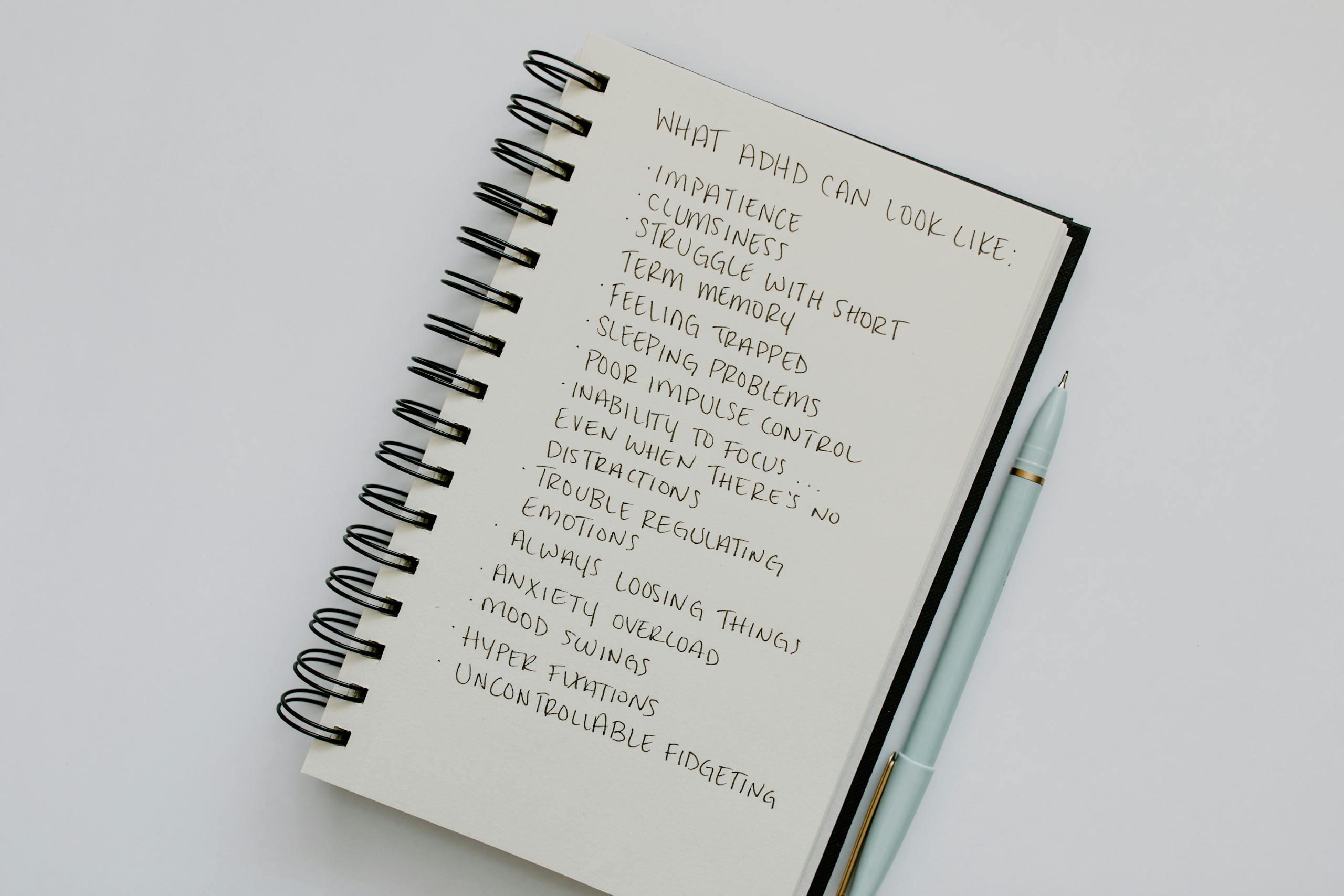
8. Work With Your Emotional Processing Style, Not Against It
Introverts and sensitive people tend to process emotions deeply and sometimes slowly. After a social situation that didn’t go well, or even one that went fine, there’s often a period of internal replay that can tip into rumination. Understanding how HSP emotional processing works when you feel deeply can help you build a healthier relationship with that replay tendency.
The difference between processing and ruminating is direction. Processing moves toward insight and resolution. Ruminating circles the same painful moment without resolution. One practice that helped me was setting a deliberate endpoint for post-event reflection: I’d give myself 20 minutes to think through what happened, then consciously redirect. Not suppression, but structure.
9. Use Preparation as a Confidence Tool, Not a Safety Blanket
There’s a version of preparation that helps and a version that feeds anxiety. Helpful preparation means knowing the context of an event, having a few conversation topics in mind, and understanding what’s expected of you. Anxious preparation means scripting every possible exchange, rehearsing responses to hypothetical disasters, and spending three hours on something that deserves thirty minutes.
As an INTJ, I’m naturally drawn to preparation, and I had to learn the difference between the two modes. Preparation that builds genuine competence reduces anxiety. Preparation that’s really just worry in disguise increases it. If you find yourself preparing past the point of usefulness, that’s a signal to stop and do something else entirely.
10. Recognize When Anxiety Is Masking Grief About Rejection
Sometimes what looks like social anxiety is actually a fear of rejection that’s been shaped by real experiences. If you’ve been dismissed, excluded, or made to feel like too much or not enough in social settings, your nervous system learned something from that. It’s protecting you from experiencing that pain again.
That protection is understandable, but it often becomes overcalibrated. The work of HSP rejection processing and healing addresses this directly, and it’s worth exploring if you find that your social anxiety has a particular emotional texture around belonging and acceptance. Healing old rejection wounds can reduce the intensity of current social fear in ways that behavioral strategies alone sometimes can’t reach.
11. Consider Professional Support Without Stigma
There’s a version of the self-help conversation that implies you should be able to manage everything on your own if you just apply the right strategies. That’s not true, and it’s not helpful. Social anxiety disorder is a recognized condition, and for many people, working with a therapist, particularly one trained in cognitive behavioral approaches, makes a meaningful difference that self-directed strategies alone don’t achieve.
The American Psychological Association’s overview of anxiety disorders makes clear that effective treatment exists and that seeking it is a practical decision, not a sign of weakness. Medication can also play a role for some people, and that’s worth a conversation with a doctor if your anxiety is significantly limiting your life.
I’ve worked with coaches and therapists at different points in my career, and the honest reflection I’d offer is that the times I sought outside perspective were consistently the times I moved forward fastest. There’s no version of this where going it entirely alone is the most efficient path.
12. Build a Social Life That Fits How You’re Actually Wired
One of the most powerful shifts I made was stopping the project of trying to be comfortable in social environments that weren’t suited to me and starting the project of building more environments that were. Smaller gatherings. Conversations with shared context and purpose. Relationships with people who didn’t require me to perform extroversion to feel welcome.
Social anxiety often eases significantly when you’re in settings where you feel genuinely understood. That doesn’t mean only socializing with other introverts or avoiding all challenging situations. It means being intentional about where you invest your social energy and giving yourself credit for the connections you do build, even if they look quieter than the cultural ideal.

What Does the Research Actually Tell Us About Social Anxiety Treatment?
Without overstating what any single study can prove, the broader body of work on social anxiety points consistently in a few directions. Cognitive behavioral therapy has strong support across multiple clinical reviews. Exposure-based approaches, where you gradually face feared situations rather than avoiding them, are central to most effective treatment protocols. Mindfulness-based interventions show promise as a complement to other approaches, particularly for people who struggle with rumination.
Two peer-reviewed resources worth exploring if you want to go deeper: a PubMed Central review examining psychological treatments for social anxiety and a separate PubMed Central study looking at the intersection of anxiety and personality traits. Neither is light reading, but both offer grounding in what the evidence actually supports rather than what the self-help industry tends to amplify.
What strikes me about the research, reading it as a layperson rather than a clinician, is that the most effective approaches share a common thread: they ask you to stay in contact with the discomfort rather than escape it, while giving you better tools for understanding and tolerating what you’re feeling. That’s not comfortable advice. But it’s honest.
How Do You Know If Your Social Anxiety Is Getting Better?
Progress with social anxiety rarely looks like a straight line. There are weeks where everything feels more manageable and weeks where an old fear resurfaces with surprising intensity. What I’ve found more useful than tracking whether I feel anxious is tracking what I do despite the anxiety.
Did I show up to the thing I was dreading? Did I stay longer than I thought I would? Did I have one real conversation instead of hovering near the exit the whole time? Did I recover from an awkward moment faster than I would have six months ago? Those are the metrics that actually matter.
Anxiety also tends to have a different texture as you work through it. Early on, it’s loud and all-consuming. Over time, for many people, it becomes more like background noise. Still present sometimes, but no longer in charge of the decisions. That shift, from anxiety driving the car to anxiety riding in the back seat, is real progress, even when it doesn’t feel dramatic.
If you’re also managing anxiety that connects to your sensitivity, the work on HSP anxiety, understanding it, and building coping strategies offers a lens that’s specifically calibrated for people who feel things deeply. It’s a useful companion to the broader social anxiety work.

There’s more to explore across all of these topics. The Introvert Mental Health Hub brings together articles on anxiety, emotional processing, sensory sensitivity, and more, all written with the specific experience of introverts and sensitive people in mind.
About the Author
Keith Lacy is an introvert who’s learned to embrace his true self later in life. After 20 years in advertising and marketing leadership, including running agencies and managing Fortune 500 accounts, Keith now channels his experience into helping fellow introverts understand their strengths and build fulfilling careers. As an INTJ, he brings analytical depth and authentic perspective to every article, drawing from both professional expertise and personal growth.
Frequently Asked Questions
Is social anxiety the same as being introverted?
No. Introversion is a personality trait describing a preference for quieter, less stimulating environments and a need to recharge through solitude. Social anxiety is a fear-based condition involving persistent worry about being judged or embarrassed in social situations. Many introverts don’t experience social anxiety, and some extroverts do. The two can overlap, but they’re distinct experiences that call for different responses.
Can social anxiety go away on its own without treatment?
For some people, social anxiety diminishes naturally as they accumulate positive social experiences over time. For others, it tends to persist or worsen without deliberate intervention, particularly if avoidance becomes the primary coping strategy. Avoidance provides short-term relief but reinforces the anxiety cycle long-term. Working with a therapist or applying structured exposure strategies tends to produce more reliable and lasting improvement than waiting it out.
What’s the most effective treatment for social anxiety?
Cognitive behavioral therapy, particularly approaches that include gradual exposure to feared social situations, has the strongest support among psychological treatments for social anxiety. Medication, including certain antidepressants and anti-anxiety medications, can also be effective and is sometimes used in combination with therapy. The most effective approach for any individual depends on the severity of their anxiety and their personal circumstances, which is why a conversation with a mental health professional is worth pursuing if social anxiety is significantly affecting your life.
How do highly sensitive people experience social anxiety differently?
Highly sensitive people tend to process social information more deeply and feel the emotional weight of interactions more acutely. This can mean that social anxiety carries additional layers: absorbing others’ emotional states, replaying interactions in more detail, and feeling the sting of perceived judgment more intensely. Sensory overload in crowded or noisy environments can also amplify social anxiety for HSPs in ways that aren’t as pronounced for non-sensitive people. Addressing both the anxiety and the sensitivity together tends to be more effective than treating either in isolation.
Can introverts build genuine social confidence without changing who they are?
Yes, and that framing matters. Social confidence for an introvert doesn’t look like becoming the life of the party. It looks like feeling comfortable in the kinds of social settings that suit your temperament, being able to show up even when you’re anxious, and recovering from difficult interactions without extended self-criticism. Building social confidence as an introvert is about expanding your range and reducing the power fear has over your choices, not about performing a personality that isn’t yours.