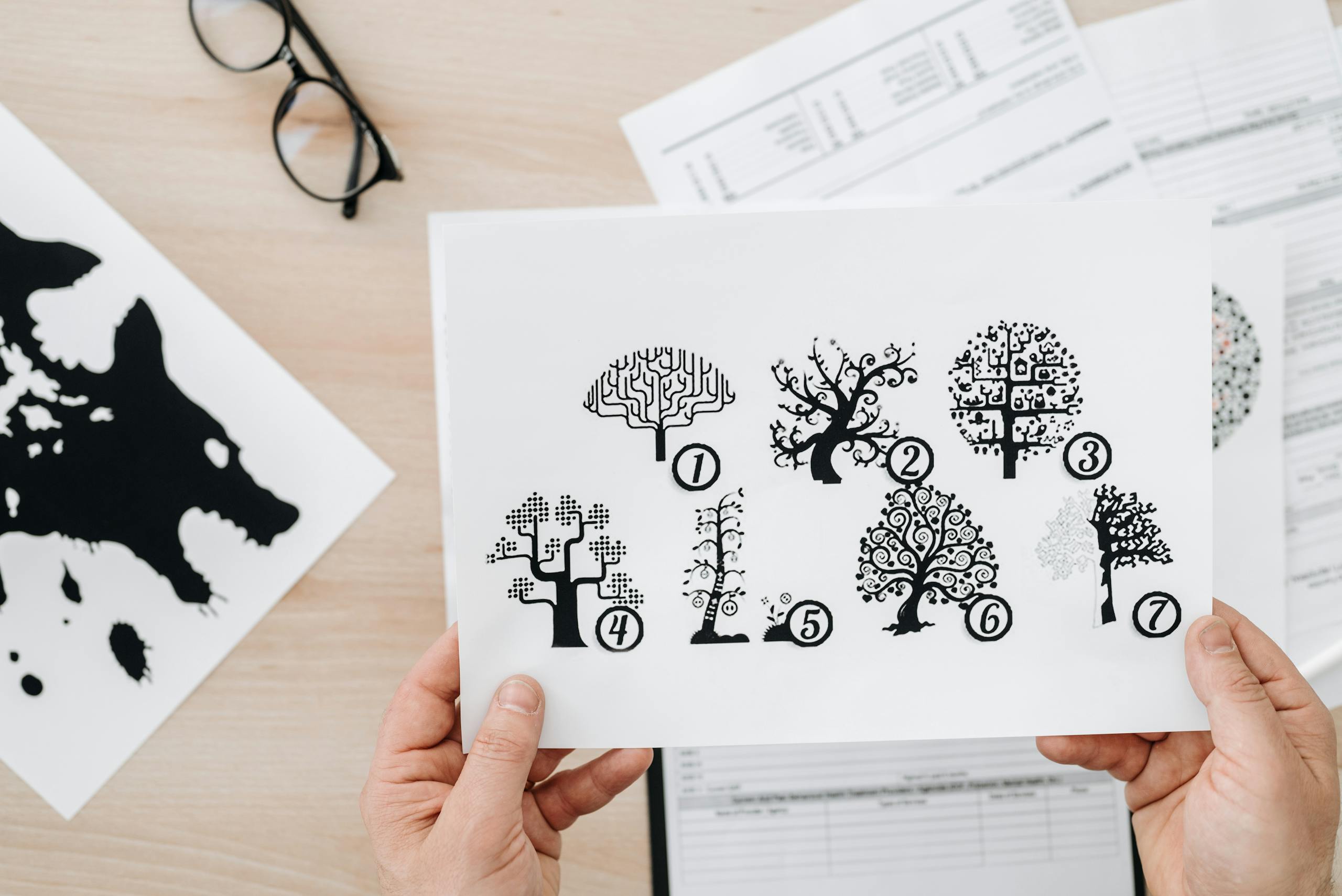
A 15 second personality test is a short assessment designed to give you a quick snapshot of your personality type, typically by asking a handful of rapid-fire questions about how you think, feel, and make decisions. Done well, these tests can point you toward a meaningful framework for self-understanding. Done poorly, they flatten the complexity of who you actually are into a label that fits about as well as a borrowed coat.
So what’s the real value here? That’s what I want to explore, because I’ve seen both sides of this coin, as someone who’s spent decades in high-pressure business environments where personality typing was either dismissed as soft science or treated like gospel truth.

If you’re curious about where a quick test fits into the broader picture of personality typing, our MBTI General and Personality Theory hub covers the full landscape, from cognitive functions to the 16 types to how these frameworks actually apply to real life. This article takes a more specific angle: what a 15 second test can and can’t tell you, and how to use the results without getting stuck in a box that was never meant to hold you.
Why Do People Want a Personality Answer in 15 Seconds?
Honestly, I get it. Speed matters. Attention is scarce. And there’s something deeply appealing about the idea that a handful of questions can hand you a mirror that actually reflects something true about yourself.
Early in my advertising career, I watched brand strategists spend months building consumer personas. We’d commission research, run focus groups, analyze data. And then a junior copywriter would walk in, read the one-paragraph summary, and immediately understand the target customer better than anyone who’d been staring at spreadsheets for weeks. Some people are wired to synthesize quickly. A short test taps into that same instinct: give me the signal, skip the noise.
There’s also a psychological reason quick tests feel satisfying. A 2005 American Psychological Association report on self-perception found that people are strongly motivated to confirm and clarify their self-concept. A personality test, even a brief one, feeds that motivation directly. It offers a structured vocabulary for something you’ve been sensing about yourself for years but couldn’t quite articulate.
The problem is that 15 seconds can only scratch the surface. What you get is a starting point, not a destination. And confusing the two is where things go sideways.
What Can a Quick Test Actually Measure?
A well-designed short assessment can reliably surface your preferences along a few key dimensions. The most meaningful of these, at least in the MBTI framework, is where you fall on the spectrum between extraversion and introversion. That single axis tells you something genuinely useful about how you restore energy, process information, and engage with the world around you.
If you want to go deeper on what that distinction actually means, E vs I in Myers-Briggs: Extraversion vs Introversion Explained breaks it down in a way that goes well beyond the “introverts are shy” misconception. Spoiler: it’s about energy, not social skill.
A 15 second test can also give you a rough read on whether you tend toward structured thinking or open-ended exploration, whether you lean toward logic-first or values-first decision-making, and whether you prefer clear closure or staying flexible. These aren’t trivial insights. They’re the same dimensions that longer, validated assessments measure, just with less precision.
Think of it like a weather app versus a full meteorological report. The app tells you to bring an umbrella. The full report tells you exactly when the rain starts, how heavy it’ll be, and what the pressure system looks like for the next week. Both are useful. They just serve different purposes.

The Hidden Risk: When a Fast Result Becomes a Fixed Identity
Here’s where I want to be honest with you, because I’ve watched this play out in real professional settings and it matters.
At one of my agencies, we went through a period of team-building exercises that included personality typing. Someone on the leadership team got their four-letter result and immediately started using it as a shield. “I’m an INTJ, I don’t do small talk.” “I’m an ESTJ, I need things done my way.” The types became excuses rather than insights. And the team suffered for it, because nuance collapsed into caricature.
A 15 second test amplifies this risk. When the result arrives fast, it feels authoritative. You didn’t labor over it, so it must be true, right? But fast doesn’t mean accurate, and a four-letter label is never the full picture of a person.
A 2020 study published in PubMed Central found that personality traits exist on continuums rather than as binary categories, which means the sharp edges implied by type labels don’t reflect how personality actually works in the brain. You’re not either a thinker or a feeler. You’re somewhere on a spectrum, and that position can shift depending on context, stress, and life experience.
This is exactly why I’d encourage you to treat a quick result as an opening question, not a closing answer.
How Cognitive Functions Add the Depth a Short Test Misses
One of the most significant things a 15 second personality test can’t capture is your cognitive function stack. And if you’ve never heard that term, it’s worth understanding, because it’s the difference between knowing your type and actually understanding yourself.
Cognitive functions are the mental processes that sit underneath your four-letter type. Every MBTI type has a dominant function, an auxiliary function, a tertiary function, and an inferior function. These four shape how you perceive the world and how you make decisions in ways that a surface-level label simply can’t convey.
Take two people who both test as INTJ on a quick assessment. One might lead with sharp strategic vision, seeing systems and long-term patterns with unusual clarity. The other might look similar on paper but process information in a completely different sequence internally. The four letters are the same. The experience of being that type can be quite different.
If you want to get past the surface, our Cognitive Functions Test is worth taking after you get your initial result. It digs into the actual mental processes driving your behavior, which gives you a much more accurate picture than any 15 second snapshot can provide.
As an INTJ, my dominant function is Introverted Intuition. My auxiliary is Extroverted Thinking (Te), which is why I gravitate toward systems, efficiency, and measurable outcomes. In agency life, that showed up as an obsession with whether our creative work actually moved the needle for clients, not just whether it won awards. I wanted the data. I wanted to know if it worked. That’s Te in action, and no four-letter label ever explained it as clearly as understanding the function itself did.
The Mistyping Problem: Why Quick Tests Sometimes Get It Wrong
Short tests have a particular vulnerability: they’re easy to answer based on who you think you should be rather than who you actually are.
I misidentified myself for years. Running advertising agencies meant I was constantly in client meetings, presenting work, managing teams, building relationships. On the surface, that looked like extraversion. So I assumed I was an extrovert. Or at least, I told myself I was, because that’s what the role seemed to demand.
A 15 second test taken during that period would almost certainly have returned an E result, because I would have answered based on my professional behavior rather than my internal experience. It took a longer, more reflective process to recognize that I was performing extraversion while quietly depleting myself. The real me was always an introvert who’d learned to operate in extroverted environments.
This kind of mistyping is more common than most people realize. Mistyped MBTI: How Cognitive Functions Reveal Your True Type goes into exactly this phenomenon, and it’s one of the most important reads if your quick test result doesn’t quite feel like you. Sometimes the four letters are wrong not because the framework is flawed, but because we answered for the person we’ve been trained to be, not the person we actually are.

The Thinking Function Split That Most Quick Tests Overlook
One of the most meaningful distinctions a 15 second test almost never captures is the difference between how different people use logic. Not whether you’re a “thinker” versus a “feeler,” but what kind of thinking you actually do.
There are two very different thinking functions in the MBTI framework. One is externally oriented, focused on organizing the world through systems, rules, and measurable outcomes. The other turns inward, building internal logical frameworks and questioning assumptions from the inside out. Both are rigorous. Both are intelligent. They just operate differently.
Our guide on Introverted Thinking (Ti) explores the second type in detail. Ti users often appear quiet or reserved precisely because their most sophisticated thinking happens internally, before it ever surfaces in conversation. In meetings, I always noticed that the people who said the least often had the most precise analysis. They were running an internal verification process that the loudest voices in the room weren’t bothering with.
A 15 second test might clock both types as “Thinking” and call it a day. Knowing the difference between Ti and Te, though, can change how you understand your own decision-making process in a meaningful way.
What Happens When You Add Sensory Awareness to the Picture
Another layer a quick test tends to flatten is how you take in information through your senses. Some people are wired to absorb the immediate physical environment with remarkable acuity, noticing textures, sounds, changes in atmosphere, and real-time details that others walk right past. This is Extraverted Sensing, and it’s a function that shows up in some of the most present, adaptable, and action-oriented people I’ve worked with.
Our complete guide to Extraverted Sensing (Se) explains how this function operates and why it matters for understanding your full personality profile. If you’ve ever wondered why some people seem to thrive in fast-moving, unpredictable environments while others (like me) prefer to think before acting, Se is a big part of that answer.
A 15 second test won’t distinguish between someone with high Se and someone without it. Both might get the same four-letter result. Yet the lived experience of those two people can be remarkably different.
How to Actually Use a Quick Test Result
So what’s the right way to approach a 15 second personality test? My honest answer is this: treat it like a first conversation, not a final verdict.
When I finally committed to understanding my own personality type with real depth, it wasn’t because a short test handed me an answer. It was because I took the initial result and started asking questions. Does this actually feel true? Which parts resonate and which feel off? What would it mean if I’m slightly different from what the label suggests?
That process of questioning is where the real value lives. A quick test can spark it. It can give you a vocabulary and a framework to start exploring. But the exploration itself requires something more than 15 seconds.
A 2008 study from PubMed Central on self-knowledge and psychological wellbeing found that people who engage in genuine self-reflection, rather than just self-labeling, report greater life satisfaction and better decision-making. The label is a door. Walking through it is the actual work.
If your quick result points you toward MBTI, the next step is to take a fuller assessment. Our free MBTI personality test gives you a more complete picture than any 15 second version can, and it’s a much better foundation for the kind of self-understanding that actually changes how you live and work.

What the Data Says About Personality Type Distribution
One thing that surprises people when they first get a personality type result is how common or rare their type actually is. According to 16Personalities’ global data, personality type distributions vary significantly across cultures and regions, which raises interesting questions about how much environment shapes the way we answer these tests.
In Western business cultures, extroverted and judging traits tend to be overrepresented in leadership roles, which means a lot of introverted leaders spend years answering personality questions through the lens of what their role demands rather than what their nature actually is. I was one of them.
The practical implication is that a quick test taken during a high-pressure professional period might return a different result than one taken during a quiet weekend at home. Neither is wrong, exactly. They’re just measuring different versions of you. And that variability is itself a useful piece of information.
Personality Testing in Teams: What Works and What Backfires
Over two decades running agencies, I used personality frameworks in team settings more times than I can count. Sometimes it worked beautifully. People who’d been quietly frustrated with each other suddenly had a shared language for their differences. The detail-oriented account manager and the big-picture creative director stopped assuming bad intent and started recognizing different cognitive styles.
Other times, it backfired. The shorter and faster the assessment, the more it backfired. Quick tests handed out in a team meeting, with results shared immediately and no context provided, tended to produce exactly the kind of rigid labeling I mentioned earlier. People used their types to opt out of growth rather than lean into it.
Research from 16Personalities on team collaboration suggests that personality awareness improves team dynamics most when it’s used to build empathy rather than assign roles. That’s a meaningful distinction. A 15 second test can open the empathy door. It can’t do the empathy work for you.
The teams I led that functioned best were the ones where we used personality insights as conversation starters, not conversation enders. “You tend to process things externally and I tend to process things internally, so let’s figure out how to structure our check-ins so both of us get what we need.” That kind of dialogue requires self-awareness that goes well beyond a quick result.
The Introvert Advantage in Self-Assessment
There’s something worth acknowledging here: introverts often have a genuine edge when it comes to personality self-assessment. Not because we’re more self-absorbed, but because we tend to spend more time in internal reflection by default. A Truity piece on deep thinking notes that people who engage in thorough internal processing are more likely to notice the subtle patterns in their own behavior that personality frameworks are designed to describe.
That said, deep thinking can also be a trap in personality testing. Introverts are more likely to overthink their answers, second-guess themselves, or answer based on their ideal self rather than their actual self. A 15 second test, paradoxically, might be more accurate for some introverts precisely because it bypasses the over-analysis and captures a more instinctive response.
My own experience bears this out. When I’ve taken quick assessments without time to deliberate, the results have often been more accurate than when I’ve labored over a longer test, trying to answer “correctly.” There’s something to be said for the unguarded answer.

Making Peace With Uncertainty in Personality Typing
One of the most freeing things I’ve come to accept about personality typing is that uncertainty is part of the process. You don’t have to arrive at a definitive answer in 15 seconds or 15 years. The framework is a tool, not a verdict.
Some of the most self-aware people I’ve known held their type lightly. They’d say, “I test as INFP but I think my Te is stronger than that suggests” or “I’m somewhere between INTJ and INTP depending on the context.” That kind of nuanced self-understanding is the goal, and it’s something a quick test can point you toward without being able to deliver it outright.
Personality is also genuinely complex in ways that science is still working to understand. A WebMD overview of empathy and personality notes that emotional sensitivity and interpersonal attunement vary enormously even within the same personality type, which is a reminder that the map is never the territory. The type is a map. You are the territory.
So take the 15 second test. See what it surfaces. Notice what resonates and what doesn’t. Then go deeper, because you deserve a more complete picture than any quick result can hand you.
There’s a lot more to explore when it comes to personality theory, cognitive functions, and how the 16 types actually show up in real life. Our complete MBTI General and Personality Theory hub is the best place to continue that exploration, with articles covering everything from type misidentification to the specific functions that drive each personality.
About the Author
Keith Lacy is an introvert who’s learned to embrace his true self later in life. After 20 years in advertising and marketing leadership, including running agencies and managing Fortune 500 accounts, Keith now channels his experience into helping fellow introverts understand their strengths and build fulfilling careers. As an INTJ, he brings analytical depth and authentic perspective to every article, drawing from both professional expertise and personal growth.
Frequently Asked Questions
Can a 15 second personality test give you an accurate MBTI type?
A 15 second personality test can point you toward a plausible type, but it can’t deliver the accuracy of a longer, validated assessment. Short tests work best as a starting point that prompts you to explore further. They’re particularly useful for identifying your introversion or extraversion preference, which tends to be the most stable and consistently measurable dimension. For a more complete picture, following up with a fuller assessment and reading about cognitive functions will give you far more reliable self-knowledge.
Why do I get different results each time I take a quick personality test?
Different results across multiple tests usually reflect one of three things: you’re answering based on your current context or mood rather than your baseline personality, you’re answering for who you think you should be rather than who you are, or you genuinely sit close to the midpoint on one or more dimensions. Personality traits exist on continuums, so if you’re near the middle of the thinking versus feeling spectrum, for example, small differences in how questions are framed can push your result either way. Consistency across multiple tests over time is a more reliable signal than any single result.
Are 15 second personality tests based on real psychology?
The best quick tests are built on the same dimensional frameworks as longer validated assessments, including the Big Five personality model and the MBTI framework. The underlying psychology is legitimate. What changes with a shorter test is the statistical reliability of the result. Fewer questions mean less data, which means more room for error. A quick test can surface genuine patterns, but it should be treated as a rough approximation rather than a precise measurement.
What should I do after getting my 15 second personality test result?
Start by reading about your result with genuine curiosity rather than trying to confirm it. Notice which parts feel accurate and which feel off. Then take a longer assessment to see if the result holds up with more questions. From there, learning about cognitive functions is the most valuable next step, because functions explain the why behind your four-letter type in a way that the letters alone can’t. Our cognitive functions test is a good place to start that deeper exploration.
Can your personality type change over time?
Your core personality type tends to remain relatively stable throughout your life, but how it expresses itself can shift significantly based on experience, growth, and environment. Many people report that their results change when they take tests at different life stages, and this usually reflects greater self-awareness rather than a genuine change in underlying type. What often changes is your comfort with your own nature. Introverts who spent years performing extraversion, for example, may get different results once they stop answering based on professional behavior and start answering based on internal experience.