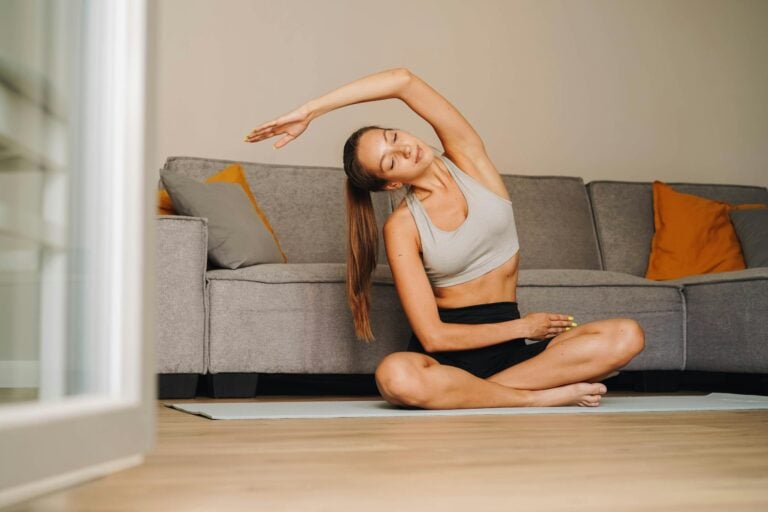

Spending time alone is essential for your health because solitude gives your mind, body, and emotional system the space they need to process, restore, and function well. Far from being a sign of isolation or antisocial behavior, intentional alone time supports everything from clearer thinking and lower stress to stronger immune function and deeper self-awareness. For many people, especially those wired for internal processing, solitude isn’t a luxury. It’s a biological and psychological need.
Most of us grew up in a culture that treated busyness as a virtue and solitude as something to fix. I carried that belief into my advertising career, filling every gap in my schedule with meetings, calls, and client dinners, convinced that constant connection was what leadership required. It took me an embarrassingly long time to realize that my best strategic thinking never happened in those crowded rooms. It happened in the quiet.
If you’ve ever felt guilty for wanting time alone, or wondered whether your need for solitude says something unflattering about you, this article is for you. What follows are 20 genuine, grounded reasons why spending time alone isn’t just acceptable. It’s one of the most health-forward choices you can make.

This conversation connects naturally to a broader set of questions about how introverts function within families, partnerships, and parenting roles. Our Introvert Family Dynamics and Parenting Hub explores how solitude, sensitivity, and introversion shape our closest relationships, and why understanding these dynamics changes everything about how we show up for the people we love.
Why Does Modern Life Make Solitude Feel Wrong?
Before we get into the specific reasons solitude supports health, it’s worth naming the obstacle most of us carry: the cultural suspicion that wanting to be alone means something is wrong with you.
What’s your personality type?
Take our free 40-question assessment and get a detailed personality profile with dimension breakdowns, context analysis, and personalised insights.
Discover Your Type8-12 minutes · 40 questions · Free
Extroversion has long been treated as the default setting for healthy, successful people. In the advertising world, this bias was almost architectural. Open floor plans, all-hands meetings, brainstorming sessions that rewarded whoever spoke loudest. As an INTJ running agencies, I watched this dynamic play out constantly. The people who performed loudest in group settings got the most visibility, regardless of whether their ideas were actually the strongest. Meanwhile, some of my most analytically gifted team members sat quietly, processing at a depth that never quite fit the format.
What neuroscience has since confirmed is that extroverts and introverts genuinely process stimulation differently. Research from Cornell University found that brain chemistry plays a meaningful role in how extroverts respond to external stimulation, which helps explain why introverts often need less of it to feel engaged. Solitude isn’t avoidance for many people. It’s calibration.
What Are the Mental Health Benefits of Spending Time Alone?
Solitude and mental health are more tightly linked than most people realize. Here are the first several reasons that alone time actively supports your psychological wellbeing.
1. Your Brain Gets to Actually Rest
Social interaction, even enjoyable interaction, requires cognitive effort. You’re reading facial expressions, managing your own responses, tracking conversational threads, and monitoring how you’re coming across. When you step away from all of that, your brain shifts into a different mode. The default mode network, the system associated with self-reflection, memory consolidation, and creative thinking, becomes more active during quiet, unstructured time. Solitude gives that system room to work.
2. Stress Hormones Drop Measurably
Chronic social pressure keeps your stress response activated. Stepping away from that pressure, even briefly, allows cortisol levels to settle. Harvard Health’s mind and mood resources consistently point to the relationship between chronic stress and downstream health consequences including sleep disruption, immune suppression, and cardiovascular strain. Solitude is one of the most direct ways to interrupt that cycle.
3. Emotional Processing Becomes Possible
Many people, particularly those with a more introverted processing style, can’t fully understand how they feel about something until they’ve had time away from the situation. During a particularly difficult client negotiation at one of my agencies, I remember sitting in back-to-back strategy sessions for three days straight, feeling increasingly reactive and unclear. It wasn’t until I took a long solo walk on the fourth morning that I could actually see what was happening and what I wanted to do about it. The emotions needed space before they could become useful information.
4. Self-Awareness Deepens Over Time
You can’t examine your own patterns when you’re constantly embedded in them. Alone time creates the observational distance needed to notice what’s working in your life, what isn’t, and why. People who regularly take time for solitary reflection tend to develop a clearer sense of their values, preferences, and emotional triggers. That clarity makes better decisions possible. If you’re curious about how your personality traits shape your self-awareness, taking a Big Five Personality Traits test can offer a useful, research-grounded starting point for understanding your own patterns.
5. Anxiety Decreases When Overstimulation Ends
For people who are highly sensitive to sensory or social input, extended time in stimulating environments doesn’t just feel tiring. It can trigger genuine anxiety responses. Solitude acts as a reset. Removing the sensory load allows the nervous system to downregulate, which is why so many introverts describe time alone not as emptiness but as relief. If you’re a parent handling this as a highly sensitive person, the challenges are layered in specific ways. HSP Parenting: Raising Children as a Highly Sensitive Parent addresses how to protect your own nervous system while showing up fully for your kids.
How Does Solitude Support Physical Health?
The mind-body connection means that psychological restoration doesn’t stay contained to the mental realm. Here’s how time alone translates into measurable physical benefits.
6. Sleep Quality Improves
A mind that never fully disengages from social processing carries that activation into the evening. Regular periods of solitude during the day, especially ones that don’t involve screens or social media, help the nervous system complete its wind-down process before sleep. People who build quiet time into their routines often report falling asleep more easily and waking less frequently through the night.
7. Immune Function Benefits From Lower Chronic Stress
Chronic stress suppresses immune response in well-documented ways. When solitude helps lower that stress baseline, the immune system operates more effectively. Published findings in PubMed Central have examined the connections between psychological stress and immune function, reinforcing what many clinicians observe clinically: people who manage their stress well tend to get sick less often and recover faster when they do.
8. Blood Pressure Responds to Genuine Rest
Not all rest is equal. Watching television in a room full of people, or scrolling through a phone in a busy coffee shop, doesn’t produce the same physiological effect as genuine quiet solitude. When the body is truly at rest, without social demands or environmental noise, cardiovascular markers including heart rate and blood pressure tend to settle. Over time, this adds up.
9. Physical Activity Becomes More Sustainable
Many introverts find that solo exercise, running, swimming, hiking, lifting weights alone, is far more sustainable than group fitness formats. When the social component is removed, the activity itself becomes the focus. This often means people stick with it longer and enjoy it more genuinely. If you’re exploring wellness as a career path or simply want to understand how physical health and personality intersect, the Certified Personal Trainer test is worth exploring as a reference point for what professional fitness guidance actually involves.
10. Digestion Improves When the Stress Response Quiets
The gut and the nervous system are in constant communication. When chronic stress keeps the body in a low-grade fight-or-flight state, digestive function is often one of the first things to suffer. Solitude that genuinely lowers stress can support more consistent digestive health, something that sounds almost too simple but shows up in clinical conversations about gut health with surprising regularity.
What Does Alone Time Do for Creativity and Productivity?
Some of the strongest arguments for solitude come from what it does to the quality of your thinking and creative output.
11. Deep Work Requires Uninterrupted Focus
There’s a category of cognitive work that simply cannot happen in fragmented, interrupted environments. Writing, strategic analysis, complex problem-solving, original design, all of these require sustained attention that social environments consistently break. I built some of my best agency pitches during early morning hours before anyone else arrived, not because I was more disciplined than my colleagues, but because my brain genuinely needed the silence to do its best work. Solitude isn’t inefficiency. For many people, it’s the condition that makes real efficiency possible.
12. Creative Connections Happen in Quiet
Creativity often works through association, connecting ideas that don’t obviously belong together. That process tends to happen below the level of conscious attention, which means it needs space and quiet to surface. Some of the most interesting creative ideas I’ve had arrived during walks, or in the shower, or during the fifteen minutes of silence after a long meeting finally ended. The mind makes connections when it’s allowed to wander, and wandering requires solitude.
13. Decision-Making Clarity Improves
Group environments introduce social pressure into decision-making in ways that aren’t always obvious. Conformity bias, the desire to align with what others seem to think, can quietly distort your judgment even when you believe you’re thinking independently. Time alone allows you to examine a decision without that interference, which tends to produce choices that are more authentically aligned with your actual values and reasoning.

14. You Learn What You Actually Think
This one sounds obvious until you sit with it. Many people, particularly those who process externally or who’ve spent years in high-pressure social environments, have a surprisingly limited sense of their own opinions separate from the opinions of the people around them. Solitude creates the conditions to hear your own voice more clearly. That’s not a small thing. It’s the foundation of intellectual independence.
How Does Spending Time Alone Strengthen Relationships?
Here’s the counterintuitive part that surprises most people: solitude makes you better in relationships, not worse.
15. You Show Up With More to Give
Depletion makes people irritable, reactive, and emotionally unavailable. When you’ve had enough time alone to restore your energy, you return to relationships with actual capacity for connection. My wife noticed this pattern long before I fully acknowledged it. On weeks when I’d protected even small pockets of solitude, I was genuinely present with her and with our family. On weeks when I hadn’t, I was physically there but mentally somewhere else, processing the backlog of everything I hadn’t had space to absorb.
16. Emotional Regulation Improves
People who are chronically overstimulated tend to have shorter emotional fuses. Small frustrations feel larger than they are. Responses come faster than they should. Regular solitude supports the kind of emotional steadiness that makes conflict less frequent and easier to handle when it does arise. Frontiers in Psychology has published work examining the relationship between solitude and positive affect, finding that for many people, time alone is associated with improved emotional functioning rather than diminished wellbeing.
17. Boundaries Become Clearer and Easier to Hold
You can’t set a boundary you haven’t identified. Solitude is where boundary clarity tends to develop. When you know what you need, what drains you, and what matters most to you, communicating those things to others becomes more natural. Boundaries stop feeling like confrontations and start feeling like honest information. Understanding where your emotional limits actually are is a form of self-knowledge that genuinely requires time alone to develop. If you’re curious about how your emotional and relational patterns show up, some people find it useful to explore resources like the Borderline Personality Disorder test as part of a broader process of self-understanding, always alongside professional guidance when needed.
18. You Become a Better Listener
When your own internal noise is quieted through regular solitude, you have more capacity to actually hear other people. Listening, real listening rather than just waiting for your turn to speak, requires mental space. That space comes from having processed your own experience sufficiently that you’re not carrying it into every conversation as unfinished business.

What Are the Deeper Benefits Most People Don’t Talk About?
Beyond the well-documented mental and physical benefits, there are subtler reasons that solitude matters, ones that tend to show up over years rather than days.
19. Your Sense of Identity Becomes More Stable
Identity is partly constructed through reflection. People who never spend time alone, who are always embedded in social contexts that define them through roles and relationships, can find themselves surprisingly uncertain about who they actually are outside of those contexts. Solitude creates the space where identity becomes something you actively know rather than something that just happens to you. Published work in Nature has explored how self-related processing and reflection connect to psychological wellbeing, pointing toward the value of inward attention as a component of a healthy inner life.
Over the course of running agencies, I watched this play out in colleagues who’d built their entire sense of self around their professional roles. When those roles shifted, through restructuring or acquisition or simply the passage of time, some of them struggled in ways that surprised me. The ones who’d maintained a rich inner life, who’d stayed connected to who they were outside of work, handled those transitions with noticeably more steadiness. That’s not a coincidence.
20. Solitude Builds Comfort With Yourself
This is perhaps the most important benefit on the entire list, and the hardest to quantify. People who are genuinely comfortable being alone have a fundamentally different relationship with themselves than those who can’t tolerate it. They don’t need constant external validation to feel okay. They don’t make decisions from desperation or loneliness. They bring a kind of groundedness to their relationships and their work that people around them can sense, even if they can’t name it.
There’s a version of likeability that comes not from performing for others but from being genuinely settled in yourself. People are drawn to that quality in ways they often can’t articulate. If you’re curious about how your relational presence lands with others, the Likeable Person test offers an interesting angle on how your social style comes across. What you’ll often find is that the most genuinely likeable people aren’t the loudest ones. They’re the ones who seem most at ease with themselves.
That ease comes from time alone. From years of choosing solitude not as escape but as practice. From learning, gradually, that your own company is worth keeping.
How Do You Actually Build Solitude Into a Busy Life?
Knowing that solitude matters doesn’t automatically make it easier to protect. Most of us live in environments that treat every quiet moment as an opportunity to fill.
Start small and be specific. A twenty-minute walk without headphones. The first fifteen minutes of the morning before you check your phone. A lunch break taken alone at a park rather than at your desk with email open. These aren’t dramatic retreats. They’re small, repeatable acts of self-maintenance that compound over time.
Communicate your needs without apology. One of the shifts I had to make as I came to understand my introversion was learning to name what I needed without framing it as a problem. Telling a colleague “I need to think through this before I respond” rather than immediately performing an opinion I hadn’t actually formed yet. Telling my family “I need an hour this evening to decompress” rather than disappearing without explanation and leaving everyone to wonder what was wrong.
If you work in a caregiving role, whether professional or personal, protecting your own solitude can feel especially complicated. The Personal Care Assistant test online is one resource for people in caregiving contexts who are exploring what sustainable, healthy care work actually looks like, including the self-care dimensions that make long-term effectiveness possible.
The science backs this up consistently. Research indexed through PubMed Central examining solitude and wellbeing has found that voluntary solitude, time alone that a person actively chooses rather than has imposed on them, is associated with positive outcomes including restored energy, improved mood, and greater sense of autonomy. The distinction between chosen and unchosen solitude matters. What we’re talking about here is the intentional kind.
Understanding how solitude fits within your broader family system, especially when partners or children have different needs, is a rich area worth exploring further. You’ll find more on that in our complete Introvert Family Dynamics and Parenting Hub, which covers everything from communicating your needs to raising children who respect different personality styles.

Solitude isn’t the opposite of connection. It’s what makes genuine connection possible. Every relationship in your life, with your partner, your children, your colleagues, your friends, is shaped by the quality of your relationship with yourself. And that relationship is built in the quiet.
The Psychology Today overview of family dynamics frames this well: the health of a family system depends significantly on the health of the individuals within it. You can’t pour from an empty vessel, and solitude is one of the most reliable ways to keep yours filled.
About the Author
Keith Lacy is an introvert who’s learned to embrace his true self later in life. After 20 years in advertising and marketing leadership, including running agencies and managing Fortune 500 accounts, Keith now channels his experience into helping fellow introverts understand their strengths and build fulfilling careers. As an INTJ, he brings analytical depth and authentic perspective to every article, drawing from both professional expertise and personal growth.
Frequently Asked Questions
Is spending time alone healthy or is it a sign of depression?
Voluntary solitude, time alone that you actively choose and find restorative, is associated with positive health outcomes including lower stress, improved emotional regulation, and clearer thinking. It’s meaningfully different from the social withdrawal that can accompany depression, which tends to feel involuntary, joyless, and accompanied by a loss of interest in things that previously mattered. If time alone consistently feels like hiding rather than restoring, speaking with a mental health professional is a worthwhile step.
How much alone time do introverts actually need?
There’s no universal answer because individual needs vary significantly based on personality, life circumstances, and the intensity of your social environment. Many introverts find that even thirty to sixty minutes of genuine solitude each day makes a noticeable difference in their mood and energy. Others need larger blocks, particularly after high-demand social periods like conferences, family gatherings, or intensive collaborative work. Paying attention to your own patterns over time is the most reliable guide.
Can spending too much time alone be harmful?
Yes, though the threshold varies considerably by person. Chronic social isolation, particularly when it’s unwanted or accompanied by loneliness, carries real health risks including elevated stress, cognitive decline over time, and reduced immune function. The difference lies in whether the solitude is chosen and satisfying versus imposed and painful. Most people who genuinely value solitude also maintain meaningful relationships. The two aren’t in conflict. Solitude supports connection by ensuring you show up to it with something to give.
How do I explain my need for alone time to family members who don’t understand it?
Frame it in terms of what it does for your relationships rather than what it takes you away from. Most people respond better to “I need some quiet time so I can be fully present with you tonight” than to “I just need to be alone.” Helping family members understand that your solitude is in service of the relationship, not a retreat from it, tends to reduce the friction significantly. Being consistent also helps. When people see that you return from your alone time calmer and more engaged, the pattern starts to make sense to them even if it doesn’t match their own experience.
Does spending time alone look different for introverts than for extroverts?
In some ways, yes. Introverts typically experience solitude as genuinely restorative, something that refills their energy rather than depleting it. Extroverts often need social interaction to feel energized and may find extended solitude more draining than refreshing. That said, even strongly extroverted people benefit from periodic quiet time for reflection, sleep, creative thinking, and stress management. The benefits of solitude aren’t exclusive to introverts. They’re just often more immediately obvious to people who are already wired to seek it.