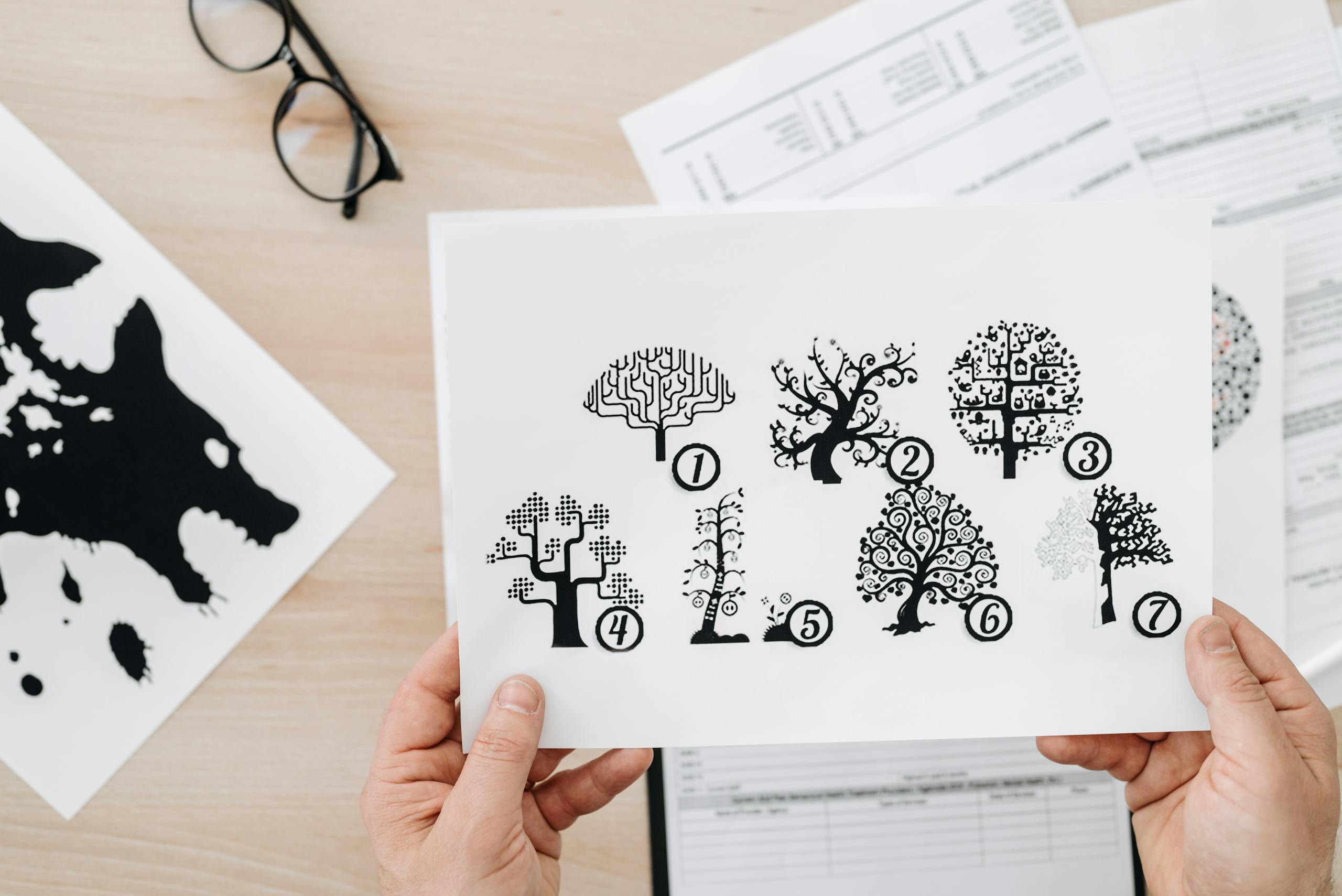
A 41 questions personality test is a structured self-assessment that uses a specific number of carefully selected prompts to measure core personality dimensions, most commonly the four MBTI preferences: Introversion vs. Extraversion, Intuition vs. Sensing, Thinking vs. Feeling, and Judging vs. Perceiving. The number 41 isn’t arbitrary. Odd-numbered question sets prevent tied scores on any single dimension, giving you a cleaner result without forcing a coin-flip tiebreaker.
What makes these assessments worth taking seriously isn’t the number of questions. It’s what those questions are actually measuring, and whether you understand what to do with the answers once you have them.
I’ve taken more personality assessments than I can count. Some were handed to me by HR departments before leadership workshops. Some I sought out on my own during years when I was trying to figure out why managing a growing agency felt so much harder than it looked on paper. The tests themselves weren’t the revelation. What changed things was finally understanding what the results were pointing toward.

Before we get into the mechanics of how these tests work, it’s worth grounding this in the broader context of personality theory. Our MBTI General and Personality Theory hub covers the full landscape of types, cognitive functions, and how to apply what you find, and this article adds a specific layer: what a 41-question format actually captures, and why the structure of the test matters as much as your answers.
Why Does the Number of Questions Matter in a Personality Test?
Most people assume more questions equal more accuracy. That’s not always true. A 200-question assessment can be padded with redundant prompts that measure the same thing repeatedly without adding new information. A focused 41-question test, designed well, can be more revealing because each question is doing real work.
The four MBTI dimensions each need enough questions to produce a reliable score. With 41 questions distributed across four dimensions, you get roughly 10 questions per axis, with one extra that typically functions as a validity check or tiebreaker. That’s enough to establish a clear preference without overwhelming the person completing the assessment.
There’s also a fatigue factor. A 2020 study published in PubMed Central found that response quality in self-report questionnaires tends to decline as length increases, particularly after the 40-question mark. Shorter, well-constructed tests often produce more honest answers because respondents haven’t started rushing or second-guessing themselves.
At my agency, we used to send clients 80-slide decks when a focused 20-slide presentation would have been sharper. The instinct was that more felt more thorough. Personality testing has the same trap. A 41-question format that’s been carefully designed forces the test creator to prioritize signal over noise, which in the end benefits you as the person taking it.
What Are the Four Dimensions a 41 Questions Personality Test Measures?
Most personality tests built on the MBTI framework measure the same four core dimensions, regardless of question count. Understanding what each one actually captures changes how you interpret your results.
Extraversion vs. Introversion
This is the dimension most people think they understand, and the one most commonly misread. Extraversion and Introversion in the MBTI sense aren’t about shyness or social skill. They describe where you direct your attention and where you restore your energy. Extraverts process externally, through conversation and activity. Introverts process internally, through reflection and solitude.
If you want a thorough breakdown of how this preference actually functions in practice, the article on E vs. I in Myers-Briggs covers the nuances that a simple test result won’t tell you. The score is a starting point, not a verdict.
My own I score was always high. What took me years to accept was that this wasn’t a professional liability. It was information about how I work best. Once I stopped scheduling back-to-back client calls and started building white space into my calendar, my thinking got sharper and my client relationships actually improved.
Sensing vs. Intuition
Sensing types gather information through direct experience and concrete detail. Intuitive types look for patterns, possibilities, and underlying meaning. Neither approach is superior. They simply describe different ways of taking in the world.
Sensing, particularly the extraverted form, involves a strong orientation toward present-moment experience and physical reality. The complete guide to Extraverted Sensing (Se) explains how this function shapes perception in ways that go well beyond what a simple S/N score conveys.
Thinking vs. Feeling
Thinking types make decisions by applying logic and objective criteria. Feeling types weigh personal values and the impact on people. Both are rational processes. The difference lies in what each considers most relevant when making a call.
As an INTJ, my Thinking preference showed up clearly in how I ran agency reviews. I wanted data, clear metrics, honest assessments. What I had to learn over time was that the people I was reviewing needed something more than a clean spreadsheet. Integrating both perspectives made me a better leader, even if it didn’t come naturally.
Judging vs. Perceiving
Judging types prefer structure, closure, and clear plans. Perceiving types stay open to new information and adapt as they go. In a fast-moving agency environment, I worked with both, and the tension between them was often where the best creative work happened, as long as someone was managing the deadline.

How Does a 41 Questions Personality Test Actually Score Your Results?
Most MBTI-style tests use a forced-choice or Likert-scale format. Forced-choice presents two options and asks which one resonates more. Likert-scale gives you a range from “strongly agree” to “strongly disagree” for a single statement.
With 41 questions distributed across four dimensions, each preference pair gets roughly 10 questions. Your answers are tallied, and the side with more responses wins that dimension. So if you answer 7 out of 10 Introversion-leaning questions in the I direction, you land as an I, regardless of how strong or mild that preference is.
Some versions of the 41-question format also calculate preference clarity, which tells you how strong your result is on each dimension. A strong I preference and a mild T preference are both valid results, but they mean different things about how consistently those traits show up in your behavior.
According to 16Personalities’ global data, personality type distributions vary significantly across cultures, which suggests that how you answer these questions is also shaped by context, not just innate wiring. That’s worth keeping in mind when you read your result.
What a raw score won’t tell you is how your preferences interact with each other. Two people can both test as INFP and experience their type very differently depending on which cognitive functions are most developed. That’s where the real depth lives, and it’s why I’d encourage you to go beyond the four-letter result.
Can You Trust a 41 Questions Personality Test to Give You an Accurate Result?
Honestly, it depends on two things: the quality of the test itself and the honesty of your answers.
A well-constructed 41-question assessment, one where the questions have been validated and the scoring is transparent, can give you a reliable starting point. The problem is that many free online tests use this format without any real validation behind the question selection. You might get a four-letter result that feels accurate by coincidence rather than design.
The honesty piece is trickier than it sounds. A 2005 piece from the American Psychological Association explored how self-perception shapes the way people respond to personality assessments, noting that we often answer based on who we want to be rather than who we actually are. I’ve caught myself doing this. Early in my career, I answered Extraversion questions the way I thought a successful agency leader should answer them, not the way I actually experienced the world.
The most accurate results come when you answer based on your natural tendencies, not your professional aspirations or how you behave under pressure. Your type describes your default wiring, not your ceiling.
One strong signal that a test result might be off: you read the description and it feels like you’re reading about someone else. That’s worth paying attention to. Many people discover they’ve been mistyped once they look beyond the surface-level preferences. The article on mistyped MBTI and cognitive functions is one of the most useful resources I’d point you toward if your result doesn’t quite land.

What Does a 41 Questions Personality Test Miss That You Should Know About?
A four-letter type result is a map, not the territory. consider this falls outside its frame.
Cognitive Functions
Every MBTI type uses a specific stack of eight cognitive functions, four of which are most active in daily life. These functions describe not just what you prefer but how your mind actually processes information and makes decisions.
Two types might share three letters and still operate very differently because their function stacks are organized differently. An INTJ and an INFJ both lead with Introverted Intuition, but their second functions, Extraverted Thinking and Extraverted Feeling respectively, create very different lived experiences.
Understanding how Extraverted Thinking shapes decision-making, particularly in leadership contexts, clarified a lot about how I naturally approached agency management. The guide to Extraverted Thinking (Te) breaks down why some leaders are drawn to systems, efficiency, and measurable outcomes, and why that’s a strength rather than a limitation.
On the other side of that coin, Introverted Thinking (Ti) describes a very different analytical process, one focused on internal logical consistency rather than external efficiency. Knowing which one drives your reasoning helps you understand not just your results but why you think the way you do.
Development and Context
Personality preferences are relatively stable over time, but how they express themselves changes as you grow. A 22-year-old INTJ and a 45-year-old INTJ are both INTJs, but the latter has likely developed their tertiary and inferior functions in ways that make them more adaptable, more empathetic, and more effective in situations that don’t play to their natural strengths.
A 41-question test captures a snapshot. It doesn’t account for how much you’ve grown into your type or how context shapes your behavior. I behave differently in a client pitch than I do in a one-on-one mentoring conversation, not because my type changes, but because different situations call on different parts of my function stack.
Emotional Depth and Empathy
Personality tests don’t measure emotional intelligence, empathy, or depth of feeling. A Thinking type can be deeply empathetic. A Feeling type can make hard, clear-eyed decisions. The T/F dimension describes a preference in decision-making, not the presence or absence of emotional capacity.
Some people who score high on empathy-related traits identify with what WebMD describes as empath characteristics, absorbing the emotional states of people around them, finding crowded or high-conflict environments draining, and needing significant recovery time after intense interactions. These experiences exist across multiple personality types and aren’t captured by a simple four-letter code.
How Should You Use Your Results After Taking a 41 Questions Personality Test?
Getting a result is the beginning of something, not the end. Here’s how I’d suggest approaching it.
Read the Description Critically
Don’t just nod along. Ask yourself which parts feel genuinely true versus which parts you’re accepting because they’re flattering or because you want them to be true. The descriptions for every type include strengths and blind spots. The blind spots are often the most useful part.
When I first got my INTJ result, I focused on the strategic thinking and vision parts. It took longer to sit with the descriptions of INTJ blind spots, things like underestimating the emotional dimension of decisions and struggling to communicate in ways that land with Feeling types. Those were the parts that actually helped me grow as a leader.
Go Deeper With Cognitive Functions
Once you have your four-letter result, the next step is understanding the cognitive function stack that underlies it. A cognitive functions test can help you identify which functions are most active in your daily thinking, which often confirms your type and sometimes reveals that the four-letter result was slightly off.
Cognitive functions explain why people with the same four-letter type can feel so different from each other. They add texture and precision to what the surface-level result can only gesture toward.
Apply It to Something Specific
Abstract self-knowledge is interesting. Applied self-knowledge is useful. Take your result and ask: where does this show up in my work? In my relationships? In how I handle stress or conflict?
A 2019 analysis from 16Personalities on team collaboration found that personality awareness improves working relationships not because it explains everything, but because it gives people a shared language for discussing differences without making them personal. That’s a concrete, practical benefit.
At my agency, understanding that some of my creative directors were strong Perceiving types helped me stop interpreting their resistance to early deadlines as laziness. They genuinely processed better under the pressure of a real deadline. Adjusting how I managed them, rather than trying to make them more like my Judging-preference self, produced better work.
Retake It Under Different Conditions
Stress changes how we answer personality questions. If you took the test during a particularly demanding period at work, you may have answered some questions based on who you need to be right now rather than who you naturally are. Taking the test again when you’re rested and not in crisis mode often produces a more accurate result.
A broader look at personality stability across life stages, supported by research from PubMed Central, suggests that core traits remain relatively consistent, but how we express them shifts with experience and development. If your result changes significantly between attempts, that’s worth exploring rather than dismissing.

What Makes a Good 41 Questions Personality Test Different From a Bad One?
Not all 41-question personality tests are created equal. A few markers separate the ones worth taking from the ones that will give you a result that feels meaningful but isn’t grounded in anything real.
Validated question design matters. Good tests use questions that have been tested for reliability, meaning they produce consistent results when taken by the same person at different times, and validity, meaning they actually measure what they claim to measure. Many free online tests skip this step entirely.
Transparency about scoring is another signal. A quality assessment will tell you not just your type but how strong your preference was on each dimension. A result that shows a very mild preference on one axis is telling you something important: that dimension might be worth exploring further rather than taking at face value.
The framing of questions also matters. Questions that describe behaviors rather than asking you to self-label tend to produce more accurate results. “I prefer to think through a problem alone before discussing it” is a better question than “Are you an introvert?” because it gets at behavior rather than identity, and people are often more honest about what they do than about who they think they are.
If you’re looking for a starting point that’s been thoughtfully constructed, our free MBTI personality test is built with these principles in mind and gives you a clear result with context for how to interpret it.
A Truity piece on deep thinking notes that people who score high on certain cognitive traits often struggle with assessments that oversimplify their inner experience. That’s a real limitation of any short-form test. The goal isn’t a perfect measurement. It’s a useful approximation that gives you something to work with.
What Should You Do If Your 41 Questions Personality Test Result Doesn’t Feel Right?
Trust that instinct. A result that doesn’t resonate isn’t necessarily wrong, but it’s worth investigating.
A few common reasons results feel off: answering based on how you behave at work rather than how you naturally prefer to operate, answering based on a recent stressful period rather than your baseline, or having a genuine borderline preference on one dimension that could swing either way depending on the day.
Some people discover that their four-letter type is accurate but the standard description doesn’t capture their experience because their cognitive function development is unusual for their type. An INFP who has spent 20 years in a corporate environment requiring strong Extraverted Thinking might not recognize themselves in the typical INFP description, even though the underlying type is correct.
The most productive response to a result that doesn’t fit is curiosity rather than dismissal. Read about the adjacent types. Explore what cognitive functions feel most natural. Ask people who know you well whether the description rings true from the outside. Sometimes the people around you see your patterns more clearly than you do.
I spent a couple of years convinced I was an INTJ with unusually strong Feeling tendencies. What I eventually understood was that I was an INTJ who had developed my tertiary Introverted Feeling more than average, partly because the agency work required it and partly because I’d done a lot of personal work around emotional intelligence. The type was right. My understanding of how it expressed itself was incomplete.

There’s much more to explore across the full spectrum of personality theory, from how types show up in relationships and leadership to the deeper mechanics of cognitive functions. Our MBTI General and Personality Theory hub is the place to continue that exploration with resources organized by topic and depth.
About the Author
Keith Lacy is an introvert who’s learned to embrace his true self later in life. After 20 years in advertising and marketing leadership, including running agencies and managing Fortune 500 accounts, Keith now channels his experience into helping fellow introverts understand their strengths and build fulfilling careers. As an INTJ, he brings analytical depth and authentic perspective to every article, drawing from both professional expertise and personal growth.
Frequently Asked Questions
How long does a 41 questions personality test take to complete?
Most people complete a 41-question personality test in 8 to 12 minutes. The format is designed to be completed in a single sitting without fatigue setting in. Taking longer is fine, and often produces more accurate results, because it means you’re reflecting on each question rather than rushing through. Avoid trying to complete it during a busy or stressful period, since your answers may reflect your current circumstances rather than your natural tendencies.
Is a 41 questions personality test as accurate as the full official MBTI assessment?
The official MBTI instrument uses 93 questions and has decades of validation research behind it. A well-designed 41-question assessment can produce reliable results for most people, particularly on dimensions where preferences are clear, but it may be less precise on borderline preferences where a few additional questions could tip the result either way. For most practical purposes, a quality 41-question test gives you a useful starting point. If you’re using results for significant professional or clinical decisions, the full validated instrument is worth the investment.
Can my result on a 41 questions personality test change over time?
Core personality preferences tend to remain stable across adulthood, but how you express them changes as you grow and develop. If you retake a 41-question personality test and get a different result, it’s worth asking whether your answers reflected your natural tendencies or your current circumstances. Mild preferences on any dimension are more likely to shift between tests than strong ones. A meaningful change in result, particularly on multiple dimensions, usually signals either that your original result was influenced by external factors or that your self-awareness has genuinely deepened.
What should I do after getting my 41 questions personality test result?
Start by reading the full description for your type with a critical eye, noting what rings true and what doesn’t. Then explore the cognitive function stack associated with your type, since this adds depth that the four-letter result alone can’t provide. Apply your findings to something specific in your life, whether that’s your work style, how you communicate, or how you handle stress. Avoid using your type as an excuse for behavior you want to change. Personality type describes tendencies, not limits.
Why do some people get different results each time they take a 41 questions personality test?
Variable results usually come down to one of three things: answering based on situational behavior rather than natural preference, having genuine borderline scores on one or more dimensions, or changes in self-perception over time. People who are close to the middle on any dimension, say, a slight preference for Thinking over Feeling, may answer those questions differently depending on their mood, recent experiences, or how they’re currently thinking about themselves. This isn’t a flaw in the test. It’s useful information that a borderline preference on that dimension means both sides of it are accessible to you.