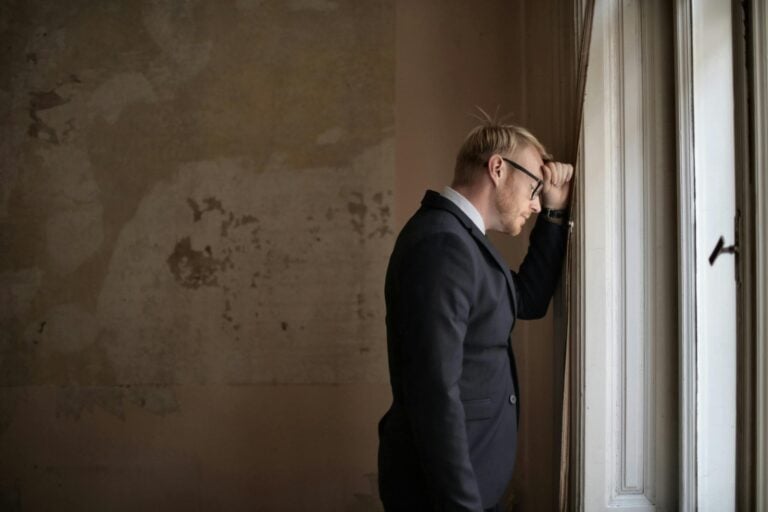

Introverts hate phone calls for reasons that go far deeper than shyness or social anxiety. The unscripted nature of a ringing phone, the pressure to respond instantly, and the absence of visual cues all create a specific kind of cognitive overload that introverts are uniquely wired to feel. Understanding why this happens can make a real difference, both for introverts trying to explain themselves and for the people in their lives who keep wondering why a simple call feels like such a big ask.
My relationship with the phone has been complicated my entire adult life. Running advertising agencies meant I was expected to be reachable, responsive, and verbally sharp at a moment’s notice. Clients called without warning. Colleagues expected immediate answers. And for years, I white-knuckled my way through those calls, performing a version of confidence that had nothing to do with how I actually processed information. It took me a long time to recognize that my discomfort wasn’t a character flaw. It was a feature of how my mind works.
If you’ve ever let a call go to voicemail and felt a wave of relief wash over you, you’re in good company. A lot of introverts share this experience, and there are specific, well-grounded reasons behind it.
Phone call aversion doesn’t exist in isolation. It shows up inside families, between partners, with parents and children, and across every relationship where communication styles differ. Our Introvert Family Dynamics and Parenting hub explores how introversion shapes the way we connect, communicate, and sometimes disconnect from the people closest to us. Phone calls are just one piece of that larger picture.

Why Do Introverts Struggle With Phone Calls More Than Extroverts?
Extroverts tend to think out loud. They process information through conversation, which means a spontaneous phone call is actually a comfortable environment for them. They can talk their way to clarity. Introverts process internally first. They need to sit with information, turn it over, consider it from multiple angles before they’re ready to speak. A phone call collapses that process entirely.
What’s your personality type?
Take our free 40-question assessment and get a detailed personality profile with dimension breakdowns, context analysis, and personalised insights.
Discover Your Type8-12 minutes · 40 questions · Free
There’s also a sensory dimension to this. Introverts often notice more than others do. They pick up on tone, pacing, pauses, and emotional undercurrents in ways that can feel exhausting over a phone line, where those signals are compressed and stripped of context. What looks like avoidance from the outside is often an internal system running at full capacity.
The National Institutes of Health has noted that temperament traits associated with introversion appear early in life and show meaningful continuity into adulthood, suggesting this isn’t something people simply grow out of or choose. It’s wired in from the start.
Personality science offers some useful framing here too. If you’ve ever taken a Big Five Personality Traits test, you’ve likely seen how introversion connects to lower extraversion scores, which correlate with a preference for less stimulating environments and a need for more time to process social input. Phone calls hit several of those pressure points at once.
Reason 1: The Ambush of an Unscheduled Call
A ringing phone is an interruption by definition. There’s no preamble, no subject line, no moment to gather your thoughts. One second you’re in the middle of something, and the next someone expects your full verbal attention.
I remember sitting in my office mid-afternoon, deep in a campaign strategy document, when a client would call out of nowhere. Not an emergency. Just a check-in. For an extrovert, that might have felt like a welcome break. For me, it felt like being yanked out of a room I’d spent an hour getting comfortable in. The work of re-entering that mental space afterward was real and it cost me.
Introverts tend to operate well when they can anticipate and prepare. Unscheduled calls remove that entirely. It’s not about being antisocial. It’s about the cognitive cost of being pulled into a high-demand interaction without any runway.
Reason 2: No Time to Think Before You Speak
Phone calls demand real-time verbal responses. Silence is interpreted as confusion, disinterest, or disconnection. So introverts end up doing something that goes against their nature: they speak before they’re ready.
In the agency world, I watched this play out constantly. I had team members who were brilliant thinkers but who came across as hesitant or uncertain on calls simply because they needed a few extra seconds to formulate a response. Their ideas were sharp. Their delivery just didn’t fit the format. Meanwhile, colleagues who were faster verbally but less thorough analytically seemed more confident, even when their answers were thinner.
Written communication gives introverts the space they need. An email or a message allows for reflection, editing, and precision. A phone call takes all of that away. What comes out is a first draft, and introverts rarely feel good about first drafts.

Reason 3: The Missing Visual Layer
Communication is layered. Facial expressions, body language, and eye contact all carry meaning that words alone can’t convey. Video calls preserve some of that. In-person conversations preserve most of it. Phone calls strip it down to voice only, and that creates a specific kind of interpretive pressure.
Introverts who are attuned to nuance often find themselves working harder on a phone call to fill in what they can’t see. Is that pause thoughtful or annoyed? Is that flat tone tiredness or frustration? The ambiguity is exhausting. And because introverts tend to process emotional information carefully, the absence of visual data doesn’t simplify things. It just means more mental energy spent on interpretation with fewer cues to work from.
This is especially pronounced for people who also identify as highly sensitive. If you’re raising children while managing this kind of sensory attunement, the article on HSP parenting and raising children as a highly sensitive parent speaks directly to how this trait shapes everyday family communication, including the phone calls you dread and the ones your kids expect you to make.
Reason 4: Phone Calls Demand Constant Performance
There’s a social performance element to phone calls that doesn’t exist in text-based communication. You have to signal engagement through verbal affirmations, “mm-hmm,” “right,” “I see,” because silence reads as absence. You have to modulate your tone to convey warmth, interest, or authority. You have to manage pacing, volume, and energy in real time.
For introverts, that performance layer sits on top of the actual content of the conversation. You’re not just thinking about what to say. You’re also managing how you sound while you think about what to say. That’s a significant cognitive load, and it’s one that many introverts carry without realizing it’s the source of their post-call exhaustion.
I spent years thinking I was just bad at phone calls. What I eventually understood was that I was actually doing twice the work of the person on the other end. They were talking. I was talking and monitoring and performing and processing, all at once.
Understanding your own personality profile in depth can help clarify why certain communication formats feel so draining. The Likeable Person test offers an interesting angle on this, exploring how social warmth and relational ease show up differently depending on your natural tendencies. Introverts often score in surprising ways because likeability doesn’t require extroversion. It just requires authenticity, which tends to come more naturally in formats where introverts feel less pressured.
Reason 5: The Anxiety of Not Knowing What’s Coming
Part of what makes written communication comfortable for introverts is that you can see the full message before responding. You know the shape of what you’re dealing with. A phone call has no shape until it’s already happening, and even then it can shift direction without warning.
Introverts are often planners. They like to anticipate, prepare, and consider multiple scenarios before they engage. A phone call from an unknown number, or even a known one, carries the uncertainty of not knowing whether this is going to be a quick logistics question or a 45-minute emotional conversation. That uncertainty creates a kind of low-grade dread that builds before the call even connects.
It’s worth noting that this anxiety isn’t always introversion alone. Sometimes it overlaps with other traits or experiences. The Borderline Personality Disorder test is one resource for people trying to understand emotional sensitivity and fear of unpredictable social interactions, though any meaningful self-assessment should always be followed up with a qualified professional.
For most introverts, though, the anxiety around phone calls is simply the cost of an interaction format that doesn’t match how they’re built. It’s not pathology. It’s a mismatch.
Reason 6: Calls Leave No Record and No Room for Reflection
One of the things introverts value most in communication is the ability to revisit it. An email thread gives you a record. A text conversation gives you context you can scroll back through. A phone call disappears the moment it ends, leaving only whatever you managed to retain in the moment.
For introverts who process information deeply, this is genuinely frustrating. You might walk away from a call realizing you didn’t fully absorb what was said because you were too busy managing the real-time demands of the conversation. Or you might think of the perfect response twenty minutes after hanging up, with no way to send it back.
In my agency days, I started a habit of immediately writing notes after every significant call, not because I had a bad memory, but because I knew the call format hadn’t given me the space to actually think. The notes were me finally processing what I’d just been forced to respond to in real time. It helped, but it also added to the overall cost of phone-based communication for me.
There’s also the professional dimension to this. People in roles that require strong verbal responsiveness, think personal trainers, healthcare workers, or client-facing service providers, often have to work against this preference deliberately. The Certified Personal Trainer test and similar professional assessments sometimes surface communication style as a factor in role fit, which speaks to how much verbal interaction style matters across different career paths.
Reason 7: The Emotional Aftermath Is Real
Even a perfectly fine phone call can leave an introvert feeling drained. Not upset, not anxious, just emptied. The energy expenditure of sustaining a verbal, real-time, performative interaction for any length of time has a recovery cost that extroverts often don’t experience in the same way.
I’ve had calls with clients that went well by every external measure. The client was happy, the conversation was productive, the outcome was positive. And I’d hang up and need twenty minutes of quiet before I could do anything else. My team used to joke that I went into “recharge mode” after big calls. They weren’t wrong. What they didn’t fully understand was that it wasn’t about the call being difficult. It was about the format itself being costly.
This is part of what published research in neuroscience and personality psychology has explored around introversion and arousal regulation, the idea that introverts reach their optimal stimulation threshold more quickly than extroverts, meaning the same interaction that energizes an extrovert can deplete an introvert, not because the introvert is weaker, but because their nervous system is calibrated differently.
The emotional aftermath also includes the post-call replay. Many introverts find themselves mentally reviewing what they said, how they said it, what they should have said differently. That loop is another energy drain that extends the cost of the call well beyond the minutes it actually lasted.

How Does This Affect Relationships, Especially in Families?
Phone call aversion doesn’t stay contained to professional settings. It bleeds into personal life in ways that can genuinely strain relationships. A parent who avoids calling their adult child. A partner who goes silent when a difficult conversation gets moved to a phone call. A sibling who responds to texts immediately but never picks up.
The people on the receiving end of this behavior often interpret it personally. They read avoidance as disinterest, silence as coldness, preference for text as emotional distance. And the introvert, who may be deeply invested in the relationship, ends up looking like they don’t care when the reality is almost the opposite. They care so much that they want to communicate well, and the phone call format doesn’t let them do that.
Psychology Today’s overview of family dynamics points to communication patterns as one of the central forces shaping how families function over time. When one family member’s communication preferences are consistently misread or dismissed, it creates distance that compounds across years.
Understanding personality differences within a family context can help bridge some of that gap. Knowing that your introvert spouse isn’t avoiding you, they’re avoiding the format, changes the conversation entirely. So does recognizing that an introverted child who won’t call grandma isn’t being rude. They’re managing something real.
Some families find that certain professional contexts bring this into sharper focus. Roles involving direct care, such as those assessed through tools like the Personal Care Assistant test online, often require people to think carefully about communication preferences and emotional availability, skills that map directly onto how we show up in family relationships too.
What Can Introverts Actually Do About Phone Call Dread?
Avoidance is understandable, but it has real costs. Missed opportunities, strained relationships, professional limitations. success doesn’t mean love phone calls. It’s to make them manageable enough that they don’t control your life.
A few things have genuinely helped me over the years. Scheduling calls whenever possible removes the ambush factor. Having a few notes in front of me before a call gives me something to anchor to when my mind goes blank. Giving myself permission to take a brief pause before responding, rather than rushing to fill silence, has made my calls feel more like me and less like a performance.
Being honest with people about your preferences also helps more than most introverts expect. Saying “I’m better in writing, can we follow up by email?” is not a character confession. It’s useful information. Most people respect it. And the ones who don’t tell you something important about whether they’re actually interested in communicating with you or just in communicating on their terms.
There’s also value in understanding the personality science behind why you’re wired this way. 16Personalities explores how introvert-introvert relationships can create unique communication challenges, including a mutual tendency to avoid calls in favor of text, which can sometimes lead to emotional distance even between people who deeply understand each other’s preferences.
And if phone calls are creating significant anxiety rather than just mild discomfort, it’s worth exploring whether something more than introversion is at play. The American Psychological Association’s resources on trauma and anxiety offer a useful starting point for understanding when avoidance crosses from preference into something that warrants more attention.

Phone call aversion is one thread in a much larger fabric of how introverts experience communication, connection, and family life. If you want to go deeper on how introversion shapes relationships at home, the Introvert Family Dynamics and Parenting hub pulls together a wide range of perspectives on exactly that.
About the Author
Keith Lacy is an introvert who’s learned to embrace his true self later in life. After 20 years in advertising and marketing leadership, including running agencies and managing Fortune 500 accounts, Keith now channels his experience into helping fellow introverts understand their strengths and build fulfilling careers. As an INTJ, he brings analytical depth and authentic perspective to every article, drawing from both professional expertise and personal growth.
Frequently Asked Questions
Is hating phone calls a sign of social anxiety or just introversion?
Phone call aversion can stem from introversion, social anxiety, or both, and they’re not the same thing. Introverts dislike phone calls primarily because of the cognitive demands: no preparation time, no visual cues, real-time verbal performance required. Social anxiety involves fear of judgment and often includes physical symptoms like a racing heart or avoidance that interferes with daily functioning. Many introverts dislike calls without experiencing anxiety at all. If the discomfort feels more like dread or panic than preference, speaking with a mental health professional is worth considering.
Why do introverts prefer texting over calling?
Texting gives introverts something phone calls don’t: time. Time to read the full message, think through a response, edit it, and send it when it’s ready. There’s no performance layer, no need to fill silence, and no ambiguity about tone because the words carry the full weight of the communication. Introverts tend to be precise communicators who value getting it right over getting it out fast. Texting supports that. Phone calls work against it.
How can I explain my phone call aversion to family members without sounding rude?
Framing it around communication quality rather than avoidance tends to land better. Something like: “I’m actually better in writing because I can give you a more thoughtful response” shifts the conversation away from what you’re avoiding and toward what you’re offering. Most people respond well to being told they’ll get more from you in a different format. It’s also worth acknowledging that this is about how you process information, not about how much you value the relationship. That distinction matters a great deal to the people who love you.
Do all introverts hate phone calls?
No. Introversion describes where you get your energy and how you process information. It doesn’t dictate every specific preference. Some introverts are perfectly comfortable on the phone, particularly if they’ve had roles that required it for years or if they’re naturally more verbally oriented. What’s more common is that introverts find phone calls more tiring than extroverts do, even when they’re capable and confident in them. The discomfort exists on a spectrum, and plenty of introverts manage it well without loving it.
What’s the best way for introverts to handle unavoidable phone calls at work?
Preparation is the most reliable tool. Before any significant call, jot down the two or three things you want to cover and any questions you anticipate. This gives you an anchor when your mind goes blank. Scheduling calls rather than accepting them spontaneously removes the ambush factor. Giving yourself a few minutes of quiet before the call starts helps too. And after the call, writing a brief summary of what was discussed serves both as a record and as a way to finally process what the real-time format didn’t let you absorb fully in the moment.