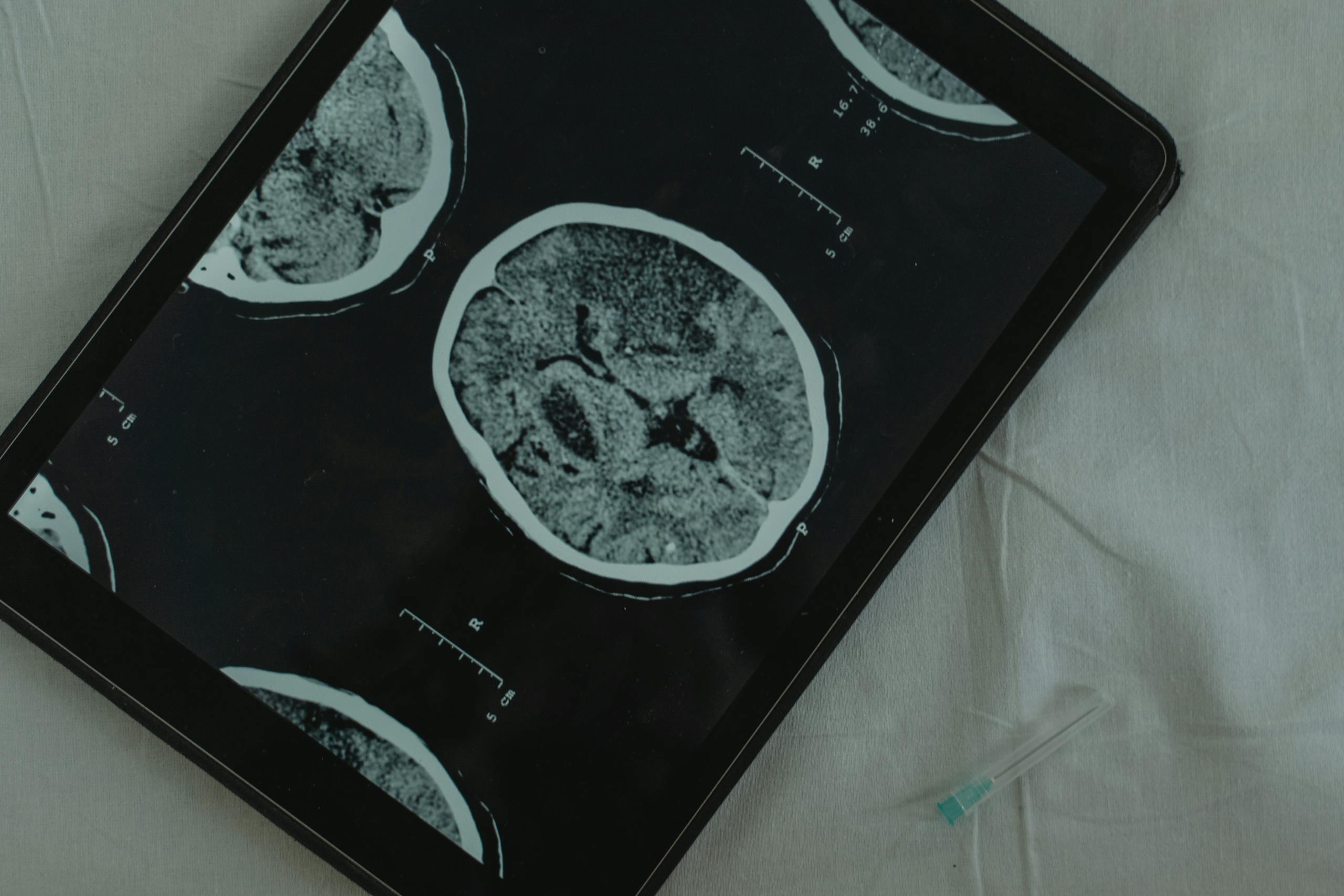

The introvert brain processes information differently than the extrovert brain at a neurological level. Introverts rely more heavily on acetylcholine, a neurotransmitter linked to focused attention and internal processing, while extroverts lean on dopamine pathways that reward external stimulation. This wiring explains why quiet environments feel restorative rather than boring, and why depth of thought comes more naturally than breadth of social activity.
Somewhere around year twelve of running my advertising agency, a client pulled me aside after a strategy presentation and said, “You’re the quietest person in the room, but somehow you always say the thing that matters most.” I didn’t know what to do with that at the time. I’d spent years trying to be louder, more spontaneous, more visibly energetic in meetings. The idea that my quietness could be a feature rather than a flaw hadn’t fully landed yet. What I didn’t understand then, and what took me years of reading and reflection to piece together, was that my brain was simply built differently. Not worse. Different.
The science behind how introverted brains work is genuinely fascinating, and it goes much deeper than the popular idea that introverts just need alone time to recharge. There are measurable neurological differences in blood flow patterns, neurotransmitter preferences, and sensory processing thresholds that help explain why people like me experience the world the way we do. Understanding those differences changed how I led my team, how I structured my days, and honestly, how I felt about myself.

- Introverts process information through longer internal circuits involving planning and memory centers before responding.
- Accept that your quiet nature reflects different brain wiring, not a personal flaw requiring correction.
- Acetylcholine neurotransmitter drives your focused attention while dopamine rewards external stimulation in extrovert brains.
- Structure your work and meetings around your brain’s natural preference for deep processing over rapid responses.
- Recognize that pausing before speaking indicates active internal processing, making your contributions more carefully considered.
What Does the Introvert Brain Actually Look Like?
One of the most cited pieces of research on introversion and brain function comes from a 1999 study by psychologist Debra Johnson and her colleagues, published in the American Journal of Psychiatry. Using PET scans to measure cerebral blood flow, the team found that introverts showed greater blood flow to regions associated with internal processing, including the frontal lobes, the anterior thalamus, and Broca’s area. Extroverts, by contrast, showed more activity in sensory processing regions tied to external stimulation.
What’s your personality type?
Take our free 40-question assessment and get a detailed personality profile with dimension breakdowns, context analysis, and personalised insights.
Discover Your Type8-12 minutes · 40 questions · Free
What that means in practical terms is that the introverted brain is running a longer, more internally oriented circuit. Information doesn’t just arrive and trigger a response. It gets routed through planning, memory, and self-reflection centers before it comes back out as a thought or a word. That’s why introverts sometimes pause before speaking. That’s why I would sit quietly through the first half of a brainstorming session and then offer one idea that seemed to come out of nowhere. It wasn’t coming out of nowhere. It had been processing the entire time.
The American Psychological Association has written extensively about how personality traits like introversion reflect genuine differences in nervous system function, not just behavioral preferences. These aren’t choices people make. They’re patterns baked into how the brain routes and prioritizes information. You can find a broader look at how introversion shapes everything from work style to emotional life in our Ordinary Introvert resource library, which covers the full spectrum of what it means to live and lead as an introvert.
How Does Acetylcholine Shape the Introvert Experience?
If you’ve ever searched for a neurological explanation of introversion, you’ve probably come across acetylcholine. It’s worth spending real time here, because acetylcholine and introverts have a relationship that explains so much about how this personality type functions at its best.
Acetylcholine is a neurotransmitter that plays a central role in attention, learning, and memory consolidation. According to the National Institutes of Health, acetylcholine is involved in activating the parasympathetic nervous system, the branch associated with rest, recovery, and focused internal attention. When acetylcholine is dominant, the brain tends to slow down, pay close attention to details, and favor depth over breadth.
Psychologist Marti Olsen Laney, who wrote extensively about the neuroscience of introversion, proposed that introverts are more sensitive to acetylcholine and rely on it more heavily as a primary reward pathway. Where extroverts get a strong dopamine hit from external stimulation, social interaction, and novelty, introverts get their sense of reward from the quieter, more internal acetylcholine pathway. That’s why a long conversation about one meaningful topic feels more satisfying than an hour of small talk. That’s why reading, writing, or working through a complex problem alone can feel genuinely energizing rather than isolating.
I noticed this in myself every time a major campaign pitch was coming together. My team would be in constant motion, running from room to room, bouncing ideas off each other at high volume. I’d find a corner, close my laptop, and think. Not because I was disengaged, but because my brain needed that acetylcholine-driven internal processing time to produce something worth saying. Every time I forced myself to match the room’s energy instead, my contributions were weaker. When I let myself work the way my brain was wired, the ideas were sharper.

Why Does the Introvert Brain Prefer Depth Over Stimulation?
Extroverts often describe introverts as hard to read, or as people who seem to be holding back. From the outside, that’s a reasonable interpretation. From the inside, what’s actually happening is that the introverted brain is processing more, not less. It’s running a longer internal loop before producing an output, and that loop is doing a lot of meaningful work.
Hans Eysenck, one of the foundational researchers in personality psychology, proposed a theory of cortical arousal that helps explain this dynamic. His argument was that introverts have a naturally higher baseline level of cortical arousal than extroverts. Because their nervous systems are already running at a higher internal activation level, they require less external stimulation to feel engaged. Too much external input, too many people, too much noise, too many competing demands, pushes them past their optimal arousal threshold and into a state that feels overwhelming rather than exciting.
Extroverts, with lower baseline arousal, need more external stimulation to reach that same optimal state. This is why a loud party energizes one person and drains another. It’s not a matter of preference or social skill. It’s a matter of where each person’s nervous system sits on the arousal curve.
In my agency years, I watched this play out in hiring decisions. We’d bring in candidates who were brilliant in one-on-one interviews and then assume they’d thrive in our open-plan, high-energy office. Some did. Others visibly contracted. The ones who contracted weren’t less capable. They were operating in an environment that was pushing them past their optimal arousal threshold every single day. Once I understood the neuroscience behind this, I started structuring my team’s environment differently, building in quiet zones, protecting focused work blocks, and stopping the assumption that visible energy meant productive energy.
Is Introversion Genetic, or Does the Brain Change Over Time?
A question I hear often, especially from people who feel like they’ve become more introverted with age, is whether introversion is fixed or whether the brain changes. The honest answer is: both things are true, and they’re not in conflict.
Twin studies consistently show a strong heritable component to introversion. A landmark study published in the Journal of Personality and Social Psychology found that roughly 40 to 60 percent of the variance in introversion-extroversion scores could be attributed to genetic factors. So yes, a meaningful portion of your introverted wiring came with you. It was part of your neurological inheritance.
At the same time, the brain is genuinely plastic. Experiences, environments, and sustained patterns of behavior can shift how neural pathways are weighted and how strongly they’re activated. Someone who grows up in an environment that rewards quiet reflection may develop those neural circuits more robustly than someone who spent their formative years in environments that punished stillness. Someone who spends twenty years in a high-stimulation career may find that their nervous system adapts in certain ways, even if the underlying introvert wiring remains.
What doesn’t change is the fundamental preference. Introverts who learn to perform extroverted behaviors, and many of us do, are not rewiring their brains to become extroverts. They’re developing a skill set. The underlying wiring, the longer processing loop, the acetylcholine preference, the higher baseline arousal, those remain. I can walk into a room of three hundred people and work it effectively now. But I still need two hours of silence afterward. That hasn’t changed in twenty years.

How Does the Introverted Brain Handle Emotion Differently?
One of the less-discussed aspects of introvert brain science is how emotional processing works. Many introverts describe feeling emotions deeply but expressing them sparingly. That pattern has a neurological basis.
The amygdala, the brain’s primary emotional processing center, shows interesting patterns in introverts. A 2012 study published in PLOS ONE found that introverts showed greater amygdala activation in response to emotional stimuli compared to extroverts in certain conditions, suggesting that the internal emotional experience may be more intense even when the external expression is more contained. The emotion is happening. It’s just being processed through that longer internal circuit before it surfaces.
This has real implications for how introverts experience things like workplace conflict, criticism, or high-stakes presentations. The internal processing is thorough and sometimes prolonged. An introvert who seems calm after a difficult conversation may actually be running a complex internal review of everything that was said, what it meant, and what the right response is. That’s not avoidance. That’s the brain doing what it does.
My own experience with this was most visible during client crises. When a campaign went sideways, my extroverted colleagues would respond immediately and loudly, generating energy in the room. I’d go quiet. Not because I didn’t care, but because my brain was pulling the problem apart systematically before I said anything. More than once, that quiet processing produced the solution that actually worked. The challenge was that in the moment, my silence could look like disengagement to people who didn’t understand how I worked.
Learning to name that process out loud, to say “I need twenty minutes to think through this before I respond,” was one of the more meaningful shifts I made as a leader. It didn’t change how my brain worked. It just gave other people a window into what was happening inside it.
What Role Does the Default Mode Network Play in Introvert Thinking?
One of the most significant developments in neuroscience over the past two decades has been the identification and study of the default mode network, or DMN. The DMN is a set of brain regions that become active when a person is not focused on external tasks, essentially when the mind is at rest, daydreaming, or engaged in self-referential thought. It includes the medial prefrontal cortex, the posterior cingulate cortex, and the angular gyrus, among other regions.
What’s interesting about introverts and the default mode network is that introverts tend to show more activity in DMN-associated regions even during tasks that require external attention. Their brains seem to maintain a stronger connection to internal processing even when they’re engaged with the outside world. This helps explain the introvert’s tendency toward self-reflection, their comfort with solitude, and their capacity for sustained internal thought.
The Mayo Clinic notes that mental rest and reflection are not passive states. The DMN is active during these periods, and the work it does, consolidating memories, making meaning, connecting disparate ideas, is cognitively significant. For introverts, who may spend more time in DMN-dominant states, this could be one explanation for the depth of thinking and the pattern-recognition abilities that many introverts report as natural strengths.
I’ve always been a connector of ideas. In client meetings, I’d hear something in the morning and connect it to something I’d read six months earlier, and that connection would become the insight that shaped the campaign. I used to attribute that to luck or experience. Now I understand it as a function of how my brain maintains active internal processing even when I’m outwardly engaged. The DMN was doing its work in the background the whole time.

Does Sensory Processing Sensitivity Connect to Introvert Brain Wiring?
Introversion and sensory processing sensitivity are not the same thing, but they overlap often enough that it’s worth examining the connection. Sensory processing sensitivity, a trait studied extensively by psychologist Elaine Aron, describes a nervous system that processes sensory information more deeply and thoroughly than average. People with this trait tend to be more affected by noise, light, social complexity, and emotional atmosphere.
Aron’s research suggests that roughly 70 percent of highly sensitive people are introverts, though the reverse is not necessarily true. Not all introverts are highly sensitive. The overlap exists because both traits involve a nervous system that processes input more thoroughly, which is energizing in low-stimulation environments and overwhelming in high-stimulation ones.
For those who carry both traits, the neurological picture is one of a brain that is doing an enormous amount of work at any given moment. Filtering sensory input, processing emotional cues, maintaining internal reflection, running the longer decision-making loop. That’s a lot of simultaneous processing, and it has a cost in terms of mental energy. It also has a benefit: the depth of awareness and attention to detail that comes from this kind of thorough processing is genuinely valuable in the right contexts.
Open-plan offices were genuinely difficult for me. Not because I’m antisocial, but because the sensory load of a busy agency floor, the conversations overlapping, the phone calls, the movement, competed directly with my brain’s need to maintain internal focus. When I finally gave myself permission to work from a private office with the door closed for two hours each morning, my output improved measurably. I stopped fighting my nervous system and started working with it.
How Does the Introvert Brain Respond to Social Interaction?
The popular explanation of introversion, that introverts lose energy from social interaction and gain it from solitude, is a useful shorthand but not the complete picture. The neurological reality is more specific than that.
Social interaction activates dopamine pathways in the brain. Dopamine is associated with reward, novelty, and external stimulation. Extroverts tend to have a stronger dopamine response to social stimulation, which means social interaction feels more immediately rewarding to them. Introverts, with their greater sensitivity to acetylcholine and their higher baseline arousal, don’t get the same dopamine hit from social novelty. Extended social interaction doesn’t feel like a reward. It feels like work, because their nervous systems are already running close to their optimal arousal level and adding more stimulation pushes them past it.
That said, introverts are not anti-social. Meaningful one-on-one conversation, deep discussion about ideas, sustained connection with people they trust, these interactions can feel genuinely restorative because they engage the acetylcholine pathway rather than overwhelming the dopamine system. The type of social interaction matters as much as the amount.
Some of the most energizing conversations I’ve had in my career were with individual clients who wanted to think through a problem together. One-on-one, focused, substantive. Those conversations didn’t drain me. The industry cocktail parties, the large team celebrations, the mandatory fun, those did. Understanding that distinction helped me stop feeling guilty about which social situations I avoided and start being more intentional about which ones I sought out.
Psychology Today has covered this distinction extensively, noting that introverts often thrive in social contexts that involve depth and genuine connection while finding surface-level socializing disproportionately costly in terms of mental energy. The wiring explains the preference. The preference isn’t a character flaw.
Can Understanding Your Introvert Brain Change How You Work?
Knowing the neuroscience of introversion isn’t just intellectually satisfying. It has practical implications for how you structure your work, your environment, your communication style, and your recovery patterns. The brain science gives you a framework for making decisions that align with how you actually function rather than how you think you should function.
One of the most actionable insights from introvert brain research is the importance of protecting focused, low-stimulation work time. Because the introverted brain does its best processing when it’s not competing with high sensory or social input, carving out blocks of uninterrupted time isn’t a luxury. It’s a performance strategy. A 2016 study in the Journal of Experimental Psychology found that interruptions, even brief ones, significantly impaired performance on complex tasks requiring sustained attention, the kind of tasks where introverts often excel.
Another practical implication involves communication timing. Because introverts process information through a longer internal loop, they often perform better when they have advance notice of what will be discussed in a meeting, time to prepare before responding to complex questions, and space after interactions to consolidate their thoughts. These aren’t accommodations for weakness. They’re adaptations to genuine neurological differences in processing speed and style.
I started sending meeting agendas 48 hours in advance, not just as a courtesy, but because I knew it would allow the introverts on my team to do their best thinking before they walked in the room. The quality of our meetings improved significantly. People who had previously seemed disengaged started contributing more. The change wasn’t in them. It was in the structure I’d created around them.
Recovery matters too. After high-stimulation periods, the introverted brain needs time to return to its optimal arousal state. That’s not laziness. It’s neurological maintenance. Building recovery time into your schedule, whether that’s a quiet lunch, a solo walk, or thirty minutes of reading between meetings, isn’t self-indulgent. It’s how you sustain performance over time rather than burning through your reserves and wondering why you feel depleted by Wednesday.

What Are the Cognitive Strengths That Come With Introvert Brain Wiring?
The same neurological features that make crowded rooms exhausting also produce some genuinely powerful cognitive strengths. It’s worth naming these explicitly, because introverts spend so much time managing their perceived weaknesses that they often underestimate what their wiring actually gives them.
Deep focus is one of the most significant. Because the introverted brain is less driven by dopamine-fueled novelty-seeking, it can sustain attention on a single complex task for extended periods without needing the stimulation change that extroverts often crave. In an era of constant distraction and fragmented attention, sustained focus is a competitive advantage.
Pattern recognition is another. The longer processing loop that introverts run, pulling information through memory, reflection, and planning centers before producing an output, creates conditions for seeing connections that faster, more reactive processing might miss. Many introverts describe having a sense of knowing something before they can fully articulate why. That intuition is often the result of unconscious pattern recognition happening in those deeper processing circuits.
Careful decision-making is a third strength. The Harvard Business Review has noted that reflective, deliberate thinkers often make better decisions in complex situations than fast, reactive ones, particularly when the stakes are high and the information is ambiguous. The introvert’s tendency to pause, process, and consider multiple angles before acting is a liability in environments that reward speed, but an asset in environments that reward accuracy.
Written communication often comes more naturally too. Because introverts process language through Broca’s area, the region associated with speech production and language, more thoroughly than many extroverts, they often find that writing allows them to express themselves more fully than speaking in real time. The written format accommodates the longer processing loop in a way that spontaneous conversation doesn’t.
Empathy and active listening round out the picture. Introverts, who are accustomed to observing carefully and processing deeply, often pick up on emotional cues and subtext that others miss. In client relationships, in management, in any context that requires genuine understanding of another person’s perspective, that capacity for careful attention is enormously valuable.
How Does Sleep and Rest Affect the Introvert Brain?
Sleep is where the introvert brain does some of its most important work. Memory consolidation, emotional processing, and the integration of complex information all happen primarily during sleep, and these are exactly the cognitive functions that introverts rely on most heavily.
The National Institutes of Health has documented extensively how sleep deprivation impairs the prefrontal cortex, the region most associated with planning, decision-making, and impulse control. For introverts, who rely on those frontal lobe circuits for their characteristic depth of processing, sleep deprivation hits particularly hard. A tired introvert doesn’t just feel tired. They lose access to the cognitive tools that define their best performance.
Beyond nighttime sleep, the introverted brain benefits from what researchers sometimes call “quiet wakefulness,” periods of low-stimulation rest during the day that allow the default mode network to do its consolidation work. These aren’t wasted hours. They’re when the brain connects the morning’s information to existing knowledge, generates insights, and prepares for the next period of focused work.
There were years when I treated rest as something I’d get to after everything else was done. The result was a chronic low-grade depletion that I attributed to the demands of running an agency. Some of it was that. But some of it was a failure to give my particular kind of brain what it needed to sustain itself. When I started treating downtime as a functional part of my work schedule rather than an indulgence, my thinking got clearer and my output got better. The brain science told me why. The experience confirmed it.
What Does Brain Science Tell Us About Introvert Leadership?
Leadership models have historically favored extroverted traits, visibility, charisma, rapid decision-making, vocal presence. The neuroscience of introversion suggests that this preference reflects a cultural bias rather than an accurate assessment of what effective leadership actually requires.
A well-cited study by Adam Grant and colleagues at the Wharton School found that introverted leaders often outperform extroverted leaders when managing proactive teams, people who take initiative and bring their own ideas. The introvert’s tendency to listen carefully, process thoroughly, and respond thoughtfully creates an environment where team members feel genuinely heard and are more willing to contribute their best thinking. Extroverted leaders, in the same context, can sometimes inadvertently dominate the space in ways that suppress team contribution.
The introvert’s capacity for sustained focus also translates into strategic clarity. Where extroverted leaders may energize a room with enthusiasm and momentum, introverted leaders often provide the careful analysis and long-range thinking that keeps organizations from chasing novelty at the expense of coherence. Both styles have value. The point is that neither is inherently superior, and the assumption that leadership requires extroversion is not supported by the evidence.
My own leadership style was quieter than most in my industry. I didn’t give rousing speeches or hold court at the head of the table. What I did was listen, think, and then say the thing that mattered. Over time, my team learned to trust that when I spoke, it was worth paying attention to. That trust became its own kind of authority. Not the loud kind, but the durable kind.
If you want to go deeper on how introversion shapes leadership and career development, the full range of resources at Ordinary Introvert covers everything from workplace dynamics to building confidence in roles that weren’t designed with introverts in mind.
About the Author
Keith Lacy is an introvert who’s learned to embrace his true self later in life. After 20 years in advertising and marketing leadership, including running agencies and managing Fortune 500 accounts, Keith now channels his experience into helping fellow introverts understand their strengths and build fulfilling careers. As an INTJ, he brings analytical depth and authentic perspective to every article, drawing from both professional expertise and personal growth.
Frequently Asked Questions
What is the introvert brain, and how does it differ from the extrovert brain?
The introvert brain processes information through longer, more internally oriented neural pathways, routing input through planning, memory, and self-reflection centers before producing a response. Introverts also show greater blood flow to frontal lobe regions associated with internal processing, while extroverts show more activity in sensory processing regions tied to external stimulation. These are measurable neurological differences, not personality preferences or social choices.
What is the connection between acetylcholine and introverts?
Acetylcholine is a neurotransmitter linked to focused attention, learning, and the parasympathetic nervous system. Introverts are thought to be more sensitive to acetylcholine and to rely on it more heavily as a reward pathway than extroverts do. Where extroverts get a strong dopamine response from external stimulation and social novelty, introverts find their sense of reward through the quieter, more internal acetylcholine pathway. This helps explain why deep focus, meaningful conversation, and solitary reflection feel genuinely satisfying rather than isolating.
Is introversion genetic, or can the brain change over time?
Twin studies suggest that 40 to 60 percent of the variance in introversion-extroversion scores has a genetic basis, meaning a significant portion of introvert wiring is inherited. At the same time, the brain is plastic, and experiences, environments, and sustained behavioral patterns can influence how neural pathways develop and are weighted. Introverts can learn to perform extroverted behaviors effectively, but the underlying neurological preferences, the longer processing loop, the acetylcholine sensitivity, the higher baseline arousal, tend to remain consistent throughout life.
Why does the introverted brain get drained by social interaction?
Introverts have a naturally higher baseline level of cortical arousal than extroverts. Because their nervous systems are already running at a higher internal activation level, additional external stimulation, including the social kind, pushes them past their optimal arousal threshold more quickly. Extended social interaction doesn’t feel like a reward because their dopamine response to social novelty is less pronounced than an extrovert’s. The mental energy cost is real and neurologically grounded, not a personality weakness or social anxiety.
What cognitive strengths come with introvert brain wiring?
Introvert brain wiring produces several meaningful cognitive strengths, including the capacity for deep sustained focus, strong pattern recognition from longer internal processing loops, careful deliberate decision-making, a natural affinity for written communication, and heightened attentiveness to emotional cues in others. These strengths are most visible in environments that reward accuracy over speed, depth over breadth, and careful listening over rapid response. Understanding these strengths allows introverts to seek out contexts where their wiring becomes a genuine advantage.