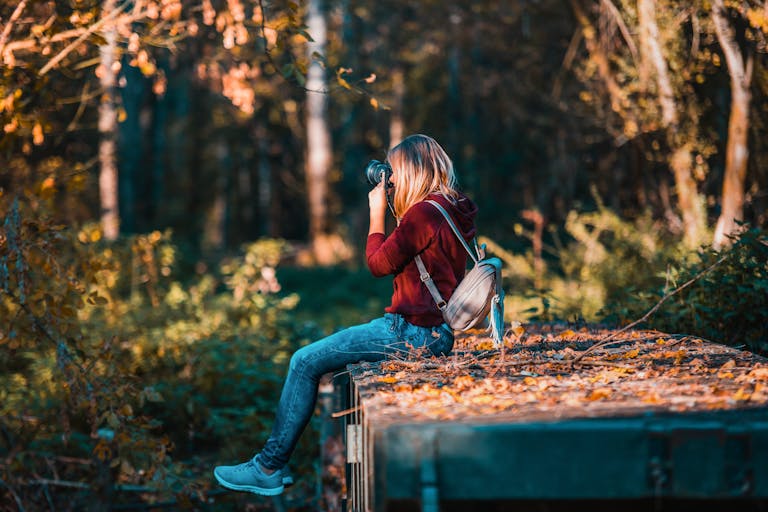
The departure gate emptied as boarding began. I watched families shuffle toward the jetway, couples comparing boarding passes, groups laughing about their upcoming adventure. When my zone was called, I stood alone. No one to share the moment with. No one to ask if I had everything. Just me, my backpack, and a destination I’d chosen entirely for myself.
That first solo trip changed how I understood myself. After years of leading teams in high-pressure agency environments, I thought I knew what independence meant. But true autonomy, the kind where every decision reflects only your needs and desires, revealed itself differently at 30,000 feet with an empty seat beside me.

Solo travel as an introvert isn’t about running away from connection. It’s about creating space where your internal rhythm sets the pace. Our General Introvert Life hub explores how introverts handle various life experiences, and solo travel stands out as one of the most powerful practices available to those who recharge through solitude.
Understanding the Introvert Solo Travel Experience
Dr. Charlotte Russell’s research on the psychological benefits of solo travel identifies several outcomes particularly relevant for introverted personalities. Personal growth, self-discovery, and the development of independence and resilience emerge as consistent themes across studies examining solo travel experiences.
What’s your personality type?
Take our free 40-question assessment and get a detailed personality profile with dimension breakdowns, context analysis, and personalised insights.
Discover Your Type8-12 minutes · 40 questions · Free
The distinction matters because solo travel strengthens problem-solving abilities and decision-making skills that transfer directly to everyday situations. These aren’t abstract benefits. The confidence you build moving through a foreign city translates to handling workplace challenges with greater composure.
During my agency years, I noticed how team dynamics shifted when people returned from significant solo experiences. One creative director came back from three weeks in Japan with a different approach to client presentations. She stopped seeking consensus before sharing ideas. Her time alone had reinforced trust in her own judgment.
Energy Dynamics of Solo Travel
Traveling alone creates unique energy patterns for those who recharge through solitude. Psychology Today research explains how solo travel allows complete access to thoughts and sensations that become blocked when distracted by companions. The absence of continuous social negotiation conserves mental resources typically depleted by group dynamics.
Think about group travel. Every meal requires consensus. Each attraction involves compromise. You’re constantly calibrating your preferences against others’ expectations. Even with compatible travel partners, this background processing drains energy reserves that introverts need for experiencing new environments.
Alone, you eliminate this friction. Want to spend two hours in a museum? Do it. Prefer sitting in a cafe for the entire afternoon? No one’s waiting impatiently. Your autonomy over schedule directly impacts how deeply you engage with each experience.
Planning Solo Travel That Matches Your Nature
Strategic planning reduces the cognitive load that depletes introvert energy. Complete solo trip preparation involves more than booking flights and hotels. You’re designing an experience that respects your need for balance between stimulation and recovery.
Start with accommodation decisions. Hostels offer social opportunities but constant interaction. Private rooms in family-run guesthouses provide occasional connection without forced socialization. Hotels deliver complete privacy at higher cost. Your choice depends on how much social energy you want to expend daily.
Building Recovery Time Into Your Itinerary
Research on mental health benefits and personal growth outcomes demonstrates how solo travel creates what researchers term a “psychological reset.” This reset requires intentional downtime, not just passive rest between activities.
Schedule blank mornings or afternoons. Not empty because nothing’s available but deliberately open for whatever your energy level suggests. Some days you’ll use this time for spontaneous exploration. Other days you’ll recognize you need to sit in your room reading. Both choices are valid.
I learned this planning my first extended European trip. I’d packed every day with museums, walking tours, and recommended restaurants. By day five in Paris, I couldn’t face another Metro ride. I spent the next day in Luxembourg Gardens with a book and discovered how vacation without exhaustion actually feels. That park bench became more memorable than most scheduled attractions.

Destination Selection for Introvert Travelers
Not all destinations suit introvert travel equally. Cities with excellent public libraries, abundant parks, and cafe culture support the need for public solitude. Destinations requiring constant negotiation or aggressive vendor interactions drain energy faster than the experience replenishes it.
Consider Copenhagen. The city’s design prioritizes quiet spaces, efficient public transport, and respect for personal boundaries. Compare that to markets in Marrakech where vendors actively pursue interaction. Both offer valuable experiences, but they demand different energy management strategies.
Natural environments particularly support introvert travelers. Adventure-seeking introverts often thrive in settings where observation replaces conversation as the primary engagement mode. National parks, coastal trails, and mountain regions offer profound experiences without social performance requirements.
Managing Social Energy While Traveling Alone
Solo travel doesn’t mean zero social interaction. Complete isolation typically increases loneliness rather than reducing it. The goal involves finding your optimal balance between connection and solitude.
Academic research on women’s solo travel experiences identifies how solitude in travel differs from isolation. Solitude provides restoration. Isolation breeds disconnection. Recognizing the difference helps you adjust your social engagement appropriately.
Choosing When and How to Connect
Controlled social interactions preserve energy better than random encounters. Joining a single walking tour provides structured connection with defined endpoints. You meet people, share the experience, then return to solitude without exchanging contact information or making future commitments.
Cafes serve as excellent social laboratories. You’re present among people without direct interaction requirements. The ambient social energy satisfies connection needs while allowing complete autonomy. Many introverts report feeling most content in these semi-social environments.

During a month in Portugal, I established a routine at a small cafe in Lisbon’s Alfama district. Same table each morning. Same order. The owner recognized me by day three. We’d exchange brief greetings, but he understood I came to write, not chat. That gentle recognition provided connection without depletion. Group travel requires different strategies, but solo travel lets you calibrate exactly how much interaction serves you.
Setting Boundaries Without Guilt
Declining social invitations during solo travel triggers less guilt than refusing friends at home. Strangers don’t carry relationship history or future expectations. Practicing boundary-setting in low-stakes situations builds confidence for more challenging conversations.
A fellow traveler invites you to dinner. You’re depleted from a full day of sightseeing. Saying “I appreciate the invitation, but I need a quiet evening” becomes simpler when you won’t see them again. These micro-practices build confidence in asserting your needs.
Practical Skills Solo Travel Develops
The competencies you build while traveling alone as an introvert extend far beyond navigation abilities. Decision-making speed increases when you can’t defer to a companion’s judgment. Problem-solving improves through necessity. Self-trust deepens as you successfully handle situations you previously might have avoided.
Consider language barriers. Traveling with someone who speaks the local language means you never develop your own communication strategies. Alone, you learn to convey needs through gesture, patience, and creative problem-solving. These experiences build a different kind of confidence than linguistic fluency provides.
Managing Logistics Independently
Every booking, every route planned, every meal ordered without consultation strengthens your self-reliance. The point isn’t proving you don’t need help. It’s about discovering you can handle more than you assumed.
My first major logistics challenge came in Switzerland. I’d booked a mountain hut accessible only by cable car and hiking. The cable car stopped running for maintenance. No one spoke English. My hotel was non-refundable. I found an alternative route involving two different mountain railways and a bus, then hiked the final segment in fading daylight.
That problem-solving experience changed how I approached client crises back home. If I could handle Swiss mountain transport systems in German, I could certainly manage production delays or budget shortfalls. The confidence transfer was direct.

Developing Comfort With Uncertainty
Solo travel forces tolerance for ambiguity. Plans change. Transportation delays happen. Accommodations don’t match photos. You learn to adapt without the buffering effect of a companion’s presence.
Guides specifically designed for introverts emphasize how pushing boundaries while maintaining self-awareness creates growth. You don’t need to become comfortable with chaos. You simply expand your range of acceptable uncertainty.
The tolerance you develop transfers remarkably well to professional environments. Agency work involves constant pivoting. Clients change direction. Campaigns get killed after weeks of development. The resilience built through solo travel makes these professional fluctuations feel less destabilizing.
Common Challenges and How to Address Them
Solo travel as an introvert isn’t universally easy. Specific challenges appear predictably, but each has manageable solutions that don’t require changing your fundamental nature.
Balancing Loneliness and Solitude
Loneliness and solitude feel similar but function differently. Solitude restores. Loneliness depletes. Learning to distinguish between them helps you respond appropriately rather than defaulting to isolation when connection would actually serve you better.
Loneliness typically hits during transitions. Arriving in a new city. Sitting alone at dinner while couples surround you. Watching sunset from a viewpoint you wish you could share. These moments are normal. They don’t indicate you’ve made a mistake.
Simple strategies help. Call someone from home. Not for long conversation, just connection. Journal about the feeling rather than trying to escape it. Understanding travel companion dynamics makes you appreciate why you chose to travel alone despite occasional loneliness.
Dealing With Social Pressure
People question solo travel. Family worries about safety. Friends don’t understand why you’d go alone when they’re available. Colleagues assume you couldn’t find anyone to join you. External pressure like this can undermine your confidence before departure.
Frame your solo travel as a choice, not a default. You’re actively selecting an experience that serves your development. Reframing it this way helps others understand your decision without requiring them to agree with it.
Safety concerns deserve acknowledgment. Solo travelers do face different risks than groups. Research destination-specific safety considerations, share your itinerary with someone, and trust your instincts. These precautions address legitimate concerns without abandoning your plans.
Managing Decision Fatigue
Every choice falls solely on you when traveling alone. Where to eat. What to see. How to spend each hour. Without strategies to reduce trivial decisions, such autonomy becomes overwhelming.
Create decision frameworks before trips. Breakfast: whatever’s closest to accommodation. Lunch: local markets or cafes. Dinner: one researched restaurant per city, otherwise simple options. Such structure eliminates hundreds of micro-decisions that drain mental resources needed for meaningful choices.
Pack a decision-making uniform. Same basic outfit combinations mean you’re not choosing clothes each morning. It sounds trivial until you’re jet-lagged in an unfamiliar room trying to remember which bag contains clean shirts.
Essential Items for Introvert Solo Travel
Certain tools make solo travel more sustainable for people who recharge through solitude. These aren’t luxury items. They’re strategic investments in maintaining your energy throughout your trip.
Noise-canceling headphones create portable privacy. You control when ambient noise penetrates your awareness. On transportation, in busy accommodations, during meals in crowded restaurants, these headphones signal “not available” without requiring verbal boundary-setting.
A quality journal transforms observations into understanding. The act of writing processes experiences more deeply than mental review alone. Many introverts discover their clearest insights emerge through written reflection rather than conversation.
Portable chargers ensure your phone remains functional for navigation, photography, and emergency contact. Running out of battery in unfamiliar territory creates unnecessary stress that depletes energy reserves. Backup power sources eliminate this anxiety.
A compact book provides escape when you need mental distance from your environment. Physical books work better than e-readers for this purpose. The tactile experience signals your brain to shift into a different mode. I’ve carried the same paperback across three continents specifically for this grounding function.
What Research Tells Us About Solo Travel Benefits
Evidence consistently supports solo travel as a meaningful contributor to personal development. A comprehensive analysis of introvert travel experiences found measurable improvements in self-efficacy, emotional regulation, and stress management following solo travel periods.
The mechanisms make sense. Solo travel creates controlled exposure to unfamiliar situations. You face small challenges repeatedly, building competence through accumulated successes. Each successful navigation, meal ordered, or conversation initiated reinforces your capability.
These confidence gains don’t remain travel-specific. Research participants reported applying solo travel problem-solving approaches to professional challenges, relationship decisions, and major life choices. The transfer effect appears particularly strong for introverts, possibly because solo travel aligns naturally with existing cognitive preferences.
Mindfulness benefits emerge organically during solo travel. Heightened attention to surroundings, increased awareness of internal states, and reduced rumination patterns all contribute to improved mental health outcomes. You’re not practicing formal meditation. You’re simply more present when experience isn’t filtered through a companion’s perspective.
Making the Decision to Travel Alone
Waiting for the perfect travel companion means missing opportunities that might never return. Career phases change. Responsibilities accumulate. The window for extended solo travel narrows as life complexity increases.
Start small if major solo trips feel overwhelming. A weekend in a nearby city tests your comfort with solo travel dynamics without the commitment of international adventures. Success in manageable doses builds confidence for larger trips.
Accept that solo travel won’t suit everyone equally. Some people genuinely prefer shared experiences. Others find solo travel lonely regardless of preparation. You won’t know which category you occupy until you try. One trip provides more data than years of speculation.
The investment returns compound over time. Skills developed during your first solo trip make subsequent adventures easier. Confidence grows. Fear diminishes. What felt risky initially becomes familiar. Many solo travelers report the first trip being hardest, with each one after that feeling more natural.
After two decades of leading teams and managing client relationships, I thought I understood independence. Solo travel revealed how much of my identity remained entangled with others’ expectations. Sitting alone in unfamiliar places forced confrontation with who I actually was versus who I performed being.
That confrontation wasn’t comfortable. But it clarified what mattered. Which experiences I actually enjoyed versus which ones I pursued because they looked good. Which relationships energized me versus which ones I maintained from obligation. Solo travel strips away the social mirrors that usually reflect these distinctions.
Your solo travel won’t duplicate anyone else’s experience. Your destinations, your timeline, your balance between solitude and connection will reflect your unique needs. This personalization makes solo travel valuable. You’re designing an experience that serves your development rather than following someone else’s template.
Frequently Asked Questions
Is solo travel safe for introverts who prefer avoiding confrontation?
Solo travel carries similar safety risks as group travel, with some specific considerations. Research destinations thoroughly, share your itinerary with someone at home, and trust your instincts when situations feel uncomfortable. Many introverts report feeling safer alone because they remain more alert to their surroundings without the distraction of group conversation. Avoidance of confrontation doesn’t equal inability to assert boundaries when necessary. Start with destinations known for traveler safety and build confidence before tackling more challenging locations.
How do I handle meals alone without feeling awkward?
Bring reading material or a journal to give yourself something to focus on besides the fact that you’re dining alone. Choose counter seating at cafes or restaurants when available, as this feels less isolating than a table for one. Lunch typically feels easier than dinner for solo dining. Many travelers report that discomfort with solo meals decreases significantly after the first few experiences. Consider treating dinner as a picnic in your accommodation or a park rather than always eating in restaurants.
What if I get lonely while traveling alone?
Loneliness during solo travel is normal and doesn’t indicate you’ve made a mistake. Brief video calls with friends or family can provide connection without requiring extensive social energy. Joining a single organized activity like a walking tour offers structured social interaction with a defined endpoint. Spending time in cafes or public spaces provides ambient social energy without direct interaction requirements. Remember that loneliness and solitude differ; solitude restores while loneliness signals a need for connection adjustment.
How much should I plan versus leaving things spontaneous?
Plan the framework but leave flexibility within it. Book accommodation and major transportation in advance to reduce decision fatigue and ensure you have places to recharge. Create a loose itinerary of potential activities but don’t schedule every hour. Many introverts find that over-planning leads to burnout while under-planning creates anxiety about wasting time or missing important experiences. Having backup plans for low-energy days prevents guilt about skipping scheduled activities.
Will I miss out on experiences that groups have access to?
Solo travelers access different experiences rather than fewer. You’ll have more opportunities for spontaneous conversations, easier time adjusting plans based on energy levels, and deeper engagement with locations because you’re not managing group dynamics. Some activities genuinely work better in groups, such as certain adventure sports or expensive private tours. Consider joining organized day trips for specific activities while maintaining solo travel for the overall experience. The experiences you gain through solo travel often prove more personally meaningful than shared group adventures.
Explore more travel resources and lifestyle strategies in our complete General Introvert Life Hub.
About the Author
Keith Lacy is an introvert who’s learned to embrace his true self later in life. With a background in marketing and a successful career in media and advertising, Keith has worked with some of the world’s biggest brands. As a senior leader in the industry, he has built a wealth of knowledge in marketing strategy. Now, he’s on a mission to educate both introverts and extroverts about the power of introversion and how understanding this personality trait can unlock new levels of productivity, self-awareness, and success.