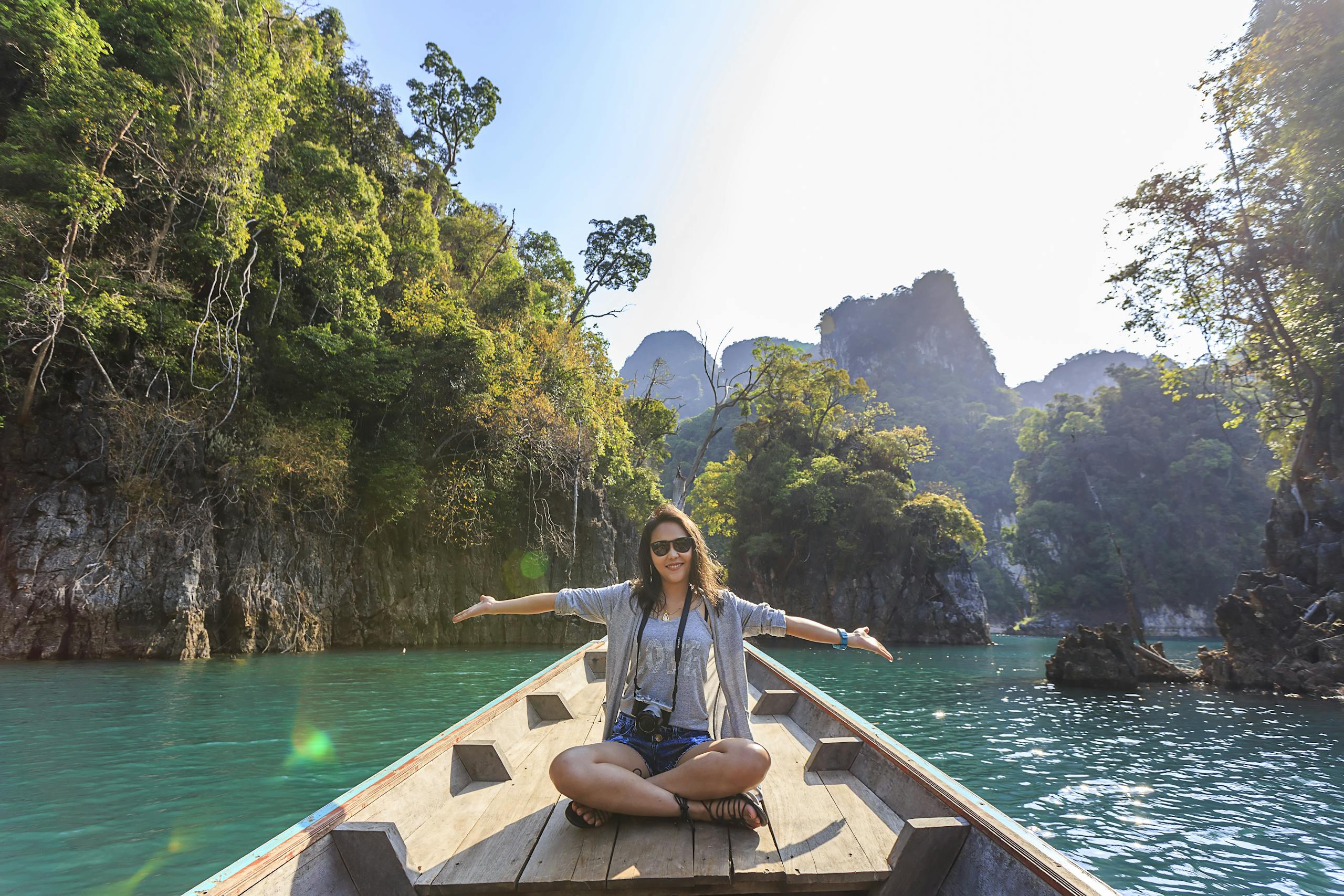

Introverts can absolutely step outside their comfort zones and have meaningful adventures. The difference lies in how we approach them. Planning deliberately, building in recovery time, and choosing experiences that align with our natural depth of focus makes stepping into the unfamiliar feel like growth rather than punishment.
Everyone assumed I loved the chaos. Client dinners that ran until midnight, agency retreats packed with trust falls and improv exercises, conference trips where the real work happened in crowded hotel bars. From the outside, I probably looked like I was thriving. I had learned to perform extroversion so convincingly that even I sometimes forgot it was costing me something.
It took me a long time to understand that avoiding discomfort and avoiding growth are two completely different things. Introverts aren’t afraid of challenge. We’re wired for it, actually, as long as the challenge feeds our minds rather than drains our energy. Once I figured out the distinction, everything about how I approached new experiences shifted.
Adventure planning, for those of us who process the world internally, isn’t about forcing ourselves into situations designed for extroverts. It’s about building experiences that stretch us in ways that actually stick.

Why Does Stepping Outside Your Comfort Zone Feel So Different for Introverts?
Comfort zones get a bad reputation, as if staying inside one is a moral failing. But the discomfort introverts feel in unfamiliar social situations isn’t weakness. It has a physiological basis. The American Psychological Association has documented that introverts show higher baseline arousal in the brain’s cortical systems, which means we reach overstimulation faster than extroverts in high-input environments. That’s not a character flaw. It’s a nervous system difference.
What’s your personality type?
Take our free 40-question assessment and get a detailed personality profile with dimension breakdowns, context analysis, and personalised insights.
Discover Your Type8-12 minutes · 40 questions · Free
What that means practically is that the same experience, say, a weekend hiking trip with strangers or attending a solo travel meetup, lands very differently depending on how it’s structured. An extrovert might thrive on spontaneity and constant social contact. Many introverts need to know what’s coming, have space to decompress, and feel some sense of control over the pace.
At my agencies, I watched this dynamic play out repeatedly. We’d send junior creatives to industry conferences expecting them to come back energized and full of ideas. Some did. Others came back hollow-eyed and burned out. The ones who struggled weren’t less talented. They were often the most thoughtful people in the room. They just hadn’t been given any framework for managing the experience on their own terms.
Stepping outside a comfort zone works best when the stretch is real but the structure is yours. That’s the foundation of everything I’ll share here.
What Actually Happens in Your Brain When You Try Something New?
There’s a reason new experiences feel uncomfortable at first and satisfying in retrospect. The National Institutes of Health has published research showing that novelty activates the brain’s dopamine system, the same reward circuitry involved in motivation and pleasure. We’re literally wired to get something out of new experiences, even when they feel hard in the moment.
For introverts, the challenge is that the discomfort can be loud enough to drown out the reward signal. When I was running my second agency, I made myself attend a three-day leadership intensive that involved a lot of group work, public speaking exercises, and what the facilitators cheerfully called “radical vulnerability.” By day two, I was fantasizing about my hotel room and a room service menu.
But something interesting happened on day three. A small group exercise required us to sit quietly for twenty minutes and write about a professional failure. No sharing required, no performance, just honest reflection. That twenty minutes cracked something open for me. I came home with more clarity about my leadership style than I’d gained in years of extroverted networking events.
The experience taught me that the format of an adventure matters as much as the adventure itself. Novelty that includes space for internal processing tends to land deeper for people wired like me.

How Do You Plan Adventures That Actually Work for Your Personality?
Planning isn’t the enemy of adventure. For introverts, it’s the thing that makes adventure possible. When I know what to expect, I can save my energy for the experience itself rather than burning it all on anxiety about the unknown.
A few principles have served me well over the years, both in my professional life and in the personal experiences I’ve pushed myself toward since leaving the agency world.
Choose Depth Over Breadth
Introverts tend to get more from one rich experience than from ten surface-level ones. A week in a single city, learning its neighborhoods, finding a few spots that feel like yours, sitting with a language you’re just beginning to understand, that kind of immersion feeds us in a way that a ten-country whirlwind tour rarely does.
When I finally took a solo trip to Portugal several years ago, I spent four days in Lisbon and three in a small coastal town I’d found in a travel essay. I came home feeling more restored than I had after any vacation I’d taken during my agency years, most of which involved client-adjacent activities that never fully let me exhale.
Build Recovery Time Into the Plan
Recovery isn’t a reward for surviving the adventure. It’s a structural requirement. Mayo Clinic notes that chronic stress without adequate recovery periods affects cognitive function, mood regulation, and physical health. For introverts who are already working harder to manage overstimulation in novel environments, this matters even more.
Practically, this means building quiet mornings into a travel itinerary. It means leaving a day between a big social event and a demanding work commitment. At my agencies, I eventually stopped scheduling client dinners the night before major presentations. My team thought I was being strategic about focus. I was, but I was also protecting my ability to show up as my best self when it counted most.
Start With Solo or Small-Group Formats
Large group adventures, tours with twenty strangers, team retreats with mandatory bonding, festival weekends, these formats often demand constant social performance at exactly the moments when you most want to be absorbing an experience quietly. Starting with solo travel or experiences shared with one or two trusted people gives you the stretch without the social overhead.
Some of the most meaningful professional growth I’ve seen in introverted colleagues came from solo conference attendance, where they could choose every conversation deliberately rather than being swept into group dynamics. One of my former creative directors told me that attending a design conference alone, no colleagues, no shared agenda, was the first time she’d actually absorbed what she was hearing instead of managing other people’s reactions to it.

What Are the Best Types of Adventures for Introverts?
Not all adventures require crowds, noise, or constant social contact. Some of the most stretching experiences available to us are built around exactly the qualities introverts already possess: focus, patience, observation, and the ability to sit with complexity.
Nature-Based Experiences
Hiking, kayaking, wildlife observation, backcountry camping, these activities reward the kind of sustained attention that introverts bring naturally. A 2019 study published in Frontiers in Psychology found that time in natural environments significantly reduces cortisol levels and self-reported stress, with effects that persist for days after the experience. For those of us who carry the weight of overstimulation from work and social environments, nature offers a reset that few other settings can match.
My first solo backpacking trip happened the summer after I sold my last agency. Three nights in the Appalachians with no phone signal and no agenda. By the second morning, I realized I hadn’t thought about a client or a deadline in eighteen hours. That felt like its own kind of miracle.
Learning-Centered Travel
Cooking classes in a foreign city. A photography workshop in a place you’ve never been. A language immersion weekend. These experiences give introverts a structured entry point into unfamiliar territory. The learning objective creates natural social interaction without requiring constant small talk, because you’re all focused on something outside yourselves.
Structure gives us permission to engage on our own terms. That’s not a workaround. It’s a legitimate strategy for getting more out of any experience.
Creative and Cultural Immersion
Museum visits, literary tours, architectural walks, attending a concert or performance in a city you don’t know, these experiences feed the introvert’s appetite for meaning without demanding social performance. You can be fully present, fully engaged, and fully yourself without having to manage anyone else’s energy.
Some of the most vivid memories from my years of business travel came not from client dinners but from the two hours I’d steal on a Tuesday morning to walk through a gallery or sit in a cathedral before the day’s meetings began. Those moments kept me sane. They also kept me curious, which made me better at my job.
How Do You Push Past Fear Without Overwhelming Yourself?
Fear and overstimulation can feel identical in the body. Racing heart, tight chest, the urge to cancel and stay home. Learning to distinguish between the two changed how I approached new experiences.
Overstimulation is a signal that you need less input. Fear, in the productive sense, is a signal that you’re approaching something that matters. One calls for retreat. The other calls for a slower, more deliberate advance.
Psychology Today has written extensively about the concept of “optimal anxiety,” the idea that a moderate level of stress improves performance and engagement, while too much shuts us down. For introverts, finding that optimal level often means taking smaller steps than an extrovert might need, not because we’re less capable, but because our threshold for overstimulation is calibrated differently.
In practical terms, this looks like committing to one new experience per month rather than overhauling your entire social calendar. It looks like attending an event for ninety minutes with permission to leave, rather than promising yourself you’ll stay until the end. It looks like booking the solo trip for five days rather than two weeks, at least the first time.
Small commitments that you actually keep build more confidence than large ones you abandon halfway through.

Can Introverts Thrive in Social Adventures Without Burning Out?
Yes, with intention. The word “thrive” is doing important work in that question, because thriving looks different from surviving. Surviving a group adventure means white-knuckling through it and collapsing afterward. Thriving means coming home with something, a connection, a memory, a new piece of yourself, without feeling like you’ve been wrung out.
The difference usually comes down to three things: preparation, permission, and pacing.
Preparation means knowing enough about what you’re walking into that your brain isn’t burning energy on basic orientation. Read about the place. Know the rough schedule. Have a mental map of where you can go if you need twenty minutes alone.
Permission means giving yourself explicit authorization to leave early, skip the after-party, take a walk by yourself, or simply not perform enthusiasm you don’t feel. Many introverts I’ve spoken with carry enormous guilt about these choices, as if needing space is a social failure. It isn’t. It’s self-knowledge.
Pacing means not front-loading all your social energy into the first day of an experience and then having nothing left. I learned this the hard way at a week-long industry summit early in my career. I threw myself into every session, every dinner, every after-hours conversation. By day three, I was functionally useless. I sat through a panel on the future of media and absorbed nothing because my tank was empty.
From that point on, I started treating my social energy like a budget. Spend it deliberately. Save some for the moments that matter most.
How Do You Build a Habit of Stepping Outside Your Comfort Zone?
Habits form through repetition and reward. The challenge with comfort zone expansion is that the reward is often delayed. You might not feel the benefit of the uncomfortable thing until days or weeks later, when you notice that you’re a little less anxious about the next unfamiliar situation, or that you have a reference point for your own resilience you didn’t have before.
Harvard Business Review has published work on habit formation in professional contexts, noting that linking new behaviors to existing routines dramatically increases follow-through. For introverts building a practice of intentional adventure, this might mean pairing a new experience with something already comfortable. Attend the networking event, then give yourself the next morning completely free. Book the unfamiliar trip, then plan one familiar restaurant you’re looking forward to.
Anchoring the new to something known makes the stretch feel less like free-fall.
Reflection also matters more than most people acknowledge. After any new experience, introverts benefit from processing time, actual structured reflection, not just vague rumination. I keep a simple practice: after any significant new experience, I write three sentences. What surprised me. What I’d do differently. What I want to carry forward. That’s it. Three sentences. It takes five minutes and it cements the learning in a way that moving immediately on to the next thing never does.
Over time, the record of those three-sentence entries becomes evidence. Evidence that you’ve done hard things before. Evidence that you came back from them. Evidence that the discomfort was worth it.

What Does Growth Actually Look Like for an Introverted Adventurer?
Growth for introverts rarely looks dramatic from the outside. There’s no moment where we suddenly become the life of the party or start craving packed itineraries. What changes is quieter and more durable than that.
You notice that the pre-trip anxiety is a little shorter than it used to be. You catch yourself suggesting the unfamiliar option instead of defaulting to the familiar one. You realize you’ve stopped apologizing for needing quiet time, because you’ve built it into your plans from the start rather than treating it as a failure.
A 2021 study from the National Institutes of Health found that individuals who regularly engaged in novel experiences reported higher levels of psychological well-being and greater sense of personal agency over time, even when those experiences were modest in scale. The size of the adventure matters less than the consistency of the practice.
After two decades of running agencies, I spent years believing that growth meant becoming more extroverted. More comfortable in crowds, more energized by constant contact, more at ease with the performance that leadership often demands. What I’ve come to understand is that growth for me looked entirely different. It meant getting better at knowing myself. Better at designing experiences that fed my particular kind of mind. Better at choosing depth over volume, meaning over novelty for its own sake.
That’s not a smaller version of adventure. It’s a more honest one.
If you’re an introvert who has been waiting for the right moment to step into something new, the moment doesn’t arrive on its own. You build it, deliberately, on your own terms, at a pace that respects how you’re wired. That’s not a compromise. That’s strategy.
Explore more perspectives on introvert identity and personal growth.
About the Author
Keith Lacy is an introvert who’s learned to embrace his true self later in life. After 20 years in advertising and marketing leadership, including running agencies and managing Fortune 500 accounts, Keith now channels his experience into helping fellow introverts understand their strengths and build fulfilling careers. As an INTJ, he brings analytical depth and authentic perspective to every article, drawing from both professional expertise and personal growth.
Frequently Asked Questions
Can introverts genuinely enjoy adventure, or do they just tolerate it?
Introverts can genuinely enjoy adventure when it’s structured around their strengths. Experiences that offer depth, sensory richness, and space for internal reflection tend to resonate far more than high-stimulation, socially demanding formats. The difference lies not in the appetite for new experience but in the conditions that make those experiences feel rewarding rather than exhausting.
How much recovery time should an introvert plan after a big adventure?
There’s no universal formula, but a practical starting point is planning at least one full low-stimulation day for every two to three days of intense new experience. Solo travel, nature immersion, or time at home with no social obligations all qualify. The goal is to re-establish your baseline before moving into the next demanding commitment.
What’s the best first adventure for an introvert who rarely steps outside their comfort zone?
A solo day trip to somewhere you’ve never been is often the ideal starting point. It’s contained, reversible, and entirely on your terms. You can leave when you want, move at your own pace, and absorb the experience without managing anyone else’s expectations. From there, you build toward longer or more socially complex experiences as your confidence grows.
How do introverts handle group travel without losing themselves?
Preparation and explicit boundaries are the two most reliable tools. Know the itinerary in advance. Identify the moments in each day when you can step away without disrupting the group. Communicate your needs clearly and early, most travel companions respond well to honesty about needing quiet time. Choosing small groups over large ones also reduces the social overhead significantly.
Is it possible to build a genuine habit of seeking new experiences as an introvert?
Yes, and the most effective approach is to start small and link new experiences to existing routines. Commit to one unfamiliar experience per month rather than attempting a wholesale change in lifestyle. Pair each new experience with something restorative afterward. Keep a brief written record of what each experience gave you. Over time, the accumulated evidence of your own resilience becomes the motivation to keep going.