Extroverted Feeling (Fe) is a cognitive function that processes emotion by reading and responding to the emotional environment around you. People who lead with Fe naturally attune to group dynamics, pick up on unspoken tension, and adjust their behavior to maintain harmony. It shows up not as a personality trait but as a specific, observable pattern of emotional processing.
Quiet people can have extraordinary emotional intelligence. That sentence used to confuse me, back when I assumed that emotional attunement meant being loud, expressive, and socially dominant. Running advertising agencies for two decades taught me otherwise. Some of the most emotionally perceptive people I ever worked with were the ones who said the least in meetings and noticed everything.
Fe, or Extroverted Feeling, is one of those concepts that sounds abstract until you see it in action. Once you recognize it, though, you start spotting it everywhere: in the colleague who always seems to know when a meeting has gone sideways, in the friend who shifts the energy in a room just by walking in, in the leader who can read a client’s mood before a single word is spoken.
As an INTJ, Fe sits at the bottom of my function stack. It’s my weakest, least developed function. So I’ve spent a lot of time studying it from the outside, watching people who use it naturally and trying to understand what they’re actually doing. What I’ve found is that Fe isn’t about being emotionally dramatic or socially performative. It’s about something much more precise.
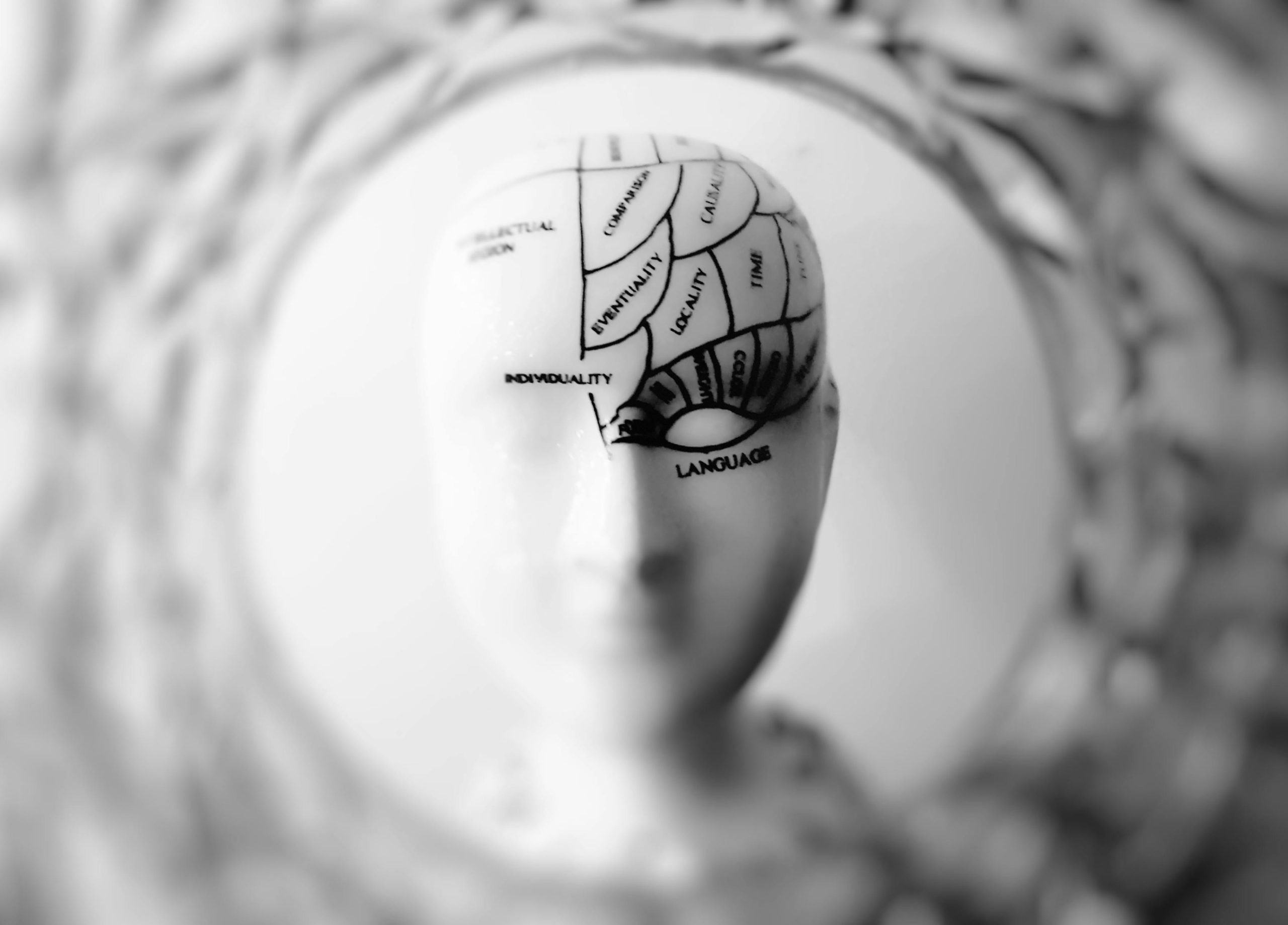
What Does Extroverted Feeling Actually Do?
Fe is a judging function, which means it’s used to make decisions and evaluate situations. What makes it “extroverted” is that it orients outward, toward the emotional atmosphere in the external world rather than toward internal personal values. Someone using Fe is constantly scanning: How is this person feeling? What does this group need right now? Am I maintaining connection or creating distance?
What’s your personality type?
Take our free 40-question assessment and get a detailed personality profile with dimension breakdowns, context analysis, and personalised insights.
Discover Your Type8-12 minutes · 40 questions · Free
A 2019 paper published through the American Psychological Association explored how individuals differ in emotional attunement and social sensitivity, finding that people with stronger external emotional processing tend to prioritize group cohesion over individual preference in decision-making. That’s Fe in a nutshell. The external emotional environment isn’t just noticed, it’s weighted heavily in every choice made.
Compare that to Introverted Feeling (Fi), which processes emotion internally. Fi users have a deep, personal value system that guides their choices, but they often don’t broadcast that emotional experience outwardly. Fe users do the opposite: they pick up on external emotional cues and respond to them in ways that are visible and socially calibrated.
Neither is better. They’re just wired differently. But understanding the difference matters enormously if you’re trying to understand yourself or the people you work with.
How Does Fe Show Up in Real Workplace Situations?
Early in my agency career, I watched a creative director named Marcus walk into a client presentation that was already going wrong. The room was tense. The client had received some bad news that morning, completely unrelated to our work, and the energy was flat and defensive. Most people in that room were so focused on their slides that they didn’t notice. Marcus noticed immediately.
He didn’t launch into the presentation. He paused, acknowledged that the morning had been rough, made a small joke that landed perfectly, and gave the room a moment to breathe before from here. The presentation went well. Not because the work was better than it had been twenty minutes earlier, but because Marcus had read the emotional environment and adjusted to it. That’s Fe at work.
In workplace settings, Fe tends to show up in several recognizable patterns:
- Sensing when a conversation has shifted emotionally, even when nothing explicit has been said
- Naturally adjusting tone, pace, and language based on who’s in the room
- Feeling genuine discomfort when there’s unresolved conflict in a group
- Taking responsibility for the emotional atmosphere, sometimes to the point of exhaustion
- Making decisions that prioritize group harmony, even when a different choice might be personally preferable
That last point is worth sitting with. Fe-dominant people sometimes struggle to identify what they personally want because they’re so attuned to what the group needs. It’s not that they don’t have preferences. It’s that Fe processes the external emotional landscape first, and personal preference can get buried under that.

Which Personality Types Lead with Fe?
Fe appears in eight of the sixteen Myers-Briggs types, but it plays a different role depending on where it sits in the function stack. The types who lead with Fe, meaning it’s their dominant function, are ENFJs and ESFJs. For them, Fe isn’t one tool among many. It’s the primary lens through which they process everything.
ENFJs tend to use Fe in combination with Introverted Intuition (Ni), which gives them an almost uncanny ability to read people’s long-term motivations and emotional trajectories. They often seem to know what someone needs before that person has articulated it themselves. ESFJs pair Fe with Introverted Sensing (Si), grounding their emotional attunement in concrete past experience. They remember how things felt last time and use that to calibrate their current response.
INFJs and ISFJs have Fe as their auxiliary function, meaning it’s secondary but still quite strong. These types often come across as deeply empathetic and socially attuned despite being introverted. Fe is what gives many introverted types their emotional warmth and social grace, even when they’re fundamentally oriented inward.
Then there are types like me, INTJs and ISTJs, where Fe is the inferior function. It’s present but underdeveloped. Under stress, inferior Fe can show up as emotional outbursts that feel out of character, sudden hypersensitivity to criticism, or an uncomfortable awareness of being disconnected from the people around you. I’ve experienced all three of those, usually during the worst moments of a difficult client relationship or a team conflict I didn’t know how to handle.
What Are the Real-World Examples of Fe in Conversation?
Fe in conversation looks different from what most people expect. It’s not always warm and effusive. Sometimes it’s quiet and precise. What it always is, though, is responsive to the emotional state of the other person.
Consider a few specific scenarios:
The reframe in a difficult moment. Someone shares bad news, and an Fe user instinctively says something that acknowledges the pain without minimizing it, then gently redirects toward what’s possible. This isn’t a technique they’ve learned. It happens naturally because they’re processing the other person’s emotional state in real time and responding to what they sense is needed.
The group check-in. A meeting starts to drag. An Fe user notices the energy dropping before anyone else does and either shifts the topic, introduces some lightness, or directly names what’s happening. “We’ve been at this for two hours. Let’s take five minutes.” That’s not just good facilitation. It’s Fe reading the room and acting on what it finds.
The social bridge. Two people at a gathering don’t know each other. An Fe user spots the awkwardness, moves in naturally, makes an introduction, and finds a connection point between the two. They’re not performing social grace. They’re genuinely uncomfortable with the disconnection and motivated to resolve it.
Psychology Today has written extensively about emotional intelligence and its connection to social attunement, noting that people who score high on interpersonal sensitivity tend to show stronger relationship outcomes across both personal and professional contexts. Fe, as a cognitive function, maps closely onto what researchers describe as interpersonal sensitivity.

How Does Fe Differ from Being Extroverted or People-Pleasing?
One of the most common misconceptions about Fe is that it’s synonymous with extroversion or with people-pleasing. Neither is accurate, and conflating them causes real confusion about what this function actually does.
Extroversion is about where you get your energy. Fe is about how you process emotion. An introverted person can have strong Fe and still need significant time alone to recharge. INFJs are a clear example: they’re some of the most emotionally attuned people you’ll meet, and they’re also deeply private and often exhausted by extended social interaction.
People-pleasing is a behavioral pattern, often rooted in anxiety or low self-worth. Fe is a cognitive function. Strong Fe can lead to people-pleasing behavior if it’s not balanced by other functions, but Fe itself isn’t pathological. It’s a legitimate and valuable way of processing the world.
The distinction matters because Fe users sometimes get labeled as “too emotional” or “conflict-avoidant” when what they’re actually doing is processing information that other types simply don’t register as clearly. The discomfort an Fe user feels in a tense room isn’t weakness. It’s data.
Research from the National Institutes of Health has explored how social cognition varies across individuals, with some people showing significantly stronger neural responses to social and emotional cues. What we call Fe in personality typology maps onto these documented differences in social processing. It’s not a character flaw or a personality quirk. It’s a measurable difference in how some people process the world.
What Happens When Fe Gets Overloaded?
Fe is a powerful function, but it has a cost. Processing the emotional environment constantly takes energy, and when that environment is chaotic, hostile, or emotionally heavy, Fe users can reach a point of genuine overload.
I watched this happen to one of the best account managers I ever employed. She had extraordinary Fe: clients loved her, her team trusted her completely, and she could defuse almost any conflict before it escalated. But she absorbed everything. Every client frustration, every team tension, every difficult conversation landed in her and stayed there. After about three years of carrying that weight without adequate recovery time, she burned out completely.
Fe overload can look like emotional exhaustion that doesn’t respond to normal rest, a sudden inability to care about other people’s feelings after caring deeply for so long, or a kind of emotional numbness that feels completely out of character. The Mayo Clinic describes emotional exhaustion as a state of feeling emotionally worn out and drained as a result of accumulated stress, and Fe users who don’t have strong boundaries around their emotional processing are particularly vulnerable to this.
The protective factor for Fe users isn’t caring less. It’s developing the internal structure to process what they take in without carrying it indefinitely. Strong Fe paired with healthy boundaries creates some of the most effective, emotionally intelligent people in any organization. Without those boundaries, it creates someone who gives everything until there’s nothing left.

How Can You Recognize Fe in Someone You Work With?
Learning to recognize Fe in colleagues changed how I led teams. Once I understood what this function looked like in practice, I stopped misreading the people who had it and started leveraging their strengths more intentionally.
Fe users in a workplace tend to share several observable characteristics. They’re often the first to notice when someone on the team is struggling, even before that person says anything. They’re skilled at managing up and across because they instinctively calibrate their communication to whoever they’re talking to. They often take on informal emotional labor, checking in on colleagues, smoothing over conflicts, making sure no one feels left out.
They also tend to find certain environments genuinely difficult. High-conflict workplaces are particularly draining for Fe users because they can’t easily filter out the emotional static. A team that communicates primarily through argument and debate will exhaust an Fe user far faster than it exhausts someone whose dominant function is Thinking.
Harvard Business Review has written about the competitive advantage of emotionally intelligent leaders, noting that teams led by people with high interpersonal sensitivity show stronger collaboration and lower turnover. Fe, when it’s understood and supported rather than dismissed as “being too sensitive,” is an organizational asset.
As a manager, recognizing Fe in my team members meant I could structure their roles to play to that strength. It meant I didn’t put them in situations that would systematically drain them without recovery time. And it meant I stopped interpreting their discomfort with conflict as a performance issue and started seeing it as meaningful information about team dynamics.
What’s the Relationship Between Fe and Leadership?
Fe and leadership have a complicated relationship, partly because our cultural model of leadership has historically favored Thinking functions over Feeling functions. The idea that good leaders are decisive, analytical, and emotionally detached has left a lot of Fe-dominant people convinced they’re not leadership material.
That’s a significant loss for organizations, because Fe brings something to leadership that Thinking functions simply don’t: the ability to maintain genuine connection with the people being led. Fe leaders don’t just manage performance. They manage the emotional health of their teams, often without anyone noticing that’s what they’re doing.
The American Psychological Association has published work on transformational leadership styles, finding that leaders who demonstrate genuine empathy and emotional attunement tend to produce higher levels of team engagement and psychological safety. Those are Fe-driven leadership behaviors, even if the research doesn’t use that specific language.
There are real challenges for Fe-dominant leaders, too. Making unpopular decisions is harder when you’re acutely aware of how those decisions will land emotionally. Holding firm on standards when someone is clearly struggling requires overriding a function that’s screaming at you to accommodate. These aren’t insurmountable challenges, but they’re real ones, and Fe-dominant leaders who don’t develop their Thinking functions alongside their natural strengths can find themselves avoiding necessary conflict at significant cost.
What I’ve observed across two decades of working with leaders of different types is that the most effective ones, regardless of their dominant function, have learned to access Fe strategically. They know when the room needs logic and when it needs warmth. They know when to push and when to hold space. Fe isn’t just a feeling function. At its best, it’s a precision instrument for human connection.

How Does Fe Interact with Introversion?
Fe and introversion create an interesting combination that confuses a lot of people, including the people who have it. An introverted person with strong Fe can seem extroverted in social situations because they’re so naturally attuned and responsive. Then they go home and need two days alone to recover, and the people who watched them work a room are completely baffled.
The confusion comes from conflating behavior with energy. Fe produces socially skilled behavior. Introversion describes where energy comes from and where it goes. An introverted Fe user can be genuinely warm, socially graceful, and deeply connected to the people around them, and still find sustained social interaction genuinely depleting.
For INFJs specifically, Fe as an auxiliary function creates a particular kind of quiet intensity. They’re not broadcasting their emotional attunement the way an ENFJ might. They’re processing it internally, filtering it through Ni, and responding with a kind of considered warmth that can feel almost prescient to the people on the receiving end. Many INFJs report that people they’ve just met tell them things they’ve never told anyone. That’s Fe doing its work, creating a quality of attention that makes people feel genuinely seen.
For introverts who score high on Fe-related traits, the challenge is often learning to honor both parts of their nature. The Fe pull toward connection and the introvert pull toward solitude aren’t in conflict. They’re complementary. But without understanding what’s actually happening, an introverted Fe user can feel perpetually torn between wanting to be with people and needing to be away from them.
If you’re exploring how cognitive functions connect to introvert strengths more broadly, our Personality Types hub covers the full landscape, from function stacks to type dynamics to how different types show up in real-world contexts.
What Does Developing Fe Look Like for Non-Fe Types?
Fe development looks different depending on where it sits in your function stack. For types like ENFJs and ESFJs, development means learning to use Fe with more discernment, knowing when to accommodate and when to hold firm, when to absorb the room’s emotion and when to set it aside.
For types where Fe is inferior, like INTJs and ISTJs, development means something more basic: learning to notice the emotional environment at all. My own Fe development has been a slow, sometimes uncomfortable process of recognizing that the emotional data in a room is as real and relevant as the logical data, even when I’d prefer to ignore it.
One specific shift that helped me was treating Fe like a skill to be practiced rather than a trait to be acquired. Instead of trying to become more emotionally expressive (which felt completely inauthentic), I focused on getting better at reading situations: What is this person actually feeling right now? What does this team need that they’re not saying directly? How is this conversation landing, separate from whether my logic is sound?
Those questions don’t come naturally to me. But asking them consistently, over years, has made me a better leader, a better collaborator, and honestly a better person. Fe development for non-Fe types isn’t about becoming someone you’re not. It’s about expanding your range so you can access more of what the situation actually requires.
Explore more on how personality types show up across work and relationships in our complete Personality Types hub.
About the Author
Keith Lacy is an introvert who’s learned to embrace his true self later in life. After 20 years in advertising and marketing leadership, including running agencies and managing Fortune 500 accounts, Keith now channels his experience into helping fellow introverts understand their strengths and build fulfilling careers. As an INTJ, he brings analytical depth and authentic perspective to every article, drawing from both professional expertise and personal growth.
Frequently Asked Questions
What is Extroverted Feeling (Fe) in simple terms?
Extroverted Feeling is a cognitive function that processes emotion by reading and responding to the external emotional environment. People with strong Fe naturally attune to how others are feeling, pick up on group dynamics, and adjust their behavior to maintain harmony and connection. It’s oriented outward, toward the emotional atmosphere around you, rather than inward toward personal values.
Which personality types have Fe as their dominant function?
ENFJs and ESFJs lead with Fe as their dominant function. INFJs and ISFJs have Fe as their auxiliary function, making it strong but secondary. ENTJs and ESTJs have Fe as their tertiary function, and INTJs and ISTJs have Fe as their inferior function, where it’s least developed and most likely to emerge under stress.
Is Fe the same as being emotionally sensitive or people-pleasing?
Fe is a cognitive function, not a behavioral pattern or a personality trait. While strong Fe can contribute to emotional sensitivity and a tendency to prioritize group harmony, it isn’t the same as people-pleasing, which is typically rooted in anxiety or low self-worth. Fe users are processing real emotional data. Their attunement to others is a form of perception, not a character flaw.
Can introverts have strong Fe?
Yes, absolutely. Fe describes how someone processes emotion, not how much social energy they have. INFJs, for example, are introverted but have Fe as a strong auxiliary function. They can be deeply attuned to others’ emotional states while still finding sustained social interaction draining. Introversion and strong Fe often coexist, creating people who are warm and perceptive in social situations but need significant solitude to recover.
How does Fe show up differently from Introverted Feeling (Fi)?
Fe orients outward, processing the emotional environment around you and responding to what the group needs. Fi orients inward, processing emotion through a personal value system that guides individual choices. Fe users tend to be visibly responsive to others’ emotional states. Fi users tend to have a rich inner emotional life that isn’t always externally visible. Both are legitimate ways of processing emotion, just pointed in different directions.