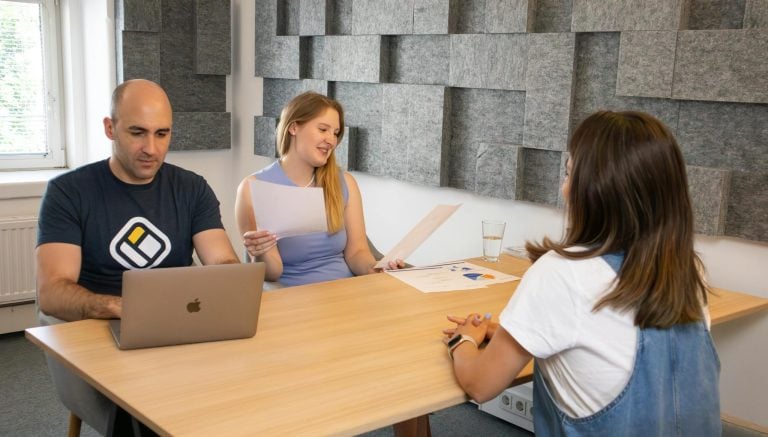

Fe under stress occurs when introverts with Extroverted Feeling in their cognitive stack absorb the emotional weight of everyone around them. Under pressure, this function amplifies, pulling in others’ moods, conflicts, and unspoken tension until the internal environment feels as chaotic as the external one. The result is emotional overload that masquerades as empathy but functions more like a short circuit.
Related reading: introverted-feeling-fi-stress-impact.
There’s a specific kind of exhaustion I remember from my agency years that had nothing to do with workload. The projects were manageable. The deadlines were tight but not impossible. What drained me was something I couldn’t name at the time: walking into a room and immediately feeling every undercurrent in it. A client who was quietly furious. A creative director who felt undermined. A junior copywriter convinced she was about to be fired. None of them said a word. I just knew, and knowing cost me something every single time.
It took me years of reflection, and eventually learning about cognitive functions, to understand what was actually happening. My Extroverted Feeling function, Fe in the Myers-Briggs framework, was working exactly as designed. What I didn’t understand was how dramatically it amplifies under stress, and what that amplification does to people who are already wired for internal processing.

If you’re an INFJ, ENFJ, ESFJ, or ISFJ, or anyone else who leads with or relies heavily on Fe, this article is about the experience you’ve probably had but struggled to articulate. You’re not too sensitive. Your wiring isn’t broken. What’s happening has a name, and understanding it changes everything about how you manage it.
Our Personality Types hub explores how different cognitive functions shape the way introverts experience the world. Fe under stress sits at the intersection of emotional intelligence and introvert burnout, and it deserves its own honest examination.
What Does Extroverted Feeling Actually Do?
Before stress enters the picture, it helps to understand what Fe is doing on a normal day. Extroverted Feeling is a cognitive function oriented toward the emotional climate of the external world. People who use it prominently are wired to read group harmony, sense interpersonal tension, and respond to the emotional needs of others almost instinctively.
What’s your personality type?
Take our free 40-question assessment and get a detailed personality profile with dimension breakdowns, context analysis, and personalised insights.
Discover Your Type8-12 minutes · 40 questions · Free
Unlike Introverted Feeling, which processes emotion internally and asks “what do I feel about this?”, Fe asks “what does this situation need emotionally?” It’s outward-facing, attuned to others, and deeply motivated by connection and relational balance. A 2021 review published by the American Psychological Association found that individuals high in emotional sensitivity and interpersonal attunement report stronger physiological responses to social conflict, even when they aren’t directly involved. That pattern maps closely onto what Fe-dominant people describe as their lived experience.
In practice, Fe shows up as the ability to walk into a meeting and immediately sense who’s uncomfortable. It’s the instinct to smooth over a tense exchange before it escalates. It’s the pull toward making sure everyone in the room feels seen and included. These are genuine strengths. In leadership, they build trust. In relationships, they create safety. In creative work, they produce output that resonates emotionally with audiences.
At my agencies, I watched Fe-leaning team members do things I genuinely couldn’t do. They could feel a client presentation going sideways before any data confirmed it, and they’d adjust in real time. They knew when a team member needed encouragement versus space. Their emotional radar was extraordinary. What they struggled with, especially under pressure, was keeping that radar from overwhelming their own internal signal.
Why Does Fe Amplify Under Stress?
Stress doesn’t make Fe disappear. It makes Fe louder. This is where things get complicated for introverts who rely on this function, because the amplification happens at exactly the moment when they most need internal clarity.
When we’re under pressure, the cognitive functions we rely on most tend to go into overdrive as a kind of compensatory response. For Fe users, this means the emotional scanning that normally runs in the background gets pushed to the foreground. Suddenly, every interpersonal signal feels urgent. Every unresolved tension in the room demands attention. Every person who seems unhappy feels like a problem that needs solving right now.
The Mayo Clinic’s research on stress and emotional regulation confirms that under high-stress conditions, the brain’s threat-detection systems become hypersensitive, making it harder to filter incoming emotional information. For someone already predisposed to absorbing the emotional atmosphere of a room, this creates a compounding effect. The filter gets thinner at exactly the wrong time.
I saw this pattern clearly during a particularly brutal pitch season at one of my agencies. We had three major pitches in six weeks, which meant six weeks of high-stakes pressure for the entire team. I noticed that my most emotionally attuned people, the ones I relied on for client relationship work, were the ones who hit the wall hardest. Not because they weren’t talented. Because they were absorbing not just their own stress but everyone else’s simultaneously. By week four, one of my best account managers told me she felt like she was “carrying the whole building.” That’s not a metaphor. That’s Fe under sustained stress, described in plain language.
How Does Fe Stress Manifest Differently in Introverts?
Fe stress looks different depending on where the function sits in your cognitive stack. For introverts, the experience tends to be more internal and harder to read from the outside, which means it often goes unaddressed longer than it should.
An INFJ or ISFJ under Fe stress might appear calm on the surface while internally managing what feels like a constant emotional broadcast from everyone around them. The processing happens quietly, invisibly, and the exhaustion accumulates without obvious external signals. By the time the depletion becomes visible, it’s usually already severe.
Some of the most consistent patterns I’ve observed and experienced personally include:
- Difficulty separating your own emotional state from the mood of the room or the people around you
- Feeling responsible for resolving tensions you didn’t create
- Compulsive checking on whether people are okay, even when you’re already depleted
- A growing sense of resentment when your emotional labor goes unrecognized
- Physical symptoms including headaches, fatigue, and tension that appear after prolonged social interaction
- Difficulty accessing your own preferences or opinions because others’ needs feel more pressing
That last one is particularly worth noting. When Fe is overloaded, the introvert’s internal voice can get drowned out. You stop knowing what you actually think or feel because you’ve been so occupied with what everyone else thinks and feels. The National Institutes of Health has published work on emotional contagion, the phenomenon of automatically absorbing others’ emotional states, noting that high empathy individuals show measurably stronger physiological mirroring of others’ stress responses. Fe amplifies this natural human tendency significantly.
What Triggers Fe Overload in Professional Settings?
Not all stress environments are equal for Fe users. Some situations reliably push Fe into overdrive faster than others, and recognizing them is the first step toward managing the response.
Unresolved interpersonal conflict is probably the most potent trigger. Fe is wired to seek resolution and harmony, so sustained conflict without resolution creates a kind of cognitive loop. The function keeps returning to the problem, scanning for a way to fix it, even when fixing it isn’t within your control or your role. I’ve sat through board meetings where two executives were in open conflict, and while everyone else in the room was focused on the agenda, I was spending significant mental energy tracking the emotional temperature between those two people and preparing for whatever fallout might come. That’s not a choice. It’s Fe doing what Fe does.

Environments with chronic emotional unpredictability are another major trigger. When you can’t predict the emotional climate, Fe stays on high alert continuously. Working for a volatile leader, managing a client relationship defined by mood swings, or operating in a team with unspoken resentments all create this kind of sustained activation. The function never gets to stand down.
Situations requiring you to deliver difficult feedback or make decisions that will disappoint people also activate Fe stress in distinctive ways. The function is oriented toward harmony, so actions that will disrupt it, even necessary ones, create internal friction. An article in Harvard Business Review on emotionally intelligent leadership noted that leaders high in empathy often struggle most with delivering negative assessments precisely because their emotional attunement makes the other person’s pain feel immediate and real. Fe users know this experience intimately.
Finally, environments that demand constant performance of positivity, the kind of forced enthusiasm common in certain corporate cultures, are particularly draining. Fe can read authenticity with remarkable precision. Spending extended time in environments where emotional expression is performative rather than genuine creates a specific kind of fatigue, the exhaustion of processing a constant mismatch between what people are expressing and what they’re actually feeling.
What’s the Difference Between Healthy Fe and Overloaded Fe?
This distinction matters enormously, because the behaviors look similar from the outside. Both healthy Fe and overloaded Fe involve attending to others’ emotions. The difference lies in what’s driving the attention and what it costs.
Healthy Fe operates from a place of genuine interest and capacity. You notice others’ emotional states, you respond when it’s appropriate and useful, and you can set the awareness aside when you need to focus elsewhere. There’s a quality of choice to it, even if the noticing itself is automatic. You feel energized by meaningful connection rather than depleted by it.
Overloaded Fe operates from a place of compulsion and depletion. The emotional scanning feels mandatory rather than chosen. You can’t turn it off even when you desperately need to. Every interpersonal signal feels like a demand rather than information. The connection that once felt meaningful starts to feel like a burden you can’t put down.
Psychology Today has written extensively on the distinction between empathy and emotional enmeshment, noting that the latter involves losing the boundary between your emotional experience and someone else’s. That’s the clearest description I’ve found of what Fe overload actually feels like from the inside. You stop being someone who understands others’ emotions and start being someone who experiences them as your own, without any clear sense of where you end and they begin.
One of the most clarifying moments in my own path with this came during a particularly difficult client relationship. The client was chronically dissatisfied, and I had internalized their dissatisfaction so completely that I genuinely couldn’t tell anymore whether my own assessment of our work was accurate or just a reflection of their mood. I had lost my own perspective inside their emotional reality. That’s overloaded Fe, and it’s a genuinely disorienting experience.

How Can Fe-Dominant Introverts Recover From Stress Overload?
Recovery from Fe overload isn’t just about rest, though rest matters. It’s about deliberately creating conditions that allow the function to stand down and the internal voice to reassert itself. This requires understanding what actually restores Fe users, which is often counterintuitive.
Solitude is essential, but not just any solitude. What Fe-overloaded introverts need is solitude that isn’t spent mentally replaying interpersonal dynamics. The mind wants to keep processing the emotional data it absorbed, turning over conversations, analyzing reactions, rehearsing responses. That kind of mental activity doesn’t restore the system. It keeps it running. Physical activity, creative work that demands focused attention, or time in nature can interrupt the loop and give the function genuine rest.
Reconnecting with your own preferences and opinions is also a meaningful part of recovery. When Fe has been overloaded, the internal signal gets quiet. Deliberately asking yourself what you actually think, what you actually want, what you actually feel about something, and then sitting with those answers without immediately filtering them through others’ likely reactions, helps recalibrate the balance between external attunement and internal grounding.
Boundaries around emotional labor are not optional for Fe users, they’re structural necessities. The World Health Organization’s framework on workplace mental health emphasizes that sustainable performance requires clear boundaries between professional responsibilities and personal emotional resources. For Fe-dominant people, this means being deliberate about which emotional situations are actually yours to manage and which ones you’ve taken on by default of your wiring.
At my agencies, I eventually learned to build recovery time into my schedule after high-stakes client interactions, not as a luxury but as a performance requirement. A thirty-minute block of quiet after an emotionally charged meeting wasn’t indulgence. It was the difference between being functional for the rest of the day or spending the afternoon managing the residue of someone else’s emotional state.
How Do You Protect Fe Without Suppressing It?
This is the question that took me the longest to work through, because the instinct when something causes pain is to shut it down. Fe causes pain under stress. So the obvious response seems like it should be to stop using it, to become less attuned, less responsive, more detached. That approach doesn’t work, and it extracts its own costs.
Fe is a genuine strength. The capacity to read emotional dynamics, to build trust through attunement, to create environments where people feel seen, these are leadership advantages that can’t be replicated by people who don’t have them. Suppressing Fe doesn’t protect you from its costs. It just means you lose the benefits while continuing to absorb the emotional environment around you, now without any of the processing capacity that makes absorption useful.
What actually works is building awareness of when Fe is operating in service of genuine connection versus when it’s running on autopilot in response to stress. The former is worth cultivating. The latter is worth interrupting.
Practical awareness looks like noticing when you’ve taken responsibility for an emotional situation that isn’t yours to manage. It looks like recognizing the physical signals, the tension, the fatigue, the mental noise, that indicate Fe is overloaded rather than engaged. It looks like building relationships where you can be honest about your own emotional state rather than always managing everyone else’s.
The American Psychological Association’s resources on emotional regulation emphasize that effective management of emotional responses requires metacognitive awareness, the ability to observe your own emotional processes rather than simply being inside them. For Fe users, developing that observer perspective is the difference between being at the mercy of the function and being able to work with it intentionally.

One reframe that genuinely helped me: Fe is information, not instruction. The emotional data I absorb from a room tells me something real and useful. What I do with that information is a choice. That distinction, between receiving and being obligated to act, took years to internalize. Once it clicked, the function felt less like a burden I carried and more like a tool I could choose to use.
What Does Fe Stress Teach Us About Introvert Emotional Intelligence?
There’s a broader point here that I think matters for how introverts understand their own emotional lives. The narrative around introverts and emotional intelligence has often been reductive, either positioning introverts as emotionally limited because they don’t express emotion outwardly, or treating emotional sensitivity as an exclusively extroverted trait.
Fe stress tells a different story. It reveals that certain introverts are processing enormous amounts of emotional information continuously, often more than the people around them realize. The processing is internal and quiet, which makes it invisible. But invisible doesn’t mean absent.
What Fe-dominant introverts bring to teams, relationships, and organizations is a form of emotional intelligence that operates through depth rather than volume. It’s not expressed through constant verbal processing of feelings. It’s expressed through the quality of attention, the accuracy of interpersonal reads, and the ability to create environments where people feel genuinely understood.
Managing Fe under stress isn’t about becoming less emotionally intelligent. It’s about developing the self-awareness and structural support to sustain that intelligence over time without burning out the system that generates it. That’s not a limitation. That’s just honest stewardship of a genuine strength.
Explore more resources on personality types and introvert strengths in our complete Personality Types Hub at Ordinary Introvert.
About the Author
Keith Lacy is an introvert who’s learned to embrace his true self later in life. After 20 years in advertising and marketing leadership, including running agencies and managing Fortune 500 accounts, Keith now channels his experience into helping fellow introverts understand their strengths and build fulfilling careers. As an INTJ, he brings analytical depth and authentic perspective to every article, drawing from both professional expertise and personal growth.
Frequently Asked Questions
What is Fe under stress and who does it affect?
Fe under stress refers to the amplified, overloaded state of the Extroverted Feeling cognitive function when a person is under sustained pressure. It primarily affects people with Fe high in their cognitive stack, including INFJs, ISFJs, ENFJs, and ESFJs. Under stress, Fe intensifies its emotional scanning, causing the person to absorb others’ moods, conflicts, and unspoken tensions at a level that becomes overwhelming rather than useful.
You might also find extroverted-intuition-ne-stress-impact helpful here.
Why do introverts with Fe feel responsible for everyone else’s emotions?
Fe is oriented toward group harmony and relational balance. It automatically reads the emotional needs of others and generates an impulse to respond to those needs. For introverts with Fe, this happens internally and quietly, which means the sense of responsibility for others’ emotional states accumulates without being visible or processed out loud. Under stress, this impulse intensifies, making it feel like every unresolved tension in the environment is something you’re obligated to fix.
How is Fe overload different from ordinary empathy?
Ordinary empathy involves understanding and sharing another person’s emotional experience while maintaining a clear sense of your own separate perspective. Fe overload occurs when that boundary dissolves and you begin experiencing others’ emotions as your own, without being able to distinguish your internal state from the emotional atmosphere around you. The difference is the loss of the observer perspective, the ability to notice others’ feelings without being inside them.
What are the most effective ways to recover from Fe stress overload?
Recovery requires both rest and deliberate reconnection with your own internal voice. Solitude that interrupts mental replay of interpersonal dynamics is more restorative than passive rest alone. Physical activity, focused creative work, and time in nature can break the loop of continued emotional processing. Deliberately asking yourself what you actually think and feel, separate from others’ reactions, helps recalibrate the balance between external attunement and internal grounding. Building structured recovery time after emotionally demanding interactions is a practical necessity, not an indulgence.
Can Fe be a professional strength even when it causes stress?
Absolutely, and this distinction is important. Fe’s capacity for emotional attunement, trust-building, and reading interpersonal dynamics is a genuine leadership and relational advantage. The stress comes not from the function itself but from operating without the awareness, boundaries, and recovery structures needed to sustain it. Developing metacognitive awareness of when Fe is engaged productively versus running on stress-driven autopilot allows you to preserve the function’s strengths while managing its costs. Fe is information, not instruction, and that reframe changes how the function can be used intentionally.