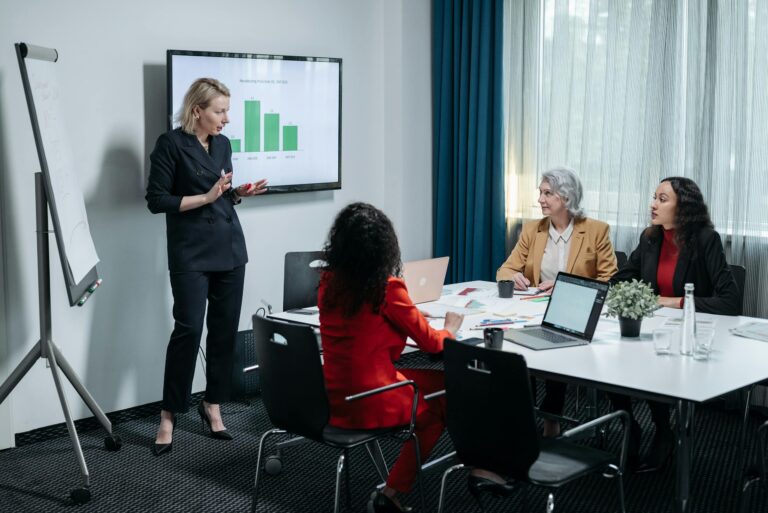

Extrovert behaviors that annoy introverts most include interrupting during focused work, forcing small talk, calling without texting first, demanding immediate responses, and filling silence with unnecessary noise. These behaviors aren’t malicious, but they consistently drain introvert energy and disrupt the deep focus that introverts need to do their best work.
Everyone assumed I thrived on packed conference rooms. They were wrong.
Twenty years running advertising agencies taught me a lot about performance. Not the performance of campaigns or creative strategy, though there was plenty of that. The performance of pretending I was someone else entirely. I watched extroverted colleagues command rooms, fire off ideas in rapid succession, and seem energized by the very chaos that left me exhausted by noon. I studied their behavior the way you study a foreign language, convinced I needed to become fluent in it to succeed.
What I didn’t understand then was that some of the behaviors I was trying to mimic were the same ones quietly draining me every single day. Not because extroverts are inconsiderate people. Most of them genuinely aren’t. But because the way many extroverts naturally operate conflicts in very specific, very real ways with how introverts process the world.
A 2021 study published through the American Psychological Association found that introverts and extroverts show measurably different patterns of cognitive arousal, with introverts reaching optimal performance at lower stimulation thresholds. That’s not a weakness. That’s wiring. And when someone else’s wiring keeps overriding yours, friction is inevitable.
This article is about naming that friction honestly. Not to blame extroverts, but to help introverts feel less alone in their frustration and more equipped to handle it.

Why Do Certain Extrovert Behaviors Bother Introverts So Much?
Before getting into the specific behaviors, it helps to understand why the irritation runs so deep. Many introverts spend years assuming they’re simply too sensitive, too rigid, or not adaptable enough. That framing does real damage.
What’s your personality type?
Take our free 40-question assessment and get a detailed personality profile with dimension breakdowns, context analysis, and personalised insights.
Discover Your Type8-12 minutes · 40 questions · Free
The truth is more grounded in neuroscience than personality preference. based on available evidence from the National Institutes of Health, introverted individuals show greater activity in the prefrontal cortex, the area associated with planning, reflection, and internal processing. Extroverts tend toward higher dopamine sensitivity in reward-seeking pathways, which is why social stimulation feels energizing to them and depleting to us.
When an extrovert interrupts a meeting to brainstorm out loud, they’re following their natural cognitive rhythm. When that interruption pulls an introvert out of a carefully constructed line of thinking, it’s not a minor inconvenience. It can take twenty minutes or more to return to that depth of focus. Multiply that across a workday and you start to understand why so many introverts come home from the office feeling hollowed out.
I managed a team of fourteen people at my agency in the mid-2000s, and I had two account directors who were high-energy extroverts. Brilliant, creative, genuinely wonderful people. They also had a habit of stopping by my office every forty minutes to “just think out loud for a second.” Each visit lasted about three minutes. The cumulative effect was that I rarely finished a complete thought between 9 AM and 5 PM. I started coming in an hour early just to have quiet. That shouldn’t have been necessary, but I didn’t yet have the language to explain why the interruptions cost me so much.
Language matters. Naming the specific behaviors that create friction is the first step toward addressing them without resentment.
Is Constant Small Talk Really That Draining for Introverts?
Yes. And I say that without exaggeration or apology.
Small talk isn’t inherently meaningless. I’ve had genuinely warm exchanges about weekend plans or a colleague’s kid’s soccer tournament. What drains introverts isn’t the content of small talk so much as the obligation of it, the expectation that you should be available for low-stakes verbal exchange at any moment, regardless of what you were just doing.
Extroverts often use small talk as a social warm-up, a way of connecting before getting to the real conversation. For many introverts, it functions differently. It requires a mental context switch that takes real effort. You’re essentially being asked to shift from whatever internal mode you were in, focused work, quiet reflection, a complex problem you were turning over in your mind, and perform social availability on demand.
Psychology Today has written extensively about how introverts tend to prefer depth over breadth in conversation, finding more satisfaction in fewer, more meaningful exchanges than in a high volume of surface-level interactions. That preference isn’t snobbery. It’s how introverts build genuine connection.
The specific behavior that bothers most introverts isn’t someone saying good morning. It’s the extrovert who follows you to the coffee machine, then to the printer, then back to your desk, filling every moment with chatter that requires a response. By the time you sit down again, you’ve spent fifteen minutes in a conversation that felt entirely one-sided in terms of energy exchange.
At one agency I ran, we had an open floor plan. I know. I know. The extroverts loved it. The introverts on my team quietly suffered. One of my best strategists, an exceptionally gifted thinker, eventually came to me and said she was considering leaving because she couldn’t think. Not because the work was wrong, but because the environment never gave her silence. That conversation changed how I approached office design and team culture entirely.

Why Do Phone Calls Without Warning Feel Like an Ambush?
Few things illustrate the introvert-extrovert divide more clearly than attitudes toward phone calls.
Extroverts often prefer calling because it’s faster, more dynamic, and allows for real-time back-and-forth. From their perspective, it’s efficient and warm. From an introvert’s perspective, an unexpected call is a demand for immediate, unrehearsed social performance with no preparation time whatsoever.
Introverts tend to process before speaking. We consider what we want to say, how we want to frame it, what the other person might respond with. A phone call collapses that processing window to zero. You have to be articulate, responsive, and socially present the moment you pick up, with no time to gather your thoughts.
Text first. That’s all most introverts are asking. A simple “hey, do you have a few minutes to talk?” gives us the chance to finish what we’re doing, shift mental gears, and show up to the conversation as our actual selves rather than a flustered, half-present version scrambling to catch up.
I had a client in the Fortune 500 space, a VP of Marketing at a major consumer goods brand, who called me without warning at least twice a day. He was a wonderful client and a genuinely good person. He also had no idea that every unannounced call cost me about thirty minutes of productive thinking time on either side of it. When I finally explained my preference for a quick text or email first, he was genuinely surprised. He’d never considered that his communication style had a cost for the people on the receiving end.
Does Being Talked Over in Meetings Really Affect Introvert Performance?
Significantly. And the research supports this.
A 2018 study cited by Harvard Business Review found that introverts are systematically underrepresented in group discussions not because they lack ideas, but because the structure of most meetings rewards whoever speaks first and loudest. Extroverts, who tend to think out loud and feel energized by group dynamics, naturally dominate these environments.
The specific behavior that stings isn’t just being talked over once. It’s the pattern. You wait for a natural pause to share a thought you’ve been developing for ten minutes. An extrovert fills that pause before you can open your mouth. You try again. Same result. Eventually, you stop trying. And the meeting ends with your best ideas unspoken.
What makes this particularly frustrating is that the ideas introverts bring to meetings are often more developed than what gets said in the moment. We’ve been thinking about the problem quietly, considering angles, anticipating objections. That depth rarely gets airtime in a meeting culture that rewards speed over substance.
Early in my career, before I understood any of this, I assumed I just wasn’t assertive enough. I spent years trying to become faster, louder, more willing to interrupt. It didn’t work, and it made me miserable. What actually worked was restructuring how my teams ran meetings: sending agendas in advance, creating space for written input before and after discussions, and explicitly inviting quieter voices. The quality of ideas that surfaced was noticeably better.

What About the Pressure to Be More Social or “Come Out of Your Shell”?
This one cuts deeper than most people realize.
Being told to come out of your shell implies that the shell is a problem. That who you are in your natural state is somehow incomplete or deficient. That if you just tried harder, socialized more, pushed through the discomfort, you’d arrive at a better version of yourself.
It’s exhausting to hear. And it’s wrong.
Introversion isn’t a developmental stage you graduate from. According to Mayo Clinic’s resources on personality and mental health, introversion is a stable personality trait, not a symptom of anxiety, depression, or social difficulty. Introverts who appear reserved in social settings aren’t struggling. They’re often simply conserving energy for what matters to them.
The extrovert who cheerfully encourages an introvert to “loosen up” or “join the fun” usually means well. But the effect is to communicate that the introvert’s natural way of being is wrong. Over time, that message accumulates. Many introverts spend years believing they’re broken, awkward, or failing at some basic human requirement.
I believed that for most of my thirties. I ran agencies, managed large teams, presented to boardrooms, and still went home most nights convinced I was doing it all wrong because I didn’t feel energized by any of it the way my extroverted peers seemed to. It wasn’t until my mid-forties that I found language for what I actually was, and started treating my introversion as an asset rather than a liability to manage.
The pressure to perform extroversion doesn’t just annoy introverts. It can genuinely harm them. A 2019 study in the Journal of Research in Personality found that introverts who regularly suppress their natural tendencies to appear more extroverted report higher levels of stress and lower life satisfaction over time.
Why Is Oversharing and Loud Personal Broadcasting So Grating?
Introverts tend to be selective about what they share and with whom. Personal information feels significant. It’s offered carefully, in contexts of genuine trust. So when an extrovert broadcasts personal details loudly in shared spaces, or shares information about others without apparent consideration, it can feel like a genuine violation of something introverts hold dear.
This isn’t about being judgmental of extroverts who process out loud. It’s about the mismatch in what feels appropriate. An extrovert might share something vulnerable in a group setting because doing so feels connecting and natural. An introvert in the same group might feel uncomfortable on the sharer’s behalf, or anxious about being expected to reciprocate with their own disclosure.
Volume matters too. Introverts are often acutely sensitive to auditory stimulation. A loud phone conversation in a shared space, a colleague who narrates their entire workday at full volume, a group lunch where everyone talks simultaneously at maximum energy: these aren’t minor inconveniences. They’re genuinely disruptive to how introverts concentrate and recover.
The American Psychological Association has documented that sensory sensitivity often correlates with introversion, with many introverts showing heightened responses to environmental stimulation. This means that what registers as normal background noise to an extrovert can feel cognitively overwhelming to the introvert sitting three feet away.

How Can Introverts Handle These Behaviors Without Damaging Relationships?
This is where the conversation gets practical. Naming what’s frustrating is useful. Knowing what to do about it is better.
The most effective approach I’ve found, both personally and in watching hundreds of introverts find their footing in extrovert-dominated workplaces, is to lead with explanation rather than reaction. Most extroverts genuinely don’t know that their behavior has a cost. They’re not withholding consideration. They simply don’t experience the world the way you do, and no one has told them.
Saying “I do my best thinking when I have uninterrupted stretches of time, so I’m going to close my door from 9 to 11 each morning” is more effective than silently resenting the interruptions. Saying “I prefer to get a text before a call so I can wrap up what I’m working on” is more effective than dreading every ring of your phone.
Setting boundaries from a place of self-knowledge rather than self-defense changes the dynamic. You’re not asking the extrovert to stop being who they are. You’re explaining who you are and what you need to do good work. Most reasonable people, extroverted or otherwise, can respect that when it’s framed clearly.
In meetings, advocate for structural changes rather than personal accommodations. Pre-meeting agendas. Written input options. A designated round-robin for quieter voices. These changes benefit everyone, not just introverts, and they’re easier to implement than asking one person to talk less.
And give yourself permission to protect your energy without guilt. Leaving a party early, skipping the optional happy hour, taking lunch alone: these aren’t antisocial behaviors. They’re maintenance. The same way an athlete rests between training sessions, introverts need quiet between social demands. That’s not a flaw in your character. That’s how you sustain yourself.
What Extroverts Actually Get Right (And What Introverts Can Learn From Them)
This article would be incomplete without acknowledging something important: extroverts bring genuine strengths that introverts can admire and even draw from.
The best extroverts I’ve worked with over two decades in advertising were magnetic connectors. They built relationships quickly, moved through conflict with ease, and kept energy alive in rooms that might otherwise go flat. Those are real skills. They served our clients and our teams in ways my quiet strengths alone couldn’t.
What I’ve come to appreciate is that the most effective professional environments aren’t ones where extroverts adapt to introvert preferences or vice versa. They’re ones where both personality types understand each other well enough to create conditions where everyone can contribute their best.
Extroverts can learn to text before calling, to pause in meetings, to respect closed doors. Introverts can learn to speak up before they’ve fully formed every thought, to tolerate some ambient social noise, to communicate their needs directly rather than hoping others will intuit them.
Neither side has to abandon who they are. Both sides benefit from understanding what the other actually needs.
I spent too many years trying to out-extrovert the extroverts in my life. What I actually needed was to become fluent in my own introversion, to understand it well enough to explain it, protect it, and yes, occasionally flex it when the situation called for it. That’s a very different thing from performing a personality that was never mine.

Explore more insights about personality, energy, and how introverts can build lives that actually fit them in our complete Introvert Strengths hub.
About the Author
Keith Lacy is an introvert who’s learned to embrace his true self later in life. After 20 years in advertising and marketing leadership, including running agencies and managing Fortune 500 accounts, Keith now channels his experience into helping fellow introverts understand their strengths and build fulfilling careers. As an INTJ, he brings analytical depth and authentic perspective to every article, drawing from both professional expertise and personal growth.
Frequently Asked Questions
Are introverts just being too sensitive when extrovert behaviors bother them?
No. The friction introverts experience around certain extrovert behaviors has a neurological basis. Introverts have lower optimal arousal thresholds, meaning they reach cognitive overload faster in high-stimulation environments. What feels energizing to an extrovert can genuinely overwhelm an introvert’s processing capacity. Sensitivity in this context isn’t a character flaw. It’s a measurable difference in how the nervous system responds to stimulation.
Why do introverts hate unexpected phone calls so much?
Introverts typically process information internally before responding, which means they need preparation time to show up well in conversations. An unexpected call removes that preparation window entirely, demanding immediate, unrehearsed social performance. It’s not that introverts dislike talking. They dislike being ambushed into it. A quick text beforehand gives them the chance to transition thoughtfully rather than scramble.
Is it normal for introverts to feel exhausted after social interactions that extroverts find energizing?
Completely normal, and well-documented in personality research. Extroverts gain energy from social interaction through dopamine responses in reward-seeking neural pathways. Introverts expend energy in those same situations because the stimulation exceeds their optimal arousal threshold. Post-social fatigue in introverts isn’t a sign of social anxiety or dysfunction. It’s a predictable outcome of how introverted nervous systems process interpersonal engagement.
How should introverts communicate their needs to extroverted colleagues without seeming difficult?
Frame needs in terms of work quality rather than personal preference. Saying “I do my best thinking in uninterrupted blocks, so I block my mornings for deep work” is easier for colleagues to respect than “I find you distracting.” Be direct and specific rather than vague or apologetic. Most extroverts respond well when they understand the professional rationale. They’re not trying to make your work harder. They simply don’t experience the same cost from the behaviors that drain you.
Can introverts and extroverts actually work well together?
Yes, and some of the most effective professional partnerships are introvert-extrovert pairings. Extroverts bring relational energy, rapid ideation, and comfort with ambiguity. Introverts bring depth of analysis, careful listening, and considered judgment. When both personality types understand each other’s working styles and communicate their needs clearly, the combination produces stronger outcomes than either type working in isolation. The friction comes from misunderstanding, not from incompatibility.