

ESTJ mid-life integration, roughly between ages 30 and 50, is the process of developing the inferior function, Introverted Feeling (Fi), which allows ESTJs to access deeper emotional awareness, personal values, and internal reflection. Without this development, ESTJs often hit a wall in their 40s, finding that efficiency and control no longer feel sufficient.
Something shifts when you spend your 30s and 40s watching the most capable, driven people you know quietly come undone. Not from failure, but from success. They built everything they set out to build, and then stood in the middle of it wondering why it felt hollow. I saw this pattern repeatedly in my years running advertising agencies, and it taught me more about personality development than any framework ever could.
ESTJs are built for execution. They lead with Extroverted Thinking, anchored by Introverted Sensing, which means they are extraordinarily good at building systems, holding people accountable, and delivering results. But the same cognitive wiring that makes them exceptional in their 20s can become a source of real friction in their 30s and 40s, when life starts asking questions that spreadsheets cannot answer.
Mid-life for an ESTJ is not a crisis. It is an integration. And understanding what that integration actually looks like, what it costs, and what it offers, can make the difference between a decade of quiet suffering and one of genuine growth.
If you haven’t yet confirmed your type, our free MBTI personality test is a good place to start before going deeper into what follows.
This article is part of our MBTI Extroverted Sentinels (ESTJ and ESFJ) hub, which explores the full emotional and psychological range of these two types, including their strengths, blind spots, and the specific developmental pressures that show up across different life stages.

What Is Inferior Integration, and Why Does It Hit ESTJs So Hard Between 30 and 50?
In Jungian typology, every personality type has a dominant function and an inferior function. The inferior function sits at the bottom of the cognitive stack, largely unconscious in early adulthood, and tends to surface under stress or during significant life transitions. For ESTJs, the inferior function is Introverted Feeling, or Fi.
What’s your personality type?
Take our free 40-question assessment and get a detailed personality profile with dimension breakdowns, context analysis, and personalised insights.
Discover Your Type8-12 minutes · 40 questions · Free
Fi is the function of personal values, emotional authenticity, and internal moral compass. It asks questions like: What do I actually want? What matters to me beyond what I can measure? Am I living in alignment with who I really am?
For a type that leads with Extroverted Thinking, those questions can feel almost foreign. ESTJs are oriented outward. They evaluate the world through logic, efficiency, and objective criteria. Feelings, especially their own, tend to get filed under “irrelevant to the task at hand.” That works well enough in your 20s, when career momentum and external achievement provide plenty of forward motion. But somewhere in the 30-to-50 window, the momentum starts to slow, and the internal questions get louder.
A 2023 analysis published through the American Psychological Association found that mid-life adults who reported the highest levels of psychological wellbeing were those who had developed the capacity to reflect on personal values alongside external achievement, a pattern that maps closely onto what Jungian typology describes as inferior function integration.
What makes this particularly hard for ESTJs is that Fi development doesn’t look like progress. It looks like doubt. It looks like sitting with discomfort instead of solving it. It looks like slowing down in a personality type that is fundamentally built for speed and output.
What Does ESTJ Mid-Life Actually Look Like From the Inside?
I want to be careful here, because I’m an INTJ, not an ESTJ. My inferior function is Extroverted Feeling, which creates its own particular brand of mid-life friction. But the pattern I observed in the ESTJs I worked with closely over two decades in advertising had a recognizable shape.
There was a creative director I’ll call Marcus. Brilliant executor. The kind of person who could take a chaotic client brief and turn it into a structured campaign in 48 hours. His teams respected him, sometimes feared him, and almost always delivered for him. By his early 40s, he had everything he’d aimed for. Senior title, strong salary, genuine influence over the agency’s direction.
And he was miserable in a way he couldn’t name.
What I noticed, watching him over several years, was that the cracks didn’t appear in his work. They appeared in his relationships. He became increasingly impatient with anyone who expressed uncertainty. He pushed harder on accountability when what his team needed was space. He read emotional feedback as weakness, both in others and in himself. When his marriage started showing strain, his response was to work more, as though the problem were simply a matter of insufficient output.
This is what undeveloped Fi looks like in an ESTJ during mid-life. Not dramatic collapse, but a slow accumulation of relational and existential friction that the dominant function cannot resolve, because the dominant function was never designed to handle it.
The Mayo Clinic has noted that emotional suppression in mid-life adults is associated with elevated stress responses and reduced relationship satisfaction, outcomes that are particularly relevant for types who default to cognitive control over emotional processing.

Why Does the ESTJ’s Need for Control Intensify Before It Softens?
Before integration happens, things often get worse. This is not unique to ESTJs, but it is particularly visible in a type whose primary coping mechanism is control. When the inferior function starts pressing upward, the ego’s first response is to double down on what it knows.
For ESTJs, that means more rules, more structure, more accountability, and more frustration when those tools fail to produce the emotional outcomes they’re suddenly being asked to deliver.
I watched this dynamic play out in client relationships as well. One of our long-term Fortune 500 clients had an ESTJ marketing VP who was extraordinarily effective at managing campaigns. But as the industry shifted toward more emotionally driven brand storytelling, she struggled visibly. Her instinct was to impose more process on a creative problem that required more intuition. Every meeting became a status update. Every deliverable had a rubric. The work got technically correct and emotionally flat.
What she was experiencing wasn’t incompetence. It was the inferior function creating pressure that her dominant function was trying, and failing, to manage through its usual methods.
If you’ve ever wondered why an ESTJ boss can shift from inspiring to suffocating seemingly overnight, this developmental pressure is often what’s underneath it. The control isn’t malicious. It’s a response to internal disorientation that hasn’t yet found a healthier outlet.
A 2021 paper from NIH on adult personality development found that the early stages of shadow function integration are frequently characterized by increased rigidity before flexibility emerges, a pattern consistent with what typologists describe as the grip experience.
How Does Inferior Fi Actually Develop in ESTJs During This Life Stage?
Fi development in an ESTJ doesn’t arrive as a sudden revelation. It tends to come through accumulation: a relationship that breaks under the weight of too much logic and not enough warmth, a career achievement that delivers status but not meaning, a health scare that forces stillness on a person who has avoided stillness for decades.
What I’ve observed, both professionally and in my own INTJ development, is that the inferior function often grows through experiences that the dominant function cannot fix. You can’t think your way into knowing what you value. You can’t optimize your way into emotional authenticity. At some point, you have to feel it, and for ESTJs, that’s genuinely unfamiliar territory.
The healthy development of Fi in an ESTJ looks like a gradual capacity to pause before reacting. It looks like the ability to sit with a colleague’s distress without immediately offering a solution. It looks like making decisions that can’t be fully justified on a spreadsheet, because they feel right in a way that matters.
This connects to something I’ve written about in the context of ESFJ types as well. The dark side of ESFJ psychology often involves a similar suppression of authentic feeling in favor of external harmony, and the mid-life reckoning for both types involves learning to honor internal experience rather than manage it away.
Psychologist Erik Erikson’s framework for adult development, referenced extensively in Psychology Today, identifies mid-life as the stage of generativity versus stagnation, where adults either find ways to contribute meaning beyond personal achievement or experience a slow contraction of purpose. For ESTJs, Fi integration is often what makes generativity possible.

What Happens to ESTJ Relationships When Fi Integration Is Resisted?
Relationships are where the cost of undeveloped Fi shows up most clearly, and most painfully. ESTJs in their 30s and 40s who haven’t begun integrating their inferior function tend to experience a specific relational pattern: they are deeply loyal, genuinely invested, and often completely baffling to the people closest to them.
Their partners feel managed rather than known. Their children feel evaluated rather than seen. Their colleagues feel accountable rather than supported. And the ESTJ, who is working harder than anyone in the room, cannot understand why none of it seems to be landing.
The question of whether an ESTJ parent is too controlling or simply concerned often comes down to exactly this developmental gap. The concern is genuine. The love is real. But without Fi access, it expresses itself through standards and structure rather than through warmth and attunement, and children, especially those with feeling-dominant types, experience the difference acutely.
I remember a conversation with a client, a senior account director at one of our partner agencies, who told me his teenage daughter had said she felt like she was always being graded. He was devastated. He’d spent fifteen years building a life he thought would make her proud. He’d never considered that what she wanted wasn’t his performance, but his presence.
That’s the Fi gap made visible. And it’s painful precisely because the intention behind the ESTJ’s behavior is almost always love. The development work isn’t about changing who they are. It’s about expanding how that love can be expressed.
There’s a parallel here with how ESFJs handle relational authenticity. The piece on when ESFJs should stop keeping the peace explores a similar tension between external behavior and internal truth, and the cost of letting the gap between them grow too wide.
How Does ESTJ Communication Change as Fi Develops?
One of the most visible markers of Fi integration in an ESTJ is a shift in how they communicate, particularly under pressure. Early in life, ESTJ directness tends to be blunt in a way that doesn’t fully account for its impact. The intention is clarity. The effect is often something closer to damage.
I’ve written about this in more detail in the piece on when ESTJ directness crosses into harsh, and the line between the two is often invisible to the ESTJ themselves, especially before Fi development begins. They’re not trying to wound. They’re trying to be efficient. But efficiency without emotional calibration is its own kind of bluntness.
As Fi develops through the 30-to-50 window, ESTJs often report a growing awareness of the gap between what they say and how it lands. That awareness is uncomfortable at first. It can feel like a loss of confidence, like second-guessing yourself when you’ve always been certain. But it’s actually the beginning of something more sophisticated: communication that carries both clarity and care.
My mind works differently. As an INTJ, I process slowly, filtering meaning through layers of observation before I speak. ESTJs are typically faster and more declarative. But the developmental arc is similar: learning to hold your own perspective while remaining genuinely open to the emotional reality of the person across from you. That’s not weakness. That’s maturity.
A 2022 study referenced by Harvard Business Review found that leaders who combined high task orientation with developed emotional intelligence were rated significantly more effective by their teams than those who scored high on task orientation alone, a finding that maps directly onto what Fi integration offers an ESTJ leader.

What Are the Practical Signs That an ESTJ Is Successfully Integrating Their Inferior Function?
Integration isn’t an event. It’s a slow accumulation of small shifts that eventually add up to a different way of moving through the world. For ESTJs, the signs tend to be subtle at first, and often more visible to the people around them than to themselves.
One of the earliest signs is a growing tolerance for ambiguity. ESTJs who are integrating Fi become slightly less allergic to situations that can’t be resolved through logic alone. They don’t suddenly become comfortable with chaos, but they develop a capacity to sit with uncertainty without immediately demanding resolution.
Another sign is a shift in what they find meaningful. ESTJs who are developing Fi often report that achievements which used to feel satisfying start to feel insufficient unless they’re connected to something larger. The promotion still matters, but it matters differently. The question shifts from “Did I perform well?” to “Did this work reflect something I actually care about?”
There’s also a noticeable change in how they handle disagreement. Early-stage ESTJs tend to experience pushback as a problem to be overcome. Mid-life ESTJs who are integrating Fi start to experience it as information. They can hold their position while genuinely considering whether the other person’s perspective has merit, rather than treating every challenge as an efficiency problem.
The National Institutes of Health has published work on adult cognitive flexibility showing that the capacity to integrate competing internal frameworks, including emotional and logical processing, tends to peak in mid-life when conditions support reflection rather than pure performance pressure.
In my agency years, the ESTJs I saw develop most fully during this life stage were almost always the ones who had experienced some kind of forced slowdown: a health issue, a relationship rupture, a professional setback that their usual tools couldn’t fix. Not because suffering is necessary for growth, but because ESTJs rarely choose to slow down voluntarily. The inferior function often has to create the conditions for its own development.
How Does Fi Integration Change the ESTJ’s Relationship With Their Own Identity?
This is the part that doesn’t get discussed enough in most MBTI content, and it’s where I think the real depth of mid-life integration lives.
ESTJs build their identity around competence. They know who they are because they know what they can do, and they know what they can do because they’ve proven it repeatedly. That’s a genuinely solid foundation in early adulthood. But it creates a specific vulnerability in mid-life: when the doing slows down, or when the doing stops producing the internal satisfaction it once did, the ESTJ can experience an identity crisis that feels disproportionate to the external circumstances.
Fi integration addresses this by offering a different source of identity: not what you do, but who you are. Not your outputs, but your values. Not your performance, but your character.
That shift is significant for ESTJs because it requires trusting something that can’t be measured. And trusting the unmeasurable is not a natural ESTJ strength. Yet it’s exactly what mid-life calls for.
There’s an interesting parallel here with how people-pleasing creates a similar identity problem for feeling types. The piece on why ESFJs are liked by everyone but known by no one explores how performing for external approval can hollow out the sense of self over time, and the ESTJ version of this is performing competence so consistently that you lose track of who you are beneath the performance.
What I find genuinely moving about this life stage, and I say this as someone who went through my own version of it as an INTJ, is that the people who come through it well don’t become less themselves. They become more themselves. The structure and accountability that define an ESTJ don’t disappear. They get grounded in something deeper, something that makes them sustainable rather than just impressive.
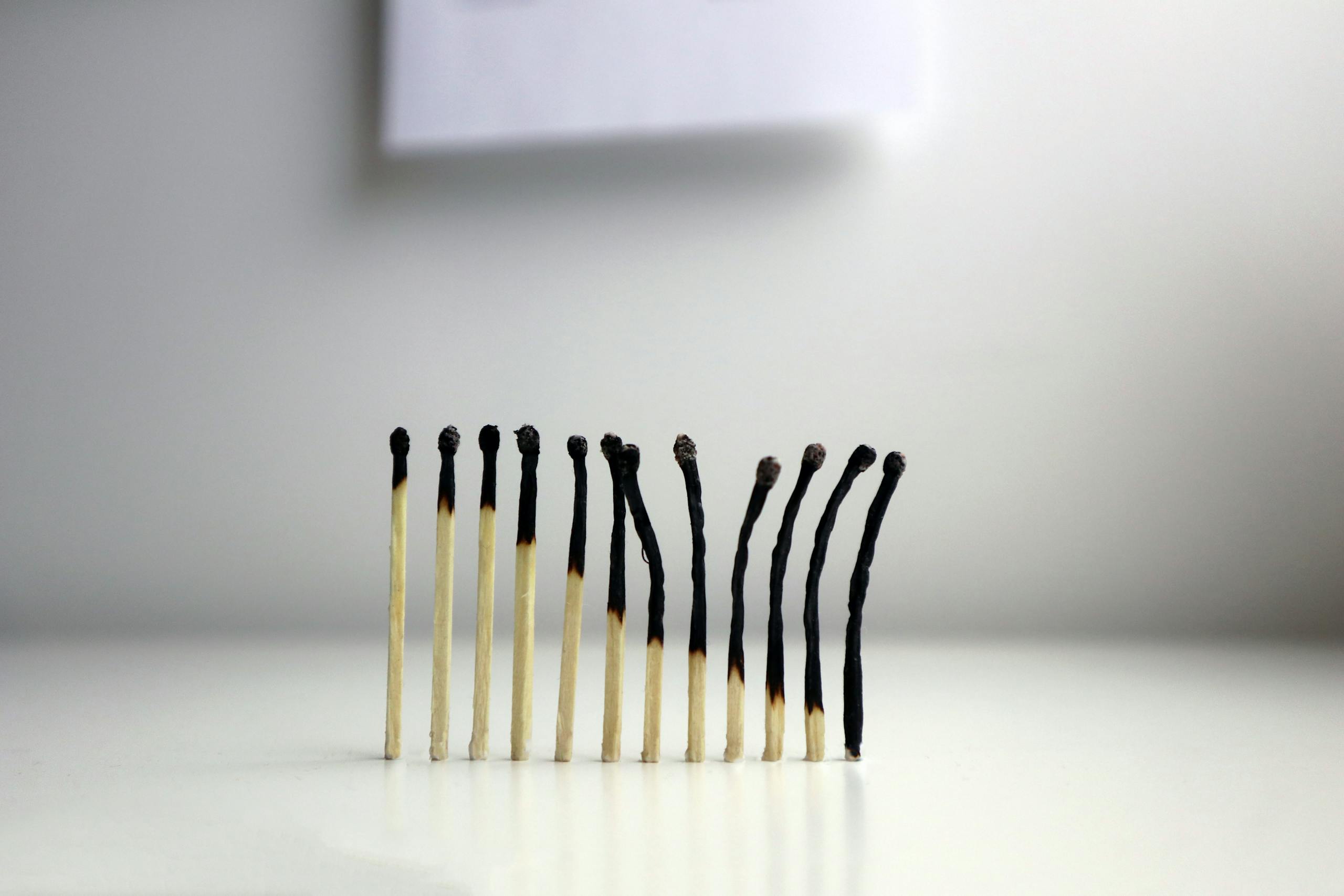
What Does Healthy ESTJ Development Look Like by Age 50?
By the time a well-developed ESTJ reaches 50, the integration of Fi doesn’t look like a personality transplant. It looks like depth added to strength. The efficiency is still there, but it’s in service of something the ESTJ can actually articulate and feel. The accountability is still there, but it’s paired with genuine compassion for the people being held accountable.
The most effective ESTJ leaders I’ve known at this stage of life are the ones who can hold a team to a high standard and genuinely care about each person on that team as a human being, not as a performance variable. That combination is rare and powerful, and it only becomes possible once Fi has been integrated enough to function alongside the dominant Te.
There’s also a quality of settledness that develops. ESTJs who have done this work tend to be less reactive to challenges to their authority, because their sense of self is no longer entirely dependent on being right or being in charge. They can admit uncertainty without experiencing it as defeat. They can receive feedback without treating it as an attack.
The APA has documented that mid-life adults who report strong alignment between personal values and daily behavior show significantly lower rates of anxiety and depression in later life, which suggests that the internal work of Fi integration has measurable long-term benefits beyond the psychological and relational gains.
For ESTJs who are currently in the thick of this developmental pressure, between 30 and 50, feeling the friction of a life that used to work smoothly now generating unexpected resistance, the most useful reframe is this: the friction is information. Something in you is asking to be heard that hasn’t been heard before. That’s not a malfunction. That’s development.
Explore more personality development resources for Extroverted Sentinel types in our complete MBTI Extroverted Sentinels (ESTJ and ESFJ) Hub.
About the Author
Keith Lacy is an introvert who’s learned to embrace his true self later in life. After 20 years in advertising and marketing leadership, including running agencies and managing Fortune 500 accounts, Keith now channels his experience into helping fellow introverts understand their strengths and build fulfilling careers. As an INTJ, he brings analytical depth and authentic perspective to every article, drawing from both professional expertise and personal growth.
Frequently Asked Questions
What is inferior integration for ESTJs?
Inferior integration for ESTJs refers to the developmental process of engaging the inferior cognitive function, Introverted Feeling (Fi), which typically becomes more prominent between ages 30 and 50. ESTJs lead with Extroverted Thinking, which prioritizes logic and external efficiency. Fi, by contrast, is concerned with personal values, emotional authenticity, and internal meaning. Integration happens when an ESTJ develops the capacity to access Fi alongside their dominant function, rather than suppressing or being overwhelmed by it.
Why do ESTJs often struggle emotionally in their 40s?
ESTJs often experience emotional friction in their 40s because the external achievements that provided identity and satisfaction in earlier life begin to feel insufficient. The inferior function, Introverted Feeling, starts pressing upward during this period, raising questions about personal values and meaning that the dominant Extroverted Thinking function cannot resolve on its own. Without Fi development, ESTJs may respond by doubling down on control and structure, which creates increased relational tension and existential restlessness.
How does Fi development change ESTJ leadership?
As Introverted Feeling develops, ESTJ leaders typically become more attuned to the emotional needs of their teams without losing their characteristic directness and accountability. They become better able to hold high standards while genuinely caring about the people behind the performance. Their communication shifts from purely transactional to more relational, and they develop greater tolerance for ambiguity and uncertainty. These changes make them significantly more effective in complex leadership environments that require both task mastery and human connection.
What triggers inferior function development in ESTJs?
Inferior function development in ESTJs is most commonly triggered by experiences that the dominant function cannot resolve: relationship breakdowns, health challenges, career transitions, or significant losses. Because ESTJs rarely choose to slow down voluntarily, the inferior function often creates the conditions for its own development through these kinds of forced pauses. Therapy, reflective practices like journaling, and close relationships with feeling-dominant types can also accelerate Fi integration when the ESTJ is open to engaging with them.
How can ESTJs support their own mid-life development?
ESTJs can support their own mid-life development by deliberately creating space for reflection rather than constant action. Practices that help include regular one-on-one conversations that prioritize listening over problem-solving, creative or artistic pursuits that have no measurable outcome, and working with a therapist or coach who can help them identify and articulate personal values. Reducing the reflexive impulse to fix emotional situations through structure, and instead sitting with them long enough to understand what they’re communicating, is one of the most direct paths into Fi development.