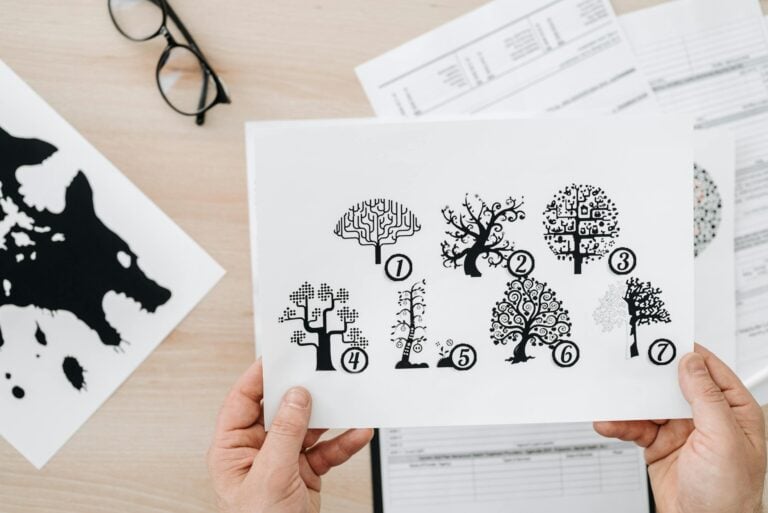

INFJ and INFP personalities share a lot of surface-level traits: deep empathy, rich inner lives, a preference for meaning over small talk. But spend time with both types and you’ll notice something that separates them in ways that actually matter. One craves structure as a foundation for their vision. The other treats structure as a cage. That difference shapes how they work, love, and make sense of the world.
Both types show up as sensitive, idealistic, and quietly intense. Both are rare. Both often feel misunderstood by a world that rewards loud confidence over depth. Yet the distinction between them runs deeper than most comparison articles admit, touching on how they process emotion, make decisions, and relate to their own identity over time.
If you’ve ever wondered which type you actually are, or why someone you care about seems so similar to you in some ways and completely foreign in others, this is worth reading carefully.

This article is part of a broader look at the two most misunderstood introverted personality types. Our MBTI Introverted Diplomats (INFJ and INFP) hub covers everything from cognitive function stacks to real-world career decisions, if you want the full picture alongside this comparison.
- INFJs crave structure as a foundation for executing their vision, while INFPs resist structure that conflicts with personal values.
- INFJs lead with Introverted Intuition, synthesizing patterns into a single converging vision of future outcomes.
- INFPs lead with Introverted Feeling, prioritizing an internal value system that resists external pressure and compromise.
- INFJs adapt their presentation approach to gain buy-in while protecting their core vision and direction.
- INFPs hold firm on what ideas represent values-wise, even when client demands or social pressure demand flexibility.
What Actually Separates INFJ and INFP at Their Core?
Most people start with the obvious: both types lead with intuition and feeling. Both are introverted. Both care deeply about authenticity. So far, so similar. The real separation happens at the cognitive function level, and while I won’t turn this into a textbook, it’s worth understanding the practical effect of that difference.
What’s your personality type?
Take our free 40-question assessment and get a detailed personality profile with dimension breakdowns, context analysis, and personalised insights.
Discover Your Type8-12 minutes · 40 questions · Free
INFJs lead with Introverted Intuition (Ni), which means they’re constantly synthesizing patterns into a single, converging vision of how things will unfold. Their dominant function is perception-based but it feels like knowing. INFPs, by contrast, lead with Introverted Feeling (Fi), which means their primary orientation is toward an internal value system that’s deeply personal and fiercely guarded.
A 2021 review published through the American Psychological Association found that individuals whose personality profiles emphasized internal value consistency showed stronger resistance to external social pressure, a pattern that maps closely onto how INFPs tend to operate. They don’t bend their values because someone else needs them to. INFJs, on the other hand, are more likely to adapt their approach while holding their vision constant.
In practical terms: an INFJ might reorganize how they present an idea to get buy-in. An INFP is more likely to hold their ground on what the idea actually stands for, even if that costs them the room.
I saw this dynamic play out in my own agency work, though I didn’t have the language for it at the time. One of my most talented creative directors had an unmistakably INFP quality. She could articulate exactly why a campaign concept mattered to her at a values level, but she struggled when clients pushed for changes that felt like compromises. My instinct, as an INTJ, was to find a way to preserve the strategic core while giving the client something they could accept. She experienced that as selling out. Neither of us was wrong. We were operating from completely different internal architectures.
| Dimension | INFJ | INFP |
|---|---|---|
| Cognitive Functions | Introverted Intuition dominant: synthesizes patterns into single, converging vision of how things will unfold | Introverted Feeling dominant: orients toward deeply personal, fiercely guarded internal value system |
| Emotional Processing | Absorbs emotion from environment before it becomes their own; struggles to separate what they feel from what they’ve taken on | Experiences emotion as intensely self-referential; emotional life rooted in personal values and authenticity |
| Structure and Planning | Prefers external framework and clear plans; feels unmoored and anxious without structure to contain vision | Keeps options open; imposed structure feels constraining and cuts off possibilities for exploration |
| Identity Formation | Ties identity to vision and role in relation to others; experiences crisis when losing sense of larger purpose | Builds identity from inside out rooted in values; feels threatened when asked to act against core values |
| Work Challenges | Struggles with gap between vision and achievable reality; absorbs organizational stress quietly until hitting wall | Needs autonomy to maintain alignment with values; struggles when work feels misaligned with authentic self |
| Relationship Approach | Extraordinarily perceptive about loved ones’ needs; tends to give more attention to others than asking for same in return | Brings intense feeling to relationships; requires genuine emotional reciprocity and authentic expression from partners |
| Communication Style | Adapts communication style to audience while keeping core message intact; can sound cryptic when sharing insights | Communicates with emotional depth and assumes shared understanding; may seem intense or overly personal to others |
| Pattern Recognition | Constantly reading patterns in people and situations; picks up on emotional undercurrents before they’re named | Evaluates situations through lens of personal values rather than environmental pattern synthesis |
| Misunderstanding Risk | Seen as cryptic or presumptuous when sharing perceptive observations; insights prove accurate over time but hard to receive | Perceived as emotionally intense or overly sensitive; depth of feeling difficult for others to understand or match |
| Decision Making | Driven by future vision and convergent intuitive knowing; needs clarity on where things are heading | Driven by internal value alignment; decisions non-negotiable when values are at stake |
How Do INFJs and INFPs Handle Emotion Differently?
Both types feel things deeply. That’s not in question. What differs is how emotion moves through them and what they do with it afterward.
INFJs tend to absorb emotion from their environment before it becomes their own. They’re often described as empaths, not because they have some mystical ability, but because their dominant Ni is constantly reading patterns in people and situations. They pick up on emotional undercurrents before anyone has named them. The challenge is that this absorption can be exhausting, and INFJs sometimes struggle to separate what they actually feel from what they’ve taken on from others.
INFPs experience emotion differently. Their Introverted Feeling function means their emotional life is intensely self-referential. They don’t just feel things, they feel things in relation to who they are and what they believe. An INFP who witnesses injustice doesn’t just feel sad about it. They feel it as a violation of something they hold sacred. That distinction sounds subtle but it creates a very different emotional signature.
Research from the National Institute of Mental Health has documented how individuals with high trait emotional sensitivity process negative stimuli more deeply in regions of the brain associated with meaning-making, not just threat response. For both INFJs and INFPs, emotional experience isn’t surface-level. It gets integrated into how they understand themselves and the world.
The difference shows up in conflict. INFJs will often try to resolve tension by understanding all sides and finding a path that preserves the relationship. INFPs are more likely to withdraw when their core values feel threatened, not out of avoidance, but because continuing a conversation that violates their internal compass feels genuinely painful. If you want to understand why an INFP goes quiet in certain situations, reading about INFP self-discovery and personality insights adds important context that most surface-level comparisons miss.

Does Structure Help or Hurt Each Type?
This is where the title of this article earns its keep, and where the practical difference between these two types becomes most visible in everyday life.
INFJs are Judging types. That doesn’t mean they’re judgmental. It means they prefer to operate with a framework in place. They like having a plan, a timeline, a clear sense of where things are heading. Their Introverted Intuition is always working toward a future endpoint, and structure gives that vision somewhere to land. Without it, INFJs can feel unmoored, even anxious. They’re comfortable with ambiguity in their inner world, but they want some external scaffolding to work within.
INFPs are Perceiving types. They tend to keep their options open. Structure, especially structure imposed by others, can feel like it’s cutting off possibilities before they’ve had a chance to fully form. INFPs often do their best creative work in the space between commitment and exploration. Deadlines can motivate them, but rigid systems tend to stifle the kind of open-ended processing their minds need.
Running an advertising agency for over two decades, I watched this play out in hiring decisions. The people who thrived in account management roles, where you’re managing client expectations, timelines, and deliverables simultaneously, tended to have that Judging preference. They wanted clarity on what was expected and when. The people who thrived in pure creative roles often had that Perceiving quality. They needed room to wander before they could arrive somewhere original.
Neither preference is better. But putting someone with strong Perceiving tendencies into a role that demands rigid structure, or putting someone with strong Judging tendencies into a role with no clear framework, is a reliable way to watch good people burn out.
A 2019 study published through Harvard Business Review found that personality-role fit was a stronger predictor of sustained performance than raw skill level in knowledge-work environments. That finding resonates with everything I observed managing creative teams. Skill gets you hired. Fit determines whether you stay.
How Do These Types Approach Identity and Self-Understanding?
Both INFJs and INFPs are known for introspection. Both spend significant time examining who they are and why they do what they do. Yet their relationship to identity itself is quite different.
For INFJs, identity tends to be tied to their vision and their role in relation to others. They understand themselves through the lens of what they’re working toward and how they’re contributing. An INFJ who loses sight of their larger purpose often experiences a kind of identity crisis that goes beyond ordinary dissatisfaction. Their sense of self is connected to their sense of direction.
INFPs build identity from the inside out. Their sense of self is rooted in their values, and those values feel non-negotiable. An INFP who is asked to act against their values doesn’t just feel uncomfortable. They feel like they’re being asked to stop being themselves. This makes INFPs exceptionally authentic, and it also makes them vulnerable to a particular kind of suffering when the world doesn’t make room for who they actually are.
The INFJ paradoxes that make this type so hard to read often come from this identity structure. INFJs can seem simultaneously certain and uncertain, private and deeply connected, idealistic and pragmatic. Those contradictions aren’t inconsistencies. They’re the natural result of a type whose identity is organized around a moving target: a vision that keeps evolving.
INFPs often struggle with a different paradox. They know themselves deeply at the values level, but they can find it hard to translate that inner clarity into external action or direction. They know what they stand for. They sometimes struggle with what to do about it.
If you want to take an honest look at your own type before going further, a well-constructed MBTI personality test can give you a clearer starting point, though I’d encourage you to hold the result lightly and read widely before landing on a label.

Where Do INFJs and INFPs Struggle Most at Work?
Both types are drawn to meaningful work. Neither thrives in environments that feel purely transactional. Beyond those shared preferences, their specific workplace challenges diverge in instructive ways.
INFJs often struggle with the gap between their vision and what’s actually achievable in the time and resources available. They can see exactly where something should go, and the distance between that vision and current reality can be genuinely painful. They also tend to absorb organizational stress in ways that accumulate quietly until they hit a wall. I recognize this pattern in myself. During my agency years, I could carry an enormous amount of tension before it showed, but that capacity came at a cost I didn’t always acknowledge.
INFPs face a different set of pressures. They need their work to feel meaningful at the values level, not just intellectually interesting or financially rewarding. When that meaning is absent, INFPs can lose motivation in a way that looks like laziness from the outside but is actually a form of values misalignment. They’re also sensitive to criticism in ways that aren’t always visible. An INFP who receives feedback that feels like an attack on their work, which they’ve often poured significant personal meaning into, may withdraw in ways that colleagues misread entirely.
The Mayo Clinic’s research on chronic workplace stress identifies value-role misalignment as one of the primary drivers of burnout in high-sensitivity individuals. Both INFJs and INFPs are at elevated risk for this pattern, though they arrive at burnout through different routes. INFJs burn out from over-giving. INFPs burn out from under-meaning.
Understanding the full picture of what drives an INFJ in professional settings is worth exploring separately. The complete guide to the INFJ personality type covers how this type’s strengths and vulnerabilities show up across career contexts in ways this comparison article can only touch on.
How Do These Types Show Up in Relationships?
Both INFJs and INFPs bring rare depth to their relationships. Both are selective about who they let in. Both tend toward fewer, more meaningful connections over a wide social network. Yet the experience of being close to each type is quite different.
INFJs are extraordinarily perceptive about the people they love. They often know what someone needs before that person has articulated it. This can feel like a gift to the people they’re close to, and it often is. It can also create a subtle imbalance: the INFJ gives so much attention and insight to others that they sometimes neglect to ask for the same in return. Over time, this creates a kind of invisible loneliness even inside close relationships.
INFPs bring an intensity of feeling to relationships that’s hard to describe without experiencing it. They love with their whole value system. When they’re committed to someone, that commitment is rooted in something deeper than affection or compatibility. It’s connected to who they believe that person is at their core. The risk is that this idealization can make it hard for INFPs when reality doesn’t match the inner portrait they’ve constructed.
Both types need partners who can handle depth without being overwhelmed by it. Both need space to process internally before responding. Both tend to feel exhausted by relationships that require constant social performance. An interesting window into how INFPs experience connection and loss shows up in how this type is portrayed in fiction. The psychology behind why INFP characters so often meet tragic ends in storytelling reveals something real about the emotional landscape this type inhabits.
What Are the Most Reliable Signs You’re One Type vs. the Other?
People mistype between INFJ and INFP more than almost any other pair. The surface similarities are real. The differences require honest self-examination to spot. Here are the markers I find most reliable.
You’re more likely INFJ if: you find yourself constantly synthesizing information into a single conclusion or prediction, you feel a strong pull toward a specific future vision even when you can’t fully explain it, you adapt your communication style to your audience while keeping your core message intact, you absorb other people’s emotions before you can separate them from your own, and you feel most at peace when you have a clear plan even if that plan is flexible in its details.
You’re more likely INFP if: your internal value system is the lens through which you evaluate almost every decision, you feel genuine distress when asked to act against your principles even in small ways, you find that your best ideas emerge through open-ended exploration rather than structured planning, you experience your emotions as deeply personal rather than as something absorbed from your environment, and you have a strong, private sense of who you are even if you struggle to express it externally.
One practical test: think about a time someone gave you critical feedback on something you’d worked hard on. An INFJ is more likely to have processed that feedback through the lens of “how does this affect my vision or my ability to help?” An INFP is more likely to have processed it through “does this person understand what I was actually trying to do, and does this feedback respect what this work means to me?”
Neither response is more mature or more valid. They’re different cognitive architectures producing different but equally legitimate responses to the same stimulus.
For a closer look at the specific traits that distinguish INFPs in real-world settings, including some that rarely make it into standard type descriptions, recognizing an INFP in practice offers a more granular picture than most comparison articles provide.
One more comparison worth considering: if you’re uncertain whether you’re INFP or ENFP rather than INFJ vs INFP, the distinction between those two types involves a different set of questions entirely. The critical decision-making differences between ENFP and INFP can help clarify that boundary if you’re sitting on that particular fence.
Why Do Both Types So Often Feel Misunderstood?
Both INFJs and INFPs are among the rarest personality types in most population studies. Both operate from internal frameworks that most people around them don’t share. Both tend to communicate in ways that assume more shared depth than actually exists in the average conversation. These factors combine to create a persistent sense of being slightly out of sync with the world.
For INFJs, the misunderstanding often comes from their perceptiveness. They see things in people and situations that others haven’t noticed yet, and when they try to articulate those observations, they can sound cryptic or presumptuous. Their insights often prove accurate over time, but that doesn’t make them easier to receive in the moment.
For INFPs, the misunderstanding often comes from their emotional depth. In a culture that tends to reward decisive action over careful feeling, INFPs can be read as oversensitive, indecisive, or impractical. Those labels miss what’s actually happening. An INFP isn’t being indecisive. They’re refusing to commit to something that doesn’t align with their values, which is a form of integrity that looks like hesitation from the outside.
Research from Psychology Today has consistently found that highly sensitive individuals, a category that includes a significant proportion of both INFJs and INFPs, report higher rates of feeling socially misunderstood despite demonstrating strong interpersonal insight themselves. The irony is real: the people most attuned to others are often the least understood by them.
What helped me most, as an INTJ who shares many of these introverted and intuitive traits, was finding language for what I was actually experiencing. Once I could name the pattern, I could stop pathologizing it. The same is true for both of these types. Understanding isn’t just intellectually satisfying. It’s genuinely stabilizing.
A 2020 analysis from the National Institutes of Health found that individuals who could accurately identify and label their own emotional and cognitive patterns showed significantly lower rates of anxiety and higher rates of life satisfaction than those who couldn’t, regardless of the content of those patterns. Knowing yourself, even when what you know is complicated, turns out to be protective.

Both types deserve more credit than they typically receive. INFJs bring a rare combination of vision and empathy that can genuinely change the direction of organizations and relationships when they’re in the right conditions. INFPs bring a moral clarity and creative depth that produces work and ideas the world genuinely needs. The fact that neither type fits neatly into conventional expectations isn’t a flaw in the type. It’s a flaw in the expectations.
If you’ve read this far and you’re still not certain which type fits you better, that uncertainty is worth sitting with rather than resolving prematurely. Both types share a tendency toward thorough self-examination, and both deserve a self-understanding that’s accurate rather than convenient.
Find more resources on both of these types, including cognitive function deep dives, career guidance, and relationship dynamics, in our complete MBTI Introverted Diplomats (INFJ and INFP) hub.
About the Author
Keith Lacy is an introvert who’s learned to embrace his true self later in life. After 20 years in advertising and marketing leadership, including running agencies and managing Fortune 500 accounts, Keith now channels his experience into helping fellow introverts understand their strengths and build fulfilling careers. As an INTJ, he brings analytical depth and authentic perspective to every article, drawing from both professional expertise and personal growth.
Frequently Asked Questions
Are INFJ and INFP the same personality type?
No. Though they share introversion, intuition, and feeling preferences, INFJs and INFPs have different dominant cognitive functions. INFJs lead with Introverted Intuition, orienting toward a converging future vision. INFPs lead with Introverted Feeling, orienting toward a deeply personal internal value system. These different foundations produce meaningfully different ways of processing emotion, making decisions, and relating to structure.
Which type is more emotional, INFJ or INFP?
Both types experience emotion deeply, but in different ways. INFJs tend to absorb emotion from their environment, often picking up on others’ feelings before their own. INFPs experience emotion as deeply self-referential, connected to their core values and identity. Neither is more emotional in an absolute sense. INFPs may appear more visibly affected because their emotional responses are tied directly to their sense of self, while INFJs often process emotion more internally before it surfaces.
How do you tell the difference between INFJ and INFP in real life?
Watch how each type responds to structure and feedback. INFJs tend to appreciate having a framework and will adapt their approach to achieve their vision. INFPs resist structure that feels imposed and are more likely to hold their ground on the meaning behind their work even when the approach is questioned. In conflict, INFJs typically seek resolution that preserves the relationship. INFPs are more likely to withdraw when their values feel compromised.
Can someone mistype as INFJ when they’re actually INFP?
Yes, this is one of the most common mistyping pairs in MBTI. The surface similarities are genuine: both types are introverted, intuitive, feeling-oriented, and drawn to meaning. The distinction requires honest reflection on internal experience rather than external behavior. Someone who values structure and feels drawn toward a specific future vision is more likely INFJ. Someone whose primary internal reference point is a personal value system they won’t compromise is more likely INFP. Many people need time and exposure to both type descriptions before the right one clicks.
Which type is rarer, INFJ or INFP?
INFJs are frequently cited as the rarest personality type in population studies, typically representing around 1 to 3 percent of the general population. INFPs are also uncommon, usually estimated at 4 to 5 percent. Both types are significantly underrepresented in most conventional workplace and social environments, which contributes to the shared experience of feeling out of step with mainstream expectations. It’s worth noting that population estimates vary across studies and should be held loosely.