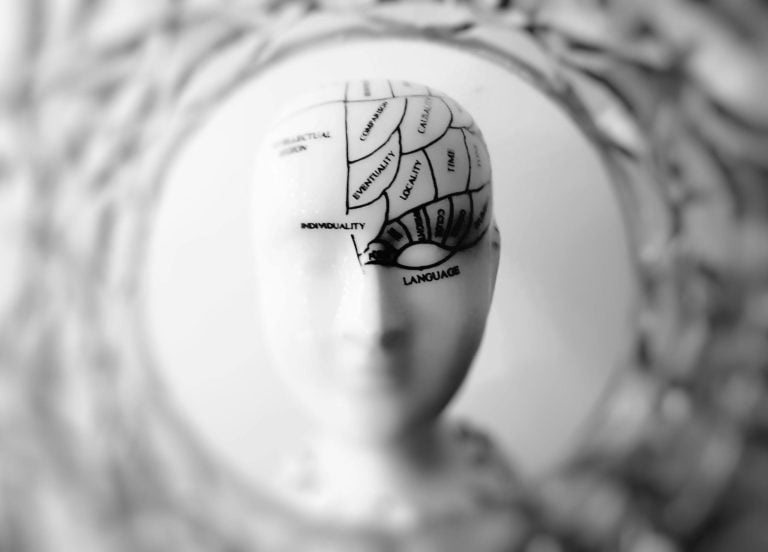
Ti (introverted thinking) builds internally consistent logical systems independent of external validation. Te (extroverted thinking) measures logic against real-world outcomes and measurable results. Both are valid but operate on opposite principles.
You’ve built the perfect system in your head. Every variable accounted for, every logical inconsistency addressed, every potential flaw examined from multiple angles. Then someone walks in, glances at your work, and declares they’ve found a “faster way” that ignores half your careful considerations. Suddenly you’re watching them bulldoze through your elegant framework with brute-force efficiency.
That frustration? It’s the fundamental tension between Introverted Thinking (Ti) and Extraverted Thinking (Te) playing out in real time. And understanding this cognitive clash could change how you approach decisions, communicate with others, and even value your own mental processes.

In my two decades managing advertising agencies and Fortune 500 accounts, I watched this clash unfold daily. I’d present a campaign strategy built on careful internal analysis, only to have a client dismiss it because their competitor had already launched something “similar enough.” My Ti wanted depth and coherence. Their Te wanted measurable results yesterday. Neither approach was wrong, but the collision created friction that took years to understand.
Carl Jung’s original framework in Psychological Types established these as two distinct orientations of the same cognitive function. Both deal with logic, analysis, and rational decision-making. The difference lies entirely in where that logic points and what it considers valid evidence. Our MBTI General & Personality Theory hub examines these cognitive dynamics across all sixteen types, but the Ti-Te distinction deserves focused attention because it shapes how billions of people think without their conscious awareness.
- Ti builds internally consistent logical systems independent of external validation or real-world outcomes.
- Te measures logic against measurable results and real-world efficiency, dismissing theoretical perfection.
- Both thinking styles are valid but operate on opposite principles, creating inevitable workplace friction.
- Ti users construct understanding from first principles without needing external protocols or manuals.
- Recognizing your thinking style helps you communicate better with people who prioritize opposite values.
How Does Internal Logic Actually Work?
Introverted Thinking operates like an internal truth-testing laboratory. Every piece of information that enters gets examined against a self-constructed framework of logical principles. Does this new data fit with what I already understand to be true? If not, something needs adjustment, either the framework or the new information itself.
What’s your personality type?
Take our free 40-question assessment and get a detailed personality profile with dimension breakdowns, context analysis, and personalised insights.
Discover Your Type8-12 minutes · 40 questions · Free
Personality Junkie’s analysis of Ti explains that Ti users rely on their own inner logic and manufacture their own ways of doing things. In many respects, this makes Ti a more portable and versatile function because it doesn’t require external protocols or doing things “by the book.”
Picture someone debugging code without documentation. A Ti-dominant thinker will trace the logic internally, building a mental model of how the system should work, then identifying where reality deviates from that model. They don’t necessarily need the manual because they’re constructing their understanding from first principles.
INTPs and ISTPs use Ti as their dominant function, while ENTPs and ESTPs rely on it as auxiliary support. The function appears in everyone’s cognitive stack somewhere, but its strength varies dramatically based on position. When Ti sits in the dominant slot, the person’s entire worldview filters through internal logical consistency first. For a deeper examination of how Ti operates as a dominant function, our Introverted Thinking (Ti) Explained guide covers the mechanics in detail.

| Dimension | Ti | Te |
|---|---|---|
| Framework Testing Approach | Examines new information against self-constructed internal logical principles to test consistency | Focuses on organizing external world and categorizing data against collective standards and procedures |
| Primary Decision Question | Is this internally consistent with my logical framework? | Does this work in the real world and can we measure the results? |
| Stance on Industry Standards | May reject standard practices if they contain logical inconsistencies, regardless of practical impact | Embraces practices that produce reliable, measurable results even if theoretical flaws exist |
| Communication Strength | Naturally articulate about internal reasoning but struggle translating it to external evidence | Confidently reference external evidence and established precedent but may overlook underlying assumptions |
| Personal Growth Area | Benefits from setting external deadlines and benchmarks to combat endless analysis and achieve closure | Benefits from questioning data sources and methodologies to avoid efficient solutions to wrong problems |
| Persuasion Strategy | Responds better to explanations of underlying reasoning and logical consistency | Responds better to outcome data and evidence rather than internal logical explanation |
| System Portability | Creates portable frameworks that don’t require external protocols or doing things by the book | Relies on collective standards, schedules, and organizational systems from the external environment |
| Common Weakness Without Balance | Produces beautiful theories that never get tested or implemented in practice | Produces efficient systems lacking examination of underlying flaws in methodology or approach |
| Collaboration Challenge | Two Ti users reach opposite conclusions despite both claiming logic because they measure against different frameworks | Focuses on execution and practical results but may skip reflection time on underlying assumptions |
What Defines External Logic Orientation?
Extraverted Thinking takes a fundamentally different approach. According to Truity’s analysis of Te users, these individuals focus on organizing and categorizing the outside world. They demonstrate obvious enthusiasm for scheduling and organizing the environment and the people around them.
Te orients toward collective standards and procedures, empirical data, and measurable outcomes. Where Ti asks “Is this internally consistent?”, Te asks “Does this work in the real world?” and “Can we measure the results?”
ENTJs and ESTJs lead with Te as their dominant function. They don’t just dream up plans, they execute them. INTJs and ISTJs use Te as an auxiliary function, supporting their dominant intuition or sensing with external organizational power. Our Extroverted Thinking (Te) guide explores how this function manifests across different type configurations.
During my agency years, I worked alongside several Te-dominant executives. Their decision-making looked almost mechanical to my Ti-oriented mind. They’d gather data, compare against established benchmarks, choose the option with the best projected outcomes, and move forward. The process felt efficient but sometimes shallow. Why weren’t they questioning the benchmarks themselves? What if the data collection methods had flaws?
I eventually realized those questions weren’t flaws in their thinking. They simply operated from different priorities. Te values getting things done correctly according to established standards. Ti values understanding why things work at a fundamental level.
Where Do Ti and Te Functions Clash?
The conflict between Ti and Te becomes most visible during collaborative decision-making. Simply Psychology’s overview of Jung’s theory notes that thinking individuals prioritize logic, objectivity, and consistency. Yet two people committed to “logical thinking” can reach opposite conclusions because they’re measuring logic against different standards.

A Ti user might reject an industry-standard practice because it contains a logical inconsistency, even if that inconsistency has no practical impact on outcomes. The flaw exists in the framework itself, which bothers Ti regardless of whether it affects results.
A Te user might embrace that same practice precisely because it produces reliable results. The logical flaw becomes irrelevant noise if the practical outcomes remain consistent. Why fix what works?
Neither position is inherently superior. Ti catches errors that Te might miss because they haven’t affected outcomes yet. Te implements solutions that Ti might endlessly refine without ever deploying. The functions serve different purposes in the broader cognitive ecosystem.
How Can You Recognize Your Own Logic Orientation?
Identifying whether you lean Ti or Te requires honest self-examination. Our Cognitive Functions Test can help clarify your natural orientation. Consider your natural response when someone challenges your conclusion. Do you immediately want to examine your internal reasoning for flaws? Or do you want to point to external evidence and established precedent?
Ti users often struggle to explain their reasoning to others. Their conclusions feel self-evidently true based on internal consistency, but translating that into external evidence can feel frustrating or even impossible. “It just makes sense” becomes a common refrain, followed by confusion when others don’t see the obvious logical structure.
Te users may struggle with questions about underlying assumptions. Their confidence comes from external validation, measurable results, and established methodologies. Questioning the foundation itself can feel destabilizing, like removing the floor beneath their reasoning.
A study published in Frontiers in Psychology distinguished between externally guided decision-making, where answers depend on circumstantial criteria, and internally guided decision-making, where answers depend on the person’s own internal preferences and frameworks. This maps directly onto the Te-Ti distinction.

How Do Ti and Te Show Up in Daily Life?
Understanding your thinking orientation transforms how you approach problems. Ti users benefit from setting external deadlines and benchmarks to combat analysis paralysis. The internal framework will never feel perfectly complete, so external constraints provide necessary closure.
Te users benefit from periodically questioning their data sources and methodologies. Efficient execution loses value when the underlying approach contains unexamined flaws. Building in reflection time prevents the bulldozer mentality from creating elegant solutions to the wrong problems.
One client project perfectly illustrated this balance. Our Te-leaning account director wanted to launch a campaign based on competitor analysis showing market opportunity. My Ti-oriented creative director questioned whether the competitor data accurately reflected customer preferences or just competitor assumptions. We nearly deadlocked until someone suggested testing both hypotheses with a small pilot program. External validation satisfied Te, internal consistency satisfied Ti, and the campaign succeeded because we caught an error neither function would have found alone.
How Can Ti and Te Types Communicate Better?
Communicating with someone using the opposite thinking orientation requires conscious translation. When speaking with Te users, Ti-dominant individuals should lead with outcomes and evidence rather than internal reasoning. “The data shows this outcome” lands better than “Here’s why this makes logical sense to me.”
When Te users speak with Ti types, they should show their work and acknowledge limitations in their data. “Industry standard says X, though I haven’t examined the methodology behind that standard” demonstrates intellectual honesty that Ti respects.
According to Psychology Today’s analysis of logical decision-making, people often fail to identify how probable their conclusions actually are. Both Ti and Te users can fall into this trap, just through different pathways. Ti may overestimate the completeness of its internal framework. Te may overestimate the reliability of its external data sources.

How Can You Integrate Both Logic Styles for Growth?
Psychological maturity involves developing access to both thinking orientations regardless of your natural preference. Ti-dominant types can consciously practice Te by setting measurable goals, tracking outcomes empirically, and valuing efficiency alongside theoretical elegance.
Te-dominant types can practice Ti by asking “why” questions about established procedures, building internal models of how systems work, and becoming comfortable with uncertainty when data is insufficient. Understanding the broader Thinking vs Feeling dimension provides additional context for where these functions fit within the complete cognitive system.
Neither function should entirely override the other. Ti without Te produces beautiful theories that never get tested. Te without Ti produces efficient systems built on unexamined assumptions. The goal is conscious choice about which orientation serves the current situation best. Our article on MBTI Under Stress examines how these functions can malfunction when we’re overwhelmed.
After twenty years in high-pressure agency environments, I’ve learned that my Ti tendency to question everything has value and limitations. Clients pay for results, not perfect theoretical frameworks. Yet the frameworks that produce sustainable results tend to be the ones that withstand internal logical scrutiny. The trick lies in knowing when to prioritize which function.
Your thinking orientation shapes how you process information, make decisions, and communicate conclusions. Understanding whether you naturally lean toward internal logical consistency or external measurable outcomes gives you power to compensate for blind spots and appreciate thinking styles that differ from your own. In a world that increasingly demands collaboration across cognitive differences, that understanding becomes a genuine competitive advantage.
Explore more MBTI insights and cognitive function analysis in our complete MBTI General & Personality Theory Hub.
Frequently Asked Questions
Can someone be strong in both Ti and Te?
Everyone has access to both functions, though one typically dominates. Psychological maturity involves developing the non-preferred function consciously. Some people achieve relative balance through deliberate practice, though their natural default under stress usually reveals their true preference.
Why do Ti users sometimes seem dismissive of evidence?
Ti users aren’t dismissing evidence itself but rather questioning whether the evidence actually supports the conclusion. They may see logical gaps between data and interpretation that Te users consider insignificant. What appears as dismissiveness is often deep skepticism about methodology.
Why do Te users sometimes seem impatient with theoretical discussions?
Te prioritizes actionable outcomes over theoretical perfection. Extended theoretical discussion without clear application can feel like wasted time to Te-dominant individuals. They want to know what to do with information, not just understand it in abstract terms.
How does stress affect Ti versus Te?
Under stress, Ti users may become paralyzed by analysis, unable to act until their internal framework feels complete. Te users under stress may become rigid and controlling, demanding compliance with established procedures without flexibility. Both represent the shadow side of their natural strengths.
Which thinking function is better for leadership?
Neither function is inherently better for leadership. Te leaders excel at organizing teams, setting measurable goals, and driving execution. Ti leaders excel at identifying strategic blind spots, questioning assumptions, and building intellectually rigorous foundations. The best leaders develop access to both orientations.
About the Author
Keith Lacy is an introvert who’s learned to embrace his true self later in life. For over 20 years, Keith led teams and managed Fortune 500 accounts as a CEO in the advertising and marketing world. Now, as an INTJ navigating a world designed for extroverts, he brings a practical, experience-based perspective to introversion, offering insights that help fellow introverts thrive personally and professionally.