The gym membership sat unused for three years before I finally cancelled it. Every month, I’d tell myself I’d go tomorrow. Tomorrow became next week, next week became next month, and eventually I accepted the truth that traditional gyms were never going to work for someone like me.
I spent years believing my aversion to gyms meant I was lazy or lacked discipline. Running an advertising agency meant leading teams, managing client expectations, and spending countless hours in high-energy environments. By the time I got home, the thought of walking into another crowded, stimulating space felt physically exhausting.
Gym-averse introverts avoid exercise because traditional fitness advice ignores how our nervous systems process stimulation. We’re not lazy or undisciplined. We need movement strategies that restore rather than deplete our energy. When I finally discovered this truth, everything changed. The problem wasn’t my motivation. The problem was trying to exercise like an extrovert.
During my years managing creative teams, I watched talented professionals abandon their fitness routines the moment work stress increased. The pattern was always the same: they’d join a gym with good intentions, attend a few group classes, then gradually stop going as the social and sensory demands became overwhelming. I made the same mistake myself, assuming willpower was the issue rather than recognizing that our exercise approach needed to match our personality.
Why Do Traditional Gyms Drain Introverts?
Understanding why gym environments feel particularly challenging for introverts requires looking at how our nervous systems process stimulation. Research published in the National Institutes of Health confirms that regular aerobic exercise is associated with lower sympathetic nervous system reactivity and reduced stress hormones. However, the environment where exercise happens matters tremendously for whether these benefits actually materialize.
Traditional gyms present a perfect storm of introvert challenges:
- Social performance anxiety – Exercising in front of strangers creates constant awareness of being watched and judged
- Sensory overload – Loud music, clanging weights, conversations, and fluorescent lighting overwhelm sensitive nervous systems
- Unwritten social protocols – Complex etiquette around equipment sharing, spotting, and small talk requires constant mental energy
- Overstimulating environment – Multiple sensory inputs compete for attention, making it impossible to achieve the meditative focus that makes exercise restorative
- Energy depletion before exercise begins – The mental effort required to navigate the social environment exhausts introvert energy reserves before physical activity starts
I remember standing in the weight room of my local gym, paralyzed by the awareness that I didn’t know the proper etiquette for asking to use a machine someone seemed to be resting near. The anxiety of that social uncertainty drained more energy than any workout ever could. By the time I figured out the social dynamics, I was too exhausted to actually exercise.
A 2025 study from University College London found that people who scored higher on neuroticism preferred low-intensity exercise sessions at home rather than being supervised in a lab setting. More significantly, participants with higher anxiety who exercised in comfortable environments were the only group that showed decreased stress levels. This finding validates what many introverts instinctively know: the setting of your workout affects its psychological benefits as much as the physical activity itself.
Understanding your introvert energy patterns becomes essential when designing an exercise routine that you’ll actually maintain. The goal isn’t to overcome your natural tendencies but to work with them.
Why Does Solo Exercise Work Better for Introverts?
Here’s what surprised me most when I started researching exercise and personality types. Solo exercise isn’t a compromise or second-best option. For introverts, exercising alone may actually provide greater mental health benefits than group workouts.
The Mental Health Foundation explains that physical activity improves mental health through multiple pathways:
- Endorphin and serotonin release – Natural mood elevators that reduce depression and anxiety
- Stress hormone reduction – Lower cortisol levels improve emotional regulation
- Enhanced self-esteem – Achievement and body awareness build confidence
- Improved sleep quality – Physical fatigue promotes deeper, more restorative sleep
- Cognitive benefits – Increased blood flow to brain improves focus and memory
What determines whether you experience these benefits isn’t the type of exercise but whether the circumstances allow you to actually relax into the activity.
When I exercise alone, something different happens in my mind. The repetitive motion of walking or swimming creates space for my thoughts to organize themselves. Problems I’ve been wrestling with at work suddenly clarify. Creative ideas emerge without effort. This meditative quality of solo exercise transforms it from a physical obligation into mental processing time, which for introverts is as essential as the physical benefits.

A meta-analysis in Frontiers in Psychology examining exercise interventions for anxiety found that physical activity significantly alleviates anxiety symptoms, with the specific finding that both aerobic exercise and yoga proved effective. What’s notable is that neither of these activities requires a gym or group setting. The research suggests that the consistency of practice matters more than the intensity or social context of the activity.
For those of us who spend considerable energy managing our overall wellness as introverts, understanding that solo exercise isn’t a limitation but potentially an advantage changes the entire mental framework around fitness.
What Home Workout Strategies Actually Work?
Creating an effective home workout practice requires understanding what prevents introverts from exercising in the first place. It’s rarely about lacking equipment or space. It’s about energy management, decision fatigue, and creating conditions where exercise feels restorative rather than depleting.
I learned this lesson the hard way after buying expensive home gym equipment that collected dust for months. The problem wasn’t the equipment. The problem was that I hadn’t addressed the real barriers. I was trying to recreate a gym experience at home when what I needed was something entirely different.
The breakthrough strategies that made the difference:
- Timing alignment with natural energy patterns – I stopped trying to exercise after work when my social battery was depleted. Morning workouts, before the demands of the day started accumulating, became my protected time. There’s something almost meditative about exercising in the quiet hours before the world wakes up.
- Decision fatigue elimination – I set out workout clothes the night before, established a simple rotation of three or four activities I could do without thinking, and removed all choices from the moment of action.
- Dedicated space creation – I cleared a corner of my living room and laid down a yoga mat that stays there permanently. That visible cue removed another mental obstacle without requiring elaborate setup.
- Energy-based flexibility – Some days call for gentle stretching, others for more intense movement. Matching exercise intensity to current energy levels prevents the all-or-nothing thinking that kills consistency.
- Integration with existing preferences – I started walking while listening to podcasts or audiobooks. The exercise became the means to something I wanted rather than the end in itself.
According to Better Health Victoria, research confirms that exercise doesn’t need to be strenuous or lengthy to provide mental health benefits. Low or moderate intensity exercise makes a meaningful difference in mood and thinking patterns. This finding liberates introverts from the pressure of intense workouts. A twenty-minute walk counts. Gentle stretching counts. Movement that matches your current energy level counts.
Integrating exercise into your broader introvert self-care routine makes it feel less like an additional obligation and more like part of how you restore yourself. Movement becomes another tool for managing energy, alongside solitude and quiet reflection.
What Outdoor Activities Work Best for Introverted Exercise?
Nature offers something that indoor environments, whether gyms or home spaces, cannot replicate. The combination of physical movement and natural settings creates a particularly powerful effect for introvert mental health. When I’m walking alone on a trail, I experience a quality of presence that rarely happens anywhere else.
The most effective outdoor exercise options for introverts:
- Walking and hiking – Requires no special equipment, can be done anywhere, and provides exactly the kind of processing time introverts crave. I’ve solved more work problems during morning walks than in any brainstorming meeting.
- Cycling – Once you’re on a bike, social interaction becomes nearly impossible. There’s only the road ahead, the sensation of movement, and the satisfaction of covering distance under your own power.
- Swimming – Particularly in natural bodies of water or during quiet hours at pools, provides remarkable solitude. The sensory experience of water creates a buffer from the world that’s genuinely therapeutic.
- Gardening – Combines gentle physical activity with the psychological benefits of nurturing growth, often overlooked as exercise despite significant calorie burn and strength building.
- Solo sports – Running, kayaking, or rock climbing (when practiced alone) provide intense focus that quiets mental chatter while building physical strength.
Research from the American College of Sports Medicine confirms that aerobic exercises including walking, swimming, cycling, and gardening have been proven to reduce anxiety and depression. These improvements in mood appear connected to increased blood circulation to the brain and the influence on stress hormone systems. For introverts, the additional benefit of doing these activities alone may enhance the psychological advantages.
The key for outdoor exercise is finding times and places where you can avoid crowds. Early mornings work well, as do weekday afternoons. I’ve discovered trails that receive heavy weekend traffic become practically empty on Tuesday mornings. That research into quiet times transforms outdoor exercise from potentially draining to genuinely restorative.
Understanding why alone time helps introverts recharge explains why solitary outdoor exercise feels so different from group activities. The combination of physical movement and true solitude creates compounding benefits.
How Do You Build Sustainable Exercise Habits?
The exercise advice that works for extroverts often backfires for introverts. “Find a workout buddy for accountability” sounds reasonable until you realize that social obligation can become another energy drain. “Join a class for motivation” makes sense unless the social dynamics of that class require energy you don’t have. Building sustainable exercise habits as an introvert means questioning conventional wisdom and designing systems that match your actual psychology.

The habits that actually stick for introverts:
- Prioritize consistency over intensity – I’d rather exercise gently five days a week than push myself hard twice a week and spend the rest of the time dreading the next session. The Greater Good Science Center at UC Berkeley notes that the sweet spot for mental health benefits appears to be four to five exercise sessions weekly, with no significant difference between thirty-minute and hour-long workouts.
- Track psychological benefits, not just physical metrics – I stopped measuring success by external metrics like calories burned or miles covered. Instead, I track whether exercise improved my mood and mental clarity. Some mornings, a gentle fifteen-minute stretch does more for my psychological state than an intense run would.
- Connect exercise to existing interests – Walking while listening to podcasts or audiobooks made exercise something I looked forward to rather than endured. The movement became the means to something I wanted rather than the end in itself.
- Adjust seasonally rather than fighting nature – In winter, I shift toward indoor options. In summer, I take advantage of longer daylight and more comfortable temperatures. Working with seasons maintains momentum year-round.
- Reframe exercise as mental restoration – When I view movement as a way to process thoughts and restore energy rather than another obligation, the entire dynamic changes.
Combining physical activity with mindfulness practices that work for introverts can deepen both experiences. Walking meditation, where you focus attention on the physical sensations of each step, transforms exercise into moving mindfulness. These hybrid approaches serve multiple introvert needs simultaneously.
What Are the Best Low-Stimulation Workout Options?
The best workouts for gym-averse introverts share certain characteristics. They can be done alone. They don’t require learning complex equipment or movements in front of others. They can be modified based on energy levels. And they provide mental benefits that match or exceed their physical benefits.
The most effective low-stimulation exercise options:
- Yoga – Home practice eliminates social dynamics while providing excellent physical and mental benefits. Online videos offer endless variety without requiring any human interaction. You can practice in whatever clothing you want, pause when needed, and modify poses without judgment.
- Resistance bands – Provide complete strength training without gym intimidation. These inexpensive, portable tools can provide significant muscle challenge in complete privacy with zero social obstacles to strength training.
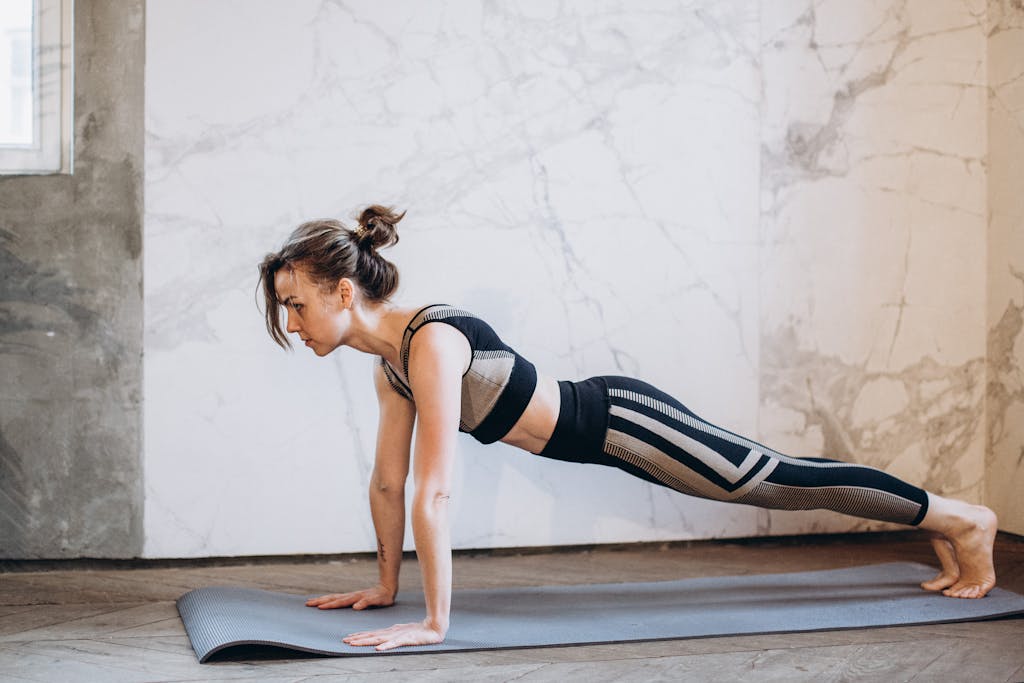
- Bodyweight exercises – Push-ups, squats, lunges, planks require nothing but your own body and floor space. These fundamental movements have been building human strength for centuries without any equipment or social setting.
- Stretching and mobility work – Can be done in any mental or physical state, require no warmup or recovery, can fill small pockets of time throughout the day, and create immediate relief from physical tension.
- Solo dancing – Provides cardiovascular benefits while potentially being the most purely enjoyable form of exercise. There’s no right or wrong way to move in your own space with the door closed.

Stair climbing, whether in your home or a quiet stairwell, offers intense cardiovascular challenge with zero social interaction. I discovered that climbing stairs for even ten minutes provides a workout comparable to much longer moderate-intensity sessions. The efficiency appeals to the introvert desire to optimize and then return to solitude.
How Can You Manage Gym Situations When Unavoidable?
Sometimes gym access becomes necessary. Maybe you’re traveling and the hotel gym is your only option. Maybe you want access to specific equipment for particular fitness goals. Maybe your home situation genuinely prevents effective home workouts. Even gym-averse introverts can navigate these environments with the right strategies.
The survival strategies that actually work:
- Strategic timing – Early morning (before 6 AM) provides near-solitude in most gyms. Late evening after 9 PM offers similar emptiness. Weekday mid-afternoons between 2 and 4 PM tend to be quiet. Avoiding peak hours means exercising in a fundamentally different environment.
- Noise-cancelling headphones – Create an invisible barrier that most people respect, signaling unavailability for conversation while providing mental escape through music or podcasts.
- Predetermined plans – Having a written list of exactly which exercises you’ll do, in what order, eliminates the vulnerable feeling of wandering around trying to figure out what to do next.
- Equipment zone selection – Cardio machines in a row require zero interaction with other humans. A corner with a bench and free weights can become your dedicated territory away from high-traffic areas.
- Mental reframing – Instead of “I have to survive this gym session,” think “I’m getting my workout done efficiently and then returning to my preferred solitude.” Short, focused sessions minimize exposure while still providing physical benefits.
Combining gym visits with proper rest and recovery strategies ensures you have the energy reserves to handle occasional social environments when they’re truly necessary.
Understanding the Mind-Body Connection for Introverts
What finally convinced me to prioritize exercise wasn’t the physical benefits but understanding how profoundly it affected my mental state. As an introvert who spends considerable time in internal mental worlds, the impact of physical movement on my thinking and emotional regulation became impossible to ignore.
The connection between movement and mental clarity feels almost magical once you start paying attention. After a morning walk, my thoughts organize themselves more efficiently. After yoga, I respond to challenges with more equanimity. After any form of exercise, the endless internal commentary quiets to a manageable volume. These psychological benefits matter at least as much as any physical outcomes.
Exercise provides what introverts desperately need but rarely discuss: release from overthinking. Physical exertion demands enough attention that the mind can’t simultaneously spiral into analysis or worry. This temporary vacation from the mental work of being an introvert creates genuine relief that no amount of rest or solitude can quite replicate.
One of my team members, a brilliant INFP designer, once told me she’d discovered that her most creative breakthroughs happened during her evening walks. She’d been struggling with a complex brand identity project for weeks, hitting wall after wall in our conference room brainstorming sessions. But during a solo walk through her neighborhood, listening to instrumental music, the entire conceptual framework suddenly crystallized. She returned the next morning with sketches that captured everything we’d been trying to articulate. That wasn’t coincidence. That was her introvert mind finally getting the space and movement it needed to do its best work.
I used to view my exercise aversion as a character flaw requiring correction. Now I understand it as information about my nervous system that I needed to work with rather than against. The strategies in this article aren’t about forcing myself to tolerate discomfort. They’re about discovering that exercise, done in introvert-friendly ways, can become something I genuinely want to do.
Your path to consistent exercise might look nothing like the advice you’ve received. That’s not failure. That’s self-knowledge. The gym-averse introvert who walks alone every morning is just as fit as the extrovert who thrives in high-energy group classes. The difference isn’t in the results. It’s in recognizing what circumstances allow you to show up consistently.
Movement isn’t meant to deplete you. Done right, it becomes another way introverts restore and maintain the energy we need to navigate a world designed for more extroverted temperaments. The best exercise is the exercise you’ll actually do. For many of us, that means exercise we do alone.
Explore more resources in our complete Solitude, Self-Care & Recharging Hub.
About the Author
Keith Lacy is an introvert who’s learned to embrace his true self later in life. With a background in marketing and a successful career in media and advertising, Keith has worked with some of the world’s biggest brands. As a senior leader in the industry, he has built a wealth of knowledge in marketing strategy. Now, he’s on a mission to educate both introverts and extroverts about the power of introversion and how understanding this personality trait can advance new levels of productivity, self-awareness, and success.
Frequently Asked Questions
Why do introverts often avoid gyms?
Introverts often avoid gyms because these environments combine multiple energy-draining elements: social performance anxiety, sensory overload from noise and crowds, unwritten social protocols around equipment sharing, and the general awareness of being observed by strangers. The mental energy required to navigate these dynamics can exceed the energy spent on actual exercise, leaving introverts depleted rather than energized.
Can exercising alone provide the same benefits as group workouts?
Yes, exercising alone can provide equivalent or even superior mental health benefits for introverts. Research shows that the psychological benefits of exercise come from the activity itself, not the social context. For introverts who find group settings draining, solo exercise may actually provide greater stress reduction because the environment doesn’t compete with the restorative effects of physical activity.
How much exercise do introverts need for mental health benefits?
Research suggests that even low to moderate intensity exercise provides meaningful mental health benefits. Studies indicate that the optimal amount for psychological wellness appears to be four to five sessions per week, with no significant difference between thirty-minute and sixty-minute workouts. The key is consistency rather than intensity, making shorter, sustainable sessions more valuable than occasional intense efforts.
What are the best types of exercise for gym-averse introverts?
The most effective exercises for gym-averse introverts include walking, home yoga practice, cycling, swimming, bodyweight exercises, resistance band training, and solo stretching or mobility work. These activities can all be done independently, adjusted to match current energy levels, and performed in private spaces where social dynamics don’t interfere with the restorative benefits of movement.
How can I make myself exercise consistently as an introvert?
Building consistent exercise habits as an introvert involves reducing decision fatigue through pre-planned routines, exercising at times when your energy naturally peaks, creating dedicated space for movement at home, connecting exercise to activities you already enjoy like listening to audiobooks, and reframing exercise as mental restoration rather than physical obligation. Focus on activities you genuinely prefer over what fitness culture says you should do.