

A home sanctuary for overstimulated introverts is a dedicated physical space designed to restore mental and emotional energy after sensory overload. It reduces external stimulation through intentional design choices, including controlled lighting, sound management, and sensory boundaries, giving the nervous system room to reset and the mind space to process.
My office used to be the loudest room in the building. Open floor plan, glass walls, a constant stream of account managers stopping by with “quick questions” that were never quick. By 2 PM on any given Tuesday, I’d be running on fumes, not because the work was hard, but because the environment was relentless. I was processing every sound, every interruption, every shift in the room’s energy. And I was doing it while trying to think strategically about campaigns worth millions of dollars.
What I didn’t understand then was that my home environment was making it worse. I’d come back to a space that was just as stimulating as the office, just louder in different ways. The TV, the notifications, the ambient chaos of a household that hadn’t been designed with my nervous system in mind. There was nowhere to actually land.
Creating a home sanctuary changed that. Not dramatically, not overnight, but in the quiet, cumulative way that meaningful changes tend to work.
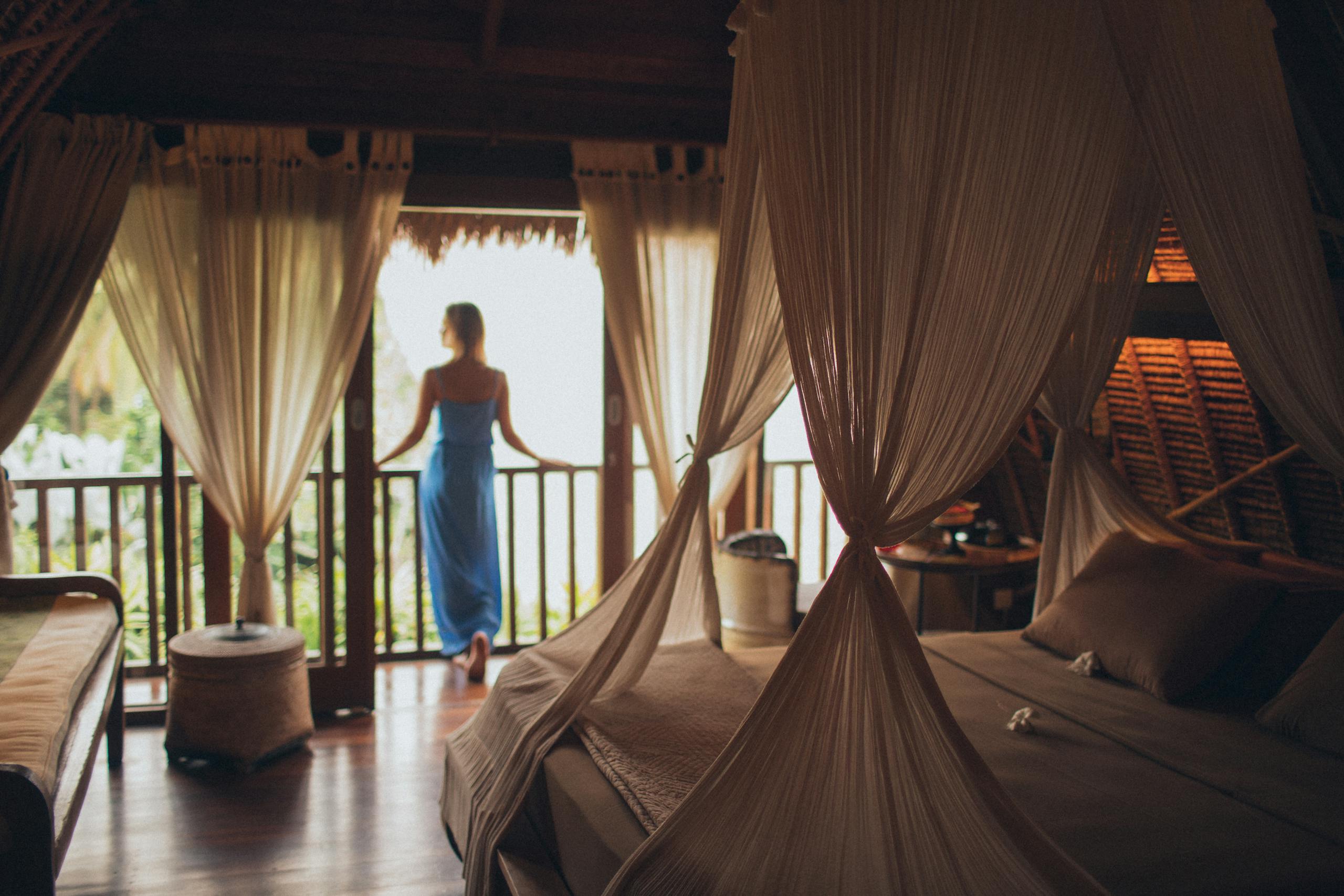
Why Does Overstimulation Hit Introverts So Hard?
There’s a physiological reason why a long day in a busy environment leaves some people energized and others completely depleted. According to research published in PubMed Central, a 2012 study in Frontiers in Human Neuroscience found that introverts show greater cortical arousal in response to external stimulation than extroverts do. As documented in additional research from PubMed Central, in plain terms, the introvert brain is processing more, reacting more, and working harder to filter what’s coming in. That’s not a flaw. It’s a feature that comes with real costs when the environment doesn’t account for it.
What’s your personality type?
Take our free 40-question assessment and get a detailed personality profile with dimension breakdowns, context analysis, and personalised insights.
Discover Your Type8-12 minutes · 40 questions · Free
I spent years thinking I just wasn’t tough enough. Other agency leaders seemed to thrive on the chaos, the back-to-back client calls, the open-door policy that meant your door was never actually closed. I kept pushing through, convinced the problem was my attitude rather than my neurology. What I was actually experiencing was chronic overstimulation with no real recovery built into my day, a pattern that Psychology Today research suggests is particularly common among introverts in high-pressure environments, and one that Harvard research has shown can significantly impact professional performance and well-being.
The American Psychological Association notes that chronic stress from environmental overload, including noise, crowding, and constant social demands, can impair cognitive function, emotional regulation, and long-term health. For people wired toward internal processing, the threshold for “too much” arrives earlier and the recovery time is longer. According to Psychology Today, that’s not weakness. That’s how the system works.
Home should be where that recovery happens. When it isn’t, the deficit compounds. You arrive at the next day already behind.
What Actually Makes a Space Feel Restorative?
The word “sanctuary” gets used loosely, often as shorthand for a room with candles and a throw blanket. What I mean is something more specific: a space that actively reduces the demands on your nervous system rather than simply looking pleasant. The difference matters.
Restorative environments share a few consistent qualities. They offer predictability, which reduces the brain’s need to stay on alert. They limit competing sensory inputs, which frees up cognitive bandwidth. They signal safety in a way the body recognizes before the mind catches up. And they’re yours, meaning they reflect your preferences rather than a compromise with everyone else’s needs.
Environmental psychology has been examining this for decades. Research from the University of Michigan, building on Attention Restoration Theory, found that environments with certain qualities, including natural elements, low complexity, and a sense of “being away” from demands, measurably restore directed attention and reduce mental fatigue. You don’t need a forest. You need a space that mimics those qualities in whatever form fits your life.
For me, that ended up being a corner of my home office with a specific chair, a lamp on a dimmer, and a strict rule that my phone stayed on the desk across the room. Not glamorous. Completely effective.

How Do You Control Sound Without Renovating Your Home?
Sound is often the most disruptive element in an overstimulated mind’s environment, and it’s the one people feel least empowered to address. You can’t always control what your neighbors do, what traffic sounds like outside your window, or what the rest of your household is running in the background. What you can control is more than most people realize.
Soft furnishings absorb sound in ways that bare floors and walls don’t. A thick rug, curtains with some weight to them, bookshelves lined with books, these all reduce the way sound bounces around a room. I added a bookshelf to one wall of my home office years ago, partly for the books and partly because I’d noticed that the room felt less harsh when there was something to absorb the echo.
White noise and brown noise are worth experimenting with. White noise masks irregular sounds by creating a consistent audio backdrop. Brown noise, which is lower and richer in tone, tends to feel less fatiguing over longer periods. The National Institutes of Health has published research indicating that certain sound masking approaches can reduce cognitive disruption from intermittent noise, which is exactly the kind of noise that’s hardest for an overstimulated mind to filter.
Noise-canceling headphones changed my working life in a way I didn’t anticipate. Not because I always used them with music, but because putting them on signaled to my brain that the auditory environment was under control. Sometimes the psychological effect of having a tool matters as much as the tool itself.
If you share your home with others, the conversation about sound is worth having explicitly. I’ve had it. It’s uncomfortable the first time and much easier after that. Most people in your life want to support you; they just need to understand what support actually looks like.
Does Lighting Really Affect How Depleted You Feel?
Yes, and significantly more than most people account for. Harsh overhead lighting, particularly fluorescent lighting, has been consistently linked to increased fatigue and reduced comfort in extended work environments. A 2019 review in the journal Building and Environment found that lighting quality, including color temperature and intensity, directly affects cognitive performance and emotional state.
Bright, cool-toned light signals alertness to the brain. That’s useful in the morning. It’s counterproductive when you’re trying to wind down after a day of overstimulation. Warm-toned light, especially at lower intensities, supports the nervous system’s shift toward rest. Dimmers are one of the most cost-effective investments you can make in your home environment.
My sanctuary corner has a lamp with a warm bulb on a dimmer, and I almost never use the overhead light in that space. There’s something about the quality of that light that tells my body we’re done performing for the day. After years of fluorescent-lit conference rooms and the relentless brightness of open-plan offices, I’ve come to treat warm low light as a kind of signal, a cue to the nervous system that it’s safe to let go.
Natural light during the day is worth protecting too. Exposure to daylight during working hours supports circadian rhythm regulation, which in turn affects how well you recover during rest. If your sanctuary space gets natural light, keep it. If it doesn’t, full-spectrum bulbs can partially compensate.

How Much Space Do You Actually Need for a Sanctuary?
Less than you think. The sanctuary concept isn’t about having a dedicated room, though that’s ideal if you have one available. It’s about having a defined space with defined rules, even if that space is a corner of a room you share with other purposes.
What matters more than square footage is consistency. The brain learns through repetition. When you use the same space for the same purpose consistently, it begins to associate that space with that state. You start to feel the shift before you’ve even settled in, because your nervous system has learned what this place means. That’s not mysticism; it’s conditioning, and it works in your favor once you’ve established the pattern.
During a particularly demanding stretch of agency work, I was managing three major client accounts simultaneously while also dealing with a staff restructuring. My sanctuary was a chair by the window in my bedroom. That was it. But I used it every evening for the same thirty minutes, with the same lamp on, the same cup of tea, and my phone in another room. Within a few weeks, sitting down in that chair produced a measurable shift in my shoulders. The tension would drop before I’d done anything except sit down.
Small spaces work. Consistent use is what makes them work.
What Role Does Clutter Play in Overstimulation?
A significant one, and it’s underestimated. Visual clutter creates low-level cognitive load. Every object in your field of vision that doesn’t belong, or that represents an unfinished task, is a small demand on your attention. Multiply that across a room and you have an environment that’s quietly exhausting even when nothing is happening in it.
A 2011 study from Princeton University’s Neuroscience Institute found that physical clutter competes for attention in the visual cortex, reducing the brain’s ability to focus and increasing stress responses. That finding has held up in subsequent research and aligns with what many people with introvert tendencies report anecdotally: cluttered spaces feel louder than they look.
This doesn’t mean you need to pursue minimalism as an aesthetic. It means that your sanctuary space specifically should be cleared of visual noise. Objects that don’t serve rest or restoration don’t belong there. Work materials, unread mail, anything that signals obligation, keep those out of the space where you’re trying to recover.
I’m not naturally tidy. My desk is usually organized chaos. But my sanctuary corner has a rule: nothing lands there that isn’t intentional. A book I’m reading, a plant, the lamp. That’s it. The boundary is small and easy to maintain, and it makes the space feel categorically different from the rest of the room.
How Do You Set Boundaries Around Your Sanctuary Space?
Creating the physical space is the easier half. The harder work is protecting it from the demands that will inevitably press against it, your own habits included.
Phones are the most common intrusion. The research on smartphone use and stress recovery is consistent: the presence of a phone, even a silenced one, reduces the depth of cognitive rest. A 2017 study published in the Journal of the Association for Consumer Research found that the mere presence of a smartphone on a desk reduced available cognitive capacity, even when participants weren’t using or thinking about it. Your sanctuary needs to be a phone-free zone if it’s going to function as one.
Communicating boundaries to the people you live with is equally important. I was reluctant to have this conversation for longer than I should have been. I think I was afraid it would sound like I was asking for special treatment, or that it would come across as rejecting the people I loved. What I found was that framing it in terms of what I needed rather than what I wanted made it easier. “I need thirty minutes where I’m not available” lands differently than “I need to be left alone.”
Time boundaries matter too. A sanctuary that you use reactively, only when you’re already at your limit, is less effective than one you use proactively. Building it into your daily rhythm, the same time each day if possible, gives your nervous system a reliable anchor. You stop white-knuckling through the day hoping you’ll have energy left by evening.

Can Nature Elements Actually Help an Overstimulated Mind?
The evidence says yes, and the effect is stronger than most people expect. Biophilic design, the practice of incorporating natural elements into built environments, has been studied extensively in workplace and healthcare contexts. Plants, natural materials, water sounds, and views of nature all show measurable effects on stress markers, including cortisol levels and heart rate variability.
Mayo Clinic research on stress management points to nature exposure as one of the most consistently effective tools for nervous system regulation. You don’t need a garden view. A single plant in your sanctuary space adds a living element that the brain responds to differently than manufactured objects. The texture of wood or stone, even in small doses, carries similar effects.
I have a small pothos on the shelf in my sanctuary corner. I didn’t put it there for aesthetic reasons initially; I put it there because I’d read about the research and decided to test it. What I noticed over time was that looking at it, particularly when I was trying to let my mind go quiet, gave my eyes somewhere to rest that didn’t feel like a demand. Plants don’t ask anything of you. In an overstimulated mind’s world, that matters.
Water sounds, whether from a small fountain or a recorded soundscape, work similarly. The sound of moving water is processed by the brain as non-threatening and rhythmically predictable, which makes it easier to settle into than silence, particularly for minds that tend to fill silence with internal chatter.
What Happens in Your Body When You Use Your Sanctuary Consistently?
The effects are cumulative and extend well beyond the time you spend in the space. Consistent use of a restorative environment supports what researchers call parasympathetic nervous system activation, the physiological state associated with rest, digestion, and recovery. This is the counterpart to the fight-or-flight response that overstimulation triggers.
The National Institutes of Health has published extensive research on the relationship between environment, stress hormones, and long-term health outcomes. Chronic overstimulation without adequate recovery is associated with elevated cortisol, disrupted sleep, impaired immune function, and increased risk of anxiety and depression. These aren’t abstract risks. They’re the direction you drift when your environment never gives your nervous system a chance to reset.
What I noticed after about six weeks of consistent sanctuary use was that my sleep improved before anything else. I was falling asleep faster and waking up less. Then I noticed I was arriving at difficult client conversations with more patience than I’d had before. Not because anything had changed about the conversations, but because I was starting each day less depleted than I’d been.
The sanctuary doesn’t solve the external demands. It gives you the capacity to meet them without running empty.
Psychology Today has written extensively about the connection between introvert energy management and long-term wellbeing, framing recovery not as a luxury but as a functional requirement for people whose nervous systems are wired toward deep processing. That framing helped me stop feeling guilty about needing it.

Where Do You Start If Your Home Doesn’t Feel Like It Has Room for This?
Start with what you have and work inward from there. A sanctuary is a practice as much as it is a place. You can begin with a chair, a lamp, and fifteen minutes. The physical refinements come later, once you’ve established that the practice is worth protecting.
Audit your home for where you naturally go when you’re depleted. Most people already have an instinct about this, a spot they gravitate toward when they need to breathe. That instinct is worth trusting. Build around it rather than designing something from scratch in a space that doesn’t already feel like yours.
Remove one thing from that space before you add anything. The subtraction often matters more than the addition. Take out the work bag, the pile of mail, the charger that keeps your phone nearby. Create the absence of demand before you fill the space with restorative elements.
Then add one thing. A lamp with warm light if you don’t have one. A plant if the space gets enough daylight. A sound source if silence fills up with anxiety rather than rest. One intentional addition, used consistently, builds the association your nervous system needs to recognize this as a place of recovery.
The sanctuary I use now took about two years to fully develop. It started as a chair and a rule about my phone. Everything else came gradually, as I paid attention to what helped and what didn’t. You don’t have to design it all at once. You just have to start.
If you’re thinking about the broader picture of how introverts manage energy, recover from overstimulation, and build lives that work with their wiring rather than against it, that’s territory we cover throughout this site. The introvert lifestyle section brings together perspectives on everything from daily routines to how quiet people build relationships on their own terms.
About the Author
Keith Lacy is an introvert who’s learned to embrace his true self later in life. After 20 years in advertising and marketing leadership, including running agencies and managing Fortune 500 accounts, Keith now channels his experience into helping fellow introverts understand their strengths and build fulfilling careers. As an INTJ, he brings analytical depth and authentic perspective to every article, drawing from both professional expertise and personal growth.
Frequently Asked Questions
What is a home sanctuary for introverts?
A home sanctuary for introverts is a dedicated physical space designed to support nervous system recovery after periods of overstimulation. It’s characterized by reduced sensory input, controlled lighting, limited sound disruption, and an absence of visual clutter or items that signal obligation. The space works through consistent use, which trains the brain to associate it with rest and recovery rather than performance or demand.
How do I create a sanctuary space when I live with other people?
Creating a sanctuary in a shared home requires clear communication and defined boundaries more than it requires dedicated square footage. Identify a corner or area that can serve as your recovery space, establish consistent rules about phone-free use and uninterrupted time, and have a direct conversation with the people you live with about what you need and why. Framing the request around what you need to function well, rather than what you want to avoid, tends to make the conversation more productive. Small, consistent use of even a shared space builds the association your nervous system needs.
Does the size of the sanctuary space matter?
Size matters far less than consistency and intentionality. A single chair in a corner of a bedroom can function as an effective sanctuary if it’s used consistently for the same restorative purpose. The brain builds associations through repetition, and a small space used daily will produce stronger recovery effects than a larger space used sporadically. What matters most is that the space is defined, that it’s free of sensory and cognitive demands, and that you return to it reliably enough for the association to form.
Why do phones need to be kept out of a sanctuary space?
A 2017 study published in the Journal of the Association for Consumer Research found that the mere presence of a smartphone reduces available cognitive capacity, even when the phone is silenced and not being actively used. For an overstimulated mind trying to recover, that residual cognitive demand is significant. The sanctuary’s effectiveness depends on reducing all competing demands on attention, and the phone represents one of the most potent sources of that demand in modern environments. Keeping it in another room removes the cognitive pull entirely.
How long does it take to feel the benefits of a consistent sanctuary practice?
Most people notice initial shifts within two to four weeks of consistent daily use, with the most common early benefit being improved sleep quality. Deeper effects, including greater emotional regulation, more patience in demanding situations, and a reduced sense of chronic depletion, tend to emerge over six to eight weeks. The timeline varies depending on how depleted you’re starting from and how consistently you use the space. Building the practice into a fixed daily routine, rather than using it reactively when you’re already overwhelmed, accelerates the benefits.