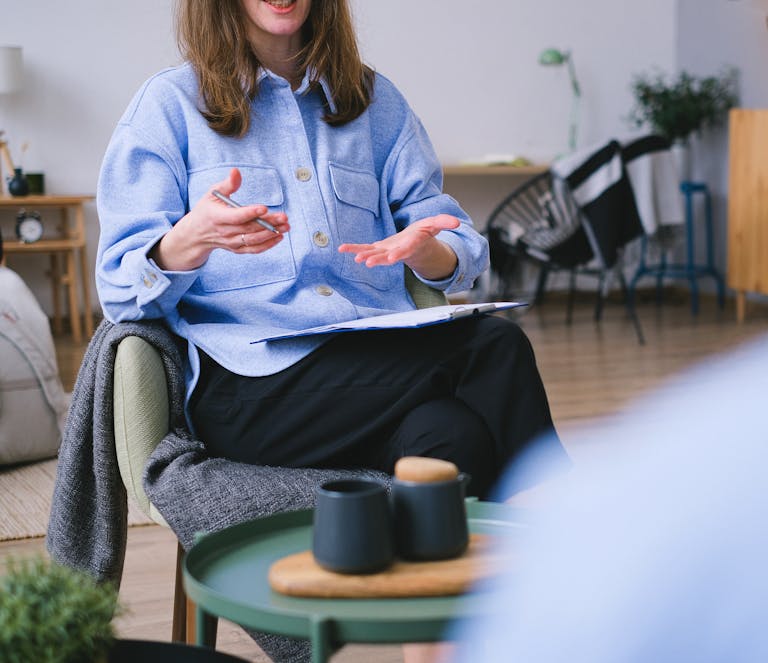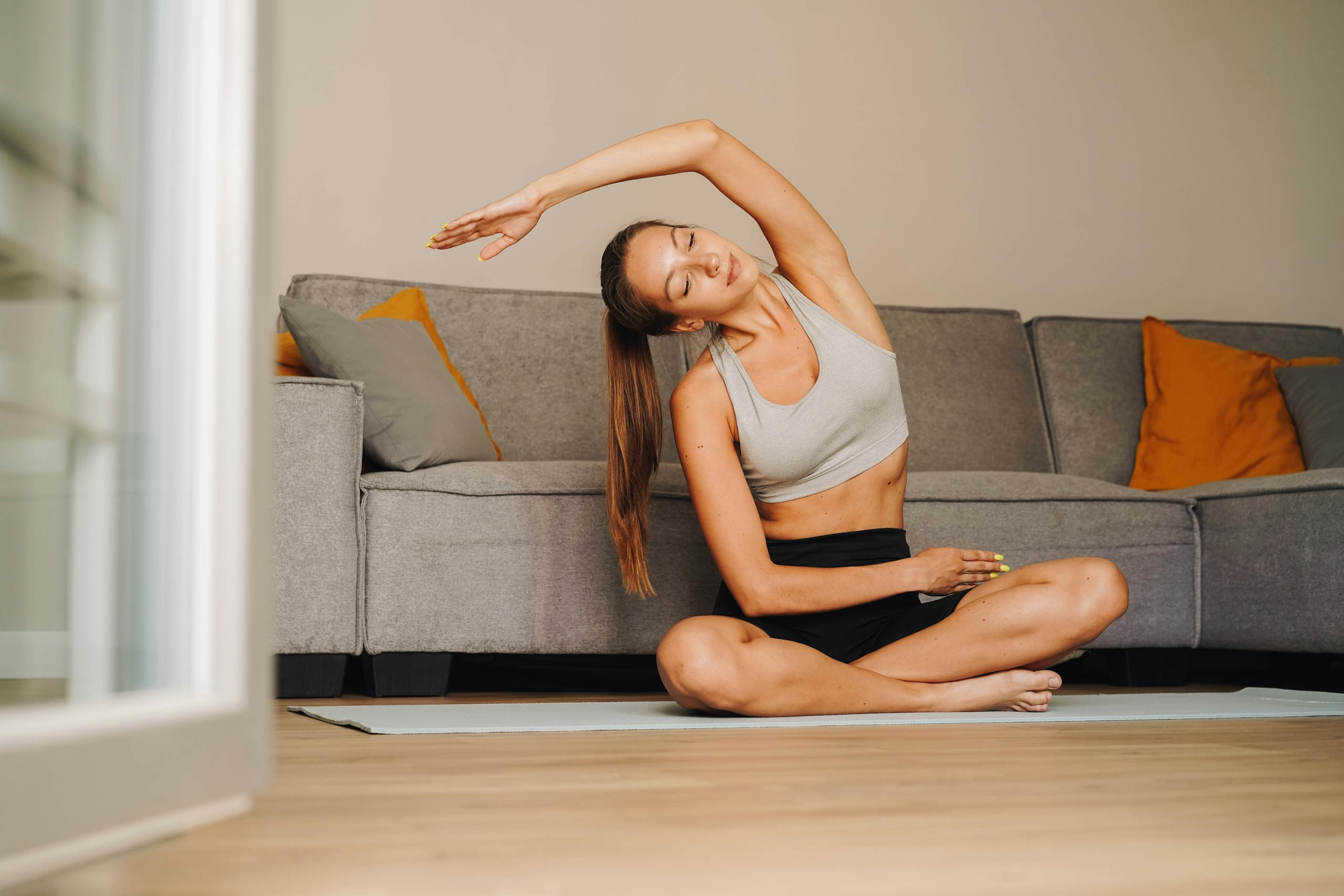

The thought of walking into a yoga studio used to make my stomach turn. Not because I disliked yoga itself, but because the mere idea of fumbling through poses while strangers watched filled me with dread. As someone who spent twenty years leading advertising teams and presenting to boardrooms, you might think public settings wouldn’t bother me. But there’s something uniquely vulnerable about exercise, about being in your body instead of your head, that strips away the professional armor introverts rely on.
I discovered yoga at home almost by accident during a particularly brutal stretch of agency work. My nervous system was fried, my back ached from endless hours at my desk, and the idea of adding another social obligation to my calendar felt impossible. So I rolled out a mat in my living room, pulled up a beginner video, and closed the blinds. That first session was awkward and imperfect. I fell out of poses. I couldn’t touch my toes. But for the first time in months, I felt my shoulders drop away from my ears.
If you’ve been avoiding yoga because studios feel overwhelming, or because you’re embarrassed about your flexibility, or because the thought of exercising in front of others makes you want to hide, this guide is for you. Home yoga isn’t a consolation prize for introverts who can’t handle “real” classes. It’s actually an ideal way to build a sustainable practice that honors your need for privacy, quiet, and genuine self-connection.
Why Self-Consciousness Keeps Introverts Away from Exercise
Before we dive into home yoga specifically, it helps to understand why exercise environments feel so threatening to many introverts. This isn’t weakness or excessive sensitivity. Research on social physique anxiety shows that self-consciousness about our bodies significantly impacts exercise behavior. People experiencing this anxiety often describe feeling like others are watching and judging them, even when rationally they know everyone is focused on their own workouts.
What’s your personality type?
Take our free 40-question assessment and get a detailed personality profile with dimension breakdowns, context analysis, and personalised insights.
Discover Your Type8-12 minutes · 40 questions · Free
For introverts, this anxiety compounds with our natural tendency to process experiences deeply. We’re not just doing a yoga pose. We’re simultaneously aware of how we look, what others might be thinking, whether we’re doing it correctly, and how this compares to everyone else in the room. That’s an exhausting amount of mental processing layered on top of physical exertion.
I remember early in my career attending a corporate gym class because a client invited me. I spent more energy worrying about whether my form looked ridiculous than actually engaging with the workout. Afterward, I felt more drained than energized. That’s the opposite of what exercise should accomplish, and it’s exactly why home practice became my sanctuary.
The Science Behind Why Yoga Works for Introverts
Yoga isn’t just stretching with fancy names. The practice creates measurable changes in your nervous system, which is particularly relevant for introverts who often live in a state of subtle overstimulation. A comprehensive review of yoga’s therapeutic effects found that regular practice enhances muscular strength and flexibility while also reducing stress, anxiety, and depression. But the mechanism behind these benefits matters as much as the outcomes themselves.
Your autonomic nervous system has two branches: the sympathetic system that activates your stress response, and the parasympathetic system that promotes rest and recovery. Many introverts spend too much time with their sympathetic system running hot, responding to the constant stimulation of modern life. Studies on yoga and autonomic function demonstrate that consistent practice increases parasympathetic activity while decreasing sympathetic dominance. In practical terms, yoga helps shift you from a state of chronic alertness into genuine relaxation.
This matters especially for introverts because we’re already spending significant mental energy filtering stimuli and managing our environment. Understanding how introverts recharge helps explain why yoga practiced alone often produces better results than studio classes. The practice becomes purely about your internal experience rather than managing social dynamics simultaneously.
Creating Your Home Yoga Space
You don’t need a dedicated yoga room or expensive equipment. What you need is a space where you feel genuinely private and undisturbed. When I started, my “yoga space” was a six-foot strip of carpet between my couch and coffee table. It worked because I knew no one was watching, no one would interrupt, and I could fall on my face without witnesses.
Start by identifying a space roughly the size of a yoga mat plus about a foot on each side for arm movements. Natural light helps but isn’t essential. More important is minimizing distractions. Close doors. Put your phone in another room or at minimum on airplane mode. If you live with others, communicate that this time is non-negotiable. Treating your practice as a real commitment rather than something that happens around other activities makes an enormous difference in consistency.
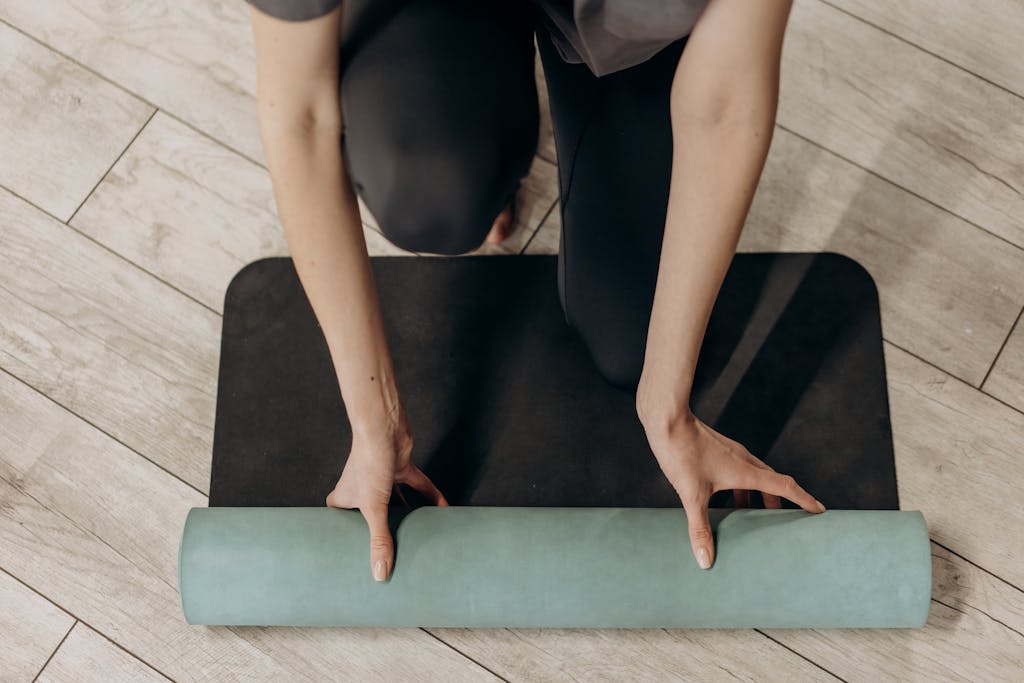
Equipment-wise, a basic yoga mat provides cushioning and grip. If you have sensitive knees, a thicker mat helps. Two yoga blocks and a strap are useful but not essential when starting out. A folded blanket or firm pillow can substitute for blocks. The key is removing any excuse that prevents you from rolling out your mat and beginning.
Starting Your Practice Without Overwhelm
Here’s where many introverts get stuck: the sheer volume of yoga content available creates decision paralysis. Thousands of YouTube videos, dozens of apps, endless styles with confusing names. Your inner perfectionist wants to find the “right” approach before beginning. But waiting for certainty means never starting.
Begin with ten minutes. That’s it. Search for “gentle beginner yoga” or “restorative yoga for beginners” and pick literally any video under fifteen minutes. Don’t research. Don’t compare. Just pick one and do it. You can refine your approach later, but the goal right now is building the habit of showing up on your mat.
Mindfulness practice comes naturally to reflective types, which is good news because yoga fundamentally is mindfulness through movement. You’re not trying to achieve perfect poses. You’re trying to be present in your body, notice your breath, and observe sensations without judgment. That’s it. The shapes your body makes are secondary to the quality of attention you bring.
Poses That Welcome Beginners
Some poses feel accessible from day one, while others require patience and progression. Start with these foundational postures that build body awareness without demanding extreme flexibility:
Child’s Pose serves as your home base. Whenever you feel overwhelmed, confused, or simply need a break, return here. Kneel on your mat, sit back on your heels, fold forward with arms extended or resting alongside your body, and let your forehead touch the mat. This pose activates the relaxation response and gives your brain permission to rest.
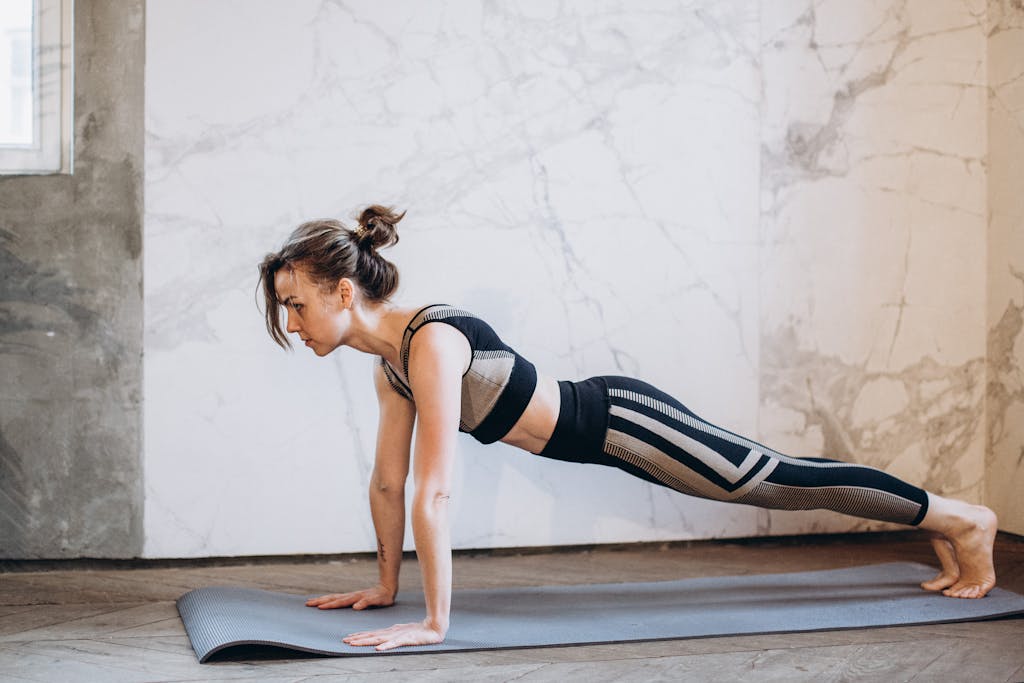
Cat-Cow movements warm up your spine gently. On hands and knees, alternate between arching your back upward while tucking your chin, then dropping your belly while lifting your gaze. Move with your breath, inhaling as you arch, exhaling as you round. This simple movement reveals where you’re holding tension.
Mountain Pose teaches you to stand with intention. Feet grounded, weight distributed evenly, spine lengthened, shoulders relaxed away from ears. It looks like just standing there, but conscious standing creates awareness of habitual patterns. I realized through Mountain Pose that I’d been carrying my shoulders near my earlobes for decades.

Downward Dog will feel challenging at first, and that’s normal. Your hamstrings may protest. Your arms may shake. Bend your knees as much as needed. The goal isn’t straight legs but rather creating length through your spine while building upper body strength over time.
Working with Self-Consciousness During Practice
Even practicing alone, self-consciousness can creep in. You might find yourself thinking about how you look, comparing yourself to the instructor on screen, or criticizing your own limitations. These thoughts are normal but don’t require your engagement.
Recent research on yoga and mental health shows that consistent practice reduces anxiety and improves emotional regulation. Part of how this works is through practicing non-reactive awareness. When self-critical thoughts arise during your practice, notice them without arguing. “There’s that thought about looking awkward.” Then return attention to your breath or the physical sensations in your body.
I’ve found it helpful to practice with my eyes closed during certain poses, especially standing balances where I tend to fixate on what I look like. Closing my eyes shifts attention inward and reminds me that this practice is about feeling, not performing.
Another strategy involves choosing videos without mirrors in the frame. Some yoga videos feature studios with wall mirrors, which can trigger comparison even when you’re alone. Look for instructors who film in simple spaces without reflective surfaces.
Styles of Yoga That Suit Introverted Temperaments
Not all yoga is created equal, and certain styles align better with introvert needs. Understanding the differences helps you find practices that energize rather than drain you.
Restorative yoga uses props to support your body in gentle poses held for five to twenty minutes. The goal is complete relaxation with minimal muscular effort. This style excels at nervous system recovery and suits introverts who arrive at their mat already depleted. Experts note that yoga’s non-judgmental environment helps introverts accept themselves while finding answers through peaceful solitude.
Yin yoga involves holding passive stretches for three to five minutes, targeting connective tissue and encouraging deep release. It’s slow, quiet, and meditative. The long holds create space for mental processing, which introverts often appreciate. However, the stillness can also surface difficult emotions, so approach yin practice with self-compassion.
Hatha yoga provides a gentler, slower-paced approach than flow-based styles. You hold poses longer, allowing time to refine alignment and notice subtle sensations. Hatha builds strength and flexibility without the cardiovascular intensity of faster practices.
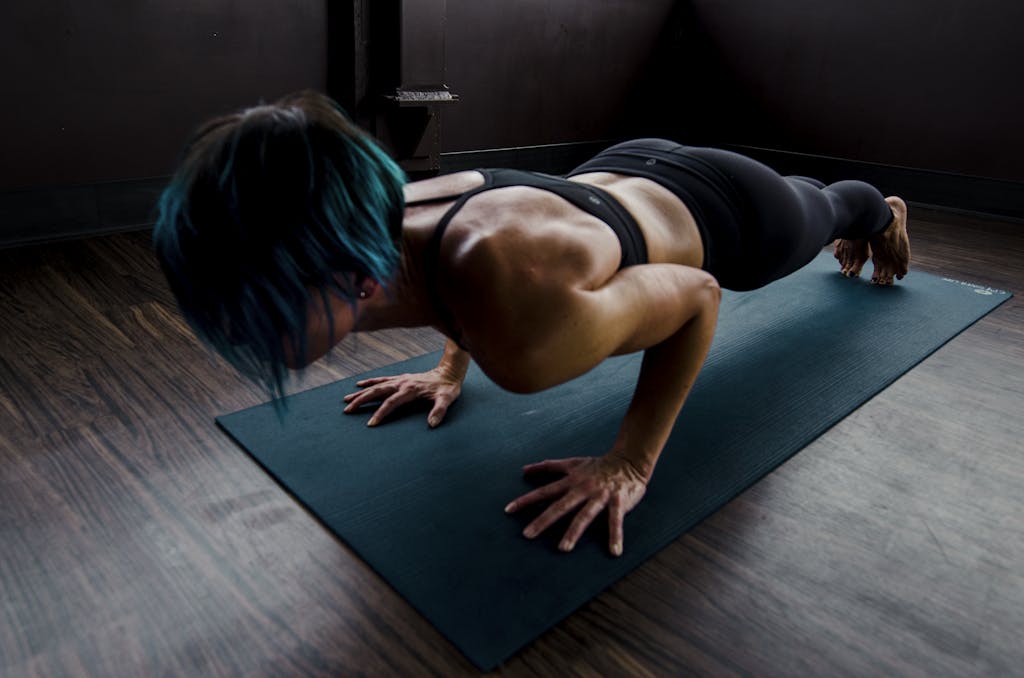
Vinyasa or flow yoga links poses together with breath, creating continuous movement. While energizing and excellent for building heat, faster flows can feel overwhelming when you’re learning. Consider developing comfort with individual poses before attempting flow sequences.
Building a Sustainable Practice Habit
Consistency matters more than duration. Ten minutes daily produces better results than an hour once weekly. Your nervous system responds to regular signals that it’s safe to relax, and those signals need repetition to become effective.
Anchor your practice to an existing habit. After morning coffee but before checking email. After work before dinner. Before bed as wind-down. The specific time matters less than the consistency of linking yoga to something you already do automatically.
Essential self-care strategies for introverts often fail because they’re treated as optional luxuries rather than non-negotiable maintenance. Your yoga practice deserves the same priority as brushing your teeth. It’s not indulgent. It’s how you maintain a functioning nervous system in a world that constantly demands your energy.
Track your practice simply. A check mark on a calendar works. So does a note in your phone. Don’t make tracking elaborate, but do make it visible. Seeing a string of completed sessions builds momentum and makes skipping feel like breaking a streak.
Managing Energy Through Your Practice
One advantage of home practice is customizing based on your current energy state. Studio classes follow predetermined sequences regardless of how you’re feeling. At home, you choose what serves you today.
When depleted, choose restorative or yin practices. Avoid anything requiring significant physical effort. Your nervous system needs gentleness, not additional demands. Solitude plays a vital role in introvert wellbeing, and coupling that solitude with gentle movement creates powerful recovery conditions.
When restless or anxious, slightly more active practices help discharge excess energy. A few rounds of sun salutations, warrior poses, or standing sequences can settle an agitated mind. The key is matching intensity to need rather than forcing yourself through practices that don’t serve your current state.
Research on exercise and anxiety shows that physical activity increases self-efficacy by providing experiences of successfully coping with stress. As your practice develops and poses become more accessible, you build confidence that extends beyond the mat. That awkward first attempt at downward dog eventually becomes a pose you can hold steadily, evidence that discomfort doesn’t have to mean defeat.
Breathing Practices for Calm
Breath work, or pranayama, forms a core element of yoga that’s often overlooked by beginners focused on physical poses. Yet conscious breathing directly influences your nervous system and can be practiced anywhere, anytime.
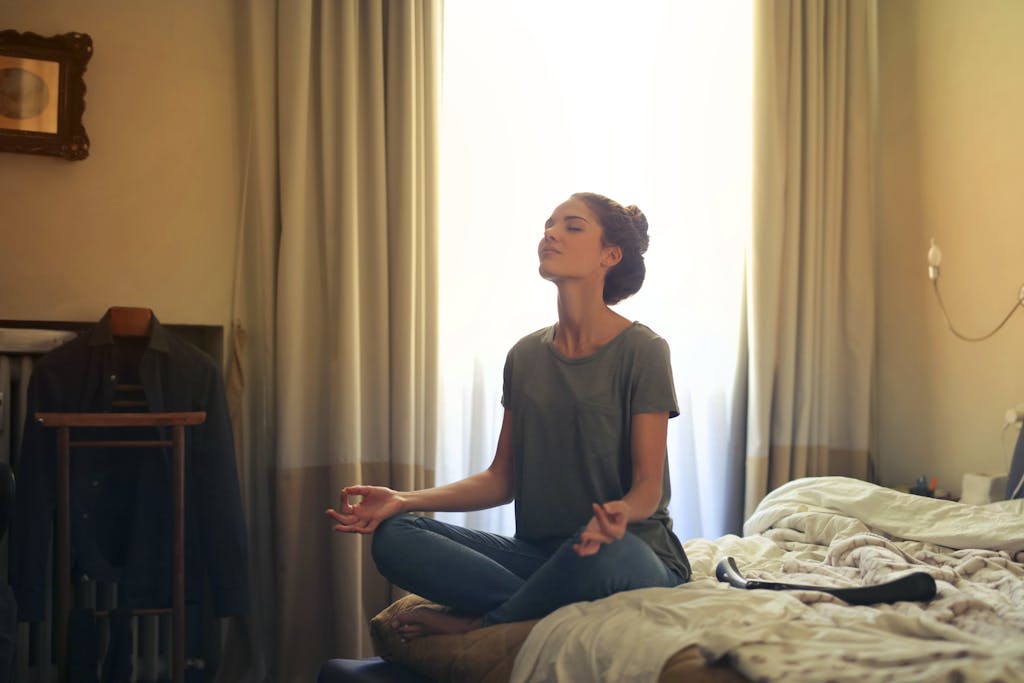
Start with simple breath awareness. Sit comfortably and observe your natural breath without changing it. Notice where breath moves in your body. Notice the pause between inhale and exhale. This observation alone often naturally slows and deepens breathing.
Extended exhale breathing activates your parasympathetic response. Inhale for a count of four, then exhale for a count of six or eight. The longer exhale signals safety to your nervous system. Practice this for a few minutes whenever you notice tension building.
Scientific research on yoga therapy confirms that breathing practices increase parasympathetic activation, leading to mental relaxation. The effect is measurable and relatively quick acting, making breath work an accessible tool for introverts managing daily overstimulation.
Overcoming Common Obstacles
Several challenges commonly derail home yoga practice. Anticipating them helps you navigate around rather than getting stuck.
Perfectionism tells you that if you can’t do a pose “correctly,” you shouldn’t do it at all. This is false. Modified poses still provide benefits. Using props isn’t cheating. Resting when needed isn’t failing. Your body today is the only body you’re working with, and comparing it to flexible instructors or your imagined ideal serves no one.
Inconsistency happens when life gets busy. Rather than abandoning practice entirely during hectic periods, shrink it. Even five minutes maintains the habit. Even a few conscious breaths while sitting on your mat counts. The goal during difficult times is simply not stopping completely.
Boredom emerges when you’ve been doing the same routine for weeks. Variety helps, but so does recognizing that yoga works through repetition. The same poses done consistently reveal subtle changes over time. You might also explore new instructors or styles periodically to maintain engagement.
Self-care approaches that actually work for introverts share a common feature: they’re sustainable rather than dramatic. Grand gestures of wellness rarely stick. Small, consistent practices compound into significant change over months and years.
When You Might Consider a Studio
Home practice serves as an excellent foundation, and for many introverts, it remains the preferred approach indefinitely. However, occasional studio visits offer benefits worth considering once you’ve established confidence in your practice.
In-person instruction allows teachers to observe and correct alignment issues that videos can’t address. A few private lessons or small group classes can accelerate progress by identifying and correcting habits you’ve developed unknowingly.
If you do venture into studios, choose strategically. Early morning or midday classes typically attract smaller crowds. Restorative and yin classes tend to have quieter atmospheres than power or flow classes. Smaller studios often feel less overwhelming than large commercial gyms with yoga programs.
Position yourself toward the back of the room where you can see others without feeling watched. Arrive early enough to set up without rushing but not so early that you’re making small talk. Leave immediately after class ends if socializing feels draining.
Meditation excellence develops through consistent practice, and the same principle applies to comfort in yoga settings. Your first studio experience might feel awkward, but that discomfort decreases with repetition.
The Long View on Yoga and Introvert Wellbeing
Yoga offers introverts something increasingly rare in modern life: a practice that rewards turning inward. While much of the world pressures us toward more connection, more stimulation, more engagement, yoga creates legitimate space for solitude and internal attention.
The benefits I’ve experienced extend beyond physical flexibility or stress reduction, though those matter. Yoga taught me to notice what my body needs before it reaches crisis levels. It gave me tools for managing the nervous system spikes that accompany demanding work. Most significantly, it provided evidence that caring for myself isn’t selfish indulgence but necessary maintenance.
Your practice will look different from mine. The poses that serve you, the styles you prefer, the time of day that works, the frequency that’s sustainable will all be yours to discover. What matters is starting where you are, with what you have, in whatever space you can claim as private.
Roll out your mat. Close the door. Let the first awkward attempts be just that, first attempts. Your nervous system will thank you, not eventually, but immediately. And that relief will bring you back tomorrow, and the day after, until yoga becomes not another obligation but a genuine refuge.
Frequently Asked Questions
How long should my home yoga sessions be as a beginner?
Start with ten to fifteen minutes and build from there. Short sessions completed consistently produce better results than long sessions done sporadically. As comfort grows, you might naturally extend to twenty or thirty minutes, but even longtime practitioners often maintain shorter daily practices rather than lengthy occasional ones.
What if I’m too inflexible for yoga?
Inflexibility is actually a reason to practice yoga, not an obstacle. Yoga meets you where you are and helps develop flexibility over time. Use props like blocks and straps to make poses accessible, and remember that modified poses still provide benefits. The practice isn’t about achieving pretzel-like flexibility but about improving from your own starting point.
Can yoga replace other forms of exercise?
Yoga can serve as a complete physical practice for many people, depending on the style and intensity you choose. More vigorous styles like vinyasa or power yoga provide cardiovascular benefits, while all styles improve strength, flexibility, and balance. However, you might also combine yoga with other activities you enjoy. The goal is sustainable movement that serves your body and temperament.
How do I stay motivated when practicing alone?
Focus on how you feel after practice rather than how you feel about starting. Track your sessions visually to build momentum. Vary your routine to prevent boredom. Connect your practice to intrinsic rewards like stress reduction and improved sleep rather than external outcomes. Remember that motivation often follows action rather than preceding it. Sometimes the hardest part is simply unrolling your mat.
Is it normal to feel emotional during or after yoga?
Absolutely. Yoga can release tension stored in the body, and that release sometimes comes with unexpected emotions. This is particularly common in hip-opening poses and longer holds. Allow whatever arises without judgment, breathe through it, and know that emotional release is often part of the healing process. If emotions feel overwhelming, return to child’s pose and gentle breathing until you feel grounded.
Explore more wellness resources in our complete Solitude, Self-Care and Recharging Hub.
About the Author
Keith Lacy is an introvert who’s learned to embrace his true self later in life. With a background in marketing and a successful career in media and advertising, Keith has worked with some of the world’s biggest brands. As a senior leader in the industry, he has built a wealth of knowledge in marketing strategy. Now, he’s on a mission to educate both introverts and extroverts about the power of introversion and how understanding this personality trait can unlock new levels of productivity, self-awareness, and success.