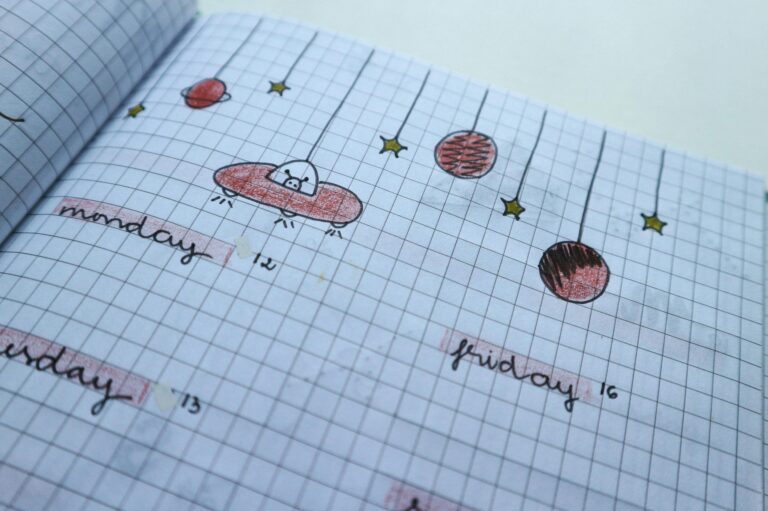

ESFJs are natural connectors, and the tools that work best for them reflect exactly that: systems built around people, harmony, and meaningful progress rather than cold efficiency. The right productivity setup for an ESFJ isn’t about doing more faster. It’s about creating an environment where their relational energy gets channeled into real results without burning out the very warmth that makes them effective.
If you haven’t confirmed your type yet, our free MBTI personality test is a good place to start before investing in any system or tool.
What follows is a personalized product guide built specifically around how ESFJs think, feel, and work. Every recommendation here connects back to the real cognitive and emotional patterns of this type, not generic productivity advice dressed up with a personality label.
Over the years running advertising agencies, I worked alongside some of the most effective ESFJs I’ve ever encountered. Account managers, project leads, client services directors. They weren’t just organized. They were the human infrastructure holding everything together. Watching them thrive or struggle depending on their tools taught me more about personality-matched productivity than any book ever did. Our MBTI Extroverted Sentinels hub covers both ESTJ and ESFJ types in depth, and this guide fits squarely within that broader exploration of how Sentinel personalities approach work, structure, and relationships.

What Does ESFJ Productivity Actually Look Like in Practice?
ESFJs lead with Extraverted Feeling, which means their productivity is fundamentally social and values-driven. They don’t just want to complete tasks. They want to complete tasks that matter to people they care about. Deadlines feel more urgent when someone else is counting on them. Projects feel more meaningful when the outcome benefits a team or community.
What’s your personality type?
Take our free 40-question assessment and get a detailed personality profile with dimension breakdowns, context analysis, and personalised insights.
Discover Your Type8-12 minutes · 40 questions · Free
At the agencies I ran, I watched this play out constantly. My most effective account managers would routinely work late not because they were chasing personal ambition, but because a client they genuinely liked needed something done. That relational motivation is a genuine strength, but it also creates a specific vulnerability: without the right systems, ESFJs can end up perpetually reactive, always responding to other people’s urgency instead of building toward their own priorities.
Their secondary function, Introverted Sensing, means ESFJs also have a strong attachment to proven methods and established routines. They’re not early adopters by nature. They want tools that feel stable, familiar, and trustworthy. A flashy new app with a steep learning curve will get abandoned within a week. A simple, consistent system they’ve been using for years will become indispensable.
This combination of relational motivation and routine-anchored execution means the best ESFJ productivity tools share a few common traits: they’re visually warm rather than sterile, they support collaboration rather than isolation, they reward consistency rather than demanding constant reinvention, and they help ESFJs track their impact on others, not just their output.
A 2015 study published in PLOS ONE via PubMed found meaningful links between personality traits and productivity behaviors, particularly around conscientiousness and social motivation. ESFJs score high on both, which explains why their productivity often peaks in structured, people-connected environments and dips when they’re isolated or working without clear relational stakes.
Which Planners and Paper Tools Suit the ESFJ Brain?
Paper still matters for ESFJs, probably more than for most types. There’s something grounding about writing things down by hand that aligns with their Introverted Sensing preference for tangible, concrete experience. A task written in ink feels more real than a digital checkbox.
The Passion Planner is worth serious consideration for this type. It combines weekly scheduling with monthly reflection prompts and a goal-mapping section that asks you to think about how your goals connect to the people in your life. For an ESFJ, that relational framing transforms a planning exercise into something genuinely motivating. The layouts are warm and structured without being rigid, which suits someone who wants order but not sterility.
The Hobonichi Techo is another strong option. It’s a Japanese daily planner with thin, high-quality paper that accepts almost any pen without bleed-through. ESFJs who enjoy decorating their planners with stickers, color-coding, or washi tape will find it endlessly customizable. The daily page format encourages the kind of granular tracking that Introverted Sensing types find satisfying.
For those who prefer a more structured weekly layout, the Full Focus Planner by Michael Hyatt works well. Its emphasis on identifying the three most important tasks for each day helps ESFJs resist the pull of other people’s priorities long enough to protect their own. That’s a skill worth building deliberately, especially for ESFJs who struggle with the patterns explored in why ESFJs are liked by everyone but known by no one, where constant accommodation can leave them invisible even to themselves.
Sticky notes deserve a mention here too. ESFJs often think in relationship clusters rather than linear hierarchies, and a wall covered in color-coded sticky notes lets them see who needs what and how everything connects. It’s not a sophisticated system, but it maps naturally onto how this type actually processes information.

What Digital Tools Actually Work for ESFJs Without Overwhelming Them?
ESFJs can absolutely thrive with digital tools, but the onboarding experience matters enormously. Anything that requires hours of setup or a YouTube tutorial series before it becomes useful will get dropped. The tools that stick are the ones that feel intuitive from day one and reward social use.
Asana is probably the strongest digital project management option for ESFJs in professional settings. Its visual layouts, particularly the board view and timeline view, let ESFJs see who is responsible for what at a glance. The ability to assign tasks to team members, leave comments, and celebrate completed milestones with small animations (Asana’s confetti moments are genuinely delightful) aligns with how ESFJs experience work as a communal activity. They want to see the team winning, not just the project closing.
Notion is worth exploring for ESFJs who want a more personal system. Its template library includes options for habit tracking, meal planning, relationship management, and project coordination, all in one workspace. The visual flexibility lets ESFJs create something that feels like theirs rather than a corporate tool. That sense of ownership matters for motivation.
For calendar management, Google Calendar’s color-coding by category and person works well for ESFJs who organize their time around relationships. Blocking time for specific people or relationship maintenance (yes, that’s a legitimate calendar entry) helps them protect the relational investments that fuel their energy.
Todoist strikes a good balance between simplicity and functionality. Its natural language input means ESFJs can type “call Mom Sunday at 3pm” and the app handles the scheduling automatically. The karma system, which tracks productivity streaks, gives ESFJs the positive reinforcement they respond well to without turning productivity into a competitive sport.
One caution worth naming: ESFJs can fall into the trap of using digital tools to manage everyone else’s needs while neglecting their own. A task list full of other people’s requests is still a task list, and it won’t build toward what the ESFJ actually wants. The American Psychological Association’s research on personality and behavior change suggests that environment and systems play a significant role in shaping long-term patterns, which means the tools ESFJs choose aren’t neutral. They either reinforce people-pleasing habits or help build something more intentional.
How Can ESFJs Use Their Environment as a Productivity Tool?
ESFJs are highly attuned to their physical and social surroundings. Unlike types who can tune out environmental noise through sheer focus, ESFJs absorb the atmosphere around them. A chaotic, impersonal workspace drains their energy. A warm, organized, aesthetically pleasing environment actively supports it.
This isn’t superficial. It’s a genuine cognitive reality for this type. Investing in the physical workspace isn’t indulgent; it’s strategic.
A few specific recommendations worth considering:
A good desk lamp with warm-toned light makes a meaningful difference. Harsh fluorescent lighting tends to feel clinical and cold, which subtly undermines the warm, connected state ESFJs need to do their best work. The TaoTronics LED desk lamp or similar adjustable-temperature options let ESFJs shift the ambiance of their workspace the same way they’d shift the mood in a room before hosting guests.
A physical inbox tray or sorting system helps ESFJs manage the volume of requests they receive. One of the most common ESFJ productivity failures I saw at the agency level was the “mental load” problem: an ESFJ account manager holding twenty different client requests in her head because she hadn’t externalized them anywhere. The moment we introduced a simple physical tray system, her stress dropped visibly within a week. Externalizing the mental load is essential for this type.
A whiteboard or wall-mounted calendar visible from the desk serves a similar function. ESFJs think better when they can see the full picture of commitments and deadlines. A shared family calendar on the wall at home, or a team-visible project board at work, also satisfies their need to feel connected to the people around them.
Plants, photos of people they love, and small meaningful objects on the desk aren’t distractions for ESFJs. They’re anchors. They remind ESFJs why the work matters, which is often exactly the motivation boost needed to push through a difficult afternoon.

What Productivity Tools Help ESFJs Protect Their Own Energy?
ESFJs are extraordinarily giving, and that generosity is one of their most valuable traits. It’s also the thing most likely to erode their productivity over time if it isn’t managed deliberately. Without systems that protect their own energy and priorities, ESFJs end up chronically overextended, doing excellent work for everyone except themselves.
There’s a real shadow side to this pattern. The article on the dark side of being an ESFJ captures it well: the same warmth and attentiveness that makes ESFJs beloved can tip into resentment and exhaustion when they never learn to protect their own reserves.
Time-blocking is one of the most effective tools for this. The act of scheduling protected time for personal priorities, and treating those blocks with the same respect given to client meetings, changes the relational dynamic ESFJs have with their own calendar. Apps like Reclaim.ai can automate this process, automatically scheduling focus time and personal tasks around existing commitments. For ESFJs who struggle to say no to incoming requests, having a calendar that’s visibly full provides a gentle, honest buffer.
The concept of a “stop doing” list is worth introducing here. Most productivity systems focus on what to add. For ESFJs, the more powerful exercise is identifying what to remove. Writing down three things they’re currently doing out of obligation rather than genuine care, and committing to stop or delegate them, can free up significant energy. This connects directly to the deeper work explored in what happens when ESFJs stop people-pleasing, where letting go of performed helpfulness creates space for more authentic contribution.
A simple boundary-tracking journal can also help. ESFJs who are working on protecting their energy benefit from writing down moments when they said yes when they wanted to say no, or when they took on a task that wasn’t theirs to carry. Not to judge themselves, but to notice patterns. Awareness precedes change. The APA’s work on intentional personality change confirms that deliberate reflection is one of the most reliable pathways to shifting habitual behavior, even deeply ingrained patterns.
At the agency, I had an ESFJ project manager who was the most capable person on the team and consistently the most burned out. She’d take on extra work without being asked, cover for colleagues without acknowledgment, and then wonder why she felt invisible. We started a simple weekly check-in where she had to name one thing she’d done purely for herself that week. It felt almost comically small. Within a few months, she’d renegotiated her workload, delegated two recurring tasks, and was doing the best work of her career. The tool wasn’t sophisticated. The permission was.
Which Communication and Relationship Management Tools Fit ESFJs Best?
For ESFJs, relationships aren’t separate from productivity. They are productivity. Managing relationships well is how ESFJs do their best work, which means investing in tools that support meaningful connection isn’t a distraction from the job. It’s central to it.
A personal CRM (customer relationship management) tool sounds corporate, but it’s genuinely useful for ESFJs who maintain large networks of meaningful relationships. Apps like Monica (a free, open-source personal CRM) let users log conversations, track important dates, and set reminders to check in with people. For an ESFJ who genuinely cares about everyone they know, this kind of system prevents the guilt of losing track of someone important.
Slack or Microsoft Teams, used intentionally, can serve ESFJs well in professional settings. what matters is setting clear availability windows and using status indicators honestly. ESFJs are prone to leaving themselves perpetually available because they don’t want to seem unhelpful. Status tools that say “focused until 3pm” give them a socially acceptable way to protect working time without feeling like they’re abandoning their team.
For email management, the SaneBox filter service or Gmail’s priority inbox helps ESFJs avoid the trap of treating every incoming message as equally urgent. ESFJs often feel a strong pull to respond immediately to anyone who reaches out, which fragments their attention across the day. A system that visually sorts messages by importance gives them permission to prioritize without feeling like they’re being neglectful.
Scheduling tools like Calendly reduce the back-and-forth of finding meeting times, which ESFJs often find emotionally taxing because they’re trying to accommodate everyone simultaneously. Letting a tool handle logistics frees ESFJs to focus on the actual conversation rather than the coordination around it.
ESFJs who are learning to hold firmer boundaries in their communication will find the principles in moving from people-pleasing to boundary-setting as an ESFJ genuinely useful alongside any tool they choose. The technology only works when the internal permission is there to use it honestly.

How Should ESFJs Think About Habit Tracking and Accountability Systems?
ESFJs respond exceptionally well to accountability structures, particularly ones that involve other people. This is one of their genuine superpowers in productivity terms. Where some types find external accountability suffocating, ESFJs find it energizing. Knowing someone else is watching or counting on them activates their best effort.
Habit tracking apps like Habitica gamify daily habits by turning them into a role-playing game where you level up by completing tasks. ESFJs who enjoy social connection will appreciate the party feature, where you and friends complete quests together by maintaining your habits. Missing a day doesn’t just affect your character; it damages the party’s progress. For an ESFJ, that social consequence is a powerful motivator.
Streaks (an iOS app) takes a simpler approach, tracking up to six habits with a clean visual interface. The satisfaction of maintaining a streak connects to the Introverted Sensing preference for consistency and continuity. ESFJs who see a 30-day streak forming will work hard to protect it.
Accountability partnerships deserve special mention. Pairing with one trusted person for weekly check-ins on shared goals is often more effective for ESFJs than any app. The relational stakes make the commitment feel real in a way that a digital notification never quite does. That said, ESFJs should choose accountability partners carefully, ideally someone who will hold them to their own goals rather than just validating whatever they did. Genuine accountability requires a degree of honesty that can feel uncomfortable, which connects to the broader question of when ESFJs should stop keeping the peace and start advocating for what they actually need.
A research team at the National Institutes of Health found via PubMed Central that social support structures significantly improve goal persistence and habit formation, particularly for individuals with high agreeableness traits. ESFJs, who score high on agreeableness by design, are well-positioned to leverage this dynamic intentionally rather than accidentally.
What Wellness and Recovery Tools Support ESFJ Productivity Long-Term?
Productivity for ESFJs can’t be separated from emotional wellbeing. When their relationships are strained, their output suffers. When they feel unseen or underappreciated, their motivation collapses. When they’re running on empty from giving too much, even their best tools won’t help. Recovery isn’t optional for this type. It’s part of the system.
Headspace and Calm are both worth considering for ESFJs who struggle to transition between relational and focused modes. ESFJs often carry the emotional residue of their interactions with them into work, which makes it hard to shift into individual task completion. A five-minute guided meditation between a difficult conversation and a solo work block can function as a genuine reset.
Journaling tools, either physical or digital, serve ESFJs differently than they serve introverted types. Introverts often journal to process internal experience. ESFJs often journal to externalize the relational weight they’re carrying, to put on paper what they can’t say out loud to the people involved. Day One (a digital journal app) or a simple paper journal both work. The medium matters less than the habit.
Sleep tracking through apps like Sleep Cycle or a wearable like a Fitbit gives ESFJs data about something they often deprioritize. ESFJs who are overextended tend to sacrifice sleep before anything else, which degrades exactly the emotional attunement they rely on most. Seeing the data makes the cost of that trade-off concrete and harder to ignore.
For ESFJs who are parents, the dynamics around family productivity tools deserve their own consideration. The tension between structure and warmth that shows up in the ESFJ approach to productivity often mirrors the dynamics explored in conversations about ESTJ parents and the balance between control and care. ESFJs bring a warmer version of that same tension, wanting to organize family life beautifully while also leaving room for spontaneity and emotional connection.
Family organization apps like Cozi or OurHome let ESFJs coordinate shared schedules, grocery lists, and chore assignments in a way that feels collaborative rather than dictatorial. The shared visibility helps ESFJs feel less like the sole keeper of family logistics, which is a genuine relief for a type that often absorbs that role by default.

What Should ESFJs Avoid When Building a Productivity System?
Not every productivity trend is worth following, and ESFJs are particularly vulnerable to certain popular approaches that work against their natural strengths.
Deep work systems that demand total isolation for four-hour blocks tend to feel punishing rather than productive for ESFJs. While solitary focus is sometimes necessary, designing an entire productivity system around it ignores the relational fuel that drives this type. A better approach is shorter focused blocks (90 minutes or less) bookended by social connection or collaborative work.
Hyper-minimalist systems like the “one notebook, one pen” approach often don’t give ESFJs enough visual and organizational richness to feel oriented. ESFJs tend to need more structure, not less. A system that feels sparse can feel chaotic to someone who processes through visual organization and color.
Productivity content that frames relationships as distractions is actively harmful for ESFJs. Advice like “stop checking messages during focus time” needs to be applied with nuance. Yes, constant interruption is a problem. Yet completely cutting off social contact for extended periods depletes the very energy source ESFJs need to perform. The goal isn’t elimination but management.
Finally, ESFJs should be cautious about systems that reward output metrics without acknowledging relational impact. A productivity tracker that counts tasks completed but ignores the quality of the relationships maintained will leave ESFJs feeling like they’re succeeding by the numbers while failing at what actually matters to them. Choose tools that can capture both dimensions, or supplement output tracking with a simple weekly reflection on relationship health.
Explore more personality-matched productivity resources and ESFJ insights in our complete MBTI Extroverted Sentinels hub.
About the Author
Keith Lacy is an introvert who’s learned to embrace his true self later in life. After 20 years in advertising and marketing leadership, including running agencies and managing Fortune 500 accounts, Keith now channels his experience into helping fellow introverts understand their strengths and build fulfilling careers. As an INTJ, he brings analytical depth and authentic perspective to every article, drawing from both professional expertise and personal growth.
Frequently Asked Questions
What are the best productivity tools for ESFJs?
The best productivity tools for ESFJs combine visual organization, social accountability, and relational context. Strong options include the Passion Planner or Full Focus Planner for paper planning, Asana or Notion for digital project management, and accountability partnerships or apps like Habitica for habit tracking. ESFJs benefit most from tools that help them see how their work connects to the people around them, not just their personal output metrics.
Why do ESFJs struggle with productivity despite being highly organized?
ESFJs often struggle with productivity because their organizational energy gets directed outward toward other people’s needs rather than their own priorities. They may maintain excellent systems for tracking team commitments while losing sight of personal goals. The underlying challenge is usually people-pleasing and boundary management rather than a lack of organizational skill. Tools that help ESFJs protect their own time and priorities, like time-blocking apps or a “stop doing” list, address the actual problem.
Do ESFJs work better alone or with others?
ESFJs generally perform best in environments that blend collaborative work with some structured solo time. Extended isolation depletes their energy because their motivation is fundamentally relational. At the same time, constant social demand without protected focus time fragments their attention. The ideal ESFJ productivity setup includes regular team connection, visible shared goals, and shorter solo work blocks rather than marathon isolated sessions.
How can ESFJs use productivity tools to stop overextending themselves?
ESFJs can use time-blocking to schedule protected personal priorities before filling their calendar with others’ requests. Tools like Reclaim.ai automate this process by carving out focus time automatically. A “stop doing” list helps ESFJs identify obligations driven by habit or obligation rather than genuine care. Scheduling tools like Calendly reduce the emotional labor of coordination. Combined with intentional boundary work, these tools create structural support for saying no without guilt.
What physical workspace tools help ESFJs be more productive?
ESFJs benefit significantly from warm, organized physical workspaces. Adjustable warm-tone desk lamps, physical inbox trays for externalizing mental load, wall-mounted calendars for visual planning, and meaningful personal objects like photos and plants all support the relational and sensory orientation of this type. Color-coded sticky note systems and whiteboards that make team commitments visible also align well with how ESFJs process information and stay motivated.