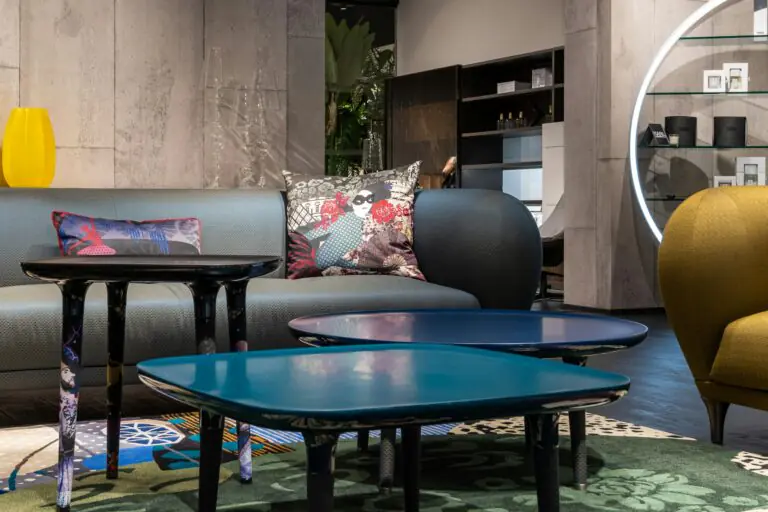
An INTJ workspace isn’t just a place to work. It’s the physical extension of how this personality type thinks: layered, intentional, and built for sustained concentration rather than quick bursts of social energy. Getting the setup right changes everything about how productively and comfortably an INTJ can operate day to day.
Most workspace guides are written for people who thrive in open, flexible, socially charged environments. This one isn’t. What follows is a product guide built around how INTJs actually process information, protect their energy, and do their best work quietly and deeply.
If you’re not yet sure whether INTJ fits you, or you’re still figuring out where you land on the introvert spectrum, take our free MBTI personality test before reading further. Knowing your type makes every recommendation here land with more precision.
This article is part of a broader look at how introverted analytical types think, work, and live. Our MBTI Introverted Analysts (INTJ and INTP) hub covers the full range of topics relevant to this personality cluster, from career strategy to relationships to mental wellness. The workspace angle adds a practical, physical dimension to everything else explored there.

What Does an INTJ Actually Need From a Physical Workspace?
My mind works in layers. Before I say anything out loud, I’ve already run through multiple interpretations, anticipated likely objections, and quietly discarded the weaker angles. That internal processing is constant, and it requires a certain kind of quiet to function properly. Not silence for the sake of silence, but a low-friction environment where the background doesn’t compete with the foreground.
What’s your personality type?
Take our free 40-question assessment and get a detailed personality profile with dimension breakdowns, context analysis, and personalised insights delivered to your inbox.
Discover Your Type8-12 minutes · 40 questions · Free and private
During my years running advertising agencies, I had access to beautiful, expensive offices. Open floor plans, glass-walled conference rooms, exposed brick, the whole creative agency aesthetic. And I was miserable in most of them. Not because they weren’t well designed, but because they were designed for a kind of energy I don’t have and don’t produce. Every passing conversation, every impromptu visit to my desk, every ambient noise from the production floor pulled me out of whatever deep thinking I was doing and cost me twenty minutes of recovery time.
What INTJs need from a workspace comes down to a few core requirements. Control over sensory input. Visual clarity without sterility. Enough structure to anchor focus, but enough flexibility to shift between strategic thinking and execution. And, critically, a clear psychological signal that this space is for serious work.
A 2020 study published in Frontiers in Psychology found meaningful connections between personality traits and environmental preferences in work settings, with introverted individuals consistently preferring lower stimulation environments that support sustained cognitive effort. That’s not a preference for comfort. It’s a cognitive necessity.
Which Sound Management Products Actually Work for INTJ Focus?
Sound is the variable that matters most. I’ve worked in enough environments to know that the wrong auditory background doesn’t just distract me, it actively degrades the quality of my thinking. Strategic planning, deep writing, complex analysis: all of it suffers when I’m fighting ambient noise at the same time.
Built for the INTJ brain
47 careers scored by intellectual challenge, autonomy, and energy fit. Free playbook with detailed breakdowns, interview strategies, and careers to avoid.
Get the Free PlaybookFree PDF · 47 careers ranked · INTJ-specific scoring
Over-ear noise-canceling headphones are non-negotiable. The Sony WH-1000XM5 and the Bose QuietComfort 45 are both worth serious consideration. The Sony edges ahead for people who want more customization over their noise cancellation profile. The Bose wins on comfort for extended wear, which matters on days when you’re in a six-hour deep work block and the last thing you need is ear fatigue pulling your attention.
What I’ve found personally is that the headphones themselves function as a signal, not just a tool. Putting them on is a ritual that tells my brain we’re shifting into focused mode. That psychological cue is almost as valuable as the noise cancellation itself.
For background audio, most INTJs do better with non-lyrical sound. Brown noise, lo-fi instrumental, or ambient soundscapes tend to support concentration without triggering the language-processing parts of the brain. Apps like Brain.fm are specifically designed around focus states and have a different effect than simply queuing up a playlist. If you work from home and ambient household sounds are the issue, a white noise machine like the LectroFan EVO placed near your door creates a consistent sound buffer that’s surprisingly effective.
One thing worth noting: some INTJs find that complete silence actually increases internal distraction. Without any external anchor, the mind can spiral into its own recursive loops. A low, consistent background hum gives the auditory system just enough to process so the deeper cognitive work can run uninterrupted.

How Should INTJs Set Up Their Visual Environment for Deep Work?
Visual clutter is cognitive load. That’s not a design preference, it’s a processing reality. Every object in your line of sight that doesn’t serve a current purpose is a small tax on your working memory. For someone whose mind is already running complex internal models, that tax adds up fast.
The desk itself matters more than most people acknowledge. A large, flat work surface with minimal objects on it creates the visual field that INTJs tend to think best within. My preference has always been for L-shaped desks because they allow a clear separation between the active work zone and a secondary surface for reference materials, without mixing the two. The Uplift L-Shaped Standing Desk is worth the investment if budget allows. The height adjustment adds a physical dimension to focus management that I was skeptical about until I actually used one consistently.
Monitor setup is another area where INTJs often underinvest. A single small monitor forces constant window-switching, which fragments attention. A wide ultrawide display, something in the 34-to-38-inch range, allows you to keep reference material, your primary document, and communication tools visible simultaneously without toggling. The LG 38WN95C-W is expensive but eliminates the cognitive friction of managing multiple windows across separate screens.
Lighting deserves its own consideration. Harsh overhead fluorescent lighting is genuinely fatiguing over a long work session, and research published in PubMed Central has documented connections between light quality and cognitive performance, including concentration and mood stability. A bias light behind your monitor reduces eye strain during extended screen time. A dedicated desk lamp with adjustable color temperature, like the BenQ ScreenBar Halo, lets you shift from a cooler, more alert-promoting light in the morning to a warmer tone in the afternoon without disrupting your workflow to fiddle with overhead switches.
One personal rule I’ve kept since leaving agency life: nothing on my desk that I’m not actively using that day. Reference books go on the shelf. Completed project notes go in a drawer. The surface stays clear. It sounds rigid, but it’s the single habit that most reliably signals to my brain that serious work is happening here.
What Seating and Ergonomic Products Support Long INTJ Work Sessions?
INTJs are notorious for losing track of time when deeply engaged in a problem. That’s a strength in terms of output, and a liability in terms of physical wellbeing. A chair that becomes uncomfortable after two hours is going to interrupt focus at precisely the wrong moments.
The Herman Miller Aeron remains the benchmark for serious desk workers. It’s not cheap, and the price is genuinely difficult to justify until you’ve spent a full week in one and noticed that you’re not shifting, fidgeting, or standing up to stretch every forty minutes. The PostureFit SL lumbar support system is what separates it from competitors that look similar on paper. For those who find the Aeron’s mesh feel too firm, the Steelcase Leap V2 offers more give and is often preferred by people who run warm.
A standing desk mat is worth adding if you use a height-adjustable desk. The Topo by Ergodriven has a contoured surface that encourages subtle weight shifting, which keeps circulation moving without requiring you to consciously think about it. That kind of passive physical support frees attention for the work itself.
Wrist health is something I ignored for years in agency life and paid for eventually. A quality wrist rest for keyboard and mouse use isn’t a luxury item. The Grovemade Desk Shelf System, while primarily an organizational tool, also elevates your monitor to eye level, which corrects the forward neck lean that causes tension headaches during long sessions. Addressing posture proactively is far easier than managing chronic pain reactively.
The physical environment supports the mental environment. INTJs who invest in ergonomics aren’t being indulgent. They’re removing friction that would otherwise interrupt the sustained concentration that defines their best work. This connects to broader questions about how this personality type approaches wellbeing, which I’ve explored in more depth in my piece on therapy apps versus real therapy from an INTJ perspective.

Which Analog Tools Belong in an INTJ Workspace?
There’s a particular kind of thinking that happens when I’m writing by hand that doesn’t happen on a keyboard. Something about the slower pace of pen on paper forces a different level of intentionality. Ideas that would become bullet points in a digital document get more fully formed on paper because I have to commit to them in a way that’s harder to undo.
INTJs tend to have complex internal models that need external scaffolding. A large-format notebook, the Leuchtturm1917 A5 or the Moleskine XL, gives enough space to develop ideas spatially rather than linearly. Dot-grid pages are particularly useful because they allow both structured lists and freeform diagrams without the visual constraint of lines.
A dedicated whiteboard or wall-mounted planning surface is one of the most underrated additions to an INTJ workspace. Not for brainstorming in the collaborative sense, but for mapping systems, tracking long-term project structures, and keeping strategic context visible while working on individual components. When I was managing multiple Fortune 500 accounts simultaneously, I kept a large whiteboard in my private office with the relationship map of every major client stakeholder. Not because I couldn’t remember them, but because seeing the whole system at once changed how I thought about individual decisions.
The LAMY Safari fountain pen is a small indulgence that makes a genuine difference in the writing experience. It’s not precious. It’s a practical tool that makes extended handwriting sessions more comfortable and, oddly, more pleasurable. When writing feels good, you write more, and more of your thinking gets externalized in ways that improve the quality of the work.
A physical inbox tray is also worth keeping on or near the desk. Not for email, but for physical items that require action: printed documents, business cards, handwritten notes from meetings. Having a designated container for incoming physical items prevents them from colonizing the desk surface and creating the visual clutter that degrades focus over time.
The reading dimension of an INTJ’s intellectual life often spills into workspace design as well. I’ve written about how my reading habits have shaped my strategic thinking in my INTJ reading list, and a well-placed bookshelf within arm’s reach of the desk makes it easy to pull reference material without breaking concentration.
How Do INTJs Create Psychological Boundaries Within Their Workspace?
Physical setup is only part of the equation. An INTJ workspace also needs psychological architecture: clear signals that separate focused work time from everything else.
One of the most effective tools I’ve used is a simple desk lamp with a warm amber bulb that I only turn on during deep work blocks. It sounds almost absurdly simple, but the ritual of switching it on has become a powerful focus trigger. My brain has learned to associate that specific light with a particular quality of attention. Switching it off signals the end of the block as clearly as any timer.
A door sign or indicator light is worth considering for anyone who works from home with other people present. The BusyLight from Plenom is designed for open office environments but works equally well as a home signal. A red light means deep work in progress. It removes the need to have repeated conversations about interruptions, which is a significant energy drain for INTJs who find those conversations exhausting and disruptive.
Time-blocking tools that integrate with physical space are also worth exploring. A simple analog timer, like the Time Timer, keeps the current work block visible in your peripheral vision without requiring you to check a digital screen. The visual countdown creates a gentle urgency that supports focus without inducing anxiety.
The psychological boundary question connects to something broader about how INTJs manage energy in professional contexts. My article on INTJ strategic careers and professional dominance gets into how this personality type can build work structures that honor their need for protected thinking time, even in demanding corporate environments. The workspace is the physical implementation of those same principles.
It’s also worth acknowledging that INTJs aren’t the only analytical introverts thinking carefully about their work environment. INTPs share many of the same sensory preferences, even though their cognitive architecture differs. I’ve seen this pattern in conversations with INTP colleagues who struggle with similar issues around stimulation and focus. The piece on bored INTP developers touches on how environmental and structural mismatches can hollow out even genuinely capable people over time.

What Technology Peripherals Make the Biggest Difference for INTJ Work Quality?
Peripheral quality is an area where incremental investment pays compounding returns. A poor keyboard or mouse doesn’t just create minor annoyance. It creates a constant low-level friction that accumulates across thousands of interactions per day.
The keyboard matters more than most people think. INTJs who do significant amounts of writing, whether that’s strategic documents, analysis, or creative work, benefit from a mechanical keyboard with a tactile switch. The Keychron K2 or K8 offers a solid balance of quality and value. The Logitech MX Keys is a better choice for those who prefer a quieter, lower-profile typing experience without sacrificing key feel.
A high-quality mouse reduces the small physical frustrations that interrupt flow. The Logitech MX Master 3S is genuinely excellent for knowledge workers. The precision scrolling wheel alone changes how you interact with long documents, and the customizable buttons can be mapped to frequently used actions that would otherwise require keyboard shortcuts or menu navigation.
A dedicated webcam, even for people who dislike video calls, is worth having. The Logitech Brio 4K produces a noticeably better image than built-in laptop cameras, which matters for the professional impression you make in client or leadership conversations. As someone who spent years managing Fortune 500 client relationships, I’m acutely aware of how much visual quality affects perceived credibility in remote settings. A blurry, poorly lit video presence undermines the authority that INTJs often work hard to establish in other ways.
Cable management is a small thing that has an outsized effect on the visual clarity of a workspace. A cable management tray mounted under the desk, combined with velcro ties and a few cable clips along the desk edge, eliminates the visual noise of tangled cords. It takes about an hour to set up properly and then disappears from your awareness entirely, which is exactly what good workspace infrastructure should do.
A USB-C hub or Thunderbolt dock simplifies the connection between your laptop and all peripherals to a single cable. The CalDigit TS4 is the premium option. The Anker 777 is an excellent value alternative. Either one means your workspace is fully functional the moment you sit down, without plugging in multiple cables or rearranging connections.
Research from the National Institutes of Health has documented how physical discomfort and environmental friction contribute to cognitive fatigue over extended work periods. Reducing that friction through quality peripherals isn’t about preference. It’s about protecting the cognitive resources that INTJs depend on most.
How Should INTJs Think About the Social Dimension of Their Workspace?
INTJs aren’t antisocial. That’s a persistent misreading of this personality type that I’ve spent years pushing back against, both in my own self-understanding and in conversations with colleagues who assumed my preference for a closed office door meant I was unfriendly or disengaged.
What INTJs need is controlled social access, not social absence. The workspace should support meaningful connection while protecting against the kind of low-value, high-frequency interruption that depletes energy without producing anything useful.
A separate, comfortable chair or small seating area within or adjacent to your workspace signals that you’re open to intentional conversation, on your terms. When someone comes to talk with me in a space where I’ve created a seat for them, the interaction feels invited rather than imposed. That subtle shift changes the quality of the conversation and my experience of it.
For remote workers, the camera and audio setup described above does double duty here. Good audio, specifically a quality condenser microphone like the Blue Yeti or the Rode NT-USB Mini, makes your voice come through with clarity and warmth that built-in laptop microphones simply can’t produce. For an INTJ who already tends toward measured, deliberate speech, poor audio quality adds another layer of friction to communication that can make you sound more distant than you actually are.
The social dimension of workspace design connects to something I think about often: how introverts in relationships, whether professional or personal, create environments that support genuine connection without sacrificing the solitude they need to recharge. My colleagues at Ordinary Introvert have written thoughtfully about this in pieces like INTP relationship mastery: balancing love and logic and the fascinating dynamics explored in INTP and ESFJ relationships. The workspace parallels are real: designing for authentic connection rather than constant availability.
According to Psychology Today’s reporting on quiet leaders, introverted executives often outperform their extroverted counterparts in sustained performance metrics, partly because they build environments and routines that protect their cognitive strengths rather than constantly working against them. The workspace is one of the most concrete ways to do exactly that.
And from an institutional perspective, Truity’s research on introverted intuition helps explain why INTJs in particular benefit from environments that support inward processing. The dominant cognitive function of this personality type is Introverted Intuition, which operates best when external stimulation is managed and internal processing has room to run.

What Does a Complete INTJ Workspace Investment Look Like in Practice?
Putting all of this together doesn’t require spending everything at once. The most effective approach is to prioritize by impact and build incrementally. Start with the highest-leverage items: sound management, seating, and monitor setup. Those three address the most common sources of focus disruption and physical fatigue for this personality type.
A reasonable phased investment might look like this. Phase one covers the essentials: quality noise-canceling headphones (roughly $300-$380), an ergonomic chair (Herman Miller refurbished options are available for $600-$800), and a wide monitor ($500-$800). Phase two adds the desk setup: a standing desk or converter ($400-$1,200), a quality keyboard and mouse ($150-$250), and a USB-C dock ($150-$300). Phase three refines the environment: lighting, analog tools, cable management, and the psychological boundary tools that make the space feel genuinely yours.
The total investment is significant. It’s also far less than the cost of chronic distraction, physical discomfort, and the slow erosion of the deep work capacity that INTJs depend on for their best professional output. I made this calculation late in my agency career and wish I’d made it earlier. The years I spent fighting my environment instead of designing it cost me more in quality of thinking than I can easily quantify.
What matters most isn’t any single product. It’s the coherence of the whole setup. A workspace that consistently signals focus, protects sensory input, supports physical comfort, and creates psychological clarity is one that an INTJ can actually inhabit fully rather than endure. That distinction, between a workspace you tolerate and one that actively supports how your mind works, is where the real return on investment lives.
Explore more resources on how analytical introverts think, work, and thrive in our complete MBTI Introverted Analysts (INTJ and INTP) hub.
About the Author
Keith Lacy is an introvert who’s learned to embrace his true self later in life. After 20 years in advertising and marketing leadership, including running agencies and managing Fortune 500 accounts, Keith now channels his experience into helping fellow introverts understand their strengths and build fulfilling careers. As an INTJ, he brings analytical depth and authentic perspective to every article, drawing from both professional expertise and personal growth.
Frequently Asked Questions
What is the single most important product for an INTJ workspace?
Sound management tends to have the highest impact for most INTJs. Quality noise-canceling headphones address the most common source of focus disruption, which is uncontrolled auditory input from the surrounding environment. Everything else in the workspace can be optimized over time, but protecting the auditory environment produces immediate, noticeable improvements in concentration and cognitive endurance.
Do INTJs need a completely silent workspace to do their best work?
Not necessarily. Many INTJs actually find that complete silence increases internal distraction, with the mind filling the quiet with its own recursive loops. A consistent, low-stimulation background sound, such as brown noise, ambient music without lyrics, or a white noise machine, often supports concentration better than total silence. The goal is controlled auditory input, not the absence of all sound.
How does visual clutter affect INTJ cognitive performance?
Visual clutter functions as cognitive load. Every object in the visual field that doesn’t serve a current purpose draws on working memory resources, even when you’re not consciously attending to it. For INTJs who are already running complex internal models, this accumulated visual tax meaningfully degrades the quality of strategic thinking and sustained concentration. Keeping the desk surface clear of non-essential items is one of the simplest, highest-impact workspace habits for this personality type.
Can an INTJ create an effective workspace in a shared or open office environment?
Yes, with the right tools and boundaries in place. Noise-canceling headphones handle the auditory challenge. A monitor privacy screen reduces visual distraction from adjacent movement. A clear desk protocol and a visual signal for focus time, such as a busy indicator light, manages interruptions without requiring constant verbal communication. The goal is to create a personal sensory bubble within a larger shared environment, which is achievable even without a private office.
How does workspace design connect to INTJ mental wellness?
The physical environment has a direct effect on cognitive fatigue, stress levels, and the capacity for emotional regulation over the course of a workday. For INTJs, who tend to internalize stress and process it slowly rather than expressing it immediately, a workspace that reduces unnecessary friction and sensory overload provides meaningful support for overall wellbeing. Designing the workspace intentionally is one of the most practical, concrete things an INTJ can do to protect their mental and cognitive health across the long term.