An ENFP workspace setup works best when it reflects the energy, curiosity, and creative restlessness that defines this personality type. The right environment gives ENFPs enough visual inspiration to stay engaged, enough structure to avoid constant distraction, and enough flexibility to shift gears when their enthusiasm pulls them in a new direction.
Most generic workspace advice assumes you want a sterile, minimalist desk. ENFPs rarely do. What actually works for this type is a space that feels alive, personal, and adaptable, one that supports deep creative sprints without boxing them in.
I spent over two decades running advertising agencies, and some of the most gifted people on my teams were ENFPs. Watching them work taught me a lot about what this type genuinely needs versus what productivity culture tells them they should want. Those are often very different things. If you haven’t confirmed your type yet, you can take our free MBTI test and get a clearer picture of how you’re wired before investing in a workspace overhaul.
Our MBTI Extroverted Diplomats hub covers a wide range of topics for both ENFPs and ENFJs, from financial habits to focus challenges to relationship patterns. This article zooms in on something more tangible: the specific tools, products, and physical arrangements that help ENFPs do their best work without burning out or shutting down.

Why Does the Physical Environment Matter So Much for ENFPs?
ENFPs are deeply sensitive to their surroundings, even when they don’t consciously realize it. A dull, cramped, or chaotic workspace doesn’t just feel unpleasant. It actively dampens the creative energy that makes this type effective. According to 16Personalities, ENFPs are imaginative, energetic, and driven by ideas, which means their environment either feeds that drive or starves it.
What’s your personality type?
Take our free 40-question assessment and get a detailed personality profile with dimension breakdowns, context analysis, and personalised insights delivered to your inbox.
Discover Your Type8-12 minutes · 40 questions · Free and private
I saw this play out constantly during my agency years. One of my most talented copywriters, a classic ENFP, produced her best work when her corner of the office was covered in sticky notes, magazine tear-outs, and half-finished sketches. The moment we moved to a new office with “clean desk policy” requirements, her output dropped noticeably. She wasn’t being difficult. Her brain literally needed visual stimulation to stay in a generative state.
A 2019 study published by the American Psychological Association found that personality traits significantly influence how people respond to environmental and situational cues. For ENFPs, whose dominant cognitive function is Extraverted Intuition, the external world is a constant source of pattern recognition and idea generation. Strip away the input, and you strip away the fuel.
That said, there’s a difference between stimulating and overwhelming. ENFPs can tip into overstimulation faster than they expect, especially when a workspace has no visual hierarchy or no quiet corner to retreat to. The goal is calibrated richness, not sensory chaos.
What Desk and Seating Setup Actually Supports ENFP Energy?
ENFPs tend to work in bursts. They’ll be intensely focused for an hour, then need to move, stretch, shift positions, or change scenery entirely. A rigid, fixed desk setup fights against that natural rhythm. A flexible one works with it.
A standing desk converter is one of the most practical investments an ENFP can make. Being able to shift between sitting and standing mid-session accommodates the physical restlessness that often accompanies mental energy. Brands like FlexiSpot and Uplift offer solid options at various price points. The ability to change posture without leaving the workspace keeps momentum going instead of breaking it.
Pair that with a comfortable chair that has genuine lumbar support. ENFPs often work long, unplanned sessions when they’re in flow, and an uncomfortable chair becomes a distraction that pulls them out of that state. A mesh-back ergonomic chair with adjustable armrests is worth the investment, not as a luxury, but as a tool for sustained creative output.
One detail I’d add from experience: ENFPs benefit from having a secondary surface nearby, a small side table, a rolling cart, or even a wide windowsill. They think with their hands. They spread things out. Having overflow space prevents the main desk from becoming a pile that triggers anxiety rather than creativity.

Which Organizational Tools Fit the ENFP Brain Without Feeling Like a Cage?
Most organizational systems are designed by and for people who think linearly. ENFPs don’t. They make connections across ideas, jump between projects, and find meaning in unexpected associations. A rigid binder system or color-coded filing cabinet often feels suffocating to this type, and gets abandoned within weeks.
That pattern of abandonment is worth naming directly. If you’ve noticed yourself starting systems and dropping them, you’re not lazy or disorganized by nature. You’re using the wrong tools. I’d point you toward our piece on why ENFPs stop abandoning projects for a deeper look at the psychological patterns underneath that cycle.
What tends to work better for ENFPs in physical workspace organization:
- Open-face shelving: When things are visible, ENFPs remember they exist. Closed drawers and cabinets create out-of-sight, out-of-mind problems. Wire shelving or open cubbies keep materials accessible and visually present.
- Large-format whiteboards or glass boards: ENFPs think spatially. A big writable surface lets them map ideas, make connections, and rearrange concepts without committing to a structure prematurely. Magnetic glass boards are particularly satisfying because they look clean while still being highly functional.
- Sticky note systems with designated zones: Rather than banning sticky notes (a losing battle), create intentional zones. A “current projects” column, an “ideas parking lot” section, and a “follow up” area give the sticky note habit structure without eliminating it.
- Portable project folders: Accordion folders or project pouches that can move around the desk, or even between rooms, suit the ENFP tendency to work in different spots depending on mood and energy level.
During my agency days, I managed several ENFPs who struggled with the filing systems our operations team imposed. One account manager solved it by keeping a large pegboard above her desk with hooks for different client folders. Everything was visible, everything was accessible, and she never missed a deadline. It looked unconventional. It worked perfectly.
What Technology and Digital Tools Complement an ENFP’s Work Style?
ENFPs are typically comfortable with technology, but they need tools that match their pace and their tendency to work across multiple projects simultaneously. The wrong digital setup creates friction that bleeds into frustration.
A dual-monitor setup is genuinely useful for this type, not just a nice-to-have. ENFPs frequently work with multiple reference points at once, comparing, cross-referencing, and building on connections between different pieces of information. Having one screen for the active work and one for research or communication reduces the constant tab-switching that fragments attention.
For note-taking, analog still has real advantages. A good quality notebook, something with thick pages that handles both pen and marker well, serves ENFPs better than most digital note apps for initial idea capture. The physical act of writing engages different cognitive processes and slows the thought down just enough to clarify it. Leuchtturm1917 and Rhodia are worth the slight premium over generic notebooks.
That said, digital tools matter too. Notion works well for ENFPs who want flexible databases that can hold project notes, reference material, and personal reflections in one place. Trello suits those who think in visual boards. The critical thing is choosing one system and not layering five on top of each other, which is a very real ENFP tendency.
Noise-canceling headphones deserve a dedicated mention. ENFPs are energized by people but can still be derailed by unpredictable noise, especially during deep work sessions. A reliable pair of over-ear headphones with active noise cancellation, Sony WH-1000XM5 or Bose QuietComfort are both strong options, creates a personal sound environment that the ENFP controls. Paired with the right music or ambient sound, they signal to the brain that it’s time to focus. Our article on focus strategies for distracted ENFPs goes deeper on the attention management side of this equation.

How Should ENFPs Use Lighting and Sensory Elements to Support Focus?
Lighting is one of the most underestimated workspace variables, and ENFPs tend to be particularly sensitive to it. Harsh fluorescent overhead lighting creates a kind of low-grade tension that accumulates over hours. Natural light, or warm-toned artificial light that mimics it, produces a noticeably different cognitive state.
A desk lamp with adjustable color temperature is a practical starting point. Being able to shift from cooler, energizing light during focused work sessions to warmer, softer light during reading or planning gives ENFPs a simple environmental lever. Elgato’s Key Light and BenQ’s ScreenBar are both worth considering if screen glare is also an issue.
Beyond lighting, ENFPs often benefit from a small amount of controlled sensory richness in their workspace. A plant or two adds life without adding noise. A small diffuser with a scent they associate with focus, peppermint and rosemary are commonly cited for mental clarity, adds another layer of environmental cueing. These aren’t indulgences. They’re environmental anchors that help a highly associative brain shift into work mode.
A 2019 research article in PubMed Central examined how environmental factors including light quality and sensory conditions affect cognitive performance and mood. The findings support what many ENFPs already intuit: the physical environment isn’t just a backdrop. It actively shapes how well the brain functions.
One thing I’ve noticed from my own experience as an INTJ is that I process my environment very differently from the ENFPs I worked alongside. My mind filters for signal and eliminates noise. An ENFP’s mind drinks in the environment and generates from it. That difference means the workspace advice that works for me, stripped down, controlled, minimal, would actually suppress an ENFP’s best thinking. Designing a workspace that fits your actual cognitive style, not someone else’s, is the whole point.
What Personal and Inspirational Elements Belong in an ENFP Workspace?
ENFPs are deeply values-driven. They work better when they can see reminders of why their work matters, who they’re doing it for, and what they’re building toward. A workspace that feels generic and impersonal tends to produce generic, impersonal work from this type.
A dedicated inspiration wall or mood board is genuinely functional for ENFPs, not just decorative. Pinning images, quotes, project goals, and visual references in one visible space gives the ENFP brain a constant source of connection and meaning. Cork boards work well. So do magnetic boards with printed images. The medium matters less than the intentionality behind what goes on it.
Photos of people who matter, mentors, collaborators, family, remind ENFPs that their work connects to something larger than the task in front of them. ENFPs are energized by human connection, and even symbolic reminders of those connections can sustain motivation during solo work sessions.
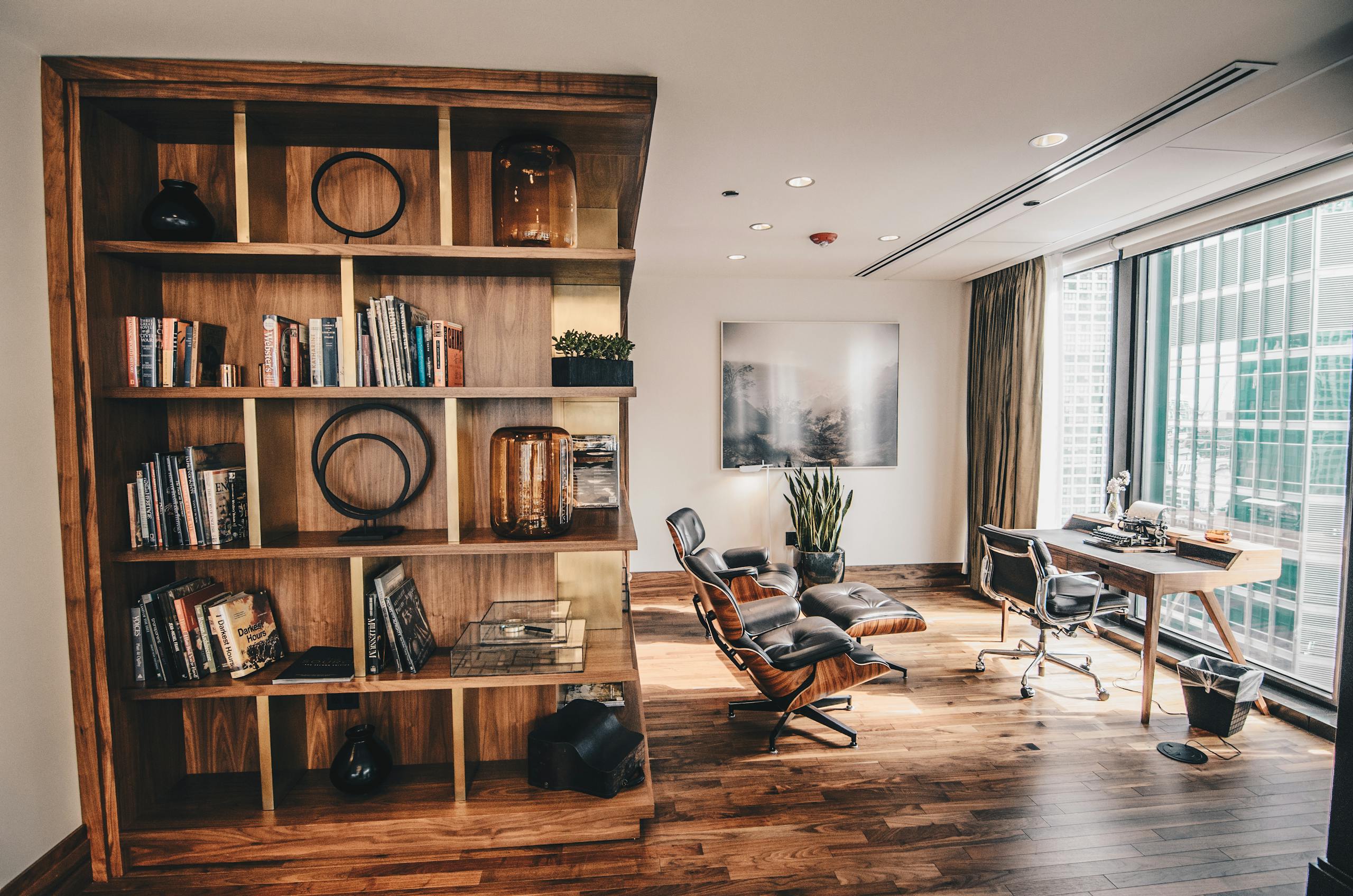
Books deserve a place in the ENFP workspace too, and not hidden away. A small curated shelf of books that span the ENFP’s interests, not just work-related titles, signals to the brain that curiosity is welcome here. ENFPs often get their best ideas from unexpected cross-pollination between fields, and having those references visible and accessible encourages that kind of thinking.
One note of caution: ENFPs can sometimes let the inspiration gathering become a form of productive-feeling avoidance. Curating a beautiful workspace is satisfying. Actually doing the work is harder. Being aware of that pattern is part of using these tools well. The workspace should support output, not substitute for it.

How Can ENFPs Use Their Workspace to Manage Financial and Project Accountability?
ENFPs have a complicated relationship with accountability, particularly around money and long-term commitments. The same spontaneity and enthusiasm that makes them creative and energizing to work with can make sustained financial discipline genuinely difficult. Our article on ENFPs and money addresses the emotional and psychological roots of that challenge directly.
From a workspace perspective, making financial and project accountability visible is one of the most practical things an ENFP can do. Out of sight truly is out of mind for this type. A simple wall-mounted tracker for monthly financial goals, a physical project status board, or even a printed quarterly plan pinned at eye level creates the kind of gentle, constant reminder that keeps ENFPs oriented toward their commitments.
A dedicated “project dashboard” section of the workspace, separate from the inspiration wall, serves this purpose well. It might include a Kanban-style board with project stages, a simple habit tracker for financial behaviors like saving or reviewing spending, and a visible deadline calendar. Physical trackers tend to work better than purely digital ones for ENFPs because they can’t be minimized or ignored the way an app can.
Timer tools also belong in this category. A physical time timer, the kind with a visual red dial showing remaining time, is surprisingly effective for ENFPs who struggle to feel the passage of time during creative work. Knowing that 45 minutes are visibly ticking away creates a gentle urgency that helps contain scope creep and keeps projects from here.
I managed a creative director at one of my agencies who was a brilliant ENFP and a chronic over-promiser. He’d commit to timelines that his enthusiasm made feel realistic in the moment, then find himself scrambling. The solution we found together was a physical wall calendar with project milestones marked in large, visible writing. Seeing the whole month laid out in front of him, rather than in a digital calendar he rarely opened, changed his relationship with time and commitments almost immediately.
What Should ENFPs Know About Workspace Boundaries and Shared Spaces?
ENFPs are people-oriented, and that creates a specific challenge in shared workspaces. They’re naturally drawn into conversations, collaborative detours, and other people’s energy. This isn’t a flaw. It’s part of what makes them warm, generative colleagues. Even so, it can make sustained solo work genuinely difficult without some intentional structure.
Physical workspace signals matter more than most people realize. A pair of headphones on signals “I’m in focus mode.” A small desk plant positioned as a subtle visual boundary between workstations creates a sense of personal territory without being unfriendly. Even the direction a chair faces can affect how much ambient social interaction an ENFP gets pulled into.
ENFPs who work from home face a different version of this challenge. Without colleagues, the social energy that normally feeds them disappears, and the workspace can start to feel isolating. Building in scheduled video calls, working from a coffee shop occasionally, or even having a playlist that feels socially energizing can compensate for that absence.
Worth noting: ENFPs in shared spaces sometimes attract dynamics that drain more than they energize. The same warmth and openness that makes them excellent collaborators can make them magnets for people who take more than they give. This is something ENFJs face too, and our piece on why ENFJs keep attracting toxic people explores the empathy-based patterns that underlie this tendency in Diplomat types broadly.
A workspace that includes a clear “do not disturb” signal, whether that’s a closed door, headphones, or a simple desk sign, gives ENFPs permission to protect their focus without feeling like they’re being antisocial. That permission matters to a type that often prioritizes others’ comfort over their own needs.
The decision-making fatigue that comes from constantly responding to others’ needs is real. ENFJs face a version of this too, as we explore in our article on why ENFJs struggle to decide when everyone matters. ENFPs experience something similar when their workspace becomes a social hub rather than a creative sanctuary. Designing for both connection and containment is the balance worth aiming for.
And on the topic of energy: ENFPs who work in environments with high emotional intensity, or who regularly absorb others’ stress and conflict, need workspace recovery rituals more than most. A small comfort corner, a comfortable chair away from the desk, a journal, a brief meditation cushion, gives the ENFP a place to decompress and reset. The Psychology Today overview of empathy explains why highly empathic people need more intentional recovery time, and ENFPs tend to score high on empathic sensitivity. Our piece on why ENFJs become narcissist magnets also touches on the cost of unmanaged empathy for Diplomat types, which resonates for ENFPs too.
What’s the ENFP Workspace Product Summary Worth Knowing?
Pulling together everything above into a practical product framework, here’s how to think about building an ENFP workspace by category:
Furniture and ergonomics: A standing desk converter for postural flexibility, an ergonomic chair with lumbar support, and a secondary surface for overflow. These three form the physical foundation.
Organization tools: Open-face shelving, a large whiteboard or glass board, sticky note zones with designated purposes, and portable project folders. Structure that’s visible and flexible, not hidden and rigid.
Technology: Dual monitors for multi-reference work, a quality notebook for analog idea capture, one digital project management tool used consistently, and noise-canceling headphones for focus sessions.
Lighting and sensory environment: A desk lamp with adjustable color temperature, natural light where possible, one or two plants, and an optional diffuser with focus-associated scents.
Inspiration and accountability: A dedicated mood board for values and vision, a separate project dashboard for commitments and deadlines, and a physical time timer for session management.
Boundary and recovery tools: A clear “focus mode” signal for shared spaces, and a small recovery corner with comfort items for emotional reset after high-intensity work periods.
None of these need to be expensive. A whiteboard from a dollar store and a $10 desk lamp can do as much as their premium counterparts if they’re used intentionally. The investment that matters most is the thinking behind the setup, not the price tag on the products.
A 2009 APA Science Brief on personality and behavioral consistency noted that people perform most consistently when their environment aligns with their natural tendencies rather than working against them. For ENFPs, that alignment is the whole design challenge. And according to Bureau of Labor Statistics data on flexible work arrangements, more workers than ever now have meaningful control over their workspace setup. ENFPs who use that control thoughtfully have a real advantage.
Explore more personality type resources and productivity insights in our complete MBTI Extroverted Diplomats (ENFJ and ENFP) Hub.
Curious about your personality type?
Our free MBTI assessment goes beyond the four letters. Get a full breakdown of your scores, see how your type shows up at work and in relationships, plus borderline analysis for close-call dimensions.
Take the Free Test8-12 minutes · 40 questions · Free and private
About the Author
Keith Lacy is an introvert who’s learned to embrace his true self later in life. After 20 years in advertising and marketing leadership, including running agencies and managing Fortune 500 accounts, Keith now channels his experience into helping fellow introverts understand their strengths and build fulfilling careers. As an INTJ, he brings analytical depth and authentic perspective to every article, drawing from both professional expertise and personal growth.
Frequently Asked Questions
What is the most important element of an ENFP workspace setup?
Visual accessibility is the single most important design principle for an ENFP workspace. ENFPs operate on an out-of-sight, out-of-mind basis more than most types. Open shelving, visible project trackers, inspiration boards, and whiteboards keep ideas and commitments present in the ENFP’s awareness without requiring constant mental effort to retrieve them. A workspace where everything is hidden in drawers or folders tends to produce the forgetfulness and project abandonment that ENFPs often struggle with.
Should ENFPs use minimalist or maximalist workspace designs?
Neither extreme serves ENFPs well. A purely minimalist workspace strips away the visual stimulation that feeds ENFP creativity and idea generation. A completely maximalist space tips into sensory overload and makes it hard to find what’s needed when it’s needed. The sweet spot is calibrated richness: intentional visual interest, organized around function, with clear zones for inspiration, active work, and accountability. Think of it as a workspace that feels alive but not chaotic.
How can ENFPs stay focused in a shared or open-plan office?
Noise-canceling headphones are the most effective single tool for ENFPs in open-plan environments. They create a personal acoustic boundary that reduces unpredictable interruptions while still allowing the ENFP to tune back into the social environment when they choose. Pairing headphones with a clear visual “focus mode” signal, such as a small sign or a specific desk arrangement, communicates availability boundaries without requiring constant verbal negotiation. Scheduling protected focus blocks earlier in the day, before social energy builds in the office, also helps significantly.
What digital tools work best for ENFP project management?
ENFPs tend to do best with visual, flexible digital project management tools rather than rigid list-based systems. Trello’s card-and-board format suits the ENFP tendency to think spatially and move tasks between stages. Notion works well for ENFPs who want to combine project tracking with note-taking and reference material in one flexible database. The most important factor isn’t which tool is chosen, but committing to one tool consistently rather than layering multiple systems on top of each other, which creates confusion and increases the likelihood of abandonment.
How often should ENFPs redesign or refresh their workspace?
ENFPs benefit from small, regular refreshes rather than infrequent complete overhauls. Updating the inspiration board seasonally, rotating the books on the desk shelf, or rearranging the physical layout slightly every few months keeps the environment feeling stimulating rather than stale. ENFPs can lose motivation in environments that feel overly familiar. Even minor changes, a new plant, a different desk lamp position, a fresh set of project cards on the whiteboard, can reset the sense of creative possibility that this type needs to stay engaged.