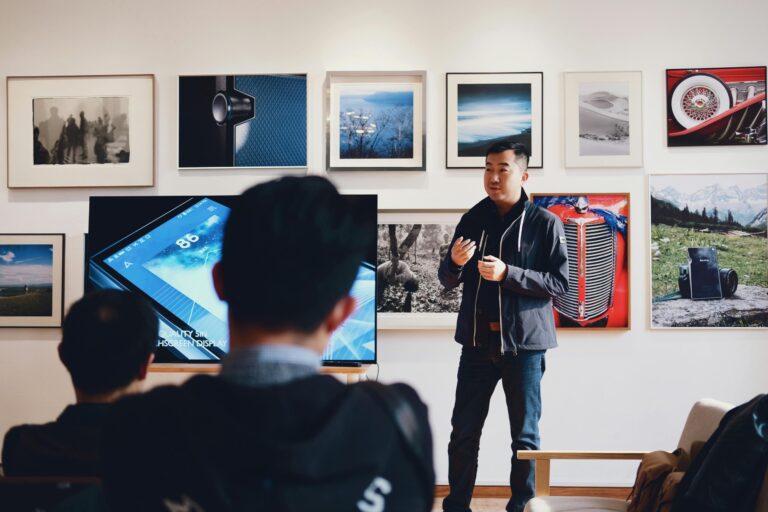
An ESTP workspace setup works best when it supports fast movement, sensory engagement, and the freedom to shift gears without losing momentum. People with this personality type think on their feet, process through action, and need an environment that keeps pace with how their minds actually work.
This guide covers the physical products, tools, and design choices that genuinely suit the ESTP wiring, not generic productivity advice dressed up with a personality label. Every recommendation here is grounded in what this type actually needs to stay sharp, engaged, and performing at their best.
I want to be honest upfront: I’m an INTJ. My ideal workspace is quiet, minimal, and built for deep solitary focus. So writing this required me to genuinely set aside my own preferences and think carefully about what the opposite kind of mind actually needs. That exercise turned out to be one of the more interesting things I’ve done on this site.
If you’re not completely sure of your type yet, it’s worth taking a moment to find your type with our free MBTI assessment before investing in a workspace overhaul. Getting the foundation right matters.
ESTPs and ESFPs share a lot of surface-level energy, but their workspace needs diverge in meaningful ways. Our MBTI Extroverted Explorers hub covers both types in depth, and understanding where they overlap and where they split apart can sharpen how you think about your own setup.
What Does an ESTP Actually Need From a Physical Workspace?

Before recommending specific products, it helps to understand the underlying wiring. ESTPs lead with Extraverted Sensing, which means they are extraordinarily attuned to their physical environment. They notice texture, light, sound, and spatial arrangement in ways that genuinely affect their cognitive performance. A cluttered, dim, or static workspace doesn’t just feel uncomfortable to an ESTP. It actually degrades how well they think.
Running agencies for two decades, I worked alongside a lot of people who fit this profile. The account executives and creative directors who thrived were almost always the ones who had claimed their space. They had standing setups before standing desks were fashionable. They had whiteboards covering entire walls. They moved around constantly, switching between their desk, a standing area, and a couch in the corner. At the time I found it slightly chaotic. Looking back, I understand it was their cognitive infrastructure.
According to the Myers-Briggs Foundation, Extraverted Sensing types are energized by real-time interaction with the physical world. That has direct implications for workspace design. A space that restricts movement, limits sensory input, or forces a single static posture works against the ESTP’s natural processing style.
There are also stress dynamics worth keeping in mind. How ESTPs handle pressure affects what their workspace needs to support. If you’ve read our piece on how ESTPs handle stress, you’ll know that this type tends to lean into intensity rather than away from it. A workspace that channels that energy productively, rather than amplifying it into chaos, is a genuine performance asset.
Which Desk and Seating Products Actually Fit the ESTP Working Style?
The single most impactful product category for an ESTP workspace is the desk and seating combination. Static setups create friction for people who think through movement. The research supports this: a 2015 study published through PubMed Central found that alternating between sitting and standing during work tasks improved both mood and energy levels in office workers. For ESTPs, that isn’t a wellness perk. It’s a functional requirement.
Height-Adjustable Standing Desks: A motorized sit-stand desk is probably the most important single purchase an ESTP can make for their workspace. Models from brands like Flexispot, Uplift, and Autonomous all offer smooth electric adjustment, programmable height presets, and enough surface area to spread out. Look for a minimum of 60 inches wide. ESTPs tend to work with physical materials alongside digital ones, and they need room to have multiple things in play at once.
Active Seating Options: When ESTPs do sit, they often don’t sit still. A balance chair, a saddle seat, or even a quality wobble stool can accommodate that natural movement without the person having to consciously manage it. These aren’t gimmicks. They allow micro-movement that keeps the body engaged without requiring a full posture reset every twenty minutes.
Anti-Fatigue Mats: For the standing portions of the workday, a thick anti-fatigue mat makes a real difference. Brands like Topo by Ergodriven have contoured surfaces that encourage subtle foot movement, which supports circulation and reduces the fatigue that can make standing feel punishing after an hour.
One of my account directors at the agency had a setup that I initially thought was excessive: a standing desk, a wobble stool, and a secondary low table in the corner where she’d sometimes work on her laptop sitting cross-legged on the floor. Her output was consistently the highest on the team. I eventually stopped questioning the setup and started defending it to anyone who raised an eyebrow.
What Display and Technology Setup Supports ESTP Focus?

ESTPs are fast processors who switch contexts quickly and get frustrated by lag, whether that’s digital lag from slow hardware or cognitive lag from having to hunt for information across too many windows. The right display and technology setup removes that friction entirely.
Dual or Ultra-Wide Monitors: A dual monitor setup or a single ultra-wide display (34 inches or wider) gives ESTPs the visual real estate to keep multiple things visible simultaneously. This type doesn’t work well with a single window open at a time. They need to see the email, the document, and the data at once. A quality ultra-wide from LG or Samsung in the 34 to 38 inch range covers this well.
Fast, Responsive Peripherals: A mechanical keyboard with tactile feedback and a high-DPI mouse aren’t just preferences for ESTPs. The physical responsiveness matches their processing speed and keeps them from feeling bottlenecked by their tools. Brands like Logitech MX, Keychron, and Das Keyboard are worth considering depending on how much tactile feedback the person prefers.
Laptop Stand or Docking Station: ESTPs often move between locations, whether that’s home, office, client sites, or coffee shops. A quality docking station that makes the transition between mobile and desktop setups effortless saves a surprising amount of daily friction. Thunderbolt docks from CalDigit or OWC allow a single cable connection to bring up a full desktop environment instantly.
Quality Webcam and Microphone: ESTPs are naturally strong communicators and tend to be effective in video meetings when their setup doesn’t undercut them. A dedicated webcam (Logitech Brio or similar) and a USB microphone rather than laptop audio makes a visible difference in how they come across, which matters to a type that leads with presence.
How Should the Physical Layout and Sensory Environment Be Designed?
ESTPs are highly sensitive to their sensory environment, even if they don’t always articulate it that way. The lighting, sound, and spatial arrangement of a workspace affects their energy levels and cognitive clarity in measurable ways.
Lighting: Natural light is the gold standard for ESTPs. Where that’s limited, a combination of overhead ambient lighting and a dedicated task light with adjustable color temperature works well. Warm light (around 2700K) supports relaxed thinking, while cooler light (5000K and above) sharpens alertness for focused work. A smart bulb system from Philips Hue or LIFX allows quick switching without leaving the desk.
Sound Management: Unlike introverted types who often need near-silence to think clearly, ESTPs frequently work better with some ambient noise or music in the background. A quality Bluetooth speaker (Sonos Era or JBL Charge series) gives them control over their audio environment. That said, some ESTPs in open offices benefit from quality over-ear headphones not for silence, but for controlling what they hear. Sony WH-1000XM5 or Bose QuietComfort models offer both noise cancellation and excellent audio quality.
Whiteboard Space: This is non-negotiable for many ESTPs. A large wall-mounted whiteboard or a glass whiteboard panel gives them a place to externalize thinking, map out ideas spatially, and see the big picture without having to hold it all in their head. The act of writing and drawing on a physical surface engages Extraverted Sensing in a way that typing into a notes app simply doesn’t replicate.
I had a creative director who covered nearly an entire wall of his office with whiteboard paint. Every Monday morning he’d wipe it clean and rebuild the week’s priorities from scratch. It looked chaotic from the outside. Every project he touched came in on time. The visual externalization was how he managed complexity, and the workspace supported that completely.
Open Layout and Movement Space: ESTPs need room to move. A workspace that’s cramped or cluttered with furniture limits the physical pacing and movement that supports their thinking. Keep the floor clear, position the desk away from walls where possible, and resist the urge to fill every corner with storage furniture.

What Organization Products Work With ESTP Tendencies Rather Than Against Them?
ESTPs are not naturally drawn to elaborate organizational systems. They tend to find detailed filing structures and color-coded binders more exhausting than helpful. The organizational products that work for this type are ones that make the current state of things immediately visible without requiring maintenance rituals.
Magnetic Task Boards: A physical magnetic task board or a large corkboard keeps active projects visible at a glance. ESTPs do better with spatial, visual organization than with nested digital folders. Products like the Quartet Magnetic Whiteboard or a simple cork tile system let them pin, move, and reorganize without any software friction.
Desktop Organizers with Open Access: Closed drawers and filing cabinets create out-of-sight, out-of-mind problems for ESTPs. Open desktop organizers, shallow trays, and visible pen cups keep tools accessible without requiring the person to remember where they put things. The goal is a system that works passively.
There’s an interesting parallel here with the ESTP relationship to routine. Many people assume this type is allergic to structure entirely, but that’s not quite right. Our piece on why ESTPs actually need routine makes the case that the right kind of structure, light and flexible rather than rigid, genuinely supports their performance. The same principle applies to physical organization. It should create a reliable foundation, not a cage.
Portable Storage for Mobile Workers: ESTPs who move between locations need organization that travels with them. A well-designed laptop bag with dedicated compartments (Peak Design, Bellroy, or Tumi) means they’re not hunting for chargers and cables every time they leave the desk. Predictability in the small things frees up cognitive bandwidth for the things that actually matter.
Quick-Reference Display Systems: A small acrylic stand or clip system near the monitor for holding printed reference materials, sticky notes, or current project briefs keeps the most relevant information in the visual field. ESTPs work faster when they don’t have to dig.
Which Analog Tools Complement the ESTP Thinking Style?
There’s a tendency in productivity writing to assume that digital tools are always superior. For ESTPs, that assumption misses something important. The physical act of writing, sketching, and manipulating objects on a surface engages Extraverted Sensing in ways that digital interfaces don’t fully replicate.
Large Format Notebooks: A5 notebooks feel cramped for ESTP thinking. A5 is fine for capturing, but ESTPs often need to think spatially across a larger page. A4 or B5 notebooks from brands like Leuchtturm1917 or Rhodia give them room to map, sketch, and connect ideas without running out of space mid-thought.
Fineliners and Markers: The tactile quality of writing tools matters to Extraverted Sensing types. A set of quality fineliners (Staedtler, Micron, or Muji) alongside a few broad-tip markers for whiteboard work gives them tools that feel responsive and satisfying to use. This isn’t vanity. The sensory feedback from a good writing instrument keeps the person more engaged with what they’re doing.
Index Cards and Sticky Notes: Physical cards that can be moved around a surface are a natural fit for ESTP planning. They can lay out a project spatially, rearrange priorities by hand, and see the whole picture at once. This is analog Kanban, and it works remarkably well for people who think through physical manipulation rather than mental abstraction.
I’ve watched this play out in agency brainstorming sessions for years. My own preference was always to think quietly before speaking, which put me at a disadvantage in fast-moving ideation rooms. The ESTPs in the room were at their absolute best when there were sticky notes on the wall and they could physically move things around. Take away the tactile element and replace it with a shared Google Doc, and their contribution dropped noticeably. The medium genuinely mattered.

How Does the ESTP Workspace Differ From What ESFPs Need?
ESTPs and ESFPs both lead with Extraverted Sensing, which means they share some workspace preferences: movement-friendly layouts, sensory richness, and visible organization over hidden systems. Yet the differences matter when it comes to specific product choices.
ESFPs tend to want their workspace to feel warm, personal, and emotionally expressive. They’ll add photos, meaningful objects, and color in ways that reflect their identity and relationships. ESTPs are more likely to want a workspace that feels sharp and ready for action. Personalization happens, but it’s usually functional or competitive in nature, a trophy, a whiteboard covered in strategy, a framed quote from someone they respect.
ESFPs also tend to need their workspace to feel emotionally safe and affirming. The articles on careers for ESFPs who get bored fast and building an ESFP career that lasts both touch on how deeply this type is affected by the emotional atmosphere of their environment. ESTPs are less sensitive to that dimension and more sensitive to whether the space allows them to move fast and think clearly.
One practical difference: ESFPs often benefit from softer ambient sound and warmer lighting that creates a comfortable, people-oriented atmosphere. ESTPs tend to prefer higher-contrast environments that signal “work mode” clearly. Cooler lighting, cleaner surfaces, and a layout that communicates efficiency rather than coziness.
There’s also a life-stage dimension worth noting. The piece on what happens when ESFPs turn 30 explores how that type often recalibrates their relationship to environment and identity as they mature. ESTPs go through a parallel shift, often becoming more intentional about their workspace as the impulsive energy of early career gives way to a more strategic approach to how they spend their attention.
What Are the Workspace Pitfalls That Can Undermine ESTP Performance?
Setting up a workspace for an ESTP isn’t just about adding the right things. It’s equally about avoiding the configurations that create friction or tempt this type into patterns that work against them.
Over-Investing in Novelty: ESTPs are drawn to new things, and the workspace product market is full of interesting gadgets and setups. The risk is building a workspace that’s exciting to assemble but doesn’t actually support sustained work. Every product should earn its place by solving a specific problem. If it’s there because it’s cool, it’s probably in the way.
This connects directly to a broader ESTP challenge. The same confidence and appetite for action that makes this type effective can also lead to costly missteps. Our article on when ESTP risk-taking backfires covers this dynamic in detail, and it applies to workspace decisions as much as career ones. An expensive standing desk treadmill that gets used twice is a workspace version of the same pattern.
Building a Setup That Requires Too Much Maintenance: Complex organizational systems that demand daily upkeep will be abandoned within a week by most ESTPs. The workspace needs to be self-maintaining as much as possible. Invest in systems that reset easily and don’t punish the person for a few chaotic days.
Ignoring Acoustic Environment: Open offices or home setups with significant background noise that the person can’t control are genuinely disruptive for ESTPs, even though they’re extroverts. The difference is between chosen noise (music they’ve selected, ambient sound they control) and imposed noise (other people’s conversations, unpredictable interruptions). The former energizes. The latter fragments attention.
Prioritizing Aesthetics Over Function: A beautifully minimal desk that doesn’t have room for the physical materials this type actually works with creates constant friction. ESTPs need surface area. A workspace that looks great in photos but forces the person to constantly clear space before they can work is a design failure.
According to Harvard Business Review’s coverage of workplace performance, environmental factors including layout, lighting, and noise control consistently rank among the most significant influences on cognitive output. For personality types with strong sensory processing, that effect is amplified.
What Does a Complete ESTP Workspace Product List Look Like?

Pulling the recommendations together into a practical reference, consider this a well-configured ESTP workspace looks like across categories:
Desk and Seating: A motorized height-adjustable desk (Uplift V2, Flexispot E7, or Autonomous SmartDesk Pro) at minimum 60 inches wide. An active seating option such as a saddle chair or balance stool. An anti-fatigue mat with contoured surface for standing periods.
Display and Technology: A 34 to 38 inch ultra-wide monitor or dual 27 inch setup. A Thunderbolt docking station for single-cable desktop connection. A mechanical keyboard with tactile switches. A high-DPI wireless mouse. A dedicated 1080p or 4K webcam. A USB condenser microphone.
Sensory Environment: Adjustable color-temperature lighting (smart bulbs or a dedicated desk lamp with tunable white). A quality Bluetooth speaker for ambient audio control. Over-ear headphones for focus sessions or controlled audio in shared spaces.
Organization and Surfaces: A large wall-mounted whiteboard or glass panel. Open-access desktop organizers and shallow trays. A magnetic task board for active project visibility. A quality laptop bag or backpack with dedicated compartments for mobile work.
Analog Tools: A4 or B5 notebooks. Quality fineliners and broad-tip markers. Index cards and sticky notes in multiple sizes. A small acrylic display stand for current reference materials.
None of these items require an enormous budget to start. A whiteboard, a good notebook, and a standing desk converter can transform the working experience for an ESTP without a major investment. Add pieces over time as each one proves its value.
The broader personality and career context for this type is worth exploring beyond just workspace setup. Truity’s ESTP career profile covers how the same sensory and action-oriented traits that shape workspace needs also shape which professional environments allow this type to thrive. And for comparison, their ESFP career overview shows where the two types diverge in professional context.
What I’ve come to appreciate, after years of watching different personality types build their professional environments, is that workspace design is really a form of self-knowledge made physical. My own workspace is quiet, minimal, and built for sustained solitary focus because that’s genuinely how I think best. An ESTP who builds a workspace that looks like mine would be working against themselves every single day. The most productive workspace isn’t the one that looks most impressive on a desk tour. It’s the one that fits how the person in it actually works.
Explore more resources on both ESTP and ESFP types in our complete MBTI Extroverted Explorers Hub.
About the Author
Keith Lacy is an introvert who’s learned to embrace his true self later in life. After 20 years in advertising and marketing leadership, including running agencies and managing Fortune 500 accounts, Keith now channels his experience into helping fellow introverts understand their strengths and build fulfilling careers. As an INTJ, he brings analytical depth and authentic perspective to every article, drawing from both professional expertise and personal growth.
Frequently Asked Questions
What is the most important workspace product for an ESTP?
A motorized height-adjustable standing desk is likely the single most impactful purchase for an ESTP workspace. ESTPs lead with Extraverted Sensing and process information better when they can move. A sit-stand desk supports that movement without requiring the person to leave their workspace entirely. Pair it with an anti-fatigue mat and an active seating option for the full benefit.
Do ESTPs work better with music or in silence?
Most ESTPs work better with some form of chosen ambient sound rather than complete silence. As Extraverted Sensing types, they are energized by sensory input, and a controlled audio environment, whether that’s music, ambient noise, or a podcast in the background, tends to support rather than disrupt their focus. The distinction is between chosen sound they control and imposed noise they can’t manage. The former helps. The latter fragments attention.
Why do ESTPs need a whiteboard in their workspace?
ESTPs think spatially and benefit from externalizing their thinking onto a physical surface. A whiteboard allows them to map projects, move ideas around, and see the full picture at once, which matches how Extraverted Sensing processes information. Digital notes apps can capture information, but they don’t replicate the spatial, tactile experience of working on a physical surface. A large wall-mounted whiteboard is one of the highest-value workspace investments for this type.
How is an ESTP workspace different from an ESFP workspace?
Both types benefit from movement-friendly layouts, sensory richness, and visible organization. The key difference lies in emotional tone. ESFPs tend to want a workspace that feels warm, personal, and relationship-affirming, often adding photos and meaningful objects. ESTPs are more likely to want a sharp, efficiency-oriented environment that signals readiness for action. Lighting choices also differ: ESFPs often prefer warmer, softer light, while ESTPs tend to perform better under cooler, higher-contrast lighting that reinforces focus.
What organizational systems work best for ESTPs?
ESTPs work best with visible, low-maintenance organizational systems rather than complex filing structures. Open desktop organizers, magnetic task boards, physical index cards, and shallow trays keep current materials accessible without requiring the person to remember where things are stored. The best organizational setup for an ESTP is one that works passively, meaning it stays functional even during chaotic periods without needing a dedicated reset ritual to maintain.