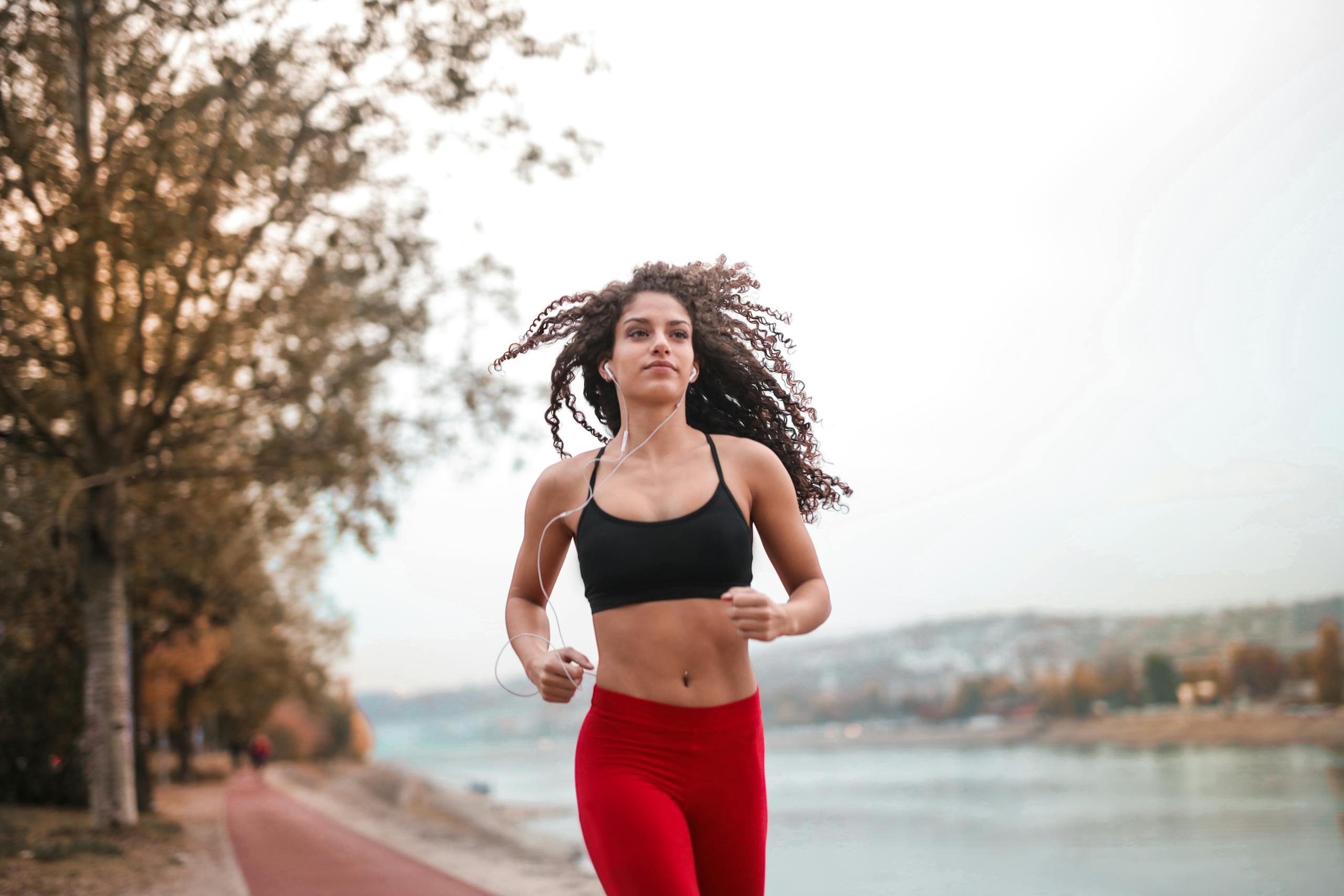

Quiet athletes exist at every level of sport. They observe more than they speak, prepare more than they perform, and process more deeply than most coaches ever realize. Introverted athletes bring focused attention, disciplined self-reflection, and a capacity for independent mental preparation that frequently produces exceptional results, even when those strengths go unrecognized in locker rooms built for louder personalities.
Spend twenty years running advertising agencies and you learn something surprising about performance under pressure. The people who held up best in high-stakes client presentations were rarely the loudest voices in the room. They were the ones who had spent the previous night thinking through every possible objection, visualizing the conversation, and preparing so thoroughly that confidence came naturally when the moment arrived. That same pattern shows up in athletic environments, and it’s worth understanding why.
I’m an INTJ who spent the better part of two decades trying to perform like an extrovert. I networked aggressively, hosted client dinners I found exhausting, and pushed myself to project energy I didn’t actually feel. What I eventually discovered was that my real competitive edge had nothing to do with matching extroverted behavior. It came from the same internal wiring that makes introverted athletes quietly formidable: depth of preparation, pattern recognition, and the ability to stay composed when everything around you is chaos.
Athletic training brings these strengths into sharp focus. Whether you’re a competitive athlete, a weekend runner, or someone who simply finds that physical training is one of the few spaces where you feel genuinely at home, understanding how introversion shapes your approach can change how you train, how you compete, and how you relate to coaches and teammates who process the world very differently.
What Does Introversion Actually Mean in an Athletic Context?
Introversion is frequently misunderstood as shyness, social anxiety, or a preference for isolation. The American Psychological Association describes introversion as a personality trait characterized by a preference for calm, minimally stimulating environments, and a tendency to draw energy from solitary reflection rather than social interaction. That distinction matters enormously in sports, where team culture often defaults to high-energy group dynamics.
What’s your personality type?
Take our free 40-question assessment and get a detailed personality profile with dimension breakdowns, context analysis, and personalised insights.
Discover Your Type8-12 minutes · 40 questions · Free
An introverted athlete isn’t someone who dislikes teammates or avoids competition. They’re someone whose mental processing runs deeper and quieter. They absorb information from training sessions differently. They self-correct through internal analysis rather than verbal processing. They may appear disengaged during pre-game rituals built around collective energy, while actually being more mentally prepared than anyone else in the room.
A 2022 study published through the National Institutes of Health found that introverted individuals demonstrate stronger activation in brain regions associated with self-referential processing and long-term planning, which aligns directly with the kind of deliberate mental preparation that separates good athletes from exceptional ones.
Early in my agency career, I managed a team that included both highly extroverted account executives and quieter, more analytical strategists. The extroverts excelled at rapid-fire client conversation. The introverts produced the strategic thinking that actually won accounts. Athletic teams work the same way, even when coaches don’t always see it clearly.
Why Do Introverts Often Excel at Independent Training?
Solo training is where introverted athletes frequently find their deepest competitive advantage. Without the social layer of group dynamics, the internal processing that can feel like a liability in team settings becomes a genuine asset. Distance runners, swimmers, cyclists, martial artists, and individual-sport competitors often describe training alone as restorative rather than isolating, which is a meaningful distinction.
What happens during solo training for someone wired this way? The mind runs a continuous internal commentary that most coaches never hear. Form adjustments, pacing calculations, mental rehearsal of competitive scenarios, emotional processing of previous performances. This internal coaching loop is remarkably sophisticated, and it operates most effectively when there’s no social noise competing for bandwidth.
I experienced a version of this every time I prepared for a major agency pitch. My best thinking never happened in group brainstorms. It happened at 6 AM before anyone else arrived, or during long drives between client meetings, when my mind could work through a problem without interruption. The ideas I generated in those quiet windows consistently outperformed anything that came out of collaborative sessions. Introverted athletes access the same kind of processing during independent training.
The Mayo Clinic has documented the psychological benefits of solitary physical activity, noting that exercise performed in low-stimulation environments can produce more consistent stress reduction for individuals who find social environments mentally taxing. For introverted athletes, solo training isn’t just a preference. It’s often a physiological necessity for optimal performance.
How Does Deep Focus Shape an Introvert’s Competitive Edge?
Focus is the word that comes up most consistently when coaches describe their best introverted athletes. Not focus as in concentration during a drill, but a sustained, penetrating attention that operates across an entire training cycle. Introverted athletes tend to study their sport differently. They watch film longer. They ask fewer but more precise questions. They notice patterns in opponents that more socially engaged teammates miss entirely.
This connects to something I observed repeatedly across two decades of managing creative teams. My introverted strategists would sit through a client briefing saying almost nothing, then produce a memo afterward that captured nuances the client hadn’t even articulated clearly. They were processing at a level that verbal participation would have disrupted. Introverted athletes do the same thing during practice. The apparent quietness isn’t disengagement. It’s deep absorption.
Psychology Today has published extensively on the relationship between introversion and focused attention, noting that introverted individuals often demonstrate superior performance on tasks requiring sustained concentration and careful analysis, particularly in low-distraction environments. Athletic training, especially at the technical level, rewards exactly this kind of attention.
Consider what happens when an introverted tennis player watches an opponent warm up. Where an extroverted player might be socializing or managing pre-match energy through conversation, the introverted player is cataloguing patterns. Serve mechanics. Footwork tendencies. How they react to wide balls on the backhand side. That mental database gets built quietly, and it pays dividends during competition in ways that are hard to quantify but impossible to ignore.
What Challenges Do Introverted Athletes Face in Team Environments?
Team sports create genuine friction for introverted athletes, and it’s worth being honest about that. Locker room culture tends to reward vocal leadership, visible enthusiasm, and the kind of social energy that comes naturally to extroverts. Coaches who haven’t thought carefully about personality differences can misread an introvert’s quiet composure as lack of commitment or emotional investment.
I felt a version of this throughout my agency years. Leadership culture in advertising rewards the person who commands a room, who can improvise brilliantly in front of a client, who generates energy through sheer presence. My natural mode was different. I prepared obsessively, listened carefully, and contributed strategically rather than constantly. It took me years to stop apologizing for that approach and recognize it as a legitimate leadership style.
Introverted athletes face the same pressure to perform extroversion. Pre-game hype rituals, mandatory team bonding activities, coaches who interpret silence as attitude problems. A 2021 analysis published through the National Institutes of Health found that personality-blind coaching approaches can create significant psychological stress for introverted athletes, reducing both performance and long-term athletic engagement.
The practical impact is real. An introverted athlete who feels pressure to perform social energy they don’t have is depleting mental resources that should be directed toward competition. It’s the athletic equivalent of what happens when I used to force myself through three consecutive client dinners. By the third evening, I had nothing left for the actual strategic thinking that was supposed to be my contribution.
Effective coaches learn to read these differences. They create space for introverted athletes to contribute through preparation and performance rather than social performance. They recognize that the quiet player who arrives early, stays late, and asks precise technical questions is often more invested than the loudest voice in the locker room.
How Can Introverted Athletes Communicate Their Strengths to Coaches?
One of the harder lessons I learned in agency life was that being excellent at your work is not sufficient on its own. You also have to make your thinking visible to the people who evaluate you. Introverted athletes face the same challenge. The internal preparation, the pattern recognition, the deep focus, these strengths are often invisible to coaches who are watching for more obvious signals of engagement.
Proactive communication matters here, even when it feels unnatural. Not performative communication, but strategic sharing of internal work. An introverted athlete might write brief notes after practice sessions, summarizing what they observed and what they’re working on. They might request one-on-one time with a coach rather than trying to compete for attention in group settings. They might ask precise questions that demonstrate the depth of their preparation.
My most effective moments with clients rarely happened in large group presentations. They happened in smaller conversations where I could think carefully before speaking and where the depth of my preparation could come through without the social noise of a crowded room. Introverted athletes often perform their best communication in similar conditions: direct conversations rather than team meetings, written feedback rather than verbal processing, one-on-one check-ins rather than group debriefs.
Harvard Business Review has documented how introverted high performers in professional environments consistently benefit from creating structures that allow their analytical strengths to become visible, rather than waiting for those strengths to be noticed organically. The same principle applies in athletic contexts. Visibility of preparation is as important as the preparation itself.
What Mental Preparation Strategies Work Best for Introverted Athletes?
Mental preparation is where introverted athletes can build the most significant competitive advantages, because it plays directly to how their minds naturally work. Visualization, journaling, pre-competition routines built around quiet focus rather than social energy, these approaches align with introvert wiring in ways that more socially oriented preparation strategies simply don’t.
Visualization deserves particular attention. Introverted athletes tend to be unusually skilled at detailed mental rehearsal, running through competitive scenarios with a specificity that produces real performance benefits. The American Psychological Association has published findings indicating that mental imagery practice activates similar neural pathways to physical practice, making it a legitimate training tool rather than a soft supplement.
Before every major agency pitch, I ran through the entire presentation mentally at least three times. Not a vague run-through, but a detailed simulation that included likely client questions, my responses, the moments where I expected to feel uncertain, and how I planned to handle them. By the time I walked into the room, I had already lived through the experience multiple times. Introverted athletes can apply the same approach to competition preparation with remarkable effectiveness.
Training journals are another tool that suits introverted athletes particularly well. The act of writing forces the internal processing that happens naturally into a form that can be reviewed, refined, and built upon over time. Patterns become visible across weeks and months. Emotional responses to training load, recovery, and competitive pressure get documented in ways that support better decision-making. What feels like a private habit is actually a sophisticated performance management system.
Pre-competition routines matter enormously for introverted athletes who can find high-stimulation pre-game environments genuinely depleting. Building a personal routine that includes quiet time, controlled breathing, and mental rehearsal rather than forced participation in group energy rituals can make the difference between arriving at competition mentally sharp or already drained. Psychology Today has noted that pre-performance routines are particularly effective for athletes who process internally, as they create a reliable mental environment that reduces cognitive load at the moment of competition.
How Does Recovery Look Different for Introverted Athletes?
Recovery is a dimension of athletic training that rarely gets discussed through the lens of personality, yet it’s one of the areas where introvert wiring creates the clearest practical differences. Physical recovery from training load is universal. Mental and emotional recovery varies significantly based on how an athlete’s nervous system processes stimulation.
Introverted athletes frequently need more solitary recovery time after competitions and high-stimulation training environments than their extroverted teammates. This isn’t weakness or antisocial behavior. It’s a physiological reality. The Centers for Disease Control and Prevention has documented how chronic psychological stress, including the stress of sustained social performance, impairs physical recovery processes, immune function, and sleep quality. For introverted athletes who are regularly required to perform social energy they don’t naturally have, the recovery implications are real and measurable.
I learned this the hard way during a period when I was running two agency offices simultaneously and traveling constantly. The physical exhaustion was manageable. The social exhaustion from constant client interaction, staff meetings, and networking events was genuinely cumulative in a way that affected my cognitive performance. I started protecting solitary recovery time as seriously as I protected client commitments, and the difference in my thinking quality was immediate.
Introverted athletes who understand this dynamic can advocate for recovery practices that actually work for their nervous system. Quiet cool-down periods rather than immediate post-game social obligations. Solo walks or drives after competitions before re-engaging with team environments. Sleep routines that prioritize genuine rest rather than social media processing of the day’s events. These aren’t indulgences. They’re performance management.

What Sports and Training Environments Suit Introverted Athletes Best?
Certain athletic environments are genuinely better suited to introvert wiring, and recognizing this can save years of unnecessary friction. That said, introverted athletes can and do excel across all sports when they understand their own needs and communicate them effectively. The question isn’t which sports introverts can do, but which environments allow introvert strengths to operate most freely.
Individual sports with strong technical and mental components tend to align particularly well. Distance running, swimming, cycling, martial arts, archery, golf, tennis, and rock climbing all reward the sustained focus, independent preparation, and internal processing that introverted athletes do naturally. These sports also tend to create more space for personal pre-competition routines and solitary training time.
Within team sports, introverted athletes often gravitate toward positions that reward preparation and pattern recognition over constant social interaction. The quarterback who studies film obsessively. The point guard who reads defensive schemes three steps ahead. The midfielder who controls tempo through positioning rather than vocal leadership. These roles suit introvert strengths without requiring constant performance of social energy.
Training environments matter as much as sport selection. Small group training with a coach who values depth of preparation over visible enthusiasm. Training partners who respect quiet focus rather than filling every session with conversation. Gyms or facilities that don’t require constant social performance just to get through a workout. Introverted athletes who find these environments tend to train more consistently and with greater quality of attention over time.
Explore more personality and performance resources in our complete Introvert Strengths Hub at Ordinary Introvert.
About the Author
Keith Lacy is an introvert who’s learned to embrace his true self later in life. After 20 years in advertising and marketing leadership, including running agencies and managing Fortune 500 accounts, Keith now channels his experience into helping fellow introverts understand their strengths and build fulfilling careers. As an INTJ, he brings analytical depth and authentic perspective to every article, drawing from both professional expertise and personal growth.
Frequently Asked Questions
Are introverts naturally suited to individual sports over team sports?
Introverted athletes often find individual sports align more naturally with their wiring because those environments reward solitary preparation, internal focus, and personal routines without requiring constant social performance. That said, introverts compete successfully in team sports across every level. The difference lies in understanding which roles and team cultures allow their strengths to operate freely, and advocating for the preparation and recovery conditions that work for their nervous system.
How can introverted athletes handle the social demands of team environments?
Managing team social dynamics works best when introverted athletes stop trying to match extroverted energy and start communicating their actual strengths instead. Proactive one-on-one conversations with coaches, written notes that make internal preparation visible, and honest communication about recovery needs all help create team environments that work better. Protecting solitary recovery time after high-stimulation events is also a practical necessity, not a personality quirk to apologize for.
What mental preparation techniques work best for introverted athletes?
Visualization and training journals are particularly effective for introverted athletes because both leverage the internal processing that already happens naturally. Detailed mental rehearsal of competitive scenarios, including likely challenges and planned responses, builds a kind of experiential preparation that reduces cognitive load during actual competition. Written training journals make patterns visible over time and support the kind of deep analysis that introverted athletes do instinctively. Pre-competition routines built around quiet focus rather than group energy rituals are also consistently effective.
Do coaches misread introverted athletes as less committed or motivated?
Yes, this happens regularly and it creates real problems for introverted athletes at every level. Coaches trained to read enthusiasm through visible social energy can misinterpret quiet composure as disengagement, lack of competitive drive, or attitude issues. The practical solution involves making internal preparation visible through direct communication rather than waiting for it to be noticed organically. Requesting one-on-one conversations, sharing preparation notes, and asking precise technical questions all signal investment in ways that don’t require performing extroversion.
How does introversion affect athletic recovery?
Introverted athletes need more solitary recovery time after competitions and high-stimulation training environments than most coaches and teammates realize. When introverts are regularly required to perform social energy they don’t naturally have, the cumulative psychological stress impairs physical recovery, sleep quality, and cognitive performance. Building recovery routines that include genuine quiet time, rather than immediate post-game social engagement, is a legitimate performance management strategy rather than an antisocial preference.