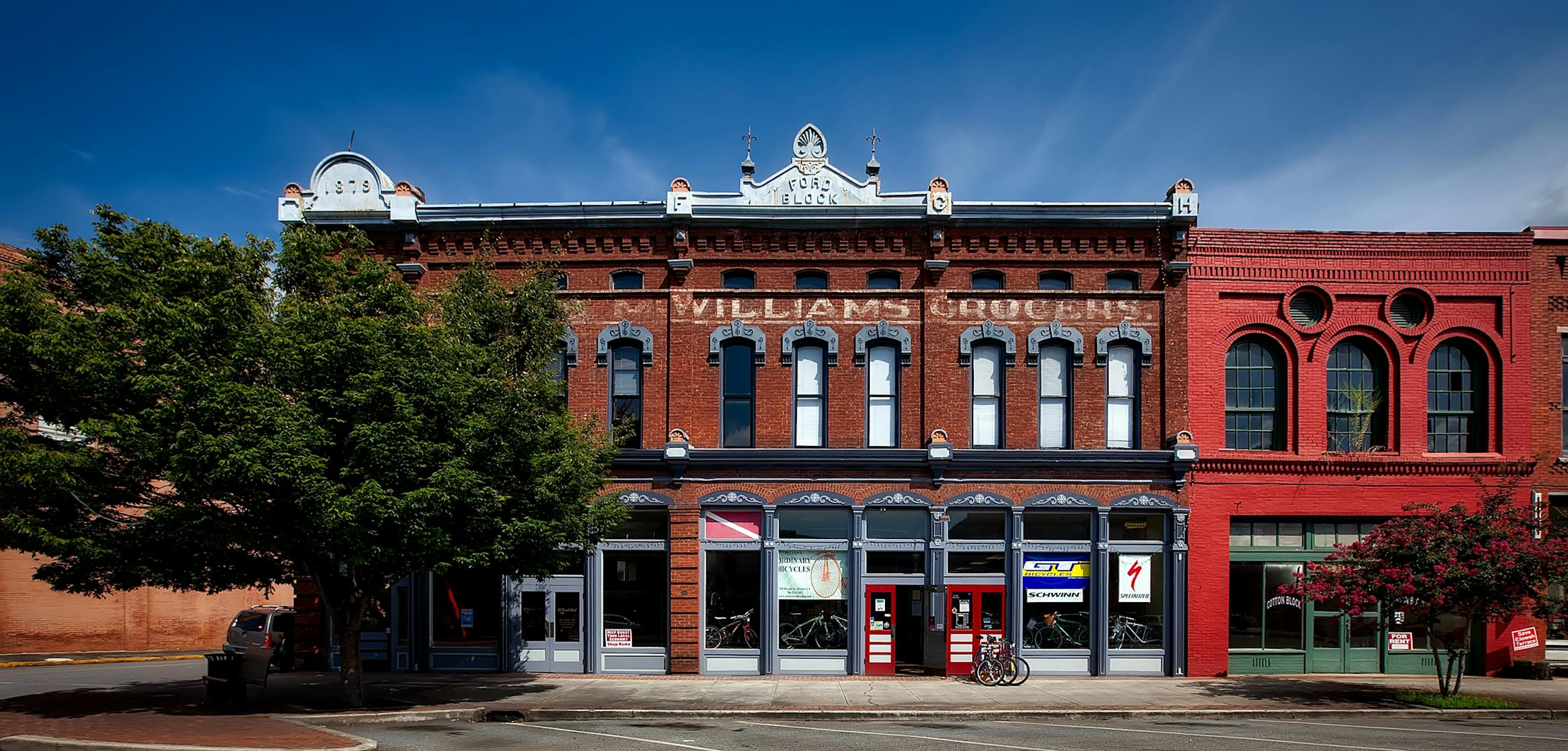

I discovered the magic of small college towns completely by accident. During a business trip several years back, I found myself with a free afternoon in a university town I had never visited before. What struck me immediately was how different the pace felt compared to the sprawling metropolitan areas where I had spent most of my career. People walked everywhere. The downtown was compact and human scaled. Coffee shops were filled with quiet conversations rather than rushed commuters grabbing drinks before disappearing into parking garages.
As someone wired for depth and internal reflection, I experience overstimulation as a core part of how I move through the world. My mind processes emotion and information quietly, filtering meaning through layers of observation, intuition, and subtle interpretation. That afternoon spent wandering a college town’s tree lined streets gave me something I rarely found in larger cities: room to think without feeling pressured by the relentless energy around me.
If you are an introvert considering where to plant roots, small college towns deserve serious consideration. They offer something increasingly rare in modern America: environments designed around walking, thinking, and community connection rather than highways, strip malls, and isolation.
Why Small College Towns Work for Introverts
The appeal of college towns goes far beyond the presence of a university. These communities have evolved over decades to serve populations that value intellectual engagement, cultural access, and pedestrian friendly living. For introverts, this creates an environment that naturally supports how we prefer to move through the world.
What’s your personality type?
Take our free 40-question assessment and get a detailed personality profile with dimension breakdowns, context analysis, and personalised insights.
Discover Your Type8-12 minutes · 40 questions · Free
Unlike sprawling suburbs that require cars for every errand or dense urban centers that overwhelm with constant stimulation, small college towns occupy a middle ground. They are compact enough to navigate on foot but diverse enough to provide variety. They are populated enough to offer anonymity when you want it but small enough that you can build genuine connections over time.
I spent years working in major metropolitan advertising markets, surrounded by constant noise and pressure to perform extroversion. The contrast when I visit college towns is striking. There is intellectual energy without the aggressive competitive edge. There is community without the claustrophobia of everyone knowing your business. For introverts seeking environments that work with rather than against our natural tendencies, this balance matters enormously.
The Walkability Advantage
One of the most significant benefits of small college town living is walkability. Research published in the International Journal of Environmental Research and Public Health found that walkable environments directly promote positive emotions and mental wellbeing. The study demonstrated that proximity to destinations, maintained pedestrian pathways, green spaces, and interesting visual elements all contribute to psychological health.
For introverts, walkability offers something beyond the physical health benefits. Walking provides thinking time. It allows us to process our internal worlds while moving through external space. Unlike driving, which demands constant attention and reaction, walking lets the mind wander productively. Some of my best insights about client challenges and creative strategies came during walks rather than in fluorescent lit conference rooms.
College towns are inherently designed around walking because students historically could not afford cars. This has shaped the physical layout of these communities for generations. Downtown areas are compact. Residential neighborhoods are close to commercial centers. Paths connect different parts of town in ways that make walking logical rather than heroic.
A study from the University of New Hampshire published in Health Economics found that communities with higher walkability scores showed reduced mental health deterioration during stressful periods. The researchers noted that walking benefits stem from multiple factors including physical activity, time spent outdoors, and improved social ties within neighborhoods. For introverts, these social ties can form organically through repeated low pressure encounters rather than forced networking events.

The Sensory Environment Question
As someone who notices details others overlook, the sensory environment of a place matters deeply to me. Small shifts in tone, background noise levels, visual clutter, and the general atmosphere of a room all register in ways that can either support or drain my energy. This heightened awareness is common among introverts and has been extensively researched.
A landmark study in the Journal of Personality and Social Psychology identified sensory processing sensitivity as a distinct trait that often correlates with introversion. People with this trait process larger amounts of sensory information than average, making them particularly aware of environmental subtleties. While this awareness brings gifts like deeper perception and creativity, it also means that overstimulating environments become exhausting faster.
Small college towns tend to offer lower baseline stimulation than major cities. There are fewer honking horns, fewer crowds jostling on sidewalks, fewer aggressive advertisements competing for attention at every corner. The pace is slower. The sounds are softer. The visual environment is often more cohesive and historically maintained rather than the chaotic patchwork of architectural styles found in rapidly growing cities.
This matters for introvert energy management in profound ways. When your baseline environment requires less energy to process, you have more capacity available for the things that matter. You can engage more deeply with work, relationships, and personal interests when you are not constantly filtering out environmental noise.
Community Without Overwhelm
The research on sense of community belonging and mental health is remarkably consistent. A study published in Family Medicine and Community Health found that people who reported negative sense of community had significantly higher odds of depression, anxiety, and stress symptoms. The connection between belonging and wellbeing appears robust across multiple studies and populations.
What makes college towns particularly interesting for introverts is how they structure community. Unlike small towns where everyone has known each other for generations, college towns have built in turnover. Students come and go. Faculty arrive and depart. This creates space for newcomers to establish themselves without having to break into established social hierarchies that have calcified over decades.
Research published in BMC Psychology examined sense of belonging in small to medium sized urban areas and found particularly high levels in college town communities. The study noted that positive mental health was strongly associated with positive sense of belonging for residents regardless of how long they had lived in the community.
For introverts, this matters because we often build community differently than extroverts. We prefer depth over breadth. We want a few meaningful connections rather than extensive networks of acquaintances. College towns provide structures that support this preference. The local coffee shop where staff remember your order. The bookstore owner who sets aside titles they think you will enjoy. The neighbor you wave to on your daily walk who eventually becomes a genuine friend rather than just someone you recognize.
This kind of slow building community allows introverts to find peace in environments that might otherwise feel isolating. You can be known without being constantly observed. You can belong without being obligated to attend every social event.

Cultural Access Without Big City Prices
One of the genuine surprises of college town living is the cultural access these communities provide. Universities bring lectures, performances, art exhibitions, film series, and intellectual events that would otherwise only be available in major metropolitan areas. Many of these events are free or heavily subsidized because they serve educational purposes.
During my advertising career, I regularly spent significant money attending cultural events in big cities. The irony was that I often felt too drained by the commute and crowds to fully appreciate what I had come to experience. In college towns, these same types of events are accessible by foot, reasonably priced, and attended by audiences that are there because they genuinely care about the content rather than because it is the fashionable thing to be seen doing.
For introverts who value intellectual stimulation and creative engagement, this access matters enormously. We can attend a lecture on topics that fascinate us without the social pressure of networking events. We can see performances without fighting through crowds for parking. We can visit galleries and museums during quiet weekday afternoons when students are in class.
This connects to what actually creates introvert fulfillment. It is not constant social activity or high status experiences. It is meaningful engagement with ideas, beauty, and depth. College towns make this engagement more accessible and less exhausting than almost any other type of community.
The Professional Reality
Any honest discussion of college town living must address the professional considerations. Universities are often the largest employers in these communities, which creates both opportunities and limitations. If your career requires proximity to major corporate centers or specific industries, college town living may not be practical regardless of its other benefits.
However, the rise of remote work has fundamentally changed this calculation for many introverts. If you can do your job from anywhere with reliable internet, college towns suddenly become viable options that were not possible even five years ago. The cost of living is typically lower than major metropolitan areas, which means your remote salary goes further.
I have also observed that college towns attract certain types of professionals beyond academics. Writers, consultants, researchers, and creative professionals often find these communities appealing for the same reasons introverts do. The presence of university libraries, intellectual community, and reasonable costs creates an ecosystem that supports knowledge work in ways that purely residential suburbs do not.
There are real challenges though. Career advancement may require occasional travel to larger cities for meetings or networking. Some industries simply do not have presence in college towns. The job market for non university positions can be limited. These are practical realities that must be weighed against the lifestyle benefits.
Understanding these tradeoffs is part of avoiding the self sabotage patterns that introverts sometimes fall into. We can romanticize quiet environments without honestly assessing whether they will support our professional goals. The key is making informed decisions rather than escaping to somewhere that sounds peaceful without understanding the full picture.

The Rhythm of Academic Calendars
College towns operate on rhythms that differ from typical communities. When students arrive in fall, energy increases. When they leave for summer, things quiet down dramatically. This seasonal fluctuation affects everything from restaurant crowds to traffic patterns to the general atmosphere of the town.
For introverts, this rhythm can be either a benefit or a challenge depending on your preferences. Some introverts love the summer lull when the town empties out and everything becomes even more peaceful. Others find the reduced activity makes the town feel too quiet or limits the services and businesses that remain open year round.
The academic calendar also creates natural periods for adapting to change. Unlike communities where nothing ever shifts, college towns have built in renewal cycles. New students bring fresh energy each fall. The community constantly regenerates rather than becoming static. For introverts who appreciate some variety but not constant disruption, this measured pace of change can feel comfortable.
I notice details others overlook, and the seasonal shifts in college towns register clearly. The town has different moods at different times of year, and learning to appreciate each season makes the living experience richer. Fall brings intellectual excitement and colorful leaves. Winter offers quiet contemplation and cozy coffee shops. Spring brings renewal and outdoor activity. Summer provides space and solitude. Each season has gifts for introverts willing to receive them.
Finding the Right College Town
Not all college towns are created equal for introverts. The size of the university relative to the town matters. A massive state university in a small town creates a very different experience than a small liberal arts college in a slightly larger community. The former may feel overrun by students during the academic year while the latter maintains more balance.
Geography affects the character of college towns significantly. A college town in New England feels different from one in the Southwest or Pacific Northwest. Climate shapes how people use outdoor spaces, which affects walkability and community interaction patterns. Architecture and urban design vary by region, influencing the sensory environment that introverts must navigate daily.
Research from Frontiers in Public Health found that the association between neighborhood belonging and mental health varied significantly by individual characteristics and geographic context. This suggests that the right college town for one introvert may not be the right choice for another. Personal factors including your specific sensory sensitivities, professional needs, social preferences, and climate tolerances all matter.
When evaluating college towns, consider visiting during different times of year if possible. A town that feels perfect in quiet summer may overwhelm you during football season. A town that seems dead in winter may come alive with energy in spring. Understanding the full annual cycle helps you make decisions based on reality rather than a single snapshot.
The Authenticity Question
One thing I have learned through decades of navigating professional environments that did not naturally fit my introvert nature is the importance of living authentically. For years, I tried to match extroverted leadership styles because that was what seemed expected in advertising and marketing. It worked professionally but cost me personally in ways I did not fully understand until later.
Choosing where to live is a profound expression of values. When introverts choose environments that force us to constantly adapt and perform extroversion, we pay a price. When we choose environments that naturally support how we prefer to operate, we conserve energy for the things that matter most.
College towns offer introverts permission to be ourselves in ways that many other environments do not. The culture generally respects quiet contemplation. The pace allows for thoughtful responses rather than demanding immediate reactions. The community values intellectual depth alongside social connection. This alignment between environment and personality supports authenticity liberation in ways that accumulate over time.
This does not mean college towns are perfect or that they will magically solve every challenge introverts face. Imposter syndrome, social anxiety, and other struggles exist regardless of where you live. But choosing an environment that works with your nature rather than against it provides a foundation from which to address other challenges more effectively.

Practical Considerations for the Transition
If college town living appeals to you, approaching the transition thoughtfully will serve you better than impulsive decisions. Start by identifying college towns that might fit your professional and personal needs. Consider factors like climate, proximity to family or other important connections, cost of living, and specific amenities that matter to you.
Extended visits before committing to a move can reveal things that shorter trips miss. Rent an apartment or house for a month if possible. Experience the daily rhythms rather than tourist highlights. Shop at local grocery stores. Walk the neighborhoods at different times of day. Sit in coffee shops and observe how people interact. This deeper immersion helps you understand whether the reality matches your expectations.
If remote work enables your move, consider maintaining some professional ties to your current location during the transition. This provides security while you establish yourself in the new community and ensures you have options if the college town does not work out as planned.
Connect with the introvert community in your potential new town if one exists. Many college towns have thoughtful populations who have deliberately chosen these environments. Finding kindred spirits early in your transition can smooth the adjustment significantly.
Understanding your own mental health needs will help you evaluate whether a particular college town can meet them. Consider access to healthcare, therapy services, and other support structures that matter for your wellbeing. Smaller communities may have fewer options in these areas, which could be significant depending on your circumstances.
The Long View
College town living is not about escaping the world or hiding from challenges. It is about choosing an environment that supports who you actually are rather than who you might pretend to be in other contexts. For introverts who have spent years adapting to environments that did not fit, this alignment can feel like coming home to a place you have never been.
I navigate life through a thoughtful, introspective rhythm that reveals nuance beneath the surface. Even in everyday moments, I move through the world observing, processing, and making meaning from what I experience. College towns support this way of being in ways that many other environments do not.
The walkability, the cultural access, the manageable scale, the intellectual community, the seasonal rhythms, and the permission to be authentically ourselves all combine to create something valuable for introverts. Not every college town will be right for every introvert, but the category deserves serious consideration if you are thinking about where to build your life.
What makes a place feel like home is deeply personal. For some introverts, the answer will be a cabin in the mountains or an apartment in a carefully chosen urban neighborhood. But for many of us, the small college town offers something uniquely suited to how we experience the world. It is worth exploring whether that something might be right for you.
Frequently Asked Questions
Are college towns too noisy and chaotic for introverts?
Most college towns are actually quieter than major cities despite the student population. The noise tends to concentrate in specific areas like the main commercial strip or near campus housing. Residential neighborhoods often remain peaceful. The key is choosing where to live within the town strategically. Areas favored by faculty and long term residents typically offer the quiet environment introverts prefer while still providing access to the town’s benefits.
Can introverts find professional opportunities in small college towns?
Professional opportunities vary significantly by college town and field. Universities themselves employ people in diverse roles beyond teaching, including administration, research, communications, and technology. The rise of remote work has expanded options dramatically. Many introverts in college towns work remotely for companies elsewhere, enjoying lower living costs while maintaining competitive salaries. Some industries like healthcare and education have strong presence in college towns due to university hospitals and school systems.
What happens during summer when students leave?
Summer in college towns tends to be quieter, which many introverts actually prefer. Some businesses reduce hours or close temporarily, but most essential services remain available. The town’s permanent population of faculty, staff, and long term residents continues normal life. Many introverts find summer the best time of year in college towns because they enjoy all the walkability and cultural access benefits with even fewer crowds and less stimulation.
How do introverts build community in college towns?
College towns support introvert friendly community building through regular low pressure encounters. Walking the same routes daily creates natural opportunities to recognize and eventually know neighbors. Local businesses like bookstores, coffee shops, and libraries become familiar spaces where relationships develop organically over time. Many college towns also have organizations and activities that attract thoughtful people, from book clubs to hiking groups to arts organizations, providing structured ways to connect without the pressure of typical networking.
Is college town living affordable for introverts on moderate incomes?
Most college towns offer lower costs of living than major metropolitan areas, though this varies by region and specific town. The student population creates demand for affordable housing, restaurants, and services. Entertainment options through the university are often free or low cost. Walkability reduces or eliminates car expenses for some residents. However, some prestigious college towns in expensive regions like the Northeast or California can be surprisingly costly. Research specific towns rather than assuming all college towns are affordable.
Explore more General Introvert Life resources in our complete General Introvert Life Hub.
About the Author
Keith Lacy is an introvert who has learned to embrace his true self later in life. With a background in marketing and a successful career in media and advertising, Keith has worked with some of the world’s biggest brands. As a senior leader in the industry, he has built a wealth of knowledge in marketing strategy. Now, he is on a mission to educate both introverts and extroverts about the power of introversion and how understanding this personality trait can unlock new levels of productivity, self awareness, and success.