
Solitude in the desert transforms introverts because the environment strips away noise, obligation, and performance. Vast open space, minimal social interruption, and a slower rhythm create conditions where internal processing deepens naturally. Many introverts report clearer thinking, stronger self-awareness, and genuine rest in desert settings that crowded environments simply cannot provide.
Something about wide-open silence has always pulled at me. Not the uncomfortable silence of a room where someone expects you to fill it, but the kind that stretches to the horizon and asks nothing of you. I discovered that pull late in my advertising career, after years of managing client relationships, leading agency teams, and performing extroversion so convincingly that even I forgot it was a performance. The desert, I eventually learned, was not an escape from real life. It was a return to it.
There is a particular kind of exhaustion that builds when you spend years operating against your own nature. Constant meetings, open-plan offices, client dinners that stretched past ten at night. All of it valuable, all of it productive, and all of it quietly draining in ways I could not fully name until I stood in a place with no agenda and no noise. That is when the deeper question surfaced: what does solitude actually do to a person, and why does the desert seem to accelerate it?
This article explores that question from the inside out, drawing on psychology, neuroscience, and my own experience as an INTJ who spent two decades learning the hard way that silence is not empty. It is where the most important thinking happens.
- Introverts restore energy through solitude, making desert environments naturally restorative rather than isolating.
- Reduce sensory input and social demands to access deeper thinking and genuine self-awareness.
- Years of performing extroversion creates exhaustion that solitude in quiet spaces can directly address.
- Wide-open silence differs from uncomfortable silence; it asks nothing and permits authentic internal processing.
- Desert living reconnects introverts with their authentic nature after prolonged operating against personal preferences.
If you’ve ever felt drawn to wide open spaces where silence speaks louder than conversation, desert living might be calling your name. The solitude that comes with this lifestyle offers exactly what many introverts need to recharge and reconnect with themselves. To explore more ways that quiet and peace can support your well-being, check out our guide on solitude, self-care and recharging.
Why Desert Solitude and Introvert Psychology Belong Together
Introversion is fundamentally about energy. Where extroverts gain energy through social interaction, introverts restore it through solitude and inward focus. That basic distinction shapes everything from career choices to vacation preferences, and it explains why a landscape as extreme as the desert can feel, to the right person, like relief.
What’s your personality type?
Take our free 40-question assessment and get a detailed personality profile with dimension breakdowns, context analysis, and personalised insights.
Discover Your Type8-12 minutes · 40 questions · Free
The American Psychological Association describes introversion not as shyness or social anxiety, but as a preference for less stimulating environments and a tendency to direct attention inward. The desert delivers exactly that: reduced sensory input, minimal social demand, and a visual field that invites contemplation rather than reaction. You can read more about personality and psychological wellbeing through the American Psychological Association.
What I noticed during my first extended stay in the Southwest was not dramatic. It was subtle. My shoulders dropped. My internal monologue slowed from a sprint to a walk. I stopped rehearsing conversations that hadn’t happened yet. For someone who had spent twenty years in advertising, where every interaction felt like a chess match requiring three moves of preparation, that stillness was almost disorienting. Then it became addictive.
What Does Solitude Actually Do to Your Brain?
Solitude is not simply the absence of other people. Neurologically, it creates conditions that allow the brain’s default mode network to activate fully. This network, associated with self-referential thinking, memory consolidation, and creative insight, is often suppressed during social interaction when attention must focus outward. Genuine solitude lets it run.
A 2021 study published through the National Institutes of Health found that periods of solitude were associated with increased self-awareness and emotional regulation, particularly in individuals who scored higher on introversion measures. The brain, given space from external demands, begins processing accumulated experience, sorting emotional residue, and generating novel connections between ideas. You can explore the broader research on solitude and psychological health at the National Institutes of Health.
I experienced this concretely during a particularly difficult agency transition. We had lost a major account, and I was managing the fallout while trying to hold the team together. I flew to New Mexico for a long weekend, partly to clear my head. By the second morning, sitting outside before sunrise with nothing but the sound of wind across flat rock, I had worked through the strategic problem that three weeks of meetings had not solved. The answer had been there the whole time. My brain simply needed the noise to stop long enough to surface it.
That experience is not unusual. Many creative and analytical thinkers describe similar patterns: solutions arriving not during intense focus but during deliberate disengagement. The desert accelerates this because it provides what researchers call “restorative environments,” spaces that replenish directed attention capacity without demanding cognitive effort in return.
Why Does the Desert Feel Different From Other Forms of Solitude?
Solitude can happen in a city apartment, a forest cabin, or a library reading room. So what makes the desert specifically compelling for introverts who crave deep withdrawal?
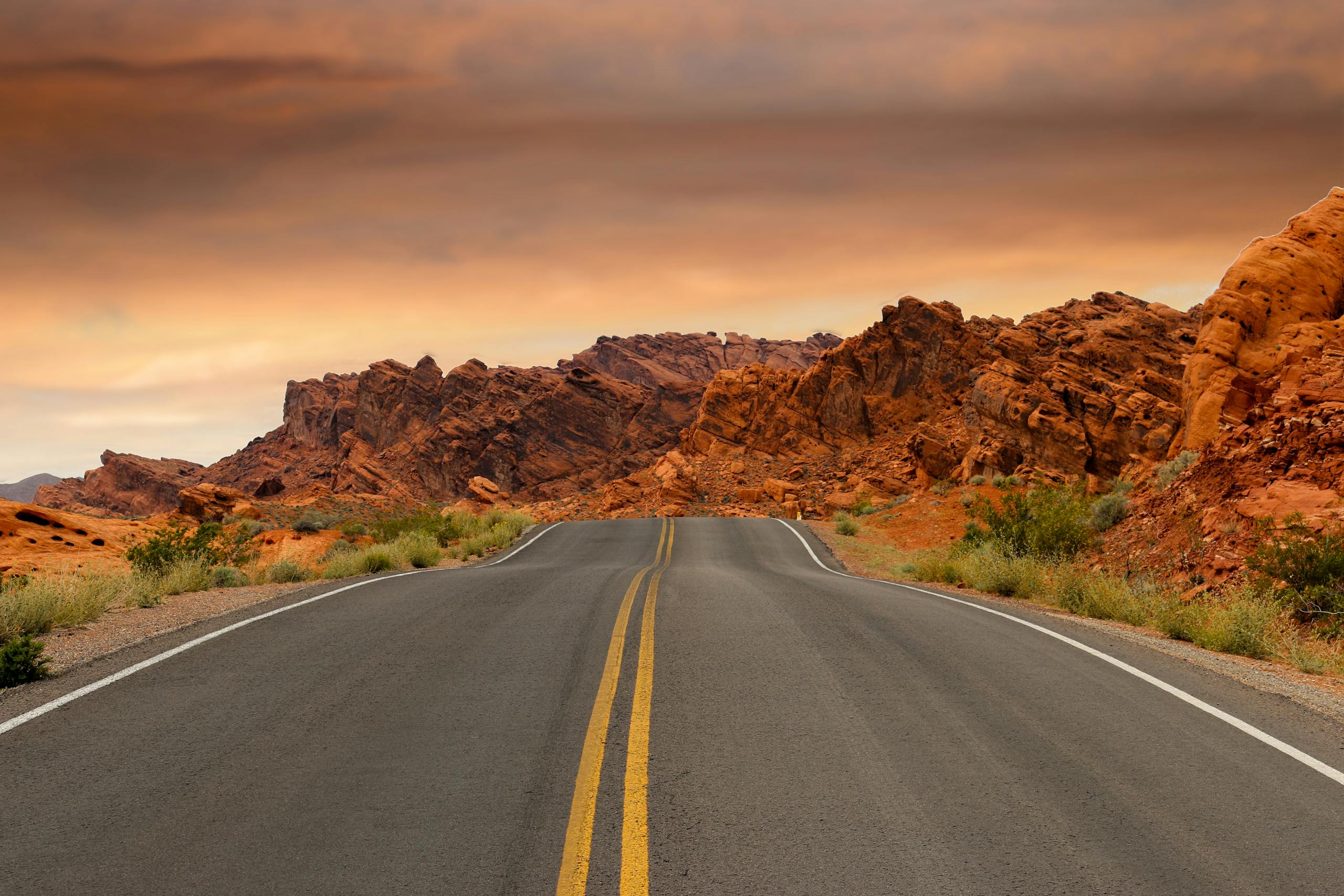
Part of the answer lies in scale. The desert presents an environment where human activity feels genuinely small. There are no crowds pressing in from adjacent streets, no neighbor sounds bleeding through walls, no ambient hum of urban infrastructure. The visual field extends to a horizon that does not end at a building or a tree line. Something about that scale recalibrates internal proportion. Problems that felt enormous shrink against a landscape that dwarfs everything.
Attention Restoration Theory, developed by environmental psychologists Rachel and Stephen Kaplan, suggests that natural environments with certain qualities, including fascination, extent, and a sense of being away, restore depleted cognitive resources more effectively than built environments. The desert scores exceptionally high on all three dimensions. Its visual complexity is enough to hold soft attention without demanding active processing. Its scale provides a genuine sense of “away.” And its distance from ordinary life contexts allows the mind to step outside its usual frameworks.
Mayo Clinic research on stress and environment supports the idea that natural settings reduce cortisol levels and activate the parasympathetic nervous system, the branch responsible for rest and recovery rather than fight-or-flight response. For introverts who have been running on social adrenaline, that physiological shift matters. You can find more on stress and recovery through Mayo Clinic’s health resources.
There is also something about the desert’s honesty. It does not perform. A forest has lush abundance. A coastline has drama and movement. The desert simply exists, spare and direct, asking you to meet it on its own terms. For someone who has spent years reading between the lines of client presentations and board meetings, that straightforwardness is a form of relief.
How Does Extended Solitude Change Your Sense of Self?
One of the most significant effects of sustained solitude, particularly in an environment as stripped-down as the desert, is a gradual clarification of identity. When external validation disappears, when there is no audience to perform for and no social mirror to check yourself against, you encounter something closer to your actual self.
That encounter is not always comfortable. I remember a stretch during my mid-forties when I took a week alone in the high desert of Utah. No client calls, no team check-ins, no social obligations. By day three, I was confronting questions I had successfully avoided for years. Was the version of myself I presented at work actually me? What did I actually value, separate from what the agency culture rewarded? What kind of leader did I want to be, not what kind had I trained myself to become?
These were not comfortable questions. But they were necessary ones, and the desert gave me the conditions to sit with them long enough to find honest answers rather than reflexive ones. That week changed the way I ran my agency for the remaining years of my tenure. Not dramatically, not overnight, but in ways that compounded over time.
Psychology Today has published extensively on how solitude contributes to identity development and self-concept clarity, particularly in adults who have spent years in high-performance social environments. The pattern is consistent: people who take deliberate solitude seriously report stronger alignment between their internal values and external behavior. You can explore that research at Psychology Today.

Can Living in the Desert Long-Term Actually Sustain an Introvert?
Weekend retreats and extended vacations are one thing. Choosing to actually live in a desert environment is a different commitment, and it raises practical questions worth taking seriously. Does the appeal hold over time? Does the solitude become loneliness? And what does the research say about long-term wellbeing in low-density, high-isolation environments?
The distinction between solitude and loneliness matters enormously here. Solitude is chosen and purposeful. Loneliness is unwanted social disconnection. Many introverts who move to desert communities report that the environment actually makes their social interactions more meaningful, not fewer. Without the constant low-grade social noise of dense urban life, the connections they do maintain become more intentional and therefore more satisfying.
A 2019 Harvard study found that social connection quality matters far more than quantity for long-term health and happiness. Introverts in low-density environments often report higher relationship satisfaction precisely because they are investing more deliberately in fewer, deeper connections. The World Health Organization similarly notes that mental wellbeing depends more on meaningful connection than on social frequency. Their broader mental health framework is available through the World Health Organization.
Practically speaking, desert living does require intentional community-building. The towns and small cities scattered across desert regions often have strong arts communities, outdoor recreation cultures, and a particular kind of self-reliant social fabric that many introverts find appealing. People tend to respect autonomy. Neighbors do not drop by uninvited. Social events are optional rather than obligatory.
There are also real health considerations. Desert climates present challenges around heat, UV exposure, and hydration that require consistent attention. The Centers for Disease Control and Prevention offers solid guidance on heat-related health risks and environmental adaptation that anyone considering desert relocation should review. Their environmental health resources are available at the CDC website.
What Are the Specific Psychological Benefits of Desert Living for Introverts?
Let me be specific rather than general here, because the benefits are concrete and measurable, not just atmospheric.
Reduced sensory overload is the most immediate. Urban environments generate constant low-level stimulation: traffic, voices, screens, artificial light, ambient sound. For introverts whose nervous systems are already more sensitive to external input, that constant stimulation creates a baseline fatigue that is easy to normalize and hard to shake. Desert environments reduce that load significantly. The result is not just calm. It is cognitive capacity returning to baseline, which feels, after years of depletion, like something close to superpower.
Deeper creative processing is the second benefit. With directed attention freed from constant demands, the associative thinking that drives creativity gets room to operate. I wrote more clearly, thought more originally, and solved problems more elegantly during extended desert stays than during any comparable period in a city. The ideas were not better because I was trying harder. They were better because I had stopped trying so hard and let the underlying processing happen.
Stronger emotional regulation is the third. A 2020 NIH-indexed study on nature exposure and emotional health found that regular time in natural environments was associated with reduced anxiety, lower rumination, and improved mood stability. For introverts who tend toward rich internal emotional lives, that regulation matters. The desert does not numb emotion. It creates enough stillness to process it properly rather than carrying it indefinitely. Additional research on nature’s effect on mental health is available through the National Institute of Mental Health.
Clearer values and priorities round out the picture. Extended time outside the social performance loop consistently reveals what actually matters versus what you have been told should matter. That clarity is not a small thing. It affects every decision that follows.

How Do You Actually Build a Life That Honors Your Need for Solitude?
Whether you are considering a full relocation or simply trying to build more restorative solitude into your current life, the principles are the same. Intentionality matters more than geography, though geography helps.
Start by auditing your current environment honestly. How much genuine solitude do you actually have each week? Not just time alone in the same space as other people, but time with no social obligation, no performance requirement, and no incoming demands. For most people in modern work environments, that number is startlingly low.
When I was running my agency, I eventually built a rule into my schedule: one morning per week with no meetings before noon. No exceptions, no renegotiations. My team thought I was eccentric. My results told a different story. That protected morning time was where the strategic thinking happened, where the creative direction for major campaigns took shape, where I processed the interpersonal complexity of leading a team of forty people. It was not luxury time. It was production time, just production of a different kind than what appeared on any calendar.
If a desert relocation is genuinely on your radar, approach it the way you would any significant decision: with research, trial periods, and honest assessment of what you need versus what you are romanticizing. Spend a month in a desert community before committing. Notice what the pace does to your nervous system. Notice whether the social fabric feels like the right kind of sparse or the wrong kind of isolated. The difference matters.
Consider also what work arrangements would make desert living sustainable. Remote work has made this more viable than at any previous point in history. A 2023 Harvard Business Review analysis found that high-performing introverted professionals were disproportionately represented among those who thrived in remote and asynchronous work environments. Their research on introversion and workplace performance is worth reading at Harvard Business Review.
The practical checklist for anyone seriously considering desert living as an introvert looks something like this: assess your remote work options, research specific communities rather than just landscapes, build in a genuine trial period, establish the social connections you actually want before you need them, and create the physical environment inside your home that supports deep work and genuine rest. The desert outside your window does a lot of work. Your interior environment needs to meet it halfway.
Is Desert Solitude Right for Every Introvert?
Honest answer: no. Introversion is a broad spectrum, and the specific appeal of desert environments reflects a particular subset of introvert preferences, those who find meaning in stark simplicity, who process best in visual openness rather than enclosed coziness, and who are energized by scale rather than intimacy of space.
Some introverts find their restorative environment in dense forests, where enclosure and organic complexity provide the withdrawal they need. Others find it in coastal solitude, where the rhythm of water serves the same function the desert’s silence serves for others. The specific landscape matters less than the underlying principle: finding an environment that reduces social demand, supports internal processing, and aligns with your particular sensory preferences.
What the desert offers that is relatively unique is a combination of visual openness, genuine quiet, and a cultural context that tends to respect self-sufficiency and autonomy. Many desert communities, particularly in the American Southwest, have a live-and-let-live social ethos that introverts find deeply compatible with their own values. You are not expected to be visible. You are not pressured to participate. Your presence is accepted without requiring performance.
For introverts who have spent careers in high-visibility, high-performance environments, that social permission can feel almost radical. It certainly did for me. The idea that I could exist in a community without being required to perform my existence was not something I had experienced since childhood. Finding it again, in the specific context of desert living, felt less like a lifestyle choice and more like a recalibration.

What the Desert Teaches That No Office Ever Could
Twenty years in advertising taught me a great deal about people, strategy, creativity, and the particular pressure of performing under constant observation. What it could not teach me, what no high-stakes professional environment can teach, is what I actually think when no one is watching.
The desert teaches that. Not through instruction, but through subtraction. Strip away the meetings, the expectations, the social calculus, and the performance requirements, and what remains is the actual you. For some people, that encounter is uncomfortable enough that they fill the silence immediately with podcasts, phone calls, and manufactured busyness. For others, that encounter is the thing they have been waiting for without knowing it.
Introverts, in my experience, tend to fall into the second category. Not because we are more enlightened, but because we have a different relationship with our own interior life. We have been processing internally our whole lives. We have been noticing what others overlook, sitting with complexity rather than rushing past it, and finding meaning in the space between events rather than in the events themselves. The desert is simply an environment that matches that orientation at a landscape scale.
Solitude does not fix problems. It does not resolve career uncertainty or relationship complexity or the particular grief of realizing you have spent years building a life that fits someone else’s template. What it does is create conditions clear enough to see those things honestly and quiet enough to hear your own response to them. That is not nothing. For many introverts, it is everything.
Explore more about introvert strengths, self-awareness, and building a life that fits your actual personality in our complete Introvert Life Hub.
For more like this, see our full Solitude, Self-Care & Recharging collection.
About the Author
Keith Lacy is an introvert who’s learned to embrace his true self later in life. After 20 years in advertising and marketing leadership, including running agencies and managing Fortune 500 accounts, Keith now channels his experience into helping fellow introverts understand their strengths and build fulfilling careers. As an INTJ, he brings analytical depth and authentic perspective to every article, drawing from both professional expertise and personal growth.
Frequently Asked Questions
Why do introverts tend to feel more at peace in desert environments?
Desert environments reduce sensory stimulation, social obligation, and the constant low-grade demand of dense human environments. For introverts, whose nervous systems are more sensitive to external input and who restore energy through inward focus rather than social interaction, that reduction creates conditions for genuine rest and deep thinking. The desert’s visual openness also supports the kind of soft, expansive attention that allows internal processing to happen naturally.
What is the difference between solitude and loneliness in the context of desert living?
Solitude is chosen withdrawal that replenishes energy and supports self-reflection. Loneliness is unwanted social disconnection that depletes wellbeing. Many introverts who choose desert living report that the environment actually improves their social satisfaction because the connections they maintain become more intentional and meaningful. Choosing fewer, deeper relationships in a low-density environment is fundamentally different from being isolated against your will.
How does the desert specifically support creative thinking and problem-solving?
Desert environments activate what neuroscientists call the default mode network, the brain system associated with creative insight, memory consolidation, and self-referential thinking. This network is often suppressed during high-stimulation social environments when attention must focus outward. The desert’s reduced sensory input and absence of social demand allow the brain to process accumulated experience, make novel connections between ideas, and surface solutions that directed effort alone cannot reach.
Is desert living a realistic long-term option for introverts who work in professional careers?
Increasingly, yes. The growth of remote and asynchronous work has made location independence viable for a wide range of professional roles. Many introverts in knowledge work, technology, writing, consulting, and creative fields have successfully relocated to desert communities while maintaining productive careers. The practical requirements include reliable internet infrastructure, a workspace designed for deep focus, and intentional relationship maintenance with professional networks and personal connections.
What should introverts consider before committing to a desert relocation?
A trial period of at least four to six weeks in a specific community is worth far more than any amount of research. Beyond that, key considerations include the quality of remote work infrastructure, the social culture of the specific town or city rather than just the landscape, access to healthcare and essential services, and honest self-assessment of whether your need for solitude is compatible with the particular kind of isolation desert living provides. Some introverts thrive on stark simplicity. Others discover they need more organic complexity in their environment than the desert offers.