
HSP travel planning is the practice of designing trips around the specific sensory, emotional, and social needs of highly sensitive people, so that travel becomes genuinely restorative rather than exhausting. A well-planned trip for someone with high sensitivity accounts for noise levels, crowd density, recovery time, accommodation quality, and the emotional weight of constant novelty. Without that intentional structure, even a beautiful destination can leave a highly sensitive traveler feeling hollowed out.
Some of us don’t just visit a place. We absorb it. The ambient noise of a crowded airport, the scratchy hotel bedding, the relentless brightness of a tourist strip at noon, the sensory static that most travelers shake off in an hour can stay with us for days. That’s not weakness. That’s just how we’re wired.
After more than two decades running advertising agencies and managing high-pressure client relationships, I’ve taken my share of business trips. I’ve sat in airports at 5 AM surrounded by CNN at full volume, checked into rooms where the HVAC sounded like a jet engine, and attended back-to-back client dinners in loud restaurants where I couldn’t hear myself think, let alone actually think. It took me years to understand why I always came home from those trips more depleted than when I left. This article is everything I wish I’d known sooner.
If you’re exploring what it means to live fully as an introvert or a highly sensitive person, the General Introvert Life hub is a good place to start. It covers the full range of how sensitivity and introversion shape everyday experiences, from relationships and work to the quieter personal moments that often go undiscussed.
Why Does Travel Feel So Much Harder for Highly Sensitive People?
Most travel advice assumes a baseline tolerance for chaos. Pack light, be flexible, embrace spontaneity. For the average traveler, that’s genuinely useful. For someone with high sensory sensitivity, it’s a recipe for a meltdown in a foreign train station.
What’s your personality type?
Take our free 40-question assessment and get a detailed personality profile with dimension breakdowns, context analysis, and personalised insights.
Discover Your Type8-12 minutes · 40 questions · Free
High sensitivity, as a trait, involves deeper processing of sensory and emotional information. A 2018 study published in Frontiers in Psychology found that highly sensitive individuals show greater neural activity in regions associated with awareness, empathy, and processing complexity. That depth of processing is genuinely valuable in many contexts. In a crowded, unpredictable travel environment, it means everything hits harder and lingers longer.
Airports are a useful case study. The CDC’s occupational noise research identifies sustained noise above 85 decibels as physiologically stressful. Busy airports routinely exceed that threshold. Add fluorescent lighting, unpredictable delays, crowds moving in every direction, and the emotional pressure of not missing a flight, and you have an environment specifically engineered to overwhelm sensitive nervous systems.
One of the most persistent misconceptions about highly sensitive people is that they’re simply anxious or antisocial. That framing misses the point entirely. As I’ve written about in the context of introversion myths and misconceptions, sensitivity is a neurological trait, not a character flaw. Highly sensitive travelers aren’t being difficult when they need quieter hotels or less packed itineraries. They’re responding to real physiological input.
What changes everything is designing travel around that reality instead of fighting it.
What Does Pre-Trip Planning Actually Look Like for HSPs?
Planning is where highly sensitive travelers have a genuine advantage, even if it doesn’t feel that way at first. The same depth of processing that makes chaotic environments overwhelming also makes us exceptionally good at anticipating what we’ll need. The work is in channeling that capacity into preparation rather than anxiety.
My approach evolved over years of business travel. Early in my agency career, I’d pack the night before a trip, wing the logistics, and trust that things would work out. They usually did, technically. But I’d arrive at client meetings already running on fumes because I hadn’t accounted for the cumulative sensory load of getting there. Eventually I started treating pre-trip planning as seriously as I treated client presentations. Same level of detail. Same intentionality.
Research Your Destination’s Sensory Environment
Before booking anything, spend time understanding the sensory reality of where you’re going. Not just “is it beautiful” but what does the noise level actually feel like? Are the streets narrow and echoing? Are markets and tourist sites packed at all hours, or is there a quieter window? What’s the light quality like at different times of day?
Travel forums, YouTube vlogs, and recent visitor reviews often contain this information if you know what to look for. Search for phrases like “quiet neighborhoods in,” “less touristy areas of,” or “best time to visit to avoid crowds.” What you’re building is a sensory map of your destination before you arrive.
Choose Accommodations Deliberately
Accommodation is one of the highest-leverage decisions a sensitive traveler makes. A genuinely restful room is a recovery space. A poor one compounds every other stressor the day has produced.
Prioritize properties that specifically mention quiet rooms, blackout curtains, and good soundproofing. Read recent reviews with a filter for noise complaints. Ask directly about room location when booking, away from elevators, ice machines, street-facing walls, and HVAC units. Boutique hotels and smaller guesthouses often outperform large chain hotels here, not because of price, but because they tend to have fewer ambient noise sources and more personalized room assignments.
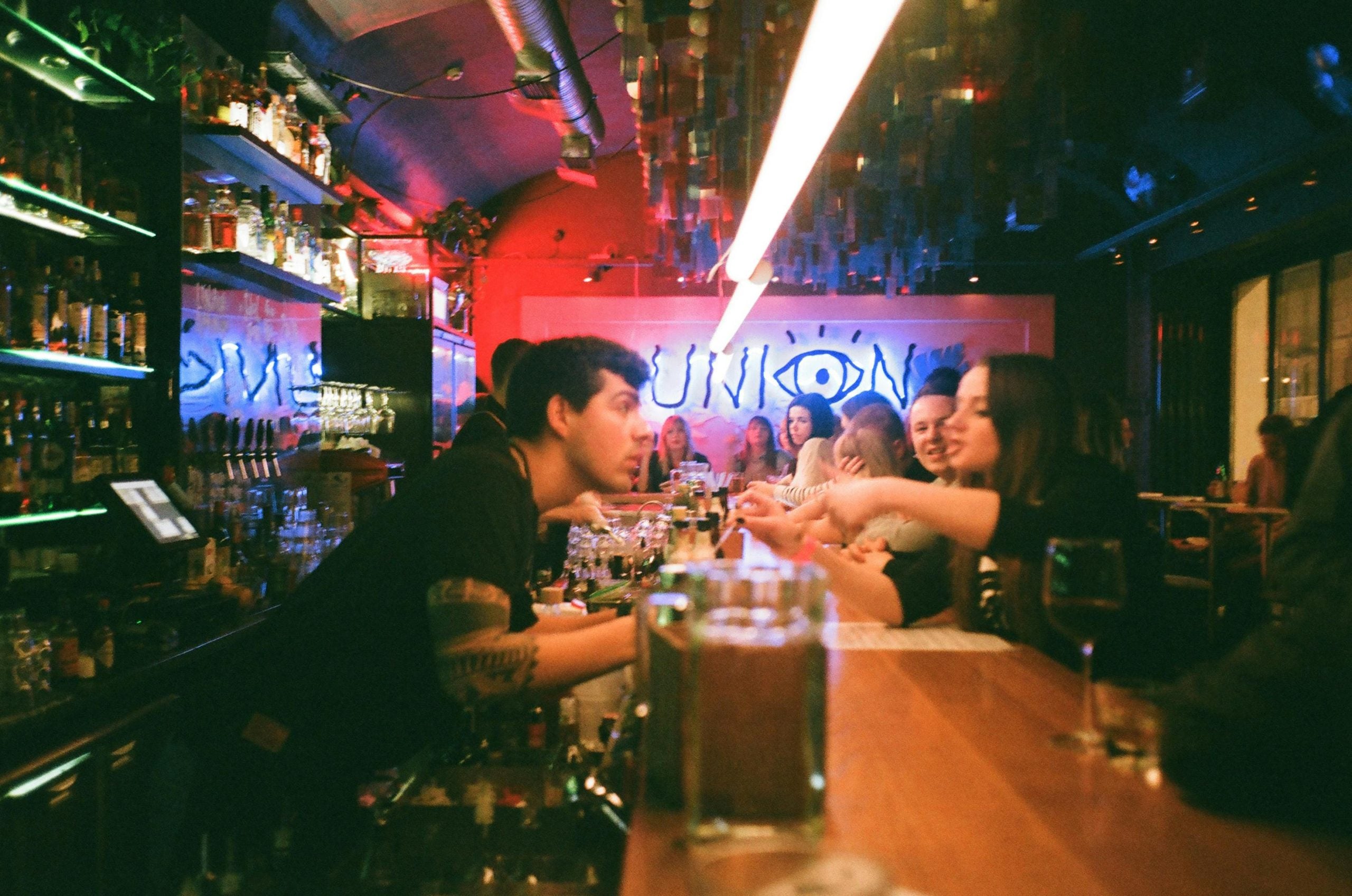
On one agency trip to New York, I learned this the hard way. I’d booked a midtown hotel based on proximity to our client’s office. The room was directly above the hotel bar. By 11 PM on night one, I’d already identified every song in their playlist rotation and given up on sleep. After that, I started reading hotel reviews specifically for noise mentions before I booked anything.

Build Buffer Time Into Every Transition
Transitions are where sensitive travelers get depleted fastest. The airport, the taxi, the check-in process, the unfamiliar street. Each one requires adaptive processing, and that processing has a cost. Tight connections and back-to-back activities eliminate any chance to absorb and recover between inputs.
Build explicit buffer time into your itinerary. Arrive at airports earlier than you think necessary. Schedule a quiet hour after landing before you do anything else. Leave gaps between activities in your daily plan. This isn’t inefficiency. It’s the same principle behind allowing margins in any complex system: the buffer is what keeps the whole thing from collapsing when something unexpected happens.
How Do You Manage Sensory Overload While You’re Actually Traveling?
No amount of preparation eliminates sensory overload entirely. What preparation does is reduce its frequency and give you better tools for managing it when it arrives.
The single most effective tool I’ve found is noise-canceling headphones. I resisted buying a quality pair for years because it felt indulgent. Then I wore them for an entire transatlantic flight and arrived feeling like a different person. A 2020 study in Frontiers in Psychology found that auditory environments significantly affect cognitive load and emotional regulation. Reducing ambient noise isn’t a luxury for sensitive travelers. It’s a functional intervention.
Beyond headphones, a few other in-the-moment strategies have made a consistent difference for me.
Create a Portable Sensory Anchor Kit
A sensory anchor kit is a small collection of items that help regulate your nervous system when the environment becomes overwhelming. Think of it as a portable version of your most calming space at home.
Mine includes noise-canceling headphones, a sleep mask, a small lavender sachet (familiar scent is a powerful anchor), a few pages of a book I’m already deep into rather than something new, and a pair of compression socks for long flights. None of these items are dramatic. Together, they give me consistent access to sensory inputs I can control when everything else feels out of control.
The psychological principle here connects to what Berkeley’s Greater Good Science Center describes in its work on emotional regulation: familiar, predictable sensory inputs help the nervous system return to a regulated state after activation. That’s exactly what a sensory anchor kit provides.
Use the “One Overwhelming Thing Per Day” Rule
This is perhaps the most counterintuitive piece of advice I can offer, and also the most liberating. Give yourself permission to do only one sensory-heavy activity per day.
That might mean visiting a crowded museum in the morning and spending the afternoon in a quiet park. It might mean attending a lively dinner with clients and then declining the after-dinner bar suggestion. It might mean choosing between the famous market and the famous cathedral, not both on the same day.
This doesn’t mean you experience less. It means you actually experience what you do, rather than moving through a blur of overstimulation that your nervous system is too exhausted to absorb. Some of my most vivid travel memories come from the quieter moments I protected: a morning coffee in a near-empty Roman café before the tourist rush, a solo walk through a Glasgow neighborhood I hadn’t planned to visit, a long train ride through the English countryside with nothing scheduled on the other end.

Identify Your Escape Routes in Advance
Before entering any high-stimulation environment, know where you can go if you need to step away. This is practical, not paranoid. At a conference, that might be a quiet hallway or an empty breakout room. At a tourist site, it might be a nearby park or a side street. At a family gathering during travel, it might be a specific room or a short walk outside.
Having an identified escape route reduces the anxiety of high-stimulation environments significantly. Much of what feels overwhelming in those moments is the combination of sensory input and the feeling of being trapped. Remove the second variable and the first becomes more manageable.
This connects directly to what I think of as the broader work of living as an introvert in a loud world: you’re not trying to eliminate noise or stimulation from your life. You’re building reliable pathways back to yourself when the external world gets too loud.
How Should HSPs Think About Travel Companions and Social Dynamics?
Traveling with others adds a layer of complexity that deserves honest attention. The social dynamics of group travel can be genuinely wonderful and genuinely exhausting, sometimes within the same hour.
One of the most important conversations a highly sensitive traveler can have is with their travel companion before the trip begins. Not during. Before. Specifically about the reality that you will need solo time, quiet time, and the occasional early exit from group activities. That’s not a preference. It’s a need.
A 2009 study published in PubMed Central found that sensory processing sensitivity is a stable, heritable trait that affects how individuals respond to environmental stimulation. Framing your needs in those terms, as a neurological reality rather than a personal quirk or social failing, can shift the conversation significantly with people who might otherwise take your need for space personally.
Many sensitive travelers find that negotiating explicit “free time” blocks into a shared itinerary works well. Two hours each afternoon where everyone does their own thing, no coordination required. That structure gives everyone permission to recharge in whatever way suits them, without it feeling like rejection or conflict.
Worth noting: the idea that needing space makes you a bad travel companion is one of those quiet social myths that does real damage. As I’ve thought about in the context of introvert discrimination and social bias, there’s still a cultural assumption that the person who wants to stay in rather than go out is somehow less engaged or less fun. Traveling with people who understand that your depth of engagement comes in quieter forms makes an enormous difference.
What Kinds of Destinations Actually Work Well for Highly Sensitive Travelers?
Not all destinations are created equal for sensitive nervous systems. Some places seem almost designed for depth, slowness, and sensory richness without overwhelm. Others are genuinely hostile to anyone who needs quiet.
In general, highly sensitive travelers tend to thrive in destinations that offer:
- Natural environments with space to breathe (coastlines, mountains, forests, rural countryside)
- Smaller cities or towns rather than major metropolitan hubs
- Cultural depth that rewards slow exploration rather than rapid sight-checking
- Clear off-peak seasons when crowds thin significantly
- Accommodation options that prioritize calm over convenience to nightlife
That doesn’t mean avoiding cities entirely. It means being strategic about how you engage with them. Visiting major attractions at opening time rather than midday, staying in residential neighborhoods rather than tourist centers, and building in regular retreats to quieter spaces all make urban travel far more sustainable.

I spent a week in Lisbon a few years ago for a conference and fell unexpectedly in love with the city, but only once I stopped trying to see everything. The conference itself was in a large convention center that left me completely wrung out by day two. What saved the trip was the two hours I carved out each morning before sessions started, walking the quieter hilltop neighborhoods and sitting in small tiled cafés. That’s where Lisbon actually happened for me. The conference was largely a blur.
How Do Sleep and Recovery Factor Into HSP Travel?
Sleep is where highly sensitive travelers either maintain their resilience or lose it entirely. The relationship between sleep quality and sensory processing sensitivity is not casual. Poor sleep amplifies every sensory input, reduces emotional regulation capacity, and makes the already-demanding work of processing a new environment genuinely destabilizing.
Research from Harvard Health confirms what most sensitive people already know intuitively: sleep quality directly affects how we process emotional and sensory information. For HSP travelers, this means protecting sleep isn’t optional. It’s the foundation everything else rests on.
Practical sleep protection strategies for travel include:
- Traveling with your own pillowcase (familiar scent and texture matter more than most people admit)
- Using a white noise app or small travel sound machine to mask hotel ambient noise
- Maintaining as much of your home sleep routine as the time zone allows
- Avoiding late-night activities that push your bedtime significantly past your normal window
- Requesting a room away from high-traffic areas when checking in
On longer trips, I’ve found that scheduling one genuine rest day, not a sightseeing day with fewer activities, but an actual day with no agenda, makes the difference between arriving home recovered and arriving home needing a week to decompress. That kind of intentional recovery is what finding peace as an introvert in a noisy world looks like in practice. It’s not passive. It’s a deliberate choice to honor what your nervous system actually needs.
What Can HSPs Do to Reframe Travel as a Strength Rather Than a Challenge?
There’s something worth naming directly: highly sensitive people often make exceptional travelers when they stop trying to travel the way everyone else does.
The same trait that makes airports exhausting also makes a conversation with a local vendor genuinely moving. The same depth of processing that makes overstimulation so costly also means that a single afternoon in a museum can yield more insight and emotional resonance than a week of rushed sightseeing. Sensitive travelers don’t just observe places. They absorb them.
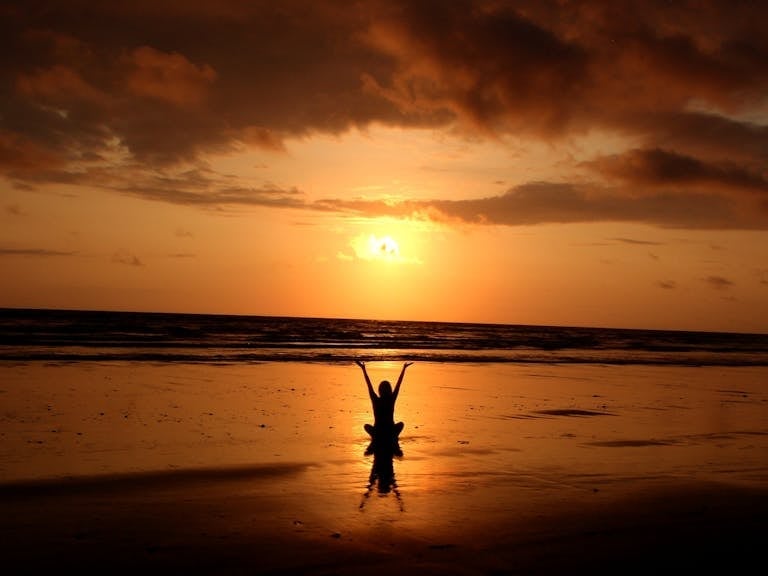
A 2020 study in PubMed Central exploring the relationship between sensory processing sensitivity and positive experiences found that highly sensitive individuals show heightened responsiveness to both negative and positive environmental inputs. That second part matters. The same sensitivity that makes overstimulation so difficult also means that beauty, connection, and meaning land with extraordinary force. A sunset over water, a piece of music heard in a small concert hall, a meal eaten slowly in a place that feels exactly right: these experiences hit differently for people wired this way.
That’s not a consolation prize. That’s a genuine advantage, one that connects directly to what I think of as the quiet power of introversion and sensitivity: the capacity to go deeper into experience rather than wider across it.
The reframe I’ve found most useful is this: stop measuring your trips by how much you did and start measuring them by how much you felt. A trip where you visited twelve cities and came home exhausted is not more successful than a trip where you spent five days in one place and came home genuinely changed by it. Depth is the metric that matters for people like us.

One of the quieter gifts of embracing my sensitivity later in life has been the permission to travel more slowly. In my agency years, I treated business travel as something to survive. Now, even when I’m somewhere for work, I try to find at least one moment of genuine presence, one thing I actually notice rather than just pass through. It changes the whole texture of the experience.
For those still working out what it means to embrace this kind of depth in daily life, not just in travel, the back to school guide for introverts offers some grounding perspective on how sensitivity and introversion show up in structured, high-stimulation environments and how to work with those traits rather than against them.
Highly sensitive travel isn’t about doing less. It’s about doing what you do with more intention, more awareness, and more honest attention to what actually fills you up versus what drains you. Get that equation right and travel stops being something you recover from. It becomes something you actually carry with you.
Find more reflections on living fully as an introvert in the General Introvert Life hub, where we cover the full range of experiences that shape a sensitive, introverted life.
About the Author
Keith Lacy is an introvert who’s learned to embrace his true self later in life. After 20 years in advertising and marketing leadership, including running agencies and managing Fortune 500 accounts, Keith now channels his experience into helping fellow introverts understand their strengths and build fulfilling careers. As an INTJ, he brings analytical depth and authentic perspective to every article, drawing from both professional expertise and personal growth.
Frequently Asked Questions
What is HSP travel planning and why does it matter?
HSP travel planning is the process of designing trips around the sensory, emotional, and social needs of highly sensitive people. It matters because standard travel advice assumes a tolerance for noise, crowds, and unpredictability that many sensitive travelers simply don’t have. Planning that accounts for accommodation quality, sensory load, recovery time, and pace of activity allows highly sensitive people to actually enjoy travel rather than just endure it.
What types of destinations work best for highly sensitive travelers?
Highly sensitive travelers tend to do best in destinations that offer natural environments, smaller cities or towns, and cultural experiences that reward slow exploration. Off-peak travel to major destinations can also work well, since reduced crowds significantly lower the sensory load. The common thread is access to quiet, space to process, and accommodation that functions as a genuine recovery environment rather than just a place to sleep.
How can HSPs manage sensory overload during travel?
Effective strategies include carrying noise-canceling headphones, building a portable sensory anchor kit with familiar calming items, identifying quiet retreat spaces before entering high-stimulation environments, and limiting high-sensory activities to one per day. The goal is to maintain access to sensory inputs you can control while reducing exposure to those you can’t. Pre-identifying escape routes in crowded or loud environments also reduces the anxiety that compounds sensory overload.
How should HSPs handle travel with companions who aren’t highly sensitive?
The most effective approach is an honest conversation before the trip begins about your specific needs, including solo time, earlier departures from group activities, and quieter accommodation. Negotiating explicit free-time blocks into a shared itinerary gives everyone permission to recharge without it feeling like conflict or rejection. Framing your needs as neurological rather than preferential helps travel companions understand that you’re not being difficult, you’re responding to real physiological input.
Why is sleep especially important for HSPs during travel?
Poor sleep amplifies sensory sensitivity and reduces emotional regulation capacity, which means that sleep deprivation during travel makes every other challenge significantly harder. For highly sensitive travelers, protecting sleep quality is the foundation that determines how well everything else functions. Practical measures like traveling with your own pillowcase, using a white noise app, maintaining your home sleep routine as much as possible, and requesting quiet rooms all contribute to the sleep quality that keeps a sensitive nervous system stable throughout a trip.