

HSP decision making is shaped by a nervous system that processes everything more deeply than most people do, which means even small choices can feel weighted with consequence. Highly sensitive people don’t overthink because they’re weak or indecisive. They overthink because their brains are genuinely registering more information, more emotional nuance, and more potential outcomes than the average person’s brain bothers to flag.
That distinction matters. A lot.
Once you understand why the pattern happens, you can start working with your sensitive mind instead of fighting it every time a decision lands on your plate.
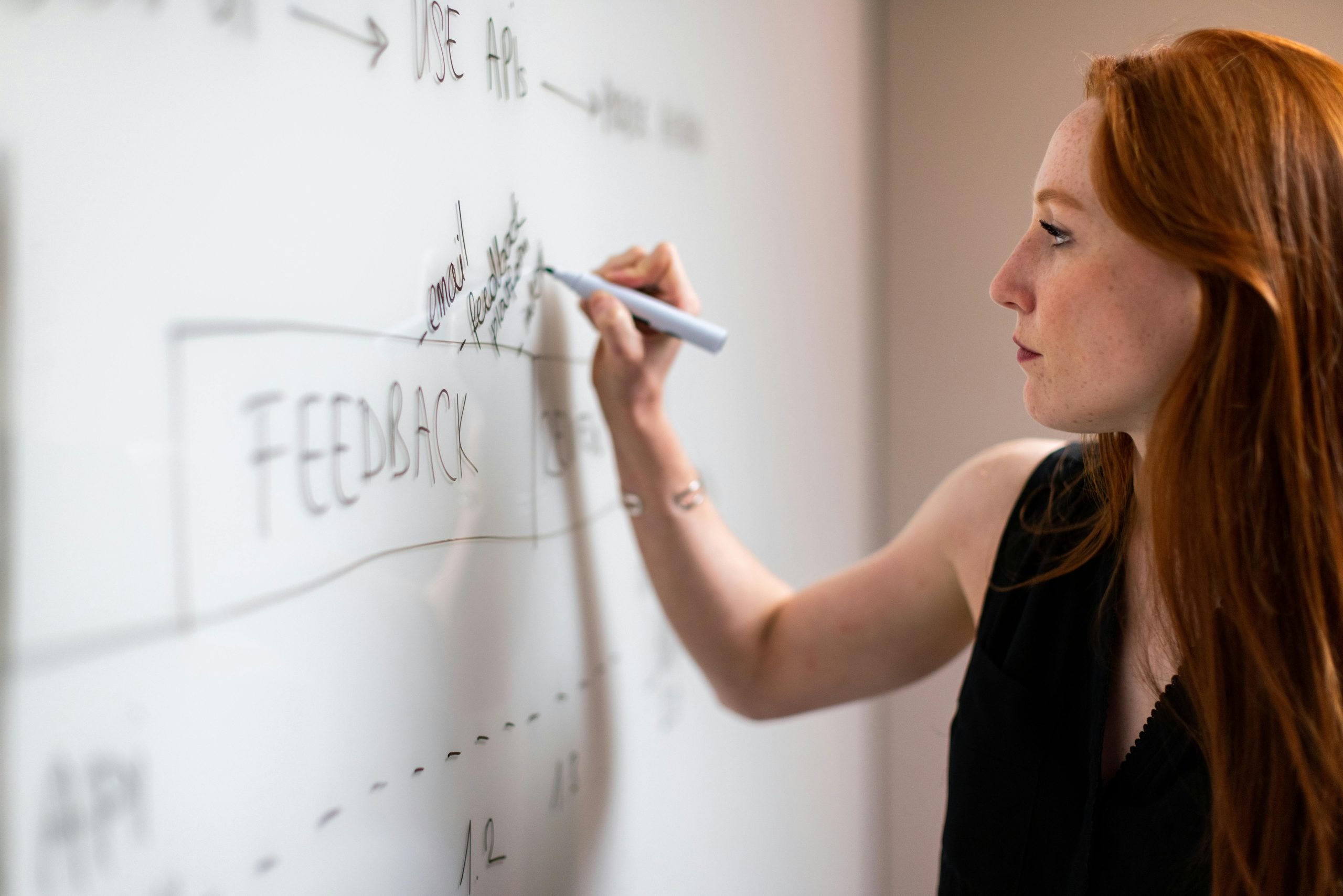
If you’ve ever found yourself paralyzed by a choice that seemed simple to everyone else around you, you’re in good company. Plenty of introverts and highly sensitive people share this experience, and it’s worth examining honestly. The General Introvert Life hub covers the full texture of what it means to live as a deeply wired person in a world that often rewards quick, confident action. This article focuses on one of the most misunderstood pieces of that experience: what actually happens inside an HSP’s mind when a decision needs to be made, and why the overthinking pattern is both a feature and a friction point.
What Makes HSP Decision Making Different From Regular Indecision?
There’s a version of indecision that comes from not caring enough to choose. And then there’s the version that comes from caring so much that every option feels significant. For highly sensitive people, it’s almost always the second kind.
What’s your personality type?
Take our free 40-question assessment and get a detailed personality profile with dimension breakdowns, context analysis, and personalised insights.
Discover Your Type8-12 minutes · 40 questions · Free
A 2018 study published in Frontiers in Psychology examined sensory processing sensitivity and found that people with this trait show deeper cognitive processing of stimuli, including emotional and social information. That deeper processing isn’t a malfunction. It’s a feature of how the HSP nervous system is built. The challenge is that deeper processing takes longer, and in a world that prizes fast answers, longer processing often gets mislabeled as a problem.
I watched this play out in my own life for years before I had language for it. Running an advertising agency means making dozens of decisions a day, some strategic, some operational, some interpersonal. My colleagues could pivot fast in a client meeting, adjusting proposals on the fly without visible hesitation. I’d be sitting there running parallel tracks in my head, weighing the downstream implications of each option, noticing the subtle shift in the client’s energy when a particular idea landed, cataloging what wasn’t being said. By the time I’d processed enough to feel confident speaking, the conversation had moved on.
People read that as slowness. What it actually was, was depth.
The difference between regular indecision and HSP decision making comes down to the source of the delay. Regular indecision often stems from a lack of information, clear values, or motivation. HSP overthinking typically stems from an excess of all three. Too much information being processed simultaneously. Values that are deeply felt and sometimes in conflict. Motivation that’s so high the stakes feel enormous even when the outside world says they aren’t.
Why Does the Brain Keep Looping Instead of Landing?
One of the most frustrating aspects of the overthinking pattern is the loop. You think through a decision, reach a tentative conclusion, and then your brain circles back and starts over. Again. And again. It can feel maddening, especially when you’re aware it’s happening and still can’t stop it.
The looping tends to happen for a few specific reasons that are worth naming clearly.
First, highly sensitive people are often highly attuned to how their choices affect other people. Research on empathy from UC Berkeley’s Greater Good Science Center describes how deep empathic processing can create a kind of emotional weight that attaches itself to decisions. When you can vividly imagine how a choice might land for someone else, every option carries emotional freight that a less sensitive person simply wouldn’t register.
Second, HSPs tend to have a strong internal value system, and decisions that brush up against those values, even slightly, trigger a kind of alarm. The brain keeps revisiting the decision because it hasn’t yet confirmed that the chosen path is fully aligned with what matters most.
Third, and this one took me years to see clearly in myself, the loop is sometimes a protection mechanism. As long as you’re still deciding, you haven’t yet made a mistake. The overthinking is, in part, a way of staying safe from regret.
A 2020 paper in Frontiers in Psychology explored the relationship between sensory processing sensitivity and emotional reactivity, finding that HSPs show heightened activation in brain regions associated with awareness, empathy, and action planning. That heightened activation doesn’t switch off just because a deadline is approaching. It keeps running its checks.

How Does Overstimulation Feed the Overthinking Cycle?
There’s a compounding factor that doesn’t get talked about enough in conversations about HSP decision making: overstimulation. When a highly sensitive person is already running hot from a loud environment, a crowded schedule, or an emotionally draining day, their capacity to make clean decisions shrinks significantly.
The CDC’s research on noise and cognitive performance documents how environmental overstimulation affects cognitive function across populations. For HSPs, whose baseline sensitivity is already higher, the effect is amplified. A decision that might take ten minutes in a calm, quiet space can balloon into an hour-long spiral when the surrounding environment is too loud, too busy, or too emotionally charged.
I learned this the hard way during a particularly brutal period at the agency when we were pitching three major accounts simultaneously. The office was chaotic. My calendar was packed. Every conversation felt like it required an immediate response. And I noticed that my decision making during that stretch was genuinely worse, not just slower, but actually less sound. I was second-guessing choices I’d normally make with confidence. I was revisiting decisions I’d already made and considered settled.
What I didn’t understand then, but do now, is that overstimulation doesn’t just make HSPs tired. It degrades the very processing system that makes them good at decisions in the first place. The depth of analysis that’s an asset in a calm state becomes a liability when the system is overloaded.
This is part of why living as an introvert in a loud, extroverted world requires intentional strategies around environment and energy. The conditions in which you make decisions matter enormously when your nervous system processes at the depth that an HSP’s does.
Is the Overthinking Pattern Actually a Hidden Strength?
Yes. With caveats.
The same processing depth that creates the overthinking loop also produces something genuinely valuable: decisions that have been thoroughly examined from multiple angles, with careful attention to emotional impact, ethical dimensions, and downstream consequences. That’s not nothing. That’s actually quite rare.
There’s a persistent myth in our culture that fast decisions are confident decisions, and confident decisions are good decisions. That’s worth pushing back on. A 2010 study published in PubMed Central examining decision-making quality found that more deliberate processing styles often produce better outcomes in complex, high-stakes scenarios. Speed is an advantage in simple, low-stakes choices. Depth is an advantage when the situation is genuinely complicated.
Most of the decisions HSPs agonize over are, in fact, genuinely complicated. They involve other people’s feelings. They have long-term implications. They require weighing competing values. The processing time isn’t wasted. It’s doing real work.
That said, the pattern tips into dysfunction when the processing never terminates. When the loop runs past the point of diminishing returns, past the point where new information is actually being generated, and into pure anxiety recycling, then the strength has become a trap. Recognizing that threshold is one of the most useful skills an HSP can develop.
Part of what helped me see this more clearly was engaging with writing about the quiet power that introverts carry. There’s something settling about recognizing that the traits that make you feel different aren’t defects. They’re a different configuration of strengths, ones that require different conditions to perform well.

What Does the Overthinking Pattern Actually Look Like Day to Day?
It’s worth getting specific about how this shows up, because the pattern can be subtle enough that you might not recognize it as overthinking. You might just think you’re being thorough, or careful, or responsible.
Some common expressions of the HSP overthinking pattern in daily life:
Replaying a conversation long after it’s over, not to understand it better but because you’re still processing whether you said the right thing and how the other person felt. Spending disproportionate amounts of time on low-stakes choices, like what to order at a restaurant or which route to take, because your brain is applying high-sensitivity processing to everything regardless of actual stakes. Asking for more time on decisions that others expect to be made quickly, and feeling shame about needing that time. Making a decision and then continuing to second-guess it, even after the window to change course has closed.
Avoiding decisions entirely by gathering more information, because more information feels like progress even when you already have enough to choose.
That last one is the one I recognize most in myself. During my agency years, I became known for thorough research before any major pitch. Some of that was genuine due diligence. Some of it, if I’m being honest, was using information gathering as a way to delay committing to a direction. As long as I was still researching, I hadn’t yet made a choice that could be wrong.
The distinction between useful research and anxiety-driven information seeking is worth examining. Useful research fills genuine gaps in your understanding. Anxiety-driven research fills time while avoiding the actual moment of commitment.
How Does Social Pressure Make HSP Decision Making Harder?
Highly sensitive people are often acutely aware of social expectations, including unspoken ones. And one of the most persistent unspoken expectations in most workplaces and social settings is that decisiveness is a virtue. Hesitation is read as weakness. Asking for time is read as uncertainty. Changing your mind is read as instability.
For HSPs who are already dealing with a more complex internal processing experience, layering social pressure on top of that creates a painful double bind. You need more time to make sound decisions, but asking for that time feels like confirming every negative assumption people might already have about you.
There’s a broader cultural context here worth naming. Many of the biases that HSPs and introverts face in professional settings are documented and real. The discrimination that introverts face in workplaces that prize extroverted traits isn’t imaginary. It shapes how people are perceived when they don’t match the dominant behavioral template, which includes making fast, visible decisions.
What helped me most in professional settings was separating the internal process from the external presentation. My internal process needed time. My external presentation didn’t have to broadcast that. I could say, “Let me give that the attention it deserves and come back to you by end of day,” and that framing communicated thoughtfulness rather than hesitation. Same internal reality, different external packaging.
That’s not performance. It’s translation. And it’s a skill that HSPs can develop without compromising the integrity of their actual processing.
What Happens to the Body During HSP Decision Paralysis?
The overthinking pattern isn’t just a mental experience. It has a physical dimension that HSPs often recognize but don’t always connect directly to decision stress.
A 2020 study in PubMed Central examining stress responses and cognitive load found that extended periods of unresolved decision stress activate physiological stress responses, including elevated cortisol and disrupted sleep. For highly sensitive people, whose nervous systems are already more reactive, this physical dimension of overthinking can become its own problem, separate from the decision itself.
Sleep is a significant factor. When the mind keeps processing a decision through the night, the quality of sleep degrades, and poor sleep further impairs the cognitive function needed to actually resolve the decision. It’s a cycle that feeds itself. The Harvard Medical School’s guidance on sleep hygiene underscores how central rest is to cognitive performance, including decision making. For HSPs in an overthinking loop, protecting sleep isn’t a luxury. It’s a prerequisite for getting out of the loop.
Physically, decision paralysis can show up as tension in the chest or shoulders, a low-grade headache that won’t fully resolve, difficulty eating normally, or a kind of restless inability to settle into any activity. The body is holding the unresolved tension that the mind is generating. Recognizing these physical signals as data about your decision-making state, rather than random symptoms, is genuinely useful. When your body is telling you that something is unresolved, that’s accurate information.

What Practical Approaches Actually Help HSPs Make Decisions Without Spiraling?
There are approaches that genuinely help, and they’re worth being specific about because generic advice like “just decide” or “trust your gut” tends to land badly for HSPs. Your gut is processing a lot. It needs a little more structure than that.
One approach that worked well for me was setting a deliberate processing window. Instead of leaving a decision open-ended and letting my brain return to it indefinitely, I’d give myself a specific block of time to think it through, and then I’d commit to stepping away from it until that window closed. The key was that stepping away was intentional, not avoidance. I was giving my subconscious mind space to work while my conscious mind rested.
A second approach is distinguishing between reversible and irreversible decisions before you start processing. Most decisions are more reversible than they feel in the moment. When you’re in an HSP overthinking loop, everything can feel permanent. Explicitly naming the actual consequences of a wrong choice, and how reversible or recoverable those consequences are, can significantly reduce the stakes your nervous system is assigning to the decision.
Writing the decision out, including the options, the values at stake, and the emotional weight you’re feeling, can also help externalize what’s happening internally. The act of writing moves the processing from a loop to a line. You can see what you’ve already considered, which prevents the brain from re-running the same tracks and calling it new analysis.
Physical movement helps too, and this isn’t just anecdotal. Changing your physical state, whether through a walk, a stretch, or simply moving to a different room, can interrupt the rumination loop in ways that purely mental strategies sometimes can’t.
And creating genuine quiet, not just silence but actual mental space, matters more than most productivity frameworks acknowledge. Finding that peace in a noisy world is a real practice, not a nice-to-have. For HSPs, quiet isn’t just pleasant. It’s often where the actual clarity lives.
How Do You Know When You’ve Thought Enough?
This might be the most practically useful question in the whole conversation, and it’s one that doesn’t get asked often enough.
There’s a signal that I’ve learned to recognize in myself, and I’ve heard similar descriptions from other HSPs. At some point in the processing, there’s a shift from generating new considerations to recycling old ones. The first few passes through a decision are genuinely productive. You’re identifying factors, weighing values, imagining outcomes. But at some point, the loop starts repeating content you’ve already processed. You’re not learning anything new. You’re just running the same material again under a slightly different emotional coloring.
That repetition is the signal. When you notice that you’ve already thought this exact thought, in almost these exact words, that’s often the moment when continued processing is no longer serving the decision. It’s serving the anxiety.
Another signal worth paying attention to is the quality of the options you’re generating. Early in good decision processing, new options or considerations emerge. Late in overthinking, you’re not generating new options. You’re just re-examining the same ones with increasing dread. If no new information is emerging, the processing has likely run its useful course.
There’s something worth acknowledging here about the way introversion intersects with this pattern. Many of the myths about introverts frame our internal processing as excessive or neurotic. That framing misses the point. The processing isn’t the problem. The problem is when we don’t have tools to recognize when it’s complete.
How Can HSPs Build Decision-Making Confidence Over Time?
Confidence in decision making, for an HSP, doesn’t come from learning to decide faster. It comes from accumulating evidence that your decisions, made through your particular process, tend to be sound.
That evidence-building requires something that can feel uncomfortable: tracking your decisions and their outcomes. Not obsessively, but with enough attention to notice patterns. When you look back over decisions you’ve made, how often did the thing you were most worried about actually happen? How often did your careful processing catch something important that faster decision making would have missed?
Most HSPs, when they actually examine their decision history, find that their process is more reliable than their anxiety suggests. The anxiety tells a story about how often things go wrong. The actual record usually tells a different story.
Building confidence also means practicing decisions at lower stakes, deliberately. If you’re someone who tends to overthink everything equally, giving yourself low-stakes decisions to make quickly, and then observing that the world doesn’t end, can gradually recalibrate your nervous system’s threat assessment. You’re teaching yourself, through experience, that not every choice requires the full processing treatment.
There’s also something to be said for community. Finding spaces where your decision-making style is understood rather than pathologized makes a real difference. For students who are HSPs, this can be particularly important. The experience of being an introvert in educational settings often includes being pressured to respond quickly, to raise your hand first, to demonstrate understanding in real time. That pressure can establish patterns around decision making that persist long into adulthood. Recognizing where those patterns came from is part of changing them.

What Does Healthy HSP Decision Making Actually Feel Like?
It doesn’t feel effortless. I want to be honest about that. For highly sensitive people, decision making is always going to involve more internal activity than it does for less sensitive people. That’s not something to fix. It’s something to work with.
Healthy HSP decision making feels like having a process you trust. It means knowing that you’ll give a decision the attention it deserves, and also knowing when that attention has reached its useful limit. It means being able to sit with some uncertainty without letting that uncertainty become a reason to keep cycling.
It means recognizing that making a decision from a place of genuine reflection, even if it’s not the optimal choice, is almost always better than making no decision at all. And it means extending yourself some grace when the process takes longer than the world thinks it should.
Late in my agency career, I stopped apologizing for my decision-making style and started naming it differently. When clients or colleagues wanted faster answers than I was ready to give, I’d say something like: “I want to give this a real answer, not a fast one.” Most people respected that framing far more than I expected. And the decisions I delivered after that kind of deliberate processing were consistently stronger than anything I produced under pressure.
Your sensitivity is not a liability in the decision-making room. Channeled well, it’s one of the most valuable things you bring to any table.
For more on living fully and authentically as an introvert, explore the complete General Introvert Life hub at Ordinary Introvert.
About the Author
Keith Lacy is an introvert who’s learned to embrace his true self later in life. After 20 years in advertising and marketing leadership, including running agencies and managing Fortune 500 accounts, Keith now channels his experience into helping fellow introverts understand their strengths and build fulfilling careers. As an INTJ, he brings analytical depth and authentic perspective to every article, drawing from both professional expertise and personal growth.
Frequently Asked Questions
Is overthinking in HSPs a mental health condition?
Overthinking in highly sensitive people is not a mental health condition on its own. It’s a byproduct of a trait called sensory processing sensitivity, which describes a nervous system that processes information more deeply than average. That deeper processing is a normal variation in human neurology, not a disorder. That said, when the overthinking pattern becomes severe enough to interfere significantly with daily functioning, it can overlap with anxiety or other conditions that are worth discussing with a mental health professional.
Why do HSPs struggle more with small decisions than big ones sometimes?
This is more common than people realize, and it happens because the HSP nervous system applies deep processing to stimuli regardless of their objective importance. A small decision doesn’t automatically receive less processing just because it’s small. In some cases, small decisions are actually harder because they feel too trivial to justify the amount of internal attention they’re receiving, which creates a secondary layer of self-criticism on top of the original processing. Big decisions, by contrast, feel more proportionate to the depth of consideration being given.
How does sleep deprivation affect HSP decision making specifically?
Sleep deprivation hits highly sensitive people’s decision making harder than average because their cognitive processing is more resource-intensive to begin with. When sleep is disrupted, whether by overthinking itself or external factors, the processing system that HSPs rely on for careful analysis becomes less reliable. Decisions made in a sleep-deprived state tend to be more reactive, more emotionally driven, and less reflective of the HSP’s actual values. Protecting sleep is genuinely one of the most practical things an HSP can do to support better decision making.
Can HSPs get better at making faster decisions without losing their depth?
Yes, with practice and the right conditions. success doesn’t mean eliminate deep processing but to become better at calibrating how much processing a given decision actually requires. HSPs can develop a kind of triage skill, quickly assessing whether a decision is low-stakes and reversible, in which case a faster choice is appropriate, or genuinely complex, in which case deeper processing is warranted. Over time, this calibration becomes more intuitive. The depth doesn’t disappear. It gets applied more selectively.
What’s the difference between HSP overthinking and anxiety?
HSP overthinking and anxiety can look similar from the outside and sometimes overlap, but they have different roots. HSP overthinking is driven by deep processing of real information, real options, real emotional considerations. It’s thorough, even when it goes too long. Anxiety-driven overthinking tends to be more catastrophic in character, focusing heavily on worst-case scenarios, and often disconnected from the actual probabilities of those outcomes. Many HSPs experience both, but recognizing which one is operating in a given moment helps determine the most useful response. Processing-based overthinking benefits from structure and time. Anxiety-based overthinking often benefits from grounding techniques and, sometimes, professional support.