HSP workplace environments that genuinely support highly sensitive people share a few core qualities: reduced sensory overload, meaningful autonomy over how and where work gets done, and a culture that values depth over performance. Highly sensitive people process sensory and emotional input more deeply than most, which means the wrong environment doesn’t just make work uncomfortable, it makes excellent work nearly impossible.
Sensitivity in the workplace isn’t a liability waiting to be managed. It’s a perceptual advantage that thrives under the right conditions and quietly suffocates under the wrong ones.
I know this from the inside. Decades of running advertising agencies taught me that some of my most capable people weren’t the loudest ones in the room. They were the ones who noticed what everyone else missed, who felt the tension in a client relationship before it became a crisis, who produced their best thinking somewhere quiet and brought it back to the table fully formed. What those people needed wasn’t fixing. They needed a different kind of environment.

Our Career Paths and Industry Guides hub covers the full landscape of how introverts and highly sensitive people can build meaningful professional lives, but the environmental piece often gets overlooked. Career fit matters enormously, yet even the right career can grind you down in the wrong physical and cultural space.
What Does It Actually Mean to Be a Highly Sensitive Person at Work?
The term “highly sensitive person” was coined by psychologist Dr. Elaine Aron, whose research identified a trait she called Sensory Processing Sensitivity. People with this trait process information more deeply, notice subtleties others miss, and feel the emotional weight of their environments more acutely. Aron’s work, developed at Stony Brook University, estimated that roughly 15 to 20 percent of the population carries this trait, making it common enough to matter at any organizational scale.
What’s your personality type?
Take our free 40-question assessment and get a detailed personality profile with dimension breakdowns, context analysis, and personalised insights.
Discover Your Type8-12 minutes · 40 questions · Free
At work, this plays out in specific ways. An HSP might feel genuinely depleted after a day of back-to-back meetings, not because they’re antisocial, but because each interaction carries more emotional and cognitive weight for them. They might be the first to sense that a team dynamic is off, or that a client is dissatisfied, long before the data confirms it. They often do their best thinking in conditions of relative quiet, where their minds can process without constant interruption.
A 2022 study published in Frontiers in Psychology found that Sensory Processing Sensitivity is associated with stronger emotional reactivity and deeper cognitive processing, both of which have significant implications for how people perform in different workplace conditions. The study reinforced what many HSPs already know intuitively: environment isn’t a soft concern. It’s a performance variable.
What I’ve come to understand, both through my own INTJ wiring and through years of watching people work, is that sensitivity and introversion often overlap but aren’t identical. Some HSPs are extroverted. Some introverts aren’t particularly sensitive. Yet the workplace conditions that serve one group often serve the other, because both require environments that honor depth, reduce unnecessary noise, and create space for genuine thinking.
Why Do Most Workplaces Fail Highly Sensitive Employees?
Open-plan offices were sold to the corporate world as collaboration engines. What they became, for a significant portion of the workforce, was sensory warfare. Fluorescent lighting, ambient noise, visual movement, the constant low hum of nearby conversations: none of these things are neutral for someone whose nervous system is calibrated to pick up everything.
Early in my agency career, I sat in a bullpen-style office with about forty other people. I told myself I was fine with it. I adapted, performed, delivered. What I didn’t recognize at the time was how much energy I was spending just managing the environment, energy that could have gone into the work itself. By three in the afternoon, I was running on fumes, not because the work was hard but because the space was relentless.
Most workplaces fail HSPs not through malice but through design assumptions. The assumption that visibility equals productivity. The assumption that collaboration requires proximity. The assumption that if something bothers you, you should simply push through it. These assumptions work reasonably well for people whose nervous systems process input more selectively. For HSPs, they create a constant tax on cognitive resources.

There’s also a cultural dimension. Many organizations still equate confidence with volume and leadership with extroversion. As Psychology Today has noted, introverted and sensitive employees often get passed over for leadership roles not because they lack capability, but because they don’t perform confidence in the expected way. That cultural bias compounds the environmental one.
When I was building out teams at my agencies, I made this mistake myself. I unconsciously favored people who presented ideas with energy and volume in the room. It took me years to recognize that some of my most strategically sound thinking came from people who sent me a carefully written email at 7 PM, not from those who dominated the morning standup. Changing that recognition changed how I built teams.
What Physical Changes Make the Biggest Difference for HSP Workplace Environments?
Sensory conditions are where HSP workplace support has to start. Not because they’re the only thing that matters, but because no amount of cultural goodwill compensates for a physical environment that’s actively working against someone’s nervous system.
Lighting and Acoustics
Fluorescent lighting is among the most consistently reported sensory irritants for highly sensitive people. The flicker rate, the color temperature, the harshness: all of it adds up across an eight-hour day. Natural light is meaningfully better. Where full daylight access isn’t possible, warm-spectrum LED lighting with adjustable intensity gives people some control over their immediate sensory experience.
Acoustics matter just as much. Sound-absorbing panels, quiet zones with enforced norms, and access to noise-canceling tools all reduce the cognitive load of filtering ambient noise. Some organizations have had success with designated silent areas, not as isolation rooms but as legitimate workspaces for focused tasks. The signal this sends matters as much as the function: it tells HSPs that their need for quiet is recognized as valid, not eccentric.
Private and Semi-Private Spaces
Access to private or semi-private space for at least part of the workday is one of the highest-impact changes an organization can make. This doesn’t require individual offices for everyone. It requires a range of space options: open areas for collaboration, quieter zones for focused work, and genuinely private spaces for tasks requiring deep concentration or emotional recovery after difficult interactions.
When I finally moved into my own office as an agency principal, the quality of my strategic thinking changed noticeably. Not because I was smarter or more experienced, though both were true, but because I had somewhere to actually think. The ideas I brought to client meetings were more considered, more layered. I’d had the space to let them develop fully before presenting them.
Control Over Personal Space
Giving employees some agency over their immediate workspace, temperature, lighting, the objects around them, reduces the baseline stress load for HSPs. It’s a small thing that carries disproportionate weight. When someone can make their desk feel like a space that belongs to them, they spend less mental energy managing discomfort and more energy on the work itself.
How Does Remote and Flexible Work Change the Equation for Highly Sensitive People?
Remote work has been, for many HSPs, one of the most meaningful professional developments of the past decade. The ability to control your own sensory environment, to take a break without handling a crowded break room, to process difficult information without an audience, changes what’s possible for people who experience the world more intensely.
A Stanford Graduate School of Business analysis found that remote work arrangements significantly improve productivity and satisfaction for workers who need focused, uninterrupted time. The research points toward a future where flexibility isn’t a perk but a structural feature of how knowledge work gets done. For HSPs, that future can’t come soon enough.
The CDC’s National Institute for Occupational Safety and Health has also documented the mental health benefits of remote work arrangements when implemented thoughtfully, noting reduced stress and improved work-life balance as consistent outcomes. For people who experience workplace environments with heightened intensity, those benefits are amplified.
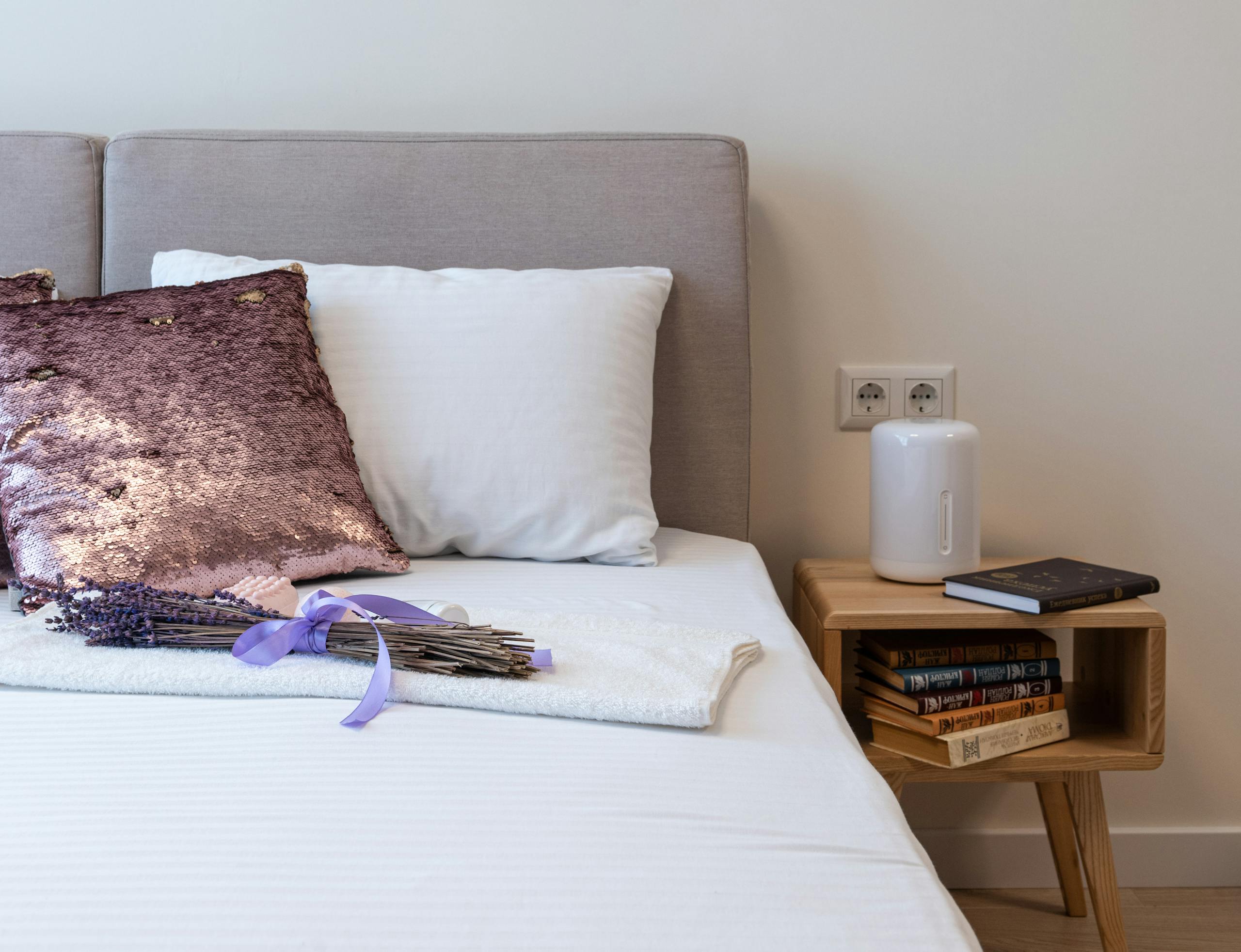
Flexibility in scheduling matters alongside flexibility in location. HSPs often have peak cognitive windows that don’t align with standard nine-to-five expectations. Some do their deepest thinking in the early morning before the world gets loud. Others need time at midday to decompress and reset before continuing. Rigid scheduling forces people to perform during hours that may not be their most capable ones.
I’ve written before about how certain career paths align naturally with this need for flexibility and autonomy. If you’re thinking through career options alongside environmental ones, the Best Jobs for Introverts career guide is worth spending time with. The overlap between what suits introverts and what suits HSPs is substantial.
What Cultural and Management Practices Actually Support HSPs at Work?
Physical environment matters enormously, yet culture is what determines whether the physical changes mean anything. An organization can install sound panels and offer remote work options and still create conditions that grind down sensitive employees, if the culture rewards performance through volume and penalizes the need for recovery time.
Meeting Design
Most meetings are designed for extroverts. Ideas get generated in real time, through discussion, with credit going to whoever speaks first and most confidently. HSPs often process more slowly and more thoroughly, which means they frequently have the best insight in the room and the least opportunity to share it under standard meeting conditions.
Effective meeting design for HSP-inclusive workplaces shares agendas in advance, creates structured space for written input before and after verbal discussion, and doesn’t conflate speaking volume with idea quality. Some of the most significant strategic pivots I’ve seen in agency work came from written briefs that a quiet team member submitted after a meeting, not from what anyone said during it.
Communication Norms
Asynchronous communication, email, documented channels, written briefs, gives HSPs the processing time they need to respond thoughtfully rather than reactively. Organizations that default to instant messaging and expect immediate responses create chronic low-grade pressure that’s particularly wearing for sensitive employees.
This doesn’t mean eliminating real-time communication. It means building in legitimate alternatives so that people who think better in writing aren’t perpetually disadvantaged. A culture where a thoughtful written response sent two hours after a question is valued as much as an immediate verbal one is a culture where HSPs can contribute at their actual level of capability.
Feedback and Performance Conversations
HSPs tend to process feedback deeply. Criticism that rolls off most people can stay with a sensitive employee for days, not because they’re fragile, but because they take it seriously and examine it thoroughly. This is actually a strength in contexts where improvement matters. Yet it requires managers to be thoughtful about how feedback is delivered, when it’s delivered, and how much recovery time is factored in.
Feedback given privately, with specificity, and with adequate time for processing tends to produce better outcomes with HSPs than feedback delivered publicly or in passing. A good manager of sensitive employees understands that the goal is genuine improvement, and that the delivery method is part of whether that happens.
Managing sensitive people well is actually a form of strategic thinking. The same depth of perception that makes data analysis a natural strength for many introverts and HSPs also makes them exceptional at spotting patterns others miss. If your team includes people doing analytical work, the piece on how introverts excel in business intelligence captures something important about why sensitivity and analytical depth often go hand in hand.
How Can HSPs Advocate for Better Working Conditions Without Feeling Exposed?
One of the harder parts of being an HSP in a workplace that wasn’t designed with you in mind is figuring out how to ask for what you need without feeling like you’re asking for special treatment or revealing something that might be used against you.
The most effective approach I’ve seen, and experienced myself, is to frame needs in terms of output rather than personality. Not “I find open offices overstimulating” but “I do my best strategic work in focused blocks with minimal interruption, and I’d like to build my schedule around that.” The need is the same. The framing is one that any results-oriented manager can understand and support.
A 2024 study in Frontiers in Psychology examined how individual differences in sensory sensitivity affect workplace wellbeing and performance, finding that employees who had some control over their work environment reported significantly better outcomes. Having the language to make that case, grounded in what you produce rather than what you feel, gives you a stronger position in those conversations.

It also helps to build relationships with managers who value results over presence. Some managers genuinely don’t care where or when you work as long as the output is excellent. Finding and cultivating those relationships gives you more room to design your work conditions around what actually works for you.
For HSPs in client-facing roles, this advocacy gets more complex. I’ve written about how introverts can succeed in sales contexts, and many of the same principles apply to sensitive employees managing client relationships. The introvert sales strategies guide has practical approaches for managing the energy demands of external-facing work without burning out.
Which Career Paths and Industries Tend to Create Better HSP Environments?
Some industries and roles are structurally better suited to highly sensitive people, not because they’re easier, but because they’re built around the qualities HSPs tend to have in abundance: depth of perception, careful analysis, attention to nuance, and the ability to hold complexity without reducing it prematurely.
Creative fields, research environments, writing and editorial work, counseling and therapy, and certain areas of technology tend to offer the combination of autonomy, meaningful work, and reduced social performance pressure that serves HSPs well. These aren’t the only options, but they’re a useful starting point for thinking about fit.
Operations and logistics roles are worth considering too. The kind of careful systems thinking that characterizes introvert-led supply chain management maps well onto how many HSPs naturally process complexity: methodically, with attention to interdependencies, and with a strong sense of when something is about to go wrong before it actually does.
Marketing and communications are fields where sensitivity becomes a genuine competitive advantage. Understanding what an audience feels, what a message actually conveys beneath its surface, and how a brand relationship can erode before the metrics show it: these are perceptual skills that HSPs often have in abundance. The introvert marketing management guide explores how these qualities translate into leadership in that space.
For HSPs who also carry ADHD traits, the career landscape has its own specific considerations. The intersection of sensitivity, variable attention, and deep interest in certain domains creates a particular kind of professional profile. The ADHD introvert career guide addresses that overlap directly and is worth reading if that combination resonates with your experience.
What Does an Organizationally Supportive HSP Culture Actually Look Like?
Supporting highly sensitive employees isn’t a checklist exercise. It’s a set of values that show up in how decisions get made, how people are evaluated, and what kinds of contributions get recognized.
Organizations that do this well tend to share a few characteristics. They value output over visibility. They create multiple channels for contribution, so that people who think in writing aren’t permanently disadvantaged compared to people who think out loud. They treat the need for recovery time and quiet as legitimate rather than as weakness. And they have leaders who model that depth of thought is worth more than speed of response.
A PubMed Central review examining workplace wellbeing and sensory sensitivity found that organizational culture was a stronger predictor of HSP employee outcomes than individual coping strategies. In other words, putting the burden of adaptation entirely on the sensitive employee is both ineffective and unnecessary. The environment itself is the intervention.
I’ve seen this play out in my own agencies. The periods when I was most deliberate about creating quiet, depth-oriented cultures were the periods when our most perceptive people did their most significant work. Not coincidentally, those were also the periods when we retained our best people longest. Sensitive employees know quickly when a culture isn’t designed for them. They also know when it is, and they tend to stay.

The research foundation at Stony Brook University, where much of the foundational HSP science was developed, continues to inform how organizations can think about sensitivity as a trait with real workplace implications, not a personal quirk to be accommodated but a perceptual style to be genuinely supported.
What strikes me most, looking back across two decades of building teams, is how much untapped capability exists in organizations that haven’t learned to create these conditions. The people who notice the most, feel the most, and process the most deeply are also often the people who can see around corners that everyone else is walking straight into. Giving them an environment where that perception can actually function isn’t charity. It’s strategy.
Find more resources on building careers that align with how you’re wired in our Career Paths and Industry Guides hub.
About the Author
Keith Lacy is an introvert who’s learned to embrace his true self later in life. After 20 years in advertising and marketing leadership, including running agencies and managing Fortune 500 accounts, Keith now channels his experience into helping fellow introverts understand their strengths and build fulfilling careers. As an INTJ, he brings analytical depth and authentic perspective to every article, drawing from both professional expertise and personal growth.
Frequently Asked Questions
What is an HSP workplace environment?
An HSP workplace environment is one designed to accommodate the needs of highly sensitive people, those who process sensory and emotional input more deeply and intensely than average. Supportive HSP workplaces typically offer reduced sensory stimulation through thoughtful lighting and acoustics, access to private or quiet work spaces, flexible scheduling and remote work options, and a culture that values depth and careful thinking over speed and volume. These conditions allow highly sensitive employees to perform at their actual level of capability rather than spending their energy managing an environment that works against them.
How common is high sensitivity in the workplace?
Psychologist Dr. Elaine Aron, who developed the concept of the Highly Sensitive Person, estimated that approximately 15 to 20 percent of the population has the trait of Sensory Processing Sensitivity. In a workplace of fifty people, that means roughly eight to ten individuals are likely experiencing their environment with significantly heightened sensitivity. This makes HSP workplace design not a niche consideration but a mainstream one with meaningful implications for team performance, retention, and wellbeing.
Can highly sensitive people succeed in leadership roles?
Yes, and often with distinctive strengths. Highly sensitive leaders tend to be attuned to team dynamics, skilled at reading interpersonal situations before they become problems, and capable of the kind of deep strategic thinking that produces durable decisions rather than reactive ones. The challenge is that many organizations still associate leadership with extroverted performance styles, which can cause HSP leaders to be overlooked or undervalued. Organizations that evaluate leadership based on outcomes rather than presentation style tend to discover that their most perceptive leaders are sometimes their quietest ones.
What are the most important accommodations for HSPs at work?
The highest-impact accommodations for highly sensitive people at work include access to quiet or private workspace for focused tasks, flexibility in scheduling and location, reduced sensory stimulation through better lighting and acoustic design, asynchronous communication options that allow for thoughtful response rather than immediate reaction, and meeting structures that create space for written input alongside verbal discussion. Cultural accommodations matter as much as physical ones: a culture that values depth, respects recovery time, and evaluates people on output rather than visibility makes a significant difference for HSP employees.
How should an HSP approach asking for workplace accommodations?
The most effective approach is to frame requests around work output rather than personal traits. Instead of explaining that you find certain environments overstimulating, describe the conditions under which you do your best work and make the case for why those conditions serve the organization’s goals. Specific, output-focused language tends to resonate with managers regardless of their familiarity with high sensitivity. Building relationships with managers who value results over presence also creates more room for these conversations to go well. Where possible, starting with small, low-stakes requests and demonstrating the performance results builds credibility for larger changes over time.