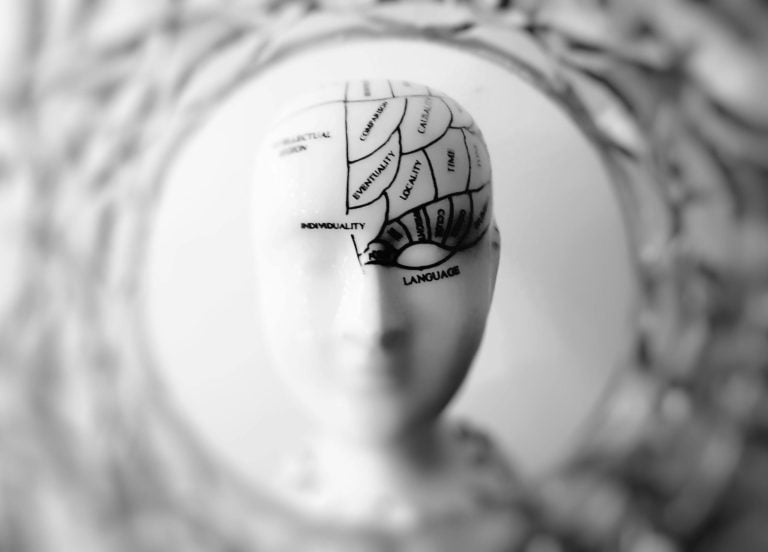

Enneagram Type 5 is defined by an insatiable hunger for knowledge, a fierce need for privacy, and a core belief that the world demands more than they naturally have to give. People with this type pull inward to conserve energy, accumulate understanding, and make sense of everything before stepping forward. They are the quiet observers, the deep thinkers, the ones who would rather spend a weekend reading than attending a party they didn’t choose to attend.
If that sounds familiar, you’re in good company. Type 5s appear across every profession and background, and they tend to be some of the most intellectually rigorous, perceptive people in any room. They just prefer not to announce it.
What makes this personality type so compelling is how much depth sits beneath the surface. And that depth deserves a thorough look, not a surface-level summary.
This article is part of a larger exploration of how personality systems shape how we work, connect, and grow. Our Enneagram and Personality Systems hub covers the full spectrum of types with the same level of care and specificity you’ll find here. If you’re trying to understand yourself or the people around you more honestly, that’s a good place to start.

What Actually Drives an Enneagram Type 5?
Every Enneagram type is organized around a core fear and a core desire. For Type 5, the fear is being helpless, incompetent, or overwhelmed by the demands of the outside world. The desire is to be capable, to understand, to have enough knowledge and inner resources that nothing can catch them off guard.
What’s your personality type?
Take our free 40-question assessment and get a detailed personality profile with dimension breakdowns, context analysis, and personalised insights.
Discover Your Type8-12 minutes · 40 questions · Free
That sounds simple enough. But the way it plays out in real life is more layered than a single sentence can capture.
Type 5s often describe a persistent sense that the world is intrusive and draining. Social interaction, unexpected demands, emotional requests from others, all of it costs something. So they develop a strategy: withdraw, observe, study, and only engage when they feel sufficiently prepared. The thinking goes, if I know enough, I’ll be okay. If I understand the situation fully, I won’t be caught without the resources I need.
A 2020 study published in PubMed Central found that individuals with high need for cognition, a trait strongly associated with Type 5 patterns, tend to process information more thoroughly and prefer depth over breadth in their thinking. That’s not a quirk. It’s a cognitive orientation.
What this creates is a person who is often brilliant in their area of focus, but who can struggle to engage before they feel ready. They may hold back opinions in meetings, not because they don’t have them, but because they’re still processing. They may seem detached, not because they don’t care, but because they’ve learned to keep their inner life carefully protected.
I recognized this pattern in myself long before I had language for it. Running advertising agencies, I was surrounded by people who seemed to generate ideas out loud, who brainstormed in real time, who thrived on the energy of a packed conference room. My process looked different. I’d sit quietly during a client meeting, absorbing everything, and then spend the drive home synthesizing what I’d heard into something I could actually use. My team sometimes read that silence as disengagement. What was actually happening was the opposite.
How Does a Type 5 Experience the World Differently?
One of the most distinct features of this type is compartmentalization. Type 5s tend to separate their life into distinct domains, keeping their inner world, their work, their relationships, and their interests in separate containers. This isn’t dysfunction. It’s a protective structure that allows them to control how much of themselves is exposed at any given time.
They also tend to detach from their emotions in the moment and process them later, often alone. A Type 5 might seem unmoved during a difficult conversation, then spend hours afterward working through what they actually felt. The emotion is real. The timing is just different.
According to Truity’s research on deep thinking, people who process information at this level often show strong pattern recognition, a preference for solitude during problem-solving, and a tendency to revisit ideas long after others have moved on. All of that describes a healthy Type 5 in full operation.
There’s also a particular relationship with time and energy. Type 5s treat both as finite and precious. They’ll often plan their social commitments carefully, giving themselves recovery time afterward. They may set internal time limits on interactions, not out of rudeness, but because they know their limits and honor them. Some people find this confusing. Type 5s find it necessary.
I used to apologize for needing time alone after a long client presentation. I’d frame it as fatigue or busyness. What I eventually understood was that I wasn’t broken. I was wired to process deeply, and deep processing requires space. Owning that changed how I led my team and how I structured my days.

What Are the Wings and How Do They Shape Type 5?
No Enneagram type exists in isolation. Each type is influenced by the types on either side of it on the Enneagram circle, called wings. For Type 5, those wings are Type 4 and Type 6, and they create meaningfully different expressions of the same core pattern.
The 5w4: The Iconoclast
A Type 5 with a 4 wing brings the emotional intensity and aesthetic sensitivity of Type 4 into the analytical framework of Type 5. These individuals tend to be more introspective, more creatively driven, and more interested in questions of meaning and identity. They may be drawn to philosophy, art, literature, or any field where intellect and imagination intersect. They’re often more comfortable with ambiguity than a pure Type 5, and they may have a stronger desire to express something original, not just understand it.
The 5w4 can also be more emotionally volatile in private, cycling through periods of rich inner experience that they rarely share with others. Their withdrawal can take on a more melancholic quality, colored by the 4’s tendency toward longing and a sense of being fundamentally different from everyone else.
The 5w6: The Problem Solver
A Type 5 with a 6 wing is more oriented toward systems, reliability, and practical application of knowledge. Where the 5w4 asks “what does this mean,” the 5w6 asks “how does this work and what could go wrong.” These individuals tend to be more collaborative than a pure Type 5, more interested in building something functional with their knowledge, and more attuned to potential risks and contingencies.
The 5w6 often makes an excellent analyst, engineer, researcher, or strategist. They combine the depth of Type 5 with the loyalty and systems thinking of Type 6, which makes them particularly valuable in environments where precision and reliability matter. They may also be more socially engaged than the 5w4, even if that engagement still requires careful management of their energy.
What Happens When a Type 5 Is Under Stress?
Understanding stress patterns is one of the most practically useful parts of Enneagram work. For Type 5, stress doesn’t usually look like a public breakdown. It looks like progressive withdrawal, followed by an unexpected and often out-of-character burst of behavior.
Under pressure, Type 5 moves toward Type 7 on the Enneagram, taking on some of the less healthy characteristics of that type. Instead of the joyful spontaneity that a healthy Type 7 brings, a stressed Type 5 may become scattered, impulsive, and distracted. They might suddenly start too many projects, pursue stimulation as a way to avoid sitting with discomfort, or make decisions they’d normally research thoroughly without any preparation at all.
Before that shift happens, there are usually warning signs. A stressed Type 5 may become increasingly isolated, cutting off even the few relationships they normally maintain. They may hoard information, becoming secretive or possessive about their knowledge. They may grow cynical, dismissive, or intellectually arrogant, using their mental sharpness as a weapon rather than a tool.
The American Psychological Association has documented the relationship between social withdrawal and cognitive performance under stress, noting that isolation can initially feel protective but eventually impairs the very thinking processes that introverted, analytical types rely on most. For Type 5s, that’s a particularly sharp irony. The strategy that feels like protection can become the thing that undermines them.
Recovery for a Type 5 under stress usually involves reconnection, both to their body and to at least one trusted person. Not a crowd. Not a social event. Just one honest conversation with someone safe enough to be real with.
For a comparison point, it’s worth looking at how other types handle pressure differently. Enneagram 1 under stress shows a very different pattern, moving toward rigidity and self-criticism rather than withdrawal and scatter. Understanding those contrasts helps clarify what’s specific to Type 5 versus what’s common across all types under pressure.

How Does Type 5 Show Up in Relationships?
Relationships are where Type 5 patterns become most visible and most challenging. Type 5s want connection. They’re not indifferent to love or friendship. But they need connection on their own terms, with clear boundaries, minimal intrusion, and the freedom to maintain their inner world intact.
Partners and friends of Type 5s often describe a feeling of trying to get close to someone who keeps moving slightly out of reach. That’s not entirely inaccurate. Type 5s do maintain a certain protective distance, even with people they love deeply. They share themselves in portions, revealing more only as trust is established over time.
What they offer in return is considerable. Type 5s are loyal in a quiet, consistent way. They don’t forget what matters to the people they care about. They think carefully before speaking, which means when they do say something meaningful, it carries real weight. They’re not given to flattery or performative warmth, so when they express genuine care, you can trust that it’s real.
The challenge in relationships often comes from the Type 5’s tendency to intellectualize emotion rather than express it. A partner who needs verbal reassurance or frequent emotional check-ins may find a Type 5 frustrating, not because the Type 5 doesn’t care, but because expressing care in that way doesn’t come naturally to them. A 2008 study in PubMed Central on emotional regulation and interpersonal functioning found that individuals who rely heavily on cognitive processing of emotions often show strong emotional stability but lower spontaneous expressiveness, which maps closely to what Type 5s experience.
The healthiest relationships for Type 5s tend to be with people who respect autonomy, who don’t take silence personally, and who can engage intellectually as well as emotionally. They thrive with partners who have their own rich inner lives and don’t need constant togetherness to feel secure.
Comparing this to how other types approach connection is illuminating. Enneagram Type 2 sits at nearly the opposite end of the relational spectrum, leading with warmth and giving generously, sometimes at the cost of their own needs. The contrast between Type 2’s outward orientation and Type 5’s inward one helps clarify what makes each type’s relational style distinct.
Where Do Type 5s Find Their Professional Footing?
Type 5s tend to excel in careers that reward depth of expertise, independent thinking, and sustained focus. They’re not well suited to environments that demand constant social performance, rapid context-switching, or decision-making without adequate information. Give them a complex problem, sufficient time, and the freedom to work without unnecessary interruption, and they’ll produce something exceptional.
Fields that draw Type 5s include research, academia, technology, data analysis, writing, engineering, philosophy, medicine, and any specialized technical domain. They often become the person in an organization who knows more about a specific subject than anyone else, and who others quietly rely on for that expertise even if the Type 5 doesn’t seek that recognition.
Leadership is possible for Type 5s, but it tends to look different from the extroverted model most organizations default to. Type 5 leaders lead through competence, clarity, and vision rather than charisma or energy. They’re often excellent at strategic thinking, at seeing around corners, at building frameworks that others can execute within. What they may struggle with is the relational maintenance that leadership requires, the regular check-ins, the emotional attunement to their team, the visibility that comes with being out front.
During my agency years, I watched several colleagues who fit the Type 5 profile get passed over for leadership roles not because their thinking was weak, but because they hadn’t learned to translate that thinking into visible, relational leadership. The work was brilliant. The communication of the work was sparse. That gap cost them.
Research from 16Personalities on team collaboration and personality suggests that analytical, introverted personality types contribute significantly to team performance when their strengths are recognized and their working preferences are accommodated. The problem is that most workplaces aren’t designed with that accommodation in mind.
For Type 5s building careers, the practical work involves learning to make their internal process legible to others. Not performing extroversion. Not pretending to be something they’re not. Just finding ways to communicate what they’re thinking, at least partially, so that the people around them can see the value they’re generating.
Looking at how other types approach career development offers useful perspective. Enneagram Type 1 at work brings a different kind of strength, one built on standards and integrity rather than expertise accumulation. And Enneagram Type 2 in the workplace shows how relational intelligence can be its own form of professional capital. Type 5s benefit from understanding these contrasts, not to imitate them, but to see clearly what they bring that others don’t.

What Does Healthy Growth Look Like for Type 5?
Growth for Type 5 isn’t about becoming more extroverted or less intellectual. It’s about learning to trust that engagement won’t deplete them as completely as they fear, and that their inner resources are more renewable than they believe.
In the Enneagram framework, Type 5 moves toward Type 8 in growth. Healthy Type 8 energy brings confidence, directness, and a willingness to engage with the world rather than observe it from a safe distance. For a Type 5, accessing that energy means stepping forward with what they know, sharing their perspective before it’s been polished to perfection, and trusting that their presence in the room has value even when they feel underprepared.
Practically, growth for Type 5 often involves three specific shifts.
The first is moving from hoarding to sharing. Healthy Type 5s recognize that knowledge shared doesn’t diminish them. It connects them to others and often returns more than it costs. The fear that giving away what they know will leave them with less is a distortion. In most real-world contexts, the opposite is true.
The second is embodiment. Type 5s live heavily in their minds and can become disconnected from their physical experience. Growth often involves practices that bring them back into their bodies, exercise, time in nature, cooking, music, anything that requires presence rather than analysis. A WebMD overview of emotional sensitivity and body awareness notes that reconnecting with physical sensation is a significant factor in overall wellbeing for people who tend toward emotional detachment, which describes many Type 5s accurately.
The third shift is allowing relationships to matter. Not performing connection, but genuinely letting people in, accepting that vulnerability doesn’t always lead to the depletion they expect. This is the hardest growth edge for most Type 5s, and it’s also the most meaningful.
The growth path for other types offers useful contrast here. Enneagram Type 1’s path from average to healthy involves softening self-criticism and accepting imperfection, which is a fundamentally different challenge than what Type 5 faces. And the way Type 1 experiences its inner critic is worth understanding as a point of comparison, because Type 5’s inner voice tends to be more about inadequacy and depletion than about moral failure.
What I’ve found in my own experience is that growth rarely happens through willpower alone. It happens through accumulated small moments of choosing differently. Sharing an idea before it’s finished. Staying in a conversation slightly longer than feels comfortable. Asking someone how they’re doing and actually listening to the answer. None of that sounds dramatic. But over time, it changes how you relate to the world and to yourself.
How Does Type 5 Intersect with MBTI and Introversion?
Type 5 shows up most frequently in MBTI types that share a preference for introversion and thinking, particularly INTJ, INTP, INFJ, and ISTP. The overlap isn’t perfect, because the Enneagram and MBTI measure different things, but the patterns align in meaningful ways.
As an INTJ myself, I recognize a significant amount of Type 5 in how I’m wired, particularly the drive to understand systems deeply before acting, the preference for solitude during complex thinking, and the tendency to hold back in social situations until I’ve assessed them carefully. The difference is that MBTI describes cognitive function preferences while the Enneagram describes motivational patterns. Both systems illuminate something true, and they complement each other when used together.
If you’re still figuring out where you land on the MBTI spectrum, our free MBTI personality test is a solid place to start. Knowing your MBTI type alongside your Enneagram type gives you a more complete picture of how you’re wired.
What’s worth noting is that not all Type 5s are introverts in the MBTI sense, though the vast majority lean that way. The Enneagram’s Type 5 pattern is fundamentally about energy management and the fear of depletion, which maps closely to introversion’s core feature of being drained by external stimulation and restored by solitude. The two frameworks reinforce each other in this case.
Global personality data from 16Personalities’ worldwide research suggests that introverted thinking types represent a meaningful but underrepresented portion of the general population. Type 5s may feel like outliers because they genuinely are less common. That rarity can contribute to the sense of being fundamentally different that many Type 5s carry through their lives.

What Do Type 5s Actually Need to Thrive?
Knowing what you need is different from knowing what you are. For Type 5s, the two are closely connected, but the “what you need” part is often the piece that gets left out of personality guides.
Type 5s need time alone that isn’t negotiated or apologized for. They need relationships with people who respect boundaries without taking them personally. They need work that has genuine intellectual substance, that rewards depth rather than speed, and that gives them room to develop real expertise rather than skimming across many topics.
They also need permission, from themselves, to not know everything before they act. That’s the growth edge that shows up again and again. The belief that they need more information, more preparation, more time before they’re ready is often the thing standing between a Type 5 and the life they actually want. At some point, enough preparation has happened. At some point, showing up is the next step.
One thing I learned running agencies is that the people who waited until they were fully ready rarely got there. Readiness is partly a feeling, and feelings can be managed. The Type 5s I watched thrive professionally were the ones who found a way to act before they felt completely prepared, trusting that their depth of knowledge would carry them through the moments of uncertainty. It almost always did.
Type 5s also benefit from understanding that their way of being in the world has real value, not just to themselves, but to the people around them. The observer who catches what everyone else missed. The analyst who sees the flaw in the plan before it’s executed. The thinker who asks the question nobody else thought to ask. These are contributions that matter, even when they happen quietly.
Explore more personality type resources and Enneagram insights in our complete Enneagram and Personality Systems hub.
About the Author
Keith Lacy is an introvert who’s learned to embrace his true self later in life. After 20 years in advertising and marketing leadership, including running agencies and managing Fortune 500 accounts, Keith now channels his experience into helping fellow introverts understand their strengths and build fulfilling careers. As an INTJ, he brings analytical depth and authentic perspective to every article, drawing from both professional expertise and personal growth.
Frequently Asked Questions
What is the core fear of Enneagram Type 5?
The core fear of Enneagram Type 5 is being helpless, incompetent, or incapable of meeting the demands of the world. Type 5s respond to this fear by accumulating knowledge and withdrawing from situations that feel draining or overwhelming, believing that sufficient understanding will protect them from being caught unprepared.
Are all Enneagram Type 5s introverts?
The vast majority of Type 5s identify as introverted, and the Type 5 pattern aligns closely with introversion’s core feature of being drained by external stimulation and restored by solitude. That said, the Enneagram and MBTI measure different things. A small number of Type 5s may test as extroverted on MBTI assessments while still showing the classic Type 5 motivational pattern of energy conservation and knowledge accumulation.
What careers suit Enneagram Type 5 best?
Type 5s tend to thrive in careers that reward deep expertise, independent thinking, and sustained focus. Strong fits include research, data analysis, engineering, software development, academia, writing, philosophy, medicine, and specialized technical fields. They generally struggle in roles that demand constant social performance, rapid context-switching, or decision-making without adequate information.
How does Type 5 behave differently from Type 4 and Type 6?
Type 4 is driven by a desire for identity and meaning, often expressing itself through creativity and emotional depth. Type 6 is driven by a need for security and loyalty, often expressing itself through vigilance and systems thinking. Type 5 shares intellectual depth with both neighbors but is primarily motivated by the accumulation of knowledge and the conservation of inner resources, rather than the search for identity or the management of anxiety about safety.
What does growth look like for an Enneagram Type 5?
Growth for Type 5 involves moving toward the healthy qualities of Type 8, including greater confidence, directness, and willingness to engage with the world before feeling completely prepared. Practically, this means shifting from hoarding knowledge to sharing it, reconnecting with physical experience and embodiment, and allowing relationships to matter more than the protective distance they typically maintain. Growth doesn’t require abandoning the depth that defines them. It means trusting that depth enough to act on it.