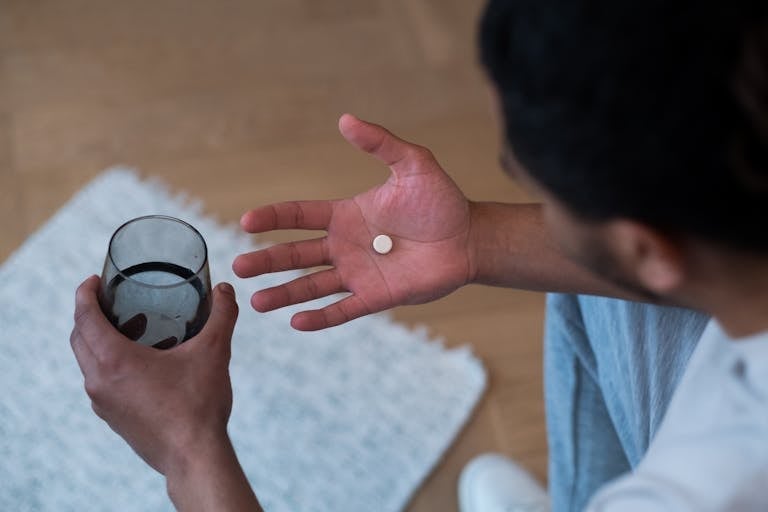
Antidepressants can sometimes increase social anxiety, particularly during the early weeks of treatment, as the brain adjusts to changes in serotonin, dopamine, or norepinephrine levels. This effect is well-documented and tends to be temporary, though for introverts who already process social situations with heightened sensitivity, it can feel disorienting and hard to distinguish from the original problem getting worse.
What no one told me when I first started exploring medication for depression was that the line between “this is working” and “this is making things worse” can be genuinely blurry, especially in those first few weeks. My social discomfort, which had always been something I managed quietly and privately, suddenly felt amplified in ways I wasn’t prepared for.
If you’re experiencing something similar, you’re in good company. Many people, particularly those with introverted temperaments, find that antidepressants and social anxiety interact in complicated, sometimes contradictory ways. Understanding what’s actually happening in your brain, and why your wiring as an introvert shapes that experience, can make an enormous difference in how you respond.

This topic sits at the intersection of mental health, personality, and medication, a space that deserves careful, honest exploration. Our Depression and Low Mood hub covers the full spectrum of mood-related challenges that introverts face, and antidepressant-related social anxiety is one of the more misunderstood pieces of that picture. What follows is both what the science says and what my own experience has taught me about moving through it.
Why Do Antidepressants Sometimes Increase Social Anxiety?
The short answer is neurochemistry, but the longer answer matters more. Most antidepressants work by altering how your brain handles certain neurotransmitters. SSRIs (selective serotonin reuptake inhibitors) like sertraline or fluoxetine increase serotonin availability. SNRIs affect both serotonin and norepinephrine. These changes don’t happen in isolation. They ripple through interconnected systems that regulate mood, arousal, and yes, social fear.
What drains your social battery?
Not all social exhaustion is the same. Our free quiz identifies your specific drain pattern and gives you personalised recharging strategies.
Find Your Drain PatternUnder 2 minutes · 8 questions · Free
A 2024 study published in Nature Scientific Reports examined how serotonergic changes affect threat-processing in socially anxious individuals, finding that early medication phases can temporarily heighten sensitivity to perceived social threat before the regulatory benefits kick in. That’s a clinical way of saying: your nervous system might read a crowded elevator or a team meeting as more threatening than usual while it’s recalibrating.
For introverts, this matters in a specific way. We already tend to process social environments more deeply and with more internal noise than our extroverted counterparts. A 2017 piece from Psychology Today noted that introverts often engage more elaborate internal processing loops when responding to social stimuli, which means any neurochemical change that heightens arousal gets amplified through that same internal architecture.
Add medication-induced restlessness or mild agitation (common in the first two to four weeks of SSRI use) to an already-active internal processing system, and you get a recipe for feeling socially raw. Not broken. Not proof the medication is wrong for you. Just raw.
How Does Introversion Shape the Medication Experience?
There’s a meaningful connection between introversion and how we process both emotional pain and its treatment. Introverts tend to have a more reactive limbic system, which is the part of the brain most involved in emotional processing and social threat detection. A 2023 paper in Frontiers in Psychology explored how introversion correlates with heightened emotional sensitivity and a tendency toward deeper, more ruminative processing, both of which affect how antidepressants feel during adjustment phases.
I ran advertising agencies for over two decades. Client presentations, new business pitches, agency reviews with Fortune 500 brand teams, these were weekly realities. What most people didn’t see was the internal cost. I’d spend the night before a major pitch running through every possible social scenario, every question someone might ask, every way the room could shift. That wasn’t anxiety in a diagnosable sense at the time. It was just how my brain worked. Thorough. Layered. Exhausting.
When I later started exploring antidepressants during a particularly difficult stretch, that same internal processing machinery didn’t stop. It just had a new variable running through it. The medication changed something in my baseline, and my introvert brain spent considerable energy trying to interpret what had changed and what it meant for every upcoming social interaction.
Understanding the relationship between depression and introversion helped me make sense of why the medication experience felt so specifically textured for me. It wasn’t generic. It was filtered through years of internalized social processing habits that medication couldn’t simply override.

Which Antidepressants Are Most Likely to Affect Social Anxiety?
Not all antidepressants carry the same social anxiety profile, and this distinction is worth knowing before you or your doctor make medication decisions.
SSRIs and SNRIs
These are the most commonly prescribed antidepressants, and they’re also the most studied in relation to social anxiety disorder. Ironically, SSRIs like paroxetine and sertraline are FDA-approved treatments for social anxiety disorder, yet in the early weeks they can produce a temporary worsening of anxiety symptoms. This is sometimes called “activation syndrome,” characterized by increased agitation, restlessness, and heightened emotional reactivity.
A review published through PubMed Central found that activation-related side effects are more pronounced in individuals with pre-existing anxiety conditions, which includes a significant portion of people taking antidepressants in the first place. The typical window is two to six weeks, after which the anxiolytic effects begin to emerge.
Bupropion
Bupropion (Wellbutrin) works differently, targeting dopamine and norepinephrine rather than serotonin. Some people find it energizing in ways that feel socially activating, almost like a low-grade stimulant effect. For introverts who are already managing sensory and social overload, that stimulant quality can make social situations feel sharper and more demanding in the early weeks.
Mirtazapine and Tricyclics
These older-class antidepressants tend to have more sedating profiles, which can actually reduce acute social anxiety symptoms in some people. The tradeoff is a different set of side effects. Your prescriber can help weigh what profile makes most sense given your specific symptom picture.
What matters most is that you go into any medication conversation with an accurate picture of your social anxiety baseline, not just your depression symptoms. The two are often intertwined in ways that affect which medication and which dose will work best.
How Do You Tell the Difference Between Adjustment and a Real Problem?
This is the question I wish someone had handed me a clear framework for. The distinction between “normal adjustment discomfort” and “this medication is genuinely wrong for me” is real, and it matters enormously for what you do next.
Adjustment-phase social anxiety typically has a few recognizable characteristics. It tends to be diffuse rather than targeted, meaning it’s a general heightening of social discomfort rather than a specific fear attached to particular situations. It often comes with physical restlessness, a kind of low-level internal hum that makes stillness feel harder. And it usually shows some sign of easing, even slightly, by the end of weeks two or three.
A more concerning pattern looks different. Social anxiety that intensifies rather than plateaus after three weeks, that attaches to new situations you previously handled well, or that comes with significant changes in sleep, appetite, or mood stability warrants a conversation with your prescriber sooner rather than later.
Tracking matters here. I know introverts who keep detailed mental logs of their internal states, and that habit becomes genuinely useful during medication adjustment. Write down what you notice, when you notice it, and what the social context was. That data gives your doctor something concrete to work with rather than a general sense that “something feels off.”
Those of us who are prone to seasonal mood shifts face an additional layer of complexity. If you’re adjusting to a new antidepressant during winter months, it can be difficult to separate medication effects from the compounding weight that many introverts experience seasonally. Introvert Seasonal Affective Disorder adds its own texture to mood and social withdrawal, and the overlap with medication adjustment can make the picture genuinely murky.

What Strategies Actually Help During the Adjustment Period?
There’s no single answer here, but there are approaches that tend to work well for introverts specifically, given how we process social environments and emotional information.
Reduce Social Load Strategically, Not Completely
Complete social withdrawal during medication adjustment can feel like relief in the short term, but it tends to reinforce avoidance patterns that make social anxiety harder to address over time. A more sustainable approach is to reduce the intensity and duration of social engagements without eliminating them.
During one particularly difficult adjustment period, I started declining optional evening client events while keeping the non-negotiable ones. I gave myself permission to attend a meeting, contribute meaningfully, and leave without the extended social tail that often followed. That felt like a reasonable accommodation rather than a retreat.
Lean Into Structured Social Environments
Introverts tend to handle structured social contexts more comfortably than open-ended ones. A meeting with a clear agenda, a one-on-one conversation with a trusted colleague, a defined role in a group setting, these provide enough scaffolding to reduce the cognitive load of social performance. During medication adjustment, prioritizing structured over unstructured social time can help maintain connection without overwhelming an already-taxed system.
Protect Sleep Aggressively
Many antidepressants affect sleep architecture, particularly in early weeks. For introverts, who tend to need more recovery time after social engagement, disrupted sleep compounds the social anxiety effect significantly. A 2023 study from PubMed Central found that sleep disruption substantially amplifies threat-processing sensitivity, which maps directly onto heightened social anxiety. Treating sleep as a non-negotiable priority during this period isn’t self-indulgence. It’s strategic.
Consider Timing of Social Obligations
Many people notice that medication-related anxiety peaks at certain times of day, often in the morning after taking an SSRI, or in the late afternoon as the initial dose effect wanes. Paying attention to your own pattern and, where possible, scheduling demanding social obligations during your lower-anxiety windows can make a meaningful practical difference.
Practical mood management during this period goes beyond medication alone. The strategies in Introvert Mood Optimization: Emotional Control Mastery offer a useful complement to whatever your prescriber recommends, particularly around managing emotional reactivity during high-demand periods.
When Social Anxiety Persists Beyond the Adjustment Window
Sometimes the social anxiety doesn’t ease after the expected adjustment period. That’s important information, not a personal failure.
Persistent social anxiety alongside antidepressant use can indicate a few different things. The medication may not be the right fit for your specific neurochemistry. The dose may need adjustment. There may be an underlying anxiety disorder that the antidepressant alone isn’t adequately addressing. Or the social anxiety may be a feature of a mood condition that requires a different treatment approach altogether.
Some people discover during this process that their mood fluctuations are more complex than initially understood. If you’re noticing social anxiety alongside significant mood variability, periods of elevated energy followed by withdrawal and low mood, it may be worth having a broader conversation with your provider. Introvert Bipolar Management addresses how mood complexity interacts with introverted temperament, and it’s a resource worth exploring if the picture feels more layered than straightforward depression.
Cognitive behavioral therapy (CBT), particularly exposure-based approaches to social anxiety, is well-supported as an adjunct to medication. The Stanford Social Neuroscience Lab has done significant work on the mechanisms behind social anxiety and how combined treatment approaches (medication plus therapy) tend to outperform either alone. If you’re working with a prescriber but not a therapist, that combination is worth considering.

The Introvert’s Specific Challenge: Distinguishing Preference from Anxiety
Here’s something I’ve wrestled with personally and that I hear from many introverts in similar situations: it can be genuinely difficult to know whether what you’re experiencing is social anxiety that needs treatment, or a legitimate introvert preference for less social stimulation that doesn’t need to be medicated away.
This distinction matters because conflating the two can lead to over-medicating introversion itself, which is not a disorder, while under-treating actual social anxiety, which can be genuinely debilitating. Social anxiety involves fear, avoidance driven by anticipated negative evaluation, and significant distress or functional impairment. Introversion involves a preference for less stimulation, a need for solitude to recharge, and a tendency toward depth over breadth in social engagement. They’re not the same thing, even though they can look similar from the outside.
What made this clearer for me was asking a specific question: am I avoiding this social situation because it genuinely doesn’t interest me and I’d rather be doing something else, or am I avoiding it because I’m afraid of what might happen if I go? The first is introversion. The second is anxiety. Medication can help with the second. It shouldn’t be expected to change the first, and shouldn’t be judged as failing if it doesn’t.
Working through this distinction is part of the broader work of introvert depression recognition and recovery, which involves learning to read your own internal signals accurately rather than through the lens of what others expect from you socially.
Practical Conversations to Have With Your Doctor
Most prescribers are working from a limited window of information. A fifteen-minute appointment doesn’t give them much to go on beyond what you tell them. Knowing what to communicate, and how to communicate it, makes those conversations significantly more productive.
Be specific about the social contexts where anxiety has increased. “I feel more anxious” is less useful than “I’ve noticed I’m more avoidant in group settings at work, and I had two panic responses in meetings last week that I didn’t have before starting the medication.” Specificity gives your doctor a clearer picture of what’s changing and whether it fits the expected adjustment profile.
Ask directly about the expected timeline for social anxiety side effects with your specific medication. Ask whether a lower starting dose might reduce the adjustment intensity. Ask whether a short-term anxiolytic (like a low-dose beta blocker for acute situations) might be appropriate as a bridge while the antidepressant establishes itself.
And if you’re working from home during this period, the social anxiety dynamic shifts in interesting ways. Isolation can feel like relief while simultaneously deepening depression and avoidance patterns. Working from Home with Depression addresses this particular tension in ways that are directly relevant to managing antidepressant adjustment when your social environment is already limited.
One more thing worth raising with your prescriber: your introversion itself. I know that sounds unusual, but your temperament affects how you experience social environments, how you process emotional information, and how you’re likely to respond to medication-induced changes in arousal and sensitivity. A prescriber who understands that you’re wired for depth and internal processing, not social avoidance driven by fear, can calibrate their recommendations accordingly.

Finding Your Footing on the Other Side
There was a period, somewhere around week five of a medication adjustment I went through during a particularly demanding agency year, when something quietly shifted. I walked into a client presentation without the usual pre-meeting internal spiral. Not because I’d become a different person, not because my introversion had been medicated away, but because the underlying depression that had been amplifying every social fear had loosened its grip enough for me to show up as myself again.
That’s what effective antidepressant treatment is supposed to do. Not make you extroverted. Not eliminate the preference for quieter environments and deeper conversations. Just remove the weight that was distorting your natural social experience into something fearful and exhausting.
Getting there requires patience with the adjustment period, honest communication with your prescriber, and a clear sense of what you’re actually trying to treat versus what’s simply part of how you’re wired. Those distinctions are worth holding onto throughout the process.
You’re not trying to become someone who thrives in crowded rooms. You’re trying to become someone who can choose, freely and without fear, how much of the world they want to engage with on any given day. That’s a meaningful goal, and the right medication, at the right dose, managed through the adjustment period with the right support, can genuinely help you get there.
Explore the full range of mood-related resources for introverts in our Depression and Low Mood hub, where you’ll find connected articles on everything from seasonal mood challenges to recovery strategies tailored to introverted temperaments.
Running on empty?
Five drain profiles, each with specific triggers, warning signs, and a recharging playbook.
Take the Free QuizUnder 2 minutes · 8 questions · Free
About the Author
Keith Lacy is an introvert who’s learned to embrace his true self later in life. After 20 years in advertising and marketing leadership, including running agencies and managing Fortune 500 accounts, Keith now channels his experience into helping fellow introverts understand their strengths and build fulfilling careers. As an INTJ, he brings analytical depth and authentic perspective to every article, drawing from both professional expertise and personal growth.
Frequently Asked Questions
Can antidepressants make social anxiety worse before it gets better?
Yes, and this is one of the more common and least-discussed aspects of starting antidepressant treatment. Many SSRIs and SNRIs produce a temporary increase in anxiety symptoms during the first two to six weeks as the brain adjusts to changes in neurotransmitter availability. This activation effect can heighten social discomfort, increase restlessness, and make previously manageable social situations feel more demanding. The effect is generally temporary, and most people see social anxiety ease as the antidepressant’s therapeutic benefits establish themselves. If symptoms intensify rather than plateau after three to four weeks, that warrants a direct conversation with your prescriber.
Which antidepressants are best for people with both depression and social anxiety?
SSRIs like paroxetine and sertraline are FDA-approved for both major depressive disorder and social anxiety disorder, making them a common first-line choice when both conditions are present. SNRIs like venlafaxine also have evidence supporting their use for social anxiety. Bupropion, while effective for depression, has less evidence for social anxiety and may increase agitation in some people. The best choice depends on your individual symptom profile, medical history, and how you respond to the initial adjustment period. A prescriber familiar with both conditions can help weigh the options.
How do introverts experience antidepressant side effects differently?
Introverts tend to process social environments and emotional information with greater depth and sensitivity than extroverts, which means medication-induced changes in arousal or emotional reactivity can feel more pronounced. The activation effects of SSRIs, including restlessness and heightened sensitivity, run through an already-active internal processing system, which can amplify the subjective experience of social discomfort. Introverts may also find it harder to distinguish between medication side effects and their natural preference for less social stimulation, making careful self-observation and honest communication with a prescriber especially important during the adjustment period.
How long does antidepressant-induced social anxiety typically last?
For most people, the heightened social anxiety associated with starting an antidepressant peaks in the first one to two weeks and begins to ease by weeks three to six. The therapeutic effects on mood and anxiety typically become more noticeable between four and eight weeks of consistent use. If significant social anxiety persists beyond six weeks at a stable dose, it’s worth discussing with your prescriber whether the medication, the dose, or the overall treatment approach needs adjustment. Some people benefit from a lower starting dose that’s gradually increased to reduce the intensity of the adjustment period.
Should introverts tell their doctor about their introversion when discussing antidepressants?
Yes, and more specifically than most people think to. Introversion affects how you process social environments, how you experience emotional arousal, and what “normal” looks like for you socially. A prescriber who understands that your baseline involves a preference for less social stimulation, deeper processing, and a genuine need for solitude can better interpret what you’re reporting during the adjustment period. Without that context, a prescriber might misread introvert-typical social behavior as a symptom requiring more aggressive treatment, or conversely, dismiss medication-induced social anxiety as simply “being introverted.” Framing your baseline clearly helps calibrate the whole conversation.