
Meeting introverts online works because digital spaces naturally favor the way introverted people connect: through writing, reflection, and meaningful one-on-one exchange rather than loud group performance. Online communities, forums, and social platforms give introverts room to think before responding, engage at their own pace, and build genuine connections without the energy drain of constant face-to-face interaction. For many of us, the internet isn’t a consolation prize for socializing. It’s where we finally feel like ourselves.
There’s a reason so many introverts describe their closest friendships as ones that started online. The format strips away small talk and gets to the substance faster. You find people based on shared interests, shared values, shared curiosity. And when you do connect, something real tends to develop.
My own relationship with online connection has evolved over two decades in advertising. I spent years managing client relationships through packed conference rooms and industry events, performing extroversion so convincingly that most people had no idea how much it cost me. It wasn’t until I started building relationships through writing, through email threads and industry forums and eventually social media, that I realized I’d been doing connection the hard way my whole career. Online spaces gave me back something I hadn’t known I was missing: the ability to be thoughtful before I spoke.

If you’re an introvert who has ever felt like social connection requires more energy than you have, or wondered whether meaningful friendship is even accessible to someone who finds parties exhausting, this is worth reading. There are real, practical ways to meet people online who think the way you do, value what you value, and won’t drain you dry in the process. The full picture of what introvert life can look like is worth exploring in our General Introvert Life hub, which covers everything from daily coping strategies to deeper questions about identity and belonging. But today I want to focus specifically on the mechanics and the mindset of finding your people in digital spaces.
Why Do Introverts Often Struggle to Meet People in Traditional Settings?
Most social environments are designed by extroverts, for extroverts. Networking events reward whoever talks the loudest and moves the fastest. Parties favor people who can hold court with strangers. Even casual social gatherings often hinge on spontaneous banter and quick wit, the very things that introverts tend to need time to warm into.
What’s your personality type?
Take our free 40-question assessment and get a detailed personality profile with dimension breakdowns, context analysis, and personalised insights.
Discover Your Type8-12 minutes · 40 questions · Free
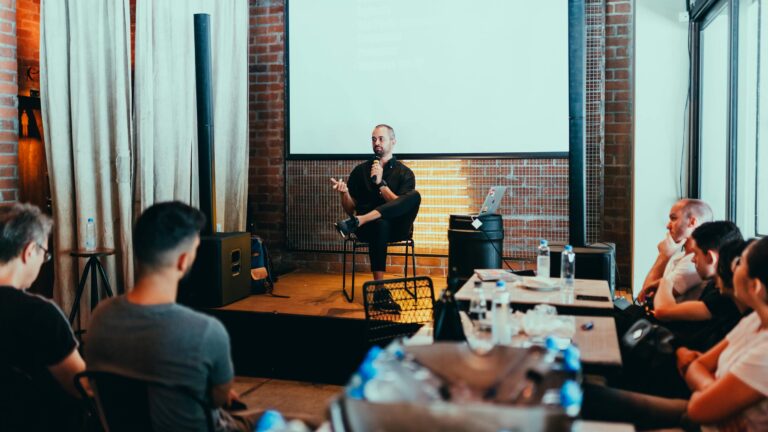
I watched this play out repeatedly in the advertising world. Industry conferences were supposed to be where you built your network. And I did build one, eventually. But it took enormous effort to do it the way everyone else seemed to do it effortlessly. I’d come home from a two-day conference feeling like I’d run a marathon, while my extroverted colleagues were already planning the after-party. Something about the whole structure felt misaligned with how I actually formed connections.
What I’ve come to understand is that introverts aren’t bad at connecting. We’re bad at connecting in formats that weren’t designed for us. A 2019 study published in PLOS ONE found that introversion is associated with a preference for smaller, more intimate social interactions rather than large group settings. That’s not a deficiency. It’s a different architecture for relationship-building.
There’s also the persistent myth that introverts are antisocial or don’t want connection at all. That’s simply not accurate. As I’ve written about in exploring introversion myths and common misconceptions, the desire for connection is just as present in introverts. What differs is the environment in which we thrive when building it. Strip away the noise, the performance pressure, and the expectation of instant rapport, and most introverts are deeply capable of rich, lasting relationships.
What Makes Online Spaces Better for Introverted Connection?
Online environments have a structural advantage for introverts that rarely gets named directly: asynchronous communication. You can read something, sit with it, form a genuine response, and share it without anyone watching you think. That’s not a small thing. For people who process internally before expressing, that gap between receiving information and responding is where the best thinking happens.
Psychology Today has written about why deeper conversations matter more than surface-level small talk, noting that meaningful exchanges create stronger bonds and greater life satisfaction. Online spaces, when chosen well, tend to filter toward depth. People who show up in niche forums, topic-specific Discord servers, or long-form communities are usually there because they actually care about the subject. That shared investment is a natural starting point for real conversation.
There’s also something to be said for the reduced performance pressure. In person, you’re managing your facial expression, your posture, the timing of your laugh, whether you’re making enough eye contact. Online, you’re just your words. For introverts who communicate most naturally through writing, that’s a genuine advantage. You get to show up as your most articulate self rather than your most anxious one.

I noticed this shift in my own work when agency life started moving more toward digital communication. Suddenly, some of my best client relationships were built almost entirely through email and written strategy documents. Clients who had seemed distant in person became genuinely collaborative in writing. And I found myself building stronger professional bonds than I ever had across a conference table. The medium changed what was possible.
Where Can You Actually Find Other Introverts Online?
The honest answer is: almost anywhere, if you know what to look for. Introverts are everywhere online. But some spaces are more naturally suited to the way we connect than others.
Interest-Based Communities and Forums
Reddit communities built around specific interests tend to attract introverts in large numbers, partly because the format rewards thoughtful writing over quick quips. Subreddits dedicated to books, philosophy, specific hobbies, creative writing, psychology, and personality types (r/introvert and r/INTJ among them) are full of people who prefer depth over volume. The introvert-specific communities on Reddit have millions of members and active daily discussion threads.
Discord servers organized around specific topics work similarly. Unlike general social platforms, Discord servers tend to attract people with focused interests, and the smaller channels within them often develop genuine community over time. Look for servers attached to podcasts, YouTube channels, or online courses you already follow. The shared context makes starting a conversation much easier.
Personality Type Communities
MBTI and similar personality frameworks have generated enormous online communities where introverts find each other almost by default. Platforms like Personality Cafe, Type Theory forums, and dedicated Facebook groups for specific types bring together people who already share a framework for understanding themselves. The conversations tend to go deep quickly because everyone is already invested in self-reflection.
A 2020 study in Psychological Science found that people with similar personality traits tend to form stronger, more stable friendships over time. Personality-type communities essentially create a shortcut to that compatibility. You’re not starting from scratch trying to figure out whether someone values depth and quiet. They’ve already self-selected into a space that signals exactly that.
Professional Networks and LinkedIn
LinkedIn gets dismissed as a place for corporate performance, and some of that reputation is earned. But for introverts, it can actually be a surprisingly good place to build genuine professional relationships, particularly through long-form posts and comment threads. The people who engage thoughtfully in comment sections on LinkedIn tend to be the ones worth knowing. And the written format lets you demonstrate your thinking before anyone has to meet you in person.
I built several of my most valuable professional relationships in the last decade of my agency career through LinkedIn, not through events. A well-written post would attract someone with a genuine perspective, we’d exchange a few comments, and eventually move to direct messages. By the time we ever spoke on the phone, there was already a foundation. That’s how introverts build networks when we’re working with our strengths rather than against them.
Online Courses and Learning Communities
Platforms like Coursera, Skillshare, and various independent course communities create natural gathering points for people who prioritize learning. The shared context of working through the same material gives you an immediate conversation starter, and the people drawn to self-directed online learning tend to skew introverted and curious. Discussion boards within courses can be genuinely good places to find people who think similarly to you.

How Do You Actually Start Conversations Without It Feeling Awkward?
Starting a conversation online feels easier in theory than it often does in practice. Even with the buffer of a screen, many introverts freeze at the blank comment box. The fear of saying something wrong, or of being ignored, or of coming across as trying too hard, is real. But there are approaches that make it considerably less fraught.
Start by responding rather than initiating. Comment on something someone else has written before you try to start a thread from scratch. A thoughtful, specific response to an existing post is much lower stakes than launching something new, and it gives the other person something concrete to respond to. Introverts tend to be good observers, and observation translates well into meaningful responses. Notice what someone said that struck you, and say why. That specificity is what separates a comment that gets a reply from one that disappears into the feed.
Ask a genuine question. Not a rhetorical one, not a compliment disguised as a question, but something you actually want to know. “What made you choose that approach?” or “Have you found that changes over time?” are the kinds of questions that signal real interest and invite a real answer. People can tell the difference between genuine curiosity and social performance, and introverts are often better at the former than we give ourselves credit for.
Be patient with the timeline. Online friendships often develop slowly, through repeated small interactions over weeks or months before anything feels like a real connection. That’s not a sign that it isn’t working. That’s actually how most meaningful relationships develop, online or off. A 2024 study in Frontiers in Psychology found that online friendships can develop comparable levels of closeness and quality to in-person friendships, particularly when built through consistent, meaningful exchange over time.
One thing I’ve learned from years of managing client relationships in advertising: the people who felt most like genuine partners were almost always the ones with whom I’d had the most honest exchanges in writing. Not the flashiest presentation, not the most impressive pitch meeting. The relationship that lasted was the one where we’d been real with each other in the back-and-forth of emails and briefs and feedback threads. Online connection has that same potential when you let it be honest.
What Are the Real Challenges of Online Socializing for Introverts?
Online spaces aren’t automatically easy for introverts. There are specific challenges worth naming honestly.
The paradox of abundance is a real one. When there are thousands of communities to choose from and millions of people to potentially connect with, the whole thing can feel overwhelming rather than freeing. Analysis paralysis sets in. You spend more time browsing than engaging, which produces none of the connection you were looking for. Narrowing your focus to one or two specific communities and committing to them consistently tends to work far better than spreading yourself thin across many platforms.
Social media algorithms tend to reward volume and speed over depth. The platforms that dominate our digital landscape were largely built to favor frequent, brief interactions. That’s not where introverts shine. Choosing platforms and formats that reward longer-form engagement, whether that’s Substack newsletters, long Reddit threads, or structured forum discussions, puts you in a better position to do connection the way that actually works for you.
There’s also the energy question. Online socializing is generally less draining than in-person interaction for introverts, but it’s not zero cost. Keeping up with multiple conversations, managing notifications, feeling obligated to respond quickly: these things add up. Setting intentional limits around your online engagement, the same way you’d protect your physical energy, matters. As I’ve found through years of figuring out how to live as an introvert in an extroverted world, protecting your energy isn’t antisocial. It’s how you stay present for the connections that actually matter.
Misreading tone is another genuine challenge. Without vocal inflection or body language, written communication can be misinterpreted in both directions. Something meant warmly can land as cold. Something playful can come across as critical. Developing a slightly more explicit communication style online, where you name your intent rather than assuming it’s obvious, helps considerably. And when something feels off in an exchange, asking a clarifying question is almost always better than assuming the worst.

How Do You Move an Online Connection Into Something Deeper?
At some point, if an online connection is going to become a real friendship, it needs to move beyond the public forum. That transition can feel awkward, but it doesn’t have to be dramatic. Moving from comment threads to direct messages is a natural first step. Something as simple as “I really enjoyed that conversation, would you mind if I sent you a message sometime?” is enough. Most people who’ve had a good exchange are happy to continue it in a more private space.
From direct messages, some connections naturally evolve toward voice or video calls, particularly for friendships that span significant distances. For introverts, the idea of a video call can feel like it erases all the advantages of online communication. And it’s true that it requires more energy. Even so, there’s something that shifts in a relationship when you’ve heard someone’s voice or seen their face. It doesn’t have to be frequent. One good conversation can anchor a friendship that continues primarily in writing.
The research on this is encouraging. A 2020 study found that online friendships can reach comparable depth to in-person ones, particularly when both people are invested in the relationship. What matters isn’t the medium, it’s the consistency and honesty of the exchange. That’s actually great news for introverts, because consistency and honesty are things we tend to be quite good at.
What I’ve noticed in my own experience is that the online friendships that have lasted are the ones where both people were willing to be genuinely honest, not just pleasant. The ones where we disagreed occasionally, where we shared things that weren’t perfectly polished, where the conversation had some friction alongside the warmth. That’s what makes a connection feel real rather than performative. And online spaces, perhaps counterintuitively, can be where that honesty comes most naturally, because you have time to find the right words.
Does Meeting Introverts Online Actually Lead to Real Friendship?
Some people still hold the assumption that online friendships aren’t “real” in the way in-person ones are. That belief is worth examining. Many of the most meaningful connections in people’s lives today began online. The question isn’t whether online friendships can be real. It’s whether you’re building them with the same intentionality you’d bring to any relationship.
Introverts have a particular advantage here. We tend to invest deeply in the relationships we choose. We remember details. We follow up on things people mentioned weeks ago. We think carefully about what we say and mean what we say when we say it. Those qualities make us good friends, and they translate directly into online relationship-building when we bring them to the table.
There’s also something worth saying about the specific experience of finding other introverts online. There’s a recognition that happens when you encounter someone else who processes the world the way you do. A comment that gets at something you’d never quite articulated. A post that describes an experience you’d assumed was unique to you. That recognition is one of the most powerful foundations for connection there is, and online spaces make it possible to find it across geographic distances that would otherwise make meeting impossible.
I think about the community that has grown around Ordinary Introvert over the years. People who found this site through a search, read something that named their experience, and reached out through comments or email to say “I thought I was the only one.” That’s not a small thing. That’s exactly the kind of connection that changes how someone understands themselves. And it started online, with words on a screen, the same way most meaningful introvert connections do.
Part of what makes that recognition so powerful is what it does for our sense of belonging. So much of introvert life involves feeling like you’re slightly out of step with the social world around you, a feeling I’ve explored in thinking about introvert discrimination and the biases we still face. Finding people online who share your wiring doesn’t just feel good. It actively counters the isolation that can come from spending years in environments that weren’t built for you.
What Mindset Makes Online Connection Work for Introverts?
The single biggest shift that makes online socializing work for introverts is releasing the expectation that it should look like extroverted socializing at a different address. You don’t need to be everywhere, respond to everything, or build a massive network. You need a few genuine connections in spaces that reward depth. Quality over quantity isn’t just a preference for introverts. It’s actually the architecture of how we form bonds.
Showing up consistently in a smaller number of spaces works better than occasional appearances across many platforms. People remember the person who’s always there with something thoughtful to say far more than the person who drops in with a clever comment once a month. Consistency builds familiarity, and familiarity is one of the primary ingredients of trust.
Letting yourself be specific about what you’re looking for also matters. The more clearly you can articulate the kinds of conversations you want to have, the more effectively you can find the communities where those conversations happen. “I want to talk about books” is less useful than “I want to talk about literary fiction with people who care about language.” Specificity attracts specificity.
And perhaps most importantly, give yourself permission to take it slowly. One of the most counterproductive things introverts do in online spaces is pressure ourselves to perform connection at an extroverted pace. You don’t have to respond within minutes. You don’t have to be funny or brilliant in every comment. You’re allowed to read for weeks before you post. You’re allowed to take time between messages. The people worth connecting with will respect that rhythm, and the ones who don’t probably aren’t your people anyway.
Finding that rhythm is part of a larger practice of finding peace as an introvert in a noisy world. Online spaces can either add to the noise or give you a genuine refuge, depending on how intentionally you approach them. The choice is more in your hands than it might feel.

Building Toward Something Sustainable
There’s a version of online socializing that introverts do that looks like hiding. Lurking indefinitely, never quite engaging, watching others connect while keeping yourself at a safe distance. I recognize that pattern because I lived it for years, both online and in person. It feels protective, and in the short term it is. But it also forecloses the very connections you’re hoping for.
The version that actually works looks more like selective courage. Choosing one community and showing up there with your real perspective. Responding to the post that genuinely moved you rather than the one that seems safe. Asking the question you actually want answered rather than the one that makes you look informed. Small risks, taken consistently, over time.
This is, I think, one of the places where introvert strengths are most visible and most underestimated. The capacity for depth, for careful attention, for genuine interest in another person’s inner world, these are exactly what online connection calls for when it’s working well. As I’ve thought about in exploring the quiet power of introversion, these traits aren’t liabilities in a social world. They’re assets that most people are hungry to encounter.
The internet, for all its noise and performance culture, still contains spaces where depth is valued and quiet observation is rewarded. Finding those spaces, and showing up in them with your full introvert self, is one of the most worthwhile things you can do for your social life. Not because it’s easier than in-person connection (sometimes it isn’t), but because it’s more aligned with how you actually work.
You don’t have to become someone else to find your people. You just have to find the right room. Online, those rooms exist. And the people in them are often looking for exactly what you have to offer.
For students who are figuring out how to build connections in the specific context of school and early adult life, the back to school guide for introverts offers practical grounding for that particular season, including how online communities can supplement the social landscape of academic life.
Explore more perspectives on everyday introvert experience in our complete General Introvert Life Hub.
About the Author
Keith Lacy is an introvert who’s learned to embrace his true self later in life. After 20 years in advertising and marketing leadership, including running agencies and managing Fortune 500 accounts, Keith now channels his experience into helping fellow introverts understand their strengths and build fulfilling careers. As an INTJ, he brings analytical depth and authentic perspective to every article, drawing from both professional expertise and personal growth.
Frequently Asked Questions
Can introverts really form meaningful friendships online?
Yes, and in many ways online environments are better suited to how introverts connect than traditional in-person settings. Written, asynchronous communication gives introverts time to reflect before responding, which tends to produce more honest and substantive exchanges. A 2024 study in Frontiers in Psychology found that online friendships can develop comparable closeness to in-person ones when built through consistent, meaningful interaction over time. The depth of a friendship depends far more on the quality of communication than the format it happens in.
Where are the best places to meet other introverts online?
Interest-based communities tend to work best because they create immediate common ground. Reddit communities focused on specific topics, Discord servers attached to podcasts or courses you follow, personality type forums like those organized around MBTI, and professional networks like LinkedIn (particularly through long-form posts and comment threads) are all productive spaces. The most important factor is choosing communities where depth and thoughtfulness are valued over speed and volume. Niche communities generally outperform large general ones for this reason.
How do introverts start conversations online without feeling awkward?
Starting by responding rather than initiating reduces the pressure considerably. A specific, thoughtful comment on something someone else has written is lower stakes than launching a new thread, and it gives the other person something concrete to engage with. Asking a genuine question, one you actually want the answer to, signals real interest and tends to generate real responses. Introverts often underestimate how much their natural tendency toward careful observation translates into the kind of specific, attentive comments that stand out in online spaces.
Is online socializing less draining for introverts than in-person interaction?
Generally yes, though not completely. Online communication removes many of the energy costs associated with in-person interaction, including managing body language, handling group dynamics in real time, and sustaining continuous social performance. The asynchronous nature of most online communication means you can engage when your energy allows rather than on someone else’s schedule. That said, keeping up with multiple conversations, managing notifications, and feeling pressure to respond quickly can still accumulate into fatigue. Setting intentional limits around your online engagement matters just as much as protecting your in-person energy.
How do you move an online friendship into a deeper connection?
The natural progression is from public forum exchanges to direct messages, then potentially to voice or video calls over time. The transition doesn’t need to be dramatic. Something as simple as noting that you’ve enjoyed a conversation and asking if they’d be open to continuing it in messages is usually enough. From there, consistency matters more than frequency. Checking in, following up on things they’ve mentioned, and being honest rather than just pleasant are the things that move a connection from acquaintance to genuine friendship. Most meaningful online friendships develop slowly, through repeated small interactions over months rather than weeks.