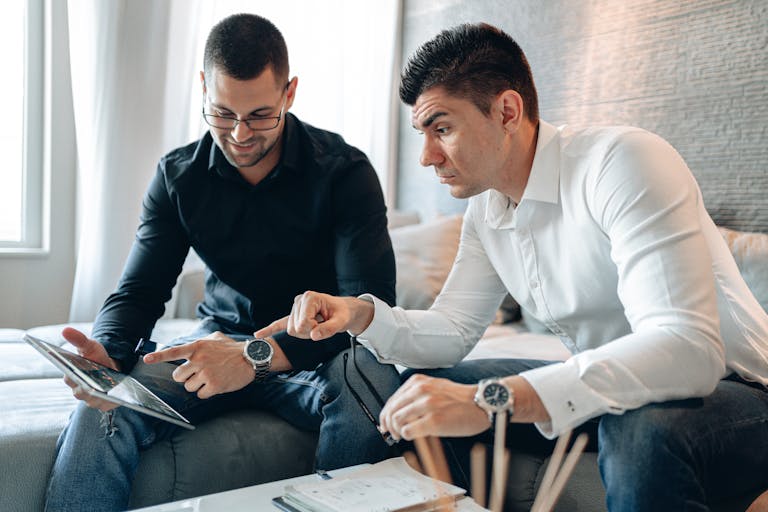
Sympathy and empathy are not the same thing, even though people use them interchangeably every day. Sympathy means acknowledging someone’s pain from a distance, offering care without fully entering their emotional experience. Empathy means stepping into that experience with them, feeling alongside them rather than simply feeling for them.
That distinction sounds subtle on paper. In practice, it reshapes every relationship you have.
Somewhere in my late thirties, sitting across from a client whose company was hemorrhaging market share after a botched campaign launch, I realized I had spent years offering sympathy when what people actually needed was empathy. I said the right things. I expressed concern. I offered solutions. What I failed to do was sit in the discomfort of what that moment actually felt like for him. The difference between those two responses, I would come to understand, is enormous.

If you identify as a highly sensitive person or an introvert, this topic probably resonates at a deeper level than most. Sensitive people often feel this distinction in their bodies before they can articulate it intellectually. Our broader HSP and Highly Sensitive Person hub explores how sensitivity shapes the way we process the world around us, and understanding the difference between sympathy and empathy sits at the center of that conversation.
What Does It Actually Mean to Sympathize With Someone?
Sympathy is an acknowledgment of another person’s emotional state. You recognize that someone is suffering, grieving, or struggling, and you respond with care. You might say “I’m so sorry for your loss” or “That sounds incredibly hard.” The emotional response is genuine, but it originates from your own perspective, not from a place of shared experience.
What drains your social battery?
Not all social exhaustion is the same. Our free quiz identifies your specific drain pattern and gives you personalised recharging strategies.
Find Your Drain PatternUnder 2 minutes · 8 questions · Free
There is nothing wrong with sympathy. It is an important social and emotional function. A sympathy card, a kind word after a difficult diagnosis, a hand on someone’s shoulder after a loss, these gestures carry real meaning. Sympathy communicates that you see someone’s pain and that it matters to you.
What sympathy does not do is close the emotional distance between two people. You are standing at the edge of someone’s experience, looking in with care and concern. That positioning, while warm, keeps a boundary intact. And sometimes that boundary is appropriate. You cannot and should not fully absorb every difficult emotion you encounter. Sympathy allows you to respond with kindness while maintaining your own emotional footing.
In my advertising agency days, sympathy was the default register of most professional interactions. A client lost a key team member? Sympathetic acknowledgment before getting back to the campaign brief. A colleague was going through a divorce? A sincere “I’m sorry, let me know if you need anything” before the next meeting started. The culture of business rewarded efficient, contained emotional responses. Sympathy fit that mold perfectly.
How Is Empathy Different From Sympathy?
Empathy requires something more demanding: perspective-taking. It asks you to set aside your own frame of reference and genuinely try to understand what another person is experiencing from inside their reality. Brené Brown’s widely cited description captures it well: sympathy drives disconnection, while empathy fuels connection. Empathy says “I hear you, and I’m in this with you.”
A 2019 study published in PubMed examining empathic accuracy found that the ability to correctly identify another person’s emotional state is a distinct cognitive and emotional skill, one that varies significantly across individuals and contexts. Empathy is not simply a feeling that washes over you. It involves active attention, emotional regulation, and a willingness to sit with discomfort that isn’t yours.
Researchers also distinguish between two forms of empathy. Affective empathy refers to the automatic, emotional resonance you feel when you witness someone else’s pain, that visceral response when you see someone cry and feel a pull in your own chest. Cognitive empathy is the deliberate process of understanding another person’s thoughts and feelings intellectually, even when you don’t share their emotional response instinctively.
Highly sensitive people often experience strong affective empathy almost involuntarily. The line between their own emotions and someone else’s can blur in ways that are both a gift and a genuine challenge. If you’ve ever wondered whether your emotional sensitivity crosses into something more, the comparison between introversion and HSP traits offers useful context for understanding where your wiring sits on that spectrum.
For me, cognitive empathy was the skill I had to deliberately develop. My INTJ nature meant I could analyze a situation with precision, map out what someone was probably feeling, and respond accordingly. What I was slower to do was feel it with them rather than just about them. That distinction took years to appreciate.
Why Do So Many People Confuse Sympathy and Empathy?
Part of the confusion is linguistic. Both words involve emotional responsiveness to another person’s experience, and both are associated with kindness and care. In everyday conversation, the nuance gets lost. We say “I sympathize with your situation” when we mean “I understand what you’re going through,” which is actually closer to empathy.
Part of it is also cultural. Many of us were raised in environments where emotional containment was valued over emotional attunement. Sympathy was modeled as the appropriate response to someone else’s pain: acknowledge it, offer support, move on. The deeper work of empathy, sitting with discomfort, resisting the urge to fix or reframe, staying present without an agenda, was rarely taught explicitly.
A 2024 study in Frontiers in Psychology explored how individual differences in emotional processing affect empathic responses, finding that people with higher sensitivity to their own internal states tend to show stronger empathic accuracy. This suggests that the capacity for genuine empathy is partly dispositional, and partly a practiced skill.
In agency life, I watched talented people confuse the two constantly. A creative director would offer beautifully worded sympathy to a client in crisis while missing entirely what the client actually needed, which was to feel understood before any solutions were offered. The sympathy was sincere. The empathy was absent. And the client could feel the difference, even if they couldn’t name it.
How Does This Difference Show Up in Close Relationships?
Nowhere does the sympathy and empathy difference matter more than in intimate relationships. Sympathy can feel hollow to a partner who needs to feel truly seen. When someone shares a fear or a wound and receives a well-meaning “that’s really tough, you’ll get through it,” they often feel more alone than before they spoke. The response was kind. It just didn’t land where they needed it to.
Empathy in close relationships requires a specific kind of emotional courage: the willingness to stop problem-solving long enough to simply be present. It means resisting the instinct to minimize (“at least…”), compare (“I went through something similar once…”), or reassure prematurely (“everything will work out”). Those responses, however well-intentioned, redirect attention away from the other person’s experience and back toward your own comfort.
For highly sensitive people, this dynamic plays out in particularly complex ways. The depth of feeling that comes with high sensitivity creates both a capacity for profound empathic connection and a vulnerability to emotional overwhelm. Understanding how HSPs experience intimacy sheds light on why sensitive people often feel the absence of genuine empathy so acutely, and why they may pull back when they sense they’re only receiving sympathy.
My wife has told me more than once that I’m better at solving problems than sitting with them. She’s right. Early in our marriage, my default response to her distress was to generate options. Efficient. Logical. Completely beside the point. Learning to stay present without immediately reaching for a solution was one of the more humbling personal growth experiences I’ve had. It required me to recognize that empathy isn’t about being useful. It’s about being with someone.

Can You Have Too Much Empathy?
Yes, and this is a question that matters enormously for sensitive people. Empathy without boundaries becomes emotional absorption. When you feel so deeply alongside another person that you lose track of where their experience ends and yours begins, you’re no longer empathizing, you’re merging. That distinction is critical for anyone who identifies as highly sensitive or empathic.
A useful clarification from Psychology Today’s Empath Survival Guide notes that while highly sensitive people process emotional information deeply, empaths may take this further, actually absorbing the emotions of others into their own bodies. Whether you identify as HSP, empath, or somewhere in between, the risk of emotional depletion is real when empathy lacks a container.
Compassion fatigue is the clinical term for what happens when sustained empathic engagement depletes a person’s emotional reserves. It’s well-documented in caregiving professions, but it shows up in personal relationships too. A partner, parent, or friend who consistently prioritizes deep emotional attunement without replenishing their own reserves will eventually find that the well runs dry.
It’s also worth noting that high sensitivity is not inherently pathological. A Psychology Today piece examining high sensitivity makes the important point that sensitivity is a neurobiological trait, not a symptom of unresolved trauma. That framing matters because it shifts the conversation from “what’s wrong with you” to “how do you work with your wiring.”
Partners of highly sensitive people often wrestle with this balance too. The experience of living with a highly sensitive person includes learning how to support deep empathic engagement without inadvertently draining the person you love. That requires understanding, not just sympathy.
How Does the Sympathy and Empathy Difference Play Out in Relationships With Different Personality Types?
Introvert-extrovert dynamics add another layer to this conversation. Extroverts often process emotions externally, talking through feelings in real time, seeking responsiveness and engagement. Introverts tend to process internally first, which can look like emotional distance to a partner who needs immediate empathic presence.
Neither approach is wrong, but they can create friction when each person interprets the other’s style as indifference or overwhelm. An introvert who needs time to process before responding may offer delayed empathy that feels like sympathy to a partner who needed connection in the moment. An extrovert who processes out loud may feel like they’re flooding an introverted partner who needs quiet to access their own empathic response.
The dynamics become even more nuanced when high sensitivity enters the picture. Exploring how HSPs function in introvert-extrovert relationships reveals that sensitive people often serve as emotional anchors in these partnerships, which is a strength that can become exhausting without conscious management.
In my agency years, I managed teams that spanned the full personality spectrum. The extroverted account managers on my staff were often faster to offer sympathy, quick with words, expressive, responsive in the room. The introverted strategists and creatives tended to hold back, observe, and then offer something more considered. Both approaches had value. What I noticed was that the introverts, when they did engage emotionally, often went deeper. They had been listening at a level that allowed for genuine perspective-taking rather than reflexive reassurance.
What Does Empathy Look Like in Practice?
Empathy in practice is less about what you say and more about how you hold space. It starts with full attention, not the performative kind where you’re nodding while mentally composing your response, but genuine presence. It continues with curiosity rather than assumptions. Instead of projecting what you would feel in someone else’s situation, you stay open to the reality that their experience might be entirely different from what you’d expect.
Reflective listening is one of the most concrete empathy skills. Paraphrasing what someone has shared, not to parrot it back, but to demonstrate that you’ve genuinely received it, creates the experience of being understood. “So what I’m hearing is that you felt invisible in that meeting, not just frustrated but actually unseen” lands very differently than “That sounds frustrating.”
Tolerating silence is another. One of the most empathic things you can do is resist the urge to fill emotional space with words. Silence, when it’s offered with warmth rather than withdrawal, communicates that you are present and that the other person doesn’t need to perform or explain themselves into a resolution. That kind of stillness comes more naturally to introverts than we often give ourselves credit for.

Parenting offers some of the most demanding empathy practice available. Children need to feel understood before they can accept guidance, and they have a finely tuned radar for the difference between genuine attunement and managed sympathy. For sensitive parents, the challenge is often the reverse: not accessing empathy, but managing the intensity of it. Thinking through what parenting looks like as a highly sensitive person puts this dynamic in clear relief.
Does Your Career Shape How You Express Empathy and Sympathy?
Significantly, yes. Certain professions reward sympathy because it’s efficient and bounded. Others require genuine empathy as a core competency. The gap between those two demands has real consequences for how people experience their work and how sustainable their careers are over time.
Sensitive people often gravitate toward work that calls for deep human attunement: counseling, education, healthcare, creative fields, advocacy. These roles draw on empathic capacity as a professional asset. They also carry a higher risk of emotional depletion when the organizational culture doesn’t support the kind of recovery time sensitive workers need.
Understanding which career paths align with highly sensitive traits matters not just for job satisfaction but for long-term sustainability. The difference between a role that uses your empathic capacity and one that exploits it without replenishment is the difference between meaningful work and chronic burnout.
Running an advertising agency meant I was constantly managing the emotional tenor of client relationships. Clients who felt genuinely understood, not just professionally serviced, stayed longer, gave more honest feedback, and extended more grace when things went sideways. The empathic investment paid dividends that sympathy alone never would have generated. That wasn’t a soft skill. It was a business strategy, one I came to only after years of doing it the other way.
A Frontiers in Psychology analysis of emotional processing and interpersonal outcomes found that individuals who demonstrate higher empathic accuracy report stronger relationship quality and greater professional effectiveness in roles requiring sustained human interaction. The data supports what experience teaches: empathy is a functional advantage, not just a moral virtue.
How Can You Develop Stronger Empathy Without Losing Yourself?
success doesn’t mean feel everything at maximum intensity. That path leads to overwhelm and withdrawal. The goal is to develop what might be called grounded empathy: the capacity to genuinely enter another person’s experience while maintaining enough of your own center to be useful to them.
Mindfulness practices build this capacity by strengthening your awareness of your own internal state. When you know what you’re feeling, you’re less likely to confuse your emotions with someone else’s. That clarity creates space for genuine empathic presence without the blurring that leads to emotional absorption.
Time in nature has also been documented as a meaningful support for emotional regulation. Yale’s e360 publication on ecopsychology details how immersion in natural environments reduces stress hormones and restores attentional capacity, both of which are prerequisites for sustained empathic engagement. For introverts and sensitive people who need genuine recovery time, this isn’t a luxury. It’s maintenance.
Naming the difference between sympathy and empathy in your own relationships is also a practice. Start noticing when you’re offering acknowledgment from a distance versus when you’re genuinely entering someone’s experience. Neither is wrong in every context, but conscious choice beats unconscious default.

What I’ve found, after years of working with this distinction personally and professionally, is that empathy is less a feeling you have and more a choice you make about where to place your attention. Sympathy says “I care about your pain.” Empathy says “I’m willing to be changed by it.” That willingness, offered sustainably, is one of the most powerful things one person can give another.
Explore more resources on sensitivity, emotional depth, and self-understanding in our complete HSP and Highly Sensitive Person hub.
Running on empty?
Five drain profiles, each with specific triggers, warning signs, and a recharging playbook.
Take the Free QuizUnder 2 minutes · 8 questions · Free
About the Author
Keith Lacy is an introvert who’s learned to embrace his true self later in life. After 20 years in advertising and marketing leadership, including running agencies and managing Fortune 500 accounts, Keith now channels his experience into helping fellow introverts understand their strengths and build fulfilling careers. As an INTJ, he brings analytical depth and authentic perspective to every article, drawing from both professional expertise and personal growth.
Frequently Asked Questions
What is the simplest way to explain the difference between sympathy and empathy?
Sympathy means caring about someone’s pain from your own perspective, acknowledging their difficulty while remaining emotionally separate from it. Empathy means stepping into their perspective and trying to feel what they’re feeling from inside their experience. Sympathy says “I feel for you.” Empathy says “I feel with you.” Both have value, but they create very different experiences for the person receiving them.
Can a person be sympathetic but not empathetic?
Yes, absolutely. Many people offer genuine sympathy, sincere care and concern, without being able to access the deeper perspective-taking that empathy requires. This is common in professional environments where emotional efficiency is valued, or in personality types that process feelings analytically rather than experientially. Sympathy is not a lesser quality than empathy. It’s simply a different kind of emotional response, one that maintains more distance between the giver and the receiver’s experience.
Are highly sensitive people naturally more empathetic than others?
Highly sensitive people tend to process emotional information more deeply and are often quicker to notice subtle cues in others’ expressions, tone, and behavior. This can translate into stronger empathic capacity, particularly affective empathy, the automatic emotional resonance with another person’s state. That said, sensitivity and empathy are not identical. A 2019 PubMed study on empathic accuracy found that empathy involves both dispositional traits and practiced skills, meaning it can be developed regardless of baseline sensitivity level.
Is it possible to become emotionally exhausted from too much empathy?
Yes, and it’s well-documented. Compassion fatigue occurs when sustained empathic engagement depletes a person’s emotional reserves faster than they can be replenished. This is particularly common in caregiving professions and in relationships where one person consistently carries the emotional weight. For highly sensitive people, who process emotional information more intensely, the risk is amplified. Developing grounded empathy, the ability to be genuinely present without absorbing another person’s emotions as your own, is essential for long-term sustainability.
How can introverts use their natural traits to express empathy more effectively?
Introverts bring several natural advantages to empathic engagement. Deep listening, comfort with silence, preference for one-on-one connection, and a tendency toward careful observation all support genuine empathy. Where introverts sometimes struggle is in the real-time, expressive responsiveness that some people associate with empathy. The solution isn’t to perform emotions you don’t feel in the moment, but to communicate your attunement in ways that feel authentic: a thoughtful follow-up message, a quiet acknowledgment that you heard what was said, or simply staying present without rushing toward resolution.