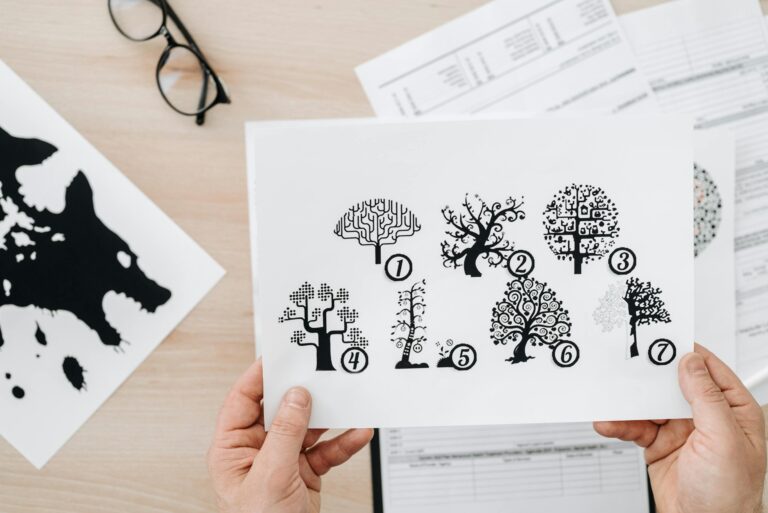

Personality assessments beyond the Myers-Briggs Type Indicator have multiplied significantly over the past decade, giving curious minds more ways than ever to examine how they think, connect, and work. Quizzes like Myers-Briggs range from rigorous psychometric instruments used by organizational psychologists to quick online tools that take five minutes and deliver surprisingly accurate insights. What matters is knowing which ones actually measure something real and how to use what you find.
Some of the most useful alternatives include the Big Five personality model, the Enneagram, DISC assessments, StrengthsFinder, and the TypeFinder. Each approaches personality from a different angle, and for introverts especially, exploring multiple frameworks can reveal dimensions of yourself that a single test might miss entirely.

My own relationship with personality testing started in the middle of a career that looked confident from the outside and felt genuinely confusing from the inside. Running an advertising agency meant I was constantly surrounded by people who seemed to thrive on rapid-fire brainstorming sessions, client dinners that stretched past midnight, and the kind of spontaneous energy that leaves me quietly exhausted. I took my first proper personality assessment not because I was curious about psychology but because I needed to understand why I kept feeling like I was performing a version of myself I hadn’t quite agreed to play. What I found changed how I lead, how I hire, and honestly, how I talk to myself on difficult days.
If you’re exploring the broader world of personality theory and want context for where these assessments fit, our MBTI General and Personality Theory hub covers the full landscape of frameworks, cognitive functions, and type theory in one place. It’s a useful companion to everything we’ll cover here.
Why Look Beyond the Myers-Briggs in the First Place?
Myers-Briggs has a complicated reputation in academic psychology circles, and honestly, some of that skepticism is fair. A 2005 American Psychological Association analysis noted that while MBTI has widespread organizational use, its test-retest reliability raises questions, with a meaningful percentage of people receiving different type results when retested just weeks later. That doesn’t make it useless. It means treating it as a single complete picture of who you are is the wrong approach.
What Myers-Briggs does well is give people accessible language for tendencies they’ve felt but never named. Hearing for the first time that introversion isn’t shyness or social anxiety, that it’s about where you draw your energy, can genuinely shift how someone understands their own behavior. That kind of insight has real value. The limitation comes when people treat their four-letter type as fixed and absolute, rather than as one useful lens among several.
The distinction between E vs I in Myers-Briggs is probably the most widely understood dimension of the entire framework. Most people can immediately identify whether they lean toward extraversion or introversion. Yet even that single dimension gets more nuanced when you start looking at cognitive functions, which is where the deeper architecture of personality actually lives. Other assessment systems approach that architecture differently, and comparing what multiple tools reveal about you tends to produce more accurate self-knowledge than relying on any one framework alone.
What Is the Big Five and How Does It Compare?
The Big Five personality model, also called OCEAN, is the framework most academic psychologists consider the most empirically supported personality assessment available. It measures five broad dimensions: Openness to experience, Conscientiousness, Extraversion, Agreeableness, and Neuroticism. A 2020 study published in PLOS ONE via PubMed Central found that Big Five traits show meaningful cross-cultural consistency, which gives the model credibility that more culturally specific frameworks sometimes lack.
What I appreciate about the Big Five from a practical standpoint is that it doesn’t sort you into categories. You don’t come out labeled an INTJ or an ENFP. Instead, you get scores along five continuous spectrums, which more accurately reflects how personality actually works. Most people aren’t fully introverted or fully extraverted. They sit somewhere on a continuum, and their position on that continuum can shift meaningfully depending on context, life stage, and environment.
During my agency years, I would have scored high on Conscientiousness and Openness, moderately low on Extraversion, and probably higher on Neuroticism than I’d have liked to admit at the time. That combination explains a lot about why I was effective at building systems and creative strategy but found the relentless social performance of client relationship management genuinely draining. The Big Five would have named that clearly. Myers-Briggs named pieces of it. Both had value.

The Enneagram: Why Motivation Matters More Than Behavior
The Enneagram describes nine core personality types, each defined not primarily by behavioral tendencies but by the underlying fear and desire that drives behavior. That distinction is significant. Two people can behave identically in a meeting, both staying quiet, both listening carefully, both speaking only when they have something precise to add. Myers-Briggs might type them similarly. The Enneagram might reveal they’re operating from completely different internal motivations, one from a desire for competence, one from a fear of conflict.
For introverts who have spent years trying to understand why they respond to certain situations the way they do, the Enneagram often produces those “finally, someone named it” moments that feel almost physically relieving. I’m a Type 5 on the Enneagram, the Investigator, which describes someone who manages anxiety by withdrawing to gather more information and understanding before acting. Reading that description in my early forties felt less like taking a personality test and more like reading a letter someone had written specifically about me.
The Enneagram doesn’t have the same level of empirical validation as the Big Five, and that’s worth knowing. Its value lies more in the depth of insight it provides about motivation and growth patterns than in statistical reliability. A 2008 study in the Journal of Cross-Cultural Psychology via PubMed Central explored how personality frameworks translate across cultures, a useful reminder that no single assessment captures the full complexity of a human being.
DISC: The Assessment Built for the Workplace
DISC measures four behavioral tendencies: Dominance, Influence, Steadiness, and Conscientiousness. It was designed specifically for professional and organizational contexts, which makes it one of the most practically useful assessments for understanding workplace dynamics. Many Fortune 500 companies use DISC for team building, communication training, and leadership development, and I’ve sat in more than a few agency conference rooms watching teams work through their results together.
What DISC does exceptionally well is make interpersonal dynamics visible and discussable. When a team understands that their high-D project lead wants direct communication and quick decisions while their high-S team member needs time to process change before committing, they have a framework for reducing friction without anyone having to feel criticized. That kind of practical application is where DISC earns its place in organizational settings.
For introverts specifically, DISC often surfaces the Steadiness and Conscientiousness dimensions prominently. High-S types tend to be reliable, patient, and deeply loyal, qualities that organizations frequently undervalue compared to the high-energy visibility of high-I types. Seeing those strengths named and validated in a workplace context can genuinely shift how an introvert presents and advocates for themselves. I’ve watched that happen in team debrief sessions more times than I can count.
According to 16Personalities research on team collaboration, understanding personality differences within teams correlates with meaningfully better communication outcomes and reduced interpersonal conflict. DISC is one of the most direct tools for creating that understanding at the team level.
CliftonStrengths: What You Do Well Instead of Who You Are
CliftonStrengths, formerly called StrengthsFinder, takes a different approach than most personality assessments. Instead of describing personality dimensions or types, it identifies your top talent themes from a list of 34 possibilities. The underlying philosophy is that people grow more by developing their natural strengths than by trying to fix their weaknesses.
That philosophy resonates deeply with how I’ve come to think about introversion. Spending years trying to become more extraverted, to network more enthusiastically, to be the loudest voice in the room, produced a version of me that was competent but chronically tired. Redirecting that energy toward what I actually did well, building deep client relationships, thinking through complex strategy problems, writing and communicating with precision, produced results that felt sustainable and genuinely satisfying.
Common strength themes among introverts include Intellection (thinking deeply and enjoying mental activity), Input (collecting information and ideas), Deliberative (careful decision-making), Learner (driven by the process of learning), and Analytical (seeking to understand patterns and causes). Seeing those themes validated as genuine professional strengths rather than weaknesses to compensate for can be quietly powerful.

Cognitive Function Tests: The Layer Beneath the Letters
One of the most significant limitations of standard MBTI assessments is that they measure four dichotomies without revealing the cognitive functions underneath. Knowing you’re an INTJ tells you something. Understanding that your dominant function is Introverted Intuition, supported by Extraverted Thinking, gives you a much richer picture of how your mind actually processes information and makes decisions.
Cognitive function tests are designed specifically to surface that underlying architecture. If you’ve taken Myers-Briggs before and felt like the result was close but not quite right, a cognitive functions test often resolves that ambiguity by revealing which mental processes you actually lead with, rather than just which behavioral preferences you report.
The cognitive function framework also explains why two people with the same four-letter type can feel quite different from each other. An INTJ and an ENTJ both use Extraverted Thinking prominently, but in different positions in their function stack. That difference shapes how they lead, how they communicate, and what kinds of problems they find energizing versus draining.
Similarly, understanding functions like Extraverted Sensing helps explain why certain types are highly attuned to their immediate physical environment and present-moment experience, while others, particularly those with Se lower in their stack, process the world through a more filtered, internalized lens. For introverts who’ve always felt slightly out of step with a culture that prizes immediate reaction and sensory engagement, that explanation can be genuinely clarifying.
And if you’ve ever suspected your original MBTI result might not have been accurate, the cognitive functions approach is often what finally resolves it. Many people discover they’ve been mistyped on MBTI because they answered based on behavior rather than underlying cognitive preference, a common and completely understandable mistake.
The TypeFinder and Online Alternatives Worth Knowing
Truity’s TypeFinder is probably the most carefully constructed online alternative to the official MBTI assessment. It measures the same sixteen personality types using questions designed to reduce the social desirability bias that affects many self-report personality tests. The result tends to be more stable across retests than many free online versions, and Truity publishes detailed breakdowns of each type that go beyond the standard four-letter summary.
According to Truity’s research on deep thinking patterns, certain personality types consistently show stronger preferences for internal processing, abstract reasoning, and reflective analysis over immediate action. That profile maps closely to what introverts often experience as their natural operating mode, though it’s worth remembering that introversion and deep thinking aren’t perfectly synonymous.
Other online options worth considering include the 16Personalities assessment, which blends MBTI-style typing with Big Five elements to produce a more nuanced result than pure dichotomy-based tests. Their global database also provides interesting context: 16Personalities’ global personality data shows meaningful variation in type distribution across cultures, which challenges the assumption that personality frameworks translate universally without adjustment.
If you haven’t yet identified your Myers-Briggs type or want to revisit it with fresh eyes, our free MBTI personality test is a good starting point before layering in the additional frameworks covered here.
How Thinking Functions Shape What Tests Reveal About You
One pattern I’ve noticed across years of working with personality frameworks, both personally and in team settings, is that how you think shapes how you respond to personality tests themselves. People who lead with Introverted Thinking often approach assessment questions with a kind of analytical skepticism. They read each question carefully, notice the assumptions embedded in it, and sometimes find themselves unable to answer straightforwardly because the question feels like it’s forcing a false choice.
That skepticism isn’t a problem with the person. It’s actually a fairly accurate expression of how Ti-dominant types process everything, by pulling apart the internal logic of a system before accepting its conclusions. Recognizing that tendency in yourself can help you take personality assessments more productively, answering based on your most natural default rather than your most considered philosophical position.
I had a creative director at one of my agencies who spent forty-five minutes on a fifteen-minute DISC assessment because she kept wanting to write in the margins. Every question felt incomplete to her. She was an INTP, Ti-dominant, and she wasn’t being difficult. She was being exactly herself. Once we understood that, her apparent resistance to process and structure made complete sense, and we stopped trying to manage it away and started designing her role around it instead.

Using Multiple Assessments Without Getting Lost in Them
There’s a real risk in personality assessment culture of becoming so absorbed in frameworks and types that self-knowledge becomes an intellectual exercise disconnected from actual change. I’ve seen people collect personality results the way others collect certifications, accumulating labels without integrating the insights into how they actually live and work.
The more useful approach is to treat each assessment as a hypothesis rather than a verdict. Take the Big Five and notice which dimensions feel accurate and which feel off. Take an Enneagram test and sit with whether the type description captures something true about your underlying motivation. Work through a cognitive functions assessment and see whether it resolves any confusion your MBTI result left behind. Then ask yourself what all of it suggests about one specific area you want to develop or one pattern you want to change.
For me, the combination of INTJ typing, Type 5 Enneagram, and high Conscientiousness on the Big Five painted a consistent picture of someone who processes deeply, moves carefully, and can struggle with the vulnerability of acting before feeling fully prepared. That picture helped me stop criticizing myself for not being more spontaneous and start designing workflows and communication styles that actually fit how my mind works. The agency performed better for it. My team felt better led. And I stopped ending every Friday feeling like I’d spent the week pretending to be someone else.
A 2005 APA analysis on self-knowledge and personality assessment found that structured reflection tools, including personality frameworks, help people develop more accurate self-concepts when used alongside genuine introspection rather than as substitutes for it. That distinction matters. The test doesn’t tell you who you are. It gives you language and structure to examine who you already are more clearly.
What Introverts Often Discover When They Go Deeper
Across every personality framework that includes an introversion dimension, introverts consistently show up as more likely to engage in deep internal processing, more sensitive to environmental stimulation, and more oriented toward meaning and depth in their relationships and work. Those aren’t weaknesses dressed up in polite language. They’re genuine cognitive and temperamental strengths that certain environments reward and others systematically undervalue.
WebMD’s overview of empathic sensitivity touches on how certain people process emotional and environmental information more intensely than others, a quality that often correlates with introversion and that multiple personality frameworks capture in different ways. Whether you call it high Openness, Introverted Intuition, or simply introversion, the underlying experience tends to be consistent: a rich inner world that processes more than it shows.
What introverts often discover when they move beyond a single personality assessment is that the frameworks converge. The Big Five shows low Extraversion and high Openness. The Enneagram reveals a type driven by the desire for understanding. CliftonStrengths surfaces Intellection and Input in the top five. Cognitive functions show dominant introverted perceiving or judging functions. All of it points in the same direction, and seeing that convergence tends to produce a kind of settled confidence that one test result alone rarely delivers.
Small business owners who take personality seriously as a leadership tool report measurably better team outcomes, according to SBA research on small business leadership practices. For introverted leaders especially, understanding your own type and the types of the people you lead can be one of the highest-leverage investments you make in your business.

Which Assessment Should You Start With?
Start with Myers-Briggs or a TypeFinder equivalent if you haven’t already. It gives you accessible language and a community of people who speak the same framework, which makes the insights easier to apply in conversations about work and relationships. From there, layer in a cognitive functions assessment to see whether your four-letter type holds up when examined at the function level.
Add the Big Five if you want empirical grounding and a more nuanced picture of where you fall on continuous personality dimensions rather than binary categories. Take the Enneagram when you’re ready to examine motivation rather than just behavior, particularly if you’ve found yourself wondering why you keep responding to certain situations in ways that don’t quite align with your values or intentions.
Use CliftonStrengths if your primary goal is professional development and you want a framework specifically designed to help you build on what you do naturally well. Use DISC if you’re working on team dynamics or communication and want a tool that translates easily into practical workplace conversations.
None of these assessments will tell you everything about yourself. Each one will tell you something true. Used together, with genuine reflection rather than just result-collecting, they build a picture of who you are that’s accurate enough to actually change how you live and work. That’s worth the time they take.
Find more frameworks, type descriptions, and personality theory resources in our complete MBTI General and Personality Theory hub.
About the Author
Keith Lacy is an introvert who’s learned to embrace his true self later in life. After 20 years in advertising and marketing leadership, including running agencies and managing Fortune 500 accounts, Keith now channels his experience into helping fellow introverts understand their strengths and build fulfilling careers. As an INTJ, he brings analytical depth and authentic perspective to every article, drawing from both professional expertise and personal growth.
Frequently Asked Questions
Are there personality tests more accurate than Myers-Briggs?
The Big Five personality model has stronger empirical support than Myers-Briggs and is the framework most academic psychologists consider the most reliable for measuring personality. That said, accuracy depends on what you’re measuring. For understanding cognitive processing patterns and type dynamics, a cognitive functions assessment often produces more nuanced and stable results than standard MBTI dichotomy tests. The most useful approach is to treat different assessments as complementary tools rather than competing ones.
What is the Enneagram and how does it differ from Myers-Briggs?
The Enneagram describes nine personality types defined primarily by core fears and desires rather than behavioral tendencies. Where Myers-Briggs focuses on how you perceive information and make decisions, the Enneagram focuses on why you behave the way you do at a motivational level. Many people find that using both together produces deeper self-knowledge than either framework provides alone. Myers-Briggs tends to be more useful for understanding cognitive style and communication preferences, while the Enneagram is often more revealing about emotional patterns and growth edges.
Can introverts score as extraverts on personality tests?
Yes, and it happens more often than people expect. Introverts who have spent years adapting to extraverted workplace cultures sometimes answer personality questions based on their learned behavior rather than their natural preference. This is one reason why cognitive function assessments can be more revealing than dichotomy-based tests. An introvert who tests as an extravert on standard MBTI often finds that their cognitive function profile clearly reflects introverted processing preferences. Taking multiple assessments and comparing where they converge and diverge usually resolves the ambiguity.
Is CliftonStrengths useful for introverts in the workplace?
CliftonStrengths is particularly valuable for introverts because it reframes the conversation from compensating for weaknesses to building on natural talents. Common introvert strength themes like Intellection, Input, Deliberative, and Analytical are treated as genuine professional assets rather than personality quirks to manage. In workplace settings, having a shared strengths language helps introverts articulate the value they bring in ways that resonate with colleagues and managers who might otherwise overlook quieter contributions.
How many personality tests should I take?
Two to four assessments covering different dimensions of personality tends to produce the most useful picture without becoming overwhelming. A good starting combination is Myers-Briggs or TypeFinder for type and cognitive style, the Big Five for empirical grounding, and either the Enneagram or CliftonStrengths depending on whether your primary goal is understanding motivation or developing professional strengths. success doesn’t mean accumulate labels but to find frameworks that illuminate patterns you can actually use to make better decisions about how you work, communicate, and grow.