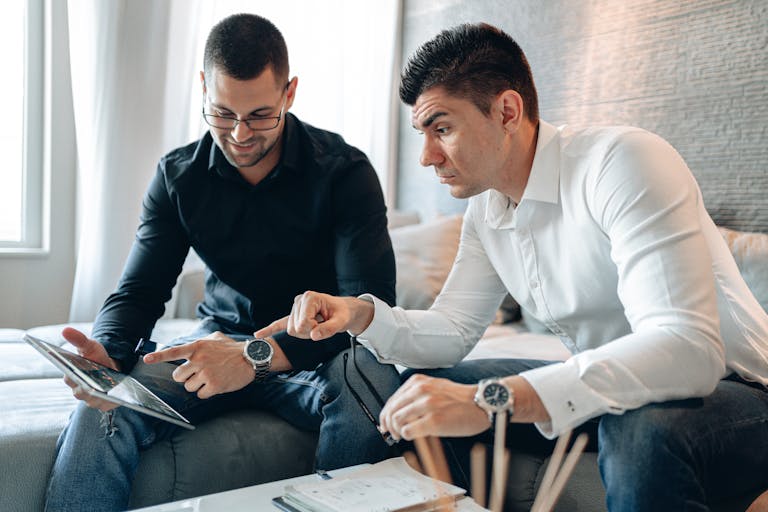
Personality disorder testing isn’t a single quiz you take on a Saturday afternoon and walk away with a neat diagnosis. It’s a layered, clinical process that combines structured interviews, standardized assessments, and careful observation over time. If you’re wondering how to test for personality disorders, whether for yourself or someone close to you, the honest answer is that formal diagnosis requires a licensed mental health professional, but understanding the process can help you know what to expect and how to prepare.
Most clinical evaluations draw on tools like the Minnesota Multiphasic Personality Inventory (MMPI), the Millon Clinical Multiaxial Inventory (MCMI), or structured diagnostic interviews aligned with the DSM-5 criteria. These aren’t personality type assessments. They measure patterns of thought, emotion, and behavior that cause significant distress or impairment, and they require interpretation by a trained clinician who understands context, history, and the full picture of a person’s life.
That context piece matters more than most people realize. And for introverts, especially those of us who’ve spent years being misread by the people closest to us, understanding what these evaluations actually measure can feel like both a relief and a revelation.
This topic sits close to the heart of what I explore in the Introvert Family Dynamics and Parenting hub, because the question of personality disorders rarely exists in isolation. It surfaces in family systems, in parenting relationships, in the stories we tell ourselves about why certain dynamics feel so difficult to shift. Understanding the testing process is one piece of a much larger conversation about how introverts move through family life with clarity and self-awareness.

Why Do Introverts Often Find Themselves Asking This Question?
My experience running advertising agencies for two decades gave me a front-row seat to how personality differences create friction, sometimes quietly, sometimes explosively. I managed creative teams, account directors, and client relationships simultaneously. Certain dynamics repeated themselves in ways I couldn’t explain through skill gaps or communication styles alone. Some people seemed to operate from a fundamentally different emotional rulebook, and no amount of feedback or restructuring changed that.
What’s your personality type?
Take our free 40-question assessment and get a detailed personality profile with dimension breakdowns, context analysis, and personalised insights.
Discover Your Type8-12 minutes · 40 questions · Free
That same pattern shows up in family systems. Introverts, who tend to process experiences deeply and observe carefully, often notice when something feels consistently off in a relationship. We’re wired to sit with complexity rather than dismiss it. A 2020 study published in Frontiers in Psychology found that individuals high in trait introspection, a quality common among introverts, are more likely to seek psychological explanations for interpersonal difficulties they experience. That’s not pathologizing. That’s pattern recognition.
So when an introvert starts researching personality disorder testing, it’s often because they’ve been living inside a dynamic that doesn’t make sense, and they’re trying to find language for something they’ve been feeling for years. Sometimes that question is about a family member. Sometimes it’s about themselves. Both are valid starting points.
The challenge is that introverted traits, including social withdrawal, preference for solitude, emotional reserve, and deep sensitivity, can sometimes be misread by clinicians unfamiliar with introversion as symptoms of personality pathology. This is why understanding the testing process matters so much before you walk into an evaluation room, or before you encourage someone you love to do the same. Temperament and personality disorders are genuinely different things, as MedlinePlus explains in their overview of temperament and genetics, and any good clinician will work to distinguish between the two.
What Does a Formal Personality Disorder Evaluation Actually Include?
A formal evaluation for personality disorders typically unfolds across several sessions, not a single appointment. consider this that process generally looks like in clinical practice.
Clinical Interview and History
The first stage is usually a comprehensive clinical interview. A psychologist or psychiatrist will ask about your developmental history, family background, relationship patterns, work history, and any previous mental health treatment. They’re looking for long-standing patterns, not situational responses. Personality disorders, by definition in the DSM-5, involve enduring patterns that are inflexible and pervasive across many contexts, beginning in adolescence or early adulthood.
This is where an introvert’s tendency toward careful self-reflection can actually be an asset. Being able to articulate your own patterns, even the uncomfortable ones, gives a clinician richer material to work with. That said, it can also feel exposing in a way that’s genuinely hard for those of us who guard our inner lives carefully.
Standardized Psychological Testing
Beyond the interview, clinicians often use standardized instruments. The MMPI-3 is one of the most widely used, a 335-item questionnaire that assesses a broad range of psychological functioning. The MCMI-IV focuses more specifically on personality pathology and aligns closely with DSM-5 diagnostic categories. The Personality Assessment Inventory (PAI) is another common tool.
These aren’t personality type tools like the ones you might find at 16Personalities or Truity. They’re clinical instruments designed to identify dysfunction, not preference. The distinction matters enormously, and a responsible clinician will explain that distinction clearly.
Collateral Information
In some cases, particularly with children or adolescents, clinicians may gather information from family members, teachers, or other people who know the individual well. This adds another layer of context, though it also introduces the complexity of perspective. What one family member describes as “controlling behavior” another might describe as “high standards.” A skilled clinician weighs these accounts carefully rather than taking any single narrative at face value.

How Does This Intersect With Introvert Family Dynamics?
Personality disorders don’t exist in a vacuum. They shape the entire texture of family life, the way conflict gets handled, the way love gets expressed, the way boundaries get set or violated. For introverts who are already managing the particular challenges of family dynamics, a personality disorder in the mix, whether their own or a family member’s, adds significant complexity.
I’ve written before about the specific challenges introverts face in family systems in the piece on introvert family dynamics and handling challenges, and what strikes me most is how often the difficulty isn’t simply about introversion versus extroversion. It’s about deeper patterns of relating that have nothing to do with energy preferences. A narcissistic parent doesn’t become easier to deal with just because you understand they’re an extrovert. A borderline family member’s emotional dysregulation doesn’t soften because you’ve learned to set better limits.
What does help is clarity. Knowing that what you’re experiencing has a name, that it follows recognizable patterns, and that those patterns respond to specific approaches, changes the way you show up in the relationship. It shifts you from reactive to intentional. For an INTJ like me, that shift from confusion to framework is genuinely powerful.
As Psychology Today’s overview of family dynamics notes, family systems develop their own rules and roles over time, and individual pathology ripples through those systems in ways that affect every member. Understanding that dynamic doesn’t mean accepting dysfunction. It means you can see it clearly enough to make informed choices about how to respond.
What Should Introverted Parents Know Before Pursuing an Evaluation?
Whether you’re seeking an evaluation for yourself, for your child, or trying to understand a co-parent’s behavior, there are a few things worth knowing before you begin.
First, diagnosis is not the destination. A diagnosis is a tool that points toward treatment. The most important question isn’t “does this person have a personality disorder” but “what kind of support would help this person and this family function better?” Framing the evaluation that way from the start keeps the focus where it belongs.
Second, introverted parents often carry a particular kind of guilt into this process. We wonder if our child’s struggles are a reflection of our quietness, our need for solitude, our discomfort with certain kinds of emotional expressiveness. The research doesn’t support that guilt. A 2020 study in PubMed Central on parenting styles and child outcomes found that warmth, consistency, and responsiveness matter far more than a parent’s social energy level. Being an introverted parent doesn’t predispose your child to personality pathology.
Third, the evaluation process itself can feel draining in ways that are specific to introversion. Multiple sessions with a stranger, answering deeply personal questions, having your history examined and categorized, all of that takes a particular kind of energy. Give yourself permission to go slowly, to ask questions between appointments, and to bring a trusted person with you if that helps.
If you’re an introverted parent specifically, the resource I’d point you toward is the complete guide to parenting as an introvert, which addresses the broader context of how introverted parents can show up fully for their children without losing themselves in the process. That foundation matters before you add the complexity of a clinical evaluation into the picture.

What Happens When a Teenager Is the Focus of the Evaluation?
Diagnosing personality disorders in adolescents is a genuinely complicated clinical territory. Most diagnostic frameworks are cautious about applying full personality disorder diagnoses to teenagers, partly because adolescence is developmentally a time of significant personality formation and flux. What looks like borderline personality disorder at sixteen might be a trauma response, might be developmental, might be something that resolves with the right support.
That said, early intervention matters. Patterns that go unaddressed in adolescence tend to solidify. So even if a clinician stops short of a full diagnosis, identifying the patterns and beginning treatment early makes a meaningful difference in long-term outcomes.
For introverted parents managing this with a teenager, the dynamics are particularly layered. Teens often resist evaluation. They may see it as an accusation rather than support. The way you frame the process, and the quality of your relationship with your teenager going into it, shapes how they engage with it. The article on how introverted parents can successfully parent teenagers gets into the specific relational dynamics that matter here, including how introverted parents can use their natural depth and listening ability to build the kind of trust that makes a teenager willing to engage with professional support.
One thing I noticed in my agency years that translates directly here: the people who were most resistant to feedback were almost always the ones who felt least safe. Safety, in the therapeutic context, means knowing that the evaluation is about understanding, not judgment. That’s a message introverted parents can communicate powerfully, because we genuinely mean it.
How Do Limits and Self-Protection Factor Into This Process?
One of the harder realities of having a family member with a personality disorder is that love and limits have to coexist. This is something introverts often struggle with, not because we lack backbone, but because we process relationships so deeply that setting firm limits feels like it contradicts the care we feel.
It doesn’t. Limits are, in fact, one of the most caring things you can offer someone whose disorder involves testing or crossing them. Personality disorders like borderline or antisocial often involve significant difficulties with relational limits, and consistent, compassionate limit-setting is part of how healthy relationships survive in those contexts.
For adult introverts managing family relationships where personality pathology is present, the piece on setting family limits as an adult introvert addresses the specific emotional and practical terrain of holding those lines without severing connection entirely. That balance is genuinely difficult, and it deserves its own careful attention.
At my agencies, I had to make peace with a version of this. There were clients and team members whose behavior patterns were genuinely disordered, not just difficult. Learning to set clear professional limits while maintaining a functional working relationship was one of the hardest skills I developed. What I found was that clarity, delivered calmly and consistently, worked better than any amount of emotional appeal or confrontation. The same principle applies in family systems.
What About Co-Parenting When Personality Disorders Are Involved?
Co-parenting with someone who has a personality disorder is one of the most challenging situations an introvert can face. The unpredictability, the emotional intensity, the way agreements get reinterpreted or ignored, all of that runs directly against an introvert’s need for structure, calm, and reliability.
The clinical guidance in this area has evolved significantly. The approach that tends to work best is what practitioners call “parallel parenting,” which involves minimal direct communication, highly structured handoffs, and written agreements for everything. It’s less co-parenting in the collaborative sense and more a managed parallel operation, which, frankly, suits many introverts’ natural preference for clear systems over constant negotiation.
The resource on co-parenting approaches for divorced introverts covers the broader landscape of post-divorce parenting from an introvert’s perspective, and much of that framework applies with even greater urgency when a personality disorder is part of the picture. Protecting your own mental health in that context isn’t selfishness. It’s the foundation from which you parent effectively.
As Psychology Today’s overview of blended and post-divorce family dynamics notes, the quality of co-parenting communication directly affects children’s adjustment outcomes. Finding ways to maintain that quality, even under significant stress, is one of the most important things a parent can do.

Can Introverts Themselves Be Misdiagnosed With Personality Disorders?
Yes, and this is worth addressing directly. Certain introvert traits can look, on the surface, like symptoms of personality pathology to clinicians who haven’t been trained to distinguish between them.
Schizoid personality disorder, for example, is characterized by social detachment and a limited range of emotional expression. Avoidant personality disorder involves social inhibition and feelings of inadequacy. Both can be confused with introversion, particularly severe introversion, by clinicians who are applying a pathology lens to what is actually a temperament variation.
The difference lies in distress and impairment. A healthy introvert chooses solitude because it’s genuinely restorative and satisfying. Someone with schizoid personality disorder experiences social relationships as genuinely unrewarding and has little desire for connection. Someone with avoidant personality disorder desperately wants connection but is paralyzed by fear of rejection. These are meaningfully different experiences, even if they look similar from the outside.
An article at Truity exploring rare personality types touches on how easily unusual personality profiles get misread, which is a useful reminder that personality variation is wide and that pathology is a specific subset of that variation, not a synonym for it.
If you’re an introvert pursuing an evaluation and you’re concerned about misdiagnosis, you have every right to ask your clinician directly how they’re distinguishing between temperament and disorder. A good clinician will welcome that question. It shows self-awareness and engagement with the process.
What Role Does Gender Play in Personality Disorder Diagnosis?
Gender shapes both how personality disorders present and how they get diagnosed, in ways that matter particularly for introverted fathers and men who are already working against cultural assumptions about how they’re supposed to show up emotionally.
Borderline personality disorder, for instance, is diagnosed in women far more often than men, though research suggests the actual prevalence may be more equal. Men with borderline traits often present with more externalizing behaviors, anger and impulsivity rather than self-harm and emotional volatility, and those presentations sometimes get coded as antisocial personality disorder instead. The diagnostic process isn’t gender-neutral, and knowing that going in helps you advocate for an accurate picture.
For introverted fathers specifically, who are already working against the cultural assumption that quiet men are either cold or avoidant, the intersection of gender and personality assessment adds another layer of complexity. The piece on introverted dads and breaking gender stereotypes in parenting gets into how introverted fathers can hold their own identity clearly in a culture that doesn’t always have good language for them. That clarity matters in a clinical context too.
The Stanford Department of Psychiatry is among the institutions actively researching how gender, culture, and context shape both the expression and assessment of personality disorders, and their work is a useful reminder that the field is still evolving in important ways.

What Comes After a Diagnosis?
A diagnosis is the beginning of a process, not the end of one. For personality disorders, the evidence-based treatments are specific and worth knowing about before you reach that stage.
Dialectical Behavior Therapy (DBT) was originally developed for borderline personality disorder and remains the gold standard for that diagnosis. It’s structured, skills-based, and focuses on emotional regulation, distress tolerance, interpersonal effectiveness, and mindfulness. For introverts, the skills-based framework of DBT often feels more approachable than open-ended talk therapy.
Schema Therapy is effective for a broader range of personality disorders. It works by identifying and addressing deeply held patterns of belief and relating that developed in childhood, which aligns well with the kind of deep self-examination that introverts are often already doing informally.
Mentalization-Based Treatment (MBT) focuses on improving the ability to understand one’s own and others’ mental states, which is particularly useful for disorders involving significant interpersonal difficulties. And for family members of someone with a personality disorder, Family Connections, a program developed by the National Education Alliance for Borderline Personality Disorder, offers structured support that doesn’t require the person with the diagnosis to participate.
What I’ve come to believe, after years of watching how people change and don’t change in professional and personal contexts alike, is that the willingness to see clearly matters more than any specific intervention. A diagnosis gives you a clearer view. What you do with that clarity is where the real work begins.
Explore the full range of topics on family relationships, parenting, and introvert identity in the Introvert Family Dynamics and Parenting hub, where every article is written from the perspective of someone who’s lived these questions, not just studied them.
Curious about your personality type?
Our free MBTI assessment goes beyond the four letters. Get a full breakdown of your scores, see how your type shows up at work and in relationships.
Take the Free Test8-12 minutes · 40 questions · Free
About the Author
Keith Lacy is an introvert who’s learned to embrace his true self later in life. After 20 years in advertising and marketing leadership, including running agencies and managing Fortune 500 accounts, Keith now channels his experience into helping fellow introverts understand their strengths and build fulfilling careers. As an INTJ, he brings analytical depth and authentic perspective to every article, drawing from both professional expertise and personal growth.
Frequently Asked Questions
Can you test for personality disorders online?
Online screening tools can help you identify patterns worth discussing with a mental health professional, but they cannot diagnose personality disorders. Formal diagnosis requires a licensed clinician who can conduct structured interviews, administer validated assessments, and interpret results within the full context of your history and functioning. Online tools are a starting point for conversation, not a substitute for clinical evaluation.
How long does a personality disorder evaluation take?
A comprehensive personality disorder evaluation typically takes between three and six hours of clinical contact, often spread across two to four appointments. This includes a clinical interview, psychological testing, and feedback sessions. Some evaluations take longer depending on complexity, the number of instruments used, and whether collateral information is gathered from family members or other sources.
Can introversion be mistaken for a personality disorder?
Yes. Introvert traits like social withdrawal, emotional reserve, and preference for solitude can superficially resemble symptoms of schizoid or avoidant personality disorder. The critical distinction is whether the traits cause significant distress or functional impairment. A healthy introvert finds solitude restorative and satisfying. Personality disorders involve patterns that are rigid, pervasive, and cause genuine suffering or impaired functioning across multiple life areas.
What should I do if I think a family member has a personality disorder?
Start by consulting a mental health professional yourself, even before the family member does. A therapist can help you understand what you’re observing, set appropriate limits, and decide how to approach the situation. Encouraging someone with a personality disorder to seek evaluation works best when it comes from a place of care rather than accusation, and when you have professional support of your own in place first.
Are personality disorders treatable?
Yes, though the nature and pace of treatment varies by diagnosis and individual. Dialectical Behavior Therapy has strong evidence for borderline personality disorder. Schema Therapy is effective across multiple personality disorder types. Mentalization-Based Treatment shows good outcomes for disorders involving interpersonal difficulties. Many people with personality disorders experience significant improvement with consistent, appropriate treatment, particularly when they engage voluntarily and have a stable therapeutic relationship.