
An empath shield bracelet is a piece of jewelry, often made with crystals or grounding stones, that sensitive people wear as a physical anchor for emotional protection. The idea is straightforward: wearing something intentional on your body creates a sensory reminder to maintain boundaries and manage the emotional input you absorb from others. Whether you approach it as spiritual practice, mindful ritual, or simply a grounding tool, the appeal makes complete sense when you live with heightened sensitivity every day.
Highly sensitive people and empaths often describe their inner experience as a radio that picks up every signal in a room, whether they want to or not. A bracelet won’t change your nervous system, but it can become part of a larger toolkit for protecting your energy without shutting yourself off from the world you care so deeply about.
Our HSP and Highly Sensitive Person hub covers the full range of what it means to live with deep sensitivity, and the question of energy protection sits right at the heart of that conversation. Because managing what you absorb isn’t a luxury for sensitive people. It’s survival.
Why Do Empaths and Sensitive People Feel Like They Need Protection?
My agency years gave me a front-row seat to what emotional overload looks like in practice. I ran a mid-sized advertising firm, and we had open-plan offices before open-plan offices were fashionable. Every conversation, every creative argument, every client panic call happened within earshot of everyone else. I noticed that certain people on my team would come in energized on Monday and look genuinely depleted by Wednesday, not from the workload, but from the sheer volume of emotional noise around them.
What’s your personality type?
Take our free 40-question assessment and get a detailed personality profile with dimension breakdowns, context analysis, and personalised insights.
Discover Your Type8-12 minutes · 40 questions · Free
At the time I didn’t have language for what I was watching. Later, as I started understanding my own sensitivity more clearly, I recognized what was happening. Some people absorb the emotional states of others as readily as they breathe air. A colleague’s anxiety becomes their anxiety. A client’s frustration lands in their body as physical tension. A room full of competitive energy leaves them exhausted in ways that a quiet introvert who simply prefers solitude wouldn’t fully experience.
A 2019 study published in PubMed examining sensory processing sensitivity found that highly sensitive individuals show significantly greater neural responses to emotional stimuli, particularly the emotions of others. This isn’t a character flaw or a sign of weakness. It’s a measurable difference in how the nervous system processes the world.
Worth noting here: sensitivity and introversion aren’t the same thing, though they often travel together. The introvert vs HSP comparison on this site does a thorough job of separating these two traits, because understanding which one you’re actually dealing with changes how you approach protection and recovery.
An empath, specifically, often goes beyond high sensitivity into something that feels more like emotional merging. Psychology Today draws a distinction between HSPs and empaths, noting that empaths tend to actually absorb others’ emotions into their own bodies, while highly sensitive people process external stimuli more deeply without necessarily taking on those feelings as their own. Both groups, though, often find themselves searching for tools to manage the input.
What Stones Are Actually Used in Empath Shield Bracelets?
The crystal and stone choices in empath shield bracelets aren’t random. Different stones carry different associations in both traditional healing practices and modern energy work, and people who wear them tend to choose based on what they feel they need most.
Black tourmaline is probably the most commonly cited stone for empathic protection. It’s described as a grounding stone that creates a kind of energetic barrier, deflecting negative energy before it has a chance to attach. Practitioners often recommend wearing it on the left wrist, which in many traditions is considered the receiving side of the body.
Labradorite shows up frequently as well. Its iridescent surface seems almost designed to reflect things back, and it’s associated with strengthening the aura and preventing energy leakage. Empaths who feel like they lose themselves in other people’s emotions often gravitate toward labradorite for this reason.
Amethyst brings a different quality, more about calming the nervous system and supporting clear-headed discernment. For sensitive people who struggle to separate their own feelings from what they’ve absorbed from others, amethyst is often used as a clarifying stone rather than a strictly protective one.
Smoky quartz, obsidian, hematite, and shungite round out the most common choices. What they share is a grounding quality, a heaviness, a connection to the earth that seems to appeal to people whose inner experience tends toward the overwhelmingly airy and diffuse. Hematite in particular has a metallic weight that some wearers find genuinely calming as a sensory experience, separate from any energetic properties you might or might not believe in.
Does Wearing a Bracelet Actually Do Anything for Sensitive People?
This is the question that matters, and I want to answer it honestly rather than either dismissing the practice or overselling it.
There’s no peer-reviewed evidence that crystals emit measurable protective energies. A geologist will tell you that black tourmaline is a beautiful mineral with interesting piezoelectric properties, but not a force field. That’s a fair point, and I don’t think people who work with crystals are well-served by pretending otherwise.
What there is solid evidence for is the power of intention, ritual, and physical anchoring on psychological states. A 2024 study in Frontiers in Psychology examining sensory processing sensitivity highlighted how environmental and somatic cues significantly affect emotional regulation in highly sensitive individuals. Physical objects worn on the body can function as what psychologists call “transitional objects,” anchors that help regulate the nervous system by providing a consistent sensory reference point.
I’ve watched this work in my own life, though not with crystals specifically. During the years I ran client presentations for Fortune 500 accounts, I had a particular watch I wore only on high-stakes days. Putting it on became a ritual that signaled to my nervous system: you’ve prepared, you know your material, you can hold this space. The watch didn’t change the room. It changed my internal state before I walked in. That’s real, and it matters.
An empath shield bracelet works through a similar mechanism when it works at all. The stone on your wrist becomes a physical reminder of your intention to stay grounded, to maintain your own emotional center, to notice when you’re absorbing something that isn’t yours. That noticing is where the actual protection happens.
It’s also worth noting that Psychology Today has addressed the misconception that high sensitivity is a trauma response, clarifying that sensory processing sensitivity is a genuine biological trait. Treating it as something to be managed with real tools, including physical ones, isn’t avoidance. It’s appropriate self-care for a real characteristic.
How Do Empath Bracelets Fit Into Relationship Dynamics for Sensitive People?
Relationships are where sensitivity gets most complicated, and where energy protection tools tend to become most important. Sensitive people don’t just absorb the emotions of strangers in crowded spaces. They absorb the emotional weather of their closest relationships with even greater intensity.
The experience of HSP intimacy, both physical and emotional, carries its own particular challenges. Touch lands differently on a sensitive nervous system. Emotional closeness can feel both deeply nourishing and genuinely overwhelming, sometimes in the same moment. An empath in a close relationship may find themselves taking on their partner’s anxiety as their own, grieving their partner’s losses more deeply than their partner does, celebrating their partner’s wins with a fullness that surprises everyone.
When I was managing a team of twenty-plus people at my agency, I noticed that my most empathic employees struggled most in our client-facing roles, not because they lacked skill, but because they came home from client meetings carrying things. They’d internalized the client’s stress, the account director’s frustration, the creative director’s bruised ego after a round of revisions. By Friday they were depleted in a way that a weekend couldn’t fully repair.
For sensitive people in close partnerships, the same dynamic plays out at home. A bracelet worn as a daily practice can serve as a quiet reminder at the start of each day: I can be present with you fully, and still remain myself. That’s not a small thing.
The dynamics shift again in mixed-temperament relationships. People exploring HSP experiences in introvert-extrovert relationships often describe the exhaustion of living with someone whose energy fills a room, not because that person is doing anything wrong, but because the sensitive partner’s nervous system is working overtime to process everything coming in. Physical grounding tools, including bracelets, can be part of a broader strategy for staying regulated in a relationship where energy levels naturally differ.
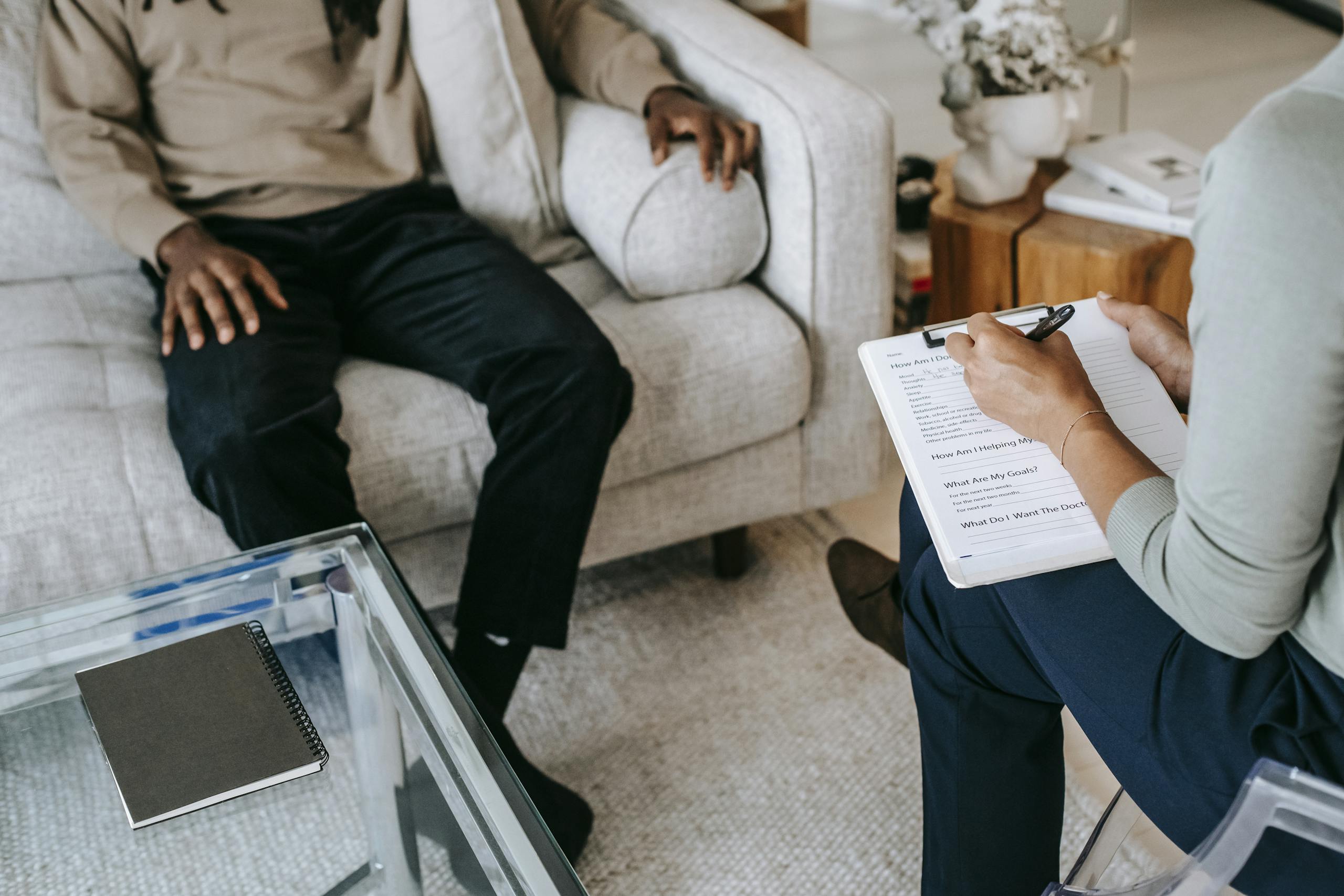
What Does an Empath Shield Practice Look Like for Sensitive Parents?
Parenting as a sensitive person deserves its own conversation, because children are among the most emotionally expressive humans on the planet. They don’t filter. They don’t modulate. They feel something and it comes out, loudly, physically, completely. For an empathic parent, raising children means being in constant contact with that unfiltered emotional output.
The article on HSP parenting and raising children as a sensitive person gets into the specific texture of this experience. Sensitive parents often describe feeling their child’s distress in their own body before they’ve even consciously registered what’s happening. A child’s nightmare wakes the sensitive parent not just because of the sound, but because something in the parent’s nervous system was already responding.
This depth of attunement is genuinely beautiful. It also makes it very easy for sensitive parents to lose themselves in the emotional landscape of their children, to the point where they can’t distinguish their own feelings from their child’s. A bracelet worn as part of a morning ritual can be one small piece of a practice that says: I am present for you, and I am also a separate person with my own inner experience.
Some sensitive parents choose stones specifically for the parenting context. Moonstone, associated with emotional balance and maternal energy, shows up in parenting-focused empath bracelets. Rose quartz, which carries associations with unconditional love and gentle boundaries, is another common choice. The specificity matters less than the intentionality. Choosing a stone because it represents something you want to embody in your parenting is itself a meaningful act.
How Does Living With a Sensitive Person Change How You Understand These Tools?
Partners and family members of sensitive people sometimes struggle to understand why someone would need a bracelet for emotional protection. From the outside, it can look like superstition or avoidance. From the inside of a sensitive nervous system, it looks like basic maintenance.
People who are living with a highly sensitive person often describe a learning curve around understanding that their partner’s need for recovery time, quiet, and grounding practices isn’t a rejection of the relationship. It’s a biological need. A bracelet that a sensitive partner wears as part of their daily regulation practice is no different, functionally, from the noise-canceling headphones they put on when they need to think, or the long solo walk they take after a difficult social event.
I’ve had this conversation with my own family. My wife has watched me develop rituals over the years that help me stay grounded, and early on she sometimes took them personally. When I needed to sit quietly after a long day of client calls rather than immediately engaging in family conversation, it read as withdrawal. What it actually was, was recovery. Learning to name these needs, and to explain them without apology, changed the dynamic significantly.
An empath shield bracelet, worn visibly, can sometimes open that conversation. A partner who asks about it gets a window into how the sensitive person experiences the world, which is a gift for the relationship even if it starts as a simple question about jewelry.
Can Empath Protection Practices Support Sensitive People at Work?
The workplace is where many sensitive people feel most exposed. Open offices, back-to-back meetings, the performance of constant availability, the emotional labor of managing up and managing clients simultaneously. These environments are genuinely taxing for people whose nervous systems process everything more deeply.
During my agency years, I watched talented, empathic people burn out in roles that would have suited them perfectly if the environment had been different. Account management, creative direction, client strategy, these roles play directly to empathic strengths. The ability to read a room, to sense what a client isn’t saying, to feel the emotional undercurrent of a brand’s relationship with its audience. These are competitive advantages. Yet the same people who excelled in those moments often struggled with the cumulative weight of absorbing the emotional environment day after day.
Thinking about career paths that suit highly sensitive people involves more than just finding quiet work. It involves finding roles where the depth of feeling that sensitive people bring is recognized as skill, and where the workplace culture allows for some degree of recovery and autonomy. Even within those roles, though, daily grounding practices matter.
Wearing an empath shield bracelet to work is a practice some sensitive professionals describe as genuinely useful, not because it changes the office environment, but because it creates a private ritual in a public space. Touching the stone during a tense meeting is a somatic cue to return to your own center. Putting it on in the morning is a signal to yourself that you’re going into the world with intention rather than just reactivity.

How Do You Choose the Right Empath Shield Bracelet?
Choosing a bracelet for empathic protection is less about finding the objectively correct stone and more about finding what resonates with your specific experience of sensitivity.
Start by identifying what you most need. Grounding is different from protection, which is different from clarity, which is different from calm. If your main challenge is feeling unmoored in crowded spaces, a heavy grounding stone like hematite or black tourmaline makes sense. If you struggle most with emotional clarity, with not knowing where your feelings end and someone else’s begin, amethyst or labradorite might serve you better. If anxiety is your primary companion, blue lace agate or lepidolite carry calming associations.
The physical quality of the bracelet matters more than many people expect. Sensitive people, almost by definition, notice texture, weight, and sensation acutely. A bracelet that chafes or feels awkward on your wrist will become a source of irritation rather than comfort. Natural stone beads on an elastic cord are the most common format because they’re lightweight and adjustable, but some people prefer a single larger stone on a leather cord, or a metal cuff with inlaid crystal.
There’s also the question of intention-setting. Many crystal practitioners recommend cleansing a new stone before wearing it, either through sunlight, moonlight, sound, or simply holding it and setting a clear intention for what you want it to represent. Whether or not you believe in energetic cleansing, the act of pausing to set an intention with a new object is itself psychologically meaningful. You’re beginning a relationship with a tool, and naming what you want from it.
Nature can amplify this practice considerably. A 2021 feature from Yale Environment 360 on ecopsychology and nature immersion documented the measurable stress-reduction benefits of spending time in natural settings. Charging your bracelet outdoors, or simply spending time in nature while wearing it, connects two grounding practices that both have real effects on a sensitive nervous system.
What Are the Broader Practices That Work Alongside a Shield Bracelet?
A bracelet is most effective as part of a broader practice rather than a standalone solution. Sensitive people who report the most success with energy management tools tend to use them within a larger framework of intentional living.
Grounding practices are the foundation. These include physical movement, particularly walking barefoot on grass or soil, which has its own body of research supporting its effects on the nervous system. Breathwork, even simple techniques like box breathing or extended exhale breathing, activates the parasympathetic nervous system and gives the sensitive person a way to regulate in real time.
Visualization is another tool that pairs naturally with a physical anchor like a bracelet. Many empaths use a simple practice of imagining a protective boundary around themselves, often visualized as light or a shield, while touching their bracelet. The physical touch combined with the mental image creates a dual-channel anchor that tends to be more effective than either alone.
Journaling serves a different function, more about processing what’s already been absorbed than preventing future absorption. Sensitive people often find that writing helps them sort through which emotions belong to them and which they’ve picked up from others. This is particularly useful after high-exposure days, large social events, difficult conversations, or emotionally charged work situations.
Sleep and recovery deserve mention too. A 2024 study published in Nature examining environmental stressors and sensitive populations highlighted how sleep quality significantly mediates the relationship between environmental stress and wellbeing outcomes. Sensitive people who are chronically sleep-deprived lose access to their most important regulatory resource, and no bracelet compensates for that.

Is There a Difference Between Spiritual and Secular Approaches to Empath Bracelets?
Yes, and both are valid. This matters because some people who could genuinely benefit from these tools dismiss them because the language around them feels too spiritual, while others who approach them purely spiritually miss the psychological mechanisms that make them effective.
A secular approach to an empath shield bracelet treats it as a mindfulness tool. The stone is a physical anchor for an intention, a somatic cue that helps the nervous system regulate, a ritual object that creates structure around self-care practices. No metaphysical claims required. The bracelet works because you’ve decided it will represent something specific, and that decision changes how you engage with it and, through it, with the world.
A spiritual approach adds layers of meaning around energy, vibration, and the inherent properties of stones as natural objects with their own frequencies. Many people who work within spiritual frameworks find that these layers of meaning amplify the tool’s effectiveness, because meaning itself is a powerful regulator of human experience. Believing that black tourmaline deflects negative energy makes it a more powerful anchor than believing it’s just a pretty rock you’ve attached significance to.
Neither approach is more correct. Both are legitimate ways of working with a tool that, at its core, serves the same function: helping a sensitive person stay grounded in their own experience while remaining open to the world around them. That balance, presence without dissolution, is what most empaths are actually looking for.
My own experience of this is that the ritual matters more than the metaphysics. In my agency days, I didn’t believe my watch had magical properties. I believed that putting it on meant something, and that meaning changed my state. The mechanism is the same whether you’re a secular mindfulness practitioner or someone who works deeply within a crystal healing tradition.
If you’ve found this exploration of empath protection useful and want to go deeper into what it means to live with high sensitivity, the full range of resources in our Highly Sensitive Person hub covers everything from relationships and parenting to career and identity, all through the lens of what it actually feels like to be wired this way.
About the Author
Keith Lacy is an introvert who’s learned to embrace his true self later in life. After 20 years in advertising and marketing leadership, including running agencies and managing Fortune 500 accounts, Keith now channels his experience into helping fellow introverts understand their strengths and build fulfilling careers. As an INTJ, he brings analytical depth and authentic perspective to every article, drawing from both professional expertise and personal growth.
Frequently Asked Questions
What is an empath shield bracelet supposed to do?
An empath shield bracelet is designed to help sensitive people and empaths manage emotional overwhelm by providing a physical anchor for grounding and protection intentions. Typically made with crystals or stones like black tourmaline, labradorite, or hematite, the bracelet serves as a somatic cue that reminds the wearer to maintain their own emotional center rather than absorbing the feelings and energy of those around them. Whether approached spiritually or as a mindfulness tool, its effectiveness lies in the intentional practice surrounding it.
Which crystal is best for empath protection?
Black tourmaline is most commonly recommended for empath protection because of its grounding properties and traditional association with deflecting negative energy. Labradorite is favored by those who struggle with losing themselves in others’ emotions, as it’s associated with strengthening personal boundaries and aura integrity. Amethyst supports emotional clarity and nervous system calm, making it useful for empaths who need help discerning their own feelings from what they’ve absorbed. The best choice depends on what aspect of sensitivity you most need support with on any given day.
Is there any scientific basis for empath shield bracelets?
There is no scientific evidence that crystals emit protective energies. What does have scientific support is the psychological mechanism through which these bracelets can work: physical anchoring and intentional ritual. Research on sensory processing sensitivity confirms that highly sensitive individuals have measurably different neural responses to emotional stimuli. Physical objects worn on the body can function as grounding anchors that support emotional regulation, particularly when paired with consistent intention-setting practices. The bracelet’s effectiveness comes from what it represents and how it’s used, not from any inherent energetic properties of the stone.
Can an empath shield bracelet help in relationships?
Yes, in a practical sense. Sensitive people in close relationships often absorb their partner’s emotional states so thoroughly that they lose track of their own feelings. Wearing a bracelet as part of a daily grounding practice creates a physical reminder to maintain a sense of self within emotional closeness. It can also open conversation with partners who may not fully understand the experience of high sensitivity, giving the sensitive person a concrete way to explain their need for grounding tools and recovery practices. The bracelet itself doesn’t change relationship dynamics, but the intentional practice around it can support healthier emotional boundaries.
How do I choose an empath shield bracelet?
Start by identifying your primary challenge: grounding, boundary-setting, emotional clarity, or nervous system calm. Match your stone choice to that need, with heavier grounding stones like hematite or black tourmaline for those who feel unmoored, and lighter stones like amethyst or rose quartz for those seeking calm and clarity. Pay attention to how the bracelet feels physically, since sensitive people notice texture and weight acutely, and a comfortable fit matters for daily wear. Set a clear intention when you first put it on, naming specifically what you want this tool to represent in your self-care practice. That intentionality is what makes the difference between a piece of jewelry and a genuine grounding tool.