

Personality test couples use their shared type knowledge to build deeper understanding, reduce conflict, and communicate more honestly by recognizing how each person processes emotion, makes decisions, and needs connection. Rather than treating type as a compatibility checklist, the most useful approach treats it as a shared language for the very real differences that show up in everyday life together.
Whether you’ve both taken a formal assessment or one of you stumbled onto MBTI through a late-night internet search, the question most couples eventually ask is the same: does knowing our types actually help us get along better? In my experience, the answer is yes, but only when you use that knowledge honestly.

If you want a broader foundation for everything personality type can tell you, our MBTI General and Personality Theory hub covers the full landscape, from cognitive functions to the 16 types to what the research actually supports. This article focuses specifically on what happens when two people bring their types into a relationship and try to make sense of each other.
Why Do Couples Take Personality Tests Together in the First Place?
My wife and I took the MBTI together during a particularly rough stretch in our marriage. We weren’t in crisis, but we were in that grinding phase where two people who genuinely love each other keep misunderstanding each other in the same ways. She’d feel dismissed when I went quiet after a hard conversation. I’d feel overwhelmed when she wanted to process everything out loud, immediately, while I was still sorting through my own reaction.
Seeing our results side by side didn’t fix anything overnight. But it gave us a shared vocabulary for something we’d been experiencing without words. She processes externally. I process internally. Neither of us was doing it wrong. We were just wired differently, and we’d spent years interpreting those differences as indifference or avoidance rather than just, well, difference.
A 2020 study published in PubMed Central found that self-awareness and the ability to accurately perceive a partner’s emotions are both significant predictors of relationship satisfaction. Personality frameworks, when used thoughtfully, can accelerate both. They give couples a structured way to ask: “How do you actually experience this?” instead of assuming the answer.
That’s the real value. Not the four-letter code itself, but the conversations it opens.
What Does the Introvert-Extrovert Divide Actually Look Like in a Relationship?
Of all the MBTI dimensions, the introversion-extraversion axis tends to create the most visible friction in relationships. Not because it’s the most important, but because it affects the texture of daily life in ways that are hard to ignore.
Extroverted partners often recharge through social activity, want to talk through problems in real time, and may interpret a quiet partner’s withdrawal as emotional distance. Introverted partners often need solitude to recover, prefer processing internally before speaking, and may feel steamrolled by a partner who wants to resolve everything immediately through conversation.
Understanding what extraversion and introversion actually mean in Myers-Briggs helps here, because most people still carry the pop-psychology version: introverts are shy, extroverts are loud. The reality is more nuanced and more useful. It’s about where you direct your attention and where you draw your energy, not about how talkative you are at a party.
During my agency years, I managed a creative director who was one of the most extroverted people I’ve ever worked with. She was magnetic in client meetings, brilliant at reading a room, and completely drained if she had to work alone for more than a few hours. I was the opposite. Give me a quiet office, a complex problem, and no interruptions, and I’d produce my best thinking. Put me in back-to-back client presentations all day and I’d need the entire weekend to recover.
We were effective together precisely because we understood that difference. She took the relationship-building work. I took the strategic analysis. Neither of us had to pretend to be the other. That same principle applies in romantic partnerships, maybe even more so, because the stakes are higher and the proximity is constant.

How Do Thinking and Feeling Types Experience Conflict Differently?
If the introvert-extrovert axis affects daily rhythm, the thinking-feeling dimension affects how couples fight. Or more precisely, how they decide what’s worth fighting about and what “resolving” something even means.
Thinking types tend to approach conflict by identifying the logical problem and solving it. Feeling types tend to approach conflict by identifying the emotional wound and healing it. When these two orientations meet in the middle of an argument, both people can feel like they’re not being heard, because they’re actually answering different questions.
A Thinking-dominant partner might say “I’ve already explained why I made that decision” and genuinely believe the matter is closed. A Feeling-dominant partner might still be sitting with hurt that hasn’t been acknowledged, and no amount of logical explanation will address it. Both people are being sincere. They’re just operating from different definitions of what it means to resolve something.
The distinction between Extroverted Thinking and Introverted Thinking adds another layer here. Te-dominant types (like ENTJs and ESTJs) tend to externalize their reasoning, wanting to establish clear frameworks and visible outcomes. Ti-dominant types (like INTPs and ISTPs) tend to work through an internal logical system first, sometimes appearing detached when they’re actually deeply engaged in analysis. Both can frustrate a Feeling-dominant partner in different ways, but for different reasons.
I’ve sat across the table from both types in boardrooms, and I’ve seen those same patterns play out in high-stakes negotiations. The Te executive who wants a decision tree and a timeline. The Ti analyst who needs to rebuild the logic from first principles before committing to anything. Neither is wrong. Both need to understand how the other experiences the same conversation.
Are Some Type Combinations Actually More Compatible?
This is the question every couple wants answered, and the honest answer is: sort of, but not the way most people hope.
There’s a popular idea that “complementary” types make the best couples, that an INTJ and an ENFP balance each other, or that two similar types create harmony through shared understanding. Both ideas contain some truth and some significant oversimplification.
According to 16Personalities research on personality and collaboration, shared values and communication styles matter more than matching or complementing type letters. Two people can share three out of four MBTI letters and still struggle enormously if they haven’t developed the self-awareness to understand their own patterns. Two people with very different types can build extraordinary relationships if they’re both willing to understand and adapt.
What type compatibility actually predicts reasonably well is the kinds of friction you’re likely to encounter, not whether you’ll succeed. An ISTJ paired with an ENFP will probably bump up against different things than an INFJ paired with an ENTJ. Knowing that in advance doesn’t guarantee anything. It just means you’re less likely to be blindsided by patterns that were always going to show up.
The American Psychological Association’s work on self-perception and relationships suggests that people often project their own values and communication styles onto partners, assuming similarity where differences actually exist. Type frameworks, used well, push back against that tendency by making differences visible and nameable before they become resentments.
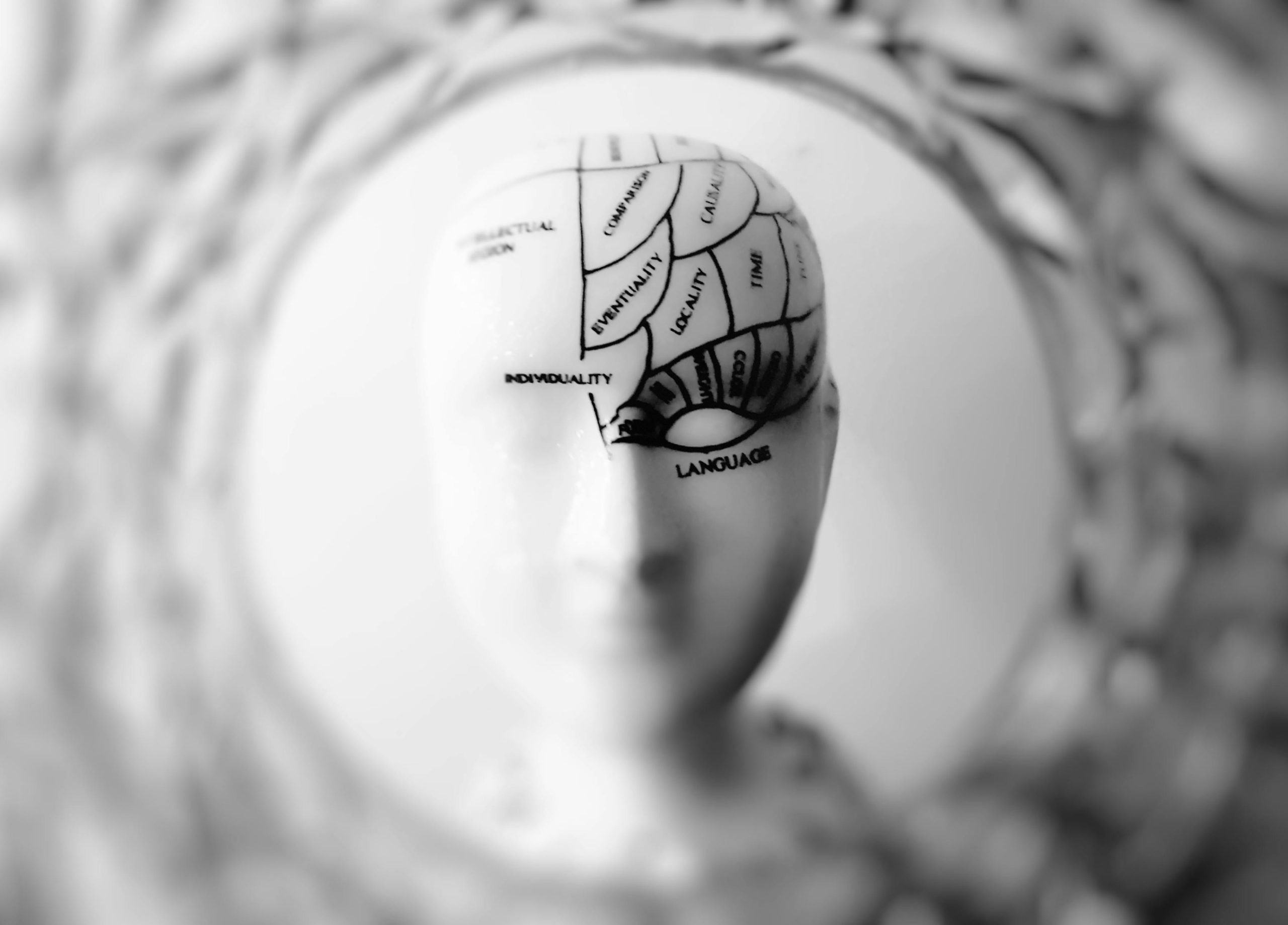
What Happens When One or Both Partners Have Been Mistyped?
Here’s something that comes up more often than people expect: one partner has been operating under a type that doesn’t actually fit them, and the relationship dynamics they’ve been trying to understand through that lens have never quite made sense as a result.
Mistyping is genuinely common. Many people, especially introverts who’ve spent years adapting to extroverted environments, test as more extroverted than they actually are. Many people who’ve been rewarded professionally for logical, structured thinking test as Thinking types when their natural orientation is actually Feeling. The pressure to perform a certain way at work, in social settings, or even within a family system shapes how people answer personality test questions.
I spent years thinking I was more Extroverted than I am because I’d built an entire professional identity around being a capable, present, relationship-driven agency leader. I was good at the external performance of connection. What I didn’t acknowledge was how much it cost me, and how much of my actual processing happened in private, in the quiet hours before everyone else arrived at the office.
Understanding how cognitive functions reveal your true type is one of the most useful things a couple can do together. Rather than relying on a single test result, looking at the underlying cognitive patterns, how each person actually processes information, makes decisions, and engages with the world, gives a much more accurate picture. If you haven’t explored this layer yet, it’s worth doing. The four-letter result is a starting point, not the complete story.
When one partner realizes they’ve been mistyped, it can actually reframe years of relationship friction in a useful way. Patterns that seemed like character flaws or incompatibilities often turn out to be natural expressions of a type that was never properly identified.
How Do Sensing and Intuitive Types See Their Relationship Differently?
The sensing-intuition dimension is, in my view, the most underappreciated source of relationship friction. People talk a lot about introversion-extraversion and thinking-feeling, but the S-N divide shapes something more fundamental: how partners perceive reality itself.
Sensing types tend to be grounded in concrete, present-moment experience. They notice what’s actually happening, what’s been said, what’s been done. They tend to value consistency, practicality, and evidence drawn from direct experience. Intuitive types tend to live more in patterns, possibilities, and meaning. They’re often more interested in what something implies than what it is, more attuned to undercurrents than surface facts.
In a relationship, this can look like one partner saying “you never actually said that” while the other partner is completely certain they communicated it, because they signaled it through implication and assumed the signal was received. Or one partner wanting to plan a vacation based on what they know they enjoy, while the other wants to explore somewhere entirely new based on a feeling they can’t quite articulate.
A fascinating dimension of this is the role of Extraverted Sensing in how some people engage with their environment. Se-dominant and Se-auxiliary types are deeply present in physical reality, highly attuned to sensory details, and often energized by immediate, tangible experience. Paired with a strong Intuitive type, this can create real richness, one partner grounding the other, the other expanding the first’s sense of possibility. It can also create friction when the Se partner wants to act on what’s in front of them and the Intuitive partner is still processing what it might mean three steps ahead.
Some of the best creative partnerships I built at my agencies had exactly this dynamic. A sensing-dominant art director who could execute with precision and a intuitive-dominant strategist who could see around corners. The tension between them produced better work than either would have done alone. The same is true in relationships, when both people understand what they’re each bringing to the table.
Can Personality Type Help Couples Understand Their Emotional Needs?
One of the places personality type becomes most genuinely useful in a relationship is in understanding emotional needs, specifically, why two people who love each other can still consistently fail to make each other feel loved.
Some types need verbal affirmation and frequent emotional check-ins to feel secure. Others feel most loved through acts of service or shared practical support. Some need physical presence and proximity. Others need the freedom to have independent inner lives without that being interpreted as withdrawal. None of these are better or worse. They’re just different operating systems for emotional connection.
A 2008 study in PubMed Central found that emotional responsiveness and the perception of being understood by a partner are among the strongest predictors of relationship quality over time. Personality type doesn’t replace that responsiveness, but it can inform it. Knowing that your partner processes emotion differently than you do makes it easier to respond to what they actually need rather than what you would need in the same situation.
If you’re not sure where you and your partner land on these dimensions, taking our free MBTI personality test is a good starting point. Doing it together, and then talking about whether the results actually resonate, tends to be more valuable than treating the output as a fixed verdict.

What Are the Limits of Using Personality Tests in Relationships?
Personality frameworks are genuinely useful. They’re also genuinely limited, and being honest about those limits matters if you want to use them well.
The biggest risk is using type as an excuse rather than an explanation. “I’m an INTJ, I don’t do emotional processing” is not a useful application of personality knowledge. Neither is “you’re an ENFP, so of course you’re being dramatic.” Type describes tendencies, not permissions. It explains patterns without excusing them.
A second risk is over-identification with type, where the four-letter code becomes a fixed identity rather than a flexible description. People grow. Circumstances shape behavior. Someone who tested strongly Introverted at 25 may have developed significant social fluency by 45, not because their core wiring changed, but because they’ve built skills that complement their natural orientation. The science of deep thinking and personality consistently shows that traits exist on spectrums and shift across contexts, which is why rigid type-boxing tends to create more problems than it solves.
There’s also the question of what personality tests don’t measure: attachment style, trauma history, values alignment, communication skills, and the simple willingness to show up for another person. These matter enormously in relationships, and no MBTI result tells you anything about them.
A cognitive functions assessment goes deeper than a surface type result, and our Cognitive Functions Test can help you and your partner understand the actual mental processes underneath your type letters. That level of self-knowledge tends to produce more useful relationship conversations than four-letter comparisons alone.
The most honest framing I’ve found: personality type is a useful map, not the territory. Maps help you orient. They don’t replace the experience of actually being in the place.
How Should Couples Actually Use Their Type Results?
After years of thinking about this, both through my own marriage and through watching how personality dynamics played out across the teams I led, my honest recommendation is to use type results as conversation starters, not conclusions.
Start by reading your own results and asking: does this actually resonate? Not “is this flattering” but “does this describe how I actually experience the world?” Then share what resonates and what doesn’t with your partner. The discrepancies are often as revealing as the matches.
Then look at the dimensions where you differ and ask, specifically, how those differences show up in your daily life together. Not in the abstract (“Sensing types prefer concrete facts”) but in the particular (“When we’re planning something together, I notice I want to nail down specifics and you seem to want to keep options open, and that’s been a real source of friction for us”).
According to WebMD’s coverage of emotional attunement and empathy, people who feel genuinely understood by their partners report significantly higher relationship satisfaction, even when the relationship involves real differences and real conflict. Type frameworks, at their best, are tools for building that understanding. They work when both people approach them with curiosity rather than defensiveness.
The couples I’ve seen use personality type most effectively aren’t the ones who found out they’re perfectly compatible. They’re the ones who found a shared language for differences they’d been experiencing in silence, and then used that language to actually talk about those differences without it turning into a referendum on who’s more difficult to love.

There’s much more to explore about personality theory, cognitive functions, and what the 16 types actually reveal about how we connect. Our complete MBTI General and Personality Theory hub is a good place to go deeper once you’ve started these conversations with your partner.
About the Author
Keith Lacy is an introvert who’s learned to embrace his true self later in life. After 20 years in advertising and marketing leadership, including running agencies and managing Fortune 500 accounts, Keith now channels his experience into helping fellow introverts understand their strengths and build fulfilling careers. As an INTJ, he brings analytical depth and authentic perspective to every article, drawing from both professional expertise and personal growth.
Frequently Asked Questions
Do personality tests actually predict relationship compatibility?
Not with precision, no. Personality tests can identify the kinds of differences and friction points a couple is likely to encounter, but they don’t predict whether a relationship will succeed. What matters more than type compatibility is each person’s willingness to understand their own patterns and genuinely engage with their partner’s. Two people with very different types can build a strong relationship; two people with matching types can still struggle if self-awareness is low.
What is the best personality test for couples to take together?
The MBTI and MBTI-style assessments are the most widely used and tend to produce the most accessible shared vocabulary for couples. Taking the test individually and then comparing results, rather than taking it together in a way that might influence each other’s answers, tends to produce more honest and useful results. Following up with a cognitive functions assessment adds meaningful depth to the four-letter comparison.
How does the introvert-extrovert difference affect relationships most?
The introvert-extrovert dimension most commonly affects how partners recharge, how they process conflict, and how much alone time feels necessary versus isolating. Extroverted partners often want to talk through problems immediately and may interpret an introverted partner’s need for quiet processing as avoidance. Introverted partners may feel overwhelmed by the pace and intensity of verbal processing their extroverted partners prefer. Understanding that both responses are legitimate, rather than assigning blame, is where the real value of knowing your types shows up.
Can personality type change over time within a relationship?
Core type preferences tend to remain relatively stable, but how they’re expressed can shift significantly with growth, experience, and conscious effort. Someone who tested as strongly Thinking-dominant at the start of a relationship may develop much greater emotional fluency over years of intentional work. People also sometimes discover they were mistyped initially, especially if they took the test during a period when they were heavily performing a role that didn’t reflect their natural orientation. Revisiting type assessments every few years can be genuinely illuminating.
What should couples avoid when using personality tests in their relationship?
The two most common pitfalls are using type as an excuse for behavior (“that’s just how I am as an INTJ”) and using it as a fixed verdict on compatibility (“our types aren’t supposed to work together”). Type describes tendencies, not permissions, and it predicts patterns, not outcomes. The most useful approach treats type results as a starting point for curiosity rather than a final answer about who either person is or whether the relationship can work.