

A Marvel Comics personality test matches each of the 16 Myers-Briggs types to a specific superhero or villain based on how they think, make decisions, and interact with the world. Tony Stark’s relentless logic and Iron Man’s strategic drive map closely to certain MBTI profiles, while characters like Steve Rogers or Natasha Romanoff reflect entirely different cognitive patterns. Knowing which Marvel character shares your personality type can make abstract psychological concepts feel immediate and personal.
Sitting across a conference table from a client who wanted bold, loud, fast ideas, I used to wonder why my instinct was always to slow down, pull the concept apart, and rebuild it from the inside. My creative directors loved the energy of a brainstorm. I loved what came after, the quiet hour when I could filter the noise and find the one idea that actually worked. Years later, I’d learn that’s not a flaw in leadership style. It’s a cognitive function. And Marvel, of all places, helped me understand it.
Pop culture has a way of making personality theory accessible in ways that textbooks never quite manage. When you see Bruce Banner struggling to contain the Hulk’s rage while still trying to solve every problem through pure intellect, something clicks that a description of introverted thinking never fully captures on its own.
If you want to go deeper into the theory behind these types before we get into the characters, our MBTI General and Personality Theory hub covers everything from cognitive functions to the full 16-type framework in one place.

Why Does Mapping Marvel Characters to MBTI Actually Work?
Good storytelling and personality psychology share the same foundation. Both are trying to explain why people behave the way they do under pressure. Marvel’s writers, whether they knew it or not, built characters whose decision-making patterns, emotional responses, and relationship dynamics are remarkably consistent with specific psychological profiles.
Tony Stark doesn’t just happen to be arrogant and brilliant. He processes the world through a specific cognitive lens that prioritizes external logic, efficiency, and measurable outcomes. That’s the signature of Extroverted Thinking (Te), the dominant function of ENTJs and ESTJs, and the auxiliary function of INTJs. Stark’s compulsive need to build systems, optimize everything, and impose order on chaos isn’t a personality quirk. It’s a cognitive pattern playing out on screen.
On the other end of the spectrum, characters like Spider-Man (Peter Parker) are constantly improvising in real time, reacting to physical cues, adapting on the fly, and finding creative solutions through immediate sensory engagement. That kind of present-moment responsiveness is the hallmark of Extraverted Sensing (Se), which shows up strongly in ESTP and ESFP types.
A 2019 study published in PLOS ONE via PubMed Central found that fictional characters can serve as meaningful reference points for self-understanding, particularly when people are exploring identity and values. Marvel characters work so well for personality typing because they’re written with enough consistency and depth to reflect genuine psychological patterns rather than surface-level stereotypes.
Which Marvel Characters Match Each MBTI Type?
Let’s go through all 16 types. Some of these will feel immediately obvious. Others might surprise you, and that surprise is often where the real self-reflection begins.
INTJ: Thanos or Nick Fury
As an INTJ myself, I’ve always had a complicated relationship with Thanos as a type match. Yes, the long-range strategic thinking, the absolute conviction in a vision that others can’t fully see, the willingness to make decisions that feel cold from the outside but are driven by deeply internal logic. That’s all uncomfortably familiar. Nick Fury is the more functional version of this profile, someone who builds systems in the background, trusts almost no one fully, and operates on information others don’t have access to.
INTJs lead with introverted intuition and support it with extroverted thinking. They’re not interested in consensus. They’re interested in what works, long term, even when the path there is difficult to explain to anyone else.
INTP: Bruce Banner (The Hulk)
Bruce Banner is one of the clearest INTP representations in the entire Marvel universe. His dominant function is Introverted Thinking (Ti), which means he builds elaborate internal frameworks for understanding the world, often to the point where he loses track of how those frameworks affect the people around him. He’s not emotionally detached because he doesn’t care. He’s emotionally detached because his mind is always somewhere else, pulling apart a problem at the atomic level.
The Hulk is, in a way, the shadow side of that profile. All the suppressed emotion and physical energy that Banner’s hyperrational mind keeps contained, finally breaking through. It’s a surprisingly accurate metaphor for what happens when an INTP’s inferior extroverted feeling gets pushed past its limits.
ENTJ: Tony Stark (Iron Man)
Tony Stark is the textbook ENTJ. Dominant extroverted thinking, strategic vision, absolute confidence in his own judgment, and a constant drive to build, optimize, and lead. He doesn’t wait for permission or consensus. He identifies what needs to happen and makes it happen, usually while everyone else is still arguing about whether it’s a good idea.
I worked with a creative director once who had this exact energy. Every meeting became a Tony Stark moment, bold declarations, instant decisions, zero patience for ambiguity. It was exhausting to be around as an introvert, but I’ll admit the results were often impressive. ENTJs move fast because their cognitive stack is wired for external execution rather than internal deliberation.
ENTP: Loki
Loki is the most compelling ENTP in Marvel because he embodies both the brilliance and the chaos of that profile. ENTPs lead with extroverted intuition, which means they’re constantly generating possibilities, angles, and alternative framings. They’re natural debaters who can argue any side of any position with equal conviction, which makes them either fascinating or infuriating depending on what you need from them in the moment.
Loki’s shifting alliances aren’t just plot devices. They reflect a genuine cognitive pattern where the exploration of possibilities is more interesting than committing to any single one of them. His auxiliary introverted thinking means he’s always running the logical analysis internally, even when his external behavior looks purely chaotic.

INFJ: Vision or Doctor Strange
INFJs lead with introverted intuition and support it with extroverted feeling, which gives them a rare combination of deep pattern recognition and genuine concern for the wellbeing of others. Vision embodies this perfectly. He’s constantly processing at a level that others can’t follow, yet he’s deeply invested in human connection and meaning. Doctor Strange has a similar profile, someone whose dominant intuition drives him toward understanding the larger patterns of existence, while his feeling function keeps him anchored to why any of it matters.
INFP: Wanda Maximoff (Scarlet Witch)
Wanda’s entire arc is an INFP story. Dominant introverted feeling means her internal value system is the most real thing in her world, more real sometimes than external reality itself. When her values and her grief collide, she literally rewrites the world around her. INFPs don’t just feel deeply. They experience emotion as a kind of fundamental truth that external facts have to answer to, not the other way around.
The American Psychological Association has written about how people use fictional characters as mirrors for their own emotional processing. Wanda resonates so deeply with INFP audiences precisely because she externalizes what introverted feeling types experience internally.
ENFJ: Captain America (Steve Rogers)
Steve Rogers leads with extroverted feeling, which means he’s constantly oriented toward the values and wellbeing of the group. He doesn’t just hold moral convictions privately. He embodies them publicly and expects the world to rise to meet them. His auxiliary introverted intuition gives him a long-range sense of what matters and why, which is why he’s willing to stand alone against institutions when those institutions betray their own stated values.
ENFJs are natural leaders not because they seek authority, but because people instinctively trust someone who is visibly, consistently oriented toward others rather than themselves.
ENFP: Thor
Thor leads with extroverted intuition and is driven by enthusiasm, possibility, and a genuine love of experience. He’s impulsive in the best sense, throwing himself at challenges with total commitment before fully thinking through the consequences. His auxiliary introverted feeling means his actions are in the end guided by a genuine personal value system, even when that system gets buried under ego and bravado in his earlier appearances.
ISTJ: Hawkeye (Clint Barton)
Clint Barton is the most grounded Avenger, and that groundedness is quintessentially ISTJ. He leads with introverted sensing, which means he relies on accumulated experience, established methods, and proven reliability over flashy innovation. He’s the one who shows up, does the job, and goes home to his family. No cosmic power, no billion-dollar suit. Just skill, discipline, and a commitment to doing what he said he’d do.
ISFJ: Peter Parker (Spider-Man)
Peter Parker’s defining characteristic isn’t his powers. It’s his sense of responsibility. ISFJs lead with introverted sensing and support it with extroverted feeling, which creates someone who is deeply attuned to the needs of specific people in their immediate world and feels personally responsible for protecting them. “With great power comes great responsibility” isn’t just a tagline. It’s an ISFJ value statement.
ESTJ: Nick Fury (alternate read) or Maria Hill
Maria Hill is a cleaner ESTJ than Fury. She leads with extroverted thinking and introverted sensing, which means she’s oriented toward systems, protocols, and institutional effectiveness. She’s not interested in bending rules for the sake of a bigger vision. She’s interested in making sure the right structures are in place and followed. ESTJs are the people who make organizations actually function, even when the visionaries get all the credit.
ESFJ: Pepper Potts
Pepper leads with extroverted feeling and introverted sensing. She’s the person who holds the relational fabric of Stark Industries together, who remembers what matters to people, who manages the human consequences of Tony’s brilliant and often reckless decisions. ESFJs are frequently undervalued in systems that prize individual genius over collective wellbeing, which is a pattern I saw play out constantly in agency culture.
ISTP: Black Widow (Natasha Romanoff)
Natasha leads with introverted thinking and supports it with extroverted sensing. She processes information internally, makes rapid independent assessments, and then acts with precise physical efficiency. ISTPs don’t explain their reasoning until after the fact, if ever. They trust their internal analysis and move. Natasha’s emotional detachment isn’t coldness. It’s an ISTP operating at full capacity in a high-stakes environment.
ISFP: Black Panther (T’Challa)
T’Challa leads with introverted feeling and extroverted sensing. His decisions are guided by a deep, private value system rooted in his identity, his ancestors, and his responsibility to Wakanda. He’s not loud about his convictions. He embodies them. ISFPs often appear calm and reserved on the surface while carrying an internal moral intensity that only becomes visible when something they care about is genuinely threatened.
ESTP: Star-Lord (Peter Quill)
Peter Quill is pure ESTP energy. Dominant extroverted sensing means he lives completely in the present moment, responding to immediate reality with improvisational confidence. He’s not strategic in the INTJ sense. He’s adaptive in the ESTP sense, finding angles and opportunities that only become visible when you’re fully present in the current situation. His inferior introverted intuition shows up in those moments when he makes a decision based on gut feeling that turns out to be either brilliant or catastrophic, with very little middle ground.
ESFP: Thor (earlier arc) or America Chavez
America Chavez leads with extroverted sensing and extroverted feeling, which makes her spontaneous, physically expressive, and deeply connected to the emotional reality of the people around her. ESFPs bring energy and warmth into every room they enter, and they make decisions based on what feels right in the moment rather than long-term strategy. They’re not reckless. They’re present in a way that more internally-focused types often struggle to access.
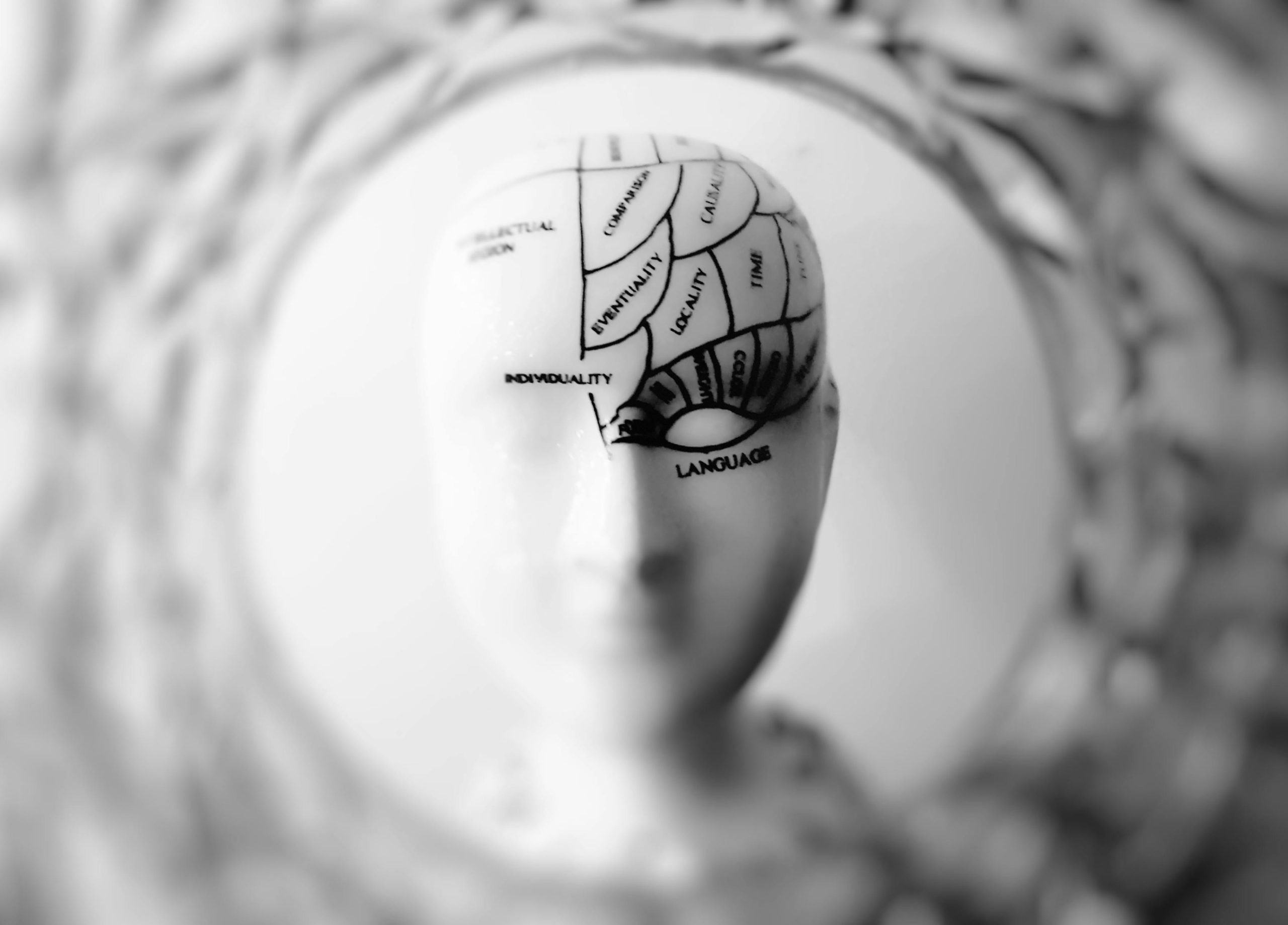
What Do These Character Matches Actually Reveal About Your Type?
There’s a reason personality tests built around pop culture characters spread faster than traditional assessments. According to Truity’s research on deep thinking patterns, people who identify as deep thinkers are more likely to engage with personality frameworks when those frameworks are connected to concrete, emotionally resonant examples rather than abstract descriptions.
Seeing yourself in a Marvel character does something that reading a type description alone doesn’t. It gives you a narrative. And narrative is how human beings actually understand identity.
That said, character matches are a starting point, not a destination. Many people find that they resonate strongly with a character but don’t fully match the associated type, which is often a sign that they’ve been misidentified somewhere along the way. A 2020 study from PubMed Central examining personality consistency found that self-reported type identification becomes significantly more accurate when people engage with concrete behavioral examples rather than abstract trait descriptions. Marvel characters are, in effect, behavioral examples at scale.
If you find yourself identifying more with the character than the type description, that’s worth paying attention to. It might mean your actual cognitive function stack looks different from what your test results suggested. Our guide on how mistyped MBTI results happen and how cognitive functions reveal your true type is worth reading if you’ve ever felt like your official result didn’t quite fit.
How Do Introversion and Extraversion Show Up Differently Across Marvel Characters?
One of the most useful things about mapping Marvel characters to MBTI is seeing how differently introversion and extraversion actually manifest in practice. In pop culture, introversion often gets reduced to “quiet and shy” while extraversion becomes “loud and outgoing.” Neither of those is accurate, and Marvel’s more complex characters demonstrate why.
Tony Stark is unmistakably extraverted, but his extraversion isn’t about being socially warm. It’s about directing his cognitive energy outward, toward systems, toward problems, toward external validation of his own brilliance. Steve Rogers is also extraverted, but his extraversion is entirely relational, oriented toward the feelings and needs of the people around him.
Meanwhile, characters like Natasha Romanoff and Bruce Banner are clearly introverted, but in completely different ways. Banner turns inward to analyze and theorize. Romanoff turns inward to assess and strategize. Both are processing internally, but the content and purpose of that internal processing are entirely different.
Our deep-dive into extraversion vs. introversion in Myers-Briggs covers these distinctions in detail, particularly why the E/I dimension is about cognitive orientation rather than social behavior.
Running an agency, I had to learn this distinction the hard way. My team assumed that because I was the boss who called the big meetings and presented to Fortune 500 clients, I must be extraverted. What they didn’t see was the two hours of quiet preparation before every presentation, the way I’d mentally rehearse every question a client might ask, the fact that I needed to be completely alone after a major pitch to recover my energy. That’s not introversion as shyness. That’s introversion as a fundamental orientation toward internal processing over external stimulation.

Why Do Some Marvel Characters Feel Like Multiple Types at Once?
This is one of the most common reactions people have when they start mapping fictional characters to MBTI. Loki feels like an ENTP in some scenes and an INTJ in others. Thor reads as ENFP in his later development but almost ESTP in his earliest appearances. There are a few reasons for this.
First, good characters grow. Psychological type isn’t about behavior in a single moment. It’s about the underlying cognitive functions that generate behavior across time and context. When Thor matures, his extroverted intuition doesn’t change. What changes is how well he’s integrated his auxiliary introverted feeling, which makes him look more grounded and less impulsive even though his fundamental type remains the same.
Second, stress responses can look like a completely different type. A 2021 analysis from 16Personalities on personality and team dynamics noted that individuals under extreme stress often exhibit behaviors associated with their inferior function, which can make them appear to be an entirely different type to outside observers. Thanos in his most desperate moments looks less like a strategic INTJ and more like an emotionally reactive ESFP. That’s not inconsistent writing. That’s actually psychologically accurate.
Third, writers sometimes blend character traits in ways that don’t map cleanly to a single type. That’s okay. The goal of a Marvel personality test isn’t perfect categorical precision. It’s finding enough resonance to generate useful self-reflection.
If you want to move beyond character matching and actually identify your own cognitive function stack, our cognitive functions test is designed to surface your dominant, auxiliary, tertiary, and inferior functions rather than just assigning you a four-letter code.
What Can Introverted Marvel Characters Teach Introverts About Their Own Strengths?
There’s something genuinely meaningful about seeing introversion portrayed as a source of power rather than a limitation. For a long time, I absorbed the message that the most effective leaders were the ones who filled the room, who commanded attention through presence and volume, who made decisions quickly and publicly. Marvel’s introverted characters quietly dismantle that assumption.
Bruce Banner’s greatest contributions to the Avengers don’t come from his ability to become the Hulk. They come from his capacity to spend months alone in a lab, going deeper into a problem than anyone else is willing to go. Nick Fury’s effectiveness as a leader comes not from charisma but from information, from seeing patterns others miss and making decisions based on a longer timeline than anyone around him can access. Vision’s value to the team is precisely his ability to process complexity at a level that bypasses the noise of group dynamics.
These aren’t characters who succeed despite their introversion. They succeed because of it. Their capacity for deep internal processing, their comfort with solitude, their preference for depth over breadth, these are the specific qualities that make them irreplaceable.
According to WebMD’s overview of empathic personality traits, people who process emotional and social information deeply often demonstrate stronger long-term decision-making in complex environments, precisely because they’re not optimizing for immediate social approval. That’s a description of introverted Marvel heroes at their best.
One of the shifts that changed how I led my agency was accepting that my introversion wasn’t something to compensate for. My instinct to process before speaking, to build arguments from the inside out, to resist the pull of consensus when my internal analysis pointed somewhere else, that wasn’t a liability. It was the thing that kept us from making the same expensive mistakes our competitors made when they chased trends instead of thinking them through.
If you haven’t yet identified your own type, take our free MBTI test before diving deeper into the character comparisons. Knowing your actual type makes the character matches significantly more meaningful.
How Should You Actually Use a Marvel Personality Test?
A Marvel Comics personality test is most valuable when you treat it as a mirror rather than a label. The point isn’t to walk away saying “I’m a Tony Stark.” The point is to notice what the comparison surfaces about your own cognitive patterns, your default responses under pressure, your relationship to leadership, creativity, and connection.
Pay attention to where the match feels right and where it doesn’t. If you identify as an INTJ but feel more like Steve Rogers than Nick Fury or Thanos, that’s information. It might mean your extroverted feeling is more developed than a typical INTJ profile, or it might mean you’ve been mistyped and are actually closer to an INFJ.
Notice also which characters you’re drawn to versus which ones you actually resemble. Many introverts are drawn to Tony Stark’s confidence and external command, not because they share his profile, but because those qualities represent something they’ve been told they should aspire to. That gap between aspiration and actual cognitive wiring is worth examining honestly.
The most useful personality frameworks, Marvel-based or otherwise, are the ones that help you understand your actual strengths rather than measuring you against an external standard you were never designed to meet. Global personality data from 16Personalities’ worldwide research consistently shows that the most satisfied and effective people are those who’ve found ways to operate in alignment with their natural cognitive orientation rather than against it.
I spent the first decade of my agency career trying to be the Tony Stark version of a creative leader. Loud, fast, decisive in public, performing confidence even when my internal processing was still running. It worked, after a fashion. But it cost me enormously in energy and authenticity. The second decade, once I stopped treating my introversion as a problem to solve, was both more effective and significantly more sustainable.

There’s much more to explore about how personality theory applies across different life contexts. Our complete MBTI General and Personality Theory hub brings together articles on cognitive functions, type development, and practical applications for introverts building careers and relationships on their own terms.
About the Author
Keith Lacy is an introvert who’s learned to embrace his true self later in life. After 20 years in advertising and marketing leadership, including running agencies and managing Fortune 500 accounts, Keith now channels his experience into helping fellow introverts understand their strengths and build fulfilling careers. As an INTJ, he brings analytical depth and authentic perspective to every article, drawing from both professional expertise and personal growth.
Frequently Asked Questions
What MBTI type is Tony Stark?
Tony Stark is most consistently typed as an ENTJ. His dominant extroverted thinking drives his compulsive need to build systems, lead decisively, and impose order on chaos through external logic and efficiency. His auxiliary introverted intuition gives him the long-range strategic vision that makes him more than just a reactive problem-solver. Some analysts type him as INTP based on his solo lab work and theoretical depth, but his orientation toward external execution and leadership places him more accurately in the ENTJ profile.
Which Marvel character is an INFJ?
Vision and Doctor Strange are the strongest INFJ matches in the Marvel universe. Both characters lead with introverted intuition, processing reality at a depth that others can’t easily follow, while their auxiliary extroverted feeling keeps them oriented toward the wellbeing of others rather than pure abstract understanding. Their combination of visionary perception and genuine compassion is the defining signature of the INFJ profile.
Is a Marvel personality test scientifically valid?
A Marvel personality test isn’t a validated psychological instrument in the clinical sense. Its value is as an accessible entry point into personality theory rather than a diagnostic tool. When character matches are grounded in actual MBTI cognitive function analysis rather than surface-level trait comparisons, they can generate genuine self-reflection and make abstract psychological concepts more concrete. Think of it as a useful starting point that should lead you toward more rigorous self-assessment rather than a definitive answer on its own.
Which Marvel characters are introverts?
Several of Marvel’s most significant characters are introverts. Bruce Banner (INTP), Natasha Romanoff (ISTP), T’Challa (ISFP), Vision (INFJ), Wanda Maximoff (INFP), Clint Barton (ISTJ), Peter Parker (ISFJ), and Nick Fury (INTJ) all demonstrate the characteristic inward cognitive orientation of introverted types. Their introversion shows up not as shyness but as a preference for internal processing, depth of focus, and selective engagement with the external world.
What if I identify with a Marvel character but not their assigned MBTI type?
That disconnect is worth taking seriously. It often means one of two things: either the character has been typed inconsistently by different analysts and your instinct about their cognitive pattern is actually more accurate, or you’ve been mistyped yourself and your resonance with the character is pointing toward your actual type rather than your test result. Exploring your cognitive function stack in more depth, rather than relying solely on the four-letter code, usually resolves the confusion. Character resonance is often a more honest signal than a questionnaire completed under social pressure.