Wanting to stop being an empath doesn’t mean you’re cold, selfish, or broken. It usually means you’ve been absorbing everyone else’s emotional weight for so long that your own inner life has started to feel like a stranger’s. The exhaustion is real, and so is the quiet desperation behind that wish to just feel less.
What most people don’t say out loud is this: sensitivity itself isn’t the problem. The problem is what happens when no one ever taught you how to carry it.

Our HSP and Highly Sensitive Person hub explores the full spectrum of what it means to feel deeply, but the specific ache of wanting to turn your sensitivity off sits in its own uncomfortable corner. That’s what I want to talk about here, honestly and without pretending it’s simple.
What Does It Even Mean to Be an Empath?
The word “empath” gets thrown around a lot these days, sometimes as a badge of honor and sometimes as a clinical-sounding explanation for why social situations feel so draining. At its core, being an empath means you don’t just observe other people’s emotions. You absorb them. You walk into a room and pick up the residue of an argument that happened an hour before you arrived. You sit across from someone who says they’re fine and feel the specific weight of how not-fine they actually are.
What drains your social battery?
Not all social exhaustion is the same. Our free quiz identifies your specific drain pattern and gives you personalised recharging strategies.
Find Your Drain PatternUnder 2 minutes · 8 questions · Free
A 2019 study published in PubMed found that highly sensitive individuals show measurably different neural responses to emotional stimuli, particularly in regions associated with awareness, empathy, and processing the experiences of others. So this isn’t a personality quirk you invented. It’s a documented difference in how certain nervous systems are wired.
That distinction matters, because a lot of people who identify as empaths are actually highly sensitive people, or HSPs. The two overlap significantly, but they’re not identical. If you’re curious about where the line falls, the comparison between introvert vs HSP traits is a useful place to start sorting out which label actually fits your experience.
And there’s another important distinction worth making: sensitivity is not the result of trauma. Psychology Today addressed this directly, noting that high sensitivity is a neurobiological trait, not a wound. That framing matters enormously when you’re trying to figure out whether you want to change who you are or simply change how you’re living.
Why Do So Many Empaths Eventually Hit a Wall?
There’s a particular kind of exhaustion that comes with years of feeling everything. It’s not the tiredness you get from a long workday. It’s more like the feeling of having been slightly porous your entire life, with other people’s moods, anxieties, and grief seeping in through every crack.
I ran advertising agencies for over two decades, and I can tell you that the most emotionally expensive part of that work wasn’t the deadlines or the difficult clients. It was the constant absorption of everyone else’s stress. A team member’s anxiety before a pitch would settle into my chest like something I’d swallowed. A client’s frustration would stay with me long after the call ended, replaying in my head while I tried to sleep. I didn’t have language for it then. I just thought I was bad at compartmentalizing.
What I’ve come to understand is that empaths often hit a wall not because their sensitivity is too strong, but because they’ve been operating without any real structure around it. No filters. No deliberate recovery time. No language for saying “I’ve taken on enough today.” The sensitivity itself was never the enemy. The absence of boundaries around it was.
The research reflects this. A 2024 paper published in Frontiers in Psychology found that emotional regulation strategies significantly affect how sensitive individuals experience stress and social interactions. In other words, the trait doesn’t determine your wellbeing. What you do with it does.
Is the Wish to Stop Being an Empath Really About Empathy at All?
Sit with this question for a moment: when you say you don’t want to be an empath anymore, what exactly are you wishing away?
Most of the time, when I’ve asked myself that question honestly, the answer isn’t “I wish I didn’t care about people.” It’s closer to “I wish caring about people didn’t cost me so much.” That’s a meaningfully different wish, and it points toward a different solution.
Wanting to stop being an empath is often the mind’s way of signaling that something in your current life is unsustainable. The relationships that drain without reciprocating. The workplace that treats your emotional attunement as a resource to be extracted. The family dynamics that have assigned you the role of emotional caretaker without your consent. These are structural problems, not sensitivity problems.
The difference between empaths and highly sensitive people, as Psychology Today explored, lies partly in the degree of absorption. Empaths often feel they actually take on other people’s emotions as their own. HSPs feel them intensely but with slightly more separation. Both groups, though, share the experience of a world that wasn’t designed with their nervous system in mind.
And that’s where the real grief lives. Not in the sensitivity itself, but in the accumulated experience of moving through spaces that don’t accommodate it.
What Happens to Empaths in Close Relationships?
Close relationships are where the empath experience gets most complicated, and most costly. When you feel other people’s emotions as viscerally as your own, intimacy isn’t just emotionally rich. It can become emotionally overwhelming.
The dynamic that tends to develop, particularly in long-term partnerships, is one where the empath becomes the emotional center of gravity. Their partner’s moods land heavily. Their partner’s unspoken needs get picked up and responded to, sometimes before the partner has even fully registered them. Over time, this creates an imbalance that neither person may consciously notice until the empath is running on empty.

There’s a particular complexity that arises in HSP relationships where one partner is extroverted. The extrovert brings energy and social momentum. The sensitive partner absorbs it, processes it, and often exhausts themselves trying to keep up with a pace that doesn’t match their internal rhythm. Neither person is doing anything wrong, exactly. The mismatch just requires more deliberate attention than most couples give it.
What makes this harder is that the empath’s sensitivity is often part of what drew their partner to them in the first place. The attentiveness. The way they notice. The depth of care. Partners of empaths often describe feeling genuinely seen, sometimes for the first time. That gift is real. The question is whether it’s being given sustainably, and whether it’s being received with equal care.
If you’re trying to understand the physical and emotional dimensions of this, the piece on HSP and intimacy gets into the specific texture of how sensitive people experience closeness, including why too much togetherness can feel like sensory overload even with someone you love deeply.
What About the People Who Live With You?
One of the less-discussed dimensions of empath exhaustion is what it does to the people in your household. When you’re running on fumes emotionally, you don’t disappear. You become reactive, or you go quiet in ways that feel alarming to the people who depend on you. The very sensitivity that makes you so attuned to others starts misfiring under pressure.
For partners and family members trying to understand what’s happening, the experience can be confusing. The person who usually notices everything suddenly seems unreachable. The warmth that was always present feels guarded. If you’re on the other side of this, the resource on living with a highly sensitive person offers some grounding perspective on what’s actually happening beneath the surface.
And for those who are also parenting, the stakes feel even higher. Sensitive parents tend to be extraordinarily attuned to their children’s needs, sometimes to a degree that borders on self-erasure. The worry is constant. The guilt is loud. The awareness of how your own emotional state ripples into your child’s experience can become its own source of anxiety.
The reality is that sensitive parents bring something genuinely valuable to the parent-child relationship. The attunement, the care, the ability to read what a child needs before they can articulate it. But that value only holds if the parent has enough left in reserve to actually be present. The conversation around HSP parenting addresses this tension directly, including how to protect your own emotional reserves without withdrawing from your kids.
Can You Actually Change How Much You Feel?
Here’s the honest answer: not really, and probably not in the way you’re hoping. The neurological architecture behind high sensitivity doesn’t get rewired through willpower or enough therapy sessions. What changes, with intention and practice, is your relationship to what you feel.
That might sound like a consolation prize. It isn’t. The difference between an empath who is drowning and one who is functioning well has almost nothing to do with the volume of their sensitivity. It has everything to do with what structures they’ve built around it.
When I finally stopped trying to be less affected by the emotional atmosphere of my agencies and started building actual practices around recovery, everything shifted. Not dramatically, not overnight, but measurably. I started leaving the office at a set time, not because I didn’t care about the work but because I’d learned that staying until 8 PM absorbing everyone’s end-of-day anxiety wasn’t making the work better. It was just making me worse.
Nature, specifically time spent in it without an agenda, became non-negotiable for me. There’s real science behind why. Yale’s e360 has written compellingly about how immersion in natural environments reduces stress markers and restores attentional capacity, both of which tend to be depleted in people who are processing emotional information constantly. It’s not a cure. It’s maintenance. And maintenance matters.
What Would It Look Like to Stop Fighting Your Own Wiring?
There’s a version of this conversation that gets very philosophical very quickly, but I want to keep it grounded. Because the practical question, the one that actually matters day to day, is this: what would your life look like if you stopped treating your sensitivity as a problem to be managed and started treating it as a parameter to design around?
That reframe changed how I thought about my career, eventually. I stopped taking on agency roles that required me to be constantly “on” in open-plan environments and started structuring my work around the conditions where I actually do my best thinking. Quiet mornings. Fewer meetings with more preparation. Written communication over spontaneous phone calls where possible. None of these accommodations made me less capable. They made me more effective, because I was working with my nervous system rather than against it.
Professionally, empaths and HSPs often thrive in roles that reward depth of perception and genuine attunement to others. The question is finding the right context. The overview of career paths suited to highly sensitive people is worth reading if you’ve ever felt like your sensitivity was a liability at work, because in the right environment, it’s genuinely one of the most valuable things you bring.
Stopping the fight against your own wiring doesn’t mean accepting every circumstance that depletes you. It means getting clearer about which circumstances are actually incompatible with how you’re built, and being willing to change them.
What Does Healthy Sensitivity Actually Look Like?
Healthy sensitivity isn’t a muted version of what you have now. It’s the same depth of feeling, held within a structure that doesn’t require you to sacrifice yourself to it.
It looks like noticing someone’s distress without automatically making it your responsibility to fix. It looks like feeling the emotional atmosphere of a room and choosing, consciously, how much of it to engage with. It looks like caring deeply about people while maintaining a clear sense of where you end and they begin.
That last part is the hardest for most empaths. The boundary between self and other gets genuinely blurry when you’re wired to absorb emotional information so readily. Building more definition there isn’t about becoming less caring. It’s about becoming more sustainable in how you care.
There was a period in my agency years when I prided myself on always being available to my team emotionally. Someone was struggling, and I was there. Someone needed to process something difficult, and my door was open. What I didn’t see clearly until much later was that I was operating without any off-switch, and the cost was showing up in my health, my sleep, and the quality of my own thinking. Being available to everyone meant I was fully present for no one, including myself.
Healthy sensitivity requires the same kind of intentional design that any other high-demand capacity requires. Athletes don’t train without recovery time. Surgeons don’t operate indefinitely without rest. Empaths need the same logic applied to their emotional output, and there’s nothing selfish about that framing.

So What Do You Do With the Wish to Feel Less?
You honor it as information. That wish is telling you something true about your current circumstances, even if the solution it’s pointing toward isn’t quite right.
Wanting to stop being an empath is usually a signal that your current life doesn’t have enough room for you to be one safely. The answer to that isn’t to amputate the sensitivity. The answer is to rebuild the room.
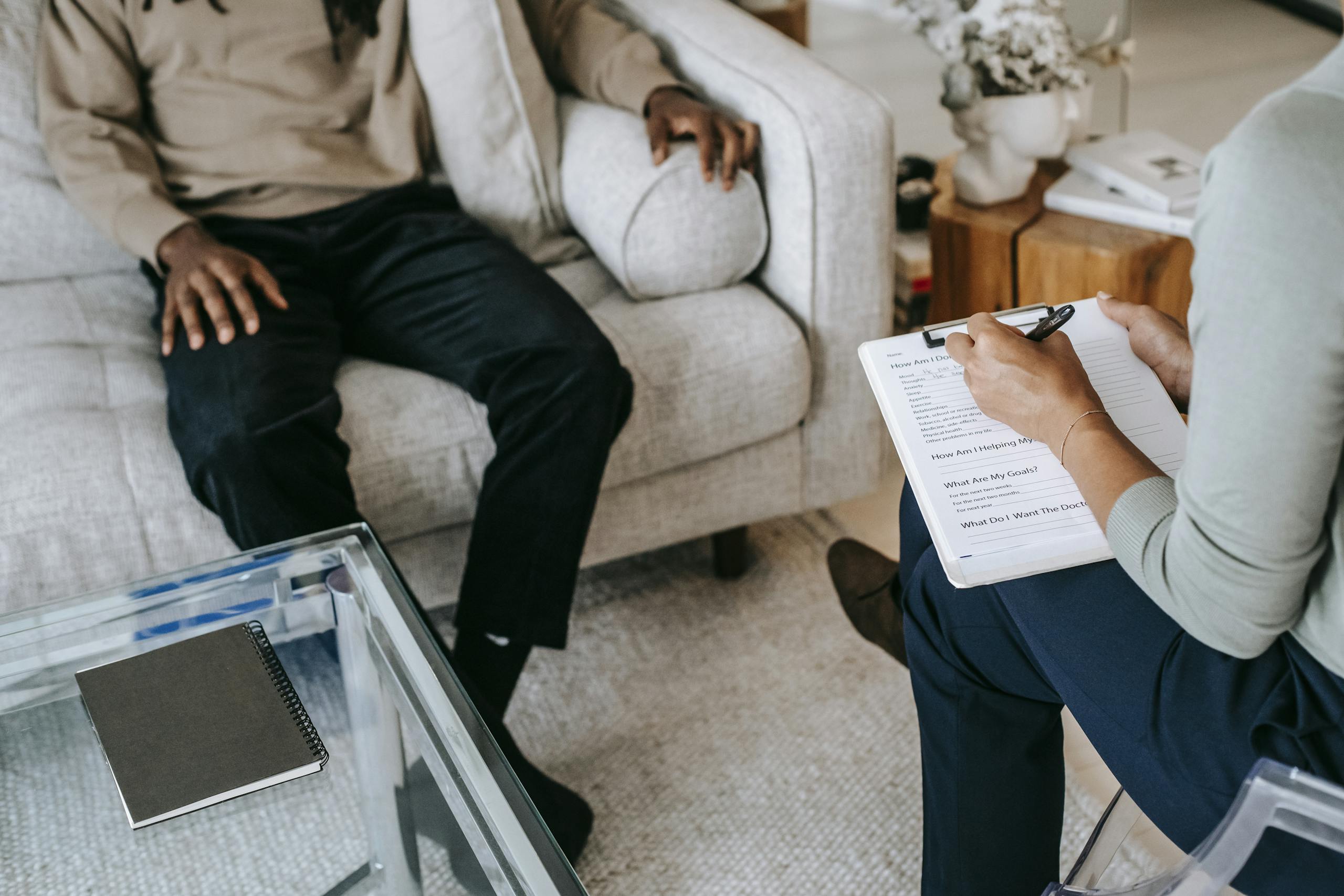
That might mean having some hard conversations about what you need in your relationships. It might mean restructuring your work environment or reconsidering a career path that’s been treating your emotional attunement as an infinite resource. It might mean finding a therapist who understands high sensitivity and can help you develop the internal scaffolding that turns your empathy from a liability into something you can actually live with, and even appreciate.
What it almost certainly means is getting honest about the places in your life where you’ve been giving without receiving, absorbing without recovering, and showing up fully for others while showing up last for yourself.
Being an empath is genuinely hard in a world that moves fast, rewards detachment, and rarely makes space for depth. That difficulty is real. So is the capacity for meaning, connection, and perception that comes with this kind of wiring. Both things are true, and you don’t have to choose between them. You just have to stop pretending the hard part isn’t there.
There’s much more to explore across the full range of sensitive person experiences. The HSP and Highly Sensitive Person resource hub covers everything from relationships to parenting to career, all written with the understanding that sensitivity isn’t a flaw to overcome but a trait worth understanding deeply.
Running on empty?
Five drain profiles, each with specific triggers, warning signs, and a recharging playbook.
Take the Free QuizUnder 2 minutes · 8 questions · Free
About the Author
Keith Lacy is an introvert who’s learned to embrace his true self later in life. After 20 years in advertising and marketing leadership, including running agencies and managing Fortune 500 accounts, Keith now channels his experience into helping fellow introverts understand their strengths and build fulfilling careers. As an INTJ, he brings analytical depth and authentic perspective to every article, drawing from both professional expertise and personal growth.
Frequently Asked Questions
Is it normal to wish you weren’t an empath?
Yes, and it’s more common than most empaths admit publicly. The wish usually surfaces after a sustained period of emotional overload, when the cost of absorbing everyone else’s feelings has outpaced any sense of recovery or reciprocity. It doesn’t signal that something is wrong with you. It signals that something in your current circumstances is unsustainable. Many empaths go through cycles of wanting to feel less, particularly during high-stress periods in their relationships or careers, before finding structures that make their sensitivity more livable.
Can you actually stop being an empath?
Not in any fundamental neurological sense. High sensitivity and the empathic capacity that comes with it are rooted in how your nervous system is wired, and that wiring doesn’t change through willpower or avoidance. What does change, with deliberate effort, is how you relate to your sensitivity. Empaths who feel most at peace with their trait have typically developed strong emotional boundaries, intentional recovery practices, and environments that don’t require them to be constantly absorbing other people’s emotional states. The sensitivity remains. The suffering around it decreases significantly.
What’s the difference between an empath and a highly sensitive person?
The terms overlap considerably, but they’re not identical. Highly sensitive people (HSPs) experience the world with greater depth and intensity across sensory and emotional dimensions. Empaths specifically tend to absorb other people’s emotions as if they were their own, sometimes to the point of losing track of where their feelings end and another person’s begin. HSPs feel others’ emotions intensely but typically retain more of a boundary between self and other. Many empaths are also HSPs, but not all HSPs identify as empaths. The distinction matters because it shapes which coping strategies are most useful.
Why do empaths burn out in relationships?
Empath burnout in relationships typically develops when the emotional attunement flows consistently in one direction. The empath picks up on their partner’s moods, needs, and unspoken feelings and responds to them, often before the partner has even articulated them. Over time, this creates a dynamic where the empath is doing the majority of the emotional labor without an equivalent flow of care returning to them. Add in the physical exhaustion of processing emotional information constantly and the lack of solitude that close cohabitation brings, and burnout becomes almost inevitable without deliberate structural changes to how the relationship operates.
What are practical ways for empaths to protect their emotional energy?
The most effective approaches tend to be structural rather than purely psychological. Creating reliable solitude, even brief daily periods of genuine quiet without social input, matters enormously. Being deliberate about which relationships and environments you expose yourself to, and for how long, reduces the cumulative load. Time in natural settings has documented restorative effects on the nervous system. Learning to identify the physical sensations that signal you’re absorbing rather than simply observing, and pausing when you notice them, builds the kind of awareness that makes boundaries possible. And getting honest about which relationships are chronically draining without reciprocating is uncomfortable but often the most important step of all.