
The Myers Brigg personality types are a framework of 16 distinct personality profiles, each built from four preference pairs: Introversion or Extraversion, Intuition or Sensing, Thinking or Feeling, and Judging or Perceiving. Developed from Carl Jung’s theory of psychological types, the system helps people understand how they process information, make decisions, and relate to the world around them. More than a simple label, your four-letter type can illuminate patterns in your behavior that you’ve felt your whole life but never quite had words for.
Somewhere around my late thirties, after two decades of running advertising agencies and managing teams for Fortune 500 brands, I finally sat down and took a proper personality assessment. The result was INTJ. And honestly, reading that profile felt less like a revelation and more like someone had quietly handed me a mirror I’d been avoiding for years.

Before we go further, it’s worth knowing that this article is part of a broader collection I’ve been building. My MBTI General and Personality Theory hub covers the full landscape of personality typing, from the foundational theory behind the four-letter system to deep dives on individual types. If you’re just starting out or want to connect the dots between different aspects of the framework, that hub is a good home base.
Where Did the Myers Brigg Personality Types Come From?
Most people know the name Myers-Briggs without knowing the story behind it. Isabel Briggs Myers and her mother, Katharine Cook Briggs, spent decades developing the assessment based on Carl Jung’s 1921 work, “Psychological Types.” What started as a personal project to understand human behavior became one of the most widely used personality instruments in the world.
What’s your personality type?
Take our free 40-question assessment and get a detailed personality profile with dimension breakdowns, context analysis, and personalised insights.
Discover Your Type8-12 minutes · 40 questions · Free
Jung proposed that people have fundamental preferences in how they perceive the world and how they make judgments about what they perceive. Myers and Briggs took that foundation and built a practical system around it, one that could be applied in real-world settings like education, career counseling, and organizational development. The formal Myers-Briggs Type Indicator assessment was published in 1962, though the research behind it stretched back much further.
A 2005 piece from the American Psychological Association explored how personality instruments like this one function as mirrors for self-understanding, noting that the act of seeing yourself reflected in a structured framework can shift how you interpret your own behavior. That’s exactly what happened to me. Not because a four-letter code told me something I didn’t know, but because it gave me permission to stop apologizing for how I was already wired.
In the agency world, I spent years assuming that my preference for working through problems alone before bringing ideas to a room was a professional liability. Clients expected energy. They expected big personalities. They expected the kind of leader who could walk into a pitch meeting and fill the space with enthusiasm. I could perform that version of myself, but it cost me enormously. Understanding the framework behind personality types helped me see that what I’d been calling a weakness was actually a coherent, consistent way of operating, one shared by a significant portion of the population.
How Do the Four Preference Pairs Actually Work?
Each of the 16 Myers Brigg personality types is built from four letters, and each letter represents a preference on a spectrum. It’s not a binary. Most people sit somewhere along a continuum rather than at the extreme ends, but the system asks you to identify which side feels more natural.
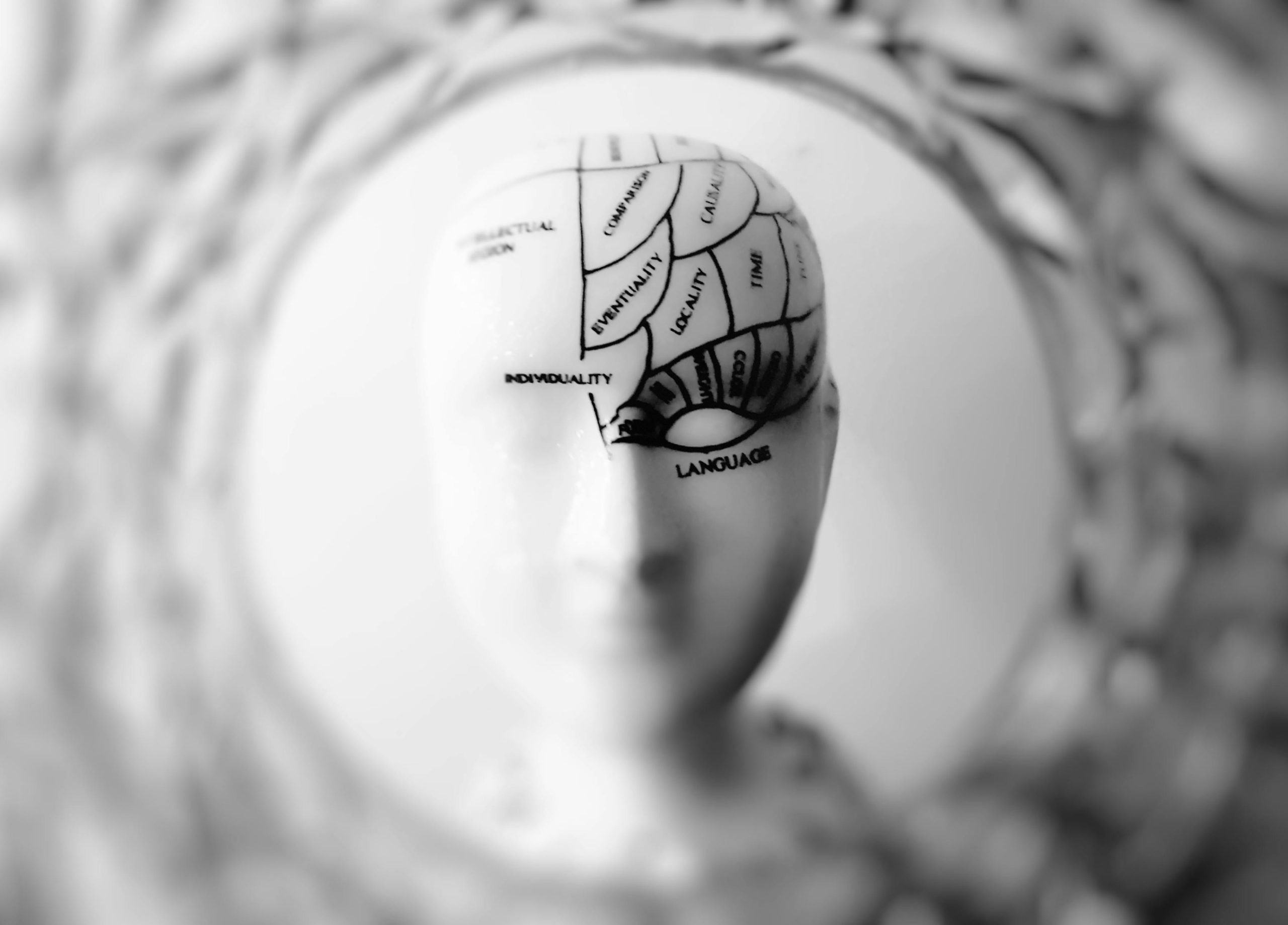
The first pair is Introversion (I) versus Extraversion (E). This is the one most people think they understand, but it’s more nuanced than “shy versus outgoing.” The real distinction is about energy: where you recharge. Extraverts draw energy from external interaction and stimulation. Introverts restore themselves through solitude and internal reflection. I’ve had plenty of extraverted clients who were perfectly comfortable being alone. The difference was that extended social engagement left me depleted in a way it simply didn’t leave them.
The second pair is Sensing (S) versus Intuition (N). Sensing types prefer concrete, tangible information gathered through direct experience. Intuitive types gravitate toward patterns, possibilities, and the meaning behind the data. In my agency years, I watched this play out constantly in creative briefings. Sensing-oriented account managers wanted specifics: deliverables, timelines, measurable outcomes. Intuitive strategists wanted to talk about what the campaign could mean for the brand five years down the road. Neither was wrong. They were just processing the same information through different filters.
The third pair is Thinking (T) versus Feeling (F). This isn’t about emotion versus logic. Both types are capable of emotional depth and logical reasoning. The distinction is about what you prioritize when making decisions. Thinking types tend to apply objective criteria and impersonal analysis. Feeling types weigh the impact on people and consider relational harmony as a legitimate factor in decision-making. A 2020 study published in PubMed Central found meaningful correlations between personality dimensions and decision-making patterns, which aligns with what the MBTI framework has long described.
The fourth pair is Judging (J) versus Perceiving (P). Judging types prefer structure, closure, and planned approaches. Perceiving types prefer flexibility, spontaneity, and keeping options open. My INTJ profile lands firmly on the Judging side, which explains why open-ended timelines and ambiguous project scopes made me quietly miserable throughout most of my career. I needed a plan. Not because I was rigid, but because my mind works best when it has a clear structure to work within or push against.
What Are All 16 Myers Brigg Personality Types?
The 16 types are organized into four temperament groups, each sharing two letters and a common orientation toward the world. Understanding these groupings can make the full system feel less overwhelming.
The Analysts (NT types) are INTJ, INTP, ENTJ, and ENTP. These types share a preference for Intuition and Thinking. They tend to be strategic, intellectually driven, and comfortable with abstract systems. My own type, INTJ, sits in this group. If you want to understand what distinguishes an INTJ from the outside, the patterns can be subtle but consistent. I wrote about this in detail in my piece on INTJ recognition signs that most people miss, and some of those markers surprised even me when I revisited them.
The Diplomats (NF types) are INFJ, INFP, ENFJ, and ENFP. These types share Intuition and Feeling. They’re often described as idealistic, empathetic, and driven by a sense of purpose that goes beyond personal gain. The INFP in particular is a type I find fascinating because its outer presentation can be genuinely misleading. The traits that define an INFP aren’t always the ones people expect. My article on how to recognize an INFP, including the traits nobody mentions, gets into the specifics of what makes this type tick beneath the surface.
The Sentinels (SJ types) are ISTJ, ISFJ, ESTJ, and ESFJ. These types share Sensing and Judging. They tend to value tradition, reliability, and clear social structures. In my agency years, the most dependable project managers I worked with were often SJ types. They were the ones who caught the details everyone else missed and kept client relationships steady when creative processes got chaotic.
The Explorers (SP types) are ISTP, ISFP, ESTP, and ESFP. These types share Sensing and Perceiving. They’re often action-oriented, adaptable, and skilled at responding to immediate circumstances. The ISTP in particular brings a kind of practical intelligence that’s hard to replicate. There’s something worth examining in how ISTP problem-solving outperforms theoretical approaches in real-world pressure situations, especially in environments where quick, accurate decisions matter more than elaborate frameworks.

How Common Are the Different Personality Types?
One of the more grounding things about learning your type is understanding where you fall in the broader population. Some types are relatively common. Others are genuinely rare. According to global personality data compiled by 16Personalities, type distribution varies significantly across cultures and regions, which adds an interesting layer to how we interpret personality norms.
ISTJ and ISFJ tend to appear with high frequency across most populations. INFJ and INTJ sit at the rarer end of the spectrum. As an INTJ, I spent a lot of years feeling vaguely out of step with the environments I was in, particularly in the advertising industry, which tends to reward high extraversion and emotional expressiveness. Knowing that my type represents a small percentage of the general population didn’t make me feel superior. It made me feel less broken.
If you haven’t identified your own type yet, our free MBTI personality test is a good starting point. It won’t replace a certified assessment, but it gives you a solid working hypothesis to explore further.
What’s worth noting is that population frequency doesn’t determine value. A rare type isn’t better than a common one. A more extraverted type isn’t more suited to leadership than an introverted one. The research on team effectiveness actually suggests that diversity of type is a significant asset. A 2019 analysis from 16Personalities on team collaboration found that mixed-type teams consistently outperform homogeneous ones when psychological safety is present. I saw this firsthand managing creative teams. The campaigns that worked best came from rooms where an analytical INTJ, an empathetic INFP, and a practical ISTP were all genuinely heard.
What Does Your Type Actually Tell You About Yourself?
A personality type is a starting point, not a ceiling. What it offers is a coherent language for patterns you’ve probably already noticed about yourself. The value isn’t in the label. It’s in what the label points toward.
For me, understanding my INTJ profile explained why I consistently needed recovery time after high-interaction periods. After a major client presentation or a full-day agency review, I wasn’t tired in a general sense. I was specifically depleted in a way that quiet work and solitude could restore. That’s not a quirk. That’s a consistent feature of how my nervous system processes social engagement. A 2009 study in PubMed Central examined the neurological underpinnings of introversion and extraversion, finding measurable differences in how introverted and extraverted brains respond to external stimulation. Knowing this made it easier to build recovery into my schedule without guilt.
For INFP types, the self-discovery process often goes deeper than career preferences or communication styles. The INFP’s inner world is rich and complex in ways that aren’t always visible from the outside. My piece on INFP self-discovery and the insights that actually change things explores what it means to understand yourself through this particular lens, especially when the world keeps asking you to be something more outwardly expressive.
For ISTP types, the self-awareness process often involves recognizing that their quiet, observational style is a form of intelligence, not detachment. The signs of an ISTP personality can be easy to overlook in environments that reward verbal expressiveness, but once you know what to look for, the pattern becomes unmistakable. And the unmistakable markers of ISTP recognition go beyond the surface-level descriptions you’ll find in most introductions to the type.

Are the Myers Brigg Personality Types Scientifically Valid?
This is the question that comes up in almost every serious conversation about the MBTI, and it deserves a direct answer. The framework has critics, and some of their criticisms are legitimate. Test-retest reliability, meaning whether you get the same result when you retake the assessment weeks later, has been a documented concern. Some studies have found that a meaningful percentage of people receive different type results on repeated testing.
That said, the broader criticism that the MBTI is “just pseudoscience” is an oversimplification. The four dimensions it measures, particularly Introversion versus Extraversion and Thinking versus Feeling, align reasonably well with dimensions that appear in other validated personality frameworks, including the Big Five model. The issue isn’t that the underlying constructs are meaningless. It’s that the forced binary categorization (you’re either an I or an E, a T or an F) doesn’t fully capture the continuous nature of these traits.
Truity’s analysis of deep thinking patterns in personality science touches on how the cognitive characteristics associated with intuitive and introverted types show up consistently across different measurement systems, even when the specific frameworks differ. That consistency matters.
My own view, shaped by two decades of watching personality dynamics play out in high-pressure professional environments, is pragmatic. The MBTI is a useful map, not a perfect territory. It gives you a working model for understanding yourself and others. Used with appropriate humility, it’s genuinely valuable. Used as a rigid deterministic system, it becomes a box. The difference lies in how you hold it.
What I’ve found consistently true is that the framework’s value isn’t in predicting behavior. It’s in explaining tendencies. And tendencies, once named, become much easier to work with consciously.
How Can Knowing Your Type Change How You Work and Live?
Practical application is where personality typing either earns its keep or becomes a parlor trick. For me, the shift came not from reading about my type but from applying the insights in specific, concrete ways.
Setting boundaries became less fraught once I understood that my need for protected thinking time wasn’t a personal failing. As an agency CEO, I had an open-door culture that I’d built partly because I thought it was the right thing to do and partly because I didn’t want to seem unapproachable. What it actually created was a constant state of interrupted concentration that left me exhausted and, paradoxically, less available to the people who needed my best thinking. Once I understood that my INTJ wiring genuinely required uninterrupted processing time to function at its best, I could build that into my schedule without treating it as a selfish indulgence.
Understanding type also changed how I managed people. A Feeling-dominant team member needed a different kind of feedback conversation than a Thinking-dominant one. Not because one was more sensitive than the other, but because they processed critical information through different frameworks. The Feeling type needed to understand the relational context of the feedback before they could absorb the content. The Thinking type wanted the logic first and the relational framing second. Getting that order wrong created unnecessary friction.
Research on empathy and interpersonal attunement, including work cited by WebMD on empathic response patterns, suggests that the capacity to understand others’ emotional states is distributed unevenly across personality types, but it’s also a skill that can be developed with awareness. Knowing your type helps you identify where your natural attunement is strong and where you need to be more deliberate.
For introverted types specifically, the personality framework offers something that goes beyond career advice or communication tips. It offers a reframe. The qualities that made me feel out of place in extrovert-dominant environments, the preference for depth over breadth, the need to process before speaking, the discomfort with performative enthusiasm, weren’t deficits. They were a coherent operating system that worked exceptionally well in the right contexts. Finding those contexts, and building them where they didn’t exist, became the real work.

There’s a lot more ground to cover on this topic than any single article can hold. My complete MBTI and Personality Theory hub pulls together everything I’ve written on the framework, including individual type profiles, cognitive function deep dives, and practical applications for introverts in professional settings.
Curious about your personality type?
Our free MBTI assessment goes beyond the four letters. Get a full breakdown of your scores, see how your type shows up at work and in relationships.
Take the Free Test8-12 minutes · 40 questions · Free
About the Author
Keith Lacy is an introvert who’s learned to embrace his true self later in life. After 20 years in advertising and marketing leadership, including running agencies and managing Fortune 500 accounts, Keith now channels his experience into helping fellow introverts understand their strengths and build fulfilling careers. As an INTJ, he brings analytical depth and authentic perspective to every article, drawing from both professional expertise and personal growth.
Frequently Asked Questions
What are the 16 Myers Brigg personality types?
The 16 types are INTJ, INTP, ENTJ, ENTP, INFJ, INFP, ENFJ, ENFP, ISTJ, ISFJ, ESTJ, ESFJ, ISTP, ISFP, ESTP, and ESFP. Each type is built from four preference letters drawn from four pairs: Introversion or Extraversion, Intuition or Sensing, Thinking or Feeling, and Judging or Perceiving. The types are grouped into four temperament categories: Analysts (NT), Diplomats (NF), Sentinels (SJ), and Explorers (SP).
How accurate is the Myers-Briggs Type Indicator?
The MBTI has genuine strengths and documented limitations. Its core dimensions, particularly Introversion versus Extraversion, align with traits measured in other validated frameworks like the Big Five. The main criticism involves test-retest reliability, since some people receive different results on repeated testing. Used as a flexible self-awareness tool rather than a rigid diagnostic system, the framework offers real value. It’s most useful when treated as a working model for understanding tendencies, not a definitive personality verdict.
Can your Myers Brigg personality type change over time?
Core type preferences tend to remain relatively stable across a lifetime, though how they express themselves can shift significantly with experience, maturity, and deliberate development. Someone who tests as a strong introvert at 25 may still be introverted at 55, but they may have developed far greater comfort with social engagement through practice. Life circumstances, particularly significant transitions, can also temporarily shift how you present on an assessment. What changes most is not the underlying preference but the skill with which you work with it.
Which Myers Brigg personality types are most common?
ISTJ and ISFJ consistently appear as among the most common types across large population samples, with ISTJ often cited as the single most prevalent type in many Western countries. INFJ and INTJ tend to appear at the rarer end of the distribution. Type frequency varies across cultures and regions, which means the “common” and “rare” designations are population-specific rather than universal. Frequency doesn’t indicate value or capability. Every type brings distinct strengths that matter in different contexts.
How do introverted Myers Brigg types differ from extraverted ones?
The eight introverted types (INTJ, INTP, INFJ, INFP, ISTJ, ISFJ, ISTP, ISFP) share a preference for internal processing and tend to restore their energy through solitude rather than social engagement. This doesn’t mean they’re antisocial or incapable of strong social performance. It means that extended social engagement costs them energy rather than generating it. Introverted types often bring particular strengths in deep concentration, careful observation, and sustained independent work. The differences between introverted and extraverted types show up most clearly in how each group manages energy, prepares for interaction, and recovers from high-stimulation environments.