An autistic empath is someone who lives at the intersection of autism spectrum traits and deep empathic sensitivity, experiencing the world with both heightened emotional attunement and a nervous system wired differently from the neurotypical majority. Far from being contradictory, these two traits often coexist in ways that create a uniquely perceptive, deeply feeling inner life. Many autistic empaths absorb the emotional states of others intensely while simultaneously processing sensory and social information through a framework that differs from conventional expectations.
What makes this combination so compelling, and so frequently misunderstood, is that it challenges the outdated assumption that autistic people lack empathy. Many autistic empaths feel too much, not too little. They just process and express it differently.
Sensitivity runs in many forms across personality and neurology. Our HSP and Highly Sensitive Person hub examines the broader landscape of deep sensitivity, from biological wiring to daily experience, and the autistic empath experience adds a fascinating and often overlooked dimension to that conversation.
What Does It Actually Mean to Be an Autistic Empath?
Most people have encountered the stereotype: autistic individuals are logical, detached, unaware of others’ emotions. That picture is incomplete at best and harmful at worst. A growing body of evidence suggests the relationship between autism and empathy is far more nuanced than pop psychology ever acknowledged.
What drains your social battery?
Not all social exhaustion is the same. Our free quiz identifies your specific drain pattern and gives you personalised recharging strategies.
Find Your Drain PatternUnder 2 minutes · 8 questions · Free
A 2024 study published in Frontiers in Psychology examined emotional processing differences in neurodivergent populations and found significant variation in how empathic responses manifest, challenging the blanket assumption that autism reduces emotional sensitivity. Some autistic individuals report what researchers describe as hyperempathy, an overwhelming flood of emotional input that can be as disabling as emotional numbness, just in the opposite direction.
I think about this a lot in relation to my own wiring as an INTJ. I’m not autistic, but I spent years in advertising leadership feeling things in meetings that nobody else seemed to register. The undercurrent of tension between a creative director and an account lead. The client who smiled while their body language screamed discomfort. My mind was cataloguing emotional data constantly, even as I appeared composed and analytical on the surface. That quiet internal processing felt isolating for a long time, because it didn’t match the extroverted, back-slapping energy that agency culture rewarded.
For autistic empaths, that gap between internal experience and external expression is often even wider, and the stakes of being misread feel much higher.
Why Do So Many Autistic People Report Feeling Too Much?
The concept of hyperempathy in autism sits in interesting tension with the older “theory of mind” deficit framework. That older model suggested autistic people struggle to infer others’ mental states. What it missed is that inferring and feeling are two separate things. An autistic empath might struggle to decode the social cues that signal someone’s distress, yet feel that distress viscerally once they become aware of it.
A PubMed study on empathy and autism found evidence for what some researchers call the “double empathy problem,” the idea that communication breakdowns between autistic and neurotypical people are bidirectional. Neurotypical people are equally poor at reading autistic emotional expression. The failure isn’t one-sided. It’s a mismatch between two different emotional languages.
This reframing matters enormously. Autistic empaths aren’t broken versions of neurotypical empaths. They’re operating on a different frequency, one that can pick up signals others miss entirely.
Personality type adds another layer worth considering. Curious about how neurology and personality interact? My piece on MBTI development and the 5 truths that actually matter explores how self-understanding shifts everything, regardless of where you fall on the neurodiversity spectrum.
How Is an Autistic Empath Different from a Highly Sensitive Person?
This is one of the most common questions I see, and it deserves a careful answer because the overlap is real but the distinction matters.
Highly Sensitive People (HSPs) experience heightened sensory and emotional processing as a trait that exists across the neurotypical population. About 15 to 20 percent of people carry this trait, and it’s been studied extensively by researcher Elaine Aron. As Psychology Today notes in a piece on HSPs versus empaths, the distinction between these categories involves not just sensitivity level but the specific mechanism of emotional absorption.
Autism, by contrast, is a neurological condition with a distinct developmental profile, affecting sensory processing, social communication, executive function, and more. An autistic person can also be an HSP. An autistic empath may carry traits from both frameworks simultaneously.
One important clarification: high sensitivity is not a trauma response, even though it’s sometimes mistaken for one. Psychology Today’s piece on this distinction makes the case clearly: sensitivity is a biological trait present from birth, not a learned defensive response to difficult experiences. Autistic empaths sometimes struggle with this mischaracterization too, having their sensitivity pathologized rather than recognized as a fundamental aspect of their neurology.
What autistic empaths, HSPs, and empaths share is a nervous system that processes more deeply than average. Where they differ is in the specific architecture of that processing and the social contexts in which it plays out.
What Are the Strengths That Autistic Empaths Bring to the World?
I’ve spent enough time in corporate environments to know that the people who notice things, who pick up on what’s unsaid, who feel the emotional texture of a room, are often the most valuable people in it. They’re just rarely the ones getting credit for it.
Autistic empaths tend to bring a specific combination of strengths that, in the right environment, become genuine superpowers.
Pattern recognition in human behavior. Because autistic empaths often observe rather than perform in social situations, they build rich internal models of how people behave. They notice inconsistencies, emotional undercurrents, and patterns that others walk right past.
Fierce loyalty and authentic connection. Autistic empaths tend to form fewer but deeper relationships. When they care about someone, that care is genuine and consistent. They don’t perform connection. They mean it.
Ethical clarity. Many autistic empaths report a strong, sometimes rigid sense of fairness and justice. They feel injustice acutely and are often unwilling to compromise on values even when social pressure pushes them to do so. In my agency years, I valued this quality enormously in the people I worked with. A team member who would tell me the truth about a campaign’s weaknesses, even in a room full of excited clients, was worth more than ten enthusiastic yes-people.
Creative and analytical depth. The combination of emotional sensitivity and often intense intellectual focus creates people who can produce extraordinary creative work. They bring both feeling and rigor to problems.
These strengths don’t always translate smoothly into conventional workplaces, though. If you’re building a career around this wiring, the HSP Career Survival Guide offers practical frameworks for making sensitivity work in professional settings rather than against you.

What Are the Biggest Challenges Autistic Empaths Face Daily?
The challenges are real, and I think it’s important to name them honestly rather than gloss over them with reassuring platitudes.
Emotional overwhelm and sensory flooding. When you feel others’ emotions as intensely as your own, and you’re simultaneously processing sensory input at a heightened level, daily life can become exhausting in ways that are hard to explain to people who don’t share this experience. Crowded spaces, loud environments, and emotionally charged situations can tip into overwhelm quickly.
Sleep is often a casualty of this. A nervous system that doesn’t fully downregulate struggles to transition into restful sleep. I’ve tested and written about white noise machines for sensitive sleepers, and the right auditory environment genuinely matters for people whose nervous systems stay alert long after the day ends.
Being misread and misunderstood. Autistic empaths often feel deeply but express that feeling in ways that don’t match neurotypical social scripts. They might go quiet when overwhelmed instead of reaching out. They might express care through actions rather than words. They might need time alone to process before they can respond. All of this gets misinterpreted as coldness, indifference, or social failure by people who don’t understand the underlying wiring.
I watched this play out with a creative director I managed for years. Brilliant, perceptive, deeply invested in the work and the people around her. In client meetings she was often quiet, processing. Afterward she would send emails that were precise, warm, and insightful. Clients who didn’t know her sometimes mistook her meeting silence for disengagement. The ones who did know her understood they were getting something rare: genuine, considered attention.
Absorbing others’ distress without a clear exit. Empathic absorption without strong boundaries is genuinely draining. Autistic empaths often struggle to separate their own emotional state from the emotional states of people around them. This isn’t a character flaw. It’s a feature of how their nervous system works. Yet without strategies to manage it, it leads to burnout.
Workplace environments built for different brains. Open-plan offices, mandatory social events, constant context-switching, and performance reviews that reward extroverted visibility are particularly difficult for autistic empaths. The challenges that rare personality types face at work often mirror what autistic empaths experience: being evaluated by metrics that don’t capture their actual contributions.
How Does Nature Factor Into the Autistic Empath Experience?
Something I’ve noticed over years of reflection is that the environments where I think most clearly and feel most like myself are almost always quiet ones. A walk along the water. A morning before the city wakes up. The kind of stillness that lets the mind settle into itself.
For autistic empaths, this pull toward natural environments isn’t just a preference. It’s often a genuine regulatory need. Yale’s coverage of ecopsychology research documents how immersion in natural settings reduces cortisol, lowers heart rate, and restores attentional capacity. For a nervous system that spends significant energy processing emotional and sensory input, nature offers something rare: an environment without social demands.
Trees don’t need you to decode their emotional state. Rain doesn’t require a social script. Many autistic empaths report that time outdoors is one of their most reliable tools for emotional regulation, not as an escape from life but as a return to baseline.
This connects to something broader about how autistic empaths build sustainable lives. The environments they choose matter enormously. Not just for comfort, but for function.
Is Being an Autistic Empath Related to Personality Type?
Personality frameworks like MBTI and the Big Five aren’t diagnostic tools for autism or empathy, but they do capture real patterns in how people process information and relate to the world. Many autistic empaths find that certain personality profiles resonate strongly with their experience.
Introverted, intuitive types often appear frequently in conversations about autistic empaths, partly because the internal processing orientation of introversion aligns with how many autistic empaths describe their experience. They think before they speak. They process internally. They prefer depth to breadth in relationships and interests.
Worth noting: some people who identify as autistic empaths also wonder whether they might be ambiverts or somewhere on a social energy spectrum that doesn’t fit neatly into introvert or extrovert categories. My piece on why ambiverts might just be confused, not balanced explores why these middle-ground identities often reflect something more specific than they first appear.
What matters more than any label is understanding the specific mechanics of your own wiring. Are you drained by social interaction or by emotional absorption? Do you need solitude to process or to recover? Those distinctions shape everything from career choices to relationship dynamics.

How Can Autistic Empaths Build Lives That Actually Fit Them?
Practical strategies matter here. Not as a list of hacks, but as genuine structural choices about how to build a life around who you actually are.
Design your environment deliberately. Autistic empaths thrive when they have control over their sensory and social environment. Working from home, having a quiet corner in a shared space, choosing neighborhoods that match their sensory tolerance, these aren’t luxuries. They’re functional necessities for a nervous system that works differently.
Build in regular decompression time. After emotionally or sensorially demanding situations, autistic empaths need genuine recovery time, not just a few minutes but sometimes hours. Scheduling this proactively, rather than waiting until burnout hits, changes the entire quality of daily life. I learned this slowly over my agency years. The leaders who lasted weren’t the ones who pushed hardest without stopping. They were the ones who knew when to step back.
Develop language for your experience. One of the most powerful things an autistic empath can do is find accurate words for what they experience. Not to perform vulnerability, but to communicate needs clearly to the people who matter. “I need to process this before I respond” is a complete sentence. “I’m overwhelmed by the noise in this space” is useful information, not a complaint.
Find communities that get it. Isolation compounds every challenge. Finding others who share similar wiring, whether through autism communities, HSP groups, or simply honest friendships, provides the kind of low-stakes connection that autistic empaths genuinely need. Rare personality traits can create a particular kind of loneliness. Understanding what makes a personality type rare and why that matters can reframe that loneliness as something more meaningful than simply being odd.
Choose work that uses your actual strengths. Autistic empaths often do well in roles that require deep focus, pattern recognition, ethical clarity, and genuine care for others. Counseling, research, writing, creative fields, advocacy, and certain analytical roles can be excellent fits. what matters is finding environments that don’t require constant performance of neurotypical social behavior.
What Does Emotional Regulation Look Like for an Autistic Empath?
Emotional regulation for autistic empaths isn’t about feeling less. It’s about developing a relationship with intense feeling that doesn’t overwhelm function.
Some approaches that genuinely help:
Somatic awareness. Learning to notice where emotion lives in the body before it becomes overwhelming. Tension in the chest. Heaviness in the shoulders. A tightening in the throat. These physical signals often precede the full emotional flood, and catching them early creates space to respond rather than react.
Predictable structure. Many autistic empaths find that predictable routines reduce the baseline cognitive and emotional load, leaving more capacity for the inevitable unexpected moments. When the scaffolding of the day is stable, the nervous system can handle disruption better.
Sensory tools. Noise-canceling headphones, weighted blankets, specific textures, controlled lighting, these aren’t indulgences. They’re regulatory tools that help a sensitive nervous system stay within a functional range. Environmental control is a legitimate strategy, not avoidance.
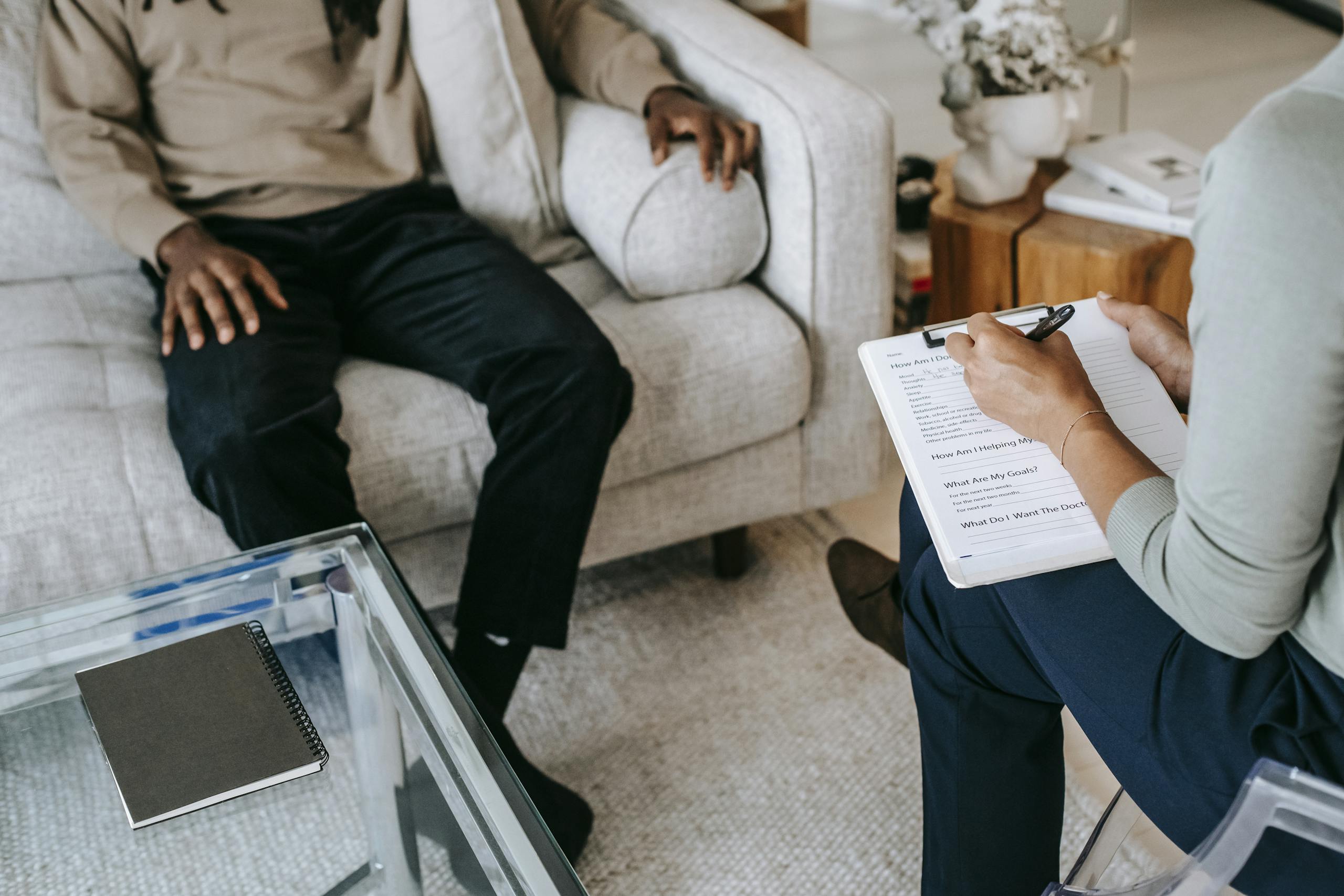
Therapeutic support. Working with a therapist who understands both autism and empathic sensitivity can be genuinely valuable. Not to fix anything, but to build a more sophisticated internal map of how your nervous system works and what it needs.
I think about the years I spent trying to manage my own internal experience through sheer willpower and professionalism. Staying composed in tense client meetings. Processing difficult feedback quietly. Never letting the weight of a struggling campaign show on my face. There’s value in composure, but there’s a cost to never acknowledging what you’re actually carrying. The autistic empaths I’ve known who seem most grounded are the ones who’ve found honest ways to honor their internal experience rather than suppress it.
How Do Relationships Work for Autistic Empaths?
Relationships are where the autistic empath experience becomes both most rewarding and most complicated.
On one hand, autistic empaths are capable of profound intimacy. They pay attention. They remember. They care in ways that are specific and real rather than performative. A friend who is an autistic empath will notice that you seem off before you’ve said a word, and they’ll mean it when they ask if you’re okay.
On the other hand, the same sensitivity that makes them attentive can make relationships exhausting. They absorb their partner’s stress. They replay difficult conversations long after the other person has moved on. They need more reassurance than average because their nervous system generates more uncertainty.
Communication differences also matter. Autistic empaths often prefer direct, explicit communication over social subtext. They may take things literally. They may need more time to process before responding. Partners and friends who understand this, and who can communicate clearly without relying on assumed social scripts, tend to build the most sustainable connections with autistic empaths.
One thing I’ve found consistently true across my years in leadership: the people who are genuinely good at relationships, not performatively good, but actually skilled at caring for others, are often the ones who’ve had to think consciously about connection rather than defaulting to social autopilot. Autistic empaths, by necessity, often develop that conscious attentiveness. It’s hard-won, and it’s real.
There’s much more to explore about sensitivity, neurodiversity, and emotional depth across different personality types. The full range of that conversation lives in our HSP and Highly Sensitive Person resource hub, where we continue to examine what it means to feel deeply in a world that often rewards those who don’t.
Running on empty?
Five drain profiles, each with specific triggers, warning signs, and a recharging playbook.
Take the Free QuizUnder 2 minutes · 8 questions · Free
About the Author
Keith Lacy is an introvert who’s learned to embrace his true self later in life. After 20 years in advertising and marketing leadership, including running agencies and managing Fortune 500 accounts, Keith now channels his experience into helping fellow introverts understand their strengths and build fulfilling careers. As an INTJ, he brings analytical depth and authentic perspective to every article, drawing from both professional expertise and personal growth.
Frequently Asked Questions
Can someone be both autistic and an empath?
Yes. The assumption that autism and empathy are mutually exclusive is based on outdated research. Many autistic people report intense empathic sensitivity, sometimes described as hyperempathy. They may process and express that empathy differently from neurotypical people, but the feeling itself is genuine and often overwhelming. The “double empathy problem” framework helps explain why autistic empathy is frequently misread rather than absent.
What is the difference between an autistic empath and a highly sensitive person?
A highly sensitive person (HSP) has a nervous system that processes sensory and emotional information more deeply than average, a trait present in roughly 15 to 20 percent of the population. Autism is a neurological condition with a broader developmental profile that affects social communication, sensory processing, and executive function. An autistic empath may carry traits of both, experiencing heightened emotional sensitivity within the context of autistic neurology. The categories overlap but are not identical.
Why do autistic empaths experience emotional burnout so often?
Autistic empaths are processing emotional and sensory input at a heightened level continuously. When that input is intense or sustained, the nervous system reaches a saturation point. Without adequate recovery time, this leads to what many describe as autistic burnout: a state of profound exhaustion that affects cognitive function, emotional regulation, and physical wellbeing. Proactive management of sensory and social load is essential for preventing this cycle.
How can an autistic empath protect their energy in social situations?
Practical strategies include setting clear time limits on socially demanding situations, building in recovery periods after high-input events, using sensory tools like noise-canceling headphones in overwhelming environments, and developing honest language to communicate needs to others. Choosing environments deliberately, whether for work, socializing, or daily routines, reduces the baseline energy cost of handling a world built for different nervous systems.
Are autistic empaths more likely to be introverted?
Many autistic empaths do identify with introversion, primarily because they tend to recharge through solitude and find sustained social interaction draining. Yet the relationship isn’t absolute. Some autistic empaths crave social connection even while finding it exhausting, a pattern that can look like ambiversion on the surface. What most share is a preference for depth over breadth in social interaction and a need for environments where they can control the level of sensory and emotional input they’re managing.