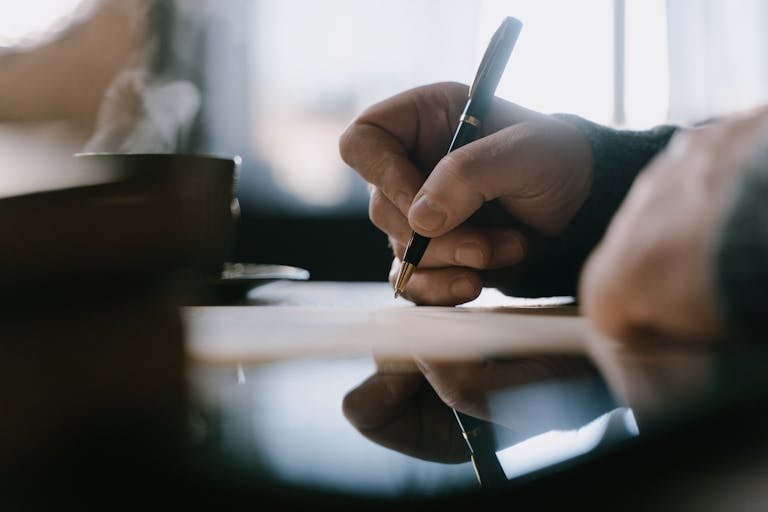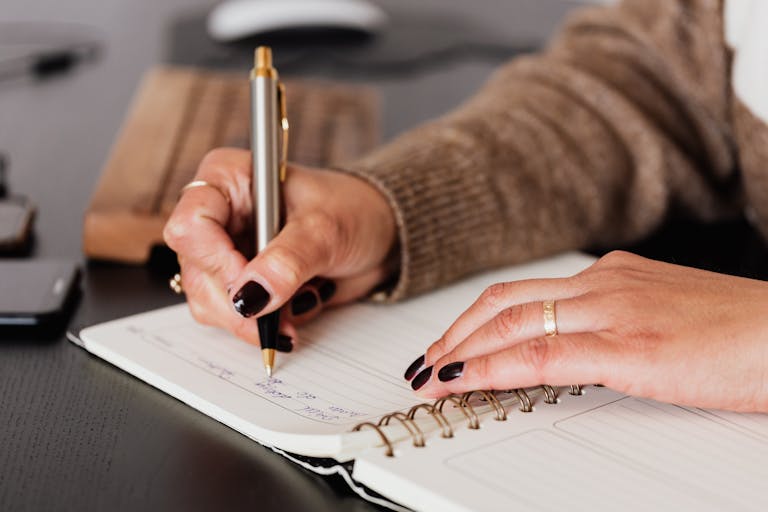
Introverts are genuinely good at texting, often better than their extroverted counterparts. The same qualities that make face-to-face small talk feel draining, the preference for depth over volume, the tendency to think before speaking, the comfort with written expression, translate directly into more thoughtful, precise, and meaningful text communication. Texting isn’t a consolation prize for people who struggle with conversation. For many introverts, it’s the medium where they communicate best.
That said, there’s more nuance here than a simple yes or no. Being good at texting means different things in different contexts, and introverts bring specific strengths and specific friction points to this particular communication channel. Let me walk through what I’ve observed, both from my own experience and from what the research tells us about personality and written communication.

If you’ve ever wondered why your introverted friend sends the most perfectly worded messages while also sometimes disappearing for three days, you’re already onto something real. There’s a pattern here worth examining. And if you’re an introvert yourself, you may finally have some language for why texting feels so much more natural than a surprise phone call.
This article fits into a broader conversation I’ve been building about what introverts actually bring to the table. Our Introvert Strengths and Advantages hub covers the full range of these qualities, and texting sits squarely in that territory because it’s one of the clearest, most everyday examples of introverted communication strengths showing up in real life.
Why Does Texting Feel So Natural to Introverts?
Spend enough time around introverts and you’ll notice something: many of us communicate in writing with a fluency that doesn’t always show up when we’re put on the spot verbally. There’s a reason for that, and it goes deeper than shyness or social anxiety.
What’s your introvert superpower?
Every introvert has a quiet strength others overlook. Our free quiz identifies yours and shows you how to leverage it in your career and relationships.
Discover Your Superpower2-3 minutes · 10 questions · Free
Introverts tend to process information internally before expressing it. We think through what we want to say, consider multiple angles, and arrive at a response that actually reflects what we mean. In a live conversation, that internal processing time creates pauses that can feel awkward, or worse, someone else fills the silence before we’ve finished thinking. Texting removes that pressure entirely. There’s no one waiting for you to finish a sentence. You can draft something, reconsider it, refine it, and send it when it’s actually ready.
Early in my advertising career, I was terrible in pitch meetings. Not because I lacked ideas, but because I needed time to formulate them properly. I’d leave those rooms frustrated, thinking of exactly what I should have said during the drive home. Written communication was different. Give me an email or a brief to respond to and I’d produce something genuinely sharp. The medium matched how my mind worked. Texting operates on that same principle.
A 2020 study published in PubMed Central examined how personality traits influence communication preferences and found meaningful differences in how introverts and extroverts engage with asynchronous versus synchronous communication. Introverts consistently showed stronger comfort with written, non-real-time formats, precisely because those formats accommodate deliberate thought rather than demanding immediate response.
There’s also the sensory element. Texting is quiet. No ambient noise, no reading facial expressions in real time, no managing your own body language while also trying to listen. For a personality type that can find sustained social stimulation genuinely tiring, the low-stimulus environment of a text exchange is a significant advantage. You’re just dealing with words. That’s where introverts tend to live anyway.
What Specific Strengths Do Introverts Bring to Text Communication?
Let’s get specific. There are several concrete qualities that introverts bring to texting that tend to make their messages more effective, more meaningful, and more memorable than the average exchange.
Precision and Word Choice
Introverts tend to choose words carefully. We’re often the people who notice when someone uses a word slightly wrong, or who reread a message before sending it to make sure it says exactly what we intended. In text communication, where tone can easily be misread and meaning stripped of vocal inflection, that precision matters enormously. A well-chosen word can prevent a misunderstanding that a sloppy message would create.
I managed creative teams at my agencies for over two decades, and some of the best copywriters I worked with were deeply introverted people. They had a relationship with language that felt almost architectural. They built sentences the way an engineer builds a bridge, with purpose and weight-bearing in mind. That same quality shows up in how they text. Not necessarily longer messages, but cleaner ones.

Depth Over Volume
One of the most consistent complaints about text conversations is that they feel superficial. Lots of “haha” and “same” and “sounds good” without any real connection happening. Introverts are wired differently. We’re drawn to substance. Psychology Today has written extensively about why introverts gravitate toward meaningful conversation over small talk, and that preference doesn’t disappear just because the medium is a text thread. An introvert who’s genuinely engaged in a conversation will bring real thought to their responses, even in a format that makes it easy to stay shallow.
This connects to something I explore in more detail when writing about introvert strengths that often go unrecognized. The capacity for depth isn’t just a social preference, it’s an actual cognitive orientation that produces better output in communication-heavy work. Texting is communication-heavy work, even if it doesn’t look like it.
Listening Through Reading
Good texting isn’t just about what you send. It’s about how carefully you receive. Introverts are often strong listeners in face-to-face settings, but in text, that quality becomes reading comprehension applied to emotional content. We notice what someone actually said versus what they seemed to mean. We pick up on the shift in tone when someone’s messages get shorter. We register when a person asks a question they’re not really asking directly.
A 2010 study from PubMed Central on personality and social behavior found that introverts demonstrated stronger performance on tasks requiring careful attention to subtle social cues, which has direct implications for how they read between the lines in written communication. That attentiveness is a genuine asset in any medium where subtext matters.
Emotional Intelligence in Writing
Introverts process emotions internally and thoroughly. That depth of processing often produces a kind of emotional intelligence that shows up in how we respond to difficult messages. When a friend texts something vulnerable, an introvert is more likely to sit with it before responding, to consider what that person actually needs to hear, and to craft a response that addresses the real emotional content rather than just the surface request. That’s a meaningful skill, and it’s one that texting rewards.
Compare that to an impulsive response fired off in two seconds. The quick reply might feel more spontaneous and warm in the moment, but the considered response is often the one that actually helps. Introverts default toward the considered response. It’s not calculated coldness. It’s genuine care expressed through careful thought.
Are There Areas Where Introverts Struggle With Texting?
Honesty matters here. There are real friction points, and pretending otherwise would undercut everything else I’m saying.
Response Time and the Disappearing Act
Introverts need time to recharge, and sometimes that means going quiet. Not because we’ve lost interest in the person, but because we’re genuinely depleted and need internal space. In text communication, that withdrawal can read as coldness, disinterest, or passive aggression, even when it’s none of those things. The person on the other end doesn’t know you’re not ignoring them. They just see the message marked “delivered” with no reply for 48 hours.
I’ve had this conversation with more people than I can count, both in my personal life and in professional settings. During a particularly intense period running a mid-sized agency, I went through stretches where I was so drained from client-facing work that even personal texts felt like another demand on a depleted system. My closest friends understood. Newer relationships didn’t always.
This is one of the real challenges that sits alongside our strengths. I’ve written about how introvert challenges and strengths are often two sides of the same coin, and the texting context is a perfect example. The same depth of processing that makes our messages meaningful is the same depth that sometimes requires us to step away from all input entirely.

Overthinking the Message
The same precision that makes introverts good at texting can occasionally tip into paralysis. Spending twenty minutes on a three-sentence reply isn’t always the best use of time, and sometimes the overthinking produces something that reads as stiff or overly formal in a context that calls for something breezy. There’s a calibration required, and introverts don’t always get it right on the first pass.
Context matters enormously here. A text to a close friend asking where you want to grab lunch doesn’t need the same level of care as a message to a colleague about a sensitive work situation. Introverts sometimes apply the same level of processing to both, which creates a kind of tonal mismatch. Learning to modulate that, to know when “sounds great, see you then” is the right answer, is a skill that develops over time.
Misreading Brevity as Coldness
Introverts tend to be economical with words. We don’t pad messages with filler. That efficiency can be misread as unfriendliness, especially by people who express warmth through verbal volume. A short, precise reply that says exactly what needs to be said can land as dismissive to someone who was expecting a paragraph of enthusiasm. This is a real communication gap, and it’s worth being aware of, particularly in relationships where the other person’s love language is expressiveness.
How Does This Play Out in Professional Settings?
The workplace context deserves its own examination because the stakes are different. In professional settings, text and messaging platforms like Slack or Teams have become primary communication channels, and introverts are handling those environments with a distinct set of advantages.
Written communication in the workplace rewards clarity, concision, and accuracy. All three are introvert strengths. In a Slack channel where ten people are firing off rapid reactions to a proposal, the introvert who takes a few extra minutes to compose a considered, well-structured response often ends up being the most useful voice in the thread. Not the loudest, but the most substantive.
A piece from Rasmussen University on introverts in business settings noted that written communication formats tend to level the playing field between personality types in professional environments, allowing introverts to contribute in ways that verbal-dominant meetings often suppress. That observation matches what I saw across two decades of agency work. Some of my most analytically sharp team members were nearly invisible in brainstorming sessions but would send follow-up emails or Slack messages after the meeting that completely reframed the problem. The medium made the difference.
There’s also a negotiation dimension worth mentioning. Harvard’s Program on Negotiation has examined how introverts perform in negotiation contexts and found that the careful preparation and analytical thinking introverts bring can actually be significant advantages, particularly in written negotiation formats where the pressure to respond instantly is removed. Texting and messaging in professional contexts is, in many ways, a form of low-stakes negotiation happening constantly. Introverts are well-suited for it.
Those professional strengths also connect to broader leadership advantages. The qualities that make introverts effective communicators in writing are the same qualities I’ve seen translate into strong leadership, which is something I’ve explored in detail when writing about the specific leadership advantages introverts carry.

Does Gender Play a Role in How Introverts Experience Texting?
Worth addressing, because the social expectations around communication vary significantly by gender. Introvert women face a particular kind of double pressure that their male counterparts often don’t. Society already expects women to be communicative, warm, and socially available. Add introversion to that, and the expectation to be “on” in text conversations can feel relentless.
An introvert woman who sends a brief text reply or takes a day to respond may be read as cold or unfriendly in ways that a man doing the same thing simply isn’t. The social penalties are different. I’ve written about the specific pressures that introvert women face in a society that misreads their communication style, and texting is one of the clearest arenas where those pressures show up. The strengths are the same, but the social cost of exercising them is often higher.
That said, the written medium can also be genuinely freeing for introvert women in ways that verbal-dominant spaces aren’t. A text thread removes some of the social performance demands of in-person interaction. You can be thoughtful without being interrupted. You can take your time without someone else filling the silence. That’s not nothing.
Can Introverts Use Texting to Build Stronger Relationships?
Yes, and many of us do, often without fully recognizing that we’re doing it deliberately. For introverts who find sustained social interaction draining, texting offers a way to maintain connection without the full energy cost of in-person time. A thoughtful check-in message, a relevant article sent with a brief note, a reply that actually engages with what someone said rather than deflecting, these are real relationship-building acts, and introverts tend to do them well.
Some of the most meaningful professional relationships I built during my agency years were maintained largely through written communication. I had clients I’d worked with for a decade who knew me better through my emails and, eventually, messages than they did through our quarterly in-person meetings. The writing was where I was most myself. It was where my thinking came through clearly, where my genuine interest in their business showed up without the interference of social performance.
A 2024 study published in Frontiers in Psychology examined how different communication modalities affect relationship quality and found that the depth and authenticity of communication content mattered more than frequency or format for long-term relationship satisfaction. That finding is almost tailor-made for introverts. We’re not going to win on volume. We win on substance.
There’s also something to be said for the way texting allows introverts to show up for people during hard times. When someone is going through something difficult, a carefully written message can land with more weight than a phone call where we might stumble over our words. The ability to compose, to find the right thing to say and say it precisely, is a genuine gift in those moments. And introverts, who tend to take other people’s emotional experiences seriously, often rise to that occasion in writing in ways that feel genuinely supportive rather than performative.
This connects to something I find fascinating about how introverts function across different domains. The same qualities that make us effective communicators in text are the same qualities that make us effective in roles that require deep focus, careful analysis, and genuine engagement with complexity. Whether that’s the workplace strengths companies are actively looking for or the personal relationship strengths that make someone a trusted friend, the underlying wiring is consistent.
What About When Texting Becomes Exhausting?
Even a medium that suits introverts well can become a source of depletion under the right conditions. When text threads multiply, when work messaging bleeds into personal time, when every notification demands an immediate response, the low-stimulus advantage of texting disappears. What’s left is just another form of constant social demand.
Managing that is something introverts have to be intentional about. Setting response windows, being honest with close relationships about needing communication breaks, turning off notifications during recharge time, these aren’t antisocial behaviors. They’re maintenance. The same way a runner needs rest days to perform well, the same logic applies here. I’ve found that solo physical activity is one of the most effective ways I manage the cumulative weight of constant communication demands. There’s something about moving through space alone that resets the system in a way nothing else quite does.
The conflict dimension is also worth noting. When a text conversation turns tense or confrontational, introverts may find themselves either over-processing every word or shutting down entirely. Neither extreme serves the relationship well. Psychology Today’s framework for introvert-extrovert conflict resolution is actually quite applicable in text contexts, particularly the emphasis on taking processing time before responding rather than either firing back immediately or going silent for days. The written medium gives you that processing time naturally. Using it well is a skill.
How Can Introverts Make the Most of Their Natural Texting Strengths?
A few practical observations from someone who’s spent years figuring this out through trial and error.
Own the medium. Stop apologizing for preferring text over calls. It’s not avoidance, it’s a communication preference that produces better output from you. Be clear about that with the people in your life. Most people, once they understand it’s about quality rather than coldness, adjust their expectations.
Acknowledge when you’re going quiet. A brief “I’m in a low-energy stretch, will be slow to respond this week” removes so much unnecessary anxiety from both sides. You don’t owe anyone an explanation, but a heads-up is a kindness that costs almost nothing and preserves the relationship through your recharge period.
Use the medium’s strengths deliberately. When something important needs to be communicated, text or email is often the better choice for introverts, not because you’re avoiding the conversation, but because you’ll actually say what you mean. I’ve had difficult client conversations over email that I genuinely believe went better than they would have in person, because I had the space to be precise and the other person had the space to receive it without the pressure of an immediate verbal response.
Calibrate depth to context. Not every text needs to be a considered piece of writing. Sometimes “sounds good!” is the right answer. Learning to match your response depth to the actual weight of the conversation is part of becoming a skilled communicator in any medium, and introverts sometimes need to give themselves permission to be lighter when the situation calls for it.
Finally, recognize that your texting style is an expression of who you are. The care you put into your messages, the attention you give to what someone actually said, the willingness to engage with substance rather than deflecting into pleasantries, these are genuine gifts. The people who matter will recognize them as such.
There’s a lot more to explore about what introverts bring to communication and connection. Our complete Introvert Strengths and Advantages hub pulls together the full picture, from workplace advantages to relationship dynamics to the quieter strengths that often get overlooked entirely.
Know your quiet strength?
Six superpower types, each with career implications and curated reading to develop your specific strength further.
Take the Free Quiz2-3 minutes · 10 questions · Free
About the Author
Keith Lacy is an introvert who’s learned to embrace his true self later in life. After 20 years in advertising and marketing leadership, including running agencies and managing Fortune 500 accounts, Keith now channels his experience into helping fellow introverts understand their strengths and build fulfilling careers. As an INTJ, he brings analytical depth and authentic perspective to every article, drawing from both professional expertise and personal growth.
Frequently Asked Questions
Are introverts better at texting than extroverts?
In many respects, yes. Introverts tend to think carefully before responding, choose words with precision, and engage with the actual content of what someone said rather than defaulting to surface-level replies. Those qualities produce more thoughtful, meaningful messages. Extroverts may text more frequently and with more spontaneous warmth, but introverts often produce higher-quality individual messages. Neither style is universally better, but introverts have genuine structural advantages in a medium that rewards deliberate thought.
Why do introverts prefer texting over phone calls?
Texting allows introverts to process before responding, which matches how their minds naturally work. Phone calls require real-time verbal response without the processing time introverts need to communicate at their best. Texting also eliminates the sensory and social performance demands of voice communication, including managing tone, pacing, and the social pressure of silence. For most introverts, text is simply a better fit for their cognitive style, not an avoidance mechanism.
Why do introverts sometimes take so long to reply to texts?
Slow replies from introverts are usually about energy management, not disinterest. Introverts need regular periods of low-stimulus solitude to recharge, and during those periods, even low-demand communication can feel like too much. Additionally, introverts may take longer to craft a response they feel good about, particularly for messages with emotional weight. A slow reply is almost never a signal that the relationship doesn’t matter. It’s usually a signal that the person is either depleted or taking the message seriously enough to think through their response.
Do introverts use texting to avoid social interaction?
Sometimes, but that framing misses the larger picture. Introverts genuinely prefer written communication in many contexts because it produces better outcomes for them, not because they’re afraid of real connection. Texting isn’t a substitute for relationship. For many introverts, it’s actually the medium where their most authentic communication happens. That said, if texting becomes a way to avoid all in-person contact indefinitely, that’s worth examining. The goal is to use communication formats that work with your wiring, not to eliminate human connection entirely.
How can introverts communicate better through texting?
A few things make a meaningful difference. Being transparent about response patterns, letting people know when you’ll be slow to reply rather than just going silent, removes a lot of unnecessary friction. Matching response depth to context, knowing when a brief reply is appropriate versus when a situation calls for more, helps avoid the tonal mismatch that can make precise introverts seem cold. And leaning into the medium’s strengths, using text for conversations where careful wording matters, plays directly to what introverts do best. success doesn’t mean text like an extrovert. It’s to text well as yourself.