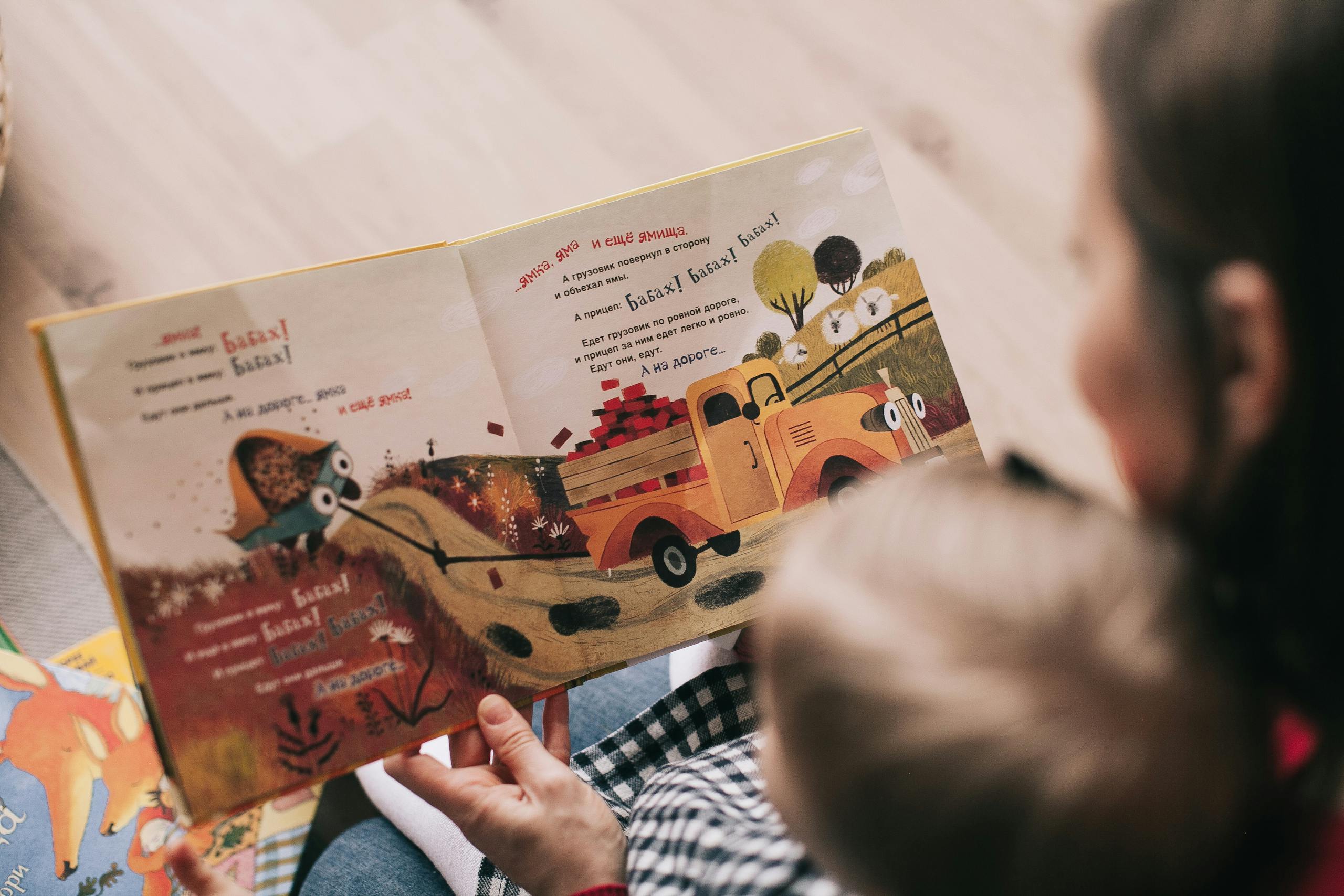

INFP parenting at 25 means raising a child while you’re still figuring out who you are yourself, and that combination of depth, idealism, and raw emotional honesty creates a parenting style unlike any other. INFPs bring fierce love, imaginative presence, and an almost instinctive attunement to their children’s inner worlds. The challenge isn’t a lack of love. It’s learning to parent from a place of values and strength rather than anxiety and self-doubt.
There’s something quietly profound about watching a young INFP parent find their footing. They’re not just raising a child. They’re raising themselves at the same time.
Before we get into the specifics, I want to acknowledge something. If you’re not completely sure where you fall on the personality spectrum, or you’ve always sensed there was a framework that could explain how you think and feel, it might be worth taking the time to find your type with our free MBTI assessment. Knowing your type doesn’t box you in. It gives you language for what was already there.
Our INFP Personality Type hub covers the full landscape of what it means to be an INFP, from relationships and emotional patterns to career and self-discovery. This article goes somewhere specific within that landscape: what happens when an INFP becomes a parent in their mid-twenties, before the world has had a chance to smooth out all the rough edges.

Why Does Being an INFP Make Early Parenthood Feel So Intense?
INFPs feel things at a frequency most people don’t tune into. That’s not poetic exaggeration. It’s a genuine feature of how this personality type processes the world. According to Truity’s breakdown of MBTI cognitive functions, INFPs lead with Introverted Feeling, a function that creates deep internal value systems and an intense awareness of emotional meaning in everyday moments. Pair that with a developing identity and a brand new human depending on you, and you have a recipe for both extraordinary connection and extraordinary overwhelm.
What’s your personality type?
Take our free 40-question assessment and get a detailed personality profile with dimension breakdowns, context analysis, and personalised insights.
Discover Your Type8-12 minutes · 40 questions · Free
I’m not an INFP, but I understand the intensity of that inner world from a different angle. As an INTJ who spent years running advertising agencies, I was surrounded by people who processed emotion outwardly, loudly, in real time. I did everything quietly. I absorbed. I analyzed. I felt things deeply and said almost nothing about it. When I finally started understanding my own personality type in my forties, I was struck by how much energy I had spent managing my inner experience instead of working with it.
Young INFP parents often describe something similar. They love their children with a depth that surprises even themselves. But they also absorb every cry, every tantrum, every moment of uncertainty as if it were a direct signal about their worth as a parent. That absorption is exhausting, and at 25, without the benefit of perspective that comes with age, it can feel suffocating.
A 2020 study published in PubMed Central found that emotional sensitivity and empathic responsiveness in parents significantly affect both parental wellbeing and child developmental outcomes. High sensitivity is genuinely an asset in parenting, but only when the parent has enough emotional support and self-awareness to keep it from tipping into chronic stress.
For young INFPs, that tipping point arrives faster than expected.
What Does the INFP Parenting Style Actually Look Like in Practice?
Ask an INFP parent what they want most for their child and you’ll rarely hear “success” or “achievement.” You’ll hear things like “I want them to feel safe being exactly who they are” or “I want them to know their feelings matter.” That instinct toward emotional validation and authentic self-expression is one of the most powerful gifts an INFP brings to parenthood.
In practical terms, INFP parents tend to create homes that feel imaginative and emotionally safe. They read stories with genuine investment. They notice when something is quietly wrong before their child has words for it. They make space for big feelings without immediately trying to fix them. These aren’t small things. A child who grows up knowing their inner world is taken seriously develops a kind of emotional intelligence that lasts a lifetime.
That said, the INFP parenting style has its friction points too, especially at 25. Structure doesn’t come naturally to most INFPs. Routines can feel restrictive. Discipline, especially consistent follow-through, often conflicts with the INFP’s deep aversion to being the source of someone else’s pain. When your two-year-old looks at you with genuine devastation because you said no to a third cookie, an INFP parent feels that in their chest. Holding the boundary anyway requires a kind of emotional muscle that takes time to build.

There’s also the question of conflict. INFPs tend to avoid confrontation, not because they don’t care, but because disagreement feels like a threat to the relationship itself. With a child, that avoidance can quietly teach the wrong lessons. Children need to see that conflict is survivable, that people can disagree and still love each other. For an INFP working through this, the article on how to handle hard talks without losing yourself offers some genuinely useful reframes for approaching those moments with honesty instead of retreat.
How Does a Young INFP Handle the Emotional Weight of Parenthood?
Early parenthood at 25 carries a specific kind of weight. You’re managing sleep deprivation, financial pressure, shifting relationships, and identity questions all at once. For an INFP, who processes all of this internally and often struggles to ask for help, that weight can become genuinely crushing.
The American Psychological Association’s research on stress consistently points to the role of social support in buffering against chronic stress. Yet INFPs often find social connection complicated. They crave depth, not small talk. They want to be understood, not just heard. Finding the right kind of support at 25, when your peer group may not yet have children, can feel genuinely isolating.
I saw a version of this play out in my agency years, not in parenting, but in the isolation of leadership. When I was running a team of thirty people, managing client expectations for brands that spent millions on campaigns, I had almost no one to process with. The role was lonely in a way I didn’t have language for at the time. I kept absorbing stress, filing it away, telling myself I’d deal with it later. That strategy worked until it didn’t. Eventually the weight of all that unprocessed emotion showed up as flat affect, short patience, and a creeping sense that nothing I did was ever quite enough.
Young INFP parents can fall into a similar pattern. They absorb the emotional demands of their child, their partner, their extended family, and their own internal critic, and they do it quietly, because asking for help feels like admitting failure. The antidote isn’t toughening up. It’s building small, intentional spaces for emotional release and honest communication before the pressure becomes unmanageable.
One thing worth examining is how INFPs handle conflict with partners during this period. Parenting disagreements are inevitable, and an INFP’s tendency to take criticism personally can turn routine co-parenting conversations into emotional landmines. The piece on why INFPs take everything so personally gets at something real here, specifically the way Introverted Feeling can make external feedback feel like an attack on identity rather than just a difference of opinion.
What Are the Specific Strengths an INFP Brings to Raising a Child?
It’s worth spending real time here, because the strengths are significant and often undersold.
INFPs are natural storytellers. They see the world in metaphor and meaning, and that quality translates directly into parenting. A child raised by an INFP often grows up with a rich imaginative life, exposed to books, art, music, and conversations that treat ideas as genuinely worth exploring. That’s not a small inheritance.
INFPs are also deeply attuned to authenticity. They can’t fake enthusiasm, and they don’t want to. When an INFP parent tells their child “I’m proud of you,” the child feels it as real, because it is. There’s no performance in it. That kind of emotional honesty creates trust that carries through adolescence and beyond.

Perhaps most importantly, INFPs model emotional courage in a way many other types don’t. They show their children that it’s okay to feel things deeply, to care about justice, to be moved by beauty, to stand by your values even when it’s inconvenient. According to 16Personalities’ framework on type theory, INFPs are driven by a core need to live in alignment with their values, and children who grow up watching that modeled consistently develop their own moral compass earlier and more firmly.
At 25, these strengths are already present, even if the INFP parent doesn’t fully see them yet. The emotional attunement, the imaginative presence, the genuine investment in who their child is becoming, these are gifts that don’t require experience to be real. They’re wired in.
How Do Young INFP Parents Manage Communication With Partners and Co-Parents?
Co-parenting requires communication that is clear, consistent, and sometimes uncomfortable. For INFPs, who often prefer to process internally before speaking and who struggle with the fear that honesty will damage connection, this is one of the harder aspects of early parenthood.
There’s a pattern I’ve noticed in highly empathic people, including myself in my earlier years, where keeping the peace becomes its own kind of trap. You don’t say the thing that needs to be said. You absorb the frustration. You tell yourself it’s not worth the conflict. And then six months later you’re resentful and your partner genuinely doesn’t know why, because you never said anything.
INFPs aren’t alone in this pattern. It shows up across several introverted and feeling-dominant types. The article on the hidden cost of keeping the peace was written for INFJs, but the dynamic it describes translates directly. Avoiding hard conversations doesn’t protect the relationship. It slowly hollows it out.
For young INFP parents specifically, the stakes of communication are higher because parenting decisions compound over time. How you handle a disagreement about screen time at two becomes the template for how you handle a disagreement about boundaries at twelve. Getting comfortable with honest, values-grounded communication early is one of the highest-leverage things a young INFP can do for their family.
It’s also worth noting that INFPs can sometimes misread communication patterns in their partners, especially if the partner has a more direct or analytical style. What reads as coldness or criticism to an INFP may simply be a different processing style. The piece on communication blind spots that quietly hurt relationships covers several of these mismatches in a way that’s worth reading even if you’re not an INFJ, because the underlying patterns are broadly recognizable.
What Happens When an INFP Parent Hits Their Emotional Limit?
Every parent hits a wall. For INFPs, the wall tends to arrive not as explosive anger but as quiet withdrawal. The warmth dims. The creativity dries up. The ability to be present, which is normally one of an INFP’s great gifts, becomes inaccessible. They go through the motions while feeling increasingly disconnected from themselves.
The National Institute of Mental Health notes that postpartum depression and parental burnout are significantly underdiagnosed, particularly in people who present as quietly functional rather than visibly distressed. INFPs are especially vulnerable to this pattern because their distress is internal. From the outside, they may look fine. From the inside, they’re running on empty.
At 25, without the benefit of having been through a full cycle of burnout and recovery before, recognizing these signals is genuinely hard. You don’t know what your bottom looks like yet. You don’t know how long the recovery takes. You just know something feels wrong and you’re not sure you’re allowed to say so.
Recognizing the early signals matters. Flatness where there used to be warmth. Irritability that feels out of proportion. A creeping sense that you’re failing at something you care about deeply. These aren’t character flaws. They’re signals that the emotional reserves are depleted and something needs to change.

One of the things that helps INFPs most in these moments is having a small number of people they genuinely trust, people who don’t require them to perform okayness. The APA’s work on social connection and wellbeing consistently shows that quality of connection matters far more than quantity. One person who truly sees you is worth more than a dozen acquaintances who only see the surface.
How Can Young INFP Parents Build Boundaries Without Losing Their Warmth?
Boundaries are hard for INFPs. Not because they don’t know what they need, but because saying no feels like a betrayal of their core drive toward connection and care. With a child, this gets even more complicated. The child’s needs are real and constant. The INFP’s needs are easy to defer. And deferral becomes a habit that eventually costs everyone.
What I’ve come to understand, both from my own experience and from years of watching how the most effective people in my industry operated, is that boundaries aren’t walls. They’re the structure that makes genuine presence possible. When I was running accounts for major consumer brands, the leaders who burned out fastest were the ones who had no clear line between their work and their identity. Every piece of feedback landed as a personal verdict. Every setback felt existential. Sound familiar?
INFP parents who build even modest boundaries, a dedicated hour of solitude each day, a clear signal to their partner that they need to decompress before re-engaging, a commitment to not making major decisions when emotionally flooded, find that their warmth returns naturally. The issue was never a lack of love. It was a lack of space to refill.
There’s also a subtler boundary worth naming: the boundary between your child’s emotional experience and your own. INFPs can absorb their child’s distress so completely that they lose track of where the child’s feelings end and their own begin. That enmeshment, while born of genuine care, doesn’t serve the child long-term. Children need parents who can hold their feelings without being destabilized by them. Building that capacity is a practice, not a personality trait you either have or don’t.
For INFPs who also encounter conflict with family members or other caregivers around parenting decisions, understanding how to hold your ground without shutting down is worth real attention. The patterns explored in why some introverts door slam and what to do instead apply broadly to anyone who tends toward emotional withdrawal when conflict feels overwhelming. The door slam feels protective. What it actually does is end conversations that needed to happen.
What Does Long-Term Growth Look Like for an INFP Who Became a Parent Young?
Here’s something worth sitting with: becoming a parent at 25 as an INFP isn’t a detour from your personal development. It’s an accelerant of it.
Parenthood forces INFPs to confront the places where their idealism meets reality. The child who doesn’t fit the imagined version. The relationship that requires more negotiation than you expected. The self that turns out to be less patient, less consistent, less perfectly loving than you hoped. These confrontations are uncomfortable. They’re also exactly the kind of friction that produces genuine growth.
INFPs who lean into that friction, who choose honest communication over comfortable silence, who build boundaries out of self-respect rather than fear, who learn to hold their child’s emotions without drowning in them, become something remarkable over time. They become parents who are not just loving but genuinely wise. The kind of parent their child will want to talk to at thirty, not just at three.
There’s something I find genuinely moving about watching someone grow up alongside their child. The INFP who is figuring out who they are at 25 while also figuring out how to raise a person is doing something hard and beautiful at the same time. The two processes aren’t in competition. They inform each other.
One thing that helps is developing a more nuanced understanding of how you influence the people around you, not through control or volume, but through presence and consistency. The piece on how quiet intensity actually creates influence resonates here, because INFPs have a version of that same quiet power. Your child will absorb your values, your emotional honesty, your curiosity about the world, not because you taught them explicitly, but because you modeled it every day.
That’s not a small thing. That’s everything.

Psychology Today’s overview of introversion and its strengths makes a point that I think applies directly here: introverts are often underestimated in roles that require visible performance, but they consistently excel in roles that require depth, attunement, and sustained presence. Parenting is exactly that kind of role. The INFP who doubts themselves because they’re not the loudest or most structured parent in the room is measuring themselves by the wrong standard entirely.
If you want to go deeper on what makes INFPs tick, from their emotional patterns to their relationship dynamics to the ways they find meaning and purpose, the complete INFP Personality Type hub is a good place to spend some time.
About the Author
Keith Lacy is an introvert who’s learned to embrace his true self later in life. After 20 years in advertising and marketing leadership, including running agencies and managing Fortune 500 accounts, Keith now channels his experience into helping fellow introverts understand their strengths and build fulfilling careers. As an INTJ, he brings analytical depth and authentic perspective to every article, drawing from both professional expertise and personal growth.
Frequently Asked Questions
Is the INFP personality type well-suited to parenting?
Yes, INFPs bring genuine strengths to parenting, including deep emotional attunement, imaginative presence, and a strong commitment to raising children who feel seen and valued. The challenges tend to center around structure, consistent discipline, and managing their own emotional absorption rather than any lack of love or investment.
What are the biggest challenges for an INFP parent at 25?
Young INFP parents often struggle with three overlapping challenges: building consistent structure and routine, holding firm boundaries without feeling like they’re damaging the relationship, and managing their own emotional reserves while absorbing the high demands of early parenthood. These challenges are real but workable, especially with self-awareness and the right support.
How does an INFP parent avoid burnout?
Avoiding burnout as an INFP parent requires intentional solitude, honest communication with partners before resentment builds, and learning to recognize the early signals of emotional depletion, including flatness, disproportionate irritability, and a sense of disconnection from the things that normally bring meaning. Building even small daily rituals of restoration makes a significant difference over time.
Can an INFP parent be good at setting limits with their child?
Absolutely. INFPs can become very effective at setting limits once they reframe what limits actually mean. Limits aren’t a rejection of connection. They’re an expression of values, and values are something INFPs understand deeply. The shift from “I’m saying no because I have to” to “I’m saying no because I care about who you’re becoming” makes the follow-through feel more natural and less like a betrayal of their core identity.
Does becoming a parent young help or hurt an INFP’s personal development?
Becoming a parent young tends to accelerate an INFP’s personal development rather than interrupt it. Parenthood forces confrontations with idealism, consistency, and emotional regulation that might otherwise take years to arrive. INFPs who lean into those confrontations with honesty and self-compassion often find that parenting and personal growth become deeply intertwined processes that strengthen each other over time.