

INFJ burnout after a promotion hits differently than ordinary work stress. It’s not just exhaustion. It’s a quiet collapse of the internal systems that make you effective, a slow erosion of the very qualities that earned you the promotion in the first place.
Most INFJs don’t see it coming. The role looked like recognition. It felt like finally being seen. And then, somewhere between the congratulations and the first full quarter in the new position, something started breaking down.
If you’re not sure whether what you’re experiencing is burnout or something else, it might help to start by understanding your personality type more clearly. Our free MBTI personality test can give you a solid foundation before we get into what’s actually happening here.
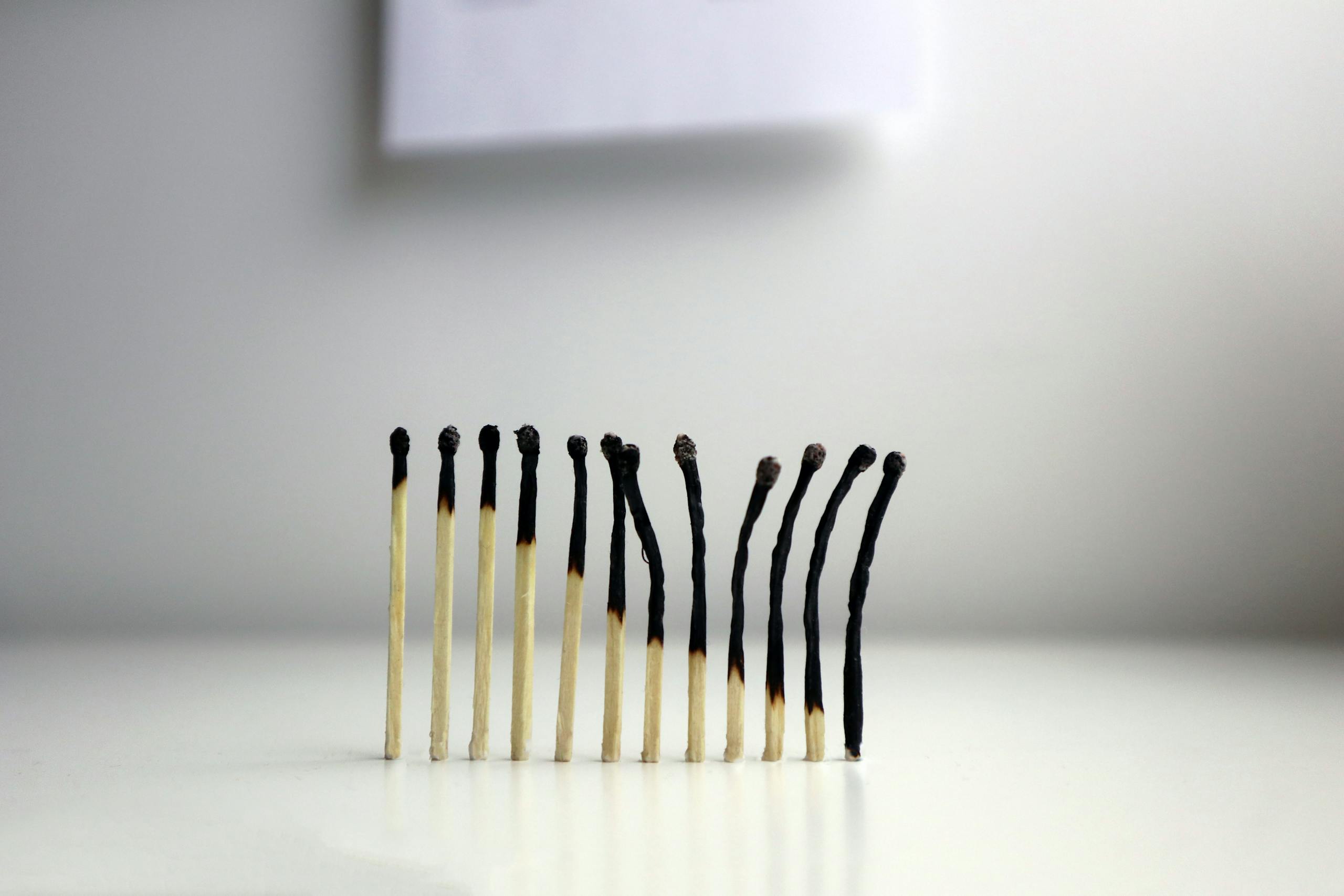
Our INFJ Personality Type hub covers the full landscape of what it means to live and work as an INFJ, but the burnout that follows a promotion is its own specific beast, and it deserves a closer look.
Why Does Promotion Trigger Burnout in INFJs Specifically?
Promotions are supposed to be rewards. More responsibility, more visibility, more compensation. For most personality types, they represent an upward shift in energy and engagement. For INFJs, they can quietly trigger the opposite.
What’s your personality type?
Take our free 40-question assessment and get a detailed personality profile with dimension breakdowns, context analysis, and personalised insights.
Discover Your Type8-12 minutes · 40 questions · Free
I’ve watched this happen to people I admired. I’ve also lived a version of it myself. When I moved from senior creative director into agency leadership in my early thirties, I assumed the discomfort was just adjustment. I told myself it would pass once I found my footing. What I didn’t understand then was that the role itself was structurally at odds with how my brain processes the world.
INFJs are wired for depth, not volume. A 2022 study published in PubMed Central found that individuals with high sensitivity and introverted processing styles show measurably different stress responses to social and cognitive overload compared to their extroverted counterparts. Promotions typically increase both. More meetings, more people to manage, more decisions to make quickly, more visibility in rooms where the INFJ’s natural processing style gets misread as hesitation.
The INFJ’s dominant function, Introverted Intuition, is a slow, deep processor. It builds meaning across time, synthesizes patterns beneath the surface, and arrives at insights that feel almost inexplicable to others. That function thrives in conditions of relative quiet and focused attention. A senior leadership role, especially in a fast-moving organization, tends to offer neither.
Add to that the INFJ’s auxiliary function, Extraverted Feeling, which is constantly scanning the emotional landscape of the room, absorbing others’ stress, and working to maintain harmony. In a management role, that function gets weaponized. Every direct report’s frustration, every team conflict, every difficult conversation lands in the INFJ’s nervous system as something to process, fix, or absorb. Over time, that accumulates into something that looks a lot like depression but isn’t quite, and into something that looks like laziness but absolutely isn’t that either.
What Does INFJ Burnout Actually Feel Like From the Inside?
From the outside, INFJ burnout can be nearly invisible for a long time. INFJs are skilled at maintaining appearances. They show up, they perform, they hold it together in the meeting and then sit in their car for twenty minutes afterward, completely depleted.
From the inside, it’s a different story.
There’s a particular kind of emotional numbness that sets in. The INFJ, who normally feels everything deeply and processes meaning in layers, starts to feel strangely flat. Decisions that used to feel intuitive become effortful. The sense of purpose that usually anchors them starts to blur. They go through the motions of the role while feeling increasingly disconnected from why any of it matters.
I remember sitting across from a Fortune 500 client, leading a quarterly review that I had run dozens of times before, and realizing I genuinely couldn’t access the part of myself that cared about the outcome. Not because the work wasn’t important, but because I had been running on empty for so long that the well had simply gone dry. The insight, the creativity, the genuine engagement with the problem, it had all retreated somewhere I couldn’t reach.

The National Institute of Mental Health notes that emotional exhaustion and withdrawal are often early indicators of serious burnout, distinct from clinical depression but capable of progressing into it if left unaddressed. For INFJs, who tend to minimize their own distress and focus outward on others, the gap between “I’m a little tired” and “I’m in serious trouble” can close faster than they realize.
Other common internal experiences during INFJ burnout include a sudden sensitivity to criticism that feels disproportionate to the feedback itself, a growing resentment toward the people and responsibilities they genuinely care about, and a creeping sense that they’ve somehow failed at being themselves. That last one is particularly painful. It’s not just job burnout. It’s identity burnout.
How Does the Promotion Structure Itself Create the Problem?
Most organizations design senior roles around extroverted models of leadership. Visibility, accessibility, quick responsiveness, high-volume communication, the ability to energize a room. These aren’t bad qualities. They’re just not the natural operating mode of an INFJ.
When an INFJ earns a promotion, it’s usually because they’ve been exceptional at something that required depth, strategic thinking, and genuine care for the people around them. They get promoted into a role that then asks them to do the opposite: to be shallow and fast and broadly accessible rather than deep and deliberate and selectively focused.
The communication demands alone can be crushing. INFJs often struggle with specific blind spots in how they communicate under pressure, and those blind spots get amplified in leadership roles. If you want to understand what I mean, the article on INFJ communication blind spots gets into the specific patterns that tend to hurt INFJs most in professional settings.
There’s also the peace-keeping problem. INFJs have a strong drive toward harmony. In a management role, that drive gets tested constantly by conflict, competing priorities, and the need to have difficult conversations. A 2016 study in PubMed Central found that individuals who suppress emotional expression in high-demand social roles show significantly elevated cortisol levels over time, contributing to both physical and psychological burnout. For INFJs who are quietly managing everyone’s emotional state while suppressing their own, that physiological cost is real.
The American Psychological Association also points to the quality of social connection as a key factor in resilience. INFJs in senior roles often find that their connections become shallower, not deeper, as they move up. They’re managing more people but genuinely knowing fewer of them. That loss of depth is, for an INFJ, a significant source of depletion.
Why Do INFJs Stay Silent About What They’re Experiencing?
This is the part that makes INFJ burnout particularly dangerous. They don’t talk about it.
Part of that silence comes from the INFJ’s natural tendency to absorb others’ emotions while protecting their own inner world. Sharing vulnerability feels risky in ways that are hard to articulate. There’s also the specific weight of having just received a promotion. Saying “I’m struggling” feels like ingratitude. It feels like admitting a mistake. It feels like proving the people who doubted them right.
There’s a real cost to that silence, and it’s worth naming directly. The tendency INFJs have toward avoiding difficult conversations, especially about their own needs, compounds the burnout. Every week they don’t say something is another week the depletion deepens. The article on the hidden cost of keeping the peace addresses this pattern with honesty, and I’d recommend it to any INFJ who recognizes themselves in that description.

I’ve been on both sides of this. I’ve been the INFJ manager who said nothing while burning out, and I’ve been the leader who missed the signs in someone on my team because they were so skilled at appearing fine. Both experiences taught me that the silence isn’t weakness. It’s a coping mechanism that outlives its usefulness.
What often happens instead of direct communication is the INFJ begins to withdraw. They become less available, less engaged, less warm. And when that doesn’t resolve the underlying pressure, they may move toward what’s sometimes called the door slam: a sudden, complete emotional withdrawal from a person, relationship, or situation. In a professional context, that can look like quiet quitting, or a resignation that seems to come from nowhere. The piece on why INFJs door slam and what to do instead is worth reading if you’ve noticed that pattern in yourself, because there are alternatives that don’t require burning everything down.
What Makes INFJ Burnout Different From INFP Burnout?
People sometimes conflate INFJ and INFP burnout because both types are introverted, feeling-oriented, and prone to absorbing others’ emotional states. The experiences are related but meaningfully different.
INFP burnout after a promotion tends to center on value misalignment. The INFP needs their work to feel personally meaningful, and when a leadership role pulls them away from the work they care about into administrative and political territory, the sense of inauthenticity becomes unbearable. The article on how INFPs can handle hard conversations without losing themselves speaks to the specific challenge INFPs face in handling that tension, and it’s a useful read even for INFJs who work closely with INFP colleagues.
INFJ burnout, by contrast, tends to center on cognitive and emotional overload. The INFJ’s dominant Introverted Intuition needs space and quiet to function. When a promotion eliminates that space, the INFJ’s most fundamental processing system goes offline. They don’t just feel disconnected from their values. They feel disconnected from their own mind.
Another distinction: INFPs tend to take conflict very personally, in ways that can feel overwhelming. The piece on why INFPs take everything personally in conflict explores that pattern in depth. INFJs, on the other hand, often internalize conflict differently. They absorb it, attempt to resolve it quietly, and then become exhausted by the effort. Both patterns lead to burnout, but through different routes.
The 16Personalities framework offers useful context here, noting that while INFJ and INFP share surface similarities, their cognitive function stacks are quite different, which means their stress responses and burnout patterns diverge in important ways.
Can an INFJ Recover Without Leaving the Role?
Yes, though it requires honesty about what’s actually driving the burnout and a willingness to make structural changes rather than just push through.
The first thing most INFJs need to do is reclaim protected time for deep processing. Not “quiet time” in a vague wellness-tip sense, but actual calendar blocks where they are not accessible, not managing anyone’s emotions, and not producing anything for external consumption. That time is when the INFJ’s dominant function can do its work, and without it, the function atrophies.
The second is to get honest about the influence they actually have versus the influence they think they need to have. INFJs often exhaust themselves trying to be present in every conversation, every decision, every team dynamic. What I eventually figured out in my agency years was that my real influence was concentrated and specific. I was most effective when I was doing what INFJs do best: seeing patterns others missed, synthesizing information into clear direction, and having fewer but more meaningful conversations. The article on how INFJ quiet intensity actually works as influence maps this out in a way that I wish I’d had access to earlier in my career.

Third, and this is the one most INFJs resist: they need to ask for help. Not just from a therapist, though that matters too. A 2023 search on Psychology Today’s therapist directory shows a growing number of practitioners who specialize in high-sensitivity burnout and introverted professional stress, which is a relatively new specialization but an increasingly relevant one. Asking for help also means being willing to tell a trusted colleague or supervisor what’s actually happening, which requires the INFJ to confront their own silence directly.
That said, some INFJs do reach a point where the role genuinely isn’t compatible with their functioning, and leaving is the right call. There’s no shame in that. The Bureau of Labor Statistics Occupational Outlook Handbook documents a wide range of career paths that align well with INFJ strengths, including counseling, strategic consulting, writing, and research-oriented leadership roles that allow for depth over breadth. A promotion that leads to burnout doesn’t define the trajectory. It’s data, not a verdict.
What Does Recovery Actually Look Like, Week by Week?
Recovery from INFJ burnout isn’t linear, and it doesn’t happen over a weekend. The patterns that led to burnout usually developed over months or years, and unwinding them takes time.
In the early weeks, the most important thing is reducing the cognitive and emotional load wherever possible. That might mean delegating more aggressively, declining optional meetings, or temporarily stepping back from the parts of the role that are most draining. It also means sleeping more than feels necessary and resisting the urge to fill recovery time with productive activity.
A few weeks in, most INFJs start to notice the return of something they’d lost: genuine curiosity. The ability to be interested in a problem without it costing enormous effort. That’s a reliable sign that the dominant function is coming back online. It’s worth paying attention to what conditions were present when that curiosity returned, because those conditions are worth protecting going forward.
Longer term, recovery involves rebuilding the structures that prevent a return to burnout. That includes clearer communication about capacity and needs, which many INFJs find genuinely difficult. The Psychology Today overview of introversion notes that introverts who learn to articulate their needs clearly, rather than hoping others will intuit them, tend to report significantly higher workplace satisfaction over time. For INFJs, who often assume others should be able to read between the lines, that’s a meaningful shift.
It also involves rebuilding a relationship with the work itself, separate from the role. INFJs who burn out in leadership positions often discover that what they actually love is the craft, the strategic thinking, the genuine human connection, not the management hierarchy. Finding ways to stay connected to that craft, even within a senior role, is often what makes the difference between sustainable leadership and a slow return to burnout.
There’s more to explore about the full range of INFJ experiences at work and in relationships. Our complete INFJ Personality Type hub brings together the research, the personal stories, and the practical frameworks that can help you understand yourself more clearly and build a life that actually fits.

About the Author
Keith Lacy is an introvert who’s learned to embrace his true self later in life. After 20 years in advertising and marketing leadership, including running agencies and managing Fortune 500 accounts, Keith now channels his experience into helping fellow introverts understand their strengths and build fulfilling careers. As an INTJ, he brings analytical depth and authentic perspective to every article, drawing from both professional expertise and personal growth.
Frequently Asked Questions
Why do INFJs burn out after a promotion more than other types?
INFJs burn out after promotions because most senior roles are structured around extroverted leadership models, high-volume communication, constant accessibility, and fast decision-making. These demands directly conflict with the INFJ’s dominant Introverted Intuition, which needs quiet and depth to function well. The INFJ’s auxiliary Extraverted Feeling also absorbs the emotional states of every person they manage, creating a compounding load that accumulates into burnout faster than most INFJs anticipate.
What are the early warning signs of INFJ burnout at work?
Early signs include emotional flatness (losing the depth of feeling that normally characterizes the INFJ), difficulty accessing intuition on problems that used to feel clear, growing resentment toward responsibilities or people they genuinely care about, and a creeping sense of disconnection from their own purpose. Many INFJs also notice increased sensitivity to criticism and a growing impulse to withdraw from social interaction at work, even when they know withdrawal will create more problems.
Can an INFJ succeed in a leadership role without burning out?
Yes, but it requires structural accommodations that most organizations don’t offer by default. INFJs who thrive in leadership roles typically protect significant blocks of uninterrupted time for deep processing, delegate high-volume social tasks where possible, and focus their influence on fewer but more meaningful interactions. They also tend to be in organizations that value strategic depth over constant visibility, and they’ve learned to communicate their needs directly rather than hoping others will intuit them.
How long does it take to recover from INFJ burnout?
Recovery timelines vary widely depending on how long the burnout has been developing and how severe it became. Most INFJs begin to notice early signs of recovery, such as returning curiosity and reduced emotional flatness, within four to eight weeks of meaningfully reducing their cognitive and emotional load. Full recovery, meaning a stable return to the depth of engagement and intuitive clarity that characterizes the INFJ at their best, can take six months to a year, particularly if the burnout was severe or went unaddressed for a long time.
Should an INFJ leave a role that caused burnout, or try to recover within it?
That depends on whether the role can be restructured to accommodate the INFJ’s actual functioning needs. If the organization is willing to allow protected deep-work time, reduce meeting load, and value strategic influence over constant visibility, recovery within the role is possible. If the role is structurally incompatible with how the INFJ processes and the organization is unwilling to flex, leaving may be the healthier long-term choice. Burnout that leads to a role change isn’t failure. It’s information about fit, and acting on that information is a form of self-knowledge, not defeat.