
INFP is not a medical abbreviation. It is a personality type designation from the Myers-Briggs Type Indicator (MBTI), standing for Introverted, Intuitive, Feeling, and Perceiving. If you searched for “INFP medical abbreviation” hoping to find a clinical term, you landed in the right place for a different reason: understanding what INFP actually means, where it comes from, and why so many people with this personality type feel a profound sense of recognition when they first encounter it.
The confusion is understandable. Medical abbreviations follow a similar four-letter shorthand format, and INFP appears in enough online searches alongside health and psychology terms that the crossover is common. What INFP actually represents, though, is something far more personal than a clinical code.
Before we get into the full picture, our INFP Personality Type hub covers everything from how this type thinks and communicates to how they handle relationships and work. If you are just discovering this personality type for the first time, that hub is a solid starting point for the broader exploration.

What Does INFP Actually Stand For?
Each letter in INFP points to a specific psychological preference, drawn from Carl Jung’s theory of psychological types and later formalized by Isabel Briggs Myers and her mother Katharine Cook Briggs into the MBTI framework. The four letters break down like this:
I (Introverted): People with this preference draw energy from solitude and inner reflection rather than external stimulation. They tend to think before speaking, process experiences internally, and feel most themselves in quieter, less crowded environments.
N (Intuitive): This preference describes how someone takes in information. Intuitive types focus on patterns, possibilities, and what could be rather than what is concretely in front of them. They are drawn to meaning, abstraction, and the bigger picture.
F (Feeling): The Feeling preference describes how someone makes decisions. People who lead with Feeling prioritize values, personal impact, and emotional resonance over purely logical analysis. They ask “does this align with what I believe is right?” before they ask “does this make logical sense?”
P (Perceiving): The Perceiving preference describes how someone relates to structure and planning. Those with this preference tend to stay open to new information, adapt as they go, and resist rigid schedules in favor of flexibility and spontaneity.
Put those four preferences together and you get a portrait of someone who is deeply reflective, values-driven, imaginative, and adaptable. The INFP is often called “the Mediator” or “the Idealist,” and those labels capture something real about how this type moves through the world.
According to 16Personalities’ theory overview, the MBTI framework builds on Jungian typology to create a system where each combination of preferences produces a distinct cognitive and emotional profile. The four-letter code is not a diagnosis. It is a map.
Why Do People Confuse INFP With a Medical Term?
Medical shorthand uses four-letter codes constantly. GERD, ADHD, PTSD, COPD. The format feels clinical, official, almost diagnostic. So when someone encounters INFP in a psychology or mental health context, the association is natural.
There is also the fact that INFP traits overlap with concepts that do appear in clinical literature. Emotional sensitivity, deep empathy, a tendency toward introspection, and difficulty with certain kinds of conflict are all characteristics that mental health professionals discuss. A 2022 study published in PubMed Central explored the relationship between personality traits and emotional processing, noting that individuals high in emotional sensitivity often show distinct patterns in how they experience and regulate feelings. INFPs frequently recognize themselves in that kind of research, even when the study itself uses different terminology.
The overlap between personality psychology and clinical psychology creates genuine confusion. Empathy, for instance, is discussed both as a personality trait and as a clinical concept. Psychology Today’s overview of empathy describes it as a multidimensional capacity involving both emotional resonance and cognitive perspective-taking, which maps closely onto how INFPs tend to experience their relationships with others.
None of that makes INFP a medical term. It remains a personality framework designation. But the confusion points to something worth acknowledging: the INFP experience is intense enough that people sometimes wonder if there is a clinical explanation for how differently they seem to process the world.
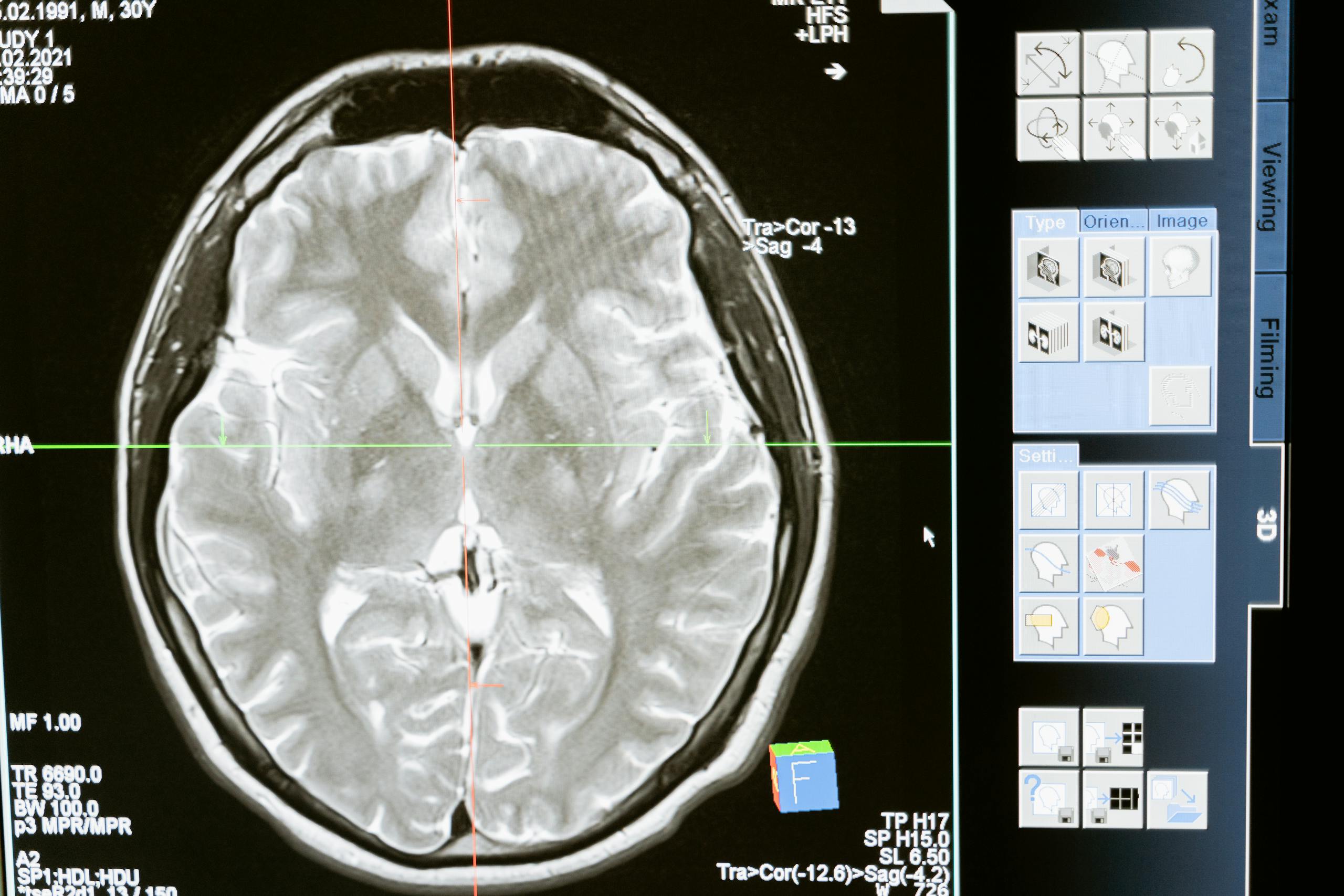
Is INFP Related to Any Psychological or Neurological Conditions?
This is one of the most common follow-up questions, and it deserves a careful answer.
INFP is not a diagnosis. It is not listed in the DSM-5, it does not appear in the ICD-10, and no clinician will use it to describe a condition. Personality type frameworks and clinical diagnostic systems are built for entirely different purposes. One describes patterns of preference and cognitive style. The other identifies conditions that cause distress or functional impairment and require treatment.
That said, there is legitimate research into how personality traits correlate with certain psychological experiences. A study available through PubMed Central examined the relationship between introversion and heightened sensory processing, finding that individuals with strong introverted tendencies often show greater reactivity to both positive and negative stimuli. INFPs, who combine introversion with a deeply feeling orientation, often report experiences consistent with what researchers call high sensitivity.
High sensitivity is not a disorder. Healthline’s overview of empaths and sensitivity describes highly sensitive people as individuals whose nervous systems process sensory and emotional information more deeply than average. Many INFPs identify strongly with this concept. Still, identifying as a highly sensitive person is different from having a clinical condition, just as being an INFP is different from having a diagnosis.
Where things get more nuanced is when INFP traits create real challenges in daily functioning. The tendency to avoid conflict, for instance, can become a serious problem in professional and personal relationships. My own experience running advertising agencies gave me a front-row seat to how avoidance compounds over time. I watched colleagues, and sometimes myself, let tension build silently until it became something much harder to address. The INFP pattern of internalizing rather than externalizing conflict is not a disorder, but it can create conditions where professional support becomes genuinely valuable.
If you find that your INFP traits are causing significant distress or interfering with your ability to function, that is worth discussing with a mental health professional. Personality type can inform that conversation, but it is not a substitute for it.
How Does the INFP Inner World Actually Work?
One reason INFPs sometimes wonder if there is a clinical explanation for their experience is that their inner world genuinely operates differently from the norm. Not pathologically differently. Just distinctly.
The dominant cognitive function of the INFP is Introverted Feeling (Fi). This is not simply “being emotional.” Fi is a process of deeply internalized value evaluation. An INFP with active Fi is constantly, often unconsciously, measuring experiences against a rich internal framework of personal ethics and meaning. They are not just feeling things. They are assessing whether what is happening aligns with who they fundamentally are.
This creates a particular kind of intensity. When an INFP encounters something that violates their values, the response is not just intellectual disagreement. It is something closer to a visceral wrongness. And when they find something that resonates deeply, the connection feels almost sacred.
I am an INTJ, not an INFP, but I recognize the depth of that internal processing. My own dominant function is Introverted Intuition, and the experience of having a rich, complex inner world that does not always translate cleanly into external communication is something I understand well. During my years running agencies, I spent enormous energy trying to make my internal processing legible to clients and colleagues who operated very differently. It was exhausting in ways I could not always articulate at the time.
INFPs carry a version of that same translation burden. Their inner world is vivid and detailed, and the gap between that inner experience and what they can express outwardly is a recurring source of frustration. This is part of why INFPs sometimes struggle with communication in professional settings, not because they lack depth, but because their depth does not always fit neatly into the formats that workplaces expect.
Understanding those communication gaps is genuinely important. If you identify as an INFJ and recognize similar patterns, the article on INFJ communication blind spots addresses several dynamics that will feel familiar across these two closely related types.

What Are the Core Strengths of the INFP Personality Type?
Personality type discussions often drift toward challenges and limitations, partly because people searching for information are often trying to understand something that feels difficult. So let me be deliberate here about what INFPs genuinely do well.
Depth of empathy. INFPs do not just understand that someone is hurting. They feel their way into another person’s experience with a specificity that most people cannot access. In my agency years, the team members who could genuinely understand what a client was afraid of, not just what they said they wanted, were invaluable. That kind of empathic intelligence is rare and powerful.
Values-driven integrity. An INFP who has clarity about their values is extraordinarily difficult to corrupt or compromise. They will not cut ethical corners because it is convenient. They will not pretend something is fine when it is not. In environments where institutional pressure pushes people toward moral drift, an INFP’s internal compass is a genuine asset.
Creative and conceptual thinking. The combination of Intuition and Feeling produces a particular kind of imagination, one that is not just abstract but emotionally resonant. INFPs often create work, whether written, visual, or interpersonal, that connects with people at a level that purely analytical approaches cannot reach.
Authentic connection. INFPs are not interested in surface-level interaction. When they invest in a relationship, it is genuine. People feel that. In professional contexts, this creates loyalty and trust that is hard to manufacture through any other means.
Adaptability and openness. The Perceiving preference means INFPs stay genuinely open to new information and changing circumstances. They do not cling to plans for the sake of consistency. In fast-moving environments, that flexibility is a real advantage.
A 2023 study published in Frontiers in Psychology examined how personality traits relate to creative problem-solving, finding that openness and emotional depth were consistently associated with more innovative approaches to complex challenges. INFPs tend to score high on both dimensions.
Where Does the INFP Struggle Most?
Honest self-awareness means looking at the harder parts too. INFPs face a specific set of recurring challenges, and understanding them is not about limitation. It is about preparation.
Conflict avoidance. The INFP’s deep sensitivity to emotional disharmony makes conflict feel genuinely threatening rather than merely uncomfortable. The instinct is to withdraw, soften, or disappear rather than engage directly. Over time, this pattern creates exactly the kind of unresolved tension that eventually becomes unavoidable. The article on why INFPs take conflict so personally gets into the specific mechanics of this pattern in detail.
Difficulty with difficult conversations. Related to conflict avoidance but distinct from it: INFPs often know what needs to be said and cannot bring themselves to say it. The fear of damaging a relationship, or of being misunderstood, creates a kind of paralysis. How INFPs can engage in hard conversations without losing themselves addresses this directly, with practical approaches that work with the INFP’s natural style rather than against it.
Idealism colliding with reality. INFPs hold strong visions of how things should be. When reality falls significantly short, the disappointment can be profound. This is not naive optimism. It is a values-based orientation that expects the world to honor what matters. When it does not, the disillusionment is real.
Difficulty with external structure. The Perceiving preference that makes INFPs adaptable also makes sustained engagement with rigid systems genuinely difficult. Bureaucracy, inflexible processes, and environments that prioritize procedure over meaning tend to drain INFPs in ways that go beyond ordinary frustration.
Absorbing others’ emotions. The same empathic capacity that makes INFPs exceptional at understanding others can become overwhelming when boundaries are not in place. Taking on the emotional weight of everyone around them is a pattern many INFPs recognize, and it has real costs over time.
I watched this dynamic play out repeatedly in agency settings. The team members who were most attuned to client emotions, who could read a room with extraordinary precision, were also the ones who came home depleted after difficult client meetings. That sensitivity was their greatest professional asset and their most consistent personal cost. The question was never how to eliminate it. It was how to protect it.

How Does the INFP Type Relate to Similar Types Like INFJ?
INFPs and INFJs are frequently confused for each other, and the mix-up is understandable. Both types are introverted, both lead with Feeling in their decision-making, and both tend toward depth, empathy, and a strong ethical orientation. From the outside, they can look nearly identical.
The difference lies in their cognitive architecture. The INFJ leads with Introverted Intuition (Ni), which produces a future-oriented, pattern-recognition style of processing. The INFJ often has a strong sense of where things are heading and why. The INFP leads with Introverted Feeling (Fi), which produces a values-centered, identity-grounded style of processing. The INFP is less concerned with where things are heading and more concerned with whether the path aligns with who they are.
Both types struggle with certain interpersonal dynamics in similar ways. The INFJ pattern of avoiding conflict to preserve harmony, for instance, has its own costs. The article on the hidden cost of INFJs keeping peace examines what happens when that avoidance becomes a long-term strategy rather than a temporary coping mechanism. INFPs will recognize elements of that pattern in themselves, even though the underlying motivation is slightly different.
INFJs also have a well-documented pattern of withdrawing completely from relationships that have become too painful, sometimes called the “door slam.” The article on why INFJs door slam and what to do instead explores that dynamic in depth. INFPs have their own version of this withdrawal, though it tends to be less final and more characterized by emotional retreat than complete severance.
Understanding the distinction between these two types matters for self-knowledge. If you are not certain which type fits you best, our free MBTI personality test can help you identify your type with more precision. The difference between INFP and INFJ is subtle but meaningful, and getting it right changes how you interpret your own patterns.
One place the two types converge is in how they wield influence. Both INFPs and INFJs tend to lead through authenticity and depth rather than authority or volume. The article on how INFJs use quiet intensity to influence others describes an approach that many INFPs will find resonant, even if the specific cognitive mechanisms differ slightly.
How Should an INFP Think About Self-Discovery and Type Verification?
One thing I have noticed across years of writing about personality types is that people often arrive at their type through a process of elimination and recognition rather than a single definitive test. You read a description and something clicks. You read another description and something does not fit. Over time, the picture sharpens.
For INFPs specifically, the verification process can be complicated by the fact that this type is unusually good at seeing themselves from multiple angles. The same empathic capacity that makes INFPs attuned to others also makes them capable of identifying with a wide range of type descriptions. They are not being indecisive. They are being thorough.
A few markers that tend to distinguish genuine INFPs from other types who share surface-level similarities:
First, the question of values versus harmony. INFPs prioritize their personal values even when doing so creates conflict. INFJs prioritize harmony even when it means suppressing their values temporarily. If you consistently find yourself willing to accept relational discomfort in order to stay true to your ethics, that points toward INFP. If you find yourself consistently bending your ethics to preserve relational peace, that points more toward INFJ.
Second, the question of identity stability. INFPs tend to have a strong, stable sense of who they are at their core, even when they are uncertain about external circumstances. That internal anchor is characteristic of dominant Fi. Types without that function often report feeling more externally defined.
Third, the question of future orientation versus present values orientation. INFJs are often focused on what is coming and what it means. INFPs are more often focused on what is happening right now and whether it is right. Both are intuitive types, but the direction of that intuition differs.
Research on personality type validity, including work cited in this PubMed Central resource on psychological assessment, emphasizes that self-report measures are most accurate when respondents have genuine self-knowledge and are answering authentically rather than aspirationally. INFPs, who tend toward deep self-reflection, often produce more reliable type results than average, provided they are answering based on who they actually are rather than who they want to be.

What Does INFP Mean in Practice, Day to Day?
Personality type descriptions can feel abstract until you see them in the texture of ordinary life. What does being an INFP actually look like on a Tuesday afternoon?
It looks like spending twenty minutes composing an email that most people would write in two, because the wording matters and you want it to land the way you intend. It looks like leaving a meeting feeling drained not because the content was difficult but because the emotional undercurrents in the room required constant monitoring. It looks like having a conversation in your head with someone you need to confront, rehearsing it dozens of times, and still finding the actual conversation harder than the rehearsal suggested it would be.
It also looks like being the person in the room who genuinely cares whether the intern feels included. It looks like producing creative work that resonates with people in ways that surprise even you. It looks like holding a position under social pressure because you know it is right, even when capitulating would be easier.
During my agency years, I worked with a creative director who I am fairly certain was an INFP, though we never had that conversation explicitly. She was the person who could look at a campaign brief and immediately identify the emotional gap between what the client said they wanted and what their audience actually needed. Her insights were almost always right. Getting her to articulate them in a client meeting was a different challenge entirely. The depth was there. The translation was hard.
That gap between internal richness and external expression is the daily reality of being an INFP. It is not a flaw to fix. It is a characteristic to understand and work with.
For INFPs working through interpersonal challenges at work or in relationships, understanding the specific dynamics of difficult conversations is worth the investment. The nuances of how to engage directly without abandoning your values are covered in the piece on how INFPs can fight without losing themselves, which addresses the specific fear that honest confrontation will cost you the relationship or the version of yourself you want to protect.
And for the related challenge of understanding why conflict hits so differently for this type, the article on why INFPs take everything personally offers a framework that many INFPs find genuinely clarifying. It is not about being too sensitive. It is about understanding why the INFP nervous system processes interpersonal threat the way it does, and what to do with that information.
Similarly, INFJs handling their own version of these patterns will find relevant insight in the piece on how quiet intensity actually works as a form of influence. The overlap between INFJ and INFP approaches to influence is real, and the strategies translate across both types.
If you want to go deeper into everything that shapes the INFP experience, from cognitive functions to relationships to career fit, the full INFP Personality Type hub brings it all together in one place.
About the Author
Keith Lacy is an introvert who’s learned to embrace his true self later in life. After 20 years in advertising and marketing leadership, including running agencies and managing Fortune 500 accounts, Keith now channels his experience into helping fellow introverts understand their strengths and build fulfilling careers. As an INTJ, he brings analytical depth and authentic perspective to every article, drawing from both professional expertise and personal growth.
Frequently Asked Questions
Is INFP a medical abbreviation or diagnosis?
No. INFP is a personality type designation from the Myers-Briggs Type Indicator (MBTI), not a medical abbreviation or clinical diagnosis. It stands for Introverted, Intuitive, Feeling, and Perceiving. It does not appear in the DSM-5 or any clinical diagnostic system. Personality type frameworks describe patterns of preference and cognitive style, not conditions requiring treatment.
What does each letter in INFP mean?
The I stands for Introverted, meaning this type draws energy from solitude and internal reflection. The N stands for Intuitive, describing a preference for patterns, meaning, and possibilities over concrete facts. The F stands for Feeling, indicating that decisions are guided primarily by personal values and emotional impact. The P stands for Perceiving, reflecting a preference for flexibility and openness over rigid structure and planning.
How is INFP different from INFJ?
Both types are introverted and empathic, but their dominant cognitive functions differ significantly. INFPs lead with Introverted Feeling (Fi), which produces a values-centered, identity-grounded orientation. INFJs lead with Introverted Intuition (Ni), which produces a future-oriented, pattern-recognition style. INFPs tend to prioritize staying true to their values even at the cost of harmony. INFJs tend to prioritize harmony and vision, sometimes at the cost of immediate self-expression.
Are INFPs considered highly sensitive people?
Many INFPs identify strongly with the concept of high sensitivity, which describes individuals whose nervous systems process sensory and emotional information more deeply than average. High sensitivity is not a disorder and is not the same as being an INFP, but the overlap is significant. INFPs’ combination of introversion and strong Feeling orientation often produces the kind of deep emotional processing that researchers associate with high sensitivity.
How can an INFP verify their personality type?
The most reliable approach combines a formal assessment with honest self-reflection. Taking a structured MBTI assessment provides a starting point, but verifying the result means reading detailed descriptions of the cognitive functions and checking whether they match your actual experience rather than your aspirational self-image. Key markers for INFP include a strong, stable internal value system, a preference for authenticity over harmony when the two conflict, and a deep sense of personal identity that persists even during external uncertainty.