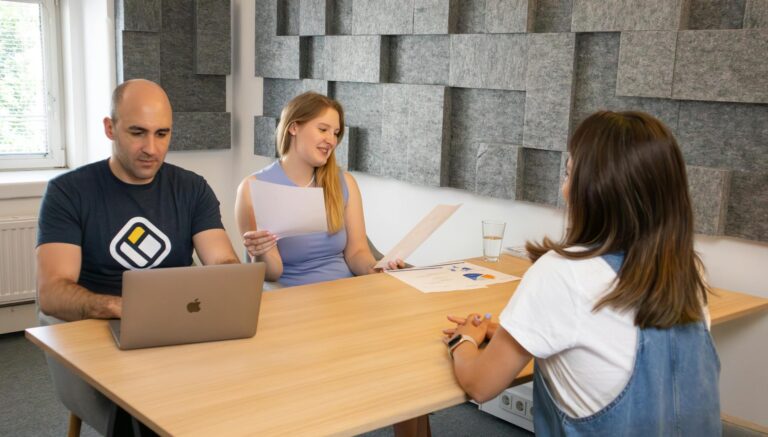
Ask an introvert if they’re feeling stressed and you’ll often get a polite, measured answer that reveals almost nothing. Not because they’re being dishonest, but because the internal experience of stress in an introvert is layered, quiet, and genuinely difficult to translate into a quick response. By the time someone thinks to ask, the stress has usually been building for weeks.
Most people around introverts misread the signals entirely. Calm exterior. Thoughtful pauses. Steady performance. None of those things mean the person is fine. They often mean the opposite.

Stress in introverts doesn’t announce itself loudly. It withdraws. It goes quiet. And that quiet is exactly why the people closest to us, and sometimes even we ourselves, miss it until it’s already done real damage.
If you want a broader look at how burnout, stress, and recovery connect for introverts, our Burnout and Stress Management hub covers the full landscape, from early warning signs to long-term recovery. This article focuses on something more specific: what’s actually happening when an introvert is stressed, why it stays hidden, and what asking the right question can change.
Why Does Introvert Stress Stay So Hidden?
There’s a version of me that showed up to client presentations looking completely composed while running on four hours of sleep, three back-to-back days of meetings, and the kind of low-grade anxiety that settles into your chest like weather. Nobody asked. Nobody needed to. I looked fine. I sounded fine. I delivered the work.
What drains your social battery?
Not all social exhaustion is the same. Our free quiz identifies your specific drain pattern and gives you personalised recharging strategies.
Find Your Drain PatternUnder 2 minutes · 8 questions · Free
That capacity to compartmentalize is something many introverts develop early, and it’s genuinely useful right up until it isn’t. The problem isn’t that we hide stress on purpose. It’s that we process it internally so thoroughly that by the time it reaches the surface, it’s already become something harder to manage.
A 2024 study published in Frontiers in Psychology found meaningful connections between introversion, internal emotional processing, and delayed stress expression. Introverts tend to filter emotional experience through extensive internal evaluation before externalizing it, which means the gap between feeling stressed and showing stressed can be significant. That gap is where a lot of damage accumulates.
Add to that the social conditioning many introverts absorb over years of being told to speak up, be more present, bring more energy, and you get people who’ve learned to mask their internal state as a professional survival skill. By the time someone asks how they’re doing, the honest answer has been edited down to something manageable.
What Does Stressed Actually Look Like in an Introvert?
Introvert stress rarely looks like what people expect stress to look like. There’s no visible agitation, no raised voice, no obvious signs of overwhelm. What you’ll see instead is a gradual pulling inward. More silence. Shorter responses. A kind of careful economy in how they spend their words and energy.
In my agency years, my version of peak stress looked like extreme focus. I’d get quieter, more deliberate, more precise. From the outside, people sometimes read that as confidence or control. From the inside, it was the mental equivalent of sealing every hatch before a storm. I was managing, not thriving. Those look identical from a distance.

Some of the most consistent signs of introvert stress include:
- Increased need for solitude, beyond their usual baseline
- Difficulty finishing thoughts or making decisions that would normally feel easy
- Physical fatigue that doesn’t resolve after sleep
- A growing irritability that surfaces in small, unexpected moments
- Withdrawal from even the relationships they value most
- A flattening of enthusiasm for things they usually care about
That last one is worth pausing on. Introverts often have a few things they genuinely love and protect: a creative project, a specific friendship, a personal ritual. When stress reaches a certain level, even those things start to feel like obligations. That flattening is a signal worth paying attention to.
Research from PubMed Central points to the way chronic activation of the stress response affects motivation and reward processing, which helps explain why things that usually bring genuine pleasure can start to feel hollow when the nervous system has been running hot for too long.
Why the Question Itself Often Fails
“Are you okay?” is a well-meaning question that almost never produces useful information from an introvert who’s struggling. Not because they want to mislead you, but because the question is too broad, arrives too quickly, and puts the burden of translation entirely on them in real time.
Introverts tend to process before speaking. Give them a vague question in a moment of stress and what you’ll get back is the processed, edited version, the one that’s been checked for accuracy, reasonableness, and potential impact on the listener. By the time all of that filtering happens, the honest answer has been replaced with something more socially manageable.
I’ve been on both sides of this. As a leader, I asked people how they were doing constantly. I thought I was checking in. What I was actually doing was giving them an easy exit. “Fine, thanks” is the path of least resistance when someone asks a question that wide. It wasn’t until I started asking differently that I started getting real answers.
The questions that actually work tend to be specific and observational. “I noticed you’ve been quieter than usual this week, what’s going on?” lands differently than “How are you?” It signals that you’ve actually been paying attention, which changes the dynamic entirely. It also removes the need for the introvert to decide whether their experience is worth mentioning, because you’ve already indicated that you’ve noticed something.
A piece from Psychology Today’s Introvert’s Corner captures something important about how introverts manage social energy, including the energy required to articulate internal states to others. That energy cost is real, and it’s higher when someone is already depleted.
What Happens When Introvert Stress Goes Unaddressed
The short answer is burnout. Not the kind that comes from one bad week, but the kind that settles in over months of quiet accumulation. Introverts who don’t have their stress recognized or addressed tend to keep functioning, sometimes at a high level, long past the point where that functioning is sustainable.
There’s a particular pattern I’ve seen in myself and in the introverted leaders I’ve worked with: the ability to perform under pressure becomes its own trap. Because we can keep going, we do. Because we look fine, nobody intervenes. Because we’ve internalized the idea that needing rest is somehow a weakness, we don’t ask for it.
That pattern, repeated over years, is how you end up with what I’d call chronic depletion. It’s worth reading about chronic burnout and why recovery never really comes for some people. That article gets into why introverts who’ve been running on empty for a long time often find that standard rest doesn’t restore them the way it used to. The system itself has been recalibrated.

A 2018 resource from the University of Rochester Medical Center describes grounding techniques that can interrupt the stress response before it compounds. These matter because introverts under sustained stress often lose access to the very internal clarity that usually helps them regulate. The processing that normally feels natural starts to feel effortful, which adds another layer of strain.
There’s also a specific risk for people who identify as somewhere between introverted and extroverted. The pull in both directions can create its own particular kind of exhaustion. If that resonates, ambivert burnout and why balance can actually destroy you is worth a read. The assumption that being in the middle means you’re protected from extremes turns out to be wrong in some important ways.
How Introverts Can Start Recognizing Their Own Stress Signals
One of the more counterintuitive things about introvert stress is that we’re often the last ones to name it accurately. We’re good at observing and analyzing other people’s emotional states. Our own tends to get rationalized, minimized, or filed under “something to deal with later.”
Part of what helped me was developing a very specific internal check-in practice. Not a vague “how am I feeling” question, but a concrete set of reference points. Am I enjoying the things I usually enjoy? Am I finding conversation more effortful than usual? Is my sleep actually restoring me? Am I looking forward to anything in the next week?
Those questions are specific enough to produce honest answers. Vague self-check-ins produce the same edited responses we give other people.
The American Psychological Association has documented how relaxation and stress-recognition practices work together, not just to reduce stress after the fact, but to lower the threshold at which we notice it’s building. That early-detection piece matters enormously for introverts who’ve learned to override their own signals.
There are also some genuinely practical approaches that work with introvert wiring rather than against it. Introvert stress management strategies that actually work goes into this in detail, including why so many generic stress management approaches backfire for people who process internally. The strategies that help tend to be quieter, more solitary, and more structured than what you’ll find in mainstream wellness advice.
What People Around Introverts Can Do Differently
If you live with, manage, or care about an introvert, there are a few things worth understanding about how to actually reach them when they’re stressed.
Timing matters more than most people realize. Asking an introvert how they’re doing immediately after a meeting, in a group setting, or when they’re clearly mid-task is almost guaranteed to produce a surface-level answer. The same question asked in a quieter moment, with no audience and no time pressure, has a completely different chance of landing honestly.
Specificity also matters. Observations are more effective than open questions. “You seem like you’ve had a heavy week” opens a door differently than “How are you?” It gives the introvert something concrete to respond to, rather than asking them to generate the entire frame of the conversation from scratch.
And patience. Introverts don’t always know in the moment how stressed they are. Sometimes the honest answer comes an hour later, or the next day, in a text or an email. That’s not avoidance. That’s just how the processing works. Staying open to delayed responses is one of the most genuinely useful things you can do.
A piece from Psychology Today on the weight of small talk for introverts touches on something relevant here: the social performance required even in casual exchanges costs introverts real energy. When someone is already stressed, that cost goes up. Reducing the performance requirement in how you ask the question helps lower the barrier to an honest answer.

The Workplace Dimension of Introvert Stress
Work is where most of the stress accumulation happens for introverts, and it’s also where it’s most likely to go unaddressed. The professional context adds a layer of performance expectation that makes honest stress disclosure feel risky.
Running an agency meant I was in a constant state of client-facing energy output. Pitches, presentations, reviews, relationship management. All of it valuable. All of it draining. The issue wasn’t any single demand. It was the cumulative weight of performing extroversion as a professional requirement, day after day, with no structural acknowledgment that recovery time was a legitimate need.
What I eventually figured out, later than I should have, was that boundaries weren’t about protecting myself from work. They were about making the work sustainable. Without them, I was always operating from a deficit. Work boundaries that actually stick after burnout gets into the specific mechanics of this, including why the boundaries most people set don’t hold and what makes the difference. It’s one of the more practically useful things I’ve written about this topic.
The research available through the University of Northern Iowa on personality and workplace stress supports what a lot of introverts already know experientially: the environments that reward constant visibility and social engagement create a structural disadvantage for people who need quiet to do their best work. Naming that clearly, rather than treating it as a personal failing, is part of what makes it possible to address.
Personality type shapes not just how stress accumulates but what kind of recovery actually works. Burnout prevention strategies by type breaks this down in a way that’s genuinely useful for understanding why one-size-fits-all wellness programs miss the mark for introverts specifically. And if you’re past prevention and already in recovery, burnout recovery by type addresses what the return actually looks like when you’re doing it in a way that matches how you’re wired.
What Asking the Right Question Can Actually Change
There’s something that shifts when someone asks an introvert how they’re really doing, and actually means it. Not as a greeting, not as a social script, but as a genuine question with space for a real answer.
I had a colleague once, early in my agency career, who had a habit of saying “No, but how are you actually doing?” It seemed almost comically direct at first. Over time I realized it was one of the most useful things anyone had ever said to me professionally. It gave me permission to skip the edited version. It acknowledged that there was an edited version. And it created enough space that an honest answer felt possible.
That’s not a small thing. Many introverts spend years developing the capacity to mask their internal state so effectively that even they lose track of it. Having someone pierce that with a specific, patient, genuinely curious question can be the thing that starts an honest internal inventory.
A 2023 study from PubMed Central on social support and stress regulation found that perceived quality of support, meaning whether someone felt genuinely heard rather than just checked on, had significantly stronger effects on stress outcomes than frequency of contact. For introverts, that quality distinction is everything. One real conversation outweighs a dozen surface-level check-ins.
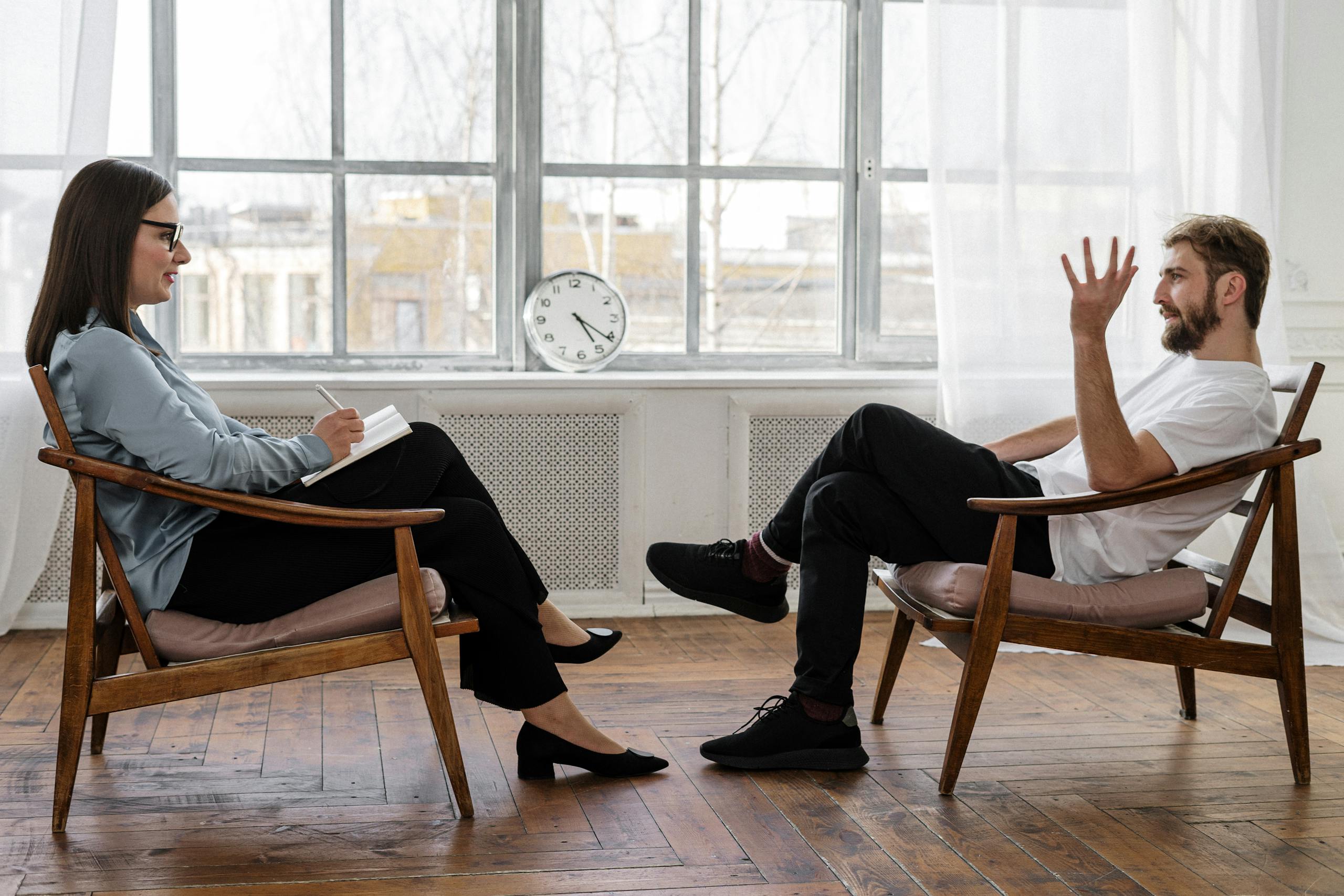
So if you’re the introvert in this situation: you’re allowed to say “actually, not great.” You’re allowed to answer the real question, even when someone only asked the polite one. Most people who ask are hoping you will. They just don’t always know how to make the space for it.
And if you’re the person asking: slow down. Pick a quiet moment. Be specific about what you’ve observed. Then actually wait for the answer. The real one takes longer to arrive, and it’s worth waiting for.
There’s more to explore on this topic across our full Burnout and Stress Management hub, including resources on prevention, recovery, and the specific patterns that show up for different personality types.
Running on empty?
Five drain profiles, each with specific triggers, warning signs, and a recharging playbook.
Take the Free QuizUnder 2 minutes · 8 questions · Free
About the Author
Keith Lacy is an introvert who’s learned to embrace his true self later in life. After 20 years in advertising and marketing leadership, including running agencies and managing Fortune 500 accounts, Keith now channels his experience into helping fellow introverts understand their strengths and build fulfilling careers. As an INTJ, he brings analytical depth and authentic perspective to every article, drawing from both professional expertise and personal growth.
Frequently Asked Questions
Why do introverts hide stress so effectively?
Introverts process emotions and experiences internally before externalizing them, which means the gap between feeling stressed and showing stressed can be wide. Years of social conditioning to appear composed in professional and social settings reinforces this tendency. The result is a person who can look completely fine while managing significant internal strain. It’s not deliberate concealment so much as a deeply ingrained processing style that filters experience before it reaches the surface.
What are the real signs that an introvert is stressed?
The most telling signs tend to be changes from their baseline rather than dramatic displays. Increased withdrawal beyond their usual need for solitude, difficulty with decisions that would normally feel easy, physical fatigue that persists after sleep, and a loss of enthusiasm for things they normally care about are all significant signals. Irritability that surfaces in small unexpected moments is another one worth noting. These signs are easy to miss precisely because they look like the introvert is just being quiet, which is their default state.
How should you ask an introvert if they’re stressed?
Specific observational questions work far better than broad open ones. “I noticed you’ve seemed quieter than usual this week” opens a different kind of conversation than “How are you doing?” Timing matters too: quieter moments with no audience and no time pressure produce more honest answers than quick check-ins in passing. Patience with delayed responses is also important. Introverts often need time to process before they can articulate how they’re actually feeling, and that honest answer may arrive hours or even a day later.
What happens if introvert stress goes unaddressed for a long time?
Sustained unaddressed stress in introverts tends to compound quietly into burnout, often over months rather than weeks. Because introverts can continue functioning at a high level even when significantly depleted, there’s often no obvious external signal that intervention is needed. Over time, the nervous system recalibrates around chronic activation, which means standard rest stops being restorative. The person may find that they can no longer recover from stress the way they once did, even with adequate sleep or time off. Early recognition and honest conversation are genuinely protective against this pattern.
Can introverts get better at recognizing their own stress?
Yes, and the most effective approach involves developing specific internal reference points rather than vague self-check-ins. Questions like “Am I enjoying the things I usually enjoy?” or “Is sleep actually restoring me?” or “Am I looking forward to anything this week?” tend to produce more honest self-assessment than general “how am I feeling” prompts. Regular practice with these kinds of specific questions builds the capacity to notice stress earlier in its development, before it reaches the level where it becomes harder to address.