
Do INFJs have anger issues? Not in the way that phrase usually implies. INFJs don’t typically rage, snap, or pick fights. Their anger tends to build quietly over months or years, compressed beneath layers of empathy and patience, until it surfaces in ways that catch everyone, including the INFJ themselves, completely off guard.
What looks like an anger problem from the outside is almost always something more complicated on the inside: accumulated hurt, violated values, and the exhaustion of absorbing other people’s emotions without adequate release. Understanding that distinction changes everything about how INFJs can manage what they feel.
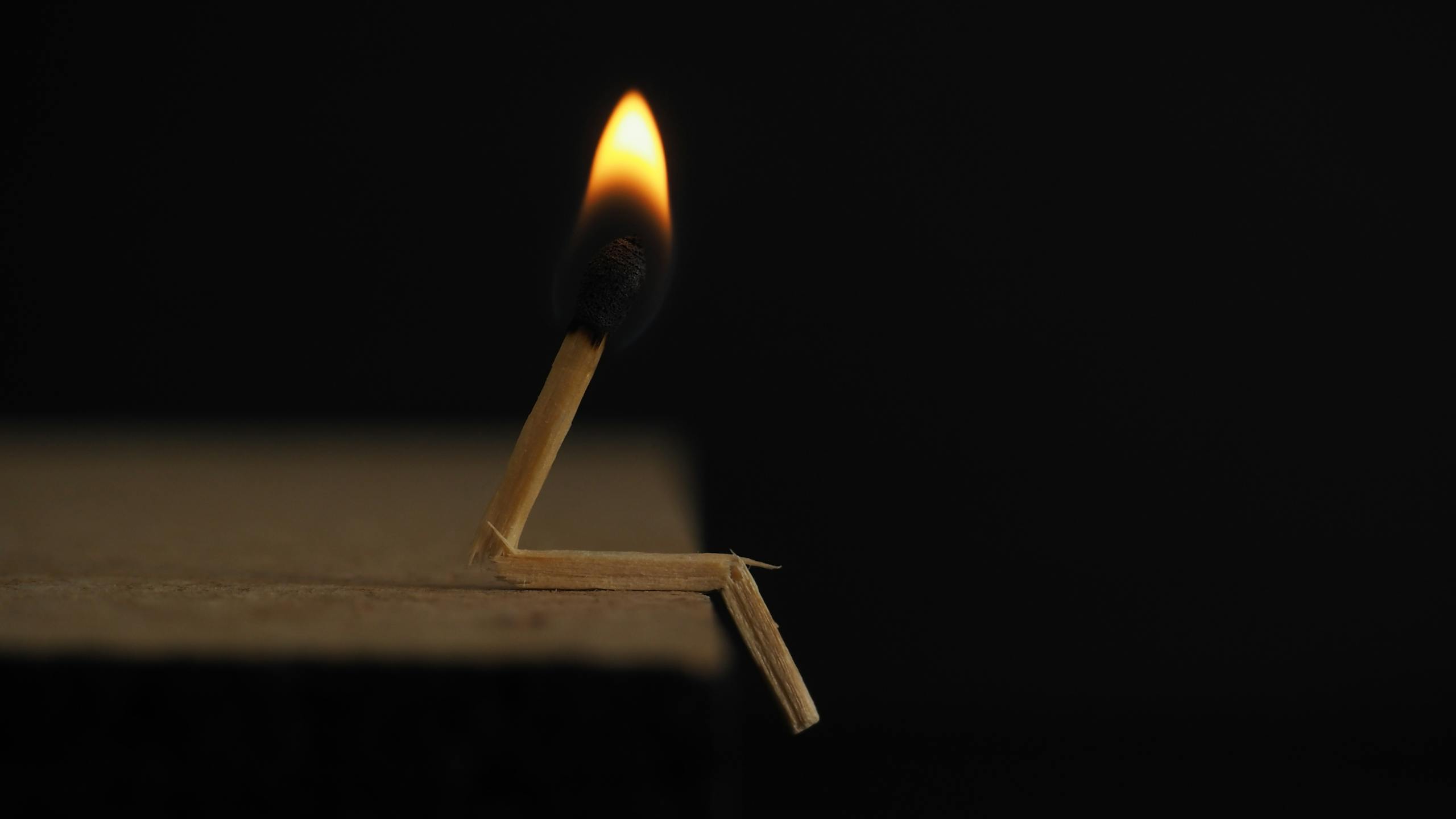
If you’ve ever wondered whether your personality type shapes how you experience and express anger, you’re asking exactly the right question. Our MBTI Introverted Diplomats hub covers the full emotional and relational landscape of INFJs and INFPs, including the parts most personality content glosses over. Anger is one of those parts.
Why Does INFJ Anger Feel So Different From Everyone Else’s?
Most people experience anger as a quick response. Something happens, they react, they move on. For INFJs, it rarely works that way. The anger gets filtered through so many layers of analysis, empathy, and self-doubt that by the time it surfaces, it’s carrying the weight of everything that came before it.
What’s your personality type?
Take our free 40-question assessment and get a detailed personality profile with dimension breakdowns, context analysis, and personalised insights.
Discover Your Type8-12 minutes · 40 questions · Free
I watched this play out in my own life for years before I had the vocabulary to describe it. Running advertising agencies meant I was constantly absorbing tension from clients, from creative teams, from account managers stuck between competing demands. I’d sit in a room where someone was being dismissive or dishonest, and I’d feel this quiet tightening, a kind of internal pressure that I’d push down because there was work to do and a room full of people depending on me to stay steady. Weeks later, something small would happen and I’d find myself responding with a sharpness that surprised everyone, including me. The small thing wasn’t really the problem. It was just the thing that finally made the pressure visible.
That experience is textbook INFJ anger. It’s not explosive by nature. It’s compressed. And compressed anger, held long enough, can feel like an anger problem even when its roots are actually in something much more understandable: a deep sensitivity to injustice and a tendency to absorb more than any one person should.
A study published in PubMed Central examining emotional regulation patterns found that individuals with high empathic sensitivity often experience delayed emotional processing, meaning they don’t always register the full impact of an emotional event until well after it occurs. For INFJs, who are wired for deep empathy and intuitive pattern recognition, this delay can make anger feel like it comes from nowhere when it actually comes from everywhere.
What Actually Triggers INFJ Anger?
There are a handful of specific triggers that reliably activate the INFJ anger response. Recognizing them matters because it shifts the experience from “I have a problem” to “I have a signal.”
Injustice is the biggest one. INFJs are built around a core moral framework, and when they witness cruelty, dishonesty, or the mistreatment of vulnerable people, something in them catches fire. This isn’t petty irritation. It’s a deep, principled response to a violation of values they hold at their center. I’ve seen quiet, measured INFJs become completely immovable when they believed something genuinely wrong was happening. That quality, when channeled well, is actually a form of moral courage. When it’s suppressed or misdirected, it becomes something harder to manage.

Being misunderstood is another significant trigger. INFJs invest enormous energy in understanding others, and when that effort isn’t reciprocated, when their motives are misread or their words are twisted, the frustration runs deep. It’s not ego. It’s the particular pain of someone who communicates carefully and still isn’t heard. If you’ve noticed that your communication patterns sometimes contribute to being misread, the piece on INFJ communication blind spots is worth sitting with. Some of the patterns that fuel misunderstanding are ones INFJs don’t even realize they’re doing.
Repeated boundary violations also build significant pressure. INFJs tend to give people many chances before they reach a breaking point. They’ll absorb small slights, overlook repeated inconsiderateness, and rationalize others’ behavior far longer than most people would. But there’s a limit. And when that limit is finally reached, the response can feel disproportionate to the person on the receiving end, even though from the INFJ’s perspective, they’ve been patient for a very long time.
Inauthenticity and manipulation round out the list. INFJs are extraordinarily perceptive about people’s underlying motivations. They often sense when someone is being dishonest or manipulative before they can articulate why. That awareness creates a kind of slow-burning frustration, especially when they’re expected to pretend they don’t see what they clearly see.
Is the INFJ “Door Slam” a Form of Anger?
The door slam, that sudden, complete withdrawal from a person or situation, is one of the most talked-about INFJ behaviors. And yes, in many cases it is a form of anger, though it functions more like a self-protective shutdown than an aggressive act.
What makes the door slam so jarring to people on the receiving end is its totality. There’s no argument, no confrontation, no visible escalation. One day the INFJ is present, and then they’re simply gone. From the outside, it looks cold. From the inside, it’s often the result of months of accumulated hurt finally reaching a threshold where continued engagement feels genuinely impossible.
The problem with the door slam as an anger response is that it bypasses the conversation that might have actually resolved something. It protects the INFJ from further harm, but it also forecloses any possibility of repair. And for a personality type that genuinely values deep, meaningful connection, that’s often a significant loss. The article on why INFJs door slam and what the alternatives look like goes deeper into this pattern and offers some genuinely useful ways to interrupt it before it becomes the only option.
What I’ve noticed, both in myself and in the INFJs I’ve worked alongside over the years, is that the door slam usually happens when someone has avoided a difficult conversation for too long. The anger that should have been expressed in smaller, manageable doses gets stored instead. And stored anger, eventually, doesn’t ask permission before it comes out.
How Does INFJ Empathy Make Anger More Complicated?
Here’s something that doesn’t get discussed enough: INFJs often feel guilty about their own anger. Their empathy doesn’t switch off just because they’re upset. Even in the middle of feeling genuinely wronged, they’re simultaneously processing the other person’s perspective, imagining their pain, constructing explanations for their behavior. That internal tug-of-war makes it very hard to simply feel angry and act on it.
According to Psychology Today’s overview of empathy, highly empathic individuals often struggle with what’s called “empathic distress,” where absorbing others’ emotions becomes destabilizing rather than connective. For INFJs, who are often described as natural empaths, this means their anger is frequently competing with their compassion in real time. The result is a kind of emotional paralysis where they can’t fully express what they feel because they’re too busy feeling everyone else’s feelings simultaneously.
I experienced this acutely during a particularly difficult client relationship early in my agency years. A client was consistently dismissive in meetings, interrupting my team, taking credit for our strategic work, and treating the relationship as purely transactional. I was genuinely angry about it. And yet every time I considered addressing it directly, I’d start mapping out their pressures, their internal politics, the reasons they might be behaving that way. My empathy kept softening my anger before it could become useful. It took me longer than it should have to understand that understanding someone’s reasons doesn’t obligate you to absorb their behavior indefinitely.
That distinction, between understanding someone and accepting mistreatment, is one of the more important things INFJs can internalize. Empathy is a strength. It becomes a liability only when it’s used to override your own legitimate emotional responses.

What Happens When INFJs Suppress Anger Instead of Processing It?
Suppression is the default for most INFJs. It feels like the responsible choice. It looks like patience and self-control from the outside. And in the short term, it works reasonably well. But the long-term costs are significant.
Chronic suppression of anger tends to show up in a few recognizable patterns. Resentment is the most common, a slow accumulation of unprocessed grievances that colors how the INFJ sees a relationship or situation over time. Where they once felt genuine warmth, they now feel a kind of flat disconnection. They’re not angry exactly, but they’re not really present either.
Physical symptoms are another consequence. A PubMed Central study on emotional suppression and health outcomes found meaningful links between habitual emotional suppression and increased risk of stress-related physical symptoms, including headaches, digestive issues, and disrupted sleep. For INFJs who already carry a high baseline of emotional input, adding suppressed anger to that load creates real strain on the body.
There’s also a subtler cost: INFJs who suppress anger consistently often start to lose touch with their own emotional landscape. They become so practiced at pushing feelings down that they genuinely can’t tell what they’re feeling anymore. That disconnection makes it harder to advocate for themselves, harder to set boundaries, and harder to bring their full selves to any relationship or situation.
The alternative isn’t to express every feeling the moment it arises. It’s to create enough internal space to process what you’re feeling honestly, and enough relational safety to express it when it matters. That’s a skill, not a personality trait, which means it can be developed.
How Does INFJ Anger Show Up Differently Than INFP Anger?
INFJs and INFPs are often grouped together as sensitive, values-driven introverts, and they share real common ground. But their anger patterns are actually quite distinct, and understanding the difference can help both types recognize what’s happening inside them more clearly.
INFJ anger tends to be strategic and contained. It builds over time, gets analyzed extensively, and when it finally surfaces, it often comes with a kind of cold precision. The INFJ has been watching, thinking, and cataloging. When they finally speak, they tend to be articulate and specific about what’s wrong. The danger isn’t incoherence, it’s the accumulation period that precedes the expression.
INFP anger has a different texture. It’s more immediate, more personal, and often more visibly emotional. INFPs feel things intensely and in real time, and their anger is frequently tied to a sense of personal betrayal rather than systemic injustice. The piece on why INFPs take things so personally in conflict unpacks this really well. And for INFPs looking at how to address difficult situations without losing their sense of self in the process, the article on how INFPs can handle hard conversations offers some practical grounding.
The shared thread between both types is avoidance. Neither INFJs nor INFPs are naturally comfortable with direct confrontation, and that avoidance is often what transforms manageable frustration into something that feels much bigger and harder to handle. Addressing things earlier, even imperfectly, tends to produce better outcomes than waiting until the pressure is too great to contain.
Can INFJ Anger Actually Be a Strength?
Framed the right way, yes. Absolutely.
INFJ anger, at its core, is moral signal. It fires most reliably in response to injustice, dishonesty, and the mistreatment of people who can’t protect themselves. Those are exactly the situations that deserve a response. The problem isn’t the anger itself. The problem is what happens when the INFJ has no healthy channel for it.
Some of the most effective advocacy I’ve witnessed came from people who had learned to use their anger as fuel without letting it become the whole story. They felt it, they named it, and then they directed it toward something constructive: a difficult conversation, a policy change, a decision to remove themselves from a situation that wasn’t serving anyone well. That’s a very different relationship with anger than suppression, and it’s also very different from explosion.

What makes this possible is what I’d call quiet intensity, the INFJ’s natural capacity to hold strong convictions without needing to broadcast them constantly. When that intensity is pointed at something meaningful, it becomes a form of influence that doesn’t require volume. The article on how INFJ quiet intensity actually works as influence explores this in depth, and it’s worth reading if you’ve ever wondered how to make your convictions felt without resorting to tactics that feel out of character.
The 16Personalities framework describes INFJs as having a rare combination of idealism and decisiveness, and that combination is exactly what makes their anger potentially powerful rather than merely disruptive. The idealism provides the moral clarity. The decisiveness, when it’s not being suppressed, provides the willingness to act on it.
What Does Healthy INFJ Anger Expression Actually Look Like?
Healthy expression doesn’t mean comfortable expression. For most INFJs, saying “I’m angry and here’s why” will never feel entirely natural. But it can feel necessary, and that’s enough.
The first step is recognition. INFJs need to get better at noticing when they’re angry in real time, rather than only recognizing it in retrospect. That tightening in the chest, the quiet withdrawal, the sudden loss of interest in a conversation or relationship: these are signals worth paying attention to when they’re happening, not just when they’ve already shaped a decision.
The second step is language. INFJs are generally skilled communicators, but many of them have a gap specifically around expressing anger. They can articulate almost any other emotional state with nuance and precision. Anger feels different, partly because of the guilt that often accompanies it, and partly because expressing anger feels like losing control of the carefully managed image they present to the world. Working on the specific language of anger, phrases that are honest without being aggressive, is genuinely useful practice.
The third step is timing. One of the patterns that makes INFJ anger feel disproportionate is that it tends to surface either too late (after months of accumulation) or at the wrong moment (when something small finally breaks through the containment). Getting better at addressing things closer to when they happen, even in small, low-stakes ways, prevents the buildup that makes later expressions feel explosive.
The article on the hidden cost of INFJ peacekeeping addresses exactly this pattern, and it’s one of the more honest pieces of writing I’ve encountered on why INFJs avoid difficult conversations even when those conversations would genuinely help them. The cost of keeping peace isn’t always obvious until it’s already been paid.
A Frontiers in Psychology study on emotional expression and well-being found that individuals who developed more flexible emotional expression strategies, meaning they could choose when and how to express rather than defaulting to suppression or eruption, reported significantly better interpersonal outcomes and lower rates of emotional exhaustion. For INFJs, developing that flexibility is less about changing who they are and more about expanding the range of what they allow themselves to do with what they feel.
How Does Self-Knowledge Change the INFJ Anger Pattern?
Everything changes when INFJs stop being surprised by their own anger. The surprise is often what makes the expression feel out of control. When you’ve been telling yourself for weeks that you’re fine, that you’re not upset, that you’re handling it, the moment when you’re clearly not fine anymore carries a kind of shock that amplifies the response.
Self-knowledge, real self-knowledge, means being honest about what you’re feeling while you’re still feeling it in manageable doses. It means knowing your specific triggers well enough to recognize them early. It means understanding the difference between anger that’s signaling something important and irritability that’s really just exhaustion or overstimulation.
If you’re not sure yet where you fall on the personality spectrum, or if you’ve been wondering whether INFJ actually fits your experience, taking our free MBTI personality test is a solid starting point. Understanding your type with more precision gives you a much clearer framework for interpreting your own emotional patterns, including the ones around anger.
One of the more useful reframes I’ve found is thinking about anger not as a character flaw to be managed but as information to be read. Anger tells you when a value has been violated, when a boundary has been crossed, when something in your environment is genuinely not okay. That’s useful data. The question isn’t how to stop feeling it. The question is how to read it accurately and respond to it wisely.

There’s also value in paying attention to what INFJs do with their anger after the fact. Many INFJs are skilled at analysis and self-reflection, and that capacity, applied to emotional patterns rather than just intellectual problems, can be genuinely significant. Not in a dramatic sense, but in the quiet, cumulative way that real change actually happens. You notice a pattern. You name it. You make a slightly different choice next time. Over months and years, those small choices add up to something meaningfully different.
The National Library of Medicine’s overview of emotional regulation identifies self-monitoring as one of the most reliable predictors of improved emotional outcomes, not therapy, not personality change, but simply the practice of paying closer attention to what you’re feeling and why. For INFJs who are already wired for introspection, this is genuinely good news. The capacity is already there. It just needs to be pointed in the right direction.
One more thing worth saying: INFJs who struggle with anger are often also struggling with the gap between how they appear to others and how they actually feel inside. They’ve spent years presenting as calm, steady, and unflappable, and that presentation becomes its own kind of trap. When the feelings don’t match the presentation, there’s nowhere for them to go. Creating even small spaces for authentic emotional expression, with trusted people, in private reflection, through writing or creative work, can relieve enough pressure to make the overall pattern much more manageable.
The piece on INFJ communication patterns that create distance touches on this dynamic in a way that’s worth revisiting if you’ve ever felt like your emotional reality and your expressed self are living in different rooms. Closing that gap, even partially, tends to make both communication and emotional regulation significantly easier.
What I’ve come to believe, after years of watching this pattern in myself and in others, is that INFJ anger is rarely the problem. The problem is usually the relationship INFJs have with their anger: the shame around it, the suppression of it, the delayed expression of it, and the self-judgment that follows it. Change that relationship, and the anger itself tends to become much less overwhelming and much more useful.
There’s more to explore on this topic and others like it in our complete MBTI Introverted Diplomats hub, which covers the emotional, relational, and professional dimensions of INFJ and INFP life in depth.
Curious about your personality type?
Our free MBTI assessment goes beyond the four letters. Get a full breakdown of your scores, see how your type shows up at work and in relationships.
Take the Free Test8-12 minutes · 40 questions · Free
About the Author
Keith Lacy is an introvert who’s learned to embrace his true self later in life. After 20 years in advertising and marketing leadership, including running agencies and managing Fortune 500 accounts, Keith now channels his experience into helping fellow introverts understand their strengths and build fulfilling careers. As an INTJ, he brings analytical depth and authentic perspective to every article, drawing from both professional expertise and personal growth.
Frequently Asked Questions
Do INFJs actually have anger issues or is it something else?
INFJs don’t typically have anger issues in the clinical or behavioral sense. What looks like an anger problem is usually the result of prolonged emotional suppression, deep sensitivity to injustice, and a tendency to absorb others’ feelings without adequate release. The anger itself is rarely the core issue. The relationship INFJs have with their anger, including the guilt, suppression, and delayed expression, is what creates the patterns that feel problematic.
What are the most common INFJ anger triggers?
The most reliable INFJ anger triggers include witnessing injustice or cruelty, being persistently misunderstood, having boundaries repeatedly violated, and encountering manipulation or inauthenticity. INFJs are also significantly affected by situations where they’re expected to pretend they don’t see what they clearly perceive. Because INFJs are highly attuned to people’s underlying motivations, dishonesty in particular tends to create a slow-burning frustration that builds over time.
Why does INFJ anger seem to come out of nowhere?
INFJ anger appears sudden because it’s rarely expressed close to when it’s first felt. INFJs tend to suppress anger, rationalize it away, or absorb it rather than address it directly. This creates an accumulation effect where months of compressed frustration finally surfaces in response to something relatively small. From the outside, the trigger looks disproportionate. From the INFJ’s perspective, the small thing was simply the last in a long series of things they’d already been carrying.
Is the INFJ door slam connected to anger?
Yes, in most cases the door slam is connected to anger, though it functions more as a self-protective response than an aggressive one. When an INFJ finally door slams, it usually means their capacity to absorb hurt has been exhausted and continued engagement feels genuinely impossible. The challenge with the door slam is that it bypasses the conversation that might have resolved the underlying issue. Addressing grievances earlier and more directly tends to reduce the likelihood of the door slam becoming the only available option.
How can INFJs express anger in a healthier way?
Healthier INFJ anger expression starts with recognition, noticing anger while it’s still in manageable doses rather than only in retrospect. From there, developing specific language for anger (honest but not aggressive), addressing issues closer to when they arise rather than waiting for accumulation, and creating small, consistent outlets for emotional expression all make a meaningful difference. success doesn’t mean become someone who expresses anger easily. It’s to develop enough flexibility that suppression and eruption aren’t the only two options available.