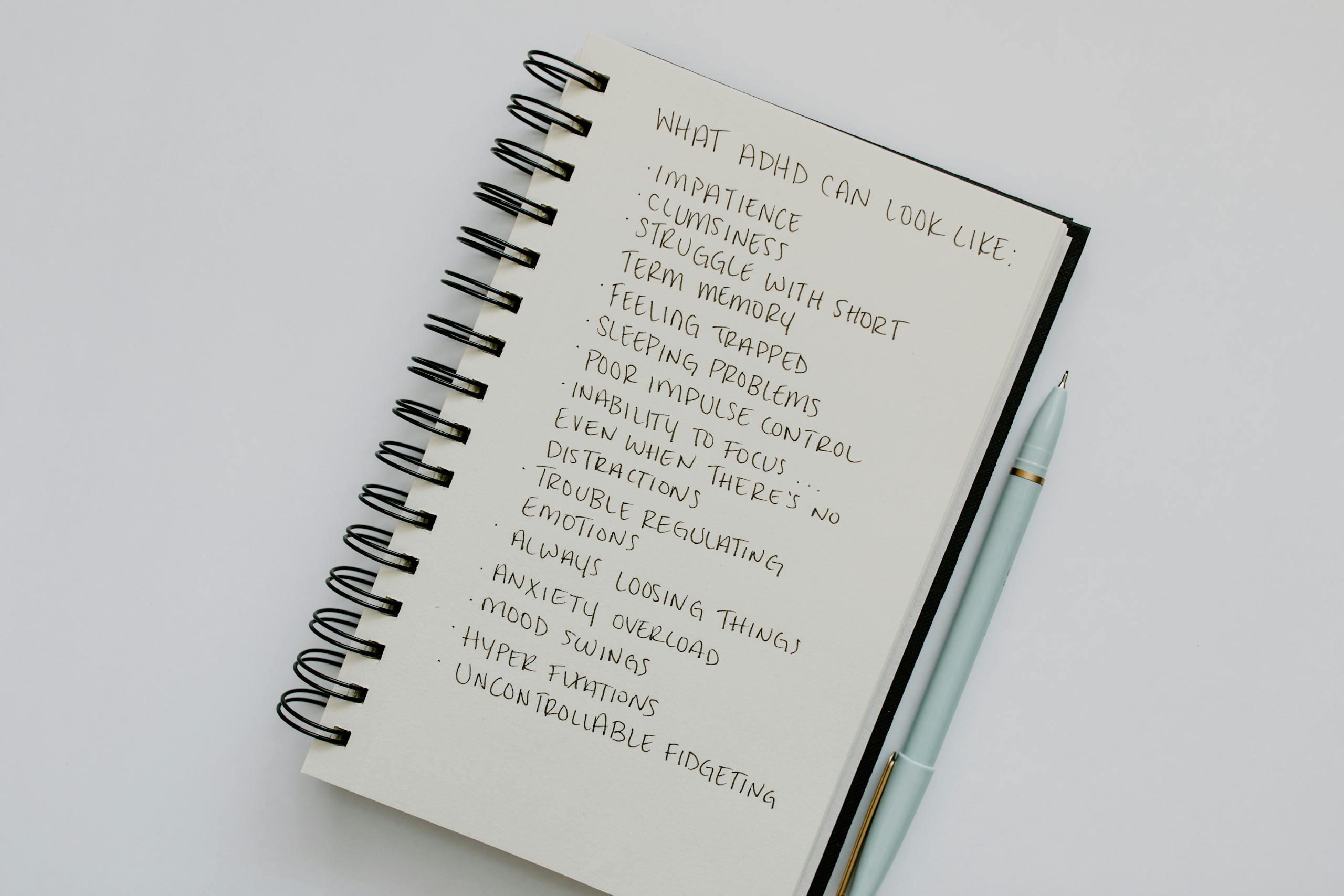

She sat in the back of the conference room, taking meticulous notes while her mind raced in twelve directions. To everyone else, she appeared calm, composed, engaged. Nobody saw the internal chaos, the desperate concentration required just to stay present, or the exhaustion that would hit the moment she walked to her car. For women living at the intersection of introversion, ADHD, and female identity, invisibility becomes a survival skill they never asked to master.
During my years leading advertising teams, I watched countless talented women struggle in ways that puzzled me before I understood my own introversion. Some of my most brilliant strategists would deliver exceptional work while appearing perpetually overwhelmed, and I later realized many were likely managing undiagnosed ADHD alongside their introverted nature. The corporate world rewards visible confidence and quick verbal responses, leaving women who process internally and manage attention challenges to develop elaborate compensation strategies that nobody ever sees or appreciates.
This triple invisibility creates a unique form of isolation. Being introverted means your contributions often go unnoticed in favor of louder voices. Being a woman means facing societal expectations about emotional labor and caregiving. Having ADHD means battling symptoms that manifest differently than the stereotypical hyperactive presentation most people recognize. When these three identities converge, the result is often a woman who has spent her entire life wondering what was fundamentally wrong with her.

Understanding the Triple Invisibility Phenomenon
The concept of triple invisibility describes how introvert women with ADHD face compounding layers of being overlooked, misunderstood, and dismissed. Each identity alone carries its own challenges with visibility and recognition. Combined, they create a perfect storm of erasure that affects everything from childhood diagnosis rates to career advancement opportunities.
What’s your personality type?
Take our free 40-question assessment and get a detailed personality profile with dimension breakdowns, context analysis, and personalised insights.
Discover Your Type8-12 minutes · 40 questions · Free
A 2023 systematic review published in the Journal of Attention Disorders found that women with ADHD often spend their lives feeling different, stupid, or lazy, blaming themselves for their underachievement without understanding the neurological basis for their struggles. The research revealed significant gender bias in ADHD studies, with 81% of participants in foundational research being male. This means the diagnostic criteria that determine who gets help were developed by observing boys and men, leaving countless women unidentified.
I think about the women I managed who would stay late rewriting the same email five times, convinced their first draft was inadequate. At the time, I attributed it to perfectionism or lack of confidence. Now I understand that some were likely compensating for attention difficulties they had no name for, working twice as hard as their colleagues to produce the same output while appearing effortlessly capable.
The invisibility starts early. Girls with ADHD typically present with inattentive symptoms rather than the hyperactive behaviors that prompt teacher referrals. They daydream rather than disrupt. They forget assignments rather than fight with classmates. Teachers praise them for being quiet while missing the signs that something fundamental is being overlooked. By the time these girls become women, they have developed sophisticated camouflage that makes their struggles nearly impossible to detect from the outside.
The Exhausting Reality of Double Masking
Masking refers to the exhausting process of hiding neurodivergent traits to appear more socially acceptable. For introvert women with ADHD, this means managing two simultaneous performances: one to appear more extroverted and engaged, another to appear more focused and organized than they naturally are.
According to the Attention Deficit Disorder Association, masking often involves camouflaging symptoms by controlling impulses, rehearsing responses, and copying behaviors of neurotypical people. This adaptation usually begins in childhood and becomes so automatic that many women do not realize how much energy they expend maintaining their facade.
The energy drain is substantial. Consider what it takes to sit through a two hour meeting while internally managing both the introvert need for processing time and the ADHD challenge of sustained attention. You are simultaneously fighting the urge to speak before fully forming your thoughts, suppressing physical restlessness, maintaining appropriate eye contact, tracking the conversation despite mental tangents, and appearing engaged even when your brain has wandered to entirely different topics. By the time the meeting ends, you have expended more mental energy than most attendees used during their entire workday.

I experienced this personally throughout my agency career, though I did not have language for it at the time. After presenting to Fortune 500 clients, I would return to my office and close the door, needing thirty minutes of silence before I could function again. My extroverted colleagues would head straight to lunch together, energized by the interaction. I assumed something was wrong with my stamina until I learned that introverts and extroverts literally process stimulation differently.
ADDitude Magazine reports that women with ADHD are now being diagnosed in their 30s, 40s, and 50s after decades of being misdiagnosed with depression or anxiety. These women became extremely skilled at masking because they never received an explanation that allowed them to understand their unique wiring. The impulse to hide becomes unconscious and automatic, deeply ingrained yet utterly exhausting.
Why Traditional Support Systems Miss Introvert Women with ADHD
The structures meant to identify and help people with ADHD were built around assumptions that exclude introvert women at nearly every level. Schools flag disruptive behavior, not quiet daydreaming. Workplaces reward visible productivity, not the internal effort required to maintain it. Even medical professionals often miss the signs because they expect ADHD to look like the hyperactive boy bouncing off walls, not the composed woman taking careful notes.
Research from Primary Care Companion for CNS Disorders confirms that inattentiveness is generally more common than hyperactivity in girls with ADHD. Females have fewer symptoms as measured by standard criteria but are just as impaired by these symptoms. Women and girls with ADHD are more likely to internalize symptoms, becoming anxious and depressed rather than acting out externally.
This internalization aligns with introvert tendencies toward reflection and internal processing, creating a double layer of concealment. An introvert woman with ADHD might appear to be thoughtfully considering a question when she is actually struggling to retrieve her train of thought. She might seem like she is taking detailed notes when she is desperately trying to anchor her attention to something concrete. The behaviors that help her cope look like strengths rather than compensations.
When I finally understood my introversion in my forties, it felt like receiving an owner’s manual for a machine I had been operating incorrectly for decades. For women who discover they have ADHD on top of introversion, the revelation often triggers a complex mix of relief and grief. Relief at finally having an explanation. Grief for all the years spent believing they were somehow defective.
The Unique Strengths That Emerge from This Intersection
Living at the intersection of introversion, ADHD, and female identity is not merely a collection of challenges. It also produces unique strengths that often go unrecognized because they do not fit conventional definitions of capability. The same traits that make life difficult in neurotypical environments can become powerful advantages when properly understood and leveraged.

Introvert women with ADHD often develop exceptional observational skills. Years of watching others to understand social expectations creates an acute awareness of interpersonal dynamics. They notice shifts in mood, unspoken tensions, and subtle signals that more externally focused people miss entirely. In my agency work, some of my best client relationship managers were quiet women who could read a room with remarkable accuracy.
The ADHD tendency toward hyperfocus, combined with introvert depth of processing, can produce extraordinary creative output when conditions align. These women might struggle with routine tasks but become deeply immersed in projects that capture their interest. Their work often shows unusual connections and innovative approaches precisely because their minds do not follow conventional linear paths.
Resilience develops naturally when you spend your life adapting to a world not designed for your brain. Women who have managed undiagnosed ADHD while meeting introvert energy needs have built robust coping systems that transfer to other challenges. They know how to push through difficulty, how to find workarounds when standard approaches fail, and how to accomplish goals through sheer determination.
Empathy deepens through struggle. Having felt misunderstood and overlooked creates genuine compassion for others facing similar experiences. Many introvert women with ADHD become fierce advocates for neurodiversity and inclusion, using their insight to create more accommodating environments for those who follow them.
Breaking the Cycle of Self Blame
Perhaps the most damaging aspect of triple invisibility is the self blame it generates. When your struggles are invisible to others, you often conclude that you are the problem. You internalize criticism that might have been offered differently if people understood your challenges. You compare yourself to neurotypical women who seem to manage life effortlessly, never realizing they do not face the same invisible barriers.
A 2025 study in Scientific Reports documented how women with delayed ADHD diagnoses report being dismissed for struggles they faced daily, leaving them feeling unseen or gaslit. Participants described being criticized and disciplined for how their ADHD manifested by family, classmates, and teachers. This dismissal occurred at all life stages, from childhood through adolescence into adulthood.
The combination of introvert self reflection and ADHD executive function challenges can create a brutal inner critic. You analyze your failures in detail while struggling to remember your successes. You replay awkward social moments on an endless loop while forgetting the conversations that went well. This pattern reinforces the belief that you are fundamentally flawed rather than differently wired.
Breaking this cycle requires external information. Learning about introversion helped me stop trying to become someone I was not. For women with ADHD, diagnosis often serves a similar function. Understanding that you have a neurological difference rather than a character flaw changes everything. Suddenly the struggles make sense. The effort you expended was not weakness but remarkable strength, compensation for challenges nobody taught you to recognize or address.
Practical Strategies for Managing Triple Invisibility
Living well as an introvert woman with ADHD requires strategies that address all three dimensions of your identity. Generic advice for introverts often ignores attention challenges. Standard ADHD recommendations frequently assume extrovert energy levels. Neither considers the specific pressures women face in professional and social environments.
Energy management becomes critical when you are simultaneously draining resources through masking both introversion and ADHD. Build recovery time into your schedule proactively rather than waiting until you crash. This might mean blocking calendar time after meetings, planning low demand activities following high stimulation days, or structuring your week so intensive tasks cluster together with adequate rest between them.

Medical News Today explains that masking behaviors are more common in women with ADHD and can lead to overcompensation that causes difficulties in opposite directions. A woman might overthink decisions to compensate for impulsivity, creating analysis paralysis. She might rehearse conversations so extensively that she loses spontaneity. Recognizing these patterns helps you calibrate your compensations more effectively.
Environmental design can reduce the cognitive load of daily functioning. Systems that externalize what ADHD brains struggle to hold internally, like visual reminders, automated routines, and physical organization, free mental energy for tasks that genuinely require it. As an introvert, you likely already appreciate environments that support concentration and reduce stimulation. Extend this thinking to address ADHD needs as well.
Communication boundaries protect both your introvert need for space and your ADHD need for focused time. Let colleagues know you prefer written communication over spontaneous conversations when possible. Establish do not disturb signals that others can recognize and respect. Practice declining requests that would overextend your capacity without excessive explanation or apology.
Building Support Networks That Actually Understand
Standard support networks often fail introvert women with ADHD because they demand extrovert engagement or assume neurotypical functioning. Group therapy might help some people but overwhelm someone managing both introversion and attention challenges. Accountability partnerships work differently when you struggle to remember your own commitments, let alone someone else’s.
Finding community with others who share your intersection of identities can feel revolutionary. Online spaces often work better than in person groups for introverts who need processing time and may struggle with spontaneous social interaction. Connecting with other women who understand triple invisibility firsthand creates validation that well meaning neurotypical friends simply cannot provide.
Professional support should come from providers who understand all aspects of your experience. A therapist familiar with introversion might not recognize ADHD symptoms. An ADHD coach might push engagement levels that exhaust an introvert. Look for professionals who can hold the complexity of your full identity rather than treating individual aspects in isolation.
Educating close relationships takes time but creates crucial understanding. Help partners, family members, and close friends recognize what you need and why. This is not making excuses but building genuine comprehension that enables authentic support. When people understand that you are not being antisocial or lazy but managing real neurological differences, they can adjust their expectations and responses accordingly.
Advocacy and Visibility for Future Generations
Breaking the cycle of triple invisibility extends beyond individual coping to collective advocacy. Every woman who speaks openly about her experience makes it slightly easier for the next girl to be recognized and supported. Every workplace that accommodates neurodiversity creates possibility for those still masking in silence.

The myths surrounding introversion compound misunderstandings about ADHD in women. Challenging these misconceptions wherever they appear creates cultural shift that benefits everyone who does not fit narrow expectations of how minds should work. This does not require extrovert style activism. Writing, one on one conversations, and leading by example all contribute to change.
Young girls currently developing their masks need role models who demonstrate that authenticity is possible. When successful women speak openly about managing introversion and ADHD, they provide proof that these traits do not prevent achievement. They also model healthier approaches than the extreme compensation that led many current adults to burnout and breakdown.
Research priorities need voices pushing for better understanding of how ADHD presents in women and girls. The diagnostic criteria developed from male subjects continue to miss women who would benefit from recognition and support. Advocating for more inclusive research ensures future generations receive help earlier, before decades of self blame take their toll.
Embracing Your Complete Identity
The goal is not to overcome triple invisibility by becoming more visible in conventional ways. It is to build a life where your complete identity is acknowledged, understood, and valued even when it remains unseen by casual observers. This means accepting that you experience the world differently than most people assume and designing your life accordingly.
Self acceptance as an introvert took me years to develop. I imagine the process is even more complex for women also integrating ADHD awareness into their self understanding. But the relief of finally knowing yourself, of having explanations for lifelong struggles, of recognizing strengths you were taught to see as weaknesses, makes the difficult work worthwhile.
Your brain is not broken. It is different in ways that create both challenges and gifts. The exhaustion you feel is not personal weakness but the natural consequence of operating in environments designed for other kinds of minds. The accomplishments you have achieved are more impressive than you realize because they required effort invisible to everyone but you.
Living authentically as an introvert woman with ADHD means accepting that some masks serve you well and others drain you unnecessarily. It means building systems that support your actual brain rather than forcing yourself into patterns designed for different neurology. It means finding people who see and value the real you, not just the persona you learned to perform. Most importantly, it means extending to yourself the understanding and compassion you would readily offer anyone else facing similar challenges.
Explore more resources for living authentically as an introvert in our complete General Introvert Life Hub.
About the Author
Keith Lacy is an introvert who’s learned to embrace his true self later in life. With a background in marketing and a successful career in media and advertising, Keith has worked with some of the world’s biggest brands. As a senior leader in the industry, he has built a wealth of knowledge in marketing strategy. Now, he’s on a mission to educate both introverts and extroverts about the power of introversion and how understanding this personality trait can unlock new levels of productivity, self-awareness, and success.
Frequently Asked Questions
What is triple invisibility for women with ADHD and introversion?
Triple invisibility describes the compounding experience of being overlooked due to three intersecting identities: being introverted, being female, and having ADHD. Each identity alone creates challenges with visibility and recognition. Combined, they result in women whose struggles and strengths are systematically missed by schools, workplaces, healthcare systems, and even personal relationships.
Why are introvert women with ADHD often diagnosed later in life?
Several factors contribute to delayed diagnosis. Girls tend to present with inattentive symptoms rather than hyperactive behaviors that prompt teacher referrals. Women often develop sophisticated masking strategies that hide their struggles. Diagnostic criteria were developed primarily from male subjects, missing female presentations. Additionally, symptoms are frequently misattributed to anxiety, depression, or simply being quiet or shy.
How does masking affect introvert women with ADHD differently?
Introvert women with ADHD often engage in double masking, simultaneously hiding both their introvert traits to appear more social and their ADHD symptoms to appear more organized. This dual performance is exceptionally draining because energy is being consumed on multiple fronts. The exhaustion compounds because introvert recovery needs may conflict with ADHD difficulty managing time and energy.
What unique strengths do introvert women with ADHD often develop?
Common strengths include exceptional observational skills from years of watching social dynamics, creative thinking that makes unusual connections, deep resilience from adapting to challenging circumstances, and profound empathy from personal experience with feeling misunderstood. When hyperfocus aligns with genuine interest, these women can produce remarkably innovative and thorough work.
How can introvert women with ADHD reduce the toll of masking?
Effective strategies include building recovery time into schedules proactively, designing environments that reduce cognitive load, establishing clear communication boundaries, finding community with others who share similar experiences, and working with professionals who understand all aspects of their identity. Gradually reducing unnecessary masking while maintaining strategic adaptations creates sustainable balance.