
Yes, INFJs go to the gym. Many of them go regularly and with genuine commitment. What makes this personality type’s relationship with fitness unusual isn’t whether they show up, it’s the specific internal experience that shapes how they show up, why they stay, and what tends to pull them away.
INFJs are deeply purpose-driven people. A 2023 study published in Frontiers in Psychology found that individuals high in intuition and feeling traits tend to connect physical activity to emotional and psychological meaning rather than external appearance alone. That framing matters, because it explains why an INFJ can be intensely dedicated to fitness one season and completely withdrawn from it the next.
If you’re not sure about your own type yet, take our free MBTI personality test before reading further. Knowing where you land on the introversion and feeling spectrums can help you recognize yourself in what follows.
Our MBTI Introverted Diplomats hub covers the full emotional and psychological landscape of INFJ and INFP personalities, and fitness is just one thread in a much larger pattern of how these types relate to their bodies, their energy, and their inner world.

What Does an INFJ’s Relationship With Fitness Actually Look Like?
Every INFJ I’ve read about, and honestly every introspective person I’ve known in my own life, has a complicated relationship with physical discipline. Not because they’re lazy. Quite the opposite. It’s because they feel everything so intensely that the gym can become either a sanctuary or a source of social anxiety depending entirely on the day.
What’s your personality type?
Take our free 40-question assessment and get a detailed personality profile with dimension breakdowns, context analysis, and personalised insights.
Discover Your Type8-12 minutes · 40 questions · Free
During my agency years, I watched colleagues treat the gym like a networking event. They’d work the floor, make small talk between sets, and leave feeling energized by the social contact. That was never me. I’d put on headphones, find a corner, and treat my workout like a moving meditation. When someone interrupted that state, I felt genuinely disrupted, not just mildly annoyed.
That experience mirrors what most INFJs report. According to 16Personalities’ theory framework, INFJs are among the most internally focused of all personality types, processing experience through rich inner narratives rather than external feedback. That wiring affects everything, including how they choose to move their bodies.
For INFJs, fitness tends to work best when it feels like a private ritual rather than a public performance. Solo gym time, early morning sessions before the crowds arrive, or workout formats that allow sustained focus without social interruption tend to stick. Group fitness classes can work, but usually only when the INFJ feels anonymous enough within the group to stay in their own head.
Why Do INFJs Start Strong and Then Disappear From the Gym?
Anyone who’s watched an INFJ commit to a fitness routine has probably also watched them vanish from it without warning. One month they’re there every day. Then they’re gone. This pattern has a real psychological explanation, and it’s not about willpower.
INFJs are absorbers. Healthline’s overview of empathic sensitivity describes how certain people unconsciously take on the emotional energy of environments and other people. INFJs sit squarely in that category. A gym full of competitive energy, loud music, and social performance can drain an INFJ in ways that feel physical even though the source is entirely emotional.
Add to that the INFJ’s tendency toward perfectionism and all-or-nothing thinking. Missing one week of workouts doesn’t register as a minor disruption. It registers as failure. And once the internal narrative shifts from “I’m someone who works out” to “I fell off,” the INFJ’s identity-based motivation collapses. They don’t just skip the gym. They emotionally exit the version of themselves who went.
This connects to something I’ve written about in the context of INFJ conflict patterns and the door slam. The same emotional mechanism that causes an INFJ to suddenly cut off a relationship can cause them to cut off a habit. When the internal cost feels too high, they don’t taper off. They stop completely.
A 2022 study from PubMed Central examining personality traits and exercise adherence found that emotional regulation capacity was a stronger predictor of long-term exercise consistency than initial motivation levels. That’s significant. It suggests that INFJs’ fitness challenges aren’t about wanting it enough. They’re about managing the emotional weight that surrounds the habit.
What Types of Exercise Do INFJs Tend to Prefer?
Pattern recognition is one of the things I genuinely enjoy about writing for this community. When you look at what INFJs gravitate toward in fitness, a clear picture emerges: they want movement that allows them to stay inside their own experience.
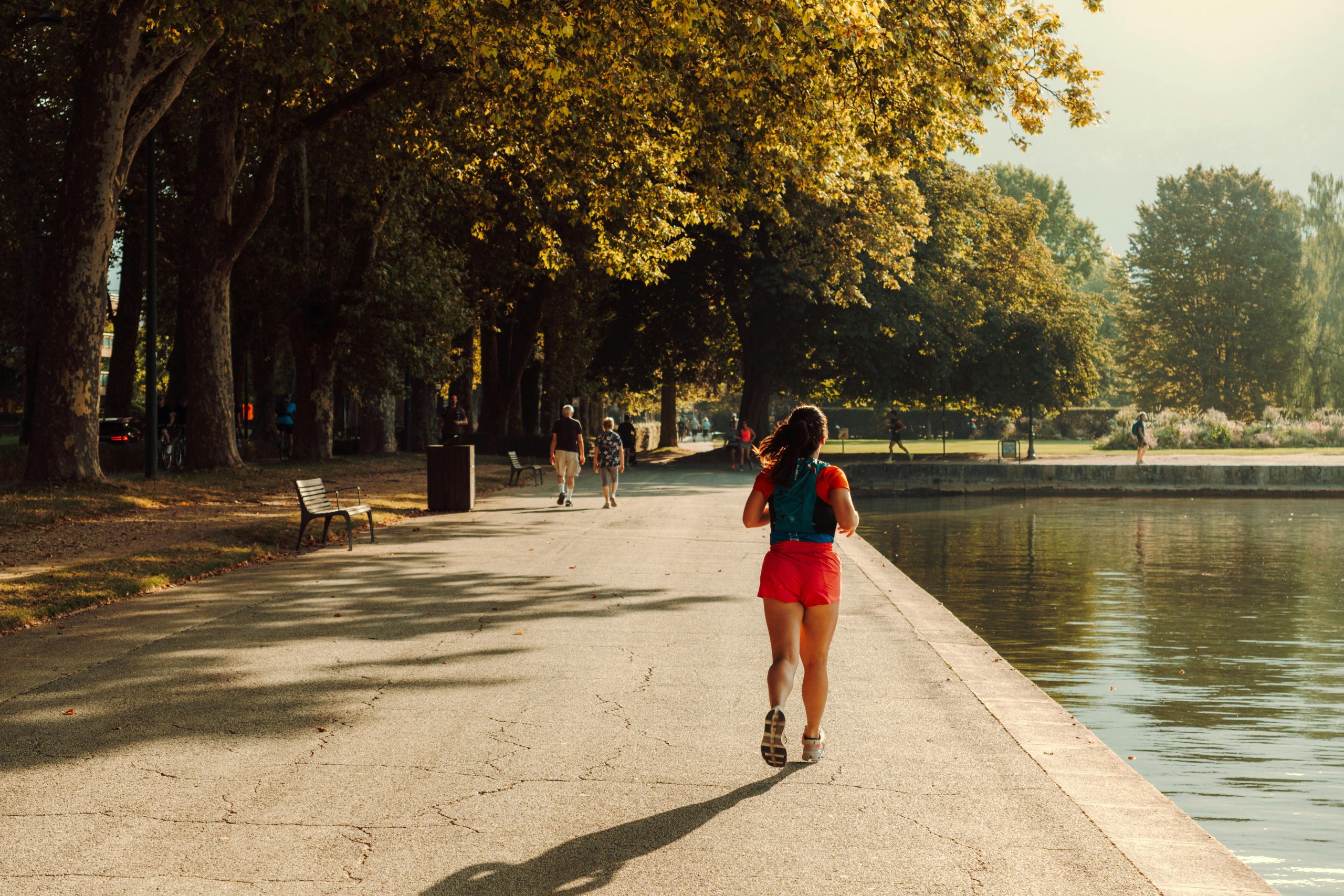
Running is enormously popular among INFJs, particularly solo running without a group or a pace partner. The rhythm is meditative. The environment changes. There’s no one to perform for. I went through a period of early morning runs during a particularly demanding agency stretch, when I was managing three client accounts simultaneously and barely sleeping. Those runs weren’t about fitness goals. They were about reclaiming forty minutes of interior quiet before the day’s noise arrived.
Weight training appeals to a significant portion of INFJs as well, particularly when approached with a structured program they can follow independently. The combination of clear metrics, progressive challenge, and the ability to work in focused silence makes lifting a natural fit for the INFJ’s love of systems and depth. Many INFJs describe the gym floor as one of the few public spaces where staring straight ahead and ignoring everyone around you is completely socially acceptable.
Yoga and Pilates show up frequently in INFJ fitness preferences, and not just because of the spiritual or mindfulness dimensions. These practices reward internal awareness. You’re not competing with anyone. Progress is measured in your own body’s response, not against a leaderboard. That aligns well with how INFJs naturally measure their own growth: from the inside out.
Swimming, cycling, hiking, and martial arts also appear consistently in what INFJs report enjoying. The common thread isn’t the specific activity. It’s the quality of attention the activity allows. INFJs thrive in movement that lets them drop into a focused, almost trance-like state of physical engagement. Anything that interrupts that state, whether it’s a chatty workout partner or a class format that requires constant social interaction, tends to feel like friction rather than fun.
How Does Social Anxiety Shape an INFJ’s Gym Experience?
This is where things get honest. INFJs don’t just prefer solitude at the gym. Many of them actively feel anxiety in shared fitness spaces, and that anxiety is layered in ways that don’t always make sense from the outside.
It’s not simple shyness. Psychology Today’s framework on empathy explains how highly empathic people are constantly processing the emotional states of those around them, often without consciously choosing to. For an INFJ in a crowded gym, that means simultaneously tracking their own workout, the ambient energy of the room, the emotional state of nearby people, and the subtle social dynamics playing out around them. That’s an enormous cognitive load on top of the physical effort of the workout itself.
There’s also the performance dimension. INFJs are acutely self-aware and often hypersensitive to being observed or judged, even when no one is actually paying attention to them. A beginner INFJ at the gym might spend so much mental energy worrying about doing exercises incorrectly in public that the workout itself becomes secondary to managing that anxiety. Some simply avoid the gym entirely because the social exposure feels too costly.
This connects to something I explored in the context of INFJ communication blind spots. One of the recurring patterns for this type is the tendency to over-monitor how they’re being perceived, which consumes energy that could go toward actual engagement. That same dynamic plays out on the gym floor.
fortunately that awareness of this pattern often changes it. INFJs who consciously recognize that they’re absorbing ambient social energy, rather than actually being watched or judged, can develop strategies to create a psychological bubble within shared spaces. Headphones help. Having a clear plan for the workout helps. Going at off-peak hours helps. Anything that reduces the unpredictability of the social environment makes it easier for an INFJ to stay in their own experience.

What Motivates an INFJ to Keep Going Back?
External motivation rarely sustains an INFJ’s fitness habits long-term. Wanting to look a certain way, competing with others, or chasing a number on a scale can generate initial momentum, but it tends to fade. What keeps INFJs coming back is something more internal and more personal.
Mental clarity is probably the most commonly cited motivator. INFJs carry a lot internally. Their minds are constantly processing, analyzing, and feeling. Physical movement creates a kind of pressure release that no amount of journaling or meditation fully replicates. Many INFJs describe coming out of a hard run or a focused lifting session feeling genuinely lighter, not just physically, but emotionally. The mental noise quiets. The tangled thoughts untangle.
A 2016 study from PubMed Central on exercise and psychological well-being found consistent evidence that regular physical activity reduces rumination and improves emotional regulation in people who score high on neuroticism and introversion traits. For an INFJ who tends to overthink and absorb emotional weight from their environment, that’s not a minor benefit. That’s the whole point.
Identity connection is the other major motivator. INFJs are deeply values-driven, and when fitness becomes part of how they understand themselves rather than something they do, it sticks differently. An INFJ who thinks “I work out because I care about being present for the people I love” or “physical discipline is part of how I honor my inner life” is drawing on something much deeper than aesthetics or social comparison.
I saw this play out in my own experience around a particularly difficult agency transition. We’d just lost a major account, and I was dealing with the kind of low-grade dread that makes everything feel heavier than it is. Returning to a consistent running habit during that period wasn’t about fitness. It was about having one part of my day that I controlled completely, that produced a clear and reliable result, and that asked nothing of me socially. That context made it sustainable in a way that earlier, more performance-oriented fitness goals never had been.
The quiet intensity that defines INFJ influence applies equally to how they sustain personal habits. It’s not loud or dramatic. It’s a slow, deliberate commitment that builds over time when the internal meaning is clear.
How Does an INFJ’s Emotional World Affect Their Fitness Consistency?
Ask an INFJ why they skipped the gym this week and they might give you a practical answer: too busy, too tired, schedule fell apart. But dig a little deeper and you’ll often find something emotional underneath. A difficult conversation they’re still processing. A relationship tension they haven’t resolved. A sense of being emotionally depleted in a way that makes physical effort feel genuinely impossible.
INFJs are not good at compartmentalizing. Their emotional state bleeds into every domain of their life, including their physical energy and motivation. When they’re emotionally full, their workouts can be extraordinary. When they’re emotionally drained, even walking to the gym feels like moving through resistance.
This is why the INFJ’s fitness life often mirrors their relational and emotional life so closely. A period of personal peace tends to produce consistent workouts. A period of interpersonal stress, internal conflict, or emotional overload tends to produce withdrawal, not just from people, but from the gym as well.
Understanding this pattern matters because it reframes what looks like inconsistency as something more accurate: emotional responsiveness. The INFJ isn’t failing at fitness. They’re responding to their whole internal system, which doesn’t separate the physical from the emotional the way some personality types can.
This also explains why INFJs benefit from fitness approaches that explicitly address emotional well-being rather than treating it as separate from physical training. Practices like yoga, tai chi, and mindful movement are popular with this type precisely because they don’t ask the INFJ to leave their emotional world at the door. They integrate it.
The patterns here echo what I’ve explored in the context of the hidden cost INFJs pay for avoiding difficult conversations. Suppressed emotional weight doesn’t disappear. It accumulates, and it eventually shows up somewhere. For many INFJs, it shows up as physical fatigue, low motivation, and a quiet withdrawal from the habits that usually sustain them.

What Happens When an INFJ Tries to Work Out With Others?
Group fitness can work for INFJs, but it requires the right conditions. A spin class where everyone faces forward and the instructor doesn’t demand verbal participation? That can work beautifully. A boot camp format that relies on partner exercises, group accountability calls, and constant social interaction? That’s likely to feel exhausting in a way that has nothing to do with the physical effort.
The distinction matters because many fitness programs are designed around extroverted social models. The assumption is that accountability partners, group energy, and social competition are universally motivating. For INFJs, those elements often create pressure that undermines rather than supports consistency.
Having a workout partner can work for an INFJ if the partner understands and respects the INFJ’s need for quiet focus. The best gym partnerships for this type tend to be ones where both people work alongside each other without constant conversation, where the relationship feels supportive without being demanding, and where there’s no social performance pressure built into the dynamic.
INFPs, who share many emotional and introversion traits with INFJs, often face similar dynamics. The difference is that INFPs tend to be more flexible about the social context of their fitness habits, while INFJs are more likely to have strong, specific preferences about their workout environment. Both types benefit from fitness approaches that honor their inner world rather than asking them to perform externally. If you’re an INFP exploring these dynamics, the piece on why INFPs take conflict so personally offers some useful context on the emotional sensitivity patterns that shape this type’s relationship with pressure and social expectation.
One pattern I noticed during agency life: the colleagues who thrived in group fitness settings were almost universally the extroverts on my team. They came back from a Saturday boot camp class energized, talking about the group dynamic, the instructor’s energy, the social atmosphere. My more introverted team members, myself included, tended to prefer the gym at 6 AM on a Tuesday, alone, with a plan and a playlist.
How Can an INFJ Build a Fitness Habit That Actually Sticks?
Practical strategies for INFJs need to account for the emotional and psychological dimensions of fitness, not just the logistical ones. A workout plan that ignores how an INFJ actually experiences their body and their environment is likely to produce the same start-and-stop cycle they’ve already experienced.
Connecting movement to meaning is the foundation. An INFJ who works out because they want to be more mentally clear, more emotionally resilient, or more physically present in their relationships has a more sustainable motivational anchor than one chasing aesthetic goals. Writing down the “why” behind the fitness habit, in specific and personal terms, gives the INFJ something to return to when motivation dips.
Protecting the environment matters as much as the workout itself. Choosing gym times that minimize social exposure, creating a consistent pre-workout ritual that signals a transition into focused mode, and building a playlist or audio environment that supports internal focus all reduce the friction that causes INFJs to disengage from shared fitness spaces.
Releasing the all-or-nothing thinking is probably the hardest part. An INFJ who misses three workouts in a row needs a way to re-enter their fitness habit without the weight of perceived failure. This is where the INFJ’s tendency toward harsh self-judgment becomes a genuine obstacle. The same empathy and understanding they extend to others rarely gets extended to themselves. Practicing self-compassion around fitness interruptions, treating a missed week as information rather than evidence of failure, is a skill worth developing deliberately.
The same communication patterns that create difficulty in relationships can show up in how INFJs talk to themselves about fitness. The article on how INFPs approach hard conversations without losing themselves touches on some of the internal dialogue patterns that apply equally to how this cluster of personality types handles self-expectation and self-criticism.
Tracking progress in qualitative terms, not just quantitative ones, also helps. An INFJ who notes how they feel after workouts, what mental clarity they experienced, how their emotional state shifted, is building a record of internal evidence that connects fitness to the outcomes they actually care about. That record becomes motivating in a way that a spreadsheet of reps and sets rarely does.

What Does the Research Say About Introverts and Physical Activity?
The science on personality type and exercise behavior is still developing, but what exists is illuminating. A 2021 review published through PubMed Central examining behavioral health and personality found that introverted individuals tend to have lower rates of participation in team sports and group fitness formats, but comparable or higher rates of adherence to individual exercise programs once a consistent habit is established.
That finding aligns with the INFJ experience. Getting started in a shared fitness context is harder. But an INFJ who finds their preferred format and builds a private ritual around it can be extraordinarily consistent. The challenge is almost always the entry point, not the sustained practice.
The research also suggests that for personality types high in feeling and empathy, exercise functions as a meaningful emotional regulation tool rather than primarily a physical one. That reframing matters for how INFJs approach fitness. When the gym is understood as a mental health practice rather than a body-modification project, the INFJ’s relationship with it changes significantly.
The connection between physical activity and emotional processing is also relevant here. INFJs who struggle to articulate or release difficult emotions often find that sustained physical effort creates a kind of emotional exhaust valve. What they couldn’t process through conversation or journaling sometimes resolves during a long run or a focused lifting session. The body does work that the mind alone can’t complete.
This is something I’ve noticed in myself, and it’s something that comes up consistently in the broader conversation about how deeply feeling types relate to their physical experience. The piece on INFJ communication patterns and their blind spots touches on this indirectly, because the emotional backlog that builds when an INFJ doesn’t communicate effectively often finds its way out through physical channels instead.
For INFJs trying to understand their own patterns more fully, the full range of resources in our MBTI Introverted Diplomats hub offers context on how these emotional and psychological patterns show up across every domain of life, not just fitness.
Curious about your personality type?
Our free MBTI assessment goes beyond the four letters. Get a full breakdown of your scores, see how your type shows up at work and in relationships.
Take the Free Test8-12 minutes · 40 questions · Free
About the Author
Keith Lacy is an introvert who’s learned to embrace his true self later in life. After 20 years in advertising and marketing leadership, including running agencies and managing Fortune 500 accounts, Keith now channels his experience into helping fellow introverts understand their strengths and build fulfilling careers. As an INTJ, he brings analytical depth and authentic perspective to every article, drawing from both professional expertise and personal growth.
Frequently Asked Questions
Do INFJs like going to the gym?
Many INFJs do enjoy the gym, particularly when they can approach it as a private, focused practice rather than a social experience. They tend to prefer solo workouts, off-peak hours, and formats that allow sustained internal focus. The gym works well for INFJs when the social environment is manageable and the workout connects to a meaningful internal purpose.
Why do INFJs quit the gym so often?
INFJs often quit the gym due to a combination of emotional depletion, all-or-nothing thinking, and the social energy cost of shared fitness spaces. When life becomes emotionally demanding, physical habits are often the first thing to drop. Missing workouts can trigger a harsh internal narrative that makes re-entry feel difficult. Building self-compassion around fitness interruptions is often more effective than trying to build stronger willpower.
What types of exercise are best for INFJs?
INFJs tend to thrive with solo activities that allow meditative focus, including running, weight training, yoga, swimming, hiking, and cycling. The common thread is movement that allows them to stay in their own internal experience without social performance pressure. Group fitness can work when the format allows anonymity and doesn’t require constant social interaction.
How does being an INFJ affect gym motivation?
INFJ gym motivation is primarily internal and meaning-based rather than external and appearance-based. Mental clarity, emotional regulation, and a sense of personal integrity tend to be stronger motivators than aesthetic goals or social comparison. INFJs who connect their fitness habit to deeply held values tend to sustain it more consistently than those chasing surface-level outcomes.
Can INFJs do well with workout partners or group fitness?
INFJs can work well with a partner who respects their need for quiet focus and doesn’t add social pressure to the workout dynamic. Group fitness works best in formats that allow the INFJ to feel anonymous within the group, such as cycling classes or yoga sessions where individual performance isn’t highlighted. High-interaction formats that rely on partner exercises, group accountability, or competitive social dynamics tend to drain rather than motivate this type.