INFPs approach interior design the way they approach everything else: through feeling first, meaning second, and practicality somewhere down the list. A space isn’t just functional for someone with this personality type. It’s an emotional landscape, a reflection of values, a sanctuary where the outside world loses its grip. When an INFP designs a room, they’re not decorating. They’re telling a story about who they are.
If you’ve ever spent an afternoon rearranging a bookshelf and felt oddly satisfied, or if you’ve walked into someone’s home and immediately sensed whether it felt “true” or performative, you probably understand this instinctively. That sensitivity to atmosphere and authenticity is one of the most underappreciated gifts this personality type carries into every corner of their lives, including the corners of their actual rooms.
Our INFP Personality Type hub covers the full range of how this type moves through the world, from relationships to work to creative expression. Interior design sits at a fascinating intersection of all three, because the spaces INFPs create tend to reveal something they rarely say out loud.
Why Does Space Feel So Personal to INFPs?
Spend enough time around different personality types and you start to notice something: some people treat their homes as backdrops, neutral stages for the rest of life to play out on. INFPs treat their homes as extensions of their inner world. The distinction matters more than it sounds.
At the cognitive level, this makes complete sense. The INFP’s dominant function is Introverted Feeling, or Fi. Fi doesn’t evaluate the world through external consensus or social expectation. It filters everything through a deeply personal value system, asking constantly whether something resonates as true, meaningful, or authentic. A space that doesn’t align with those internal values creates a kind of low-grade friction that’s hard to name but impossible to ignore.
I think about this from my own experience as an INTJ. My dominant function is Introverted Intuition, which means I process the world through pattern recognition and internal frameworks. My home environment matters to me because clutter and visual noise disrupt my thinking. But for an INFP, the relationship with space goes even deeper. It’s not just about thinking clearly. It’s about feeling like yourself.
The auxiliary function, Extraverted Intuition (Ne), adds another layer. Ne is expansive and associative. It sees connections between things, gets excited by possibilities, and tends to collect meaningful objects the way some people collect stamps. An INFP’s bookshelf isn’t just books. It’s a curated autobiography. The vintage lamp in the corner has a story. The throw blanket came from somewhere that mattered. Every object carries weight.
This is why INFPs can feel genuinely unsettled in sterile, generic, or impersonal spaces. It’s not preciousness. It’s that Fi reads the environment the same way it reads people: looking for authenticity, recoiling from anything that feels hollow or mass-produced without soul.
What Aesthetic Patterns Show Up in INFP Spaces?
There’s no single INFP aesthetic, and anyone who tells you otherwise is flattening a remarkably varied personality type into a Pinterest board. That said, certain tendencies do emerge consistently, and they’re worth exploring because they point back to something real about how this type experiences comfort and meaning.
Warmth tends to be non-negotiable. Not necessarily warm colors, though those appear often, but warmth as a quality. Soft lighting over harsh fluorescents. Natural materials over synthetic ones. Layered textures that invite touch. INFPs are drawn to spaces that feel lived in rather than staged, where the imperfections of a worn wooden table or a slightly faded rug communicate that real life has happened here.
Personal meaning shows up everywhere. A client I worked with years ago at my agency had an office that looked chaotic to outsiders but made complete sense to her. Every object on her desk had a story she could tell. A small sculpture from a trip that changed her perspective. A card from a mentor. A photograph that reminded her why the work mattered. She was an INFP, and her workspace was a physical map of her values. Removing any of it, even the things that looked like clutter, would have felt like an erasure.
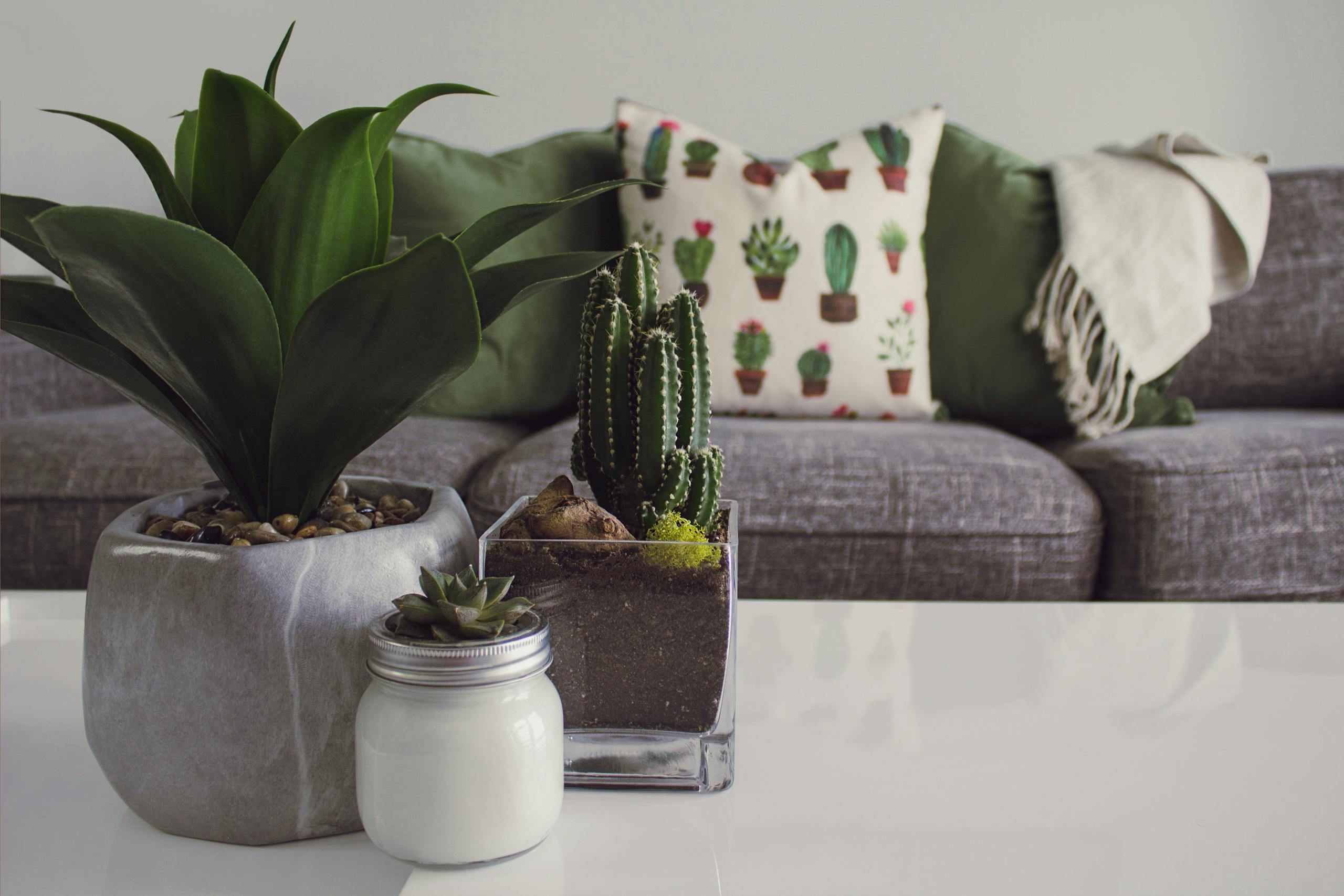
Nature tends to find its way in. Plants, natural light, wood, stone, water features. The connection between natural environments and psychological wellbeing is well-documented, and INFPs seem to feel this pull acutely. A room with good natural light and a few thriving plants can shift the emotional register of an entire space for someone with this personality type.
Quiet corners matter. Not every INFP is dramatically introverted in the social sense, but the dominant Fi function means they need regular access to their inner world. A reading chair positioned away from the main flow of the room. A window seat. A small desk tucked into an alcove. These aren’t antisocial choices. They’re architectural acknowledgments of how this type recharges and processes experience.
How Do INFPs Handle the Practical Side of Design?
Here’s where things get interesting, and a little honest. INFPs have a complicated relationship with the logistical, budget-conscious, measurement-taking side of interior design. The inferior function in the INFP stack is Extraverted Thinking (Te), and Te is exactly the function that handles systematic planning, efficiency, and practical execution.
This doesn’t mean INFPs can’t be organized or practical. It means that the practical side of design often feels like swimming upstream. Measuring twice before buying a sofa. Comparing prices across suppliers. Setting a firm budget and sticking to it. These tasks don’t carry the same intrinsic energy as wandering through a vintage market or spending an afternoon arranging objects on a shelf until they feel right.
I’ve watched this dynamic play out in professional settings too. Some of the most creatively gifted people I hired over my years running agencies were INFPs. They could articulate a brand’s emotional truth with stunning clarity. They could feel when a campaign was off before they could explain why. But ask them to manage a project timeline or track a budget line by line, and you’d see that same energy drain away. The Te function was there, just not dominant, and it required real effort to access.
For INFP interior design, this often means starting with a clear vision and a less clear plan for executing it. The workaround that tends to work best isn’t forcing a more systematic approach. It’s finding a system that feels meaningful enough to sustain. A mood board that captures the emotional quality of the finished space. A budget framed not as a constraint but as a way of protecting the vision from compromise. Partnering with someone who enjoys the logistics, whether a professional designer, a practical partner, or even a trusted friend who gets satisfaction from spreadsheets.
The tertiary function, Introverted Sensing (Si), actually helps here in ways people often overlook. Si connects present experience to past impressions, noticing what has felt right before and using that as a compass. An INFP with developed Si can draw on a rich internal archive of spaces that worked, textures that felt right, arrangements that created the atmosphere they were after. It’s a quieter form of practical wisdom, less about measurement and more about accumulated felt experience.
What Challenges Do INFPs Face When Designing Shared Spaces?
Designing a space entirely for yourself, according to your own values and aesthetic instincts, is one thing. Designing a space you share with another person, especially someone with different sensibilities, is another challenge entirely.
INFPs feel strongly about their environments. That’s not a flaw. It’s a natural consequence of having a dominant function that evaluates everything through personal values. But it can create friction when a partner wants clean minimalism and the INFP wants layered warmth, or when a roommate sees the INFP’s carefully curated collection of meaningful objects as clutter.
What makes this harder is that INFPs often struggle to articulate why something matters to them in terms that feel persuasive to someone with a different orientation. “It just feels right” or “this space doesn’t feel like me” are genuine and valid expressions of Fi, but they can land as vague or even irrational to a partner who wants concrete reasons.
This is where some of the broader patterns around INFP communication become relevant. The tendency to internalize conflict rather than address it directly, to absorb someone else’s preferences rather than advocate for your own, to avoid the discomfort of disagreement even when something genuinely matters to you. If you recognize that pattern, the piece on how INFPs can handle hard conversations without losing themselves goes into this in depth. It applies to design disagreements more than you might expect.
There’s also the related challenge of why INFPs tend to take design criticism personally. When someone dismisses your carefully chosen objects or suggests a more generic aesthetic, it can feel like a comment on your values, not just your taste. That’s because for an INFP, the two aren’t entirely separate. Recognizing that dynamic, without letting it shut down the conversation, is a skill worth developing.

How Does INFP Design Sensibility Differ From INFJ?
INFPs and INFJs share enough surface-level traits that people sometimes conflate them. Both are introverted, values-driven, and drawn to meaning over efficiency. Both tend to create warm, personal spaces. But the cognitive differences between these two types produce genuinely different approaches to design, and understanding those differences helps clarify what’s distinctively INFP about this whole picture.
The INFJ leads with Introverted Intuition (Ni), a convergent function that synthesizes patterns into a singular vision. When an INFJ designs a space, there’s often a coherent concept underneath it, a through-line that connects every element. They may not be able to fully articulate it, but the space tends to have a unified quality. Everything serves the vision.
The INFP leads with Fi, which is evaluative rather than visionary in the same way. The INFP’s space tends to be more accumulative, built up over time through individual choices that each felt right in the moment. The result can be wonderfully eclectic and deeply personal, but it may lack the unified aesthetic coherence that an INFJ’s Ni-driven vision produces. This isn’t a weakness. It’s a different kind of beauty, one that rewards looking closely rather than stepping back.
The INFJ’s auxiliary Fe also means they’re more attuned to how a space will feel to others, how guests will experience the room, whether the atmosphere communicates warmth and welcome. This shows up in design choices that consider the social function of a space alongside the personal one. INFPs, with auxiliary Ne rather than Fe, are more likely to design primarily for their own experience and less focused on how the space reads to visitors.
INFJs also carry their own design-related tensions. The way they handle disagreement about shared spaces often connects to broader patterns around avoiding conflict, which the piece on the hidden cost INFJs pay for keeping the peace explores in detail. And their communication style, including how they express aesthetic preferences, has its own blind spots covered in the article on INFJ communication patterns that create problems.
Both types benefit from understanding that their design instincts aren’t arbitrary preferences. They’re expressions of how they process meaning and experience comfort at a cognitive level.
What Environments Drain INFPs, and Why?
Knowing what an INFP finds nourishing in a space is useful. Knowing what actively drains them is arguably more so, because the draining environments tend to be the ones they can’t always control.
Open-plan offices are a good example. The design trend toward open, collaborative workspaces was built on assumptions about how people work best that don’t hold equally across personality types. For someone whose dominant function is Fi, an environment with constant visual and auditory input, no personal space to make their own, and nowhere to retreat for quiet processing isn’t just uncomfortable. It’s cognitively expensive. Environmental factors and their effects on cognitive performance and wellbeing are more significant than most workplace designers account for.
Generic spaces bother INFPs in a way that can be hard to explain to someone who doesn’t feel it. A hotel room that looks like every other hotel room. A corporate office where every surface is neutral and impersonal. A rental apartment where the landlord’s aesthetic choices are everywhere and your own are nowhere. These spaces create a kind of low-grade alienation for someone whose sense of self is so closely tied to personal values and authentic expression.
Chaos and clutter present a more complicated picture. Some INFPs are genuinely comfortable with a certain amount of organized chaos, surrounded by books and projects and meaningful objects in a way that looks overwhelming from the outside but feels rich and stimulating to them. Others find clutter genuinely distressing, particularly when it’s the kind that accumulates without intention, the junk drawer that expanded, the surfaces covered with things that don’t mean anything. The distinction seems to be between meaningful accumulation and meaningless accumulation.
Spaces where someone else’s personality dominates without room for their own expression can feel suffocating. This shows up in relationships where one partner’s aesthetic completely overtakes the shared space, and it’s one of the more subtle sources of friction that INFPs sometimes struggle to name. The discomfort is real, but it can feel petty to raise. It isn’t petty. A space that doesn’t reflect you at all is a space that tells you, quietly and constantly, that your inner world doesn’t matter here.
Can INFPs Work in Interior Design Professionally?
This question comes up more than you’d expect, and the answer is more nuanced than a simple yes or no.
INFPs bring genuine gifts to professional design work. The ability to read a client’s emotional needs and translate them into spatial decisions. A natural sensitivity to atmosphere, texture, and the felt quality of a space. Authentic creativity that doesn’t default to trends but reaches for something more personal and resonant. The Ne function’s associative thinking generates unexpected combinations, connections between a client’s stated preferences and possibilities they haven’t considered yet.
The challenges are real too. Client management requires a kind of assertive communication that doesn’t always come naturally to INFPs, particularly when a client pushes back on a design choice that the INFP knows is right. Budget management and project logistics pull on the inferior Te function. The business development side, networking, pitching, following up, can feel like a sustained performance that depletes rather than energizes.
What tends to work well is finding a niche that aligns with INFP strengths. Residential design over commercial, because the personal and meaningful nature of home spaces plays directly to Fi’s strengths. Working with clients who want something authentic and personal rather than something impressive or status-driven. Collaborating with a business partner who handles the operational side, freeing the INFP to focus on the creative work that actually energizes them.
The INFJs who work in design face their own version of this. Their Ni-driven vision can be powerful in professional settings, but their tendency to absorb conflict rather than address it directly creates problems when client relationships get complicated. The pattern described in the piece on why INFJs door-slam and what to do instead shows up in professional design relationships too, when a client relationship deteriorates past the point of repair because the INFJ never addressed the friction directly. And the way INFJs exercise influence in collaborative settings, covered in the article on how quiet intensity actually works as a professional tool, offers something INFPs can adapt to their own context.
Not sure which type you are? Taking our free MBTI personality test can help clarify whether you’re an INFP, INFJ, or something else entirely, which matters more than it might seem when you’re thinking about career fit.
What Practical Design Principles Actually Serve INFPs?
After everything above, some concrete ground is useful. Not a formula, because INFPs resist formulas on principle, but a set of principles that tend to hold across the variety within this personality type.
Start with feeling, not function. Most design advice starts with the practical: measure your space, establish your budget, identify your needs. INFPs do better starting with the emotional quality they’re after. What do you want to feel when you walk into this room? Grounded? Creative? Held? That felt quality becomes the filter for every subsequent decision.
Protect your anchor objects. Every INFP has a small collection of objects that carry disproportionate meaning: the thing from the person who mattered, the object from the place that changed something, the piece that just feels true in a way that’s hard to explain. These anchor objects deserve prominent placement. They’re not decoration. They’re orientation points for the self.
Build in solitude architecture. Whatever the scale of your space, design in at least one area that’s clearly yours for quiet and reflection. This doesn’t require a dedicated room. A chair positioned to face away from the room’s main traffic flow. A corner with good light and a small surface for whatever you’re currently working through. The physical signal that retreat is available changes how the whole space feels.
Resist the pressure to finish. INFPs often feel subtle pressure, from guests, from design culture, from their own Ne-driven enthusiasm for new possibilities, to have a completed, coherent space. That pressure can push them toward choices that look finished but don’t feel right. A space that’s still evolving, that has a few intentional gaps and works in progress, often feels more alive and authentic than one that’s been resolved too quickly.
Let nature do some of the work. Psychological research on restorative environments consistently points to natural elements as significant contributors to wellbeing and cognitive restoration. For INFPs, this isn’t news. They’ve always known it. The practical application is treating plants, natural light, and organic materials not as aesthetic choices but as functional ones, as important to the space’s purpose as any piece of furniture.
Be honest about what you’re compensating for. Some INFPs create intensely cozy, enveloping home environments as a response to an outside world that feels too loud, too fast, or too indifferent to the things that matter to them. That’s a completely valid response. Knowing it’s happening, rather than just feeling it, gives you more agency over the choices you make. The relationship between emotional sensitivity and environmental preference is real, and there’s nothing wrong with designing a space that actively counteracts the world’s rougher edges.
When Does INFP Design Sensibility Become a Problem?
Honesty requires addressing this. The same qualities that make INFP design sensibility so rich can, under certain conditions, create real difficulties.
The attachment to meaningful objects can tip into difficulty letting go. When every object carries emotional weight, editing becomes genuinely painful. The result can be a space that’s so layered with accumulated meaning that it becomes overwhelming rather than nourishing. The INFP knows something needs to go but can’t identify what, because everything matters. Developing some criteria for what earns a place in the space, not just what has a story but what story actively serves you now, is a skill worth cultivating.
The tendency to internalize rather than address design conflicts in shared spaces can lead to quiet resentment. An INFP who never speaks up about a shared space that doesn’t feel like them, who absorbs a partner’s aesthetic without expressing their own, who tells themselves it doesn’t matter when it actually does, is setting up a slow accumulation of unexpressed need. This is the same dynamic that shows up in other areas of INFP life, and it’s worth naming in the context of home and space because it often goes unrecognized there.
The Ne function’s enthusiasm for possibilities can make decisions genuinely difficult. When every option opens into ten more, and every choice feels like closing off something potentially wonderful, the result can be paralysis. A room that never gets finished. Furniture that gets moved repeatedly because each arrangement reveals a new possibility. Projects that stay perpetually in progress. Some of this is creative vitality. Some of it is avoidance of the commitment that completion requires.
The relationship between environment and mental health is significant enough that it’s worth taking seriously when a space is actively contributing to stress rather than relieving it. An INFP who recognizes that their home environment has become a source of anxiety rather than restoration has useful information, and acting on it, even imperfectly, matters more than getting the space exactly right.
The same applies to how INFP design sensibility intersects with broader patterns around conflict and communication. When a shared space becomes a silent battleground where preferences go unexpressed and resentment builds, the design problem is actually a relationship problem. Addressing it requires the kind of direct conversation that INFPs often find genuinely difficult, the kind covered in the piece on how INFPs can fight without losing themselves. The space is worth the conversation.
There’s something I’ve noticed in my own life, and in the lives of the introverted people I’ve worked with over the years: the spaces we create are rarely just about aesthetics. They’re about permission. Permission to be a certain kind of person, to need certain things, to value what you actually value rather than what the world suggests you should. An INFP who designs a space that genuinely reflects their inner world isn’t being self-indulgent. They’re practicing a form of self-knowledge that most people never get around to.
Explore more resources on how INFPs experience the world, from relationships to creativity to career, in our complete INFP Personality Type hub.
About the Author
Keith Lacy is an introvert who’s learned to embrace his true self later in life. After 20 years in advertising and marketing leadership, including running agencies and managing Fortune 500 accounts, Keith now channels his experience into helping fellow introverts understand their strengths and build fulfilling careers. As an INTJ, he brings analytical depth and authentic perspective to every article, drawing from both professional expertise and personal growth.
Frequently Asked Questions
What interior design style suits INFPs best?
There’s no single style that fits all INFPs, but certain qualities appear consistently in spaces they find nourishing: warmth, natural materials, personal meaning, soft lighting, and room for solitude. Cottagecore, bohemian, and Japandi aesthetics all attract INFPs, though the common thread is authenticity rather than any specific trend. The best INFP space is one that reflects genuine values rather than borrowed aesthetics.
Why do INFPs struggle with minimalist design?
Minimalism asks you to remove everything that doesn’t serve a clear function, and for INFPs, many objects serve the function of meaning rather than utility. The dominant Fi function attaches significance to objects that carry personal history, emotional resonance, or value alignment. Removing those objects doesn’t feel like simplifying. It feels like editing out parts of yourself. Some INFPs find a version of minimalism that works by being highly selective about which meaningful objects stay, but strict minimalism often conflicts with how this type experiences space.
How can INFPs create a productive home workspace?
An effective INFP workspace balances personal meaning with enough order to support focus. Including a few anchor objects that connect to purpose and values helps. Natural light and at least one plant make a measurable difference in how the space feels. Keeping the immediate work surface relatively clear while allowing surrounding areas to be more layered tends to work better than trying to maintain uniform tidiness. Most importantly, the workspace should feel like yours, not a generic productivity setup copied from someone else’s preferences.
How do INFPs handle design disagreements with partners or roommates?
This is one of the more genuinely difficult challenges for this personality type. INFPs feel strongly about their environments but often struggle to advocate for those feelings directly, particularly when doing so creates conflict. The most effective approach involves naming the emotional quality you need the space to have, rather than defending specific objects or arrangements, and identifying zones within the shared space where each person’s preferences can be expressed without compromise. Addressing disagreements directly, rather than absorbing the other person’s preferences and building quiet resentment, matters more than it might seem.
Can understanding MBTI type improve how you design your space?
Yes, in a practical sense. Knowing your type helps you understand why certain environments feel nourishing and others feel draining, which is information that most design advice ignores. For INFPs specifically, understanding that Fi needs authentic personal expression and Ne benefits from variety and stimulation helps explain why generic or overly rigid spaces feel wrong. It also helps clarify what you’re actually optimizing for when you design a space, which is rarely just aesthetics and almost always something deeper about how you need to feel in order to function well.