
Social media was designed to reward loudness. Post often, perform constantly, chase engagement, and project confidence even when you feel none of it. For INFPs, a personality type built around deep personal values, quiet authenticity, and inward reflection, that formula can feel like wearing a costume that never quite fits. fortunatelyn’t that you need to learn to love the performance. The real insight is that INFPs can build a meaningful, sustainable presence online without abandoning the very qualities that make them worth following in the first place.
If you’re not sure where you fall on the personality spectrum, take our free MBTI test before reading further. Knowing your type adds a layer of clarity to everything that follows.
Our INFP Personality Type hub covers the full landscape of what it means to live and work as an INFP, but the social media piece deserves its own honest conversation. Because this isn’t just about posting strategy. It’s about identity, energy, and figuring out how much of yourself you’re willing to put into a space that wasn’t built with your wiring in mind.

Why Does Social Media Feel So Draining for INFPs?
Let me start with something I observed from the agency side of things. We ran social campaigns for some major brands, and the content that performed best was almost always fast, punchy, and emotionally reactive. Short takes. Hot opinions. Controversy-lite. The algorithm rewarded speed and volume. My creative teams, particularly the quieter, more reflective ones, consistently struggled to produce content at that pace without burning out or feeling like they were compromising their voice.
That experience taught me something important: social media platforms are structurally optimized for extroverted expression. They reward frequency over depth, reaction over reflection, and broad appeal over nuanced perspective. For an INFP, whose dominant cognitive function is introverted Feeling (Fi), that structure creates a near-constant friction. Fi is concerned with authenticity, personal values, and meaning. It processes the world through an internal moral and emotional compass. Posting something that feels hollow or performative doesn’t just feel uncomfortable for an INFP. It can feel like a small betrayal of self.
Add to that the auxiliary function of extraverted Intuition (Ne), which loves exploring ideas, making unexpected connections, and generating possibilities, and you get someone who has a lot to say but wants to say it in ways that feel genuinely creative and layered. A three-word caption over a stock photo isn’t going to cut it. The INFP mind wants texture. It wants meaning. Social media, at its most commercial, offers neither.
The Psychology Today overview of introversion notes that introverts tend to process experiences more deeply and require more recovery time after social interaction. That same principle applies online. For INFPs especially, scrolling through high-volume, emotionally charged feeds isn’t passive consumption. It registers. It costs something.
What Happens When INFPs Try to Match the Extroverted Template?
I’ve watched this play out in real time. During my agency years, we occasionally brought in personal brand consultants to help our team members build their professional profiles online. The advice was always the same: post daily, share opinions loudly, engage with everyone, build your following. For some people on my team, that worked. For others, particularly those I’d now recognize as INFPs or similar types, it created a slow erosion of confidence.
They’d start strong, posting with genuine enthusiasm. Then the engagement wouldn’t match the effort. Or they’d post something vulnerable and feel exposed for days afterward. Or they’d watch louder, less thoughtful voices rack up thousands of followers and feel a deep confusion about what they were even doing there. Eventually, many of them went quiet. Not because they had nothing to say, but because the format kept punishing the way they naturally said it.
This pattern has a cost that extends beyond follower counts. When INFPs suppress their authentic voice to fit a performance-oriented format, it can bleed into other areas of communication. The same dynamics that make hard conversations difficult for INFPs show up here too: a fear of being misread, a tendency to over-explain or under-share, and the exhausting work of trying to anticipate how something will land before you’ve even said it.
The platform doesn’t care about your internal experience. It just keeps asking you to perform.
How Does the INFP Cognitive Stack Shape Online Behavior?
Worth spending a moment here, because understanding your cognitive functions changes how you approach this problem. The Myers-Briggs Foundation’s explanation of type dynamics is useful context for why different types experience the same environment so differently.
Dominant Fi means the INFP’s primary orientation is inward. Values, authenticity, and personal meaning come first. Before an INFP posts anything, there’s an internal check: does this actually represent what I believe? Does this feel true? That check takes time. It’s not perfectionism exactly, though it can look like it from the outside. It’s more like an ethical filter that runs on everything before it goes public.
Auxiliary Ne adds a layer of creative complexity. Ne generates associations, possibilities, and tangents. An INFP writing a caption might start with one idea and find themselves three conceptual leaps away from where they began. That’s not a bug in their process. It’s how they think. But social media rarely rewards that kind of associative richness. The caption that took thirty minutes of genuine creative thought might get fewer clicks than a meme someone made in thirty seconds.
Tertiary Si, the third function in the stack, contributes a strong connection to personal history and subjective experience. INFPs often find their most resonant content comes from drawing on specific memories, sensory details, or emotional moments from their own lives. When they write from that place, something shifts. The content feels real in a way that generic advice never does.
Inferior Te, the fourth and least developed function, is where things get complicated. Te is concerned with external organization, efficiency, and measurable outcomes. Metrics, analytics, posting schedules, and algorithm optimization all live in Te territory. For an INFP, that’s uncomfortable ground. It’s not that they can’t engage with it. It’s that it sits at the bottom of their natural processing hierarchy. Spending too much time in Te mode, obsessing over reach and engagement numbers, can actually disconnect them from the Fi-driven authenticity that makes their content worth reading in the first place.
Which Platforms Actually Work for INFPs?
Not all platforms are created equal, and INFPs genuinely do better on some than others. This isn’t about capability. It’s about structural fit.
Long-form platforms tend to suit INFPs well. Substack, Medium, and even LinkedIn’s long-form articles give them space to develop an idea properly. That auxiliary Ne gets room to breathe. The dominant Fi can express something with nuance rather than compression. The INFP’s natural tendency toward depth becomes an asset rather than a liability.
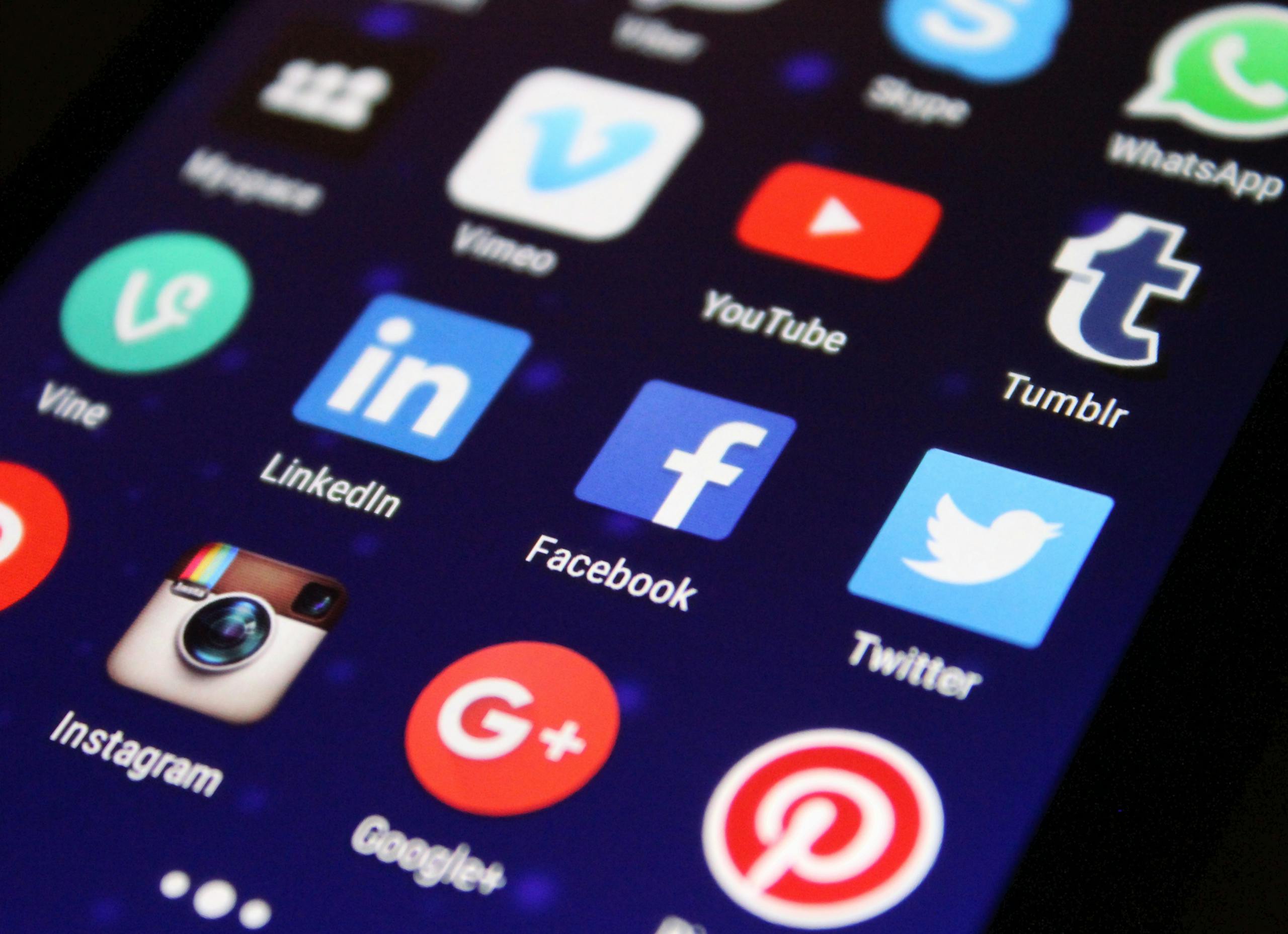
Pinterest works surprisingly well for many INFPs because it’s visually curated and relatively low-pressure. You’re sharing aesthetics, ideas, and inspiration rather than performing an identity. The emotional stakes feel lower, which means the Fi filter isn’t running at full intensity every time you post.
Tumblr, despite its chaotic reputation, has historically been a space where INFPs found genuine community. The culture there rewards emotional honesty, creative weirdness, and long-form emotional expression in a way that more polished platforms don’t. Many INFPs describe it as the one place online where they felt like themselves.
Instagram can work for INFPs when they approach it visually and thematically rather than as a personal performance stage. Building around a specific interest or aesthetic, books, nature, art, quiet spaces, gives the Fi-Ne combination something concrete to organize around. The problem comes when INFPs try to use Instagram as a personal brand megaphone. That’s when the friction becomes unbearable.
TikTok and Twitter (or X) tend to be the hardest fits. Both platforms reward speed, reactivity, and volume in ways that run directly against the INFP’s natural processing style. Some INFPs find a niche on TikTok through deeply personal storytelling or niche creative content, but it requires a significant amount of energy management to sustain.

What Does Healthy INFP Social Media Use Actually Look Like?
One of the most useful things I did in my later agency years was stop measuring everything by the same metrics. We had one client, a mid-size consumer brand, who kept chasing follower counts while their engagement rate quietly cratered. Another client, smaller, more niche, had a fraction of the followers but a community that actually bought things and talked about the brand with genuine affection. The second client had built something real. The first had built a number.
That distinction matters enormously for INFPs. Healthy social media use for this type isn’t about maximizing reach. It’s about building genuine connection around things that actually matter to you.
A few patterns tend to show up in INFPs who’ve found a sustainable relationship with social media. They post less frequently but with more intention. They gravitate toward communities rather than audiences, meaning they’re looking for conversation, not broadcast. They protect their offline creative process fiercely, treating it as the source material for what they share rather than letting social media dictate what they think about. And they’ve usually made peace with the fact that their content won’t go viral, because virality typically requires the kind of emotional compression and reactivity that doesn’t reflect who they actually are.
There’s also something worth naming about conflict online. INFPs often struggle when their content draws criticism or misinterpretation. The Fi-driven need for authentic expression means that having something you genuinely believed in dismissed or attacked lands harder than it might for other types. The same sensitivity that makes conflict feel so personal for INFPs in everyday life becomes amplified in public digital spaces. Knowing this in advance helps. Setting up some mental distance between the content and the self, while still being genuine, is a skill worth developing deliberately.
How Do INFPs Compare to INFJs in This Space?
It’s worth drawing a distinction here because INFJs and INFPs often get lumped together, and their social media experiences are actually quite different.
INFJs lead with introverted Intuition (Ni) and have auxiliary extraverted Feeling (Fe). That Fe orientation means INFJs tend to be more naturally attuned to how their content lands with an audience. They’re often better at calibrating their message for emotional resonance with a group, which can make them more comfortable with the performance aspect of social media, even if the energy cost is still real.
INFPs, leading with Fi, are oriented toward internal authenticity rather than external attunement. They’re not naturally scanning for how the audience feels. They’re checking whether what they’re saying feels true to themselves. That’s a subtle but significant difference. An INFJ might craft a post that’s emotionally resonant for followers even on a topic they feel ambivalent about. An INFP doing the same thing would likely feel the inauthenticity immediately and find it difficult to sustain.
INFJs have their own complicated relationship with online communication. INFJ communication blind spots often involve assuming others understand the depth of what they mean, which can create misreads in the compressed format of social media. INFJs also tend to carry the emotional weight of their audience in a way INFPs typically don’t, which creates a different kind of drain.
Both types benefit from intentional boundaries around social media use. But the specific friction points differ, and solutions that work for one won’t always translate to the other.
What Are the Hidden Costs of Getting Social Media Wrong?
There’s a version of this that goes beyond feeling drained after scrolling. When INFPs spend significant time on social media in ways that conflict with their values, the effects can be quietly corrosive.
Comparison is one of the biggest traps. The INFP’s dominant Fi means they have a strong internal sense of who they are and what matters to them. But social media is a relentless comparison engine. Watching others build large followings through content that feels shallow or performative can create a specific kind of cognitive dissonance: do I compromise my values to get the reach, or do I stay true to myself and accept the obscurity? Neither option feels good, and sitting with that tension over time takes a real toll.
There’s also what I’d call the quiet influence problem. INFPs have a genuine capacity to move people through honest, emotionally resonant expression. That’s not a small thing. But social media’s reward structure often buries that kind of content beneath louder, more reactive voices. An INFP can spend months building something meaningful and watch it get less traction than a throwaway post from someone who figured out the algorithm. That experience, repeated enough times, can erode the creative confidence that made the content worth creating in the first place.
The National Institute of Mental Health has noted connections between heavy social media use and increased anxiety and depression, particularly among people who use platforms for social comparison rather than genuine connection. For INFPs, whose emotional processing runs deep, that risk is worth taking seriously.
The concept of quiet influence is something I’ve thought about a lot. How quiet intensity actually creates influence applies to INFPs as much as INFJs. The depth of feeling, the commitment to authenticity, the willingness to say something real rather than something popular: those qualities build the kind of trust that algorithms can’t manufacture. But they require patience and a long-term view that social media’s feedback loops actively work against.

How Can INFPs Protect Their Energy Without Going Dark?
Disappearing entirely is always an option, but it’s rarely the right one. Many INFPs have something genuinely valuable to contribute to online conversations, and complete withdrawal means those voices go missing from spaces that could use more depth and less noise.
What tends to work better is a kind of structured intentionality. Decide in advance what you’re there for. Not what you hope to get out of it eventually, but what specific purpose this platform serves right now. Is it to connect with a small community of people who share a niche interest? To share creative work you’d make anyway? To process ideas in a semi-public format? Having a clear answer to that question creates a filter for every posting decision.
Batch creation helps enormously. Rather than responding to the daily pressure to produce something, INFPs often do better creating in longer, less frequent sessions when the creative energy is actually present. A two-hour writing session once a week that produces several pieces of genuine content tends to feel better than the low-grade stress of daily posting obligations.
Separating consumption from creation is another underrated strategy. Many INFPs find that their creative voice gets muddied when they spend too much time reading other people’s content before writing their own. Protecting the first hour of creative time from input, checking feeds only after you’ve written rather than before, is a small structural change that can make a significant difference in how authentic the output feels.
Setting boundaries around online conflict also matters. The same dynamic that makes difficult conversations costly for INFJs shows up for INFPs in comment sections and DMs. Having a clear policy in advance, whether that’s not engaging with certain types of comments, giving yourself a 24-hour buffer before responding to anything that feels charged, or simply turning off notifications during creative work, reduces the reactive decision-making that tends to go badly for feeling-dominant types.
And if you notice a pattern of conflict escalating or feeling unmanageable online, it’s worth examining what’s happening in your offline communication too. The door slam pattern that shows up in INFJ conflict has a parallel in how INFPs sometimes handle online disagreements: a period of engagement, then sudden, complete withdrawal when the emotional cost gets too high. Understanding that pattern helps you respond more deliberately rather than just reacting.
What Does an INFP’s Genuine Strength Look Like Online?
After all the friction and cost, it’s worth spending real time here. Because INFPs have specific qualities that, in the right context, become genuine online strengths.
Emotional honesty at scale is rare. Most online content is either performatively vulnerable, the kind of curated oversharing that’s calculated to seem authentic, or carefully protected behind professional distance. INFPs who write from their actual experience, without the performance layer, create something that readers recognize immediately as real. That quality builds trust faster than any content strategy.
The Ne-driven capacity for unexpected connections means INFPs often see angles on familiar topics that other writers miss. They make links between ideas that feel surprising but true. That kind of insight is what gets shared, not because it’s provocative but because it’s illuminating.
INFPs also tend to build communities rather than audiences. The people who follow them aren’t passive consumers. They’re participants in an ongoing conversation. That’s partly because the INFP’s content invites reflection rather than just reaction, and partly because the authenticity creates a sense of genuine relationship that most social media content never achieves.
The research published in PubMed Central on online social connection suggests that meaningful digital relationships are built on perceived authenticity and emotional resonance, not frequency or volume. That’s the INFP’s natural territory.
I’ve seen this play out professionally. Some of the most effective content I watched get created during my agency years came from people who refused to optimize for the algorithm and just said something true. It didn’t always perform immediately. But it built something durable. The accounts that stayed relevant over years, rather than flaring brightly and burning out, were almost always the ones built on genuine voice rather than platform strategy.
For INFPs who want to develop their communication skills more broadly, including how they handle the charged moments that social media inevitably creates, the principles of quiet influence offer a framework worth exploring. And if you’re dealing with the specific challenge of saying hard things online without losing your sense of self, the guidance on fighting without losing yourself as an INFP applies directly to digital communication, not just face-to-face conversations.

What Should INFPs Remember When Social Media Feels Like Too Much?
There’s a conversation I had with a creative director who worked for me for several years. She was one of the most genuinely talented writers I’ve encountered, and she’d built a modest but deeply engaged following on a personal blog. When we started pushing everyone on the team to increase their social media output as part of a firm-wide visibility initiative, she came to me about six weeks in looking genuinely depleted. She said something I’ve thought about many times since: “I can write from my actual life or I can write for the feed. I can’t do both at the same time.”
She was right. And what she was describing is the core tension for INFPs in digital spaces. The internal creative source, the place where Fi and Ne do their best work, requires a certain kind of quiet. It requires the freedom to process without performing. Social media, in its most demanding form, colonizes that quiet. It turns every experience into potential content before you’ve had a chance to actually have the experience.
Protecting that internal space isn’t a luxury. For an INFP, it’s the source of everything worth sharing. The question isn’t whether to be on social media. It’s how to be there without giving away the thing that makes you worth listening to.
If you’re working through any of this and finding that the emotional weight of online interaction is affecting your broader wellbeing, talking to a professional can help. Psychology Today’s therapist directory is a solid starting point for finding someone who understands the intersection of personality and mental health.
And if you’re curious about how the INFP experience extends into other areas of life and work, there’s much more to explore. Our complete INFP Personality Type hub covers relationships, career, communication, and the deeper patterns that shape how INFPs move through the world.
About the Author
Keith Lacy is an introvert who’s learned to embrace his true self later in life. After 20 years in advertising and marketing leadership, including running agencies and managing Fortune 500 accounts, Keith now channels his experience into helping fellow introverts understand their strengths and build fulfilling careers. As an INTJ, he brings analytical depth and authentic perspective to every article, drawing from both professional expertise and personal growth.
Frequently Asked Questions
Why do INFPs struggle with social media more than other types?
INFPs lead with dominant introverted Feeling (Fi), which prioritizes internal authenticity and personal values above external performance. Social media platforms are structurally designed to reward frequent, reactive, high-volume content, which runs directly against the INFP’s natural processing style. The internal check that Fi runs before any expression, asking whether something feels genuinely true and aligned with personal values, takes time that fast-moving platforms don’t accommodate. Add to that the auxiliary Ne, which generates complex, layered ideas that resist compression, and you have a type whose natural mode of expression is fundamentally mismatched with the dominant social media format.
Which social media platforms are best suited to INFPs?
Long-form platforms tend to work best for INFPs. Substack and Medium give them space to develop ideas with the depth their cognitive style requires. Pinterest works well because it’s visually curated and lower-pressure than performance-oriented platforms. LinkedIn’s long-form article feature can be effective for professional INFPs. Instagram can work when approached thematically around a specific interest rather than as a personal brand stage. TikTok and Twitter are generally the hardest fits because both reward speed and reactivity over the reflective, values-driven expression that INFPs do naturally.
How can INFPs protect their energy on social media without disappearing entirely?
Several practical strategies help INFPs sustain a social media presence without depleting themselves. Batch creating content in longer, less frequent sessions tends to feel better than daily posting pressure. Separating consumption from creation, specifically avoiding feeds before writing, protects the internal creative space that Fi-Ne expression requires. Having a clear, defined purpose for each platform creates a filter for posting decisions. Setting explicit boundaries around online conflict, including a buffer period before responding to charged comments, reduces reactive engagement that tends to cost INFPs disproportionately. And accepting a smaller, more engaged community over a large passive audience aligns with the INFP’s natural relational strengths.
What are INFPs’ genuine strengths in online communication?
INFPs bring several qualities to online communication that are genuinely rare and valuable. Their dominant Fi produces emotional honesty that readers recognize as authentic rather than performative, which builds trust quickly. The auxiliary Ne generates unexpected connections between ideas that feel both surprising and illuminating, the kind of insight that gets shared because it’s genuinely useful. INFPs tend to build communities of engaged participants rather than passive audiences, because their content invites reflection rather than just reaction. When INFPs write from their actual experience without optimizing for the algorithm, the result is often the most durable and meaningful content in a given space.
How is the INFP social media experience different from the INFJ experience?
The key difference lies in their dominant and auxiliary functions. INFJs lead with introverted Intuition (Ni) and have auxiliary extraverted Feeling (Fe), which gives them a natural attunement to how content lands with an audience. They can calibrate emotional resonance for a group more intuitively than INFPs can. INFPs, leading with Fi, are oriented toward internal authenticity rather than external attunement. They’re checking whether something feels true to themselves, not scanning for how the audience feels. This means INFPs tend to find performance-oriented posting more fundamentally uncomfortable, while INFJs may find it draining but can sustain it more easily. Both types experience real costs from heavy social media use, but the specific friction points differ significantly.