

INFPs and American Horror Story share something most people overlook: both are preoccupied with what hides beneath the surface. The show’s most compelling characters wrestle with identity, moral complexity, and the weight of feeling everything too deeply, which is precisely the internal landscape many INFPs inhabit every single day. Whether you’re drawn to the tragic humanity of Lana Winters or the fractured idealism of Violet Harmon, there’s a reason this series resonates so viscerally with people who lead with dominant Introverted Feeling.
American Horror Story doesn’t offer clean resolutions. It sits in ambiguity, moral gray zones, and the kind of emotional devastation that most entertainment avoids. For INFPs, that’s not a flaw. That’s the point.
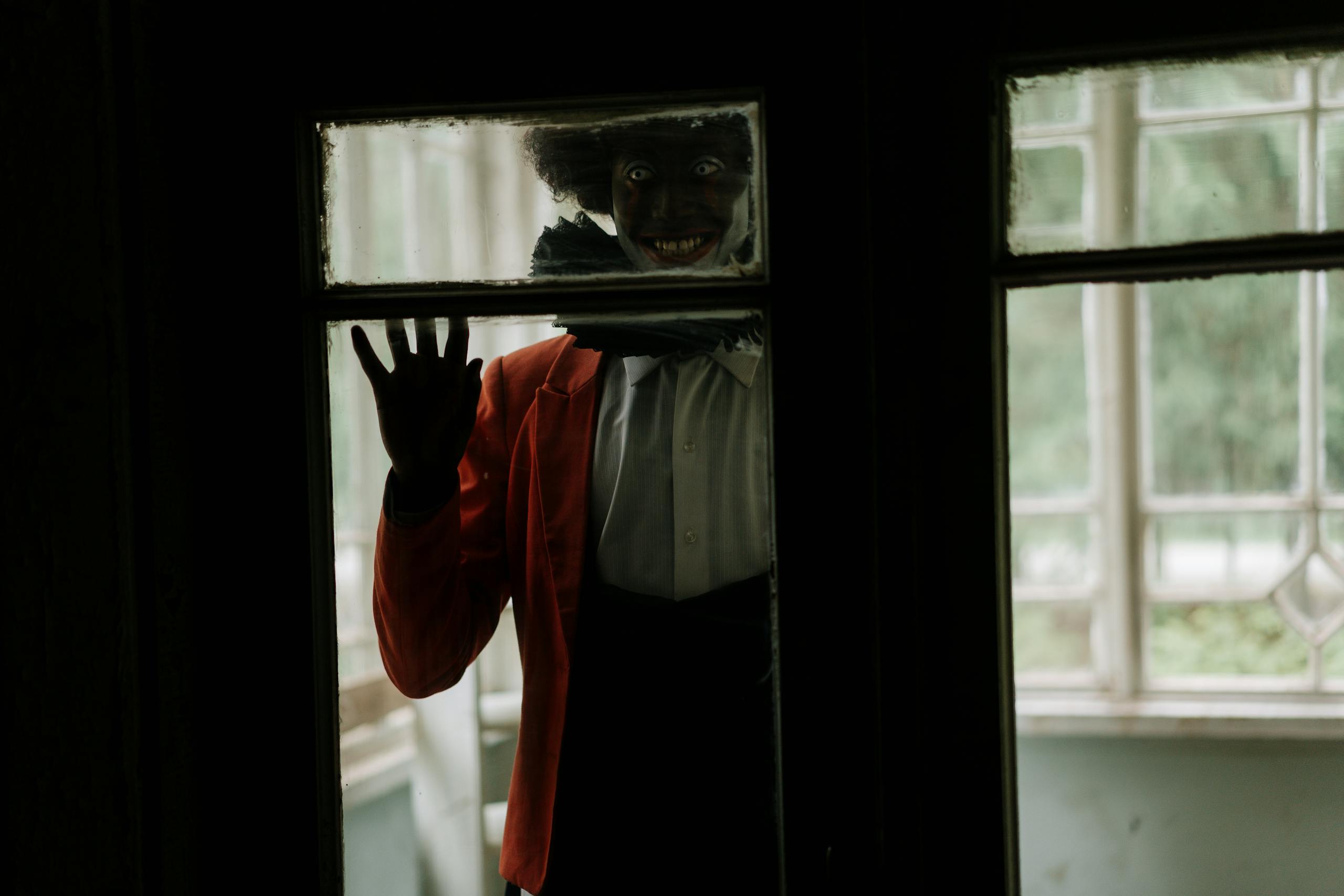
If you’re exploring what makes the INFP personality tick, our INFP Personality Type hub covers the full picture, from cognitive function stacks to career patterns to how INFPs handle relationships and conflict. This article zooms in on one specific lens: what American Horror Story reveals about the INFP inner world, and why so many people with this type find themselves obsessed with the series.
Why Does American Horror Story Hit Differently for INFPs?
Most mainstream entertainment is built around resolution. The hero wins. The villain gets punished. Order is restored. American Horror Story refuses that comfort almost aggressively, and for INFPs, that refusal feels strangely honest.
What’s your personality type?
Take our free 40-question assessment and get a detailed personality profile with dimension breakdowns, context analysis, and personalised insights.
Discover Your Type8-12 minutes · 40 questions · Free
My own experience with emotionally dense storytelling taught me something about how depth-oriented personalities process the world. During my years running advertising agencies, I noticed that the creatives on my teams who produced the most emotionally resonant work were rarely the loudest voices in the room. They were the ones who stayed after meetings, staring at a brief longer than anyone else, turning it over in their minds. They weren’t overthinking. They were feeling their way toward something true. That’s dominant Fi at work, the INFP’s core cognitive function, which evaluates meaning through an internal values system rather than external consensus.
American Horror Story speaks directly to that orientation. Its characters don’t just face external monsters. They face their own grief, guilt, longing, and fractured sense of self. That internal horror is what makes the show compelling to people whose dominant function is Introverted Feeling. The external scares are almost secondary.
According to Psychology Today’s overview of empathy, emotionally attuned individuals often seek out narratives that validate complex emotional experiences, even painful ones. For INFPs, horror isn’t escapism in the traditional sense. It’s a safe container for processing the intensity they carry internally.
Which American Horror Story Characters Are INFPs?
Typing fictional characters is always interpretive, but it’s also genuinely useful for understanding how cognitive functions play out in real behavior. A few American Horror Story characters map convincingly onto the INFP profile.
Violet Harmon (Murder House)
Violet is the clearest INFP in the series. She’s withdrawn but not passive. She has a strong internal moral compass that operates independently of what her family or peers expect. She gravitates toward Tate not because he’s safe, but because he seems to understand something real about suffering that the people around her don’t acknowledge. That pull toward depth over safety is a recognizable INFP pattern.
Her auxiliary Ne (Extraverted Intuition) shows up in how she connects disparate pieces of information and sees symbolic meaning in her environment. She notices what others dismiss. And her tertiary Si surfaces in how she clings to certain memories and past impressions, even when they become painful anchors.
What makes Violet compelling, and what makes her recognizably INFP, is the collision between her idealism and reality. She wants to believe in something pure. The show systematically destroys that possibility. Her response isn’t rage. It’s a kind of quiet devastation that she processes almost entirely alone.
Lana Winters (Asylum)
Lana is a more complex case. Her dominant drive is truth-telling, which aligns with Fi’s commitment to authenticity over social convenience. She’s willing to endure enormous personal cost to expose what she believes is genuinely wrong. That moral tenacity, rooted in personal conviction rather than institutional authority, is a hallmark of the INFP value system.
Her Ne shows up in her ability to piece together patterns others can’t see, to sense that something is deeply wrong at Briarcliff long before she has proof. Some analysts type Lana as an INFJ, and there’s a reasonable argument for that given her strategic persistence. Still, her decision-making feels driven by personal values rather than long-range systemic vision, which tilts her toward the INFP side of the spectrum.
Cordelia Foxx (Coven)
Cordelia begins Coven as someone whose values have been suppressed by an overbearing mother and institutional pressure. Her arc is essentially an INFP awakening: she moves from self-doubt and people-pleasing toward a place where her authentic values become her actual source of power. Her warmth, her protectiveness of the younger witches, and her willingness to sacrifice her own comfort for what she believes is right all track with Fi-dominant behavior.
She’s also someone who struggles significantly with conflict, which is worth noting. Many INFPs find direct confrontation almost physically uncomfortable, not because they lack conviction, but because conflict feels like a threat to the relational harmony they value deeply. If you recognize that pattern in yourself, the piece on why INFPs take everything personally in conflict gets into the cognitive mechanics behind that tendency in useful detail.
What American Horror Story Gets Right About the INFP Inner World
What American Horror Story Gets Right About the INFP Inner World
The show’s writers may not have been thinking about MBTI when they crafted these characters, but they intuited something psychologically accurate: that certain kinds of people feel the weight of the world in ways that are hard to articulate and harder to put down.
Dominant Fi means that INFPs don’t just observe emotional situations. They absorb them. A moral injustice doesn’t register as an abstract problem to be solved. It registers as a personal wound. This is worth distinguishing carefully from the concept of being an empath, which is a separate construct. As Healthline notes in their overview of what it means to be an empath, high emotional sensitivity and empathic traits are psychological and social constructs that exist independently of MBTI type. Fi doesn’t make someone an empath by definition. What it does is create a powerful internal filter through which all moral and emotional information gets processed personally.
American Horror Story captures this by giving its most emotionally complex characters no exit from their inner lives. They can’t compartmentalize. They can’t simply move on. The horror sticks because it matters to them in a way that goes beyond survival instinct. That’s Fi in a narrative form.
The Idealism That Keeps Getting Shattered
One of the most consistent INFP experiences is holding a vision of how things should be, how people should treat each other, how the world could work if everyone just cared enough, and then watching reality fall short of that vision repeatedly. It’s not naivety. It’s a deep commitment to a values-based ideal that the world rarely honors.
American Horror Story specializes in shattering idealism. Characters who believe in love discover it’s been built on manipulation. Characters who trust institutions discover those institutions are corrupt. Characters who think they’ve found safety discover the threat was always internal. For INFPs, this isn’t just dramatic tension. It mirrors something they’ve felt personally: the gap between what they believe should be true and what actually is.
I saw this dynamic play out in agency life more times than I can count. The creatives who cared most deeply about their work were also the ones most devastated when a client gutted a campaign they believed in. They hadn’t just lost a project. They’d lost something that felt true. That’s the INFP relationship with meaningful work, and with meaningful anything.
Isolation as Both Wound and Refuge
Many American Horror Story characters are profoundly isolated, not just physically but emotionally. They exist in spaces where no one quite understands what they’re carrying. That isolation is simultaneously painful and strangely comfortable, a place where at least the internal world doesn’t have to be explained or defended.
INFPs often describe a version of this. The external world can feel overwhelming and misaligned with their values, so withdrawal becomes a way of protecting the inner life. The problem is that isolation, while temporarily relieving, eventually amplifies the very pain it was meant to quiet. American Horror Story doesn’t romanticize this. It shows the cost.
How INFPs and INFJs Experience This Show Differently
People often conflate INFPs and INFJs because both types are introverted, values-driven, and drawn to depth. But their cognitive architectures are genuinely different, and those differences shape how each type experiences something like American Horror Story.
INFJs lead with Ni (Introverted Intuition), a convergent pattern-recognition function that synthesizes information into a single coherent vision. An INFJ watching American Horror Story is likely tracking the symbolic architecture of each season, noticing thematic throughlines, and building a unified interpretation. Their Fe (Extraverted Feeling) then connects that interpretation to broader human meaning.
INFPs lead with Fi (Introverted Feeling), which is evaluative rather than convergent. They’re not primarily building a unified theory. They’re feeling their way through each character’s moral experience and asking whether it rings true against their own internal values system. Their auxiliary Ne then generates connections and possibilities across those emotional impressions.
The INFJ watching Asylum might be most engaged by the systemic critique of institutional power. The INFP watching the same season is most likely absorbed in Lana’s personal experience of betrayal and survival. Same show, genuinely different entry points.
Both types share a tendency to avoid conflict in ways that can quietly accumulate into larger problems. INFJs in particular carry communication patterns that can create distance without anyone quite realizing it’s happening. The piece on INFJ communication blind spots addresses five specific patterns worth examining if you identify with that type, or if you’re close to someone who does.
There’s also a meaningful difference in how INFJs and INFPs handle the emotional aftermath of difficult content. INFJs tend to process through meaning-making: they need to understand why something affected them before they can release it. INFPs tend to need to feel through it fully before they can move forward. Neither approach is more valid. Both can get stuck if the process doesn’t complete.
The INFP Relationship With Moral Ambiguity in Horror
American Horror Story is remarkable for how consistently it refuses to let viewers feel comfortable hating its villains. Tate Langdon is a murderer who is also, in some moments, genuinely tender. Dandy Mott is a monster who was shaped by circumstances that generate at least a flicker of understanding. Even the most grotesque characters carry something recognizably human.
This moral complexity is catnip for INFPs. Dominant Fi doesn’t operate through categorical rules. It operates through nuanced internal evaluation that takes context, intention, and emotional truth into account. INFPs are often the people in a group who say “but it’s more complicated than that” when everyone else has settled on a clean judgment. American Horror Story validates that instinct by making clean judgments almost impossible.
This same quality shows up in how INFPs approach real-world conflict. They’re often reluctant to condemn people outright, even when those people have genuinely hurt them, because their Fi keeps generating context and nuance. That can be a genuine strength in terms of compassion and fairness. It can also make it very hard to advocate for themselves when they need to. The resource on how INFPs can handle hard conversations without losing themselves addresses that specific tension directly.
What American Horror Story shows, season after season, is that moral ambiguity has a cost. Refusing to judge doesn’t protect you from being harmed. Seeing the humanity in someone who hurt you doesn’t obligate you to stay. INFPs often need to hear that distinction clearly.
When the Show Triggers Real INFP Pain Points
Not everything about the INFP relationship with American Horror Story is comfortable. The show reliably presses on several genuine vulnerabilities that people with this type carry.
Betrayal by Trusted People
INFPs extend trust carefully and deeply. When that trust is violated, it doesn’t register as a disappointment. It registers as a fundamental rupture in their understanding of reality. American Horror Story is essentially a machine for producing that kind of rupture. The people you thought were safe turn out to be the source of the horror.
For INFPs who have experienced real betrayal, watching this dynamic play out on screen can be cathartic. It can also reopen wounds that haven’t fully healed. There’s value in recognizing which experience you’re having when you watch.
The Door Slam and Its Aftermath
Both INFPs and INFJs are known for a particular response to relational rupture: a sudden, complete withdrawal that can feel to the other person like it came out of nowhere. For INFPs, this often follows a long period of absorbing pain quietly, extending understanding, and hoping things will change. When the Fi threshold is finally crossed, the withdrawal can be total.
American Horror Story characters do this constantly. They endure, endure, endure, and then they’re simply gone, emotionally or literally. The show doesn’t always frame this as healthy, and it isn’t always. INFJs have their own version of this pattern, and the piece on why INFJs door slam and what the alternatives look like explores that dynamic in depth. The INFP version has its own texture, rooted in Fi’s threshold for values violations rather than the INFJ’s Ni-driven sense of futility.
Inferior Te and the Cost of Avoiding Action
INFPs’ inferior function is Te (Extraverted Thinking), which governs external organization, direct assertion, and efficient action in the world. Under stress, this function either goes completely offline (the INFP becomes paralyzed and unable to act) or erupts in an uncharacteristically blunt, even harsh way that surprises everyone including the INFP themselves.
American Horror Story characters under extreme pressure often exhibit exactly this pattern. They absorb and absorb until the internal system overloads, and then they act in ways that are either completely passive or shockingly forceful. For INFPs watching, this can feel uncomfortably familiar.
Developing a healthier relationship with Te, learning to take organized external action before reaching the breaking point, is one of the central growth edges for this type. That growth often requires learning to speak up before things escalate to a crisis point. The framework in the article on INFP difficult conversations offers practical ways to engage that function more deliberately.
What INFPs Can Take From American Horror Story (Beyond the Scares)
There’s something genuinely valuable in engaging with stories that don’t flinch. American Horror Story, at its best, is a study in what happens when people suppress their authentic selves, when they accept circumstances that violate their values, when they mistake endurance for strength.
For INFPs, those themes aren’t abstract. They’re personal. And engaging with them through narrative, at a safe remove, can be a way of processing experiences that are harder to examine directly.
Personality type frameworks like MBTI offer one lens for understanding these patterns. 16Personalities’ overview of their theoretical approach explains how they’ve adapted and extended the original framework, which is worth understanding if you’re using these tools for self-reflection. The cognitive function model used in traditional MBTI is particularly useful for understanding why certain narrative patterns resonate so specifically with certain types.
What American Horror Story in the end argues, across its many seasons, is that the things we refuse to look at directly are the things that haunt us. For INFPs, whose rich inner world can become a place of both profound meaning and unprocessed pain, that argument lands with particular force.
I spent years in agency leadership learning to look directly at things I’d rather have avoided. Difficult client relationships. Team dynamics that weren’t working. My own tendency to process everything internally and then present only the polished conclusion. The discomfort of looking directly was always less costly than the alternative. American Horror Story makes that argument in the most visceral terms possible.
The Question of Healthy Emotional Engagement
There’s a difference between engaging with dark content in a way that deepens self-understanding and engaging with it in a way that reinforces patterns of rumination or emotional overwhelm. INFPs, whose dominant Fi can make them prone to absorbing emotional content very deeply, are worth paying attention to that distinction.
Meaningful engagement with difficult narratives can be a genuine form of emotional processing. Compulsive consumption of content that consistently retraumatizes without offering any resolution is something different. American Horror Story is intense enough that it’s worth checking in with yourself about which experience you’re having.
Some relevant psychological research on emotional processing and personality is available through PubMed Central’s research on emotional regulation and personality traits, which provides useful context for understanding why some individuals process intense emotional content differently than others.
INFPs, INFJs, and the Shared Experience of Feeling Too Much
One of the things that draws both INFPs and INFJs to American Horror Story is a shared experience that’s hard to name precisely: the sense of feeling things at a depth that doesn’t fit neatly into ordinary social contexts. Both types are often told, implicitly or explicitly, that they feel too much, care too much, or take things too seriously.
American Horror Story takes that experience seriously. It treats emotional depth as meaningful rather than excessive. The characters who feel most deeply are rarely the ones the show dismisses. They’re the ones the show follows.
INFJs carry their own version of this experience, and it shows up in particular ways around interpersonal dynamics. The tendency to keep peace at significant personal cost is one of the most common INFJ patterns, and it has real consequences over time. The article on the hidden cost of INFJs keeping peace examines what that pattern actually extracts from people who live it.
For INFPs, the parallel pattern is slightly different. Rather than keeping peace through strategic management of group dynamics (which is more Fe-driven), INFPs often keep peace by simply not voicing their internal experience. They absorb rather than suppress. The cost accumulates in a different way, but it accumulates.
Both types benefit from understanding how their influence actually works when they’re operating from their genuine strengths rather than from accommodation. The piece on how INFJs exercise quiet influence offers a useful framework that has crossover relevance for INFPs thinking about how their values-driven presence affects the people around them.
Not sure which type describes you more accurately? Our free MBTI personality test can help you identify your type and start making sense of these patterns in your own life.

The INFP Superpower That American Horror Story Keeps Validating
Across every season, American Horror Story returns to a specific kind of character: someone who sees what others refuse to see, who feels what others have numbed themselves to, who holds onto meaning in environments that have become cynical or corrupt. That character is almost always the moral center of the story, even when they’re broken, even when they fail.
That character is, functionally, an INFP.
The ability to maintain genuine emotional attunement in environments that reward detachment is not a weakness. It’s a form of perceptual accuracy that most people have traded away for comfort. INFPs who have spent years being told they’re too sensitive are often the people who were right about something important that everyone else was avoiding.
American Horror Story doesn’t offer those characters easy victories. But it does take them seriously. And for INFPs who have spent a long time wondering whether their depth is a liability, that might be exactly the validation the show is quietly providing.
Additional context on how emotional sensitivity functions psychologically, separate from MBTI type, is available through this PubMed Central research on sensitivity and emotional processing, which helps distinguish between personality type preferences and trait-level sensitivity.
There’s also something worth noting about how INFPs communicate their inner experience to others, particularly in high-stakes situations. The parallel framework for INFJs, covered in the article on INFJ communication patterns that create distance, highlights how even deeply feeling types can inadvertently obscure what they’re actually experiencing. INFPs face a version of that same challenge, particularly when their Fi is running at full intensity and their Te is offline.
The Frontiers in Psychology research on personality traits and emotional experience provides additional grounding for understanding why certain personality configurations produce such distinctive relationships with emotionally intense content.
Everything explored in this article connects back to a broader body of work on what makes INFPs tick. Our complete INFP Personality Type resource hub covers the cognitive functions, common challenges, relationship patterns, and career considerations that define this type in more depth than any single article can.
About the Author
Keith Lacy is an introvert who’s learned to embrace his true self later in life. After 20 years in advertising and marketing leadership, including running agencies and managing Fortune 500 accounts, Keith now channels his experience into helping fellow introverts understand their strengths and build fulfilling careers. As an INTJ, he brings analytical depth and authentic perspective to every article, drawing from both professional expertise and personal growth.
Frequently Asked Questions
Why do INFPs tend to love American Horror Story?
INFPs are drawn to American Horror Story because the show engages seriously with emotional complexity, moral ambiguity, and the cost of suppressing authentic experience. Their dominant Introverted Feeling function evaluates meaning through a deeply personal values lens, and American Horror Story consistently tells stories that honor emotional depth rather than dismissing it. The show’s refusal to offer clean moral resolutions resonates with INFPs, who naturally resist categorical judgments and seek nuanced understanding of human behavior.
Which American Horror Story characters are most likely INFPs?
Violet Harmon from Murder House is the clearest INFP in the series, showing strong Fi-driven moral independence, Ne-fueled pattern recognition, and a tendency toward emotional isolation under pain. Lana Winters from Asylum is another strong candidate, driven by personal conviction and truth-telling at significant personal cost. Cordelia Foxx from Coven represents an INFP arc of moving from suppressed authenticity toward values-based power. Fictional character typing is always interpretive, but these characters exhibit the cognitive function patterns most consistent with the INFP profile.
How do INFPs and INFJs experience American Horror Story differently?
INFJs lead with Ni (Introverted Intuition) and tend to engage with American Horror Story through its symbolic and thematic architecture, building unified interpretations across a season’s narrative. INFPs lead with Fi (Introverted Feeling) and tend to engage through the personal moral experience of individual characters, asking whether each character’s emotional truth resonates against their own internal values. Both types are drawn to the show’s emotional depth, but their entry points and primary modes of engagement are genuinely different.
What does INFP cognitive function stack mean, and how does it relate to horror preferences?
The INFP cognitive function stack runs: dominant Fi (Introverted Feeling), auxiliary Ne (Extraverted Intuition), tertiary Si (Introverted Sensing), and inferior Te (Extraverted Thinking). In terms of horror preferences, dominant Fi means INFPs process dark content through a personal values filter, making moral complexity and emotional authenticity more engaging than pure shock. Auxiliary Ne generates connections and symbolic meaning across narrative elements. Tertiary Si means certain emotionally resonant images or experiences can linger as persistent internal impressions. Inferior Te means INFPs under stress may struggle to take organized action in response to what they’re feeling, a pattern American Horror Story characters exhibit repeatedly.
Is it healthy for INFPs to watch emotionally intense shows like American Horror Story?
Engaging with dark narratives can be a genuine form of emotional processing for INFPs, providing a safe container for exploring intense feelings and moral complexity. The distinction worth making is between engagement that deepens self-understanding and consumption that reinforces rumination or emotional overwhelm. INFPs, whose dominant Fi absorbs emotional content deeply, benefit from checking in with themselves about which experience they’re having. If a show consistently reactivates unresolved pain without offering any sense of meaning or resolution, that’s worth noticing. Meaningful engagement with difficult content is different from compulsive exposure to material that leaves you depleted.